17 Mid Century Modern Bathroom Ideas For An Airy Look

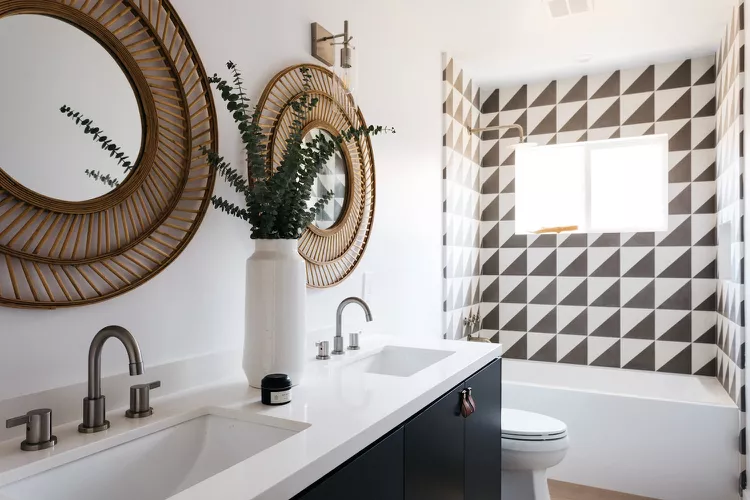
If your bathroom looks outdated, a midcentury modern update can change that fast.
The style focuses on clean lines, simple shapes, and practical use of space.
You can start with warm wood accents, classic fixtures, or better lighting. Even small updates
can shift how the room looks and works.
These midcentury modern bathroom ideas help you plan a setup that suits your space.
17 Unique Mid Century Modern Bathroom Secrets
Bold Geometric Floor Tiles
If you want your bathroom to stand out right away, start from the ground up.
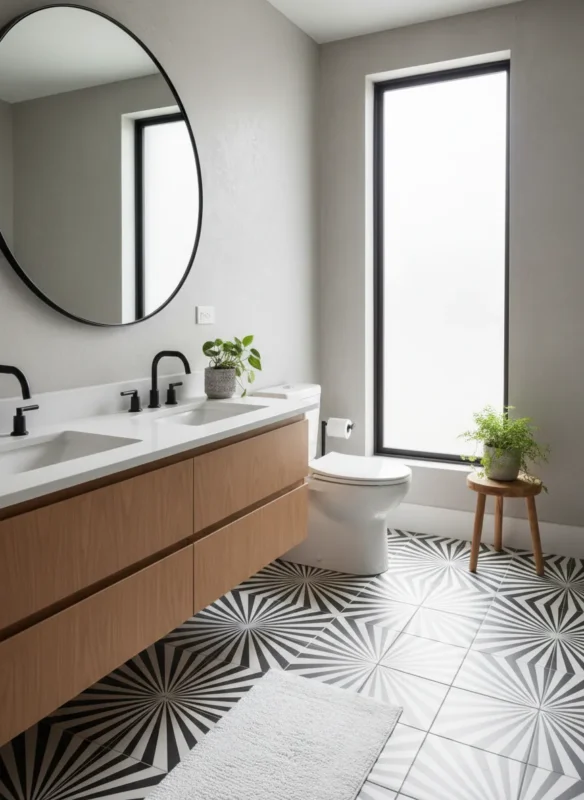
Geometric floor tiles bring structure and movement into the space in a way plain flooring cannot match.
Choose a pattern that reflects midcentury design. Look for repeating shapes like diamonds, hexagons, or angular forms that create a clear visual rhythm.
Keep the color palette controlled so the pattern stays sharp. Black and white works well, though you can also introduce muted tones for a softer look.
Let the floor take the lead. Keep walls simple so the design does not compete for attention.
Use fixtures with clean lines to support the overall direction. A floating vanity or a simple sink design will help the room stay balanced.
Make sure the tile layout is precise. Clean alignment will make the pattern look intentional and well planned.
This approach gives your bathroom a strong base that defines the entire design.
Use Bold Patterned Flooring
Patterned flooring can bring personality into your bathroom without changing the entire layout. It works especially well if the rest of the space stays simple.
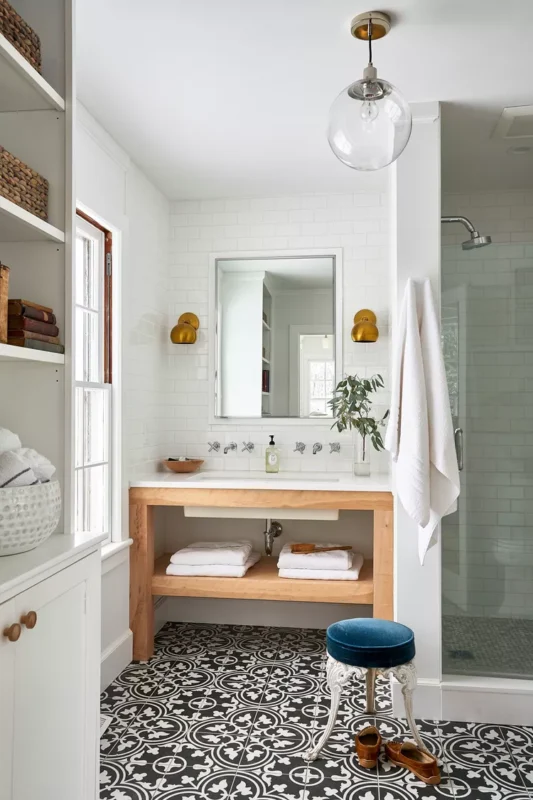
Start by selecting one standout pattern. It could be floral, abstract, or retro inspired, as long as it connects to midcentury style.
Keep walls and cabinetry in solid tones. This allows the floor to remain the main feature.
Limit additional patterns in the room. Too many competing designs can make the space look cluttered.
Use small details to tie the look together. Towels or accessories in similar colors can create a sense of continuity.
Lighting should stay clean and direct. It helps highlight the pattern without adding visual noise.
Make sure the scale of the pattern fits your space. Larger designs work better in bigger bathrooms, while smaller patterns suit compact layouts.
This idea gives you a bold look that still feels controlled and easy to live with.
Mustard Yellow Accent Walls
Mustard yellow can bring energy into your bathroom when used with care. It adds a retro touch that fits nicely with midcentury style.
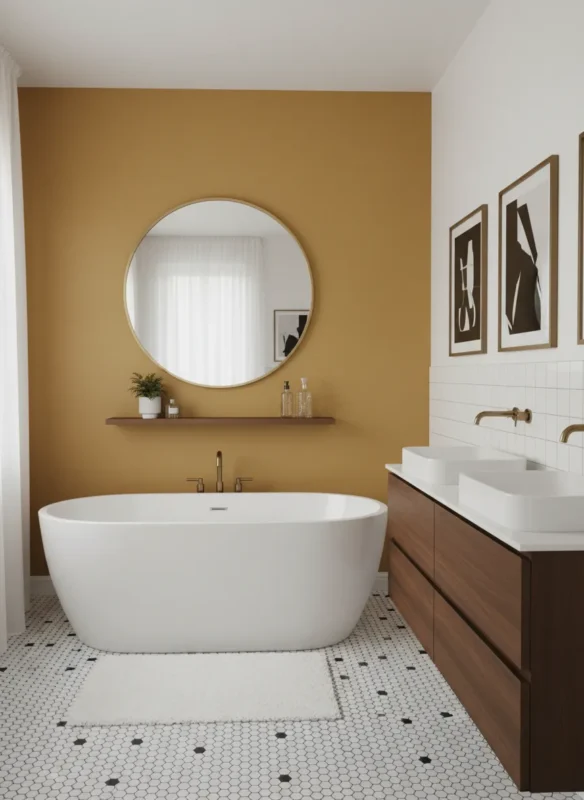
Start with one accent wall. This keeps the color focused and prevents it from taking over the room.
Pair the wall with wood finishes. A vanity in walnut or teak will balance the brightness and ground the space.
Keep the rest of the walls neutral. White or light beige helps the mustard stand out in a clean way.
Use simple decor so the color remains the highlight. A mirror with a thin frame or a small shelf is enough.
Add a few accents that echo the tone. A towel or a small object can create a connection across the room.
Lighting plays an important role here. Warm light will bring out the richness of the color.
This choice gives your bathroom a clear identity with minimal effort.
Use Midcentury Lighting
Lighting can shape the entire look of your bathroom. Midcentury fixtures bring character through form and placement.
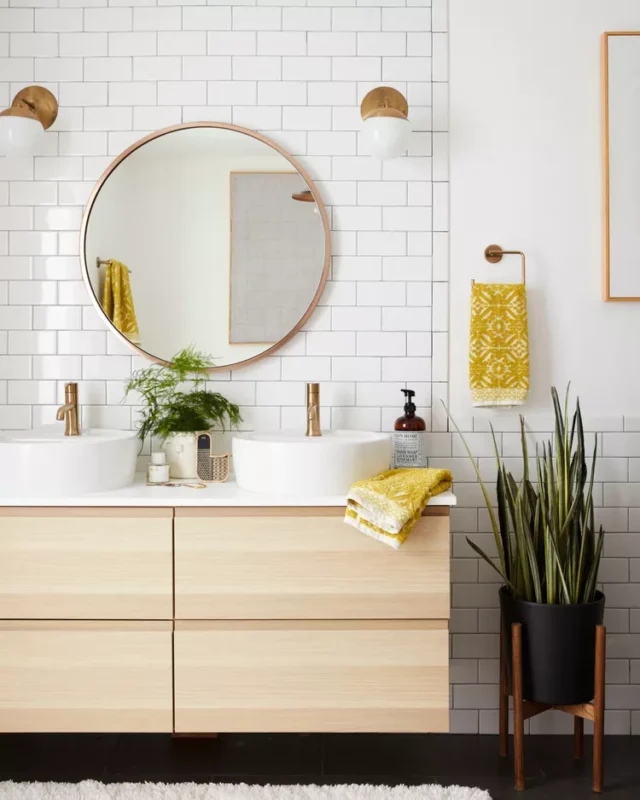
Look for designs with simple shapes. Globe lights, cone shades, or linear fixtures all fit this style.
Place lighting where it serves a purpose. Above the mirror or along the wall works best for daily use.
Choose finishes that match your overall palette. Brass, black, or brushed metal can all work depending on your setup.
Keep the number of fixtures limited. One or two well-placed lights can do more than several smaller ones.
Make sure the light is practical. It should support tasks like grooming while also adding to the design.
Pair the lighting with simple surroundings so it stands out. Clean walls and minimal decor help achieve this.
This approach allows lighting to act as a statement.
Teal Subway Tile Backsplash
A teal subway tile backsplash can add color to your bathroom in a focused way. It works well behind the sink.
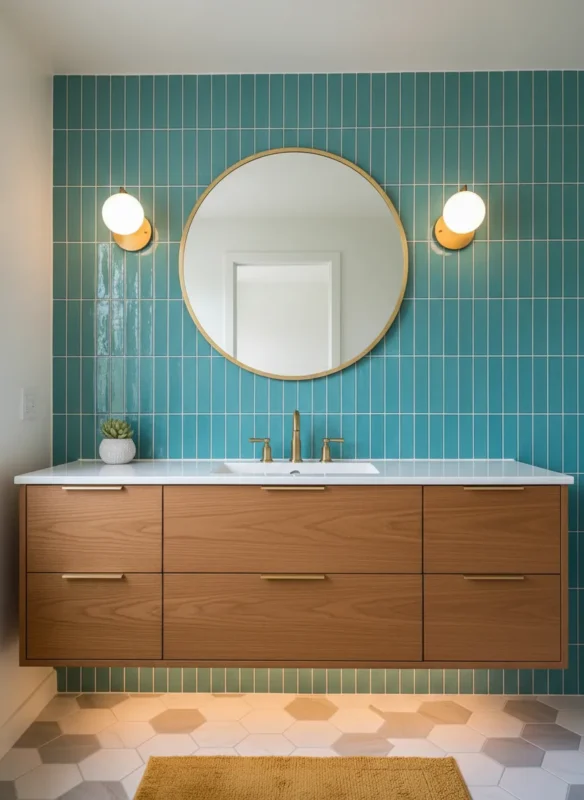
Choose a rich teal shade that pairs well with wood tones. This creates a strong midcentury connection.
Lay the tiles in a classic pattern such as horizontal brick. You can also try vertical placement for a slightly updated look.
Keep grout lines clean so the layout looks sharp. White or light gray grout can help define each tile.
Balance the color with neutral surfaces. A white sink or light countertop will prevent the space from looking too heavy.
Add simple fixtures that do not compete with the tile. Clean lines work best here.
Use lighting to highlight the backsplash. It can bring out the color and add dimension to the wall.
This idea introduces color in a way that stays controlled.
Oversized Round Wooden Mirrors
An oversized round wooden mirror can soften the straight lines often found in midcentury bathrooms.
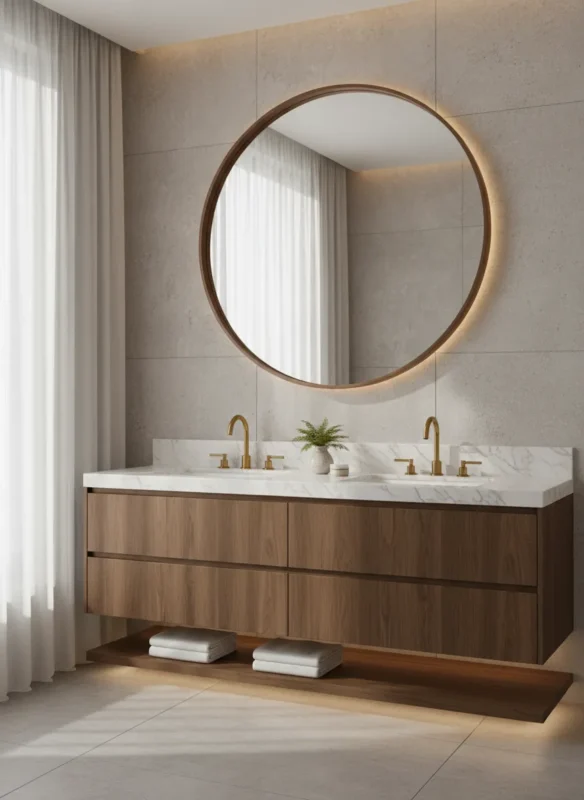
The curved shape adds contrast and draws attention without feeling heavy.
Hang it above the vanity where it can anchor the wall. The size matters here, so choose one that fills the space properly instead of looking too small.
The wooden frame should match or complement your vanity. This creates a connection across the room and keeps the design consistent.
Let the mirror remain the main feature on that wall. Avoid adding too many decorative items around it.
Lighting can frame the mirror nicely. Place sconces on each side to highlight its shape and improve visibility.
Keep the rest of the palette simple so the wood tone stands out. Neutral walls work best in this case.
This idea works well in both small and large bathrooms since the round shape helps break up rigid lines.
Use a Wood Vanity
A wood vanity is one of the easiest ways to bring midcentury style into your bathroom. It introduces structure at the same time.
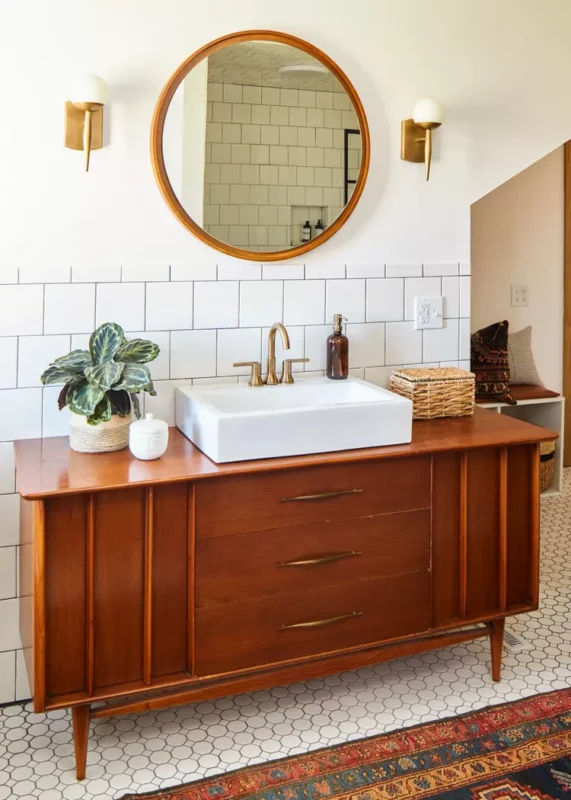
Choose a design with flat-front drawers and simple hardware. The focus should stay on the wood grain shape.
Keep the finish natural or slightly stained so the texture remains visible. This adds character without relying on extra decoration.
Pair the vanity with a clean countertop. White or light stone works well and keeps the setup balanced.
Make sure the size fits your space. A bulky vanity can overwhelm a smaller bathroom, so proportions matter.
Add a mirror that complements the tone of the wood. This helps tie the look together without much effort.
Storage should stay practical. Drawers that open smoothly and hold daily items will keep the surface clear.
This single piece can define the direction of your bathroom with very little adjustment.
Add a Pretty Pastels
Pastel tones can shift your bathroom in a softer direction while still fitting midcentury design. The key is to use them in a controlled way.
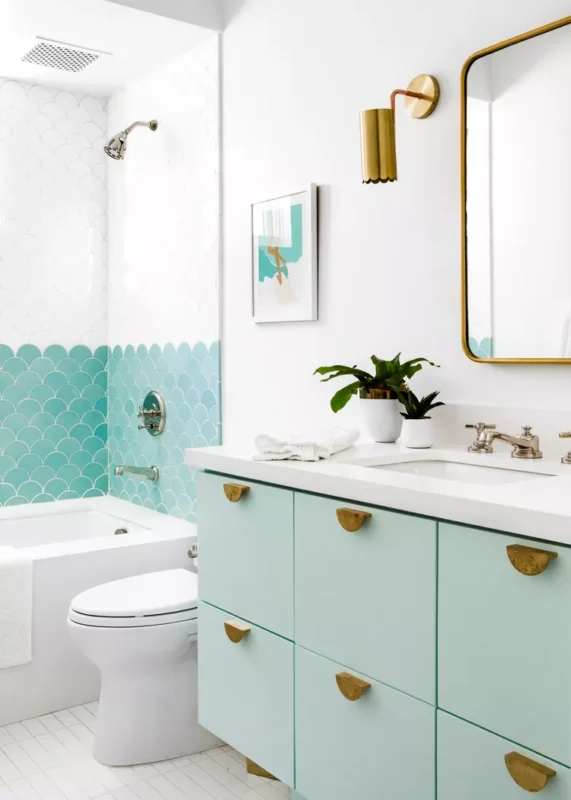
Start with one area, such as a wall, tile section, or even cabinetry. This keeps the color easy to manage.
Choose shades like pale pink, soft mint, or light peach. These tones bring color without overpowering the room.
Balance the pastel with wood finishes. This contrast keeps the space grounded and prevents it from looking overly delicate.
Keep fixtures simple so the color remains the highlight. Clean lines will support the overall look.
Repeat the color in small details to create consistency. A towel or small accessory can connect different parts of the room.
Lighting should stay warm to enhance the softness of the shade.
This approach allows you to introduce color in a way that still looks considered and easy to live with.
Hang a Brass Mirror
A brass mirror can add contrast and a touch of shine to your bathroom. It works well with midcentury design because of its clean form and warm tone.
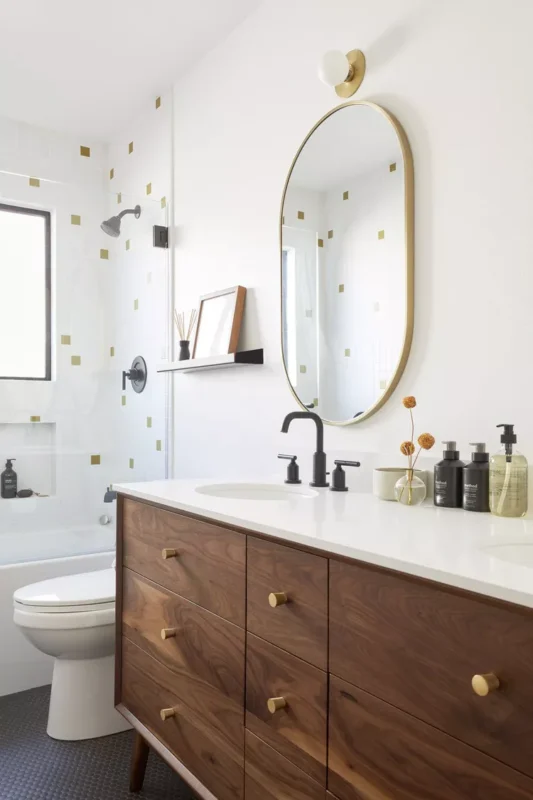
Choose a shape that suits your space. Round or rectangular options both works, as long as the frame stays simple.
Place it above the vanity where it can act as a focal point. Make sure it aligns well with the sink and lighting.
Pair the brass finish with other elements in the room. A faucet or light fixture in a similar tone can create a sense of connection.
Keep the wall behind it neutral so the metal stands out. This helps the mirror draw attention without extra effort.
Avoid heavy decoration around it. Let the mirror remain the highlight on that wall.
Good lighting will enhance the finish and make it more noticeable.
This small change can shift the overall look of your bathroom in a clear way.
Establish a Typical Coastal Palette
A coastal palette can blend well with midcentury style when handled with care. It brings a lighter mood into the bathroom while keeping the structure intact.
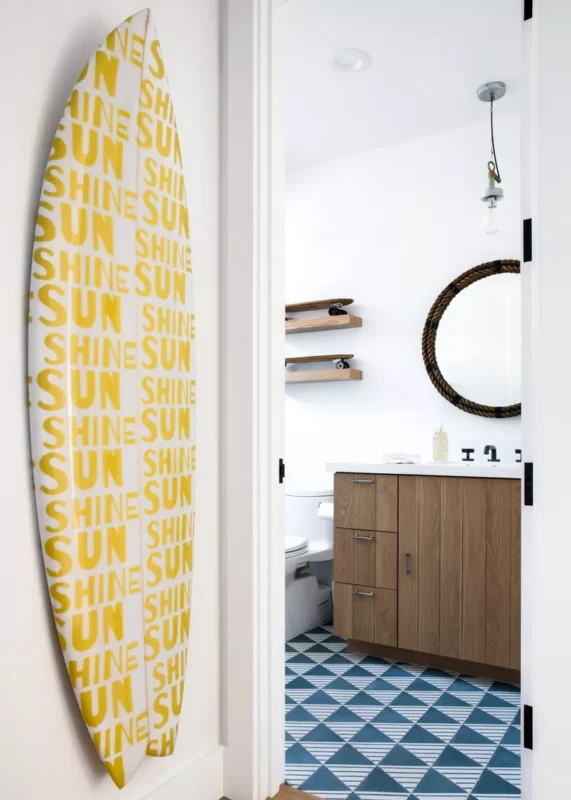
Start with a base of soft whites and light sandy tones. These colors keep the space bright and open.
Introduce shades of blue in a controlled way. Use them in tiles, textiles, or small accents so they do not take over the room.
Pair these colors with warm wood finishes. This connection keeps the design grounded and ties it back to midcentury roots.
Keep materials simple. Smooth surfaces and clean lines will prevent the theme from looking overly styled.
Limit decorative items so the palette remains the focus. A few well-placed pieces will be enough.
Use natural light where possible to enhance the color scheme throughout the day.
This approach gives your bathroom a fresh look while staying consistent with midcentury design principles.
Use and Mix Tiles for a Midcentury Patterns
Tiles can define the personality of a bathroom while remaining practical. In a midcentury modern design, mixing patterns and textures adds visual interest.
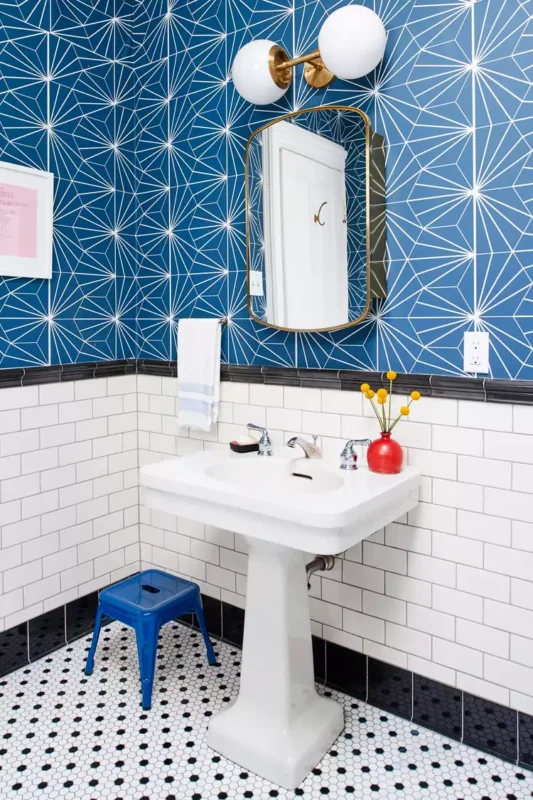
You could pair hexagonal floor tiles with a small square backsplash or use a subtle geometric wall pattern to break up uniform surfaces.
Color makes a difference. Warm neutrals like beige or terracotta contrast beautifully with deeper tones like teal or charcoal. This introduces a midcentury contrast that feels considered and deliberate.
Tile size influences the atmosphere. Large tiles can open a small space, while smaller tiles create texture and charm.
Using tiles in unexpected ways, such as a patterned strip along a vanity, can make the space feel personal.
Balance is essential. Thoughtful combinations of materials transform functional surfaces into design features, giving the bathroom character while remaining practical.
Mixing tiles allows you to highlight textures, shapes, and colors.
Try Terrazzo Tile
Terrazzo has made a major return in bathroom design. Its speckled surface brings movement and a gentle sense of pattern that suits midcentury aesthetics.
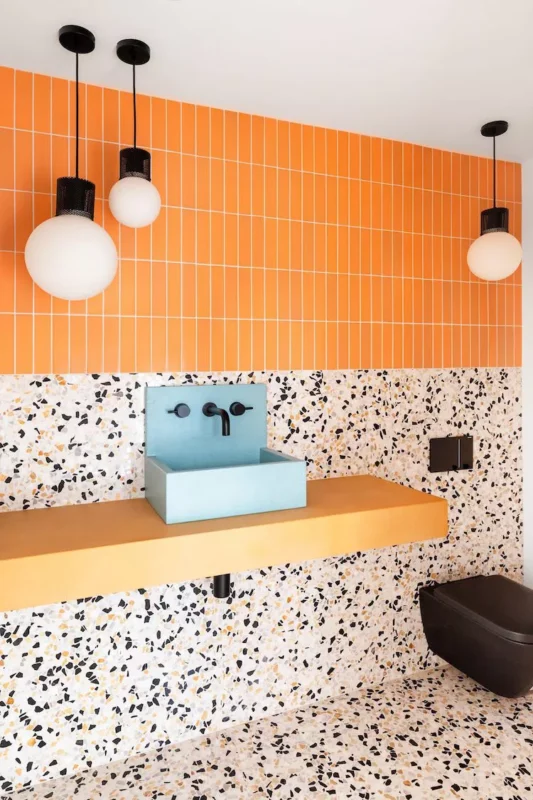
A floor in subtle neutrals grounds the space, while a wall with bold flecks of color can become a selling point.
Terrazzo is versatile. A countertop, backsplash, or shower wall made from terrazzo reinforces a sense of cohesion. Pairing it with wood and soft lighting keeps the space balanced.
Fixtures complement the material. Brass taps, black handles, or a simple wooden shelf can highlight terrazzo’s character.
Adding natural elements such as plants or woven baskets softens its surface.
This material allows creativity. Even a limited color palette can make a bathroom feel sophisticated and connected to midcentury principles of design.
Use Square Tiles
Square tiles are a simple but effective choice. Their clean geometry works with midcentury modern principles, giving the bathroom structure.
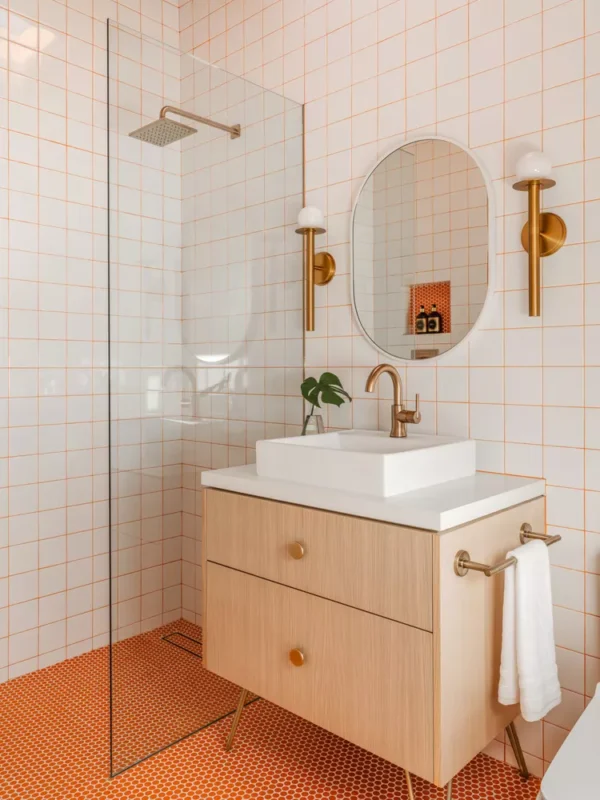
A wall or floor with uniform squares can feel minimal while allowing textures and finishes to win.
The size of the tile matters. Smaller squares provide a handcrafted effect, while larger squares make compact spaces appear larger.
Grout color changes perception; matching grout creates a seamless surface, and contrasting grout draws attention to pattern.
You can combine squares creatively. A single accent wall or niche in a different scale adds character without overwhelming the space.
The consistency of shape allows wood tones, brass accents, and woven details to complement the room naturally.
Square tiles establish a quiet framework for the bathroom. They support finishes while keeping the design orderly, cohesive, and aligned with midcentury geometry.
Rattan Details Matter
Rattan introduces natural texture to a bathroom. A woven vanity basket, a mirror frame, or a small stool can soften linear tiles and hard surfaces.
These elements bring a tactile dimension that enhances midcentury warmth.
Rattan also functions. Shelves or trays made of woven material hold toiletries, towels, or small décor items. The organic pattern contrasts with straight lines.
Lighting affects the look of rattan. Light filtering through woven surfaces creates shadow patterns that add subtle texture to walls or floors.
Pairing rattan with wood tones produces cohesion and a sense of calm.
Small rattan accents connect materials. They give the bathroom personality and layered interest while supporting a natural midcentury aesthetic.
Include Warm Wood Tones
Wood transforms a bathroom into a warmer, more tactile space. Floating vanities, shelves, or small stools complement tiles.
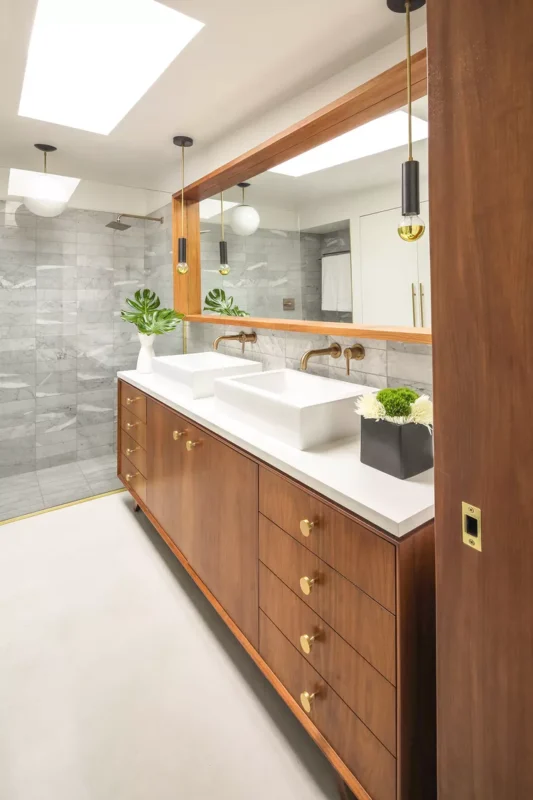
Midcentury style emphasizes organic surfaces, making wood an ideal material.
Choose the right wood. Rich walnut introduces depth, while oak or maple keeps the atmosphere light. Matte finishes preserve grain patterns.
Wood works with other elements. It pairs with brass taps, neutral tiles, and soft lighting to establish cohesion.
Even small pieces, such as a wooden soap dish or towel ladder, unify the design.
In a midcentury bathroom, wood connects geometry with texture. It offers warmth, reinforces material variety, and adds character, turning practical surfaces into design-forward features.
Opt for Brass Accents
Brass fixtures add personality and warmth. A mirror frame, faucet, or drawer handle in brass brings elegance and a midcentury signature to the bathroom.
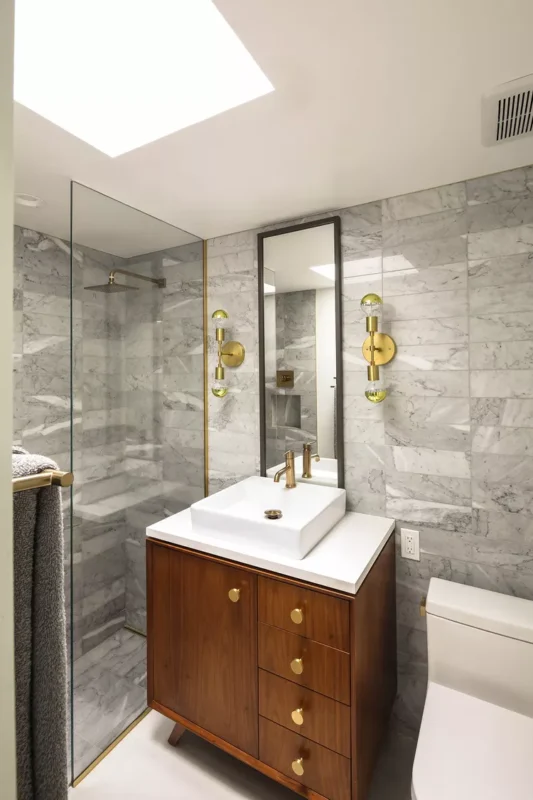
Brass suits multiple finishes. It shines against pale tiles, complements dark surfaces, and harmonizes with wood tones. Using brass sparingly highlights focal points like a vanity or shower niche.
Pairing brass with other textures creates balance. Stone, rattan, or wood surfaces reinforce the bathroom’s tactile layers.
A small accessory in brass, such as a tray or soap dish, ties the elements together.
Lighting enhances the effect. Wall sconces in brass cast a warm reflection across surfaces. Brass accents strengthen midcentury principles of materiality.
Lay Hardwood Flooring
Hardwood floors bring depth and warmth to a midcentury bathroom. Continuous wooden planks create a visual link across elements with tiles.
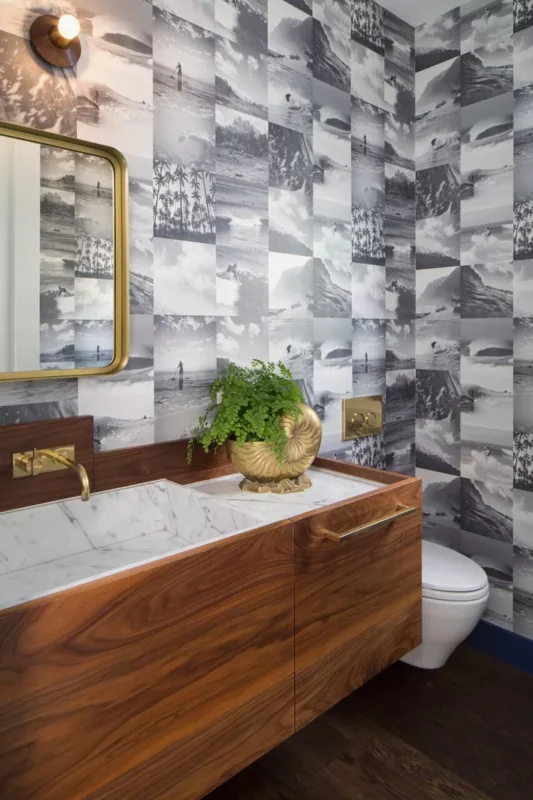
Light woods brighten, while deeper tones add richness.
Finishing affects performance. A water-resistant matte finish preserves grain and texture. Variation in planks adds natural movement.
Wood harmonizes with brass, rattan, or geometric tile details. Adding a simple rug can define zones and provide tactile comfort underfoot. The combination gives a layered look.
Hardwood flooring elevates the room beyond practicality. It connects materials, textures, and finishes to deliver a timeless midcentury modern bathroom.
FAQs
What defines a midcentury modern bathroom?
Basically, it uses clean lines, simple shapes, and practical layouts. Common elements include wood accents, neutral tones, and minimal decor.
How can you update a bathroom to midcentury modern?
Use lighting, mirrors, and fixtures. Add wood details or swap tiles to create a more structured, simple look.
What colors work best for this style?
Warm neutrals, white, muted greens, and soft blues are common. These tones keep the space simple.