13 Creative Ideas For Table Behind Couch For Your Small Space

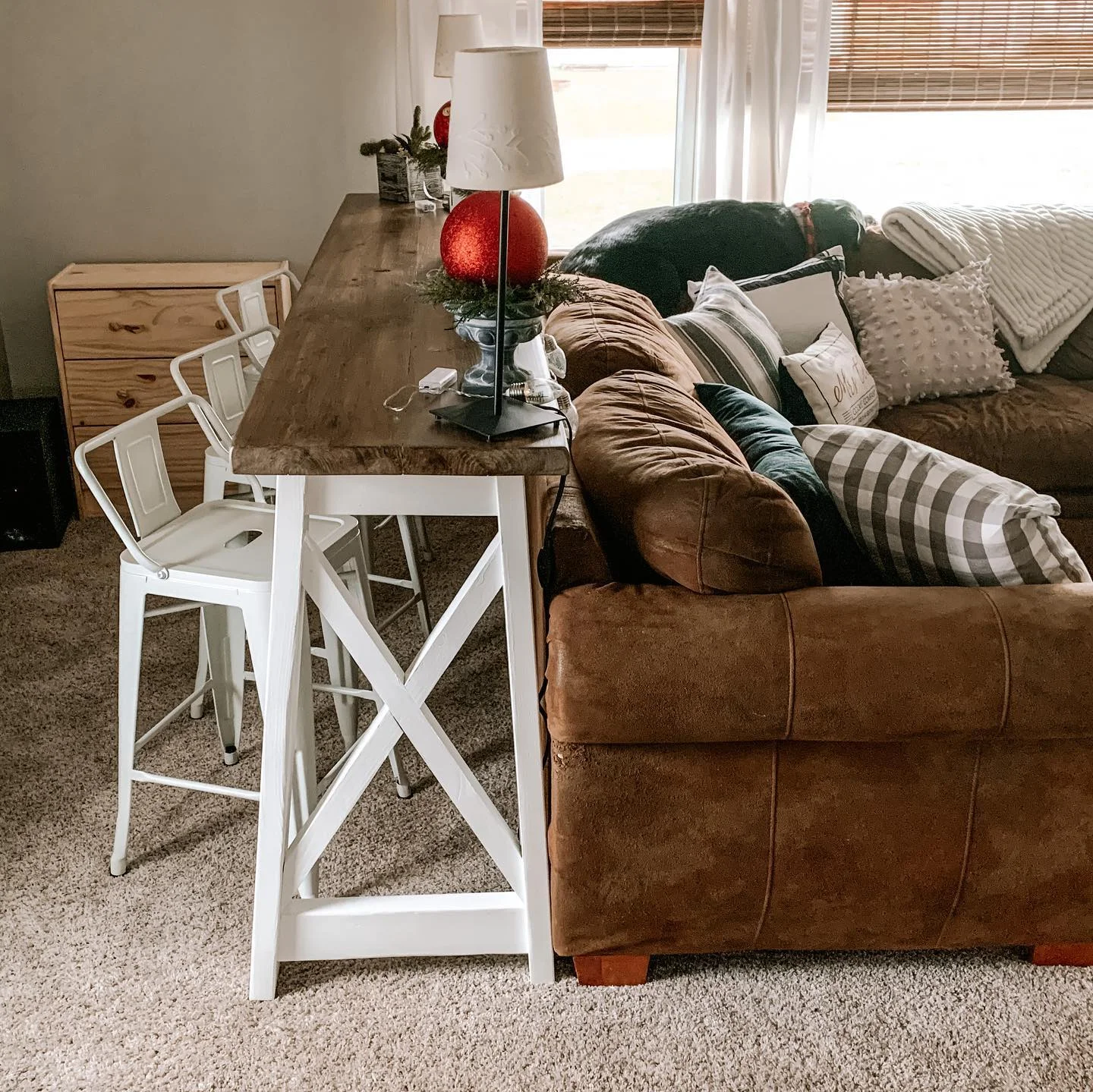
A table behind the couch can do more than fill empty space. It shapes how the entire living room comes together.
The right setup adds function, defines the layout, and introduces character in a subtle way.
From simple styling to more layered arrangements, this often-overlooked spot offers plenty of potential.
With a few thoughtful choices, it can turn into a feature that feels natural, practical, and visually balanced.
Today, I am sharing behind the couch table ideas to improve your living room’s ambience.
Table Behind Couch Decor Ideas
Pair Neutral Candles with Simple Stoneware
A table behind the couch can set the tone for the entire living room when styled with restraint.
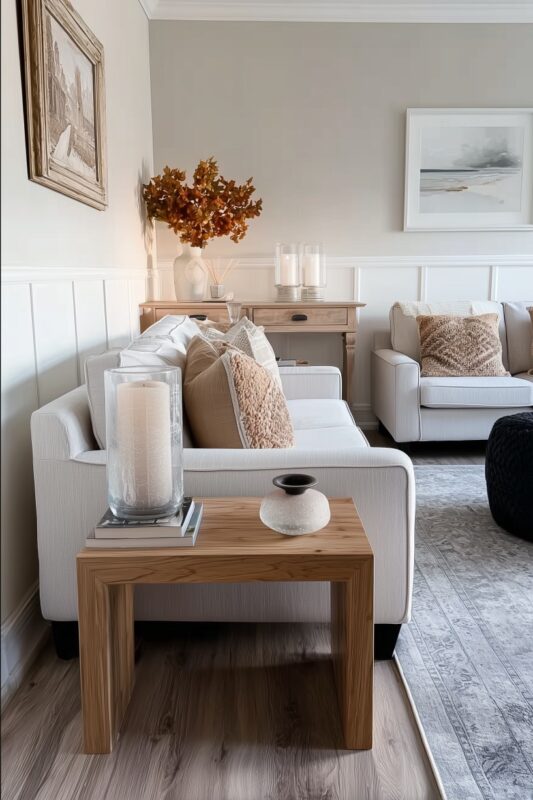
Start with neutral candles in varying heights, placed in simple holders that don’t draw too much attention.
Their soft tones blend easily into most spaces, allowing the overall setup to stay relaxed instead of overly styled.
Stoneware adds a grounded presence that works well with this approach. A few handcrafted pieces, such as a low bowl or a small vase, introduce texture through their natural finish.
These items don’t need perfect placement. Slight variation in spacing helps the arrangement look settled rather than arranged all at once.
Keep the surface open so each object has room to stand on its own. A crowded table can quickly lose its charm, especially in a spot that sits directly behind seating.
Leaving space between pieces allows the eye to move across the table at an easy pace.
This setup works because it relies on restraint. The mix of candlelight and matte ceramics creates a quiet backdrop that supports the rest of the room instead of competing with it.
Black Woven Drawer Console for Contrast
A black console table behind the couch can anchor the space with a stronger visual presence.
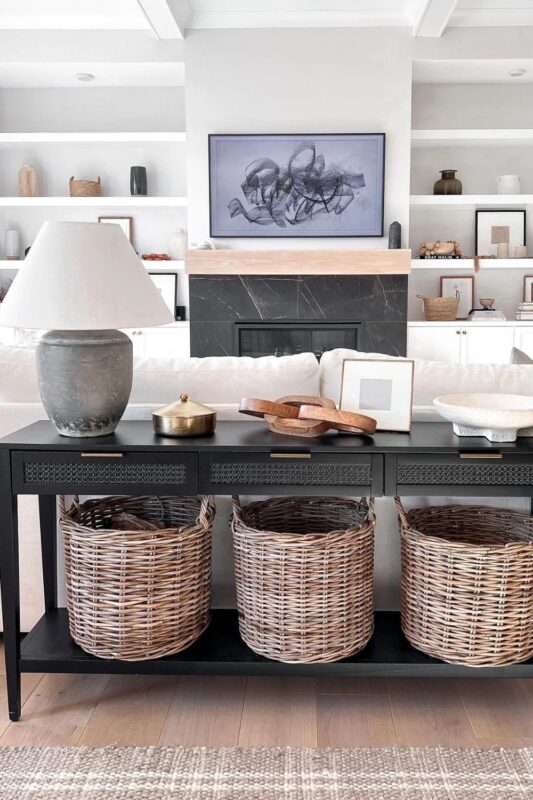
The darker tone creates contrast against lighter walls or upholstery to help define the layout of the room.
Choosing one with woven drawer fronts introduces texture that breaks up the solid color.
The woven detail adds depth without relying on extra decoration. It becomes part of the design rather than something you need to build around.
This makes the table itself the main feature, which simplifies the styling process.
On the surface, keep accessories minimal so the texture remains visible. A single lamp or a low arrangement works well here, giving the table purpose without covering its details.
Inside the drawers, everyday items can stay out of sight, which keeps the room looking organized.
This type of console suits a living room that needs structure. It provides storage, texture, and contrast in one piece, allowing the rest of the decor to stay relaxed.
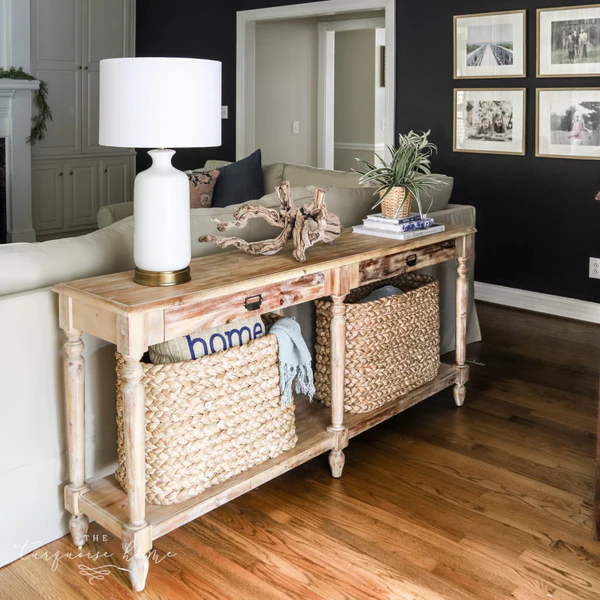
Balance Symmetrical Sofa Table with 2 Lamps and 2 Baskets
A symmetrical setup behind the couch creates a sense of order that can make the entire living room look more put together.
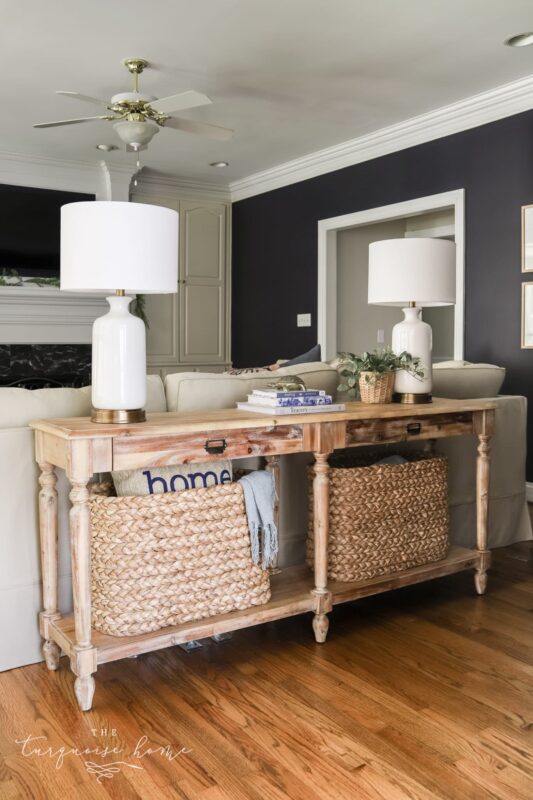
Start with a long, narrow table that aligns with the back of the sofa. Place a matching lamp on each end to frame the space and provide even lighting.
Below the table, two baskets can sit side by side. They offer practical storage for throws, magazines, or everyday items, which keeps clutter off the main surfaces.
Their placement also reinforces the structure of the arrangement.
The center of the table can stay simple. A small stack of books or a low decorative piece works well, as long as it doesn’t compete with the lamps.
The goal is to maintain a clear layout where each element has a defined role.
This approach works especially well in open-plan spaces. It creates a visual boundary behind the sofa while keeping everything accessible.
Symmetry brings a sense of rhythm to the room, making it easier for the eye to follow the layout from one side to the other.
Statement Mirrors Above the Table
A table behind the couch becomes far more impactful when paired with a large mirror on the wall above it.
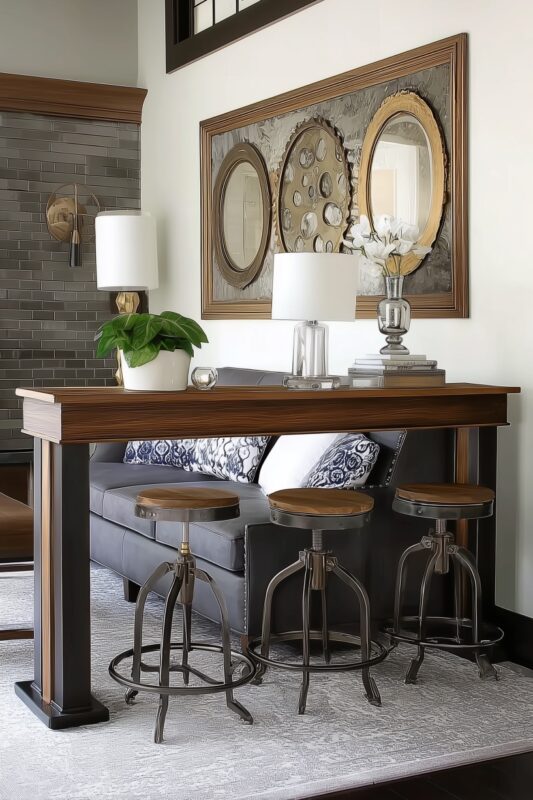
The mirror draws attention upward, which helps balance the horizontal line created by the sofa and table. It also reflects light, making the room appear more open.
Choose a mirror with a distinct frame to give the setup character. Whether it’s arched, rectangular, or slightly ornate, the shape plays a key role in how the space is perceived.
The frame can echo other finishes in the room, tying everything together.
On the table itself, keep the arrangement low so the mirror remains the focal point. A few objects placed with intention will support the look without taking attention away from the wall feature.
This combination works well in smaller living rooms where every element needs to serve more than one purpose.
The mirror expands the sense of space, while the table provides a surface for daily use, creating a practical setup.
Arrange Gold Accents for Refined Touch
Gold accents can shift the look of a table behind the couch, giving it a more polished edge. The key is to use them sparingly so they stand out in a natural way.
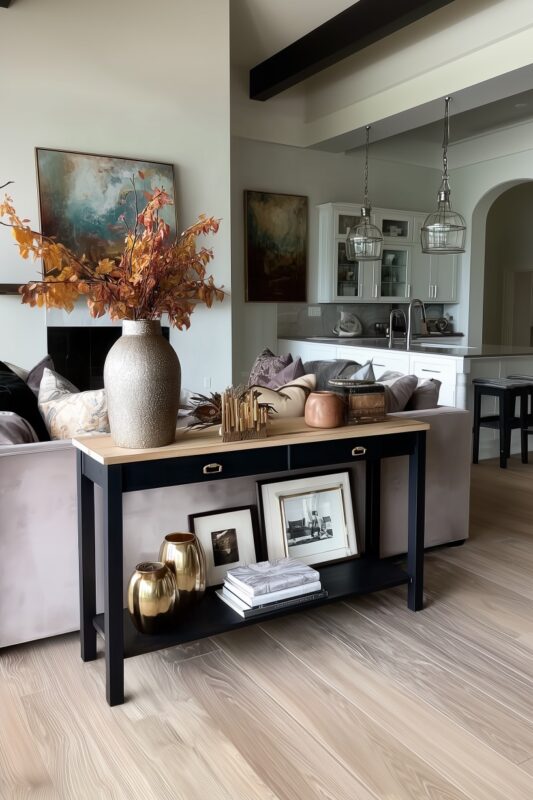
A few pieces, such as a tray, a small sculpture, or a lamp base, can introduce this finish without dominating the space.
Pair these accents with neutral tones to keep the overall setup grounded. Light wood, soft fabrics, or matte ceramics work well alongside gold, allowing the metallic elements to catch the light.
Placement matters here. Spacing each item with care helps avoid a cluttered appearance.
When objects sit too close together, the shine can feel excessive. Giving them room allows each piece to be appreciated on its own.
This approach suits a living room that leans toward a more refined style but still values comfort.
The gold details add interest and contrast, creating a setup that feels intentional without becoming overly decorative.
Showcase Stacked Table Books
Books bring structure to a table behind the couch in a way that feels natural and easy to adjust over time.
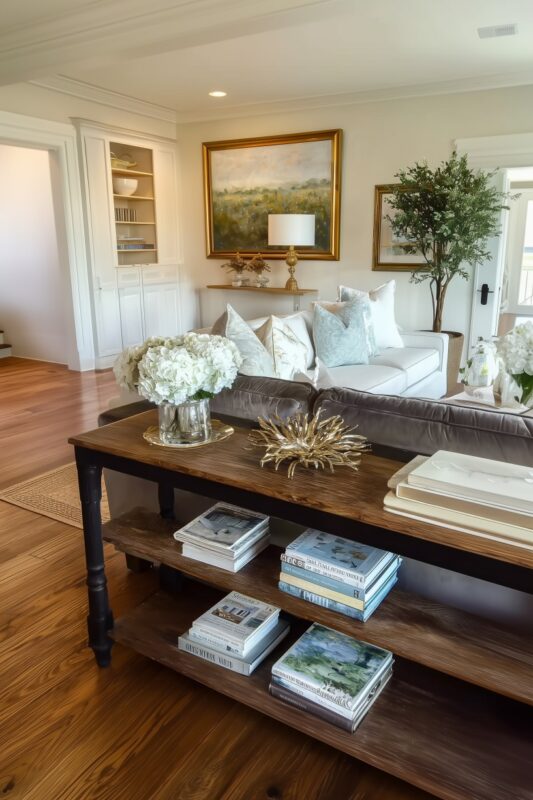
Begin with stacking a few large-format books directly on the surface. Vary the height slightly so the arrangement does not look rigid.
A horizontal stack works well as a base, especially when paired with one smaller object placed on top.
Choose books with covers that suit the room. Neutral tones keep things quiet, while bold covers can introduce contrast if the space needs it.
The content matters less than the presence they create. Books suggest daily use, which makes the setup more personal.
Leave space around each stack so the surface does not feel crowded. A table behind a couch often sits in a high-traffic area, so keeping it clear helps maintain a clean line across the room.
This approach works because it is flexible. You can swap titles, adjust the stacks, or add new pieces over time.
The result looks settled and practical, shaped by use rather than a one-time styling decision.
Display Modern Sculptures for an Artistic Edge
A few well-chosen sculptures can turn a simple console into a strong design feature. Focus on pieces with clear shapes that stand out from the background.
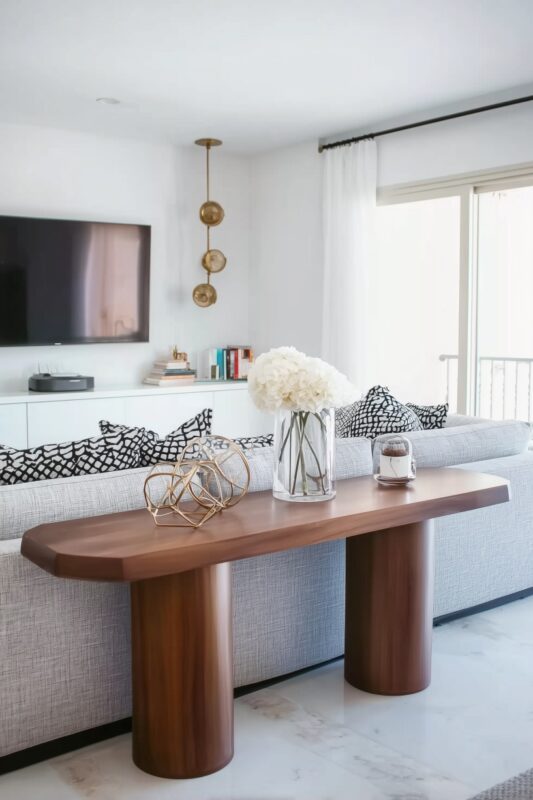
Smooth curves or sharp lines can shift the tone of the room depending on what you choose.
Placement matters more than quantity. One larger sculpture can carry the entire setup, especially if it sits slightly off-center.
Smaller pieces can work as long as they are spaced properly. Giving each object enough room keeps the arrangement from looking cluttered.
Materials play a big role here. Metal, stone, or ceramic finishes add depth through their surface quality. Light interacts differently with each one, which creates subtle variation across the table.
This setup suits a space that leans toward a more curated look. The sculptures act as focal points, drawing attention.
Use Natural Materials and Earthy Tones
A table behind the couch can connect the room to natural elements through material choice alone.
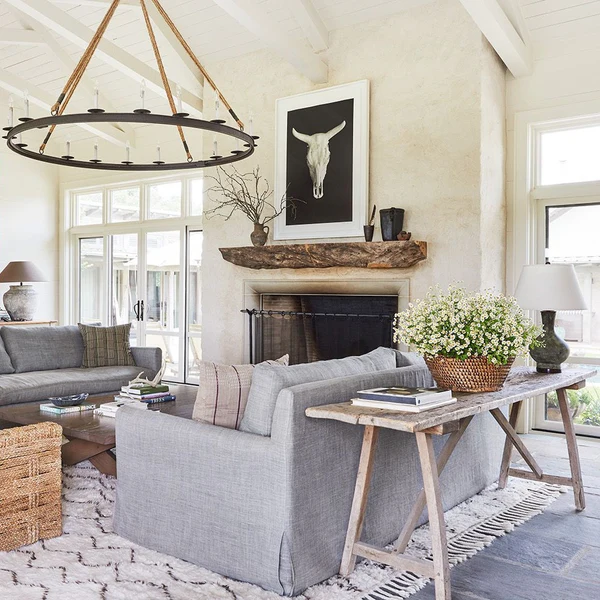
Wood, clay, linen, and stone introduce texture that feels organic and steady. These materials do not rely on bright color or heavy decoration.
Stick to tones that echo the natural world. Soft browns, muted greens, and warm neutrals create a palette that settles easily into most interiors. This keeps the setup cohesive without needing exact matches across every piece.
Layering different surfaces adds depth. A wooden table paired with a ceramic vase or a linen runner creates contrast through texture rather than color.
Each element contributes to the overall look in a quiet way.
Keep the arrangement simple so the materials remain visible. Too many objects can distract from their natural character.
This approach works best when each piece has enough space to be noticed. The result is steady, balanced, and easy to live with over time.
Decorative Woven Boxes or Baskets Under the Table
The space beneath a table behind the couch often goes unused, yet it offers a practical opportunity for storage.
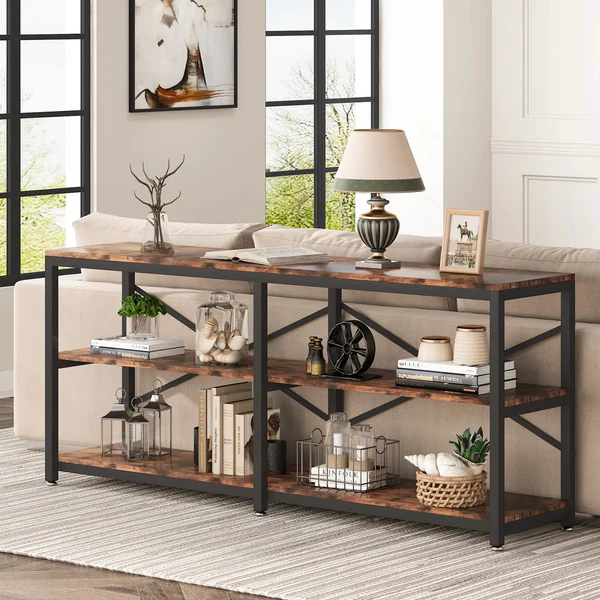
Woven boxes or baskets fit neatly underneath and help keep everyday items out of sight. They also add texture that complements the surface above.
Choose baskets that suit the size of the table so they slide in easily without crowding the area.
Their shape should align with the table legs to keep the overall layout clean. This creates a sense of order that carries through the entire setup.
The woven material introduces a softer element that contrasts with wood or metal. It adds depth at a lower level, which balances the visual weight of objects placed on top.
This solution works well in living rooms where storage is limited. It keeps the area tidy while still contributing to the overall design.
The table becomes more than a display surface, offering both function and visual interest in one simple adjustment.
Mix and Match Textures, Colors, and Patterns
A table behind the couch can reflect personality through a mix of textures and finishes.

Instead of matching every piece, combine items that differ in material or tone. This creates variation that keeps the setup interesting from every angle.
Start with a base layer, such as the table itself or a runner, then build upward with objects that contrast in surface or shape.
A smooth ceramic piece next to a rougher material introduces depth. Pattern can enter through smaller details like books.
Spacing plays a key role here. Each item should have enough room so the differences stand out clearly. When objects sit too close, the mix can lose its impact.
This idea works best when it develops over time. New pieces can be added gradually, allowing the table to evolve.
Include High-End Materials and Finishes
A table behind the couch can shift the entire tone of a living room when higher-quality materials come into play.

Think about surfaces that carry weight through their finish. Marble, solid wood, brushed metal, or glass with clean edges can instantly elevate the setup.
These materials do not need extra decoration to stand out. Their presence does the work.
Focus on a few key pieces rather than filling the table. A lamp with a stone base or a tray with a metallic finish can introduce contrast in a controlled way.
Placement should feel intentional, with enough space around each item so the material can be appreciated on its own.
The finish matters just as much as the material. A matte surface creates a quieter look, while a reflective one draws attention through light.
Mixing the two can add depth without making the arrangement busy.
This approach suits a space that leans more refined. The table becomes a strong visual anchor, built through material choice instead of excess styling.
Incorporate Antique Pieces
Antique pieces bring a sense of history that newer items often lack. A table behind the couch offers a perfect spot to introduce them in a controlled way.
A small wooden box, an aged frame, or a worn decorative object can add layers that feel collected over time.
These items do not need perfect condition to work. Slight wear, faded finishes, or small imperfections give them presence.
They suggest a past life, which adds interest without requiring explanation.
Keep the surrounding elements simple so the antique pieces remain the focus. When too many strong items sit together, the impact can get lost. A balanced arrangement allows each object to stand clearly.
This setup works well in living rooms that lean toward a more personal style.
The table becomes a place where older pieces find a new role, adding depth through contrast with newer surroundings.
Mix Animal Print Stools with Soft Surroundings
Adding stools behind a couch can introduce both function and visual interest, especially when they carry a patterned finish.
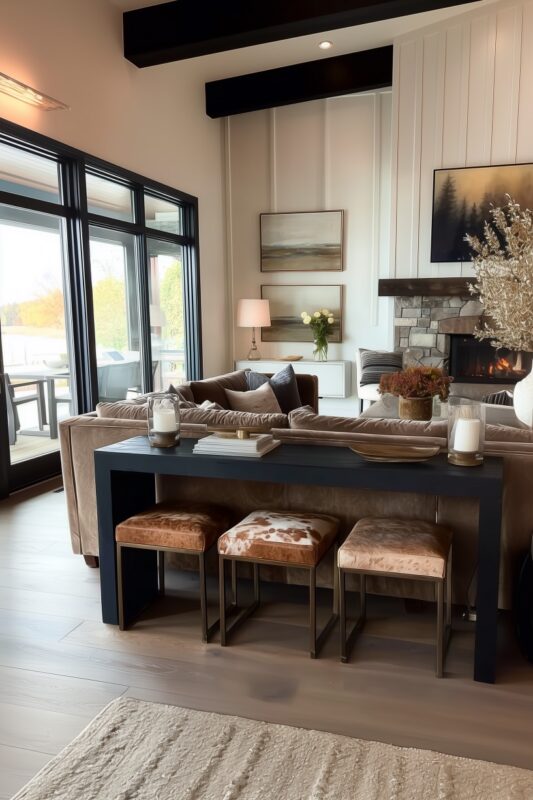
Animal prints bring movement into the space through their natural variation. Used in small doses, they can shift the energy of the room.
Place one or two stools neatly under the table so they remain accessible. Their position should feel intentional, not tucked away as an afterthought.
The pattern becomes visible as you move through the space, adding a layer that changes with perspective.
Balance the print with quieter elements above. A simple tabletop arrangement keeps the focus from becoming scattered.
The contrast between the bold pattern below and the calmer surface above creates a strong visual rhythm.
It works well for those who want something less predictable. The stools add personality and function, offering extra seating when needed while doubling as a design feature.
Lean Framed Art Casually on the Lower Shelf
The lower shelf of a sofa table often gets overlooked, yet it can hold more than storage.
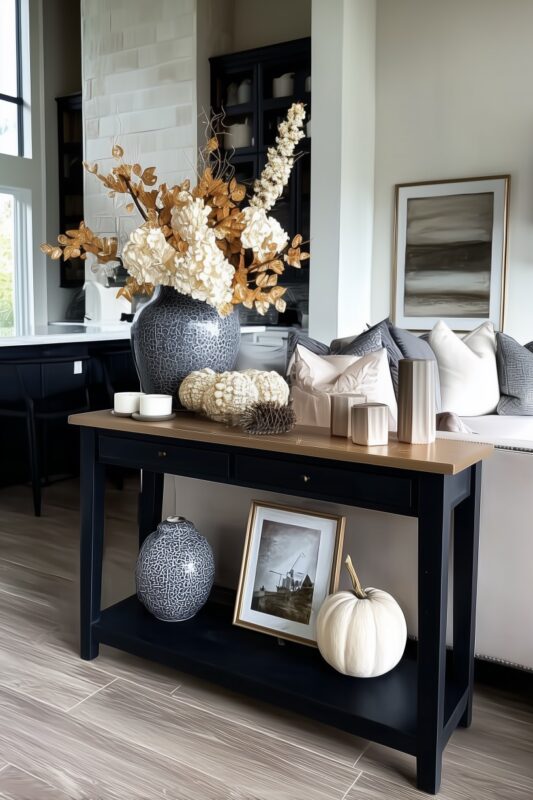
Leaning framed art along this surface creates a layered look that feels easy to adjust over time.
Rather than hanging everything on the wall, this approach keeps artwork within reach and easy to rearrange.
Choose frames that vary slightly in size or finish so the display does not look too uniform. Position them so they overlap just enough to create depth.
The angle of the lean adds a relaxed quality that contrasts with more formal wall arrangements.
Keep the top of the table relatively simple to avoid competing focal points. This allows the lower shelf to carry more visual weight without making the overall setup feel crowded.
This method suits a living room that values flexibility. Pieces can be swapped or moved without tools, allowing the space to evolve naturally.
FAQs
What should I put on a table behind a couch?
Keep it simple. A lamp, a few books, or one decorative piece is often enough. The goal is to add function and a bit of character without crowding the surface.
How tall should a sofa table be?
It should sit close to the height of the sofa back or slightly lower. This keeps the proportions balanced and prevents the table from standing out too much.
Can a sofa table be used for storage?
Yes, especially if it has shelves or drawers. Baskets, boxes, or trays can hold everyday items while keeping the space looking neat.