11 Long Narrow Living Room Layout Ideas (And What To Avoid)

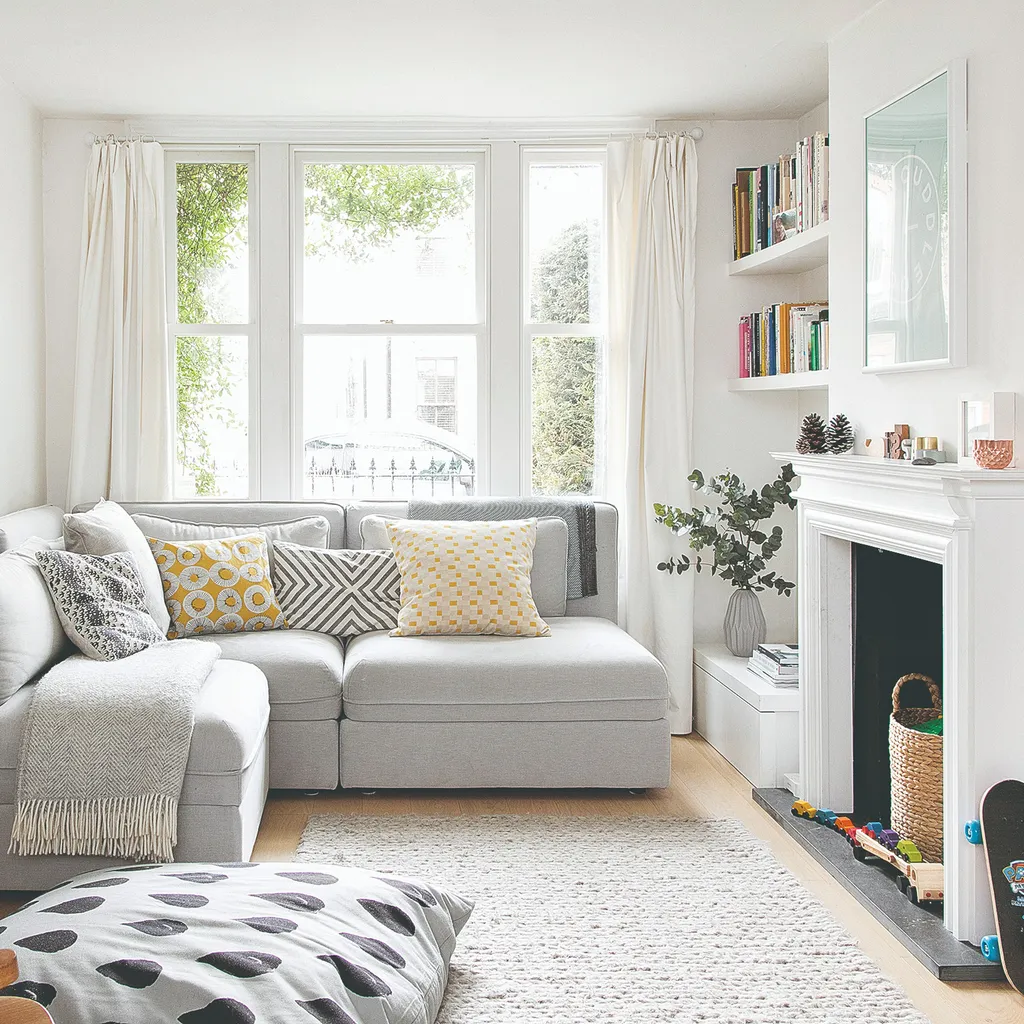
A long, narrow living room can be tricky to arrange. I am saying this because I have been there.
The good news is that a few smart adjustments can completely change how the space works.
With the creative design choices, creating a room that functions well is very possible.
Embrace these 11 tips to turn an awkward space into one that works for everyday living.
What to Consider for a Long, Narrow Living Room
You should consider these factors first:
- Room Proportions. The balance between length and width will guide your layout, including whether you can create separate zones or need a more open arrangement. It also affects the size and type of furniture that will fit comfortably.
- Traffic Flow. Movement through the room should feel natural and unobstructed. Pay close attention to doorways, windows, and built-in features when arranging furniture. A clear path prevents space from feeling cramped.
- Purpose of the Space. Think about how the room will function day to day. It may serve as a lounge, a workspace, or even a combined living and dining area. Your layout should reflect these needs while keeping the overall design cohesive.
Tips For Designing A Long Narrow Living Room
Get the Right Sized or Irregular Rug
A long narrow living room can look awkward if the rug does not match the proportions of the space.
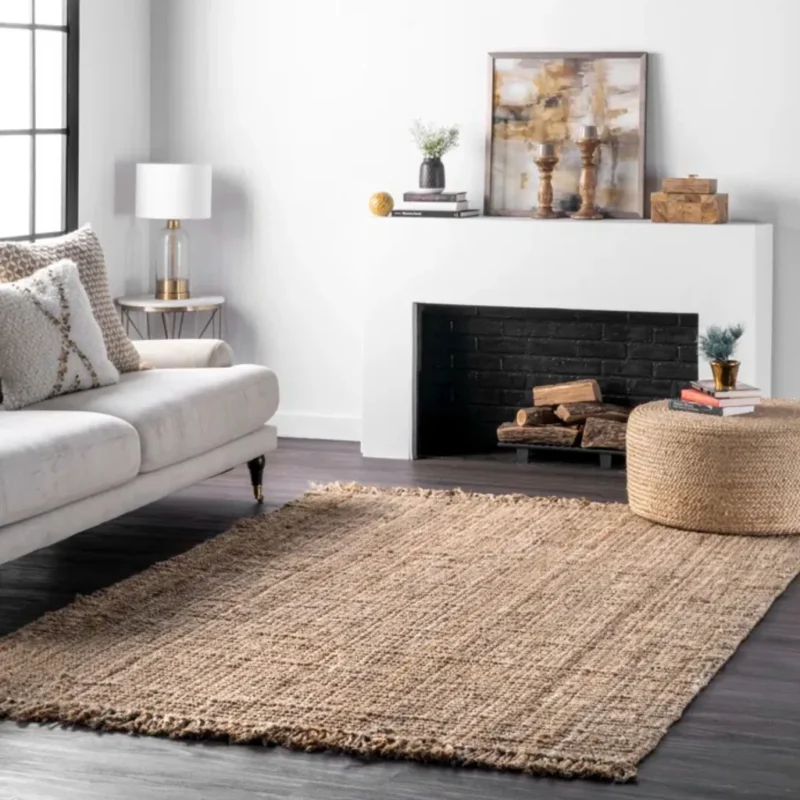
Many people choose a standard rectangular rug, but that can sometimes emphasize the length instead of balancing it.
An oversized rug can help anchor the seating area and visually widen the room. When the front legs of your sofa and chairs sit on the rug, the layout starts to look connected.
Irregular rugs can also shift the entire look of the space. Shapes that break away from straight lines can soften the narrow layout and draw attention away from the room’s length.
Placement matters just as much as size. Position the rug to define your main seating area rather than centering it in the room. This helps guide how the space is used.
Color should support the rest of the room. A rug with subtle variation can add interest.
Pro Tip: Choose a rug that extends beyond your main seating area so it anchors the space and reduces the tunnel-like effect.
Mount Your TV on the Wall
Wall-mounting your TV can free up valuable floor space in a long narrow living room. Bulky media units often take up width that the room cannot afford to lose.
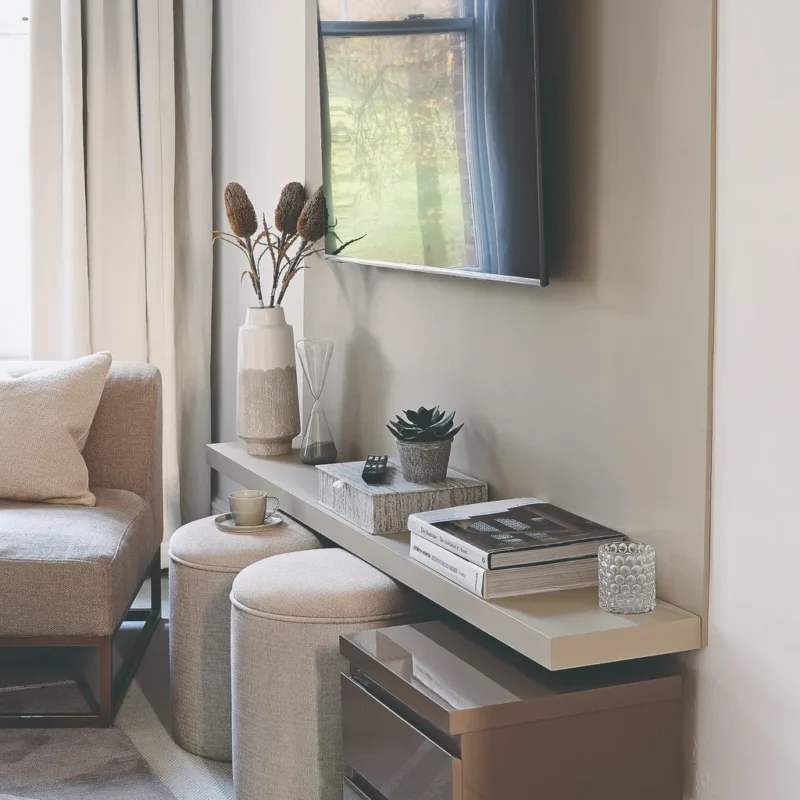
By placing the TV on the wall, the layout opens up and gives you more flexibility with furniture placement. This can make the room appear less crowded, hence easier to move through.
The height of the TV should align with your seating for comfortable viewing. A well-placed screen can also act as a visual anchor for the room.
You can keep the area below simple with a slim console or floating shelf. This keeps the setup clean while still providing storage.
A mounted TV also helps maintain clear sightlines, which is important in a narrow space where visual clutter can quickly build up.
Pro Tip: Center the TV along the main seating line so it supports the layout and keeps the room visually balanced.
Prefer a Sleek Couch Style
In a long narrow living room, the style of your couch plays a major role in how the space functions. A bulky or overstuffed sofa can restrict movement.
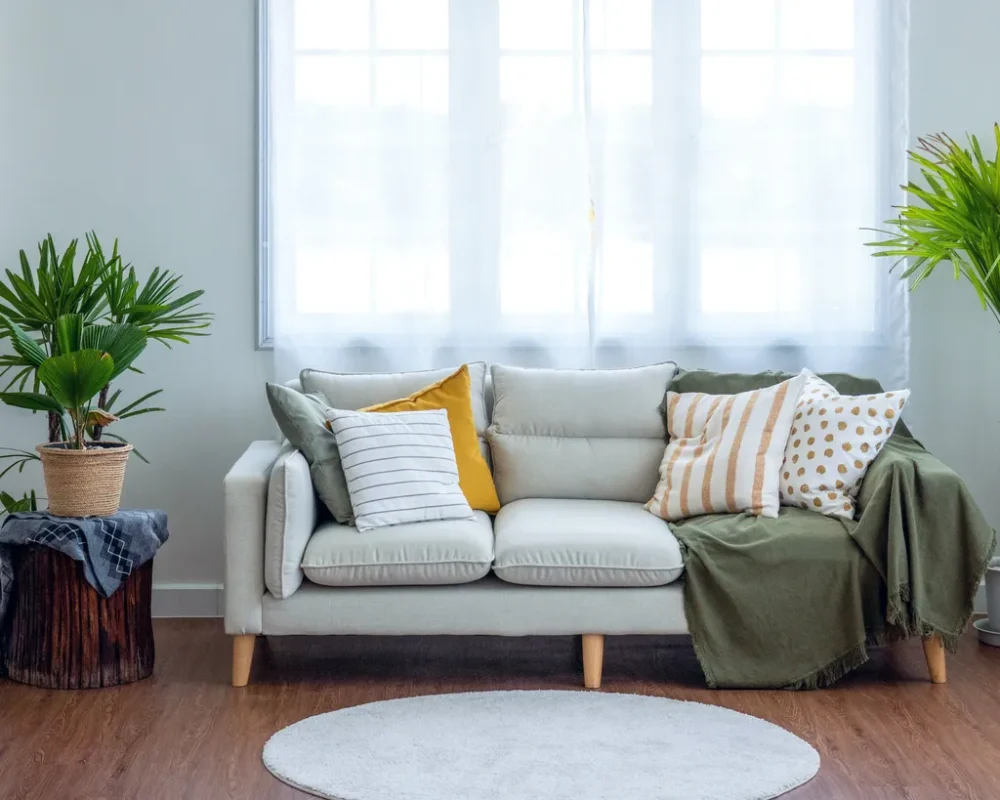
A sleek couch with clean lines allows the room to breathe. Low arms, slim legs, and a simple profile help reduce visual weight.
This type of seating keeps the layout open and makes it easier to arrange other furniture around it. It also helps maintain a clear pathway through the room.
Choosing the right scale is just as important. A couch that fits the length of the wall without overwhelming it can improve the overall balance.
Neutral upholstery often works well, as it keeps the focus on the layout rather than the furniture itself.
Pro Tip: Select a sofa with visible legs to create a sense of openness and prevent the room from looking too heavy.
Find a Focal Point to Anchor the Space
A long narrow room can feel directionless if there is no clear focal point. Creating one helps organize the layout and gives the eye a place to settle.
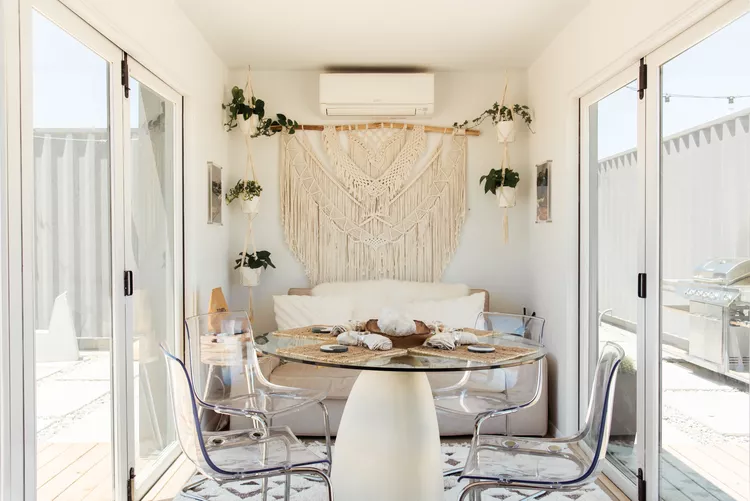
This focal point could be a fireplace, a large piece of artwork, or even the TV wall. Once established, arrange your seating around it to create a sense of purpose.
Placing furniture with this anchor in mind can break up the length of the room. It also helps define where the main living area begins and ends.
Keep surrounding décor simple so the focal point stands out. Too many competing elements can weaken its impact.
Lighting can also support this feature. A well-lit focal point boosts its role in the layout.
Pro Tip: Choose one strong focal point and arrange your main seating to face it, creating a functional layout.
Create Defined Zones
Dividing a long narrow living room into zones can make it easier to navigate. Instead of treating it as one continuous space, break it into smaller sections.
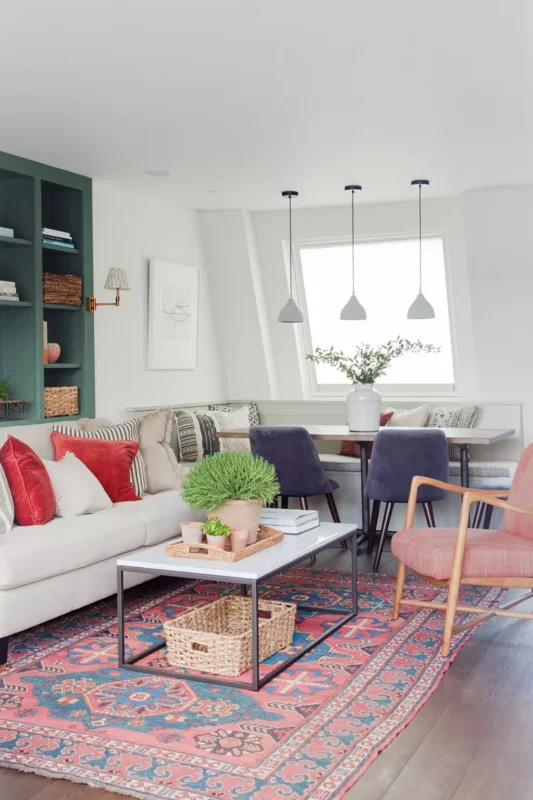
You might have a seating area at one end and a reading corner or workspace at the other. This approach helps the room serve multiple purposes without feeling cramped.
Furniture placement plays a key role here. A sofa can act as a divider, while a rug can define a specific zone.
Spacing between areas should remain clear so movement through the room stays smooth. Each section should feel connected but still have its own purpose.
Using different lighting or textures in each zone can help distinguish them further without making the space look disconnected.
Pro Tip: Use rugs or furniture placement to visually separate zones while keeping a clear path through the room
Pull Furniture Slightly Away from the Walls
It might seem logical to line everything up against the walls in a narrow room, but that makes the space look longer. Pulling furniture inward, even by a few inches, can change how the room reads.
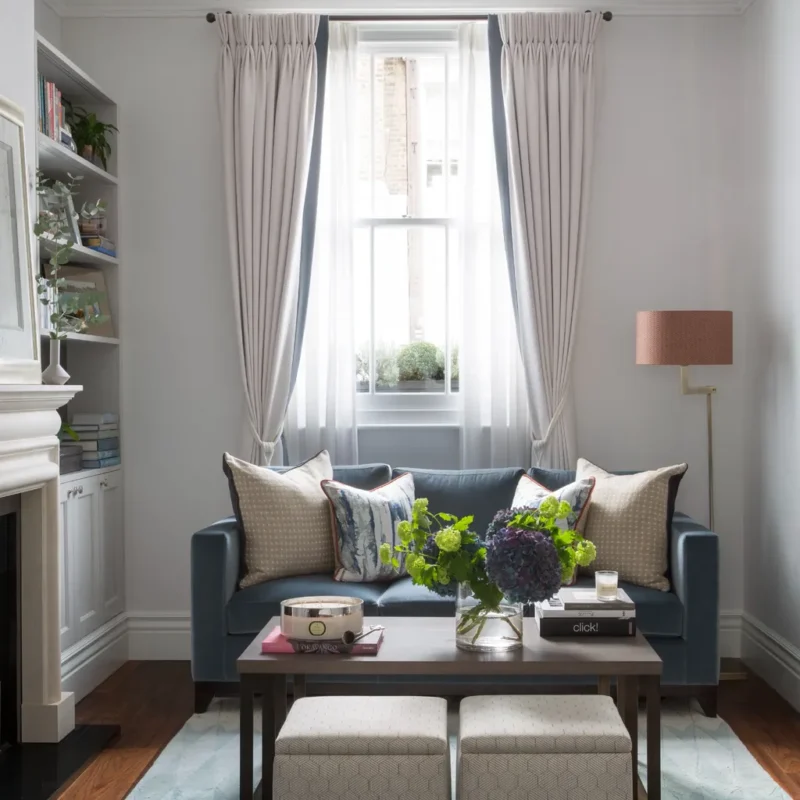
A sofa placed slightly off the wall creates a softer boundary and allows the layout to form a more intentional seating area.
This small shift can also help break the rigid, hallway-like effect that narrow rooms tend to have.
Floating furniture also opens up opportunities for better arrangement. You can add a slim console behind the sofa or create a walkway that feels more natural.
The room begins to look designed instead of just filled. Each piece has a place that supports the overall layout.
Spacing should remain practical, though. You still want enough room to move comfortably from one end to the other.
Pro Tip: Leave a few inches between furniture and walls to make the room appear less confined.
Use Light Wall Colors to Open Up the Space
Wall color plays a major role in how a long narrow room is perceived. Lighter shades can help reflect natural light and reduce the sense of tightness.
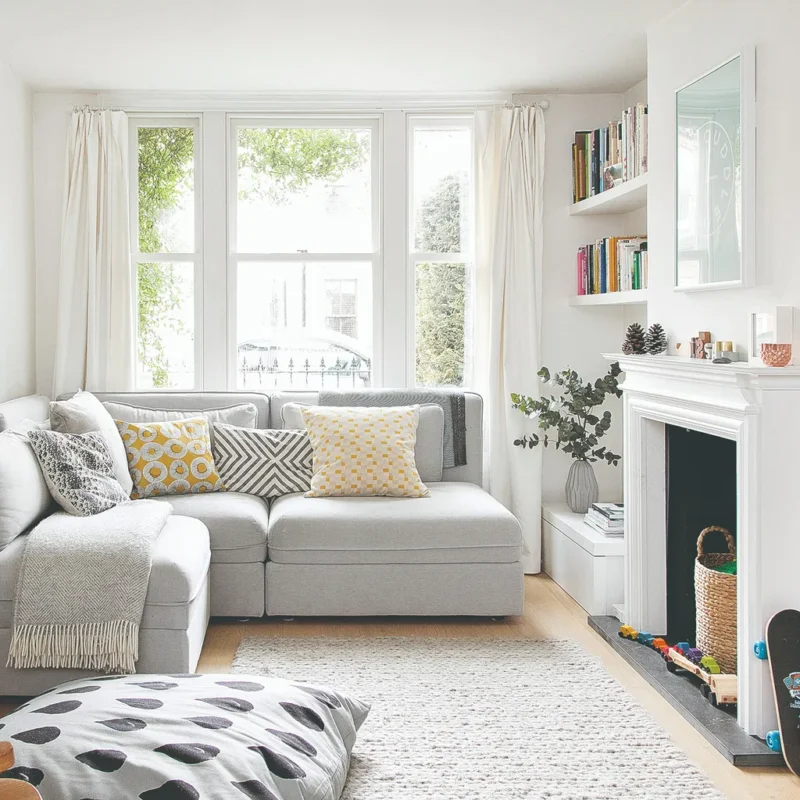
Soft neutrals, pale grays, or warm off-whites can brighten the room and make it appear open. These tones also provide a clean backdrop for furniture and décor.
A consistent wall color across the space helps avoid visual breaks that can make the room look even longer. Smooth transitions keep the eye moving naturally.
If you want to add interest, you can introduce subtle texture through finishes or wall treatments.
Pro Tip: Choose a light tone with a warm undertone to keep the room bright while maintaining a comfortable atmosphere.
Choose the Right Furniture Pieces for Scale
Furniture selection can make or break a long narrow living room. Pieces that are too large can crowd the space, while pieces that are too small may not define it properly.
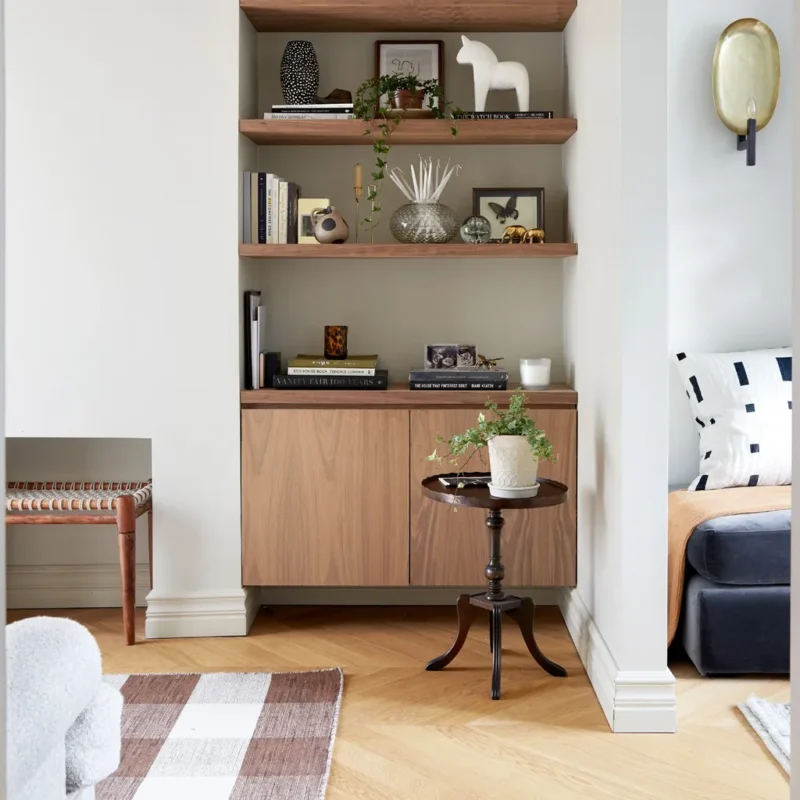
Look for furniture that fits the proportions of the room. Slim profiles, clean lines, and compact designs tend to work best.
Multi-functional pieces can also help maximize space. A storage ottoman or a narrow console can serve more than one purpose without taking up extra room.
Spacing between items should remain consistent so the layout looks balanced. Each piece should have enough room to stand on its own.
The right combination creates a layout that is practical for everyday use.
Pro Tip: Measure your space carefully before buying furniture to ensure each piece fits comfortably within the layout.
Avoid Symmetrical Arrangements for Better Flow
Symmetry can sometimes make a narrow room look even structured and rigid. Breaking away from perfect balance can introduce a relaxed layout.
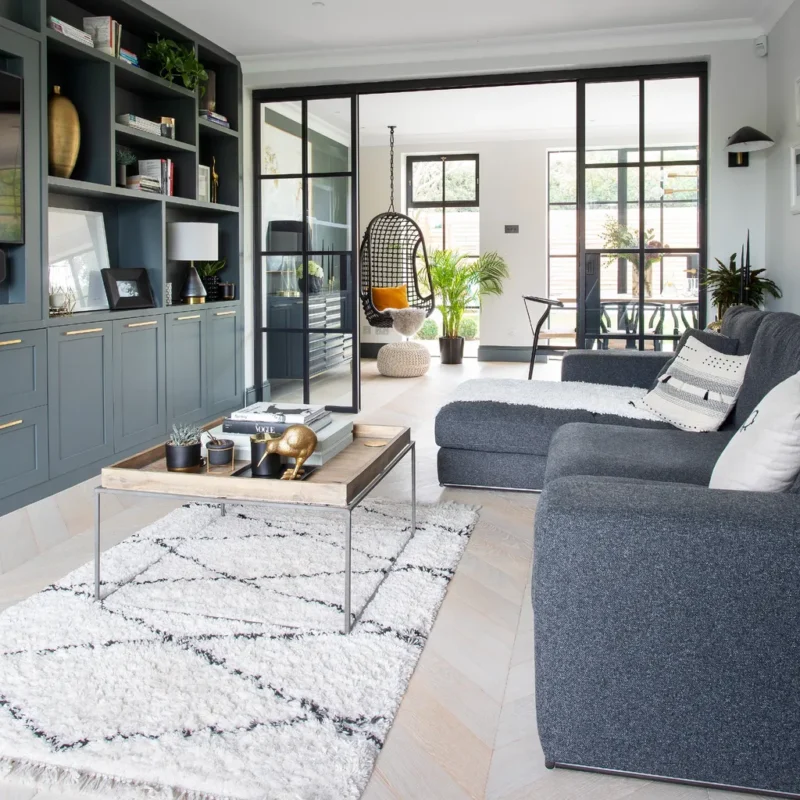
Instead of placing identical items on both sides, try offsetting furniture slightly. A chair on one side of the sofa paired with a side table on the other can create a more dynamic setup.
This approach helps the room feel adaptable. It also allows you to use the space in a way that suits your daily routine.
Visual balance still matters, but it doesn’t need to come from matching pieces. It can come from how elements relate to each other across the room.
A less structured layout often works better in a space that already has strong linear proportions.
Pro Tip: Focus on visual balance instead of exact symmetry to create a layout that feels natural and flexible.
Use an L-Shaped Sofa to Define the Layout
An L-shaped sofa can help break up the long line of a narrow living room. Its shape naturally creates a corner, which can define a seating area clearly.
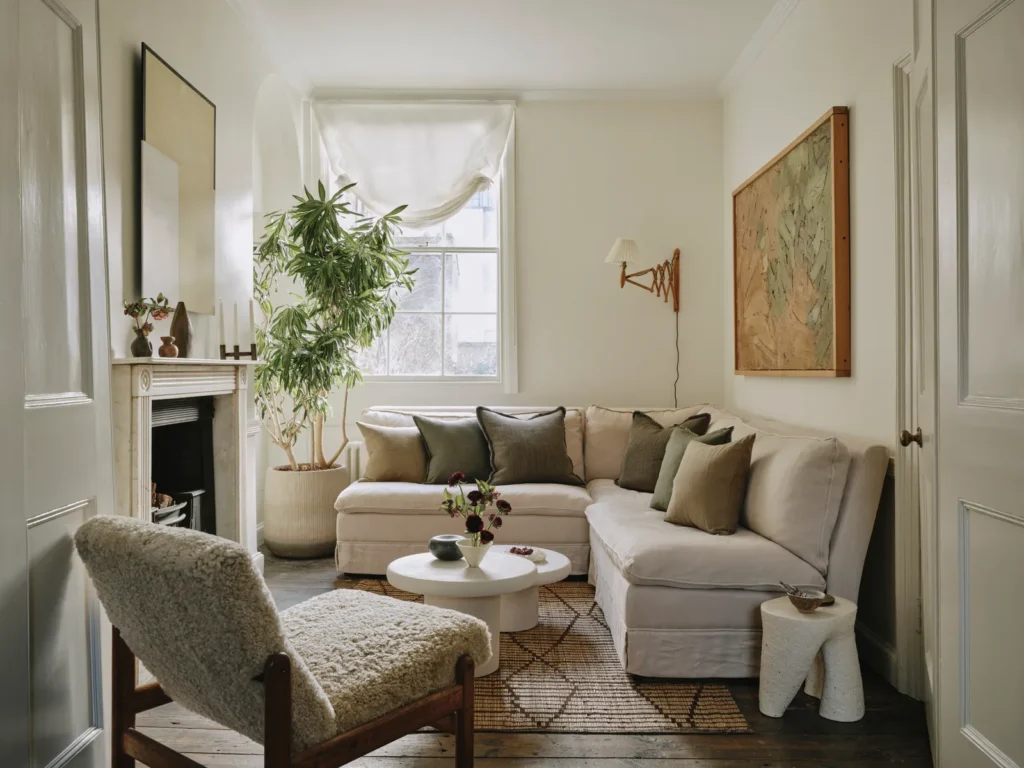
Placed strategically, it can separate the room into sections. One side can face the main focal point, while the other helps form a boundary.
This type of sofa can also provide more seating without needing multiple pieces of furniture. That keeps the layout more efficient.
The longer side should align with the room’s length, while the shorter section helps soften the straight lines.
With the right placement, the room starts to feel more structured and easier to use.
Pro Tip: Place the L-shaped sofa so it anchors one side of the room while leaving enough space for movement around it.
Go with Wall Sconces to Save Space
Lighting choices can impact how much usable space you have in a narrow living room. Floor lamps and table lamps can take up valuable room that could be used for movement.
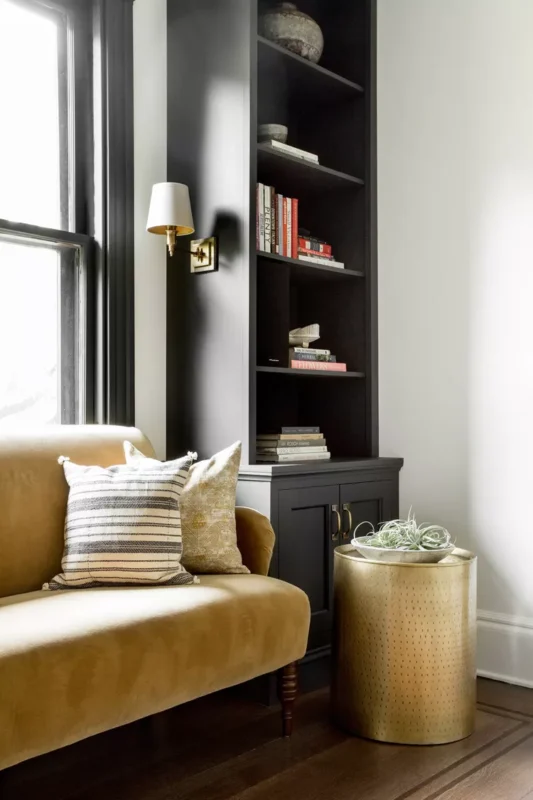
Wall sconces offer a practical alternative. They provide light at eye level without occupying floor or table space.
Placed along the walls, they can help distribute light evenly across the room. This reduces shadows.
Their design can also contribute to the overall style. Simple or minimal fixtures tend to blend in, while decorative ones can add character.
Using wall-mounted lighting allows furniture to be arranged more freely.
Pro Tip: Install wall sconces at a height that complements your seating area to create balanced and functional lighting.
FAQs
What’s the best style of sofa for a narrow living room?
A slim, low-profile sofa with clean lines works best. It not only saves space but keeps the room from looking crowded as well.
How to make a long, narrow living room cozy?
Use rugs, warm lighting, and layered textures to define zones and create a comfortable setting.
How do you make a narrow room feel wide?
Add mirrors to reflect light to open up the space. Using a mix of shapes and sizes can also make the room appear larger.