13 Stunning Living Room Ideas Featuring Dark Grey Couches

A grey couch can change the entire look of your living room, setting a strong base that’s easy to build around.
It gives you room to play with color, texture, and layout in a way that feels natural.
Small changes can shift the mood quickly, turning a simple setup into something that looks comfortable to spend time in.
Read these 13 dark grey couch living room ideas to achieve a living room that is thoughtfully arranged.
Ideas For A Living Room Featuring Dark Grey Couches
These many and not limited to:
Include Bold Accent Colors
A dark grey couch sets a strong base, but it can look flat if everything around it stays in the same tone.
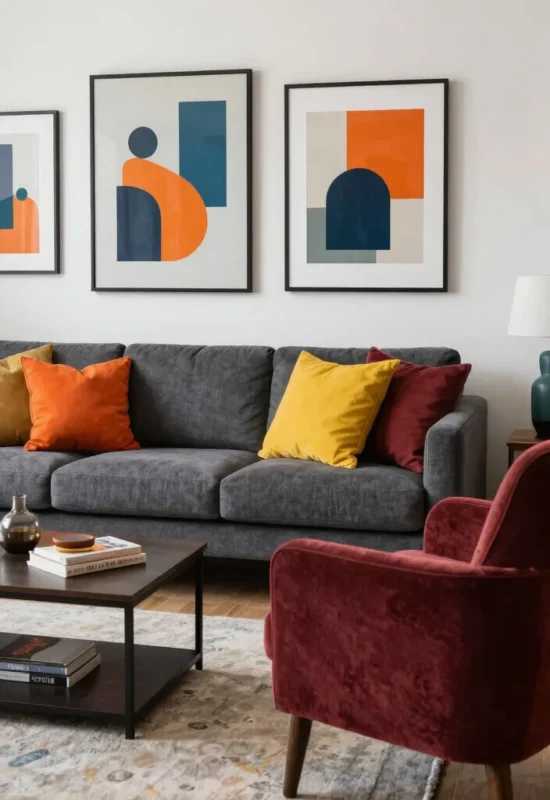
Adding bold accent colors brings energy into the room and helps break up the heaviness of the sofa.
Start small with cushions or a throw in a rich shade like mustard, deep blue, or rust. These touches stand out against grey and draw the eye without taking over the space.
You can carry that color into one or two other areas, such as a vase or a piece of décor on a nearby table. This creates a sense of connection across the room.
The goal is to create contrast that is intentional, not random. A few strong color moments can completely change how the couch sits within the space.
Pro Tip: Pick one bold color and repeat it in two spots so the room looks connected instead of scattered.
Avoid This: Avoid adding too many bright colors at once, as it can make the space look busy.
Add Personal Touches with Artwork
Artwork gives your living room a sense of identity and makes the space feel lived in. A dark grey couch provides a calm backdrop that allows art to stand out more clearly.

Large wall pieces above the couch can anchor the area and create a focal point. Smaller framed pieces can work as a grouped display if arranged with care.
Choose artwork that reflects your taste, whether it’s abstract prints, photography, or something more traditional.
Frame choice also plays a role. Wood, black, or metal frames can shift the tone depending on the look you want to achieve.
When placed thoughtfully, artwork adds depth and character to the room without needing extra decoration.
Pro Tip: Hang artwork at eye level above the couch to create a balanced and comfortable viewing height.
Avoid This: Avoid placing art too high, as it can disconnect it from the seating area.
Use Soft Fabrics to Balance the Look
A dark grey couch can sometimes come across as firm or structured. Soft fabrics help soften that impression and make the seating area more comfortable.

Layering throws and cushions introduces texture that contrasts with the smooth surface of the couch. Materials like cotton, wool, or linen can add variation.
A draped throw over one arm of the couch can make the setup look more relaxed. It also invites use rather than making the space look untouched.
Curtains and nearby upholstery can also support this idea. Keeping fabrics soft across the room helps everything connect naturally.
This approach makes the living room easier to enjoy on a daily basis.
Pro Tip: Use a mix of textures in your cushions to add depth without relying on bold patterns.
Avoid This: Avoid stiff or overly shiny fabrics, as they can make the space less comfortable.
Incorporate Plants (Greenery)
Plants can bring life into a room centered around a dark grey couch. The natural green tones create contrast and add a refreshing element to the space.

A tall plant beside the couch can frame the seating area and add height. Smaller plants on side tables or shelves can fill in empty spots.
The organic shapes of plants help soften the straight lines of furniture. This makes the room look more balanced and less rigid.
Choose plants that suit your lighting conditions so they stay healthy and easy to maintain.
Even a few well-placed plants can make the room look complete.
Pro Tip: Group two or three plants of different heights together to create a more natural arrangement.
Avoid This: Avoid scattering small plants all over the room, as it can make the space look cluttered.
Add a Decorative Rug For Warmth
A rug can anchor your dark grey couch and define the seating area. It adds warmth and helps connect all the elements in the room.
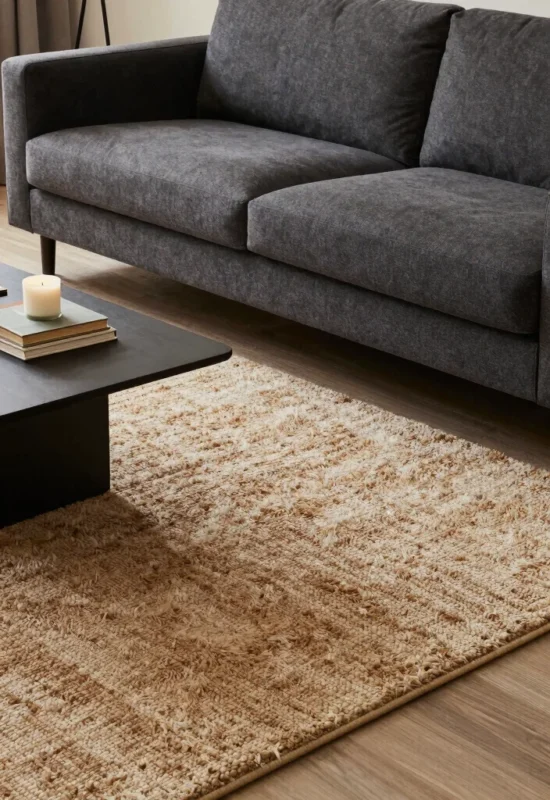
Choose a rug that contrasts slightly with the couch so it stands out. Lighter tones or subtle patterns often work well.
Size is important here. A rug that fits under the front legs of the couch and nearby furniture creates a more cohesive layout.
Texture also plays a role. A soft or woven surface adds comfort and breaks up harder flooring materials.
Pro Tip: Select a rug large enough to sit under key furniture pieces so the seating area is unified.
Avoid This: Avoid using a rug that is too small, as it can make the layout look disconnected.
Add Natural Wood Accents
A dark grey couch can sometimes lean a bit cool, especially in a room with similar tones. Natural wood accents help shift that balance by bringing warmth into the space in a simple, grounded way.
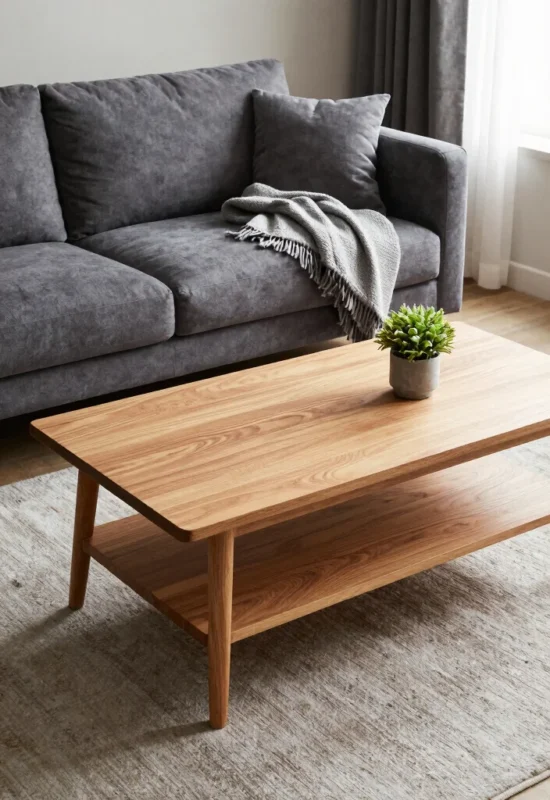
A wooden coffee table or side table can sit next to the couch and soften its presence. Even smaller details, like a wood tray or shelving, can make a difference.
Lighter woods can brighten the room, while deeper tones create a richer look. The key is to choose one direction and repeat it in a few places so the space stays consistent.
Wood also pairs well with other materials like fabric and metal, helping the room look layered instead of flat.
When used thoughtfully, these accents help the couch blend into the room instead of standing out too harshly.
Pro Tip: Repeat the same wood tone in at least two areas to create a more connected look.
Avoid This: Avoid mixing too many different wood finishes, as it can make the space look uncoordinated.
Create Contrast to Define the Space
A dark grey couch stands out more when the surrounding elements provide contrast. This helps define the seating area and keeps the room from looking too uniform.
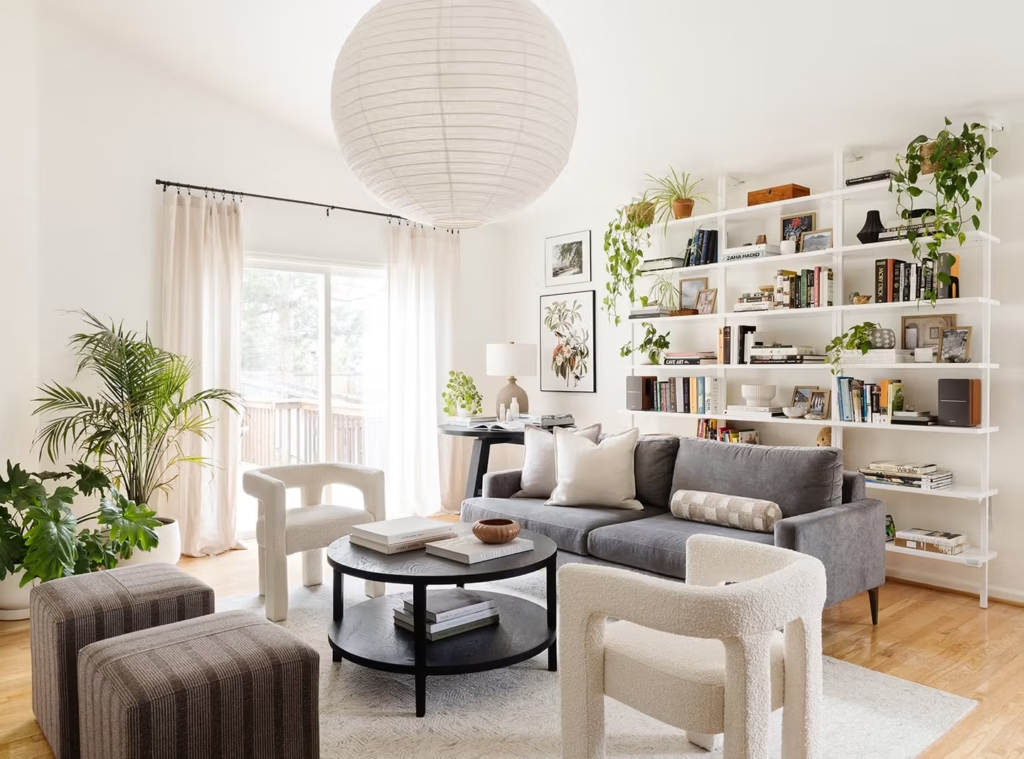
Lighter walls or a soft-toned rug can help lift the overall look. This makes the couch appear more intentional instead of blending into the background.
Contrast can also come from texture. Pairing smooth upholstery with rougher materials like woven fabrics or wood adds variety.
The idea is to give the eye something to move across. When everything sits in the same tone, the space can look flat.
Used carefully, contrast helps each piece stand out in a clear and balanced way.
Pro Tip: Use one main area, such as the wall behind the couch, to introduce contrast for a stronger visual effect.
Avoid This: Avoid creating too many contrasting areas, as it can make the room disjointed.
Choose Pillow-Top Style Sofas
A pillow-top style sofa brings a softer, more relaxed look to a dark grey couch setup.
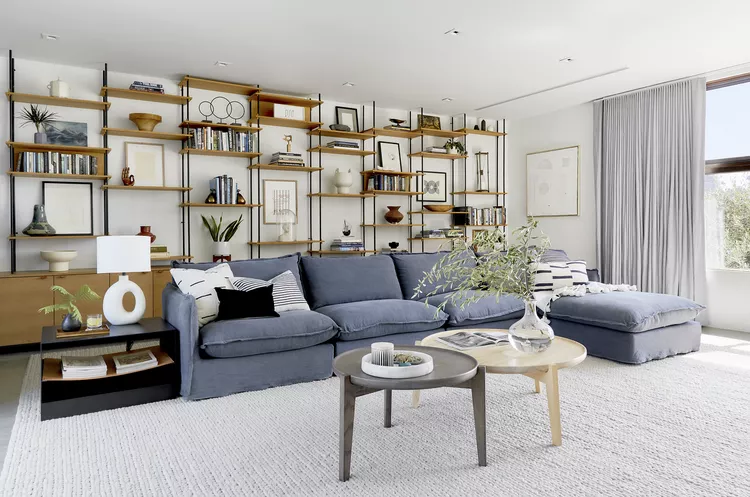
The added cushioning changes the overall appearance and makes the seating area look more inviting.
This style works well in living rooms where comfort is a priority. The plush structure breaks away from sharper, more structured designs.
It also pairs nicely with layered textiles like throws and cushions. These additions blend naturally with the softness of the sofa.
The result is a space that looks easy to use and not overly styled. It encourages people to sit down and stay awhile.
Even with a darker color, the extra cushioning helps the couch look less heavy.
Pro Tip: Pair a pillow-top sofa with simple décor so the softness remains the main focus.
Avoid This: Avoid overloading the couch with too many cushions, as it can reduce usable seating space.
Use a Low Grey Sofa
A low-profile dark grey sofa can change the entire feel of a living room. Its height creates a more open look, making the space appear larger and less crowded.
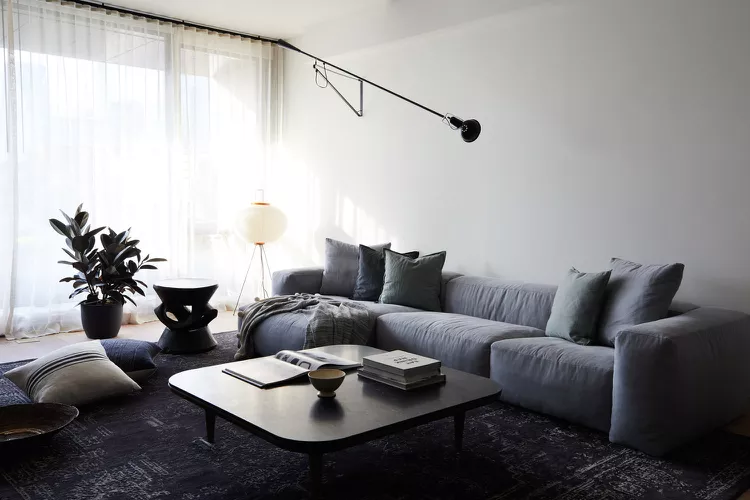
This style works especially well in rooms with clean lines and minimal décor. The lower seating keeps the focus on the overall layout rather than a single bulky piece.
It also allows other elements, like artwork or windows, to stand out more clearly.
Pairing a low sofa with a simple coffee table keeps the look balanced.
This approach works well for anyone who prefers a clean and uncluttered setup.
Pro Tip: Keep surrounding furniture low as well to maintain a consistent visual line across the room.
Avoid This: Avoid pairing a low sofa with tall, bulky furniture, as it can disrupt the balance of the space.
Try Dark Wood
Dark wood can complement a dark grey couch by creating a deeper, more cohesive palette. Together, they form a strong base for the living room.
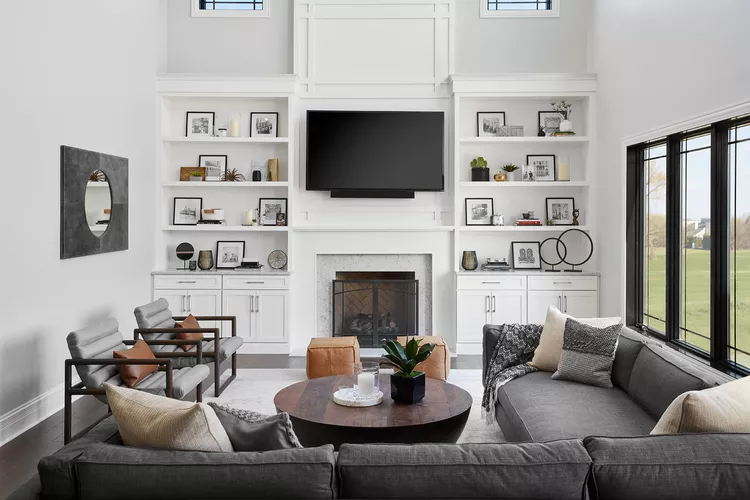
A dark wood coffee table or media unit can tie the space together. These pieces echo the depth of the couch and give the room a more defined structure.
To keep the room from looking too heavy, it helps to include lighter elements like soft textiles or neutral walls.
This balance allows the darker tones to stand out while keeping the space comfortable to spend time in.
When used carefully, dark wood adds richness and helps the room look more complete.
Pro Tip: Pair dark wood with lighter accents to maintain balance and prevent the room from looking too dense.
Avoid This: Avoid using dark tones on every surface, as it can make the space feel closed in.
Cozy Lighting Solutions
Lighting shapes how your living room looks once the sun goes down, and it can completely change how a dark grey couch comes across.
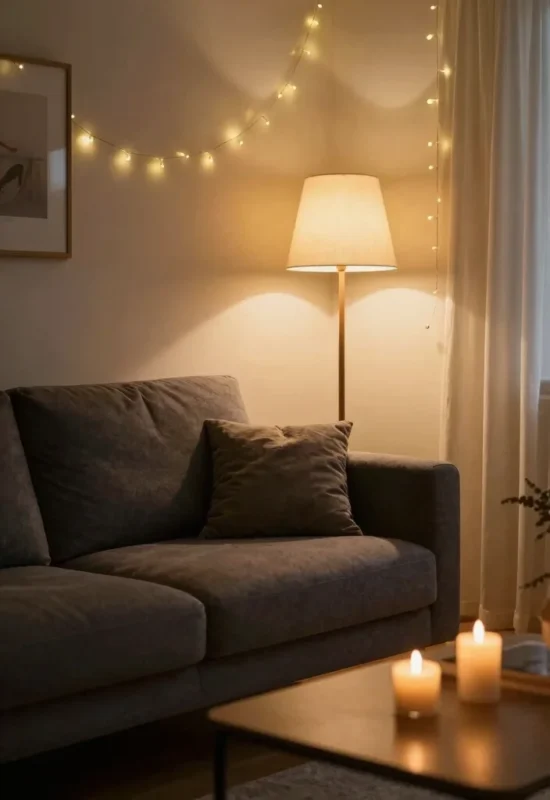
The right setup softens the space and highlights key areas around your seating.
A floor lamp placed beside the couch creates a quiet corner for reading or relaxing. Table lamps on side tables can add another layer, giving the room a steady glow instead of one strong overhead source.
Warm-toned bulbs tend to work best here. They soften the darker shade of the couch and create a calmer setting in the evening.
Placement matters just as much as the fixtures themselves. Light should fall where you spend time, not just fill the room from above.
A thoughtful lighting plan helps the couch blend naturally into the space instead of standing out too sharply.
Pro Tip: Use two light sources at different heights to create a balanced glow across the seating area.
Avoid This: Avoid relying on a single overhead light, as it can make the room look flat and less comfortable at night.
Pair Dark Grey with Salmon
A dark grey couch pairs beautifully with salmon tones, creating a look that wins. The warmth of salmon adds a soft lift to the deeper shade of grey.
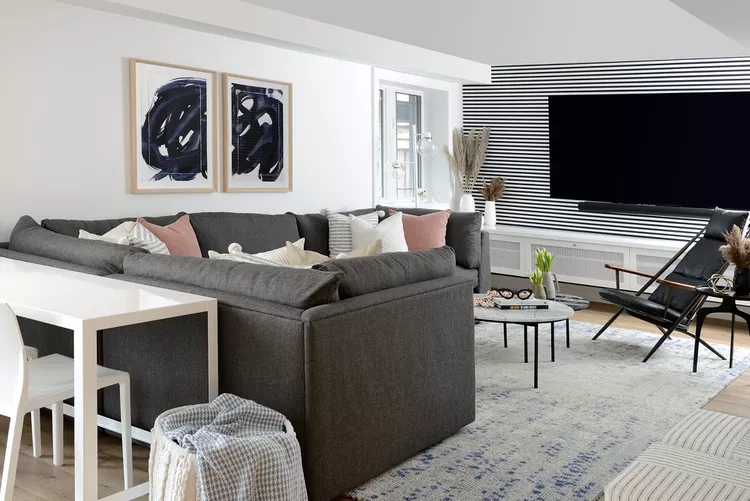
You can introduce this color through cushions, a throw, or even a piece of artwork. Small touches are often enough to shift the tone of the entire room.
The contrast between cool grey and warm salmon creates a balanced palette that draws attention in a natural way.
Keeping the rest of the room neutral helps this pairing stand out. It allows the color combination to take center stage without competition.
When used carefully, this mix adds personality and keeps the space from looking too plain.
Pro Tip: Repeat the salmon tone in at least two areas so the color looks intentional and connected.
Avoid This: Avoid adding too many competing colors alongside salmon, as it can weaken the impact of the pairing.
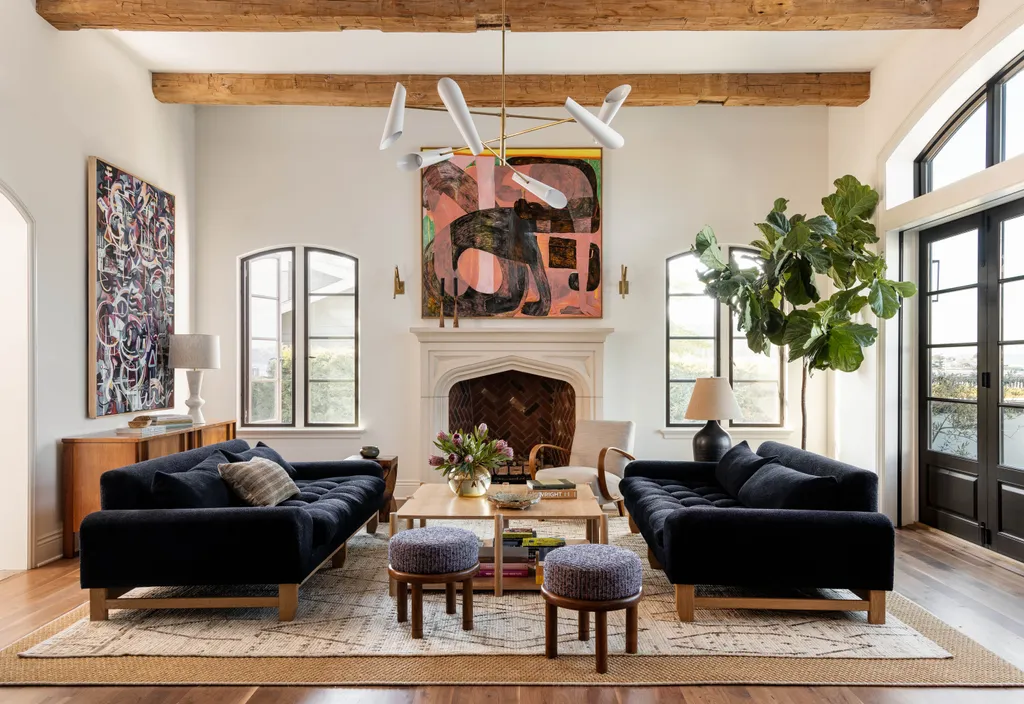
Go for Matching Sofas
Using matching sofas can create a strong sense of structure in a living room centered around a dark grey couch. It helps define the seating area and makes the layout look organized.
Placing two identical sofas facing each other creates a natural conversation zone. This arrangement works well in larger rooms where space allows for symmetry.
The consistent design keeps the focus on the layout instead of individual pieces. It also makes it easier to style the room since both sides follow the same pattern.
Adding a central coffee table can tie everything together and give the space a clear focal point.
This setup brings a sense of order that works well for both everyday use and gatherings.
Pro Tip: Keep the surrounding décor simple so the symmetry of the sofas remains the highlight of the space.
Avoid This: Avoid mixing too many different seating styles nearby, as it can disrupt the clean arrangement.