How To Create A British Colonial Bedroom:11 Best Ideas

A British colonial bedroom carries a quiet sense of history and travel.
The style grew from homes built in tropical regions, where sturdy wood furniture, airy fabrics, and natural materials helped create comfortable spaces.
Too often, I’ve liked how these rooms balance structure with a relaxed atmosphere. Nothing looks decorated, yet every piece seems to have a purpose.
The following British colonial style bedroom ideas will give you plenty of inspiration.
British Colonial Bedroom Ideas
Four-Poster Bed with Light Drapery
A four-poster bed often becomes the defining feature in a British colonial bedroom.

These beds usually feature solid wooden frames that bring weight and presence to the room.
Dark woods such as teak appear frequently because they reflect the craftsmanship common in colonial-era furniture.
Light fabric drapes soften the structure of the bed. Thin cotton or linen panels hang loosely from the top frame, creating a relaxed canopy effect.
In warmer climates, these fabrics originally helped with airflow and mosquito protection, which is why they became closely associated with colonial interiors.
The surrounding furniture should echo the same materials. Wooden bedside tables with carved legs or brass handles help maintain consistency.
A woven trunk placed at the foot of the bed can also introduce extra storage while adding character.
Lighting choices can reinforce the style. Table lamps with ceramic bases or brass details provide warm light in the evening.
With its strong wooden frame and airy drapery, a four-poster bed captures the elegance and practicality that define British colonial bedroom design.
Rattan and Cane Furniture Accents
Rattan and cane furniture play an important role in British colonial interiors. These materials became popular during the colonial period because they handled tropical climates well and offered a lighter alternative to heavy wood pieces.
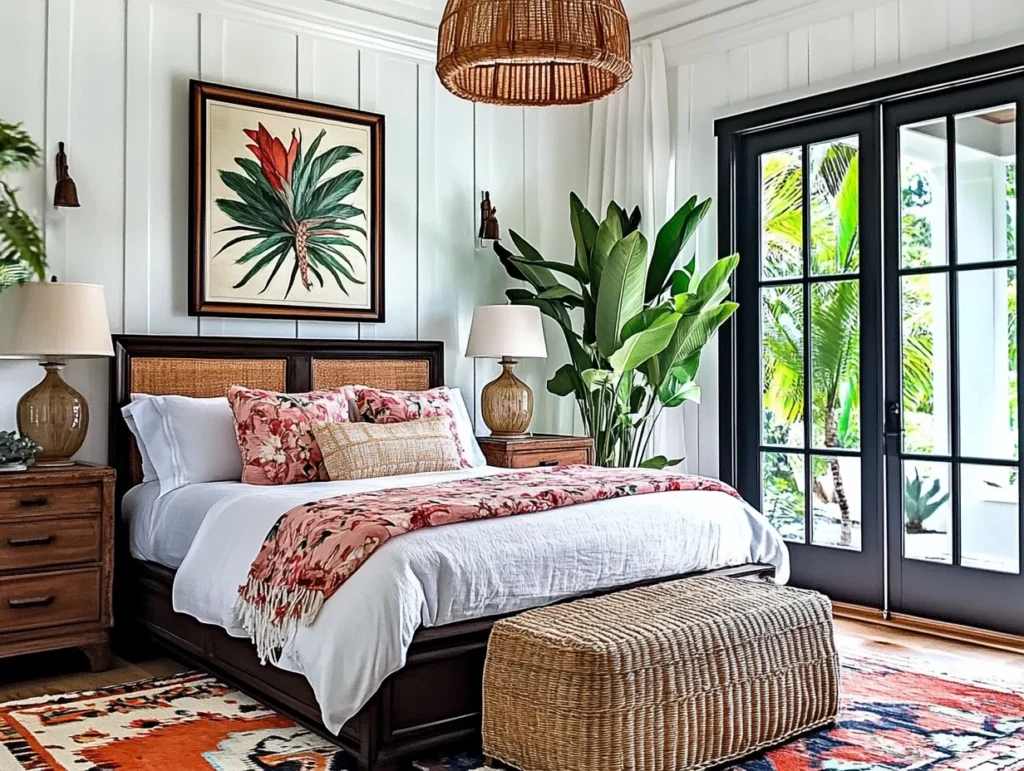
In a bedroom, a cane bench placed at the foot of the bed can introduce this texture immediately.
The woven surface contrasts nicely with smooth wooden furniture. A rattan armchair placed near a window creates a small sitting area that feels relaxed and functional.
These pieces often feature curved frames and detailed weaving patterns. The craftsmanship gives the room a sense of heritage and travel-inspired character.
Even a small cane nightstand or woven trunk can introduce the material into the space.
Textiles help balance the woven textures. Neutral bedding, cotton quilts, and linen cushions soften the overall appearance and prevent the room from looking too rigid.
Natural light works especially well in rooms with rattan furniture. When sunlight filters through the woven surfaces, subtle shadows appear across the floor and walls.
These details help create a bedroom that reflects the airy and travel-influenced spirit of British colonial style.
Plantation Shutters for Windows
Plantation shutters are a hallmark of British colonial architecture. Originally designed for homes in warm climates, these wooden window coverings allowed homeowners to control sunlight and airflow.

In a bedroom, plantation shutters introduce both function and visual structure. Their horizontal slats create clean lines that complement traditional colonial furniture.
Painted white shutters often brighten the space and reflect daylight throughout the room.
When opened during the day, the shutters allow sunlight to stream inside. The light creates gentle shadows across floors and bedding, adding movement to the room without additional decoration.
The shutters also pair well with the materials commonly found in colonial interiors. Wooden bed frames, woven rugs, and rattan furniture all connect naturally with the wood tones of the shutters.
At night, the shutters provide privacy while maintaining the room’s architectural character.
Rather than relying heavily on curtains, plantation shutters become part of the room’s design itself, helping define the relaxed yet structured appearance that British colonial bedrooms are known for.
Vintage Travel Trunks as Storage
Vintage travel trunks connect directly to the history behind British colonial interiors.
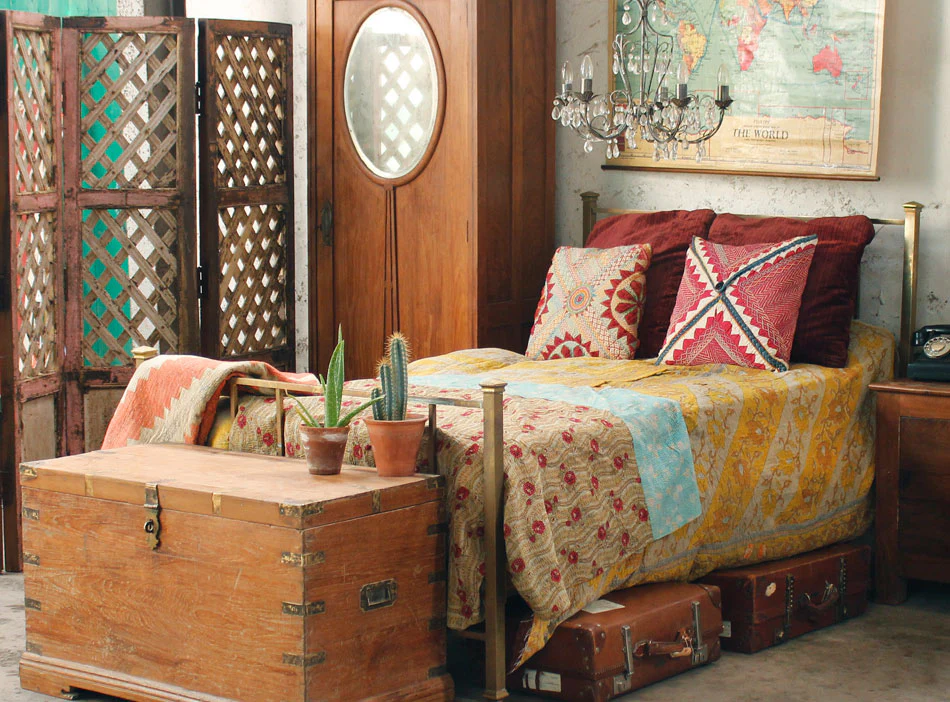
During the colonial era, travelers and officials often transported belongings across long distances using sturdy trunks made from leather, wood, and metal.
Placing a trunk at the foot of the bed instantly introduces that historic element into the bedroom. The worn leather, metal corners, and brass locks carry a sense of journey and exploration.
These trunks are not only decorative. They also provide practical storage for blankets, spare bedding, or seasonal clothing. Their flat tops can even function as a bench or small table when needed.
Color plays a role here as well. Deep brown leather trunks blend easily with dark wood furniture typically found in colonial bedrooms.
Brass hardware adds subtle shine that echoes other metal accents in the room.
A folded blanket or a stack of books placed on top can make the trunk appear more integrated with the rest of the space.
This simple addition brings a layer of storytelling into the bedroom while staying true to the travel-inspired roots of British colonial design.
Ceiling Fans with Wooden Blades
Ceiling fans are strongly associated with British colonial interiors, especially in homes located in tropical regions.
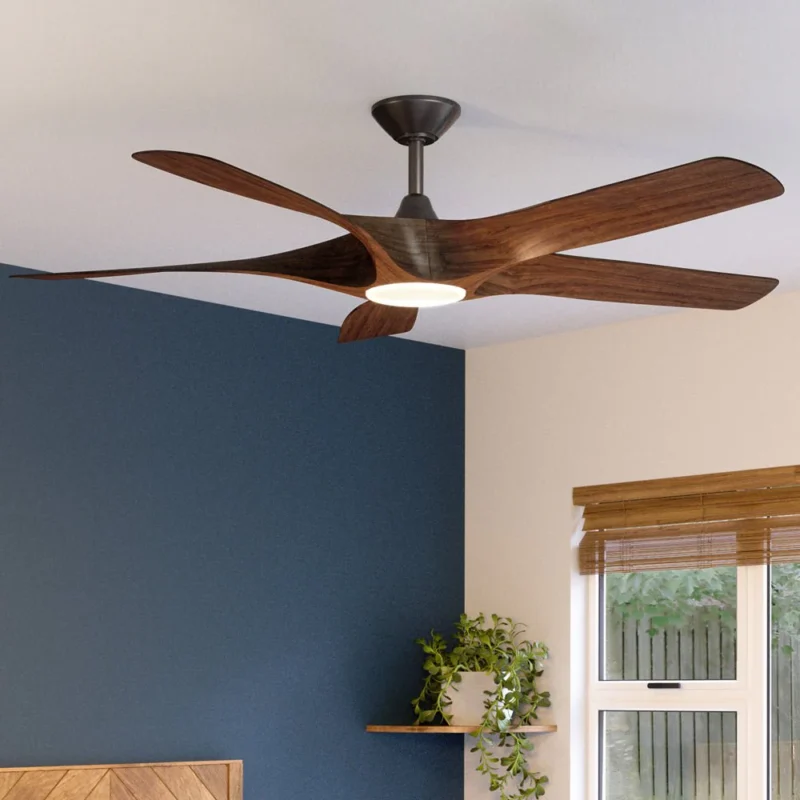
Long before air conditioning became common, ceiling fans helped circulate air and keep bedrooms comfortable.
Fans with wooden blades suit this style particularly well. The natural material blends with the wooden furniture typically found in colonial bedrooms.
Dark wood finishes often match bed frames, wardrobes, and nightstands.
Beyond practicality, the fan adds movement to the room. The slow rotation overhead introduces a sense of calm, especially during warm evenings.
The design of the fan should remain classic. Simple motor housings, understated hardware, and traditional blade shapes help maintain the historical character of the space.
Lighting fixtures can sometimes be integrated into the fan, though many colonial interiors rely on bedside lamps for softer evening lighting.
Together with high ceilings and airy fabrics, the ceiling fan contributes to a bedroom environment that feels breezy consistent with the heritage of British colonial homes.
Mosquito Net Bed Canopies
Mosquito net canopies are closely tied to the history of British colonial interiors.

In tropical regions, these nets served a practical purpose by protecting sleepers from insects while allowing fresh air to circulate around the bed.
Over time, they became a recognizable feature in colonial-style bedrooms.
A simple white net suspended above the bed introduces an airy layer that softens the space.
The fabric drapes gently around the bed frame, creating a light enclosure that adds visual height to the room.
Unlike heavy curtains, the sheer material keeps the bedroom bright during the day.
The net works particularly well with wooden bed frames. Dark wood contrasts nicely with the pale fabric, allowing both elements to stand out. This pairing often becomes the central focus of the room.
Minimal furniture keeps the canopy from feeling crowded. A pair of wooden bedside tables and soft linen bedding maintain a balanced look.
With its flowing fabric and historical roots, the mosquito net canopy adds a calm and breezy character that reflects the origins of British colonial bedroom design.
Botanical Prints and Tropical Artwork
Botanical artwork often appears in British colonial interiors because of the strong connection to tropical landscapes.
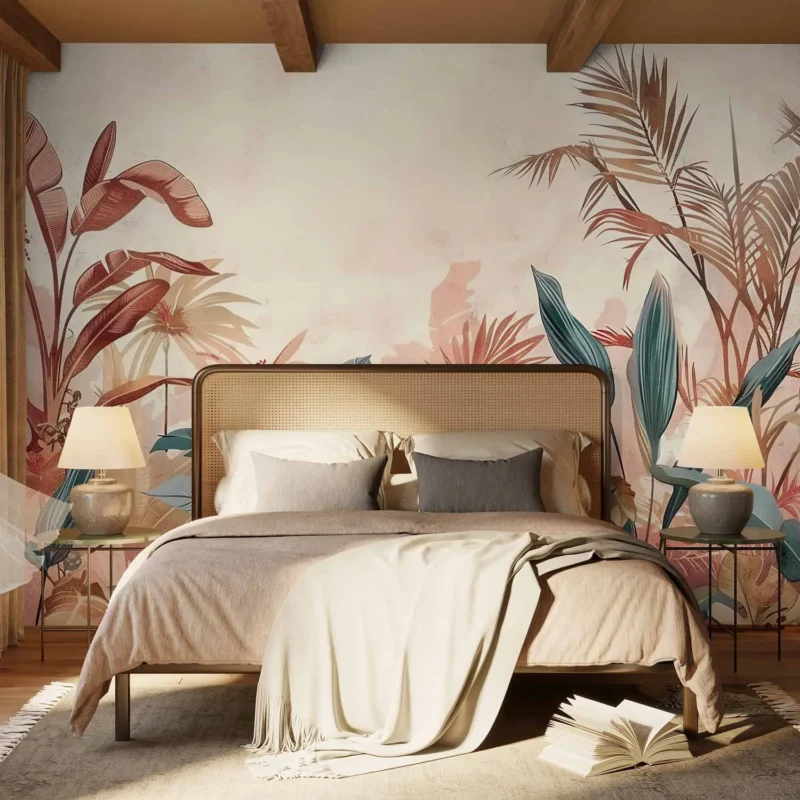
Early explorers and botanists documented plants from around the world, and these illustrations later became decorative pieces in colonial homes.
In a bedroom, framed botanical prints introduce subtle color and natural themes. Illustrations of palm leaves, ferns, or exotic plants fit naturally within the colonial style.
The artwork usually appears in neutral frames that allow the drawings themselves to remain the focus.
Arranging a few prints above the bed or along a side wall creates a gallery-like display.
The delicate details in these illustrations bring interest to the walls while maintaining a calm atmosphere.
These prints also work well alongside natural materials. Wooden furniture, woven rugs, and linen bedding all complement the botanical theme.
The presence of plant-inspired artwork helps connect the indoor space with the surrounding environment.
It reflects the exploration and appreciation of nature that influenced many colonial interiors during that era.
Dark Wood Writing Desk Corner
A writing desk can introduce both function and historical character to a British colonial bedroom.
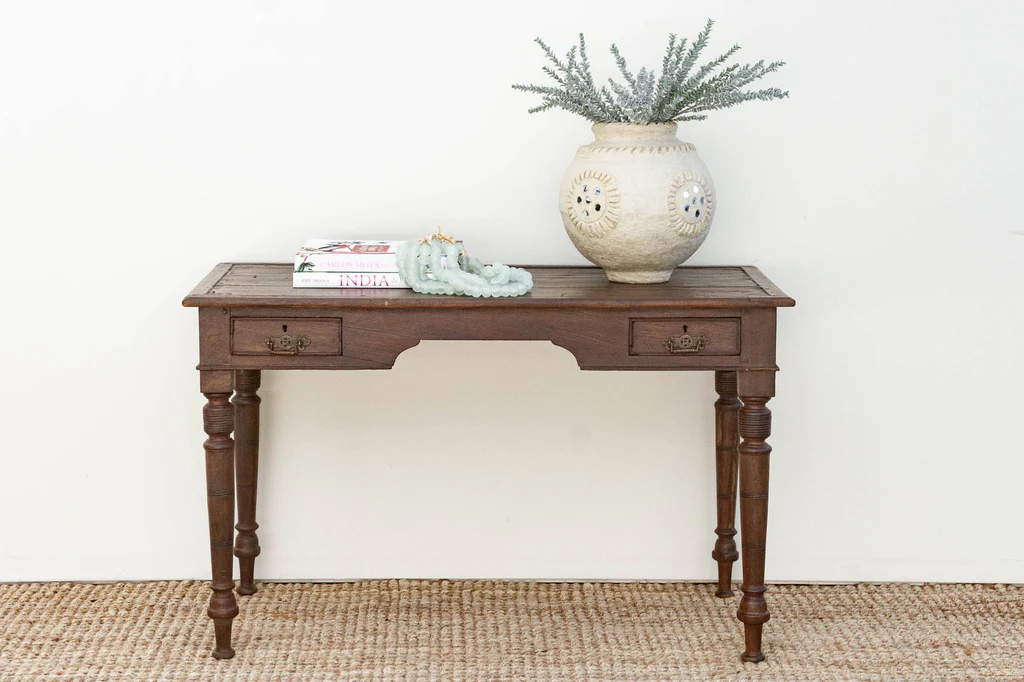
During the colonial period, desks were essential pieces of furniture used for letters, journals, and daily records. Their presence reflected a lifestyle that valued reading and writing.
In a bedroom, a compact desk placed near a window creates a quiet corner for reflection or work.
Dark wood desks made from teak or mahogany suit this style well. Their sturdy construction and carved details highlight traditional craftsmanship.
Pairing the desk with a simple wooden chair keeps the arrangement cohesive. A small table lamp or brass reading light can illuminate the workspace in the evening.
The surface of the desk can hold a few thoughtful objects. A leather notebook, vintage map, or small globe adds personality while maintaining the colonial theme.
Placing this desk within the bedroom creates a space that feels historically inspired. It reflects the intellectual side of colonial life while blending naturally with the rest of the room’s furniture.
Neutral Linen Bedding Layers
Linen bedding works especially well in British colonial bedrooms because of its breathable nature and relaxed appearance.
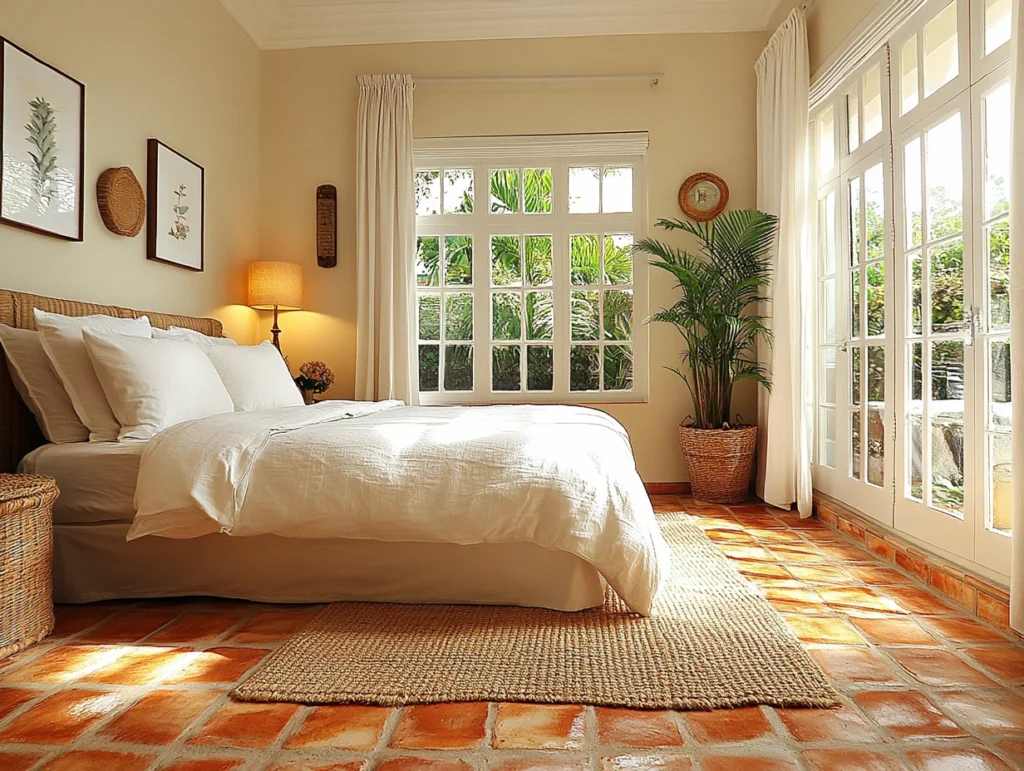
In warm climates, linen fabrics help maintain comfort throughout the night while giving the bed a soft, natural look.
Neutral tones usually dominate the bedding palette. Shades such as ivory, sand, and light beige reflect sunlight and brighten the room.
These colors also complement the darker wood furniture that often appears in colonial interiors.
Layering different linen pieces adds texture across the bed. A lightweight quilt, a folded throw, and a few cushions can create subtle depth.
The goal is to keep the arrangement comfortable and effortless rather than overly structured.
The slightly wrinkled quality of linen fabrics contributes to the relaxed atmosphere. It gives the bed a lived-in appearance that fits the laid-back spirit of colonial design.
Paired with wooden furniture and airy window treatments, linen bedding helps shape a bedroom that looks calm and restful.
Natural Fiber Rugs
Natural fiber rugs often appear in British colonial bedrooms because they suit materials used throughout the space.
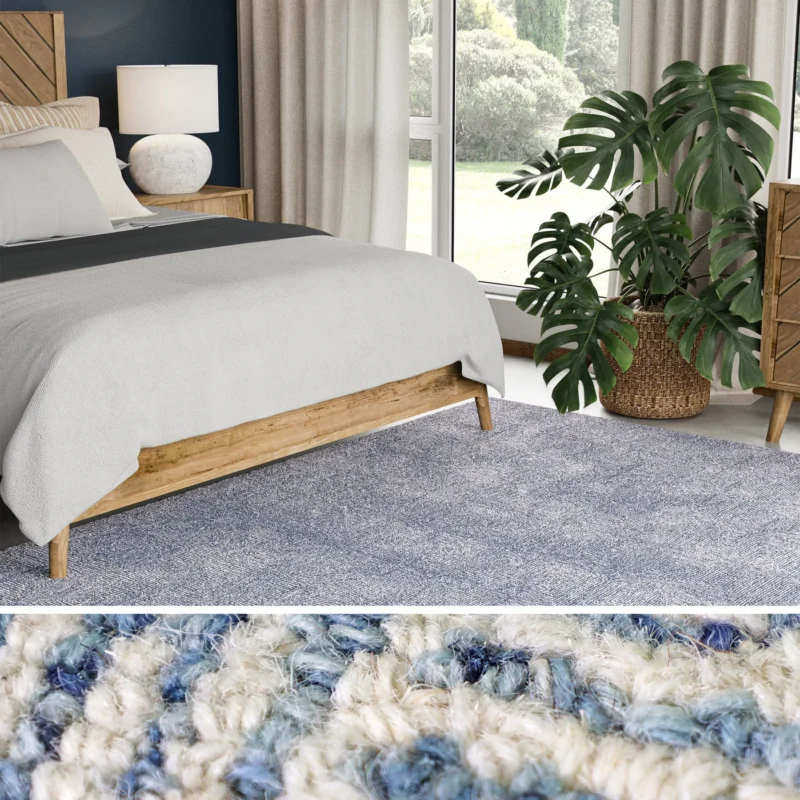
Rugs made from jute, sisal, or seagrass introduce texture underfoot while maintaining a simple, earthy palette.
Placed beneath the bed, a woven rug helps define the sleeping area and soften the floor surface. The natural tones of these rugs blend easily with wooden furniture and neutral bedding.
These rugs are known for their durability. Their sturdy fibers handle everyday use well, which made them practical choices in colonial homes located in tropical regions.
The woven patterns also bring subtle visual detail to the room. Even though the color palette remains understated, the texture creates interest across the floor.
When combined with wooden bed frames, rattan furniture, and linen fabrics, natural fiber rugs help complete the layered look of a British colonial bedroom while keeping the overall atmosphere relaxed.
Brass Lamps and Colonial Lighting
Lighting in British colonial bedrooms often features brass elements that add elegance.
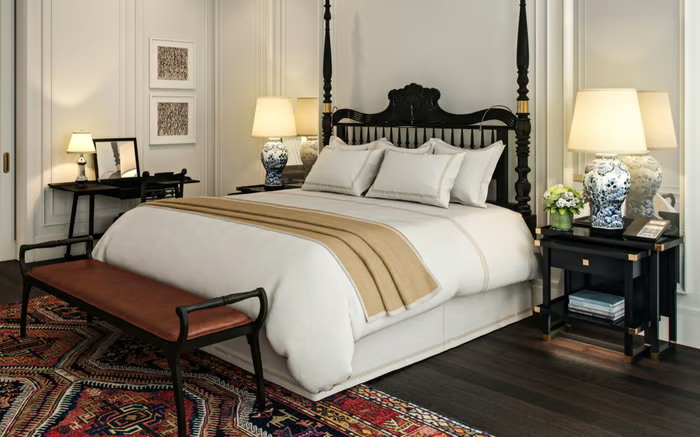
Brass lamps were widely used during the colonial period because the material was durable and carried a refined appearance.
Table lamps placed on bedside tables provide soft illumination in the evening. Their warm metallic finish reflects light gently, which helps create a relaxed nighttime atmosphere.
Some lamps include fabric shades that diffuse the glow across the room. These shades keep the lighting comfortable for reading.
Brass wall sconces can also appear beside the bed or along nearby walls. Their classic shapes contribute to the historical feel of the space.
The metal pairs naturally with dark wood furniture and neutral textiles. When combined with these materials, brass lighting adds a finishing touch that ties the room together.
This small but important detail helps maintain the timeless character that defines British colonial bedroom design.