How To Style A Mid-Century Modern Living Room: 19 Best Ideas

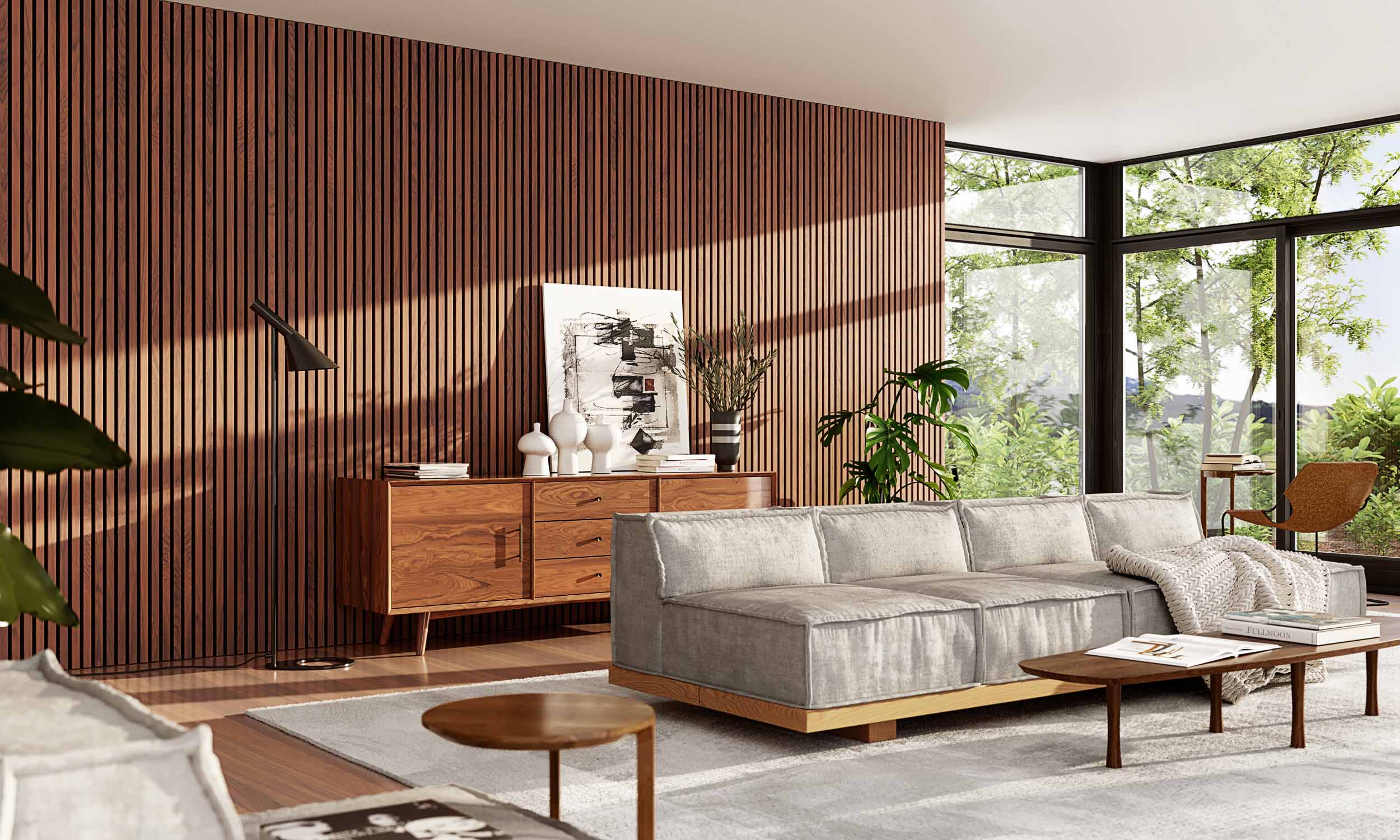
When I redesigned my first midcentury living room, I realized the small details make the biggest difference.
You start noticing how tapered legs, a low brown couch, and warm wood tones instantly shift the space.
The same approach applies to a modern bedrooms or even dining rooms.
When you focus on structure, proportion, and texture, your living room begins to look intentional.
Notably, the right lighting fixtures can also transform the mood and define each area.
With these 19 midcentury modern living room ideas, you can create a home that reflects classic design.
Mid-Century Modern Living Room Ideas
The top ideas include the following:
Clean Lines and Iconic Furniture
Mid-century modern design shines when you invest in furniture with clean lines and purposeful shapes.
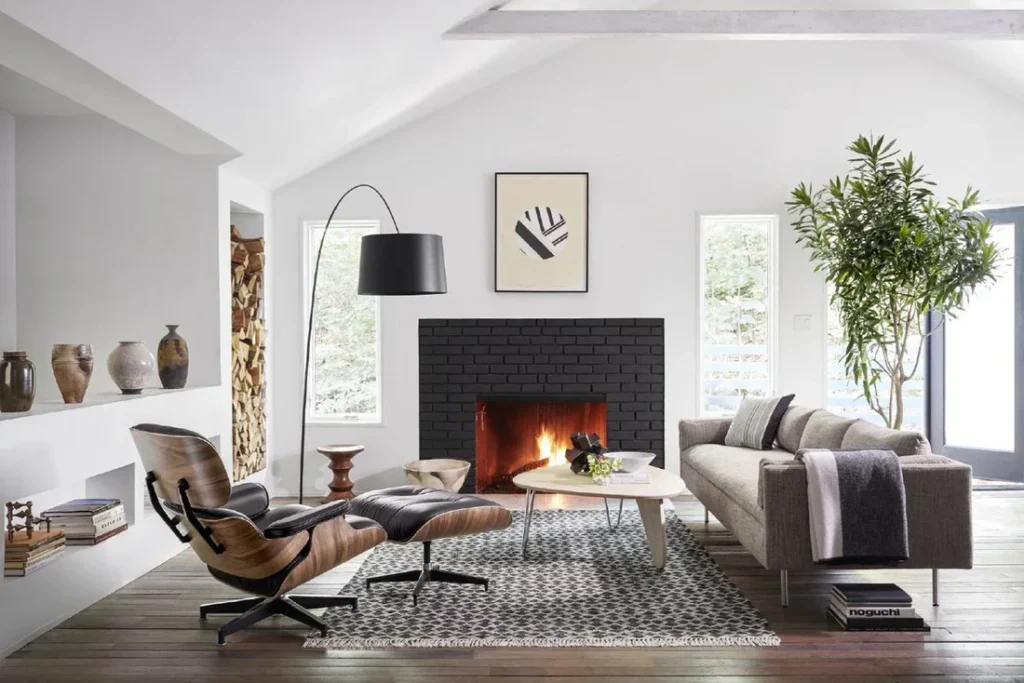
Look for pieces that have a low profile, slender legs, and simple silhouettes inspired by designers like Charles and Ray Eames.
A classic sofa with tapered wooden legs paired with an Eames lounge chair instantly signals the era.
Keep upholstery colors restrained so your furniture’s form takes center stage. A walnut coffee table or teak sideboard adds classic character.
Avoid over-decorating around these pieces. Mid-century modern spaces breathe because each item has room to stand on its own.
When styled this way, your living room becomes a thoughtful blend of function and style.
RELATED: 17 Mid Century Modern Bathroom Ideas For An Airy Look
Warm Wood Accents and Earthy Materials
Warm wood tones are at the heart of mid-century living rooms. Woods like walnut, teak, or oak introduce depth and natural beauty that complements retro forms.
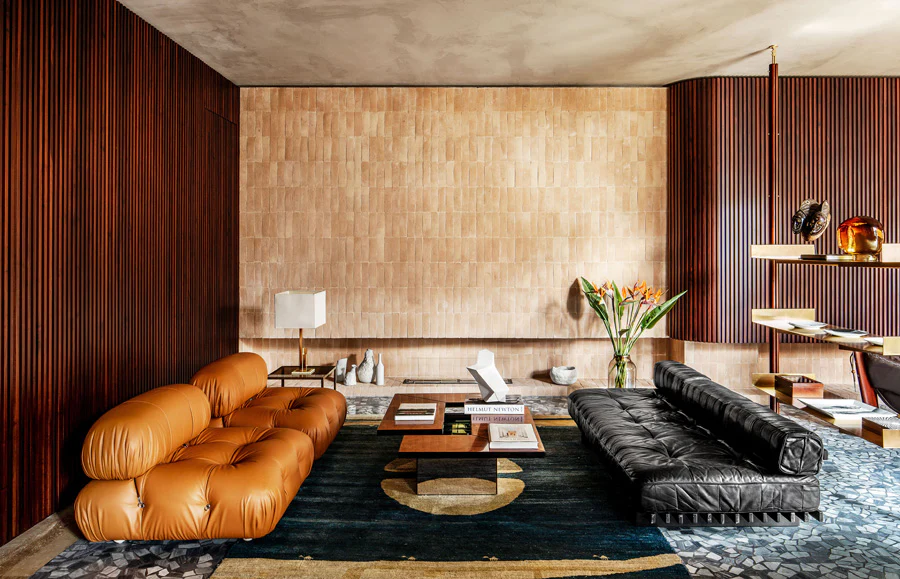
You can anchor the space with a wooden bookcase, a low media console, or a sculptural coffee table.
Leather furniture in chocolate, black, or caramel tones works particularly well alongside these timeless materials.
Adding wood elements helps your living room feel responsive to everyday life.
When you pair natural wood with clean geometric forms and simple textiles, the space captures the relaxed elegance mid-century design is known for.
Geometric Rugs and Patterns
Geometric patterns are a staple of mid-century design because they bring visual interest without excess.
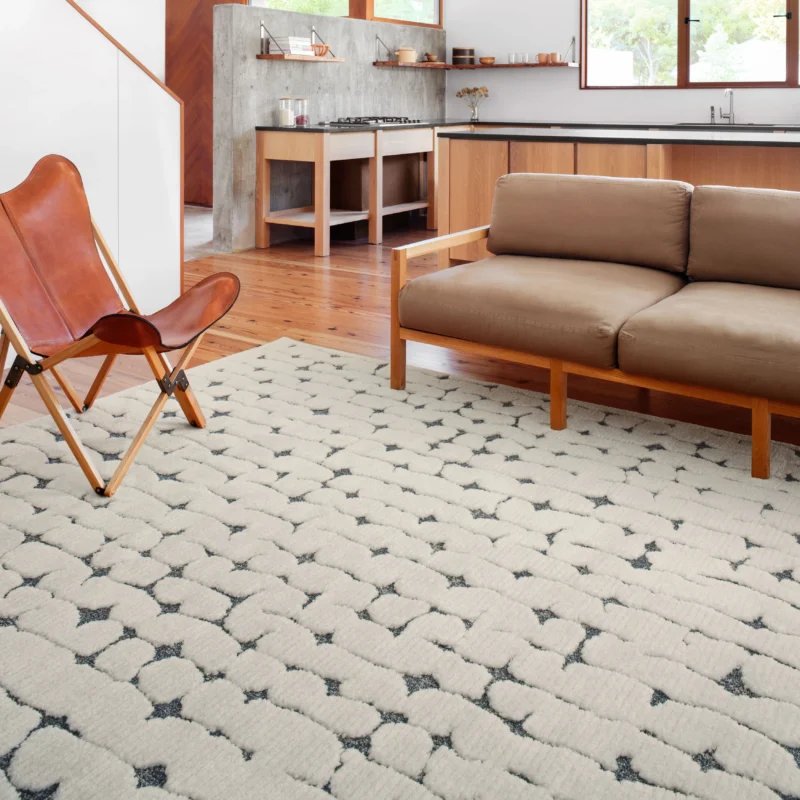
Choose a rug with triangles, arcs, or abstract motifs to help define your seating area and tie your furniture together.
You can introduce similar patterns through throw pillows or wall art to echo the rug’s vibe. Keep the rest of the palette calm so the pattern serves as a focal point rather than a distraction.
Adding texture and shape through rugs and textiles creates movement in the room and connects the overall look back to mid-century modern’s playful side.
Statement Lighting That Anchors the Room
Lighting in a mid-century living room should be both functional and decorative.
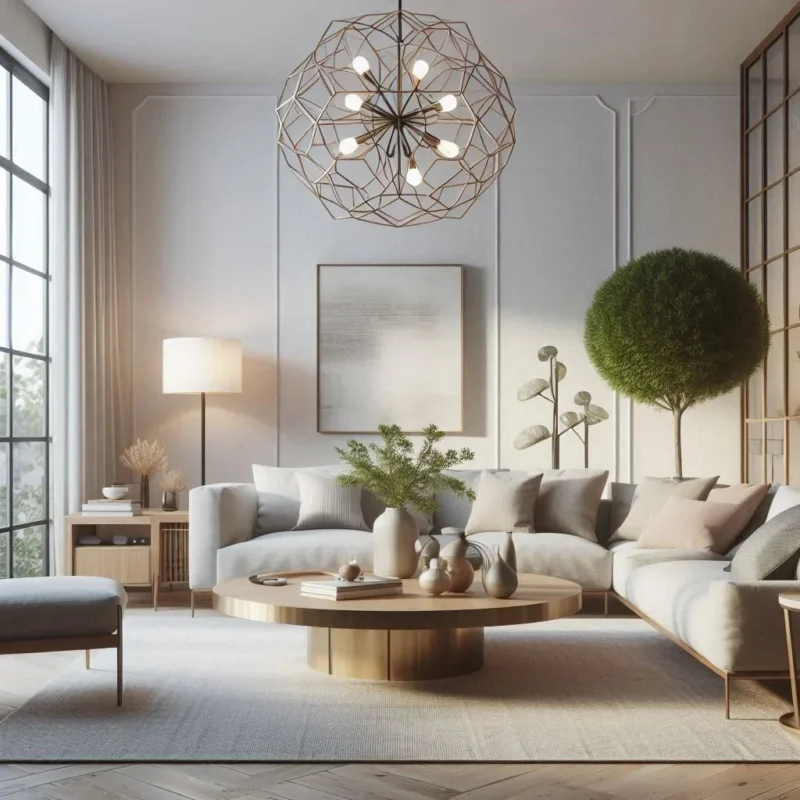
Go for pieces with sculptural influence, like a Sputnik chandelier or globe pendant lights, that reflect the futuristic optimism of the era.
These lighting choices do more than illuminate a space. They become focal points that tie the room together.
Place a floor lamp near seating or above a reading chair to add dimension and warmth.
Distinctive lighting designs can elevate the whole room without demanding a complete makeover.
Let these fixtures stand out while the rest of the room maintains a balanced, streamlined look.
RELATED: How To Bring Japandi Style To Your Kitchen: 13 Creative Ideas
Earthy Color Palettes with Retro Accents
Mid-century palettes often combine earthy neutrals with bold accents. Think tones like olive green, mustard yellow, burnt orange, or deep teal paired with warm wood and crisp neutrals.
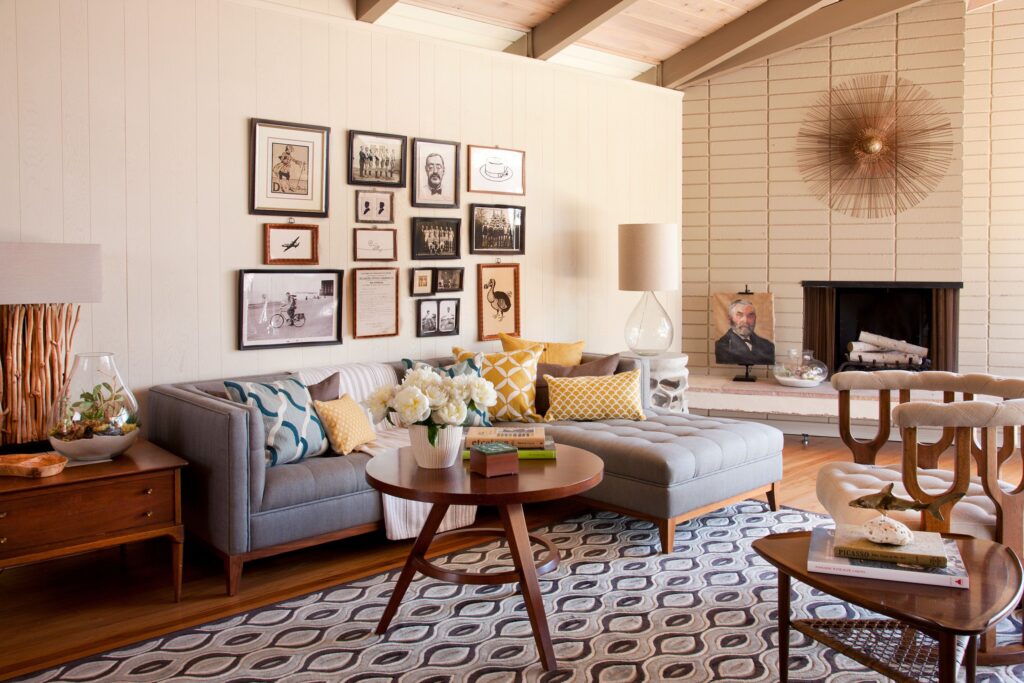
These shades bring personality without making the room feel chaotic. Start with a neutral base on walls, then introduce bold tones through an accent chair, throw pillows, or artwork.
Balance is key. Use stronger colors sparingly so they draw the eye and add character without overwhelming the room.
The result feels vibrant yet harmonious, true to mid-century modern spirit.
Sculptural Coffee Tables
A sculptural coffee table can completely define your mid-century modern living room because it sits at the center of the seating area and naturally draws attention.
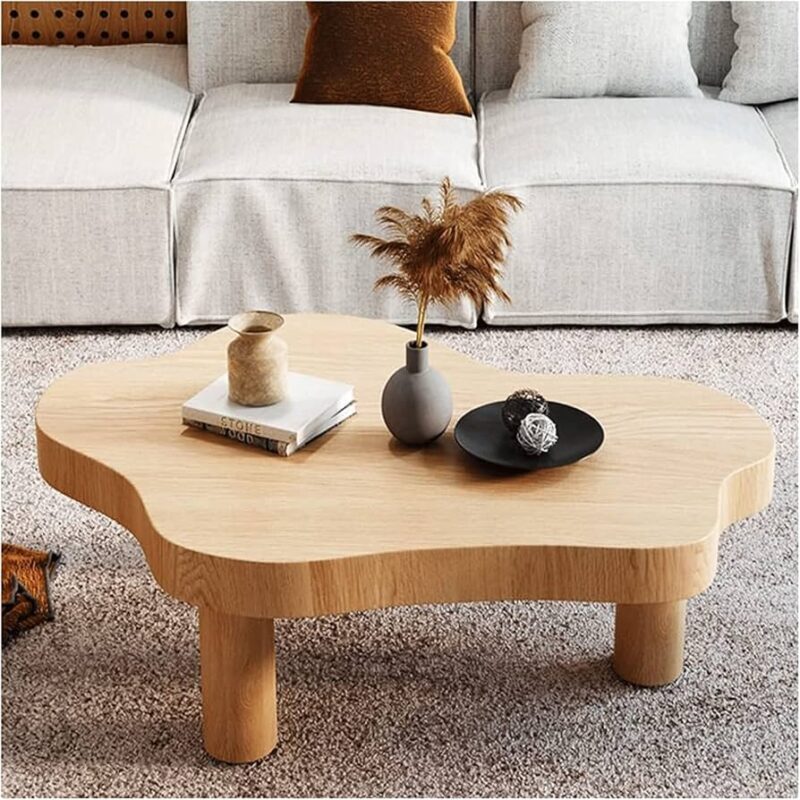
Instead of choosing a basic rectangular piece, look for organic curves, tapered wooden bases, or glass tops that highlight craftsmanship inspired by iconic 1950s design.
Tables influenced by the style of the Isamu Noguchi show how form becomes art without sacrificing function.
The combination of curved wood supports with a freeform glass surface introduces movement into a room filled with clean lines.
Place this type of table over a neutral rug so its silhouette stands out clearly. Keep accessories minimal, perhaps a ceramic bowl or a small stack of design books, to avoid cluttering the visual impact.
When you choose a coffee table with personality, it grounds the room and reinforces the architectural spirit that defines mid-century interiors.
Low Profile Platform Couch
Low profile seating plays a major role in achieving an authentic mid-century look because it highlights horizontal lines that visually widen the room.
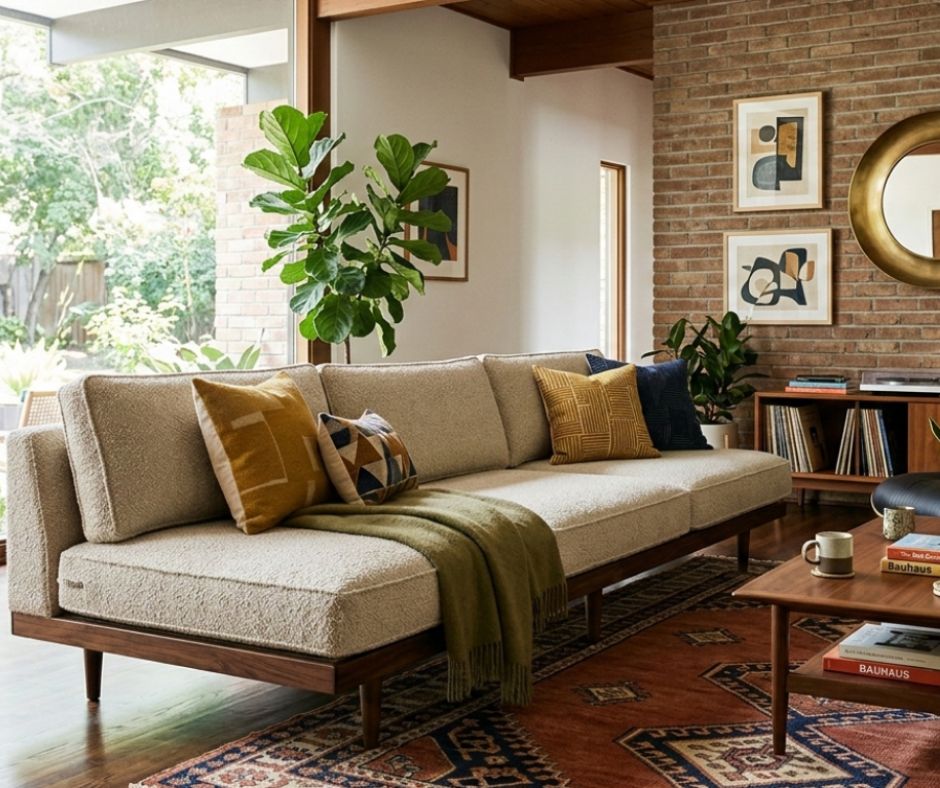
Sofas with slim arms, boxy cushions, and tapered wooden legs create a grounded silhouette that feels true to the era.
This style traces back to designers such as Florence Knoll, who favored practical forms with strong proportions.
The reduced height keeps the space open above the furniture line, allowing artwork and lighting to command attention.
Choose upholstery in muted tones like camel, olive, or textured gray to maintain a refined palette.
Position the sofa away from the wall if space allows, which helps define a conversational layout.
By focusing on horizontal emphasis, your living room gains a structured presence that reflects the clarity of mid-century design principles.
READ NEXT: 13 Creative Ideas For Table Behind Couch For Your Small Space
Wood Slat Accent Walls
A wood slat accent walls for living rooms introduces architectural rhythm into a mid-century modern look through repetition and natural texture.
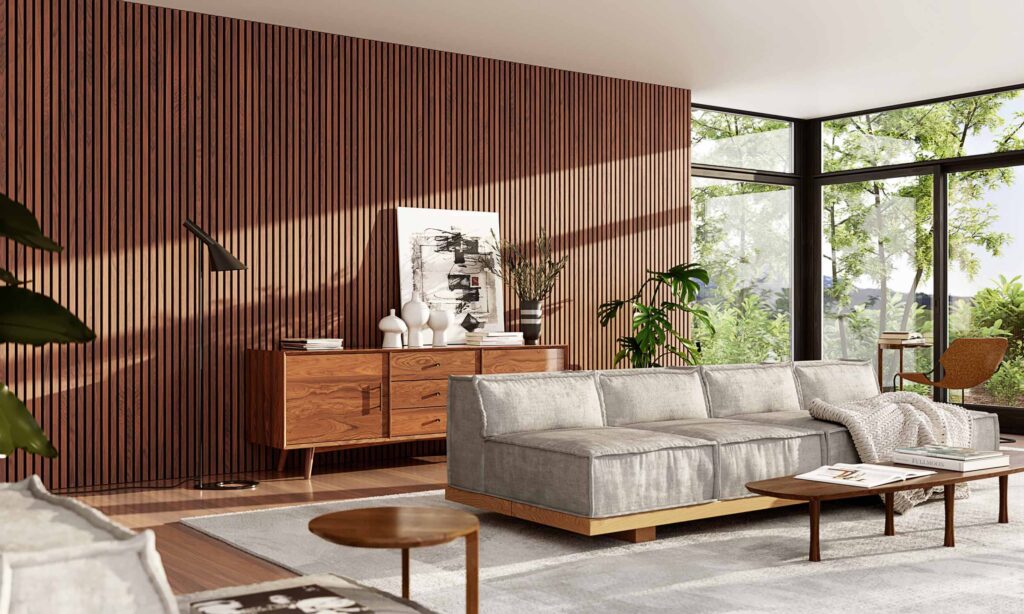
Eevenly spaced panels in walnut or teak bring warmth while reinforcing the era’s appreciation for craftsmanship.
This treatment works well behind a media console or fireplace, where it frames the focal point of the room.
The linear pattern contrasts beautifully with curved furniture pieces, creating visual balance.
Keep surrounding walls neutral so the wood detail stands out clearly. Incorporate lighting that grazes the surface, which highlights the depth between each slat.
This design approach echoes interiors influenced by architects like Frank Lloyd Wright, who emphasized harmony between structure and material.
When installed, a slatted wall transforms a plain living room into a space with architectural presence.
Retro Inspired Lounge Corners
Creating a dedicated lounge corner strengthens the social aspect of a mid-century living room by encouraging face-to-face interaction.
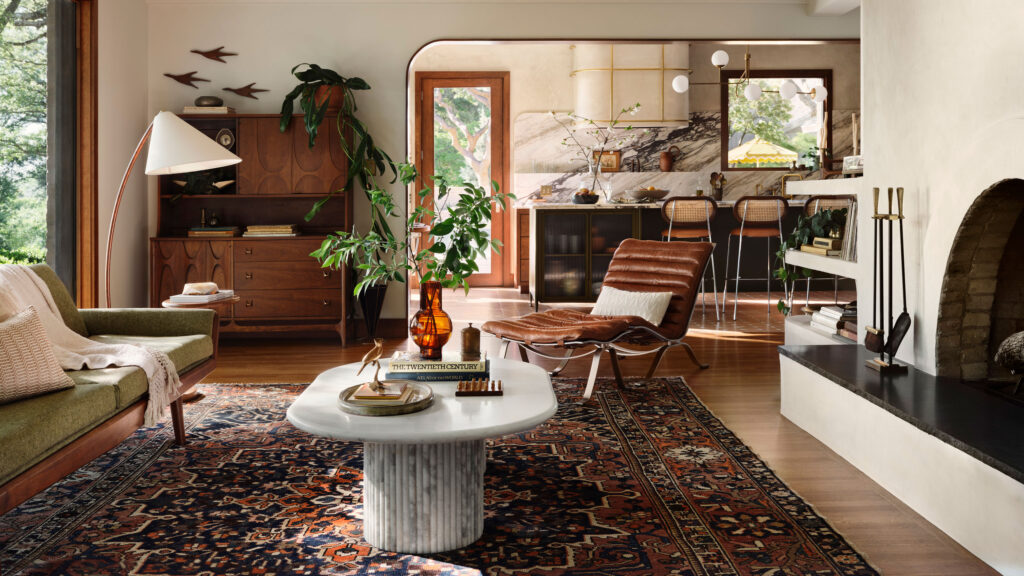
Arrange two sculptural armchairs across from each other with a small side table between them to form a balanced conversation zone.
A chair inspired by the Charles and Ray Eames silhouette adds instant recognition to the space. Position the seating near a floor lamp with an arched frame to define the area visually.
Use a compact rug beneath the chairs to anchor the arrangement. Add a small bookshelf or a ceramic planter nearby to personalize the setting.
This focused seating layout reflects how mid-century interiors valued connection and intentional design.
Instead of filling every corner with large pieces, you create purpose through thoughtful placement.
Large Abstract Art on The Wall
Oversized abstract artwork can instantly elevate a mid-century modern living room by introducing bold shapes and confident color blocking.
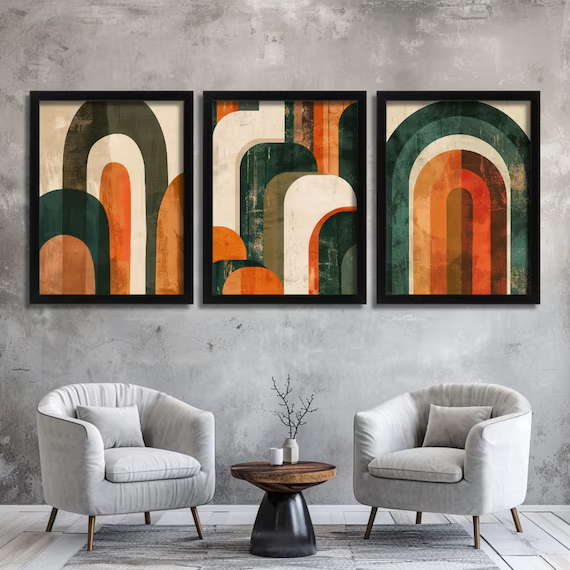
The era celebrated experimentation makes expressive canvases a natural fit.
Look for art featuring geometric patterns or layered color fields reminiscent of artists such as Mark Rothko.
Position the piece above a low sofa or console so it becomes the visual anchor of the wall.
Keep surrounding decor restrained to allow the artwork to stand out clearly. Frame the piece in a thin black or walnut border that complements the furniture tones in the room.
When you commit to large-scale art, you reinforce the creative energy associated with mid-century spaces.
The result feels curated and confident while remaining aligned with the clean structure that defines this design movement.
Luxe Velvet Statement Seating
A deep tufted sofa upholstered in rich olive velvet introduces bold character into a mid-century modern living room while honoring the era’s sculptural silhouettes.
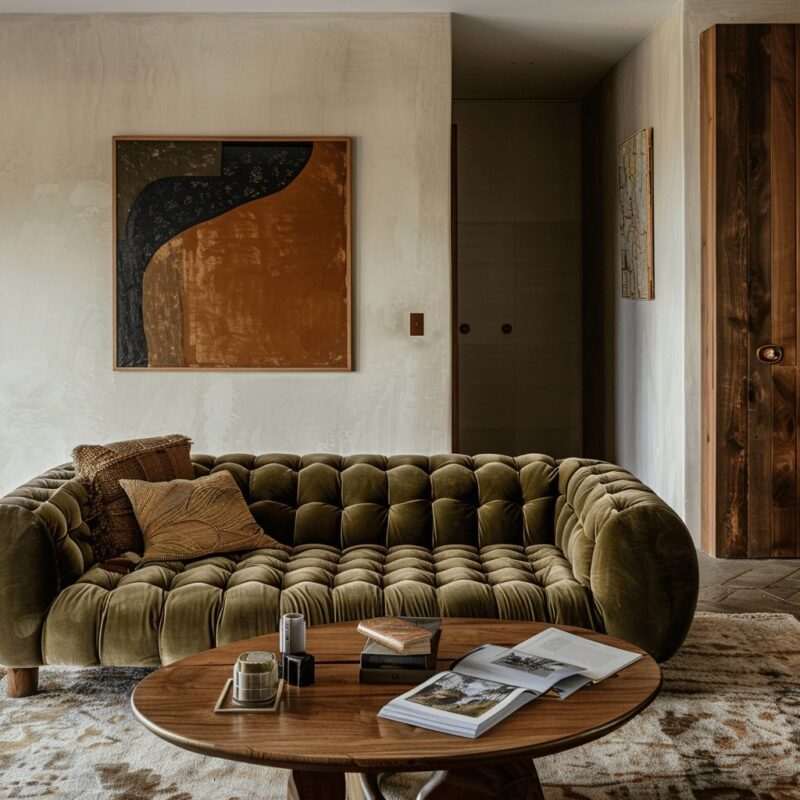
The channel detailing adds vertical rhythm across the frame, creating texture that immediately draws attention when you enter the space.
Rounded edges soften the typically angular lines found in mid-century interiors, bringing balance to wood furniture and geometric accents nearby.
This type of seating becomes more than a functional piece, as it sets the tone for the entire room through color.
Position the sofa beneath oversized abstract artwork to create a strong focal wall that anchors the layout.
Keep surrounding elements refined so the velvet texture and saturated hue remain the visual highlight.
Pair the sofa with a warm walnut coffee table and neutral walls to allow its shape and finish to stand out clearly.
String Shelving Classic
The ladder-style wall unit remains one of the most recognizable elements of mid-century modern interiors because of its adaptable structure.
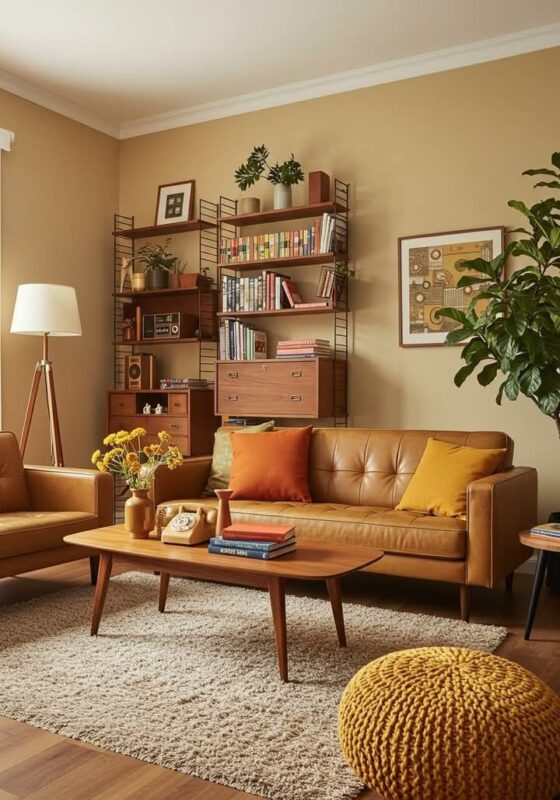
Originally popularized in the 1950s, this modular shelving system allows you to adjust shelf heights and configurations as your storage needs evolve.
Its slim framework keeps the wall visually light while offering ample room for books, ceramics, and sculptural decor.
The open design ensures that displayed objects become part of the room’s overall composition.
Below the shelving, a cognac leather sofa with button tufting provides grounded seating that develops character over time.
A tripod floor lamp introduces soft ambient lighting while maintaining a narrow footprint that preserves open floor space.
Adding a mustard knit pouf introduces texture and flexible seating that can shift easily for guests.
Altogether, these elements create a layered living room rooted in practicality, proportion, and the understated innovation that defines mid-century design.
Open Shelving Display Wall
Built-in walnut shelving units transform an ordinary wall into a functional design feature that defines the living room.
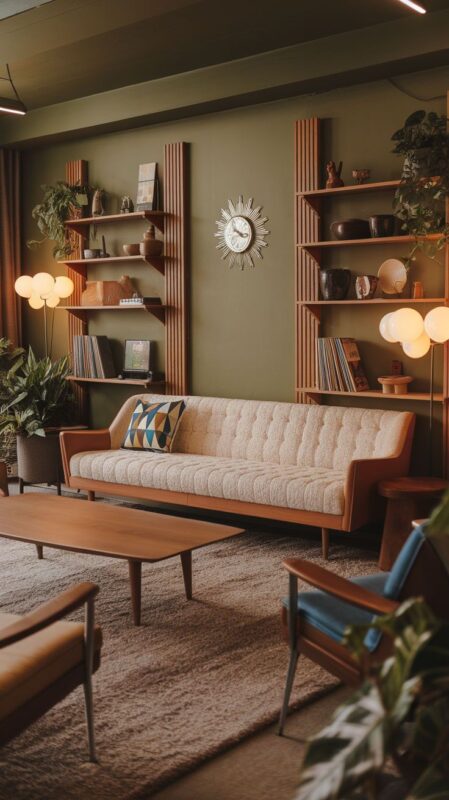
The rich wood tone establishes warmth, while the structured layout reinforces the clarity central to mid-century modern style.
Vertical slat panels placed between shelving sections introduce subtle depth and architectural rhythm.
This detailing enhances visual interest while maintaining strong linear organization.
Styling remains key to preserving balance, so arrange ceramics, stacked books, and sculptural objects with generous spacing to avoid visual clutter.
An iconic sunburst clock placed centrally references the playful geometry embraced during the mid-century era.
Below the shelving, a tufted caramel sofa grounds the composition and complements the warmth of the walnut finish.
A sage green wall backdrop introduces contrast that feels period inspired while remaining relevant in contemporary interiors. So, it creates a display wall that merges storage with artistic expression.
Vintage Tile Fireplace Feature
A mustard yellow tiled fireplace surround introduces retro personality through color and precise geometry.
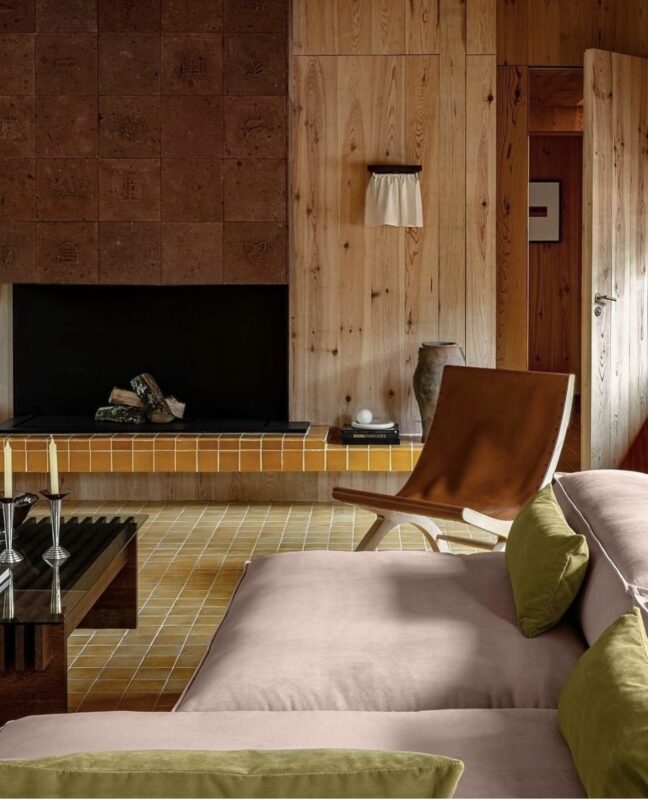
The square grid layout reflects the modular principles that defined mid-century architecture, while the golden tone energizes the surrounding wood-paneled walls.
The warmth of the tile pairs naturally with natural materials, reinforcing the movement’s appreciation for organic surfaces.
Placing a cognac leather sling chair nearby establishes a comfortable reading corner that highlights the fireplace as a focal feature.
Olive velvet pillows scattered across a neutral sofa echo the tile’s warmth and create layered contrast within the seating area.
This thoughtful repetition of color strengthens the overall cohesion of the room.
The combination of wood paneling and ceramic tile demonstrates how mid-century interiors embraced both craftsmanship and bold color.
By centering the design around the fireplace, you create a balanced composition that celebrates vintage charm through material richness.
Moody Gallery Wall Arrangement
Golden mustard walls envelop the living room in saturated warmth to create a strong backdrop that defines the mood immediately.
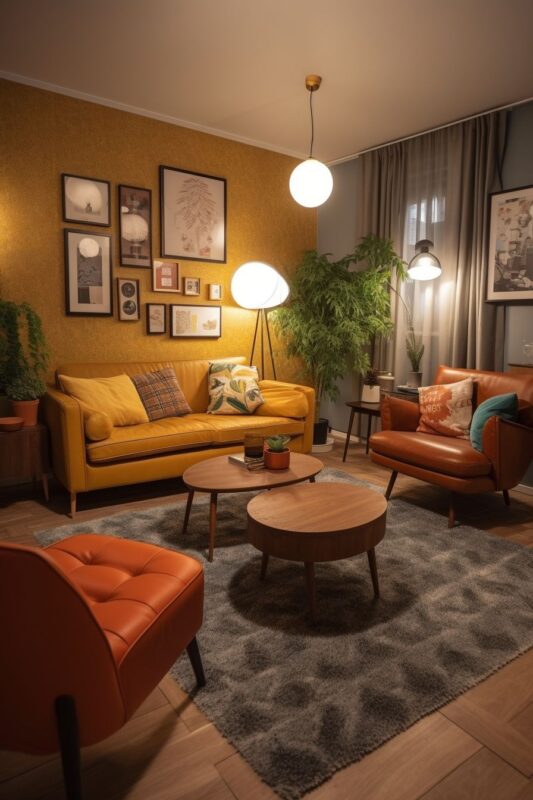
This bold color choice transforms the walls into an active design element.
An asymmetrical gallery wall composed of botanical prints and abstract art introduces personality through varied frame styles and sizes.
The relaxed arrangement moves away from rigid symmetry, reflecting the creative freedom often associated with mid-century interiors.
A golden sofa placed against the wall reinforces tonal continuity, while burnt orange and cognac leather chairs provide layered variation within the warm spectrum.
The repetition of related hues builds cohesion across the space.
Multiple globe pendant lights suspended at different heights introduce depth after sunset, highlighting artwork and seating areas effectively.
Lush potted plants positioned in corners reinforce the connection to nature that remains central to mid-century philosophy.
Sage Green with Terracotta Accents
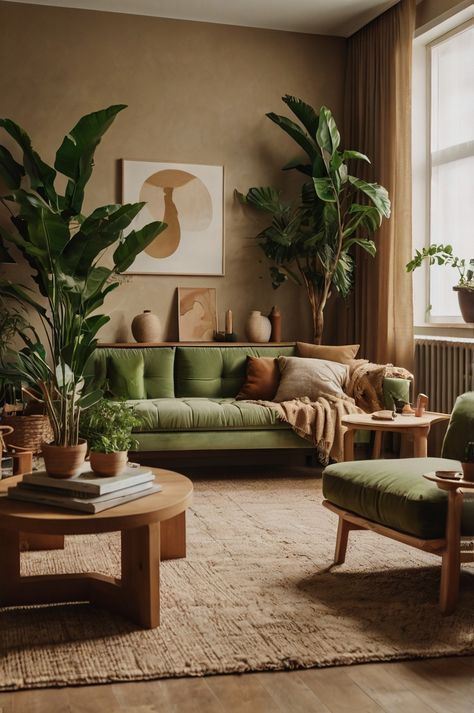
A channeled sage green sofa establishes a grounded focal point that shapes the palette of the entire living room.
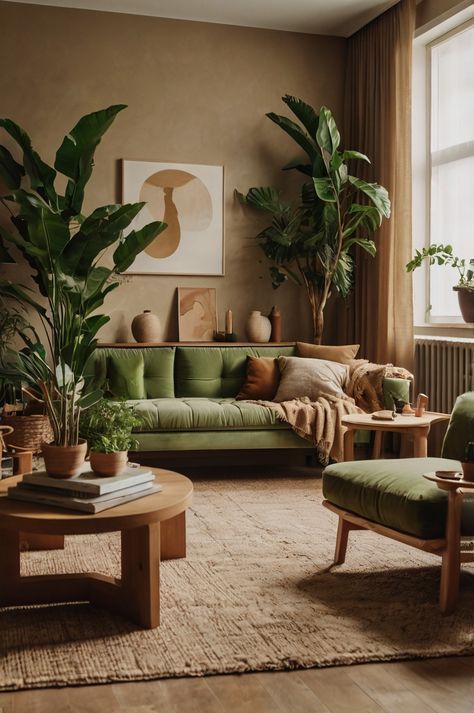
Its vertical detailing references mid-century upholstery trends while introducing texture that keeps the seating visually engaging.
Terracotta ceramics and accessories placed throughout the space provide warm contrast against the cooler green upholstery.
This pairing reflects the era’s appreciation for earth-inspired tones drawn from natural landscapes.
Open wooden shelving displays pottery and indoor plants at staggered heights, encouraging movement across the wall.
The layered arrangement brings depth while maintaining order.
Large tropical plants positioned near windows soften angular furniture silhouettes and reinforce a connection to the outdoors.
A jute area rug anchors the layout with woven texture, while warm beige curtains frame the windows and preserve incoming daylight.
The overall composition celebrates organic color relationships while honoring mid-century structure through proportion and material balance.
Warm Wood Credenza
An iconic walnut credenza serves as the backbone of this mid-century modern living room through its long horizontal profile.
The clean design offers concealed storage while its surface becomes a curated display area for sculptural decor and layered lighting.
A cognac leather lounge chair positioned nearby introduces architectural beauty through its angled wooden frame.
Over time, the leather develops a patina that enhances its character and authenticity.
Glass pendant fixtures with an amber glow introduce warmth from above, strengthening the earthy palette established by the wood and leather.
The soft lighting highlights grain patterns and enriches the room’s depth.
Gray walls provide a composed backdrop that allows the natural materials to stand out clearly.
This restrained color choice ensures the furnishings remain the focus while maintaining historical consistency with mid-century design principles centered on craftsmanship.
Channeled Upholstery with Architectural Texture
An oversized golden sofa featuring deep vertical channeling introduces dramatic structure into the seating area.
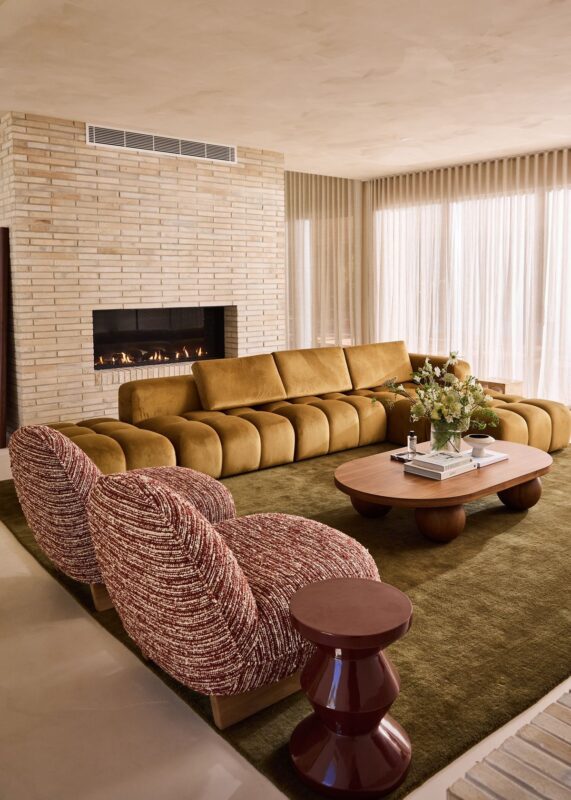
Its generous scale accommodates gatherings while reinforcing the strong geometry associated with mid-century proportions.
A sculptural woven bench in dusty rose offers additional seating and functions as an artistic focal element.
Its form contrasts with the sofa’s symmetry, adding layered interest without overwhelming the composition.
The horizontal brick fireplace wall introduces texture that grounds the space architecturally. This natural surface complements the warm color palette.
Moss green carpeting underfoot reinforces the retro influence and unifies the seating area visually.
A pedestal-style coffee table with an organic silhouette echoes the era’s fascination with flowing forms.
Linear ceiling details, on the other hand, guide the eye through the open layout.
Curved Forms Framed
A caramel velvet sofa with rounded edges introduces softness into a living room defined by angular furniture pieces.
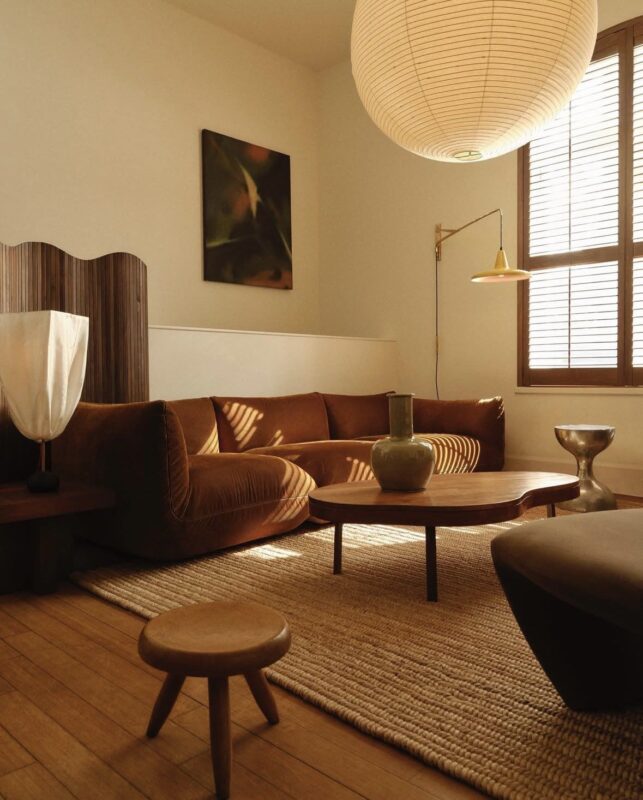
The curved silhouette contrasts with sharp-edged side tables and tripod stools, establishing balance through varied form.
A sculptural wood room divider shaped with gentle waves separates adjacent areas while preserving open sightlines.
This addition maintains spatial flow while introducing organic movement.
An oversized paper lantern pendant filters daylight streaming through wooden blinds, casting a warm glow across the seating area.
The diffused illumination enhances the richness of the velvet upholstery and wood finishes.
A jute area rug anchors the arrangement with woven texture that complements the natural palette.
This sunlit composition demonstrates how curved elements can temper mid-century geometry, resulting in a living room that blends softness with architectural precision.