21 Cottagecore Living Room Ideas That Your space Crave

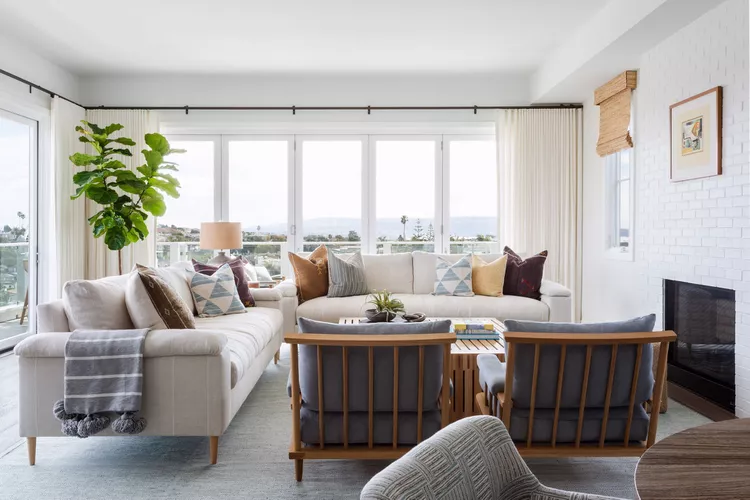
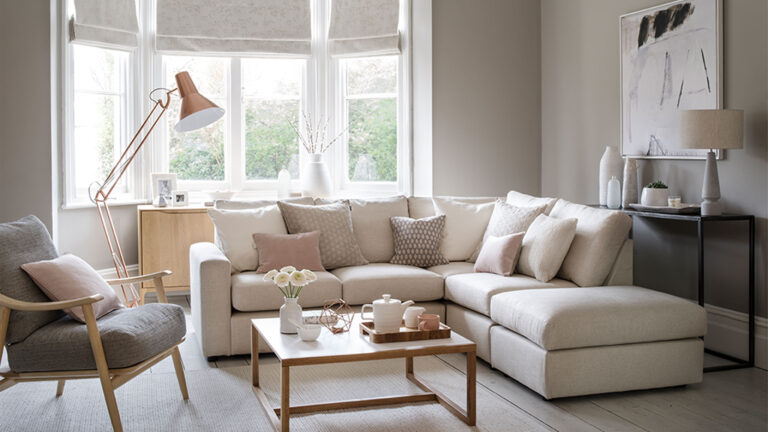
A cottagecore living room leans into simplicity in a quiet way. It comes together through soft fabrics, aged wood, and pieces that look like they have been there for years.
Nothing needs to match exactly, which makes the space easier to shape over time.
A chair by the window, a stack of books, a woven basket on the floor brings the whole room together.
Let us take a look at 21 cottagecore living room ideas worth trying.
Cottagecore Decor Ideas For Living Rooms
Add Curtains to Your Windows
Adding curtains instantly changes the character of a living room. Choose cotton or linen for a light, airy look.
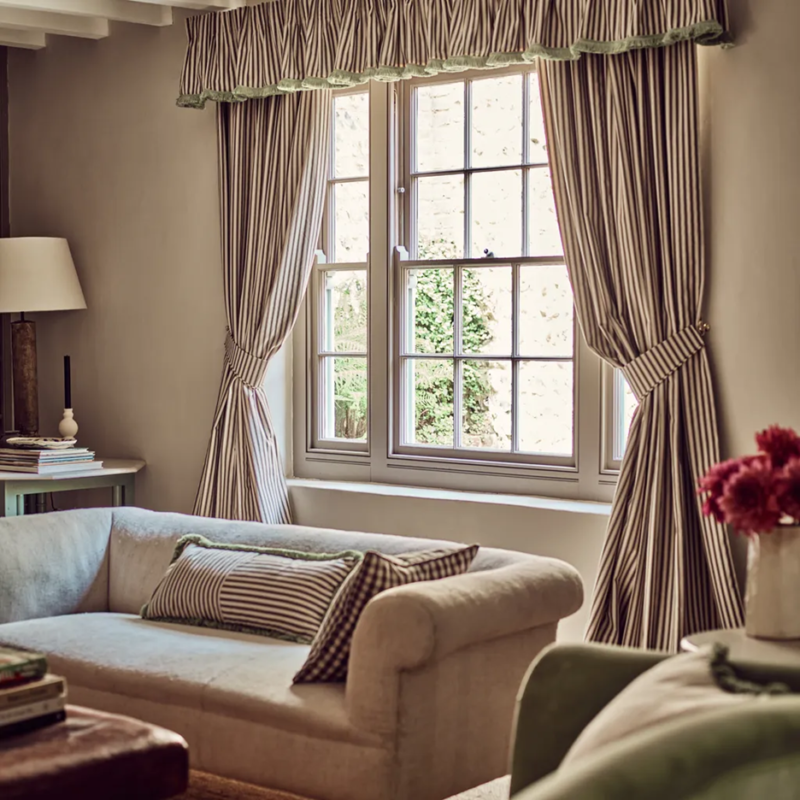
Soft neutrals or delicate floral patterns bring a subtle countryside charm.
The way the fabric hangs matters more than perfect folds. Slightly relaxed drapes make the room feel natural.
A small pelmet above the window hides the curtain hardware and gives the window a polished touch. You can even add a tiny trim in a contrasting color to give the setup extra detail.
Hanging a curtain over a doorway not only helps block drafts but also adds an additional layer of texture.
Even in the simplest arrangement, curtains shape the atmosphere. They bring a softness that transforms the room into a cozy, cottagecore space.
Finally, they serve as both a practical element and a visual feature that defines the style.
Basket Wall Meets Cozy Craft Corner
A wall covered in woven baskets can instantly give a living room a personal and textured touch. Choose baskets of varying sizes to create visual rhythm.
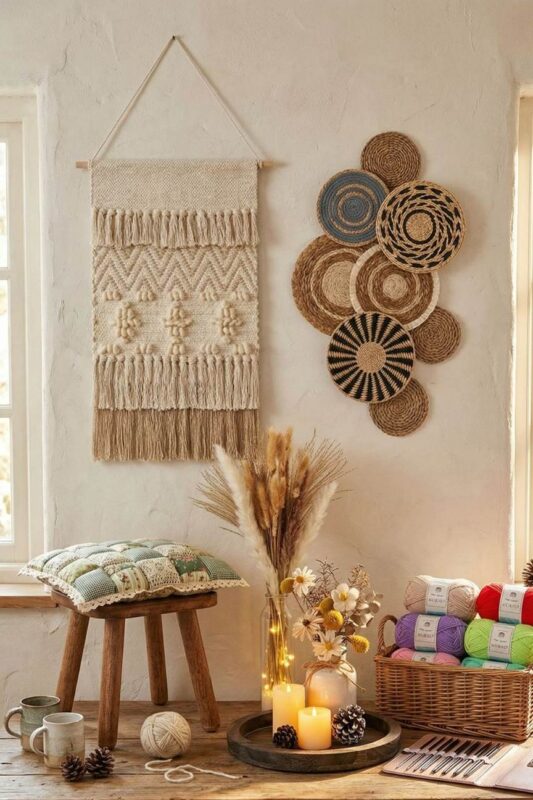
Each one has a unique pattern, and the collection looks effortless rather than carefully arranged.
A small table nearby can hold yarn, handmade mugs, or other small craft items. A soft cushion on a chair makes the corner inviting, and a nearby basket can store blankets.
Lighting is key; a few candles bring warmth and highlight the natural textures of the baskets.
This combination of textures, materials, and subtle decoration turns a simple wall into a charming craft corner.
It encourages you to slow down, touch objects, and enjoy small creative moments. The space feels lived-in, offering a quiet, comforting corner for everyday life.
Cottagecore Tea-Time Nook
A tea-time nook adds a comforting corner to your living room. Start with a quiet space near a window and bring in a small table with woven poufs. A soft throw draped over a seat adds texture.
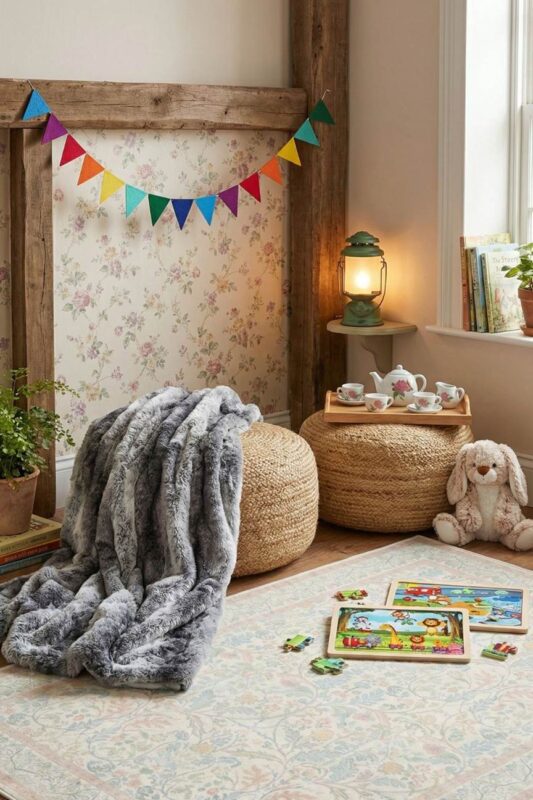
Walls can be decorated with light patterns or soft-colored prints. A string of bunting or simple artwork adds charm.
Place a tray on the table with a teapot, cups, or small treats, and add a small plant on the windowsill for a natural touch.
The space becomes a quiet retreat where you can pause and enjoy a short break. It invites conversation, reading, or simply sitting in the sun.
The combination of tactile textiles, natural light, and thoughtful details creates a corner that feels personally aligned with cottagecore aesthetics.
Firelight Reflections in a Velvet Cottage
Positioning a velvet armchair near the fireplace transforms a living room corner into a cozy retreat.
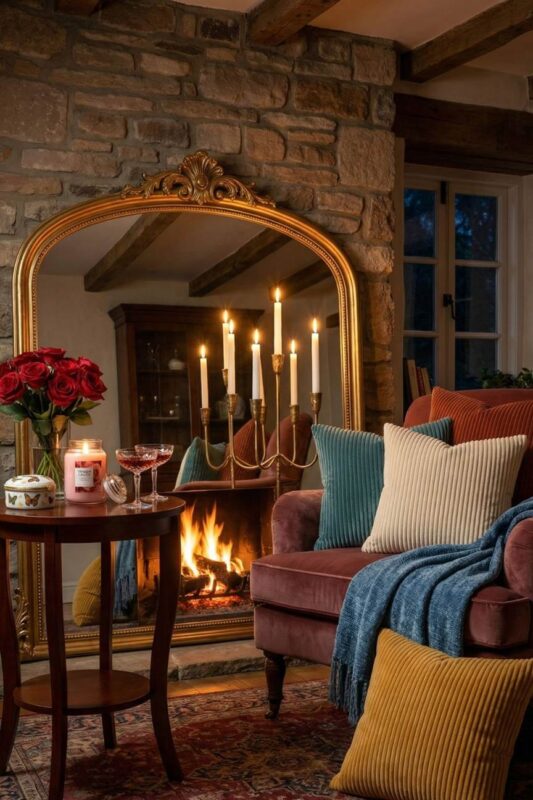
Exposed beams add rustic charm, while a mirror above the hearth reflects light. Layer cushions and a soft throw on the chair to balance comfort with visual appeal.
A patterned rug beneath the seating anchors the area, and a small side table can hold flowers or candles.
The combination of textures like stone, wood, and velvet creates a rich environment for quiet evenings.
Light from the fire and nearby candles plays across surfaces, adding warmth.
This setup turns a simple corner into a space for reading, reflection, or slow conversation.
It demonstrates how strong materials paired with soft accents can make a living room feel inviting.
Cottagecore Library Nook with Ladder
A library nook brings a sense of quiet to a living room. Install a tall bookshelf filled with well-loved books.
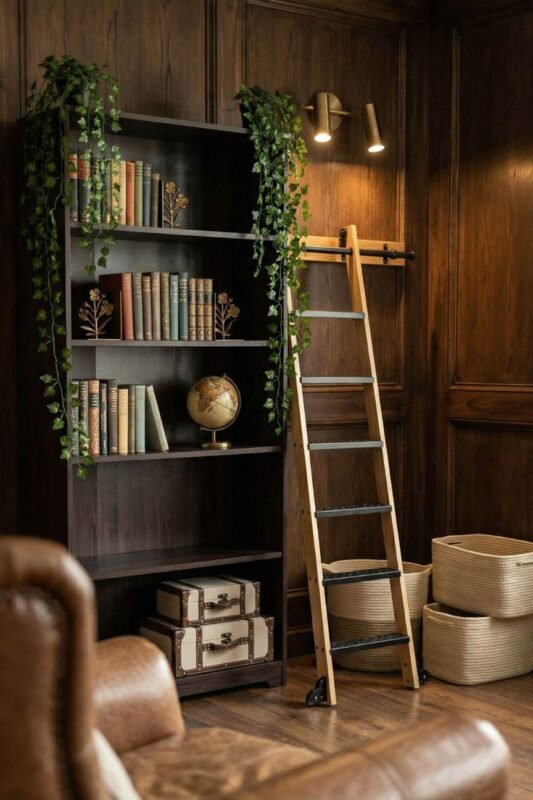
A small ladder provides access to higher shelves. The ladder also emphasizes height, drawing the eye upward and creating a dynamic composition.
Place a comfortable chair nearby with a soft cushion. A side table can hold a warm beverage or a book in progress.
Adding potted plants softens the wood and introduces a natural element that ties into the cottagecore aesthetic.
Finish the nook with a lamp for a gentle evening glow. This area encourages slow moments of reading or contemplation function with charm.
It becomes a personal corner that adds a storybook atmosphere to the living room.
Sunlit Cottagecore Mending Corner
A small mending corner can transform a quiet section of your living room into a creative retreat.
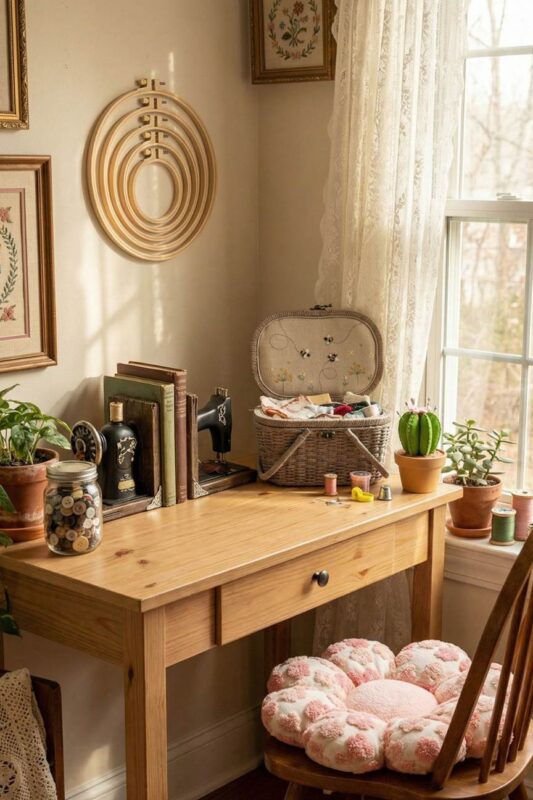
Start with a simple pine desk placed near a window so sunlight naturally illuminates the workspace.
The warmth of the light brings out the texture of the wood and the delicate details of small accessories.
Soft lace curtains filter the light, giving the corner a gentle, inviting glow. On the desk, keep a classic sewing machine, a wicker basket filled with thread and buttons, and a few essentials within easy reach.
Nothing should feel staged; the slightly imperfect arrangement adds character.
Hang embroidery hoops or framed florals on the wall above to introduce a handcrafted touch.
A chair with a cozy cushion in a textured fabric completes the setup. Small potted plants or a colorful flower cushion adds life and softness to the space.
This mending corner encourages calm, slow activity. Every glance reminds you of handwork and simple pleasures.
It transforms a living room corner into a space that is quietly productive, personal, and entirely in line with the cottagecore aesthetic.
Cream Cottage Calm with One Bold Leaf
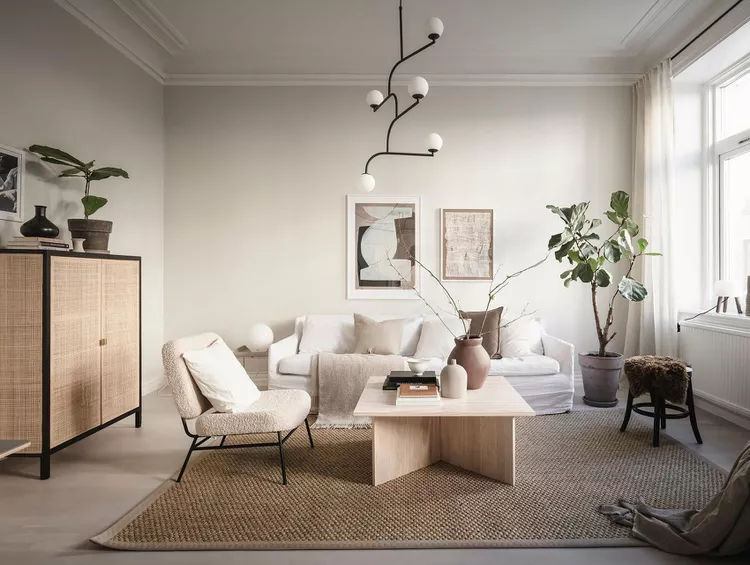
A cream-colored sofa sets a peaceful tone for your living room, creating a backdrop that feels soft.
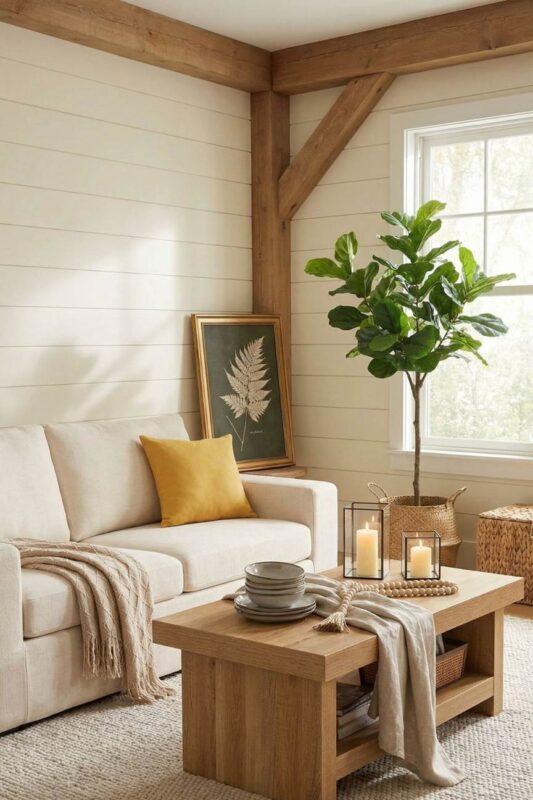
The neutral base allows other elements to stand out naturally without competing for attention.
Introduce one bold accent, such as a mustard or terracotta cushion, to give the space a touch of energy.
A wooden coffee table anchors the seating area. Place a few handmade items on it, like pottery, a folded linen throw, or a small candle arrangement.
A single leafy plant nearby becomes the focal point. Its vibrant color bring a sense of freshness and connect the indoor space to nature.
Complement it with a small botanical print on the wall to echo the natural theme.
This approach works well for those who prefer simplicity with personality. Every element contributes to a calm, curated environment.
The balance between muted tones and one striking feature creates a living room that is energized, embodying the cottagecore style.
Lamplit Card Table by the Hearth
A small drop-leaf table placed near a fireplace can become the centerpiece of a cozy living room corner.
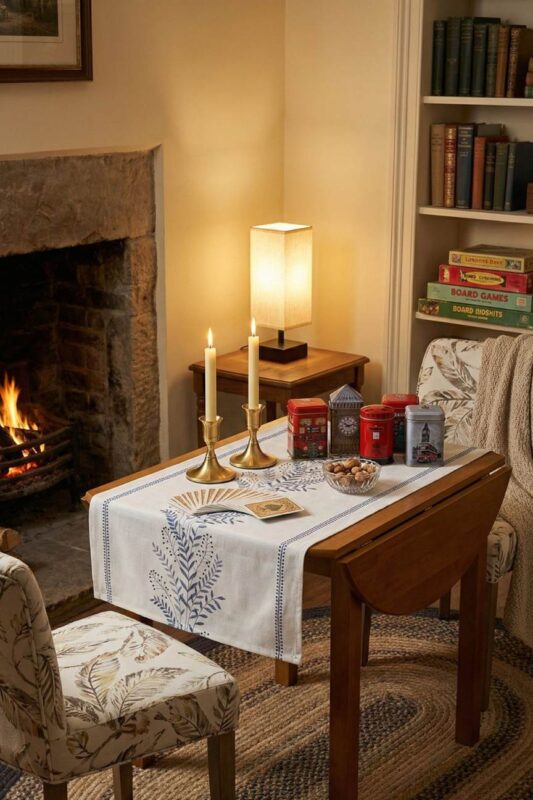
Cover it with a linen runner featuring subtle embroidery or a light pattern. This simple layer adds texture while keeping the setup practical for evening use.
Brass candlesticks or small lanterns provide soft illumination once the sun sets.
Keep a few small items on the table, such as a tin for snacks, a deck of cards, or a simple bowl. The goal is to create a space that feels ready to use.
Get chairs with soft upholstery to invite lingering. A chunky knit throw casually draped over one seat encourages relaxation.
Layer a braided rug beneath the table to define the area and ground the seating visually.
This corner turns a simple furniture arrangement into a space that extends evenings.
The combination of soft lighting carefully chosen accessories create a nice atmosphere where a hot drink feels natural.
Sunroom Corner for a Calm Cottage Feel
A sunroom-style corner brings natural warmth into your living room. Start with a simple chair in a warm honey tone, such as cane or wood.
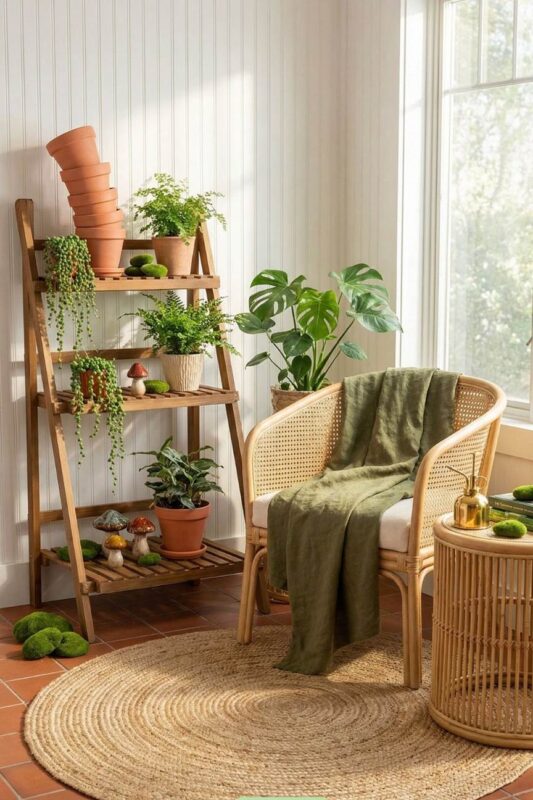
Drape a soft, muted throw over the seat to create a sense of softness and approachability.
Introduce greenery on a small ladder shelf or grouping of pots. Mix trailing plants with larger leafy varieties to add dimension.
Mossy accents or small natural decorations can enhance the cottagecore mood subtly.
A braided rug underfoot gives texture and visually separates the corner from the rest of the room.
Add a small side table for a cup of tea, a book, or a decorative object to make the space practical.
The combination of natural light, plants, and simple furniture creates a corner that is connected to the outdoors.
It encourages relaxation, reading, or quiet reflection. Every detail contributes to a cottage-inspired environment that is effortless.
Botanical Mantel with Fairy Lights for a Storybook Touch
Style a rustic wooden mantel with natural elements to create a gentle focal point in your living room.
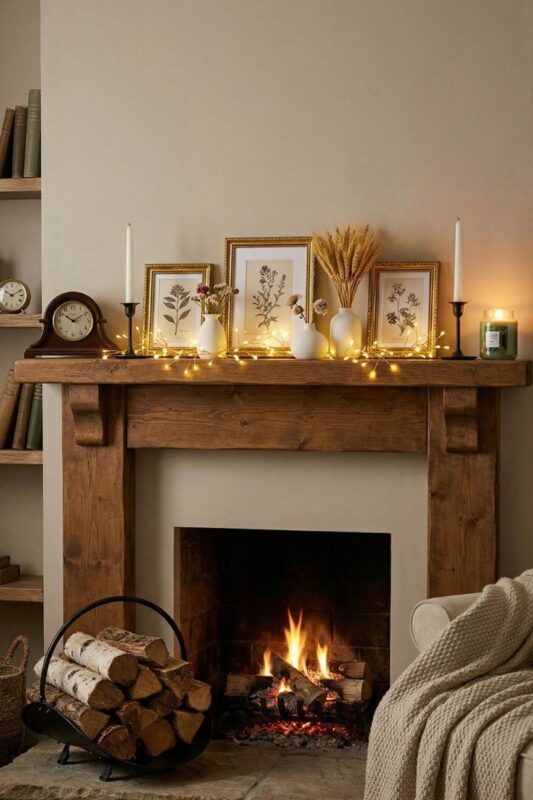
Lean botanical prints casually against the wall and add taper candles to introduce soft illumination. The arrangement should feel collected over time.
Small vases filled with dried flowers add visual interest. Drape a strand of soft fairy lights across the mantel to enhance the ambiance during the evening.
Nearby, a textured throw on a chair or a stack of logs beside the fireplace adds practicality.
This combination of natural elements and soft lighting creates a storybook quality. It emphasizes elegance, inviting anyone in the room to take in the details.
The mantel becomes more than a feature as it sets the tone for the surrounding space.
Cottagecore Herb-Drying Apothecary Wall
A whitewashed plank wall becomes a quiet centerpiece when lined with chunky wooden shelves.
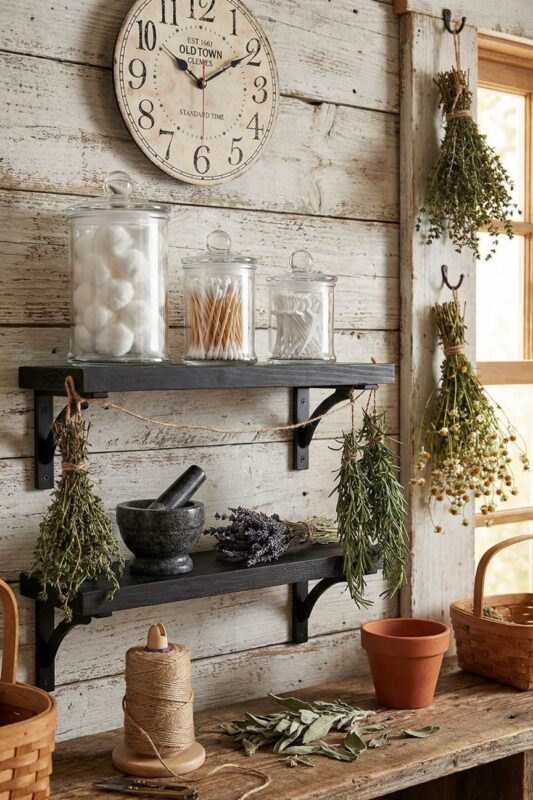
Each shelf holds glass jars, neatly filled with dried herbs, creating a functional display that also feels naturally decorative. The mix of materials adds a tactile rhythm to the space.
Hooks along the wall allow bundles of rosemary, chamomile, and other garden herbs to hang.
They fill the air with faint scents. On a nearby surface, a mortar and pestle, terracotta pots, and woven baskets offer practical surfaces for small tasks.
Each piece has its own space, which keeps the wall from feeling rigid.
The arrangement is quiet yet lively, capturing the essence of rural living. It encourages appreciation of everyday objects while blending storage with character.
This wall becomes a storytelling element, turning ordinary tools into a vignette of cottage-style life.
Sunlit Gingham Window Bench Nook
A window bench layered with soft gingham cushions transforms a corner into a cozy daydream.
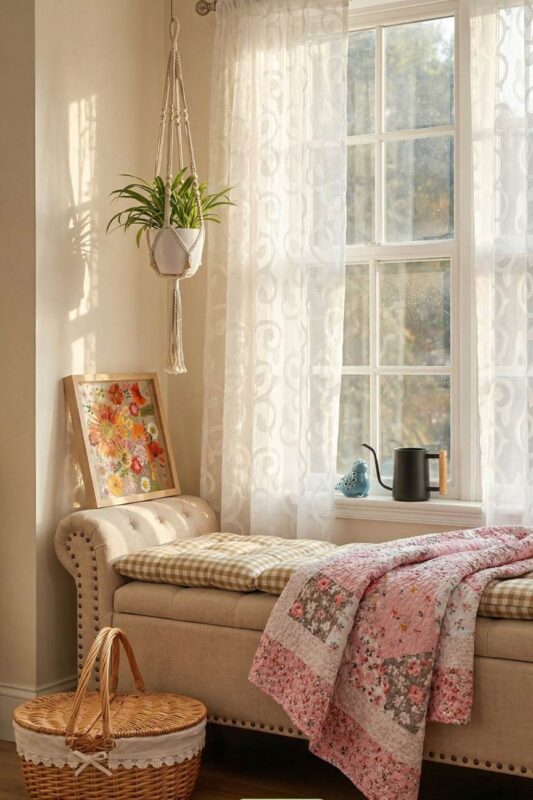
Light drifts through sheer curtains, casting a gentle pattern across the bench. A patchwork quilt folded neatly across one end adds softness to the space.
A small hanging plant nearby brings a touch of green, while a wicker basket holds books, yarn, or other small treasures.
The arrangement appears effortless, with each element placed in a way that encourages use.
The combination of light, textures, and functional objects makes the nook feel alive. It becomes a place for relaxing. This corner captures the essence of cottagecore living.
Candlelit Cottagecore Fireside Reading Nook
Position a floral armchair near the fireplace is worth. A row of taper candles along the mantel adds soft illumination, creating a calm atmosphere in the evening.
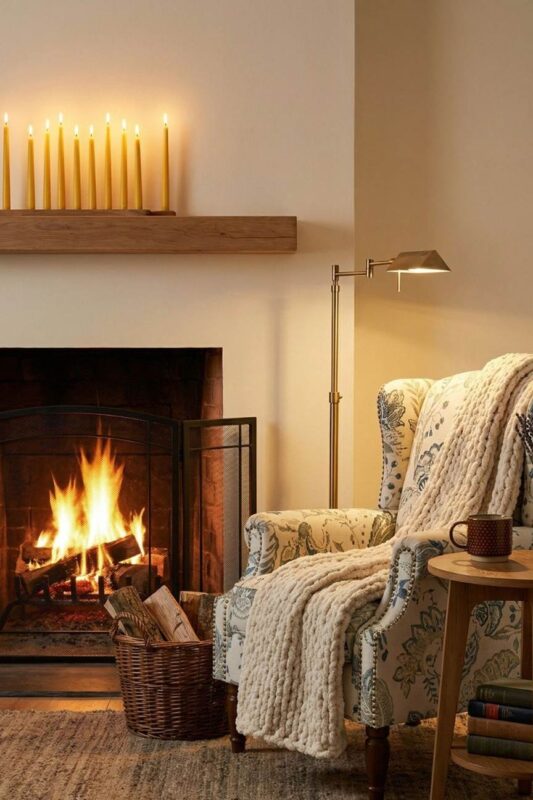
A round wooden side table keeps essentials like books and a mug within reach.
A chunky knit throw draped casually over the chair offers tactile comfort. A woven basket filled with logs sits nearby, maintaining a practical workflow.
The stone hearth and simple timber surround highlight the corner without requiring additional decoration.
This setup emphasizes pause. Each object contributes to a scene that is thoughtful. The light, the textures, and the arrangement combine to create a corner that encourages slow moments.
Rainy-Day Hearth Corner
A stone fireplace anchors this corner with tactile presence. Timber beams above and a simple wooden mantel emphasize rustic simplicity.
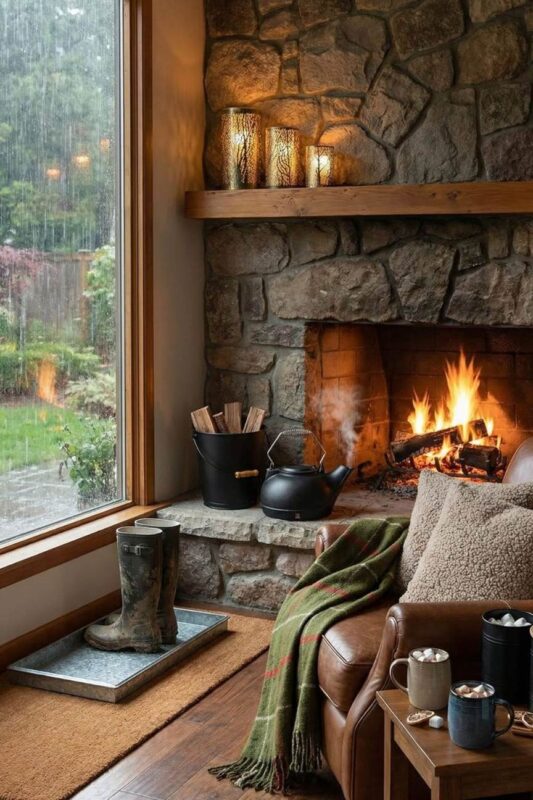
Lanterns or a few candles provide soft illumination that complements the gray light of a rainy day.
A sturdy chair sits close to the hearth, dressed with a textured pillow. Nearby, a galvanized tray organizes boots and other outdoor gear.
A small side table holds a kettle and mugs, making the corner practical as well as comfortable.
The scene encourages slowing down, whether for reading, sipping cocoa, or watching the rain.
Every element feels purposeful, as if the space evolved naturally. This corner balances utility with visual interest, offering a practical example of cottagecore living that works in daily life.
Antique Gallery Wall with a Cozy Settee
A small settee below a gallery wall instantly adds character to a living room. Frames in varied sizes hold botanical prints, cottage landscapes, and muted florals.
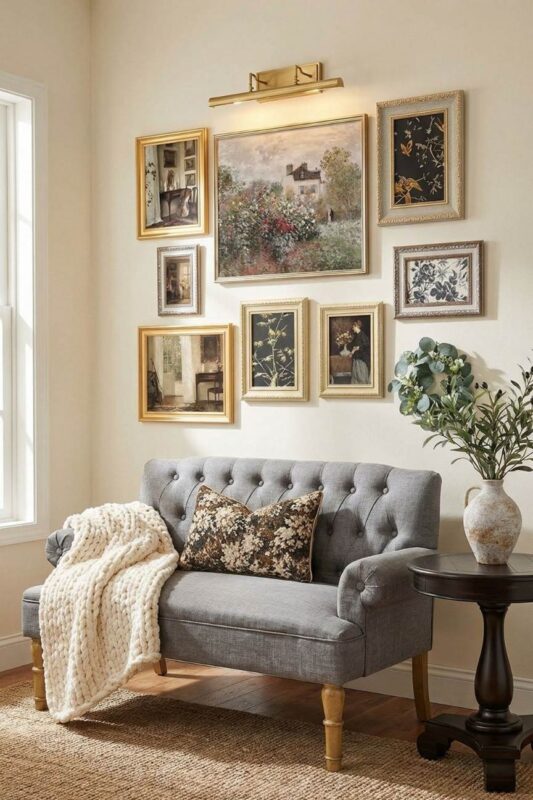
The arrangement appears curated with no strict symmetry, allowing each piece to hold its own presence.
The settee itself is textured, dressed with a chunky throw. A petite pedestal table holds a ceramic vase with leafy stems to create a functional vignette.
The combination of collected artwork and carefully chosen furniture conveys history. The space encourages lingering, offers seating that is incredible.
Deep Green Hearthside Cottage Nook
A deep green velvet armchair anchors a corner near a stone fireplace. Its rich color mirrors the forest outside the windows and adds a grounded, earthy presence.
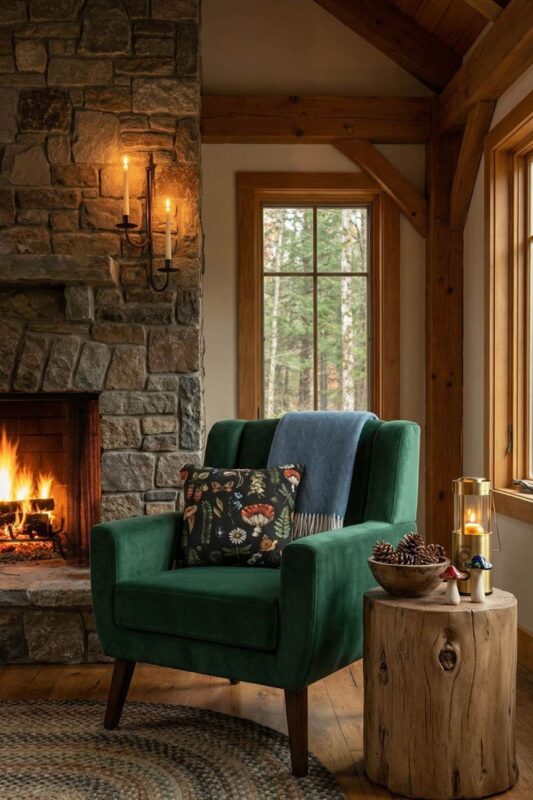
A knit throw drapes across the seat, softening the visual weight.
A raw wood stump serves as a side table, holding pinecones and small decorative objects. Each element sits comfortably, giving the area a natural rhythm instead of a forced design.
Candle sconces on the walls provide low light that reflects off the stone, casting gentle shadows that animate the space.
The view through tall timber-framed windows brings the outdoors into the living room, blending interior and exterior landscapes.
Every object appears settled in its place. The mood is calm, tactile, and connected to nature, giving the living room a grounded charm that embodies cottagecore sensibilities.
Gingham-Runner Console with Orchard-Inspired Details
A rustic console table topped with a gingham runner brings pattern to the room.
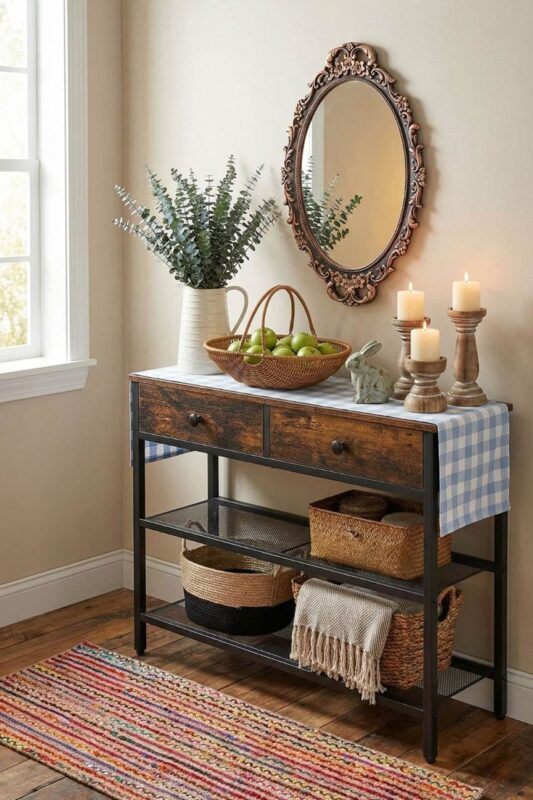
A basket of crisp apples sits on the table, next to a ceramic pitcher filled with fresh-cut greenery. The combination suggests a casual harvest scene.
Above the table, an oval mirror breaks the straight lines of the furniture. The lower shelf holds woven baskets, arranged loosely so they appear easy to use.
Small touches, like a tiny rabbit figurine or a ceramic vase, create playful interest. The eye moves naturally from one detail to another, giving the display personality.
Each element has room to stand on its own, forming a visual narrative that feels homegrown.
The console becomes a living vignette, connecting daily life with the charm of the orchard.
Vintage Finds and Handmade Pieces
Introduce furniture and décor that carry history to create a living room that tells a story.
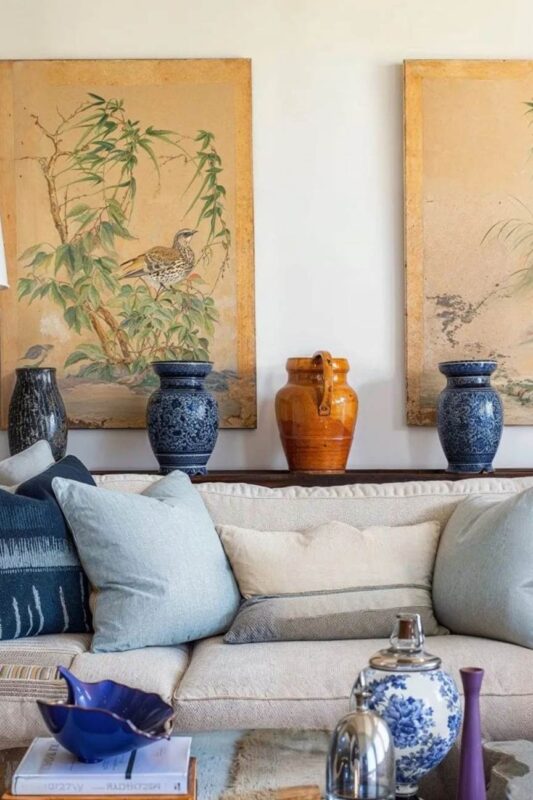
A handwoven rug layered over wooden floorboards adds visual depth while hinting at past craftsmanship.
Vintage chairs, slightly worn, show signs of daily use that bring authenticity.
Mix textures and materials. Wood, ceramic, and metal coexist naturally when their tones are balanced.
Each piece draws attention for its individuality, forming a collection that reads as uniform.
Handmade objects, like small baskets or pottery, add an intimate, human element. Placement is key where each item has space to be noticed, encouraging a sense of discovery as you move through the room.
The result is a living space that feels cultivated over time, offering character that mass-produced furnishings cannot replicate.
Layered Textiles to Build Depth Across the Room
Textiles transform a living room by adding layers of color, pattern, and texture. Start from the floor with rugs that overlap or contrast.
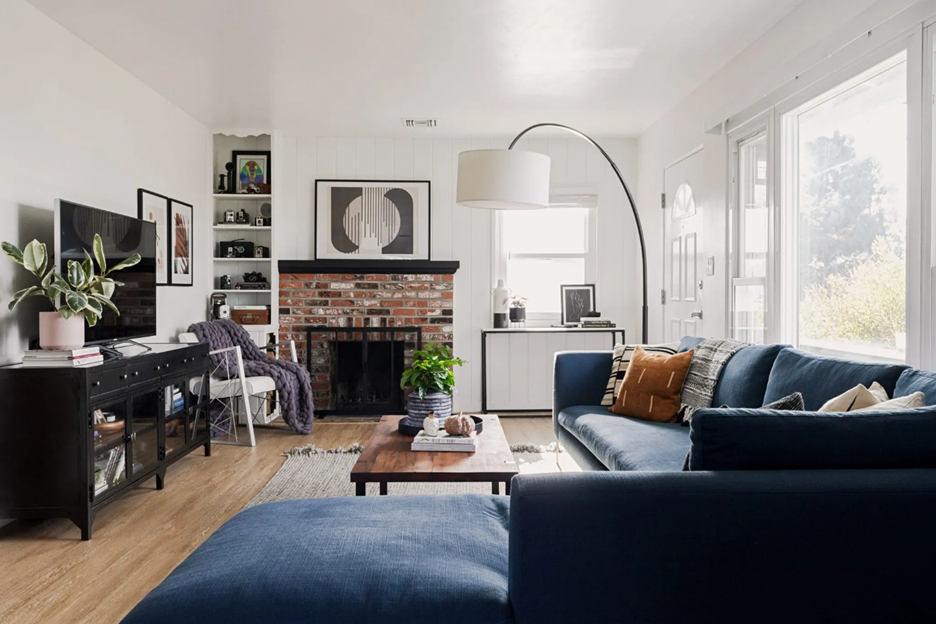
One neutral rug can anchor the space, while a patterned layer above draws the eye.
Cushions on seating create a tactile richness. Gingham, floral, and plaid work together when the palette is consistent, giving the room a relaxed rhythm.
Draping a throw across a sofa or chair breaks up flat surfaces and adds a sense of movement.
The interplay of patterns and textures gives each corner a sense of purpose. Every element contributes to a cohesive atmosphere that encourages sitting, lounging, or casual gatherings.
Layering textiles transforms the space into a living room that celebrates comfort.
Mismatched Seating for a Relaxed, Collected Look
Combine seating from different rooms to create an eclectic layout. A vintage armchair, a small sofa, and a rustic bench each bring a distinct presence, forming a conversation.
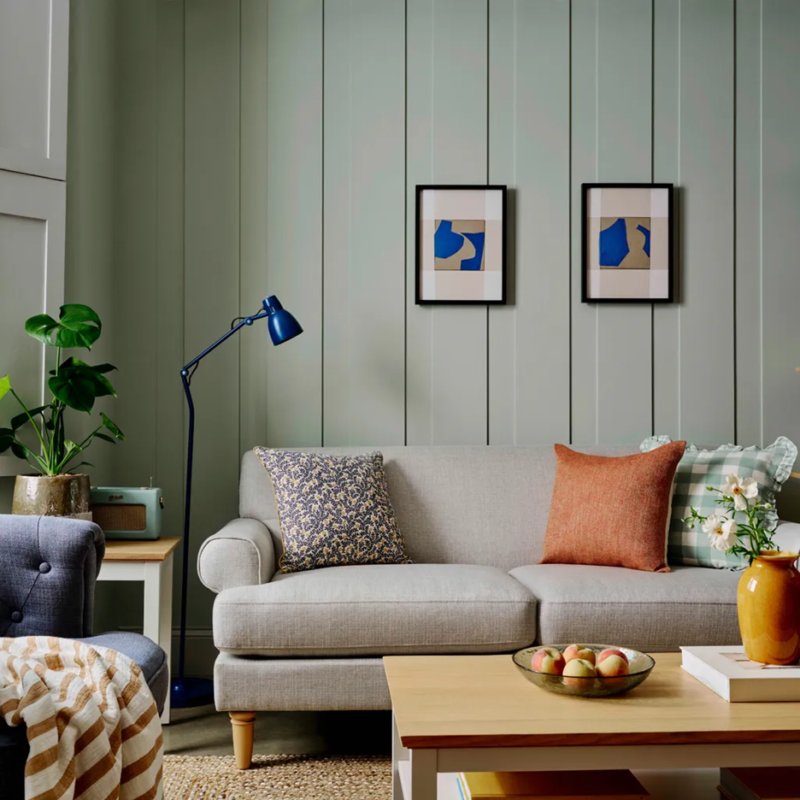
Cushions in complementary tones link the pieces visually. Spacing is important because it allow each seat room to stand apart so the arrangement appears deliberate.
This approach offers freedom. Furniture can be rotated over time as new pieces are inherited.
The result is a living room that feels personal, curated through everyday life. The mismatched look communicates authenticity in a way that strictly matched sets cannot.
Choose a Bright Accent
Introduce one bold accent to shift a traditional cottagecore palette. A bright sofa or armchair can stand as a focal point, adding vibrancy.
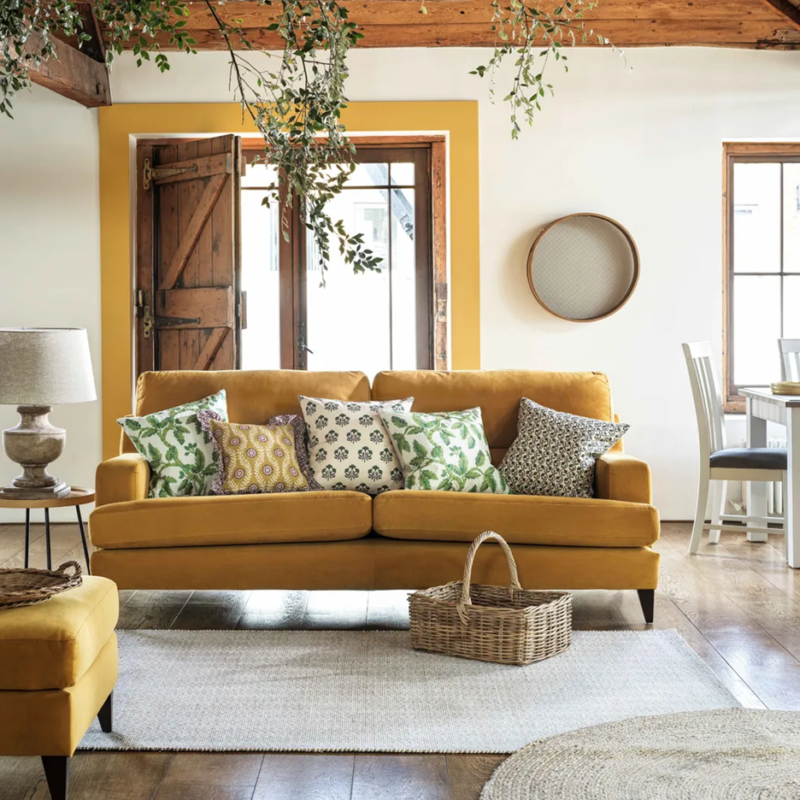
Surround it with classic wooden furniture to anchor the space. Smaller details, like cushions in a similar hue, echo the accent naturally.
Natural textures, such as woven baskets or cotton rugs, balance the intensity of the color and link it to the overall aesthetic.
Plants and floral prints around the room integrate the accent with the organic elements that define cottagecore.
The result is a living room that feels refreshed, layered, and cohesive. A single statement piece can redefine the mood of the room, giving traditional decor a modern edge.
FAQs
Is cottagecore still popular?
Yes, cottagecore is still around, but it has changed. It is no longer a viral trend like it was around 2020. Instead, it has settled into a steady design style that people continue to use in their homes.
In 2026, the look leans more toward what designers call “modern cottage.” That means deeper colors, older furniture, and spaces that look collected over time instead of styled all at once.
At the same time, there is a shift happening. Some people are moving away from strict aesthetics and focusing more on personal style.
So, cottagecore has not disappeared. It has just matured. You will still see its influence in vintage decor, handmade items, and nature-inspired spaces, even when it is not labeled as “cottagecore.”
How do I make my house look cottagecore?
Start with materials that feel natural. Wood, linen, cotton, and stone set the foundation. These surfaces give the space a relaxed and grounded look.
Bring in older or secondhand furniture. Pieces with slight wear add character and make the room look like it has developed over time. Cottagecore relies more on history than perfection.
Use soft patterns in small areas. Florals, gingham, or faded prints work best when they appear in cushions, curtains, or throws instead of covering every surface.
Add everyday items that double as decor. Baskets, books, pottery, and simple kitchen pieces can sit out in the open. This approach keeps the room practical and lived through daily use.
Finish with greenery or dried flowers. Plants connect the space to nature and soften the overall look. Even a small arrangement can shift the mood of a room.
What colors work best for a cottagecore living room?
Cottagecore colors tend to come from nature. Soft greens, warm creams, muted browns, and dusty blues form a strong base. These shades keep the space calm and easy to live with over time.
You can layer in deeper tones if you want more contrast. Shades like burgundy, mustard, or deep forest green work well in smaller elements such as cushions, throws, or a single chair.
Paint choices also matter. A slightly off-white wall often looks better than a bright white because it softens the space. If you prefer something bolder, a faded sage can shift the mood.