17 Clever Fall Classroom Decoration Ideas For Under $20

The first signs of fall remind me that classrooms deserve a seasonal refresh, too.
One change to pay attention to is how the room looks from a student’s desk.
Every touch, including classroom door decorations, should catch their attention without getting in the way of lessons.
Make use of spaces that often go unnoticed, such as windowsills, doorways, and the area around the classroom library.
With the right setup, autumn decorations become part of the learning environment.
I’ve put together my favorite fall classroom decor ideas for creating a classroom that is ready for the season.
I found 5 Amazon Finds worth having on hand before fall makeover:
- Colored cardstock paper
- Fall paper leaf cutouts
- Self adhesive felt boards for walls
- Laminating pouches
- Twine or craft string
How To Decorate A Classroom For Fall
1. Hello Fall Classroom Poster
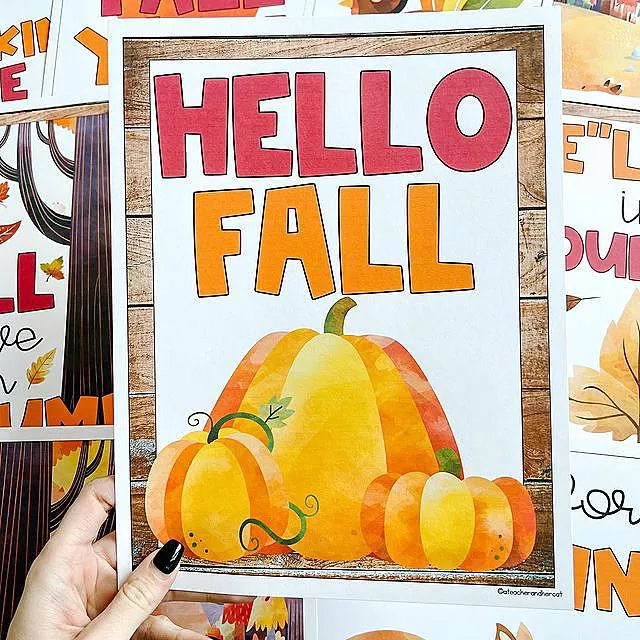
Give the room a seasonal welcome with a simple “Hello Fall” poster that catches students’ attention as they walk in.
Choose a large sheet of cardstock or a printable design with clear lettering that reads easily from across the room.
Add a few paper leaves, pumpkins, or acorns around the wording to give the poster a fall look.
For a more personal touch, leave space for students to write one thing they enjoy about autumn.
You could place their responses around the main message throughout the season.
A framed poster works well near the entrance, reading area, or teacher’s desk.
The design does not need many decorations to stand out.
A clean layout keeps the message easy to read and leaves the surrounding space open for student work.
Styling Tip: Place the poster at eye level near the entrance so students see it as soon as they arrive.
2. Pumpkin Patch Corkboard Collage
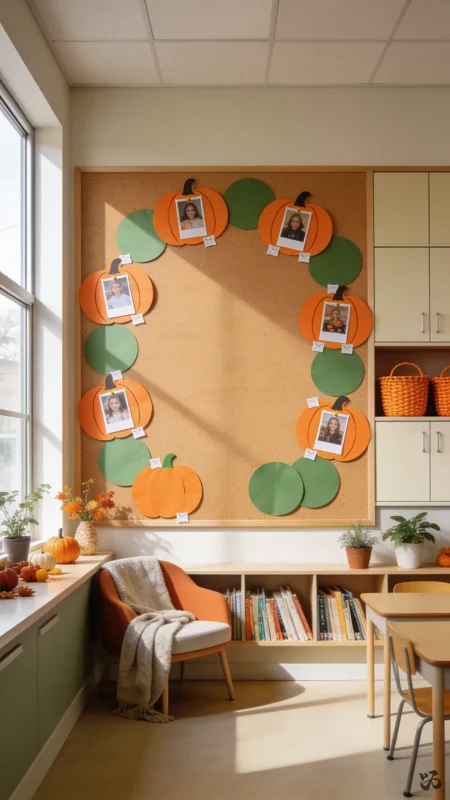
Turn a plain corkboard into a cheerful pumpkin patch using paper pumpkins in different sizes.
Cover the background with green or brown paper, then arrange the pumpkins across the lower half.
Write student names, short messages, or current class goals on the pumpkins for a personal touch.
Add paper vines that curl around the pumpkins to give the scene more character.
A few leaves scattered across the background help fill small empty areas.
You could also place a small basket near the bottom for extra pumpkin shapes.
Change the pumpkins throughout fall as students complete projects or reach classroom goals.
This setup suits younger grades particularly well because the shapes are simple enough for students to help create.
The finished scene gives the room a cheerful harvest look without requiring expensive supplies.
Decor Tip: Use cardstock for the pumpkins so they stay firm when students handle them or when you move pieces around.
3. Create a Cozy Fall Reading Nook
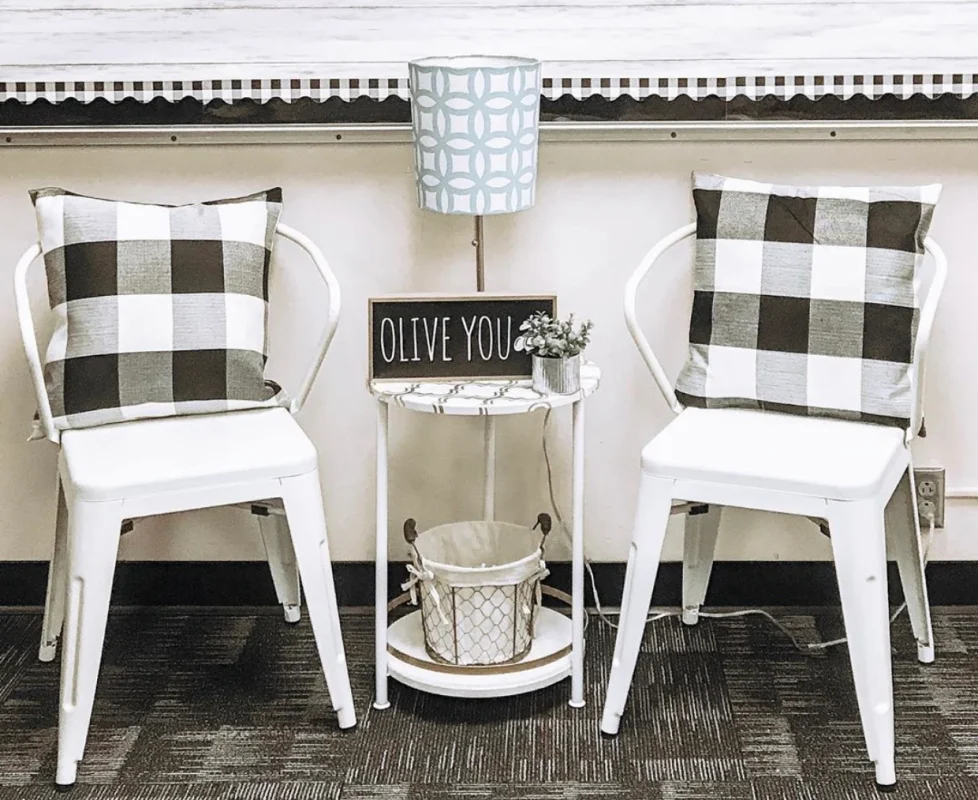
Give your reading corner a seasonal update that makes the space more inviting for quiet reading time.
Start with a small fall sign near the bookshelf or seating area.
Add two or three throw pillows in autumn shades, then place a soft blanket over a chair or floor cushion.
A few faux leaves around the bookshelf bring in the seasonal theme without taking up valuable reading space.
Small pumpkins also work well on a low shelf or nearby table.
Keep the seating comfortable and leave enough room for students to move around easily.
You could rotate a few fall-themed books into a front-facing display so the seasonal theme continues through the reading choices.
The result feels cozy enough for fall yet remains practical for everyday classroom use.
Styling Tip: Choose washable pillow covers and a durable blanket since reading corners tend to get plenty of daily use.
4. Alphabet Fall Tree on the Wall
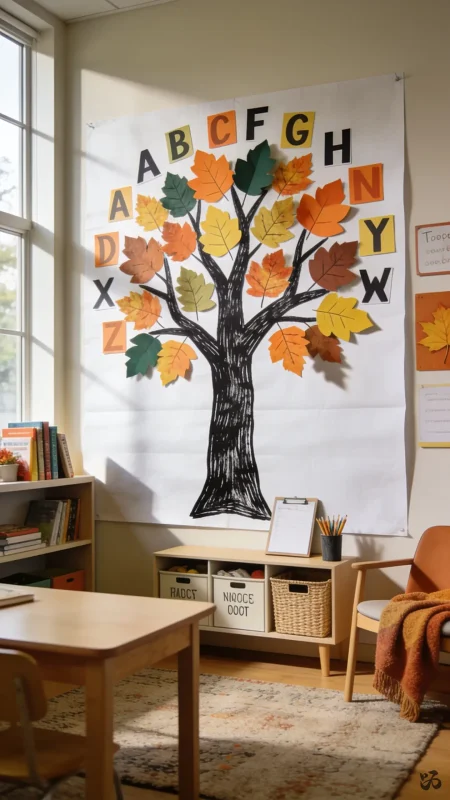
Turn alphabet practice into a fall scene with a large tree covered in colorful letter leaves.
Draw or cut out a sturdy tree trunk, then place the branches across a whiteboard or open wall.
Create one leaf for each letter of the alphabet, using large letters that students recognize easily.
Arrange the leaves across the branches instead of lining them up like a traditional alphabet chart.
For younger students, add a simple picture beside each letter to reinforce recognition.
You could also invite children to suggest words that begin with each letter throughout the season.
Write their suggestions on smaller leaves, then place them beneath the matching letters.
The tree gradually becomes a shared learning project that changes as students contribute.
It also brings a strong fall theme into an area already used for instruction.
Styling Tip: Laminate the letter leaves before attaching them so you can reuse the tree for future autumn lessons.
5. Autumn Book Display
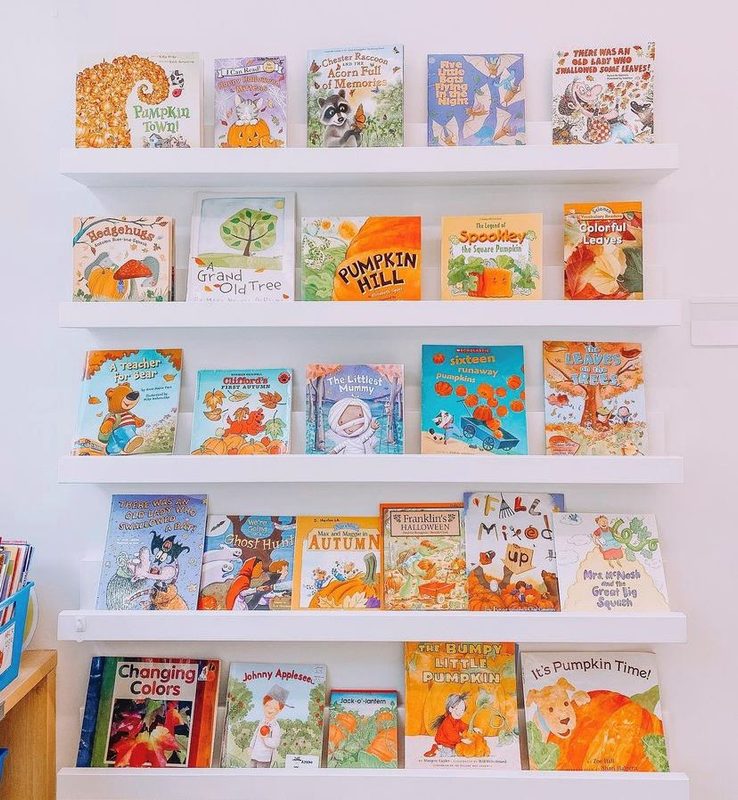
Give your fall reading collection a dedicated spot that makes the books easier for students to notice.
Choose a small shelf, table, or section of your existing library for the seasonal arrangement.
Place the covers of a few autumn-themed books facing outward so students see the titles immediately.
Add paper leaves around the books, then include a small “Fall Favorites” sign above the collection.
A miniature pumpkin or two adds seasonal character to the setup.
Keep decorations around the edges so students have enough room to pick up and return books.
Rotate the featured titles every week to introduce different stories throughout the season.
You could also let students recommend a favorite book and place their choice at the front.
That small contribution turns the display into part of your reading routine.
Decor Tip: Use a wooden crate as a simple riser for shorter books so every cover remains visible from across the room.
6. Stained Glass Apple Classroom Window Craft
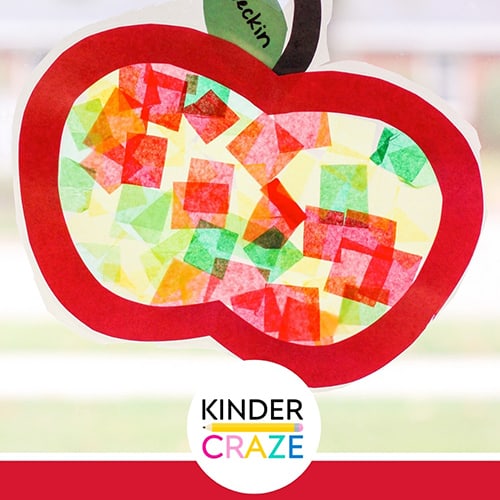
Bring fall color to your windows with simple stained glass apples made from tissue paper.
Cut large apple outlines from black cardstock, then remove the center to create an open frame.
Place small pieces of red, yellow, orange, or green tissue paper across the opening.
Cover the back with clear contact paper to hold everything in place. Once finished, attach the apples to the window so sunlight shines through the colored sections.
The translucent paper gives the apples a lovely stained glass effect during bright afternoons.
Invite students to create their own apple patterns using different tissue paper combinations.
Add a small leaf or stem to complete each shape.
The finished pieces turn an ordinary window into a seasonal art project that students helped create.
Styling Tip: Leave small gaps between the tissue paper pieces so sunlight passes through the design more clearly.
7. Mini-Display Shelves with Seasonal Word Cards
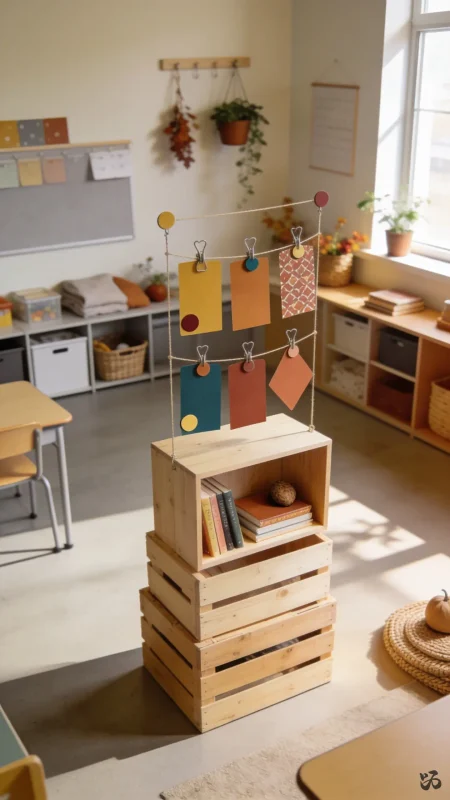
Use small wall shelves to create a rotating collection of fall-themed words, objects, and student work.
Place a few mini pumpkins, pinecones, acorns, or small wooden signs on each shelf.
Add word cards with simple terms such as “autumn,” “harvest,” “apple,” or “crisp.”
You could pair each word with a picture or a short definition for younger students.
Leave enough space between the objects so the shelves do not look crowded.
Change the cards every week to introduce new vocabulary connected to current lessons.
The shelves also provide a useful spot for displaying seasonal books, crafts, or small student projects.
Choose lightweight decorations that stay secure on the shelves during busy school days.
This setup adds vertical interest to an otherwise empty wall.
Styling Tip: Use matching card sizes for every word so the shelves look organized even when the seasonal objects change.
8. Fall Flowers and Plaid Wall
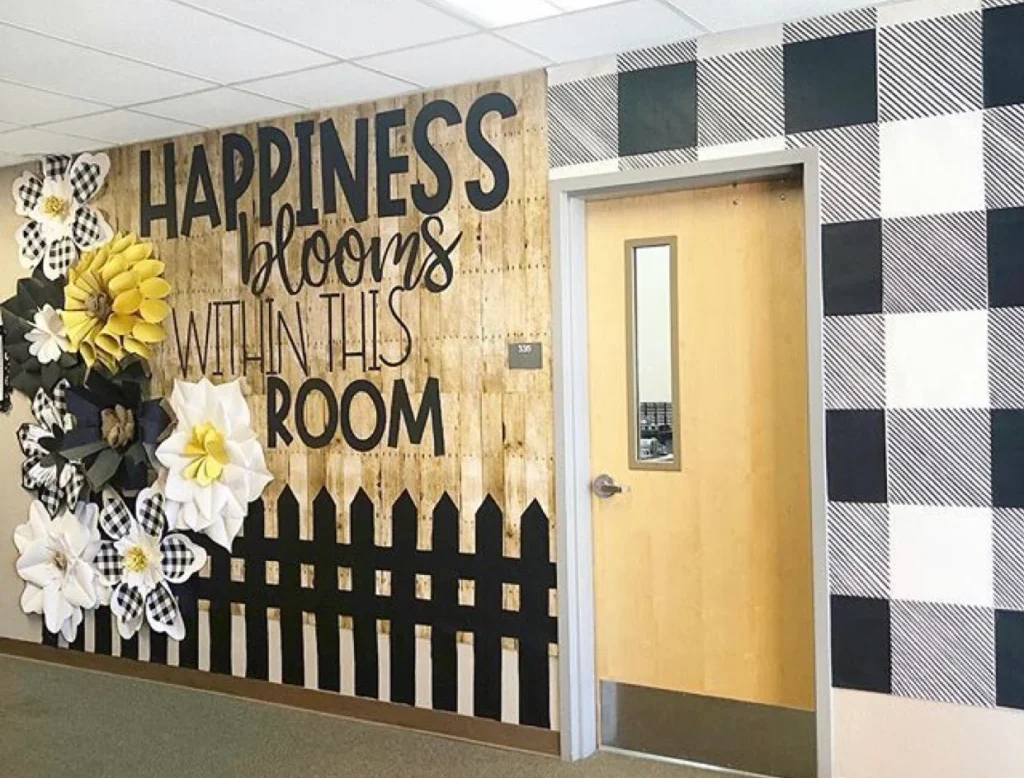
Bring a cozy fall look to an empty wall with oversized paper flowers set against a plaid background.
Choose one plaid fabric or paper as the backdrop, then arrange large flowers across one side.
Sunflowers, mums, and simple paper blooms suit the autumn theme nicely.
Use different flower sizes to keep the arrangement from looking too uniform.
A few paper leaves between the blooms fill small gaps and connect the pieces.
You could add a simple seasonal phrase in the center if the wall needs an educational or welcoming message.
Keep the pattern limited to one section so it does not compete with student work nearby.
This approach suits teachers who want something decorative rather than a display built around assignments.
Styling Tip: Secure the plaid fabric tightly before adding the flowers so the background stays smooth throughout the season.
9. Counting Corn Stalks Door Cover
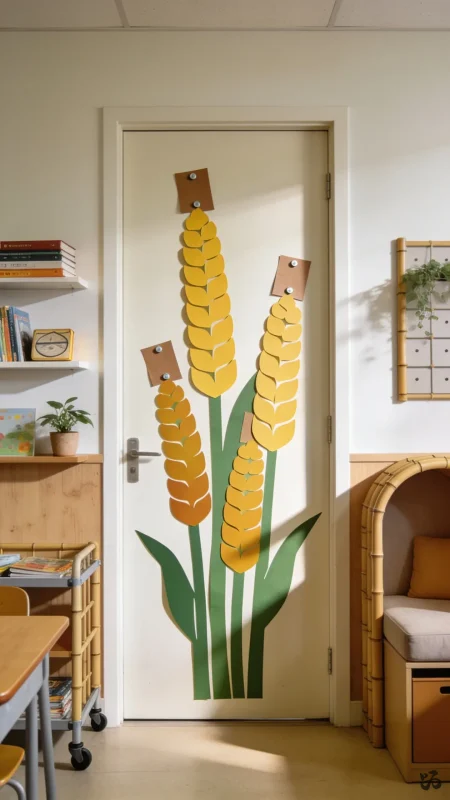
Turn the classroom door into a simple fall math activity with paper corn stalks and numbered corn cobs.
Cover the door with green paper, then add tall stalks across the surface.
Attach yellow corn cobs labeled with numbers that match your students’ current counting skills.
Younger children could count from one to ten, while older students could work with larger numbers.
Leave a few empty spaces so students have room to add missing numbers during a class activity.
A small basket or scarecrow near the bottom completes the harvest scene.
The design combines seasonal decoration with number practice, so the door serves a purpose beyond looking festive.
Change the numbers as your class moves into new math skills.
Decor Tip: Use laminated corn cobs so you can replace the numbers easily for different lessons throughout the year.
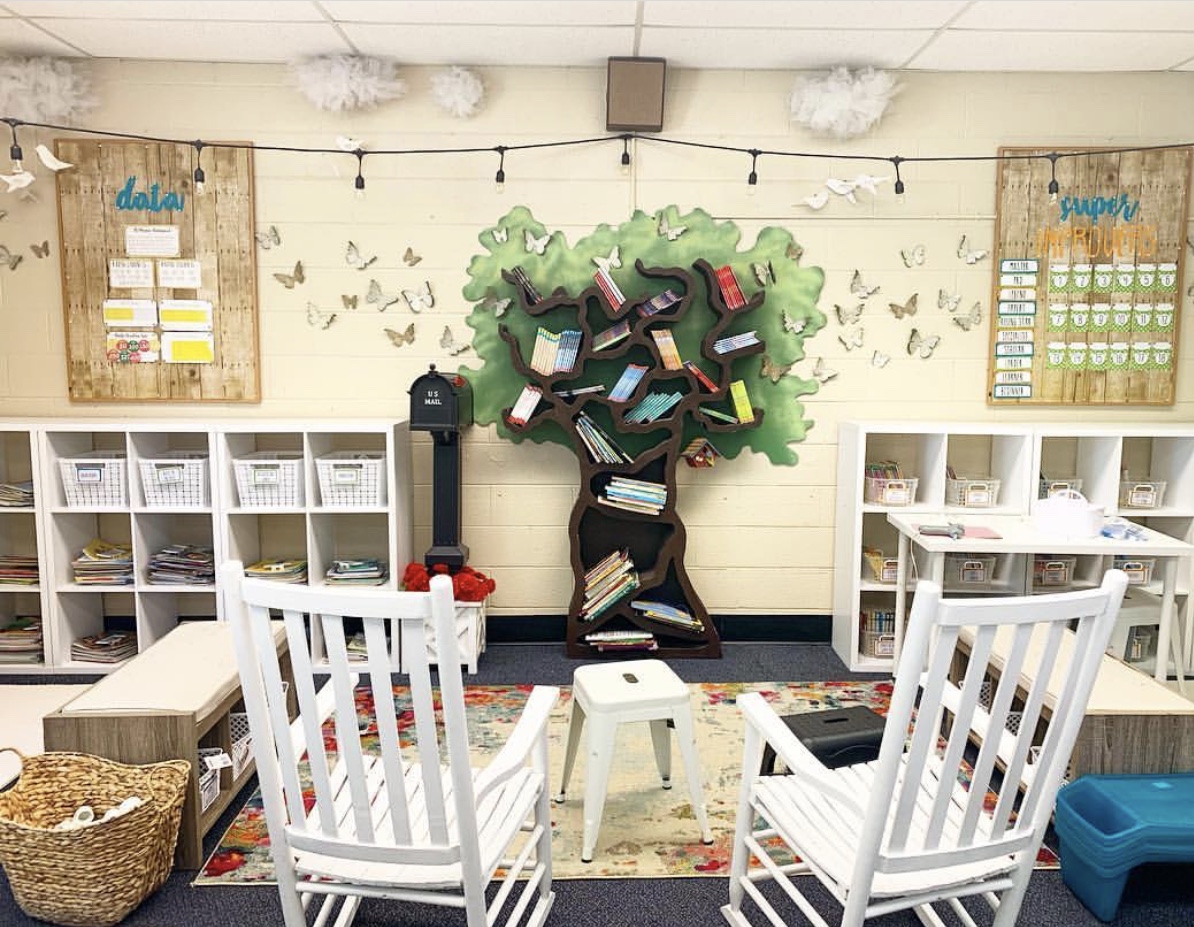
10. Tree Bookshelf in Class
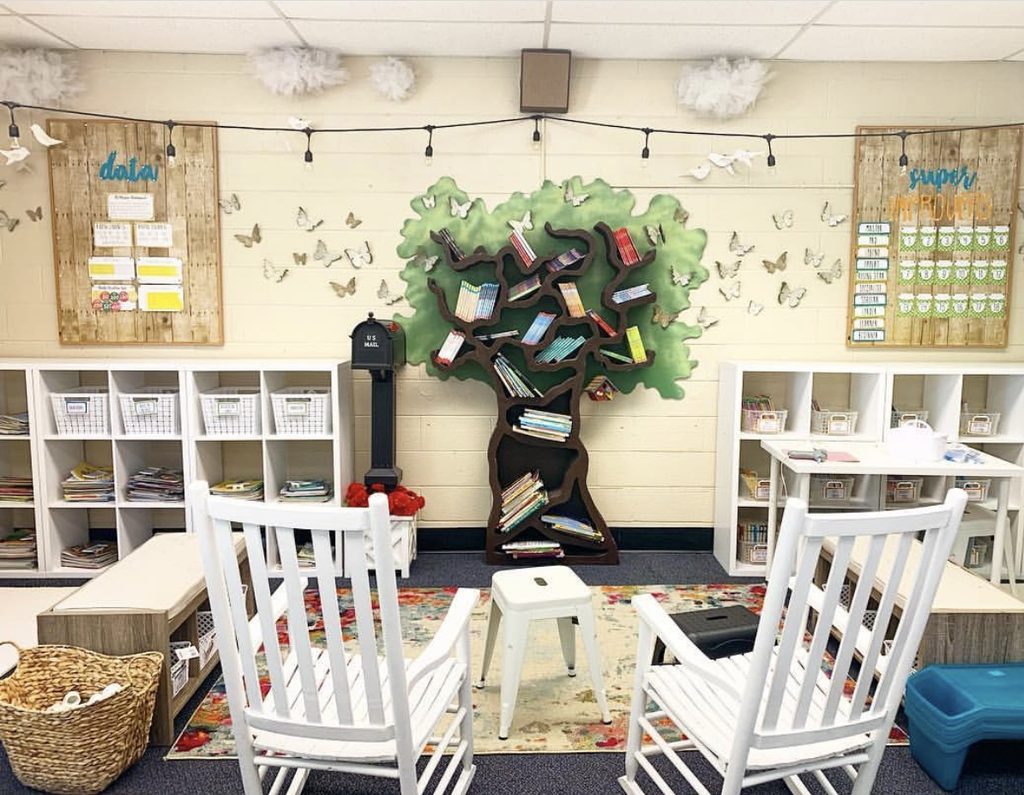
Turn your classroom library into a woodland scene with a tree-shaped bookshelf.
Use a sturdy wooden tree shelf if you have one, or create a paper tree around a regular bookcase.
Place books along the branches or shelves so the display remains practical for daily reading.
Add paper leaves featuring book titles, reading goals, or student recommendations.
Small woodland animals around the base give the area a clear fall theme.
Keep the lower shelves easy for students to reach so books remain accessible.
You could rotate the featured books each week to introduce new stories.
The tree shape also works nicely for a reading corner because it separates the library from the rest of the room.
Styling Tip: Keep decorations away from book spines and shelf edges so students can remove books easily.
11. Fall Classroom Door Mat
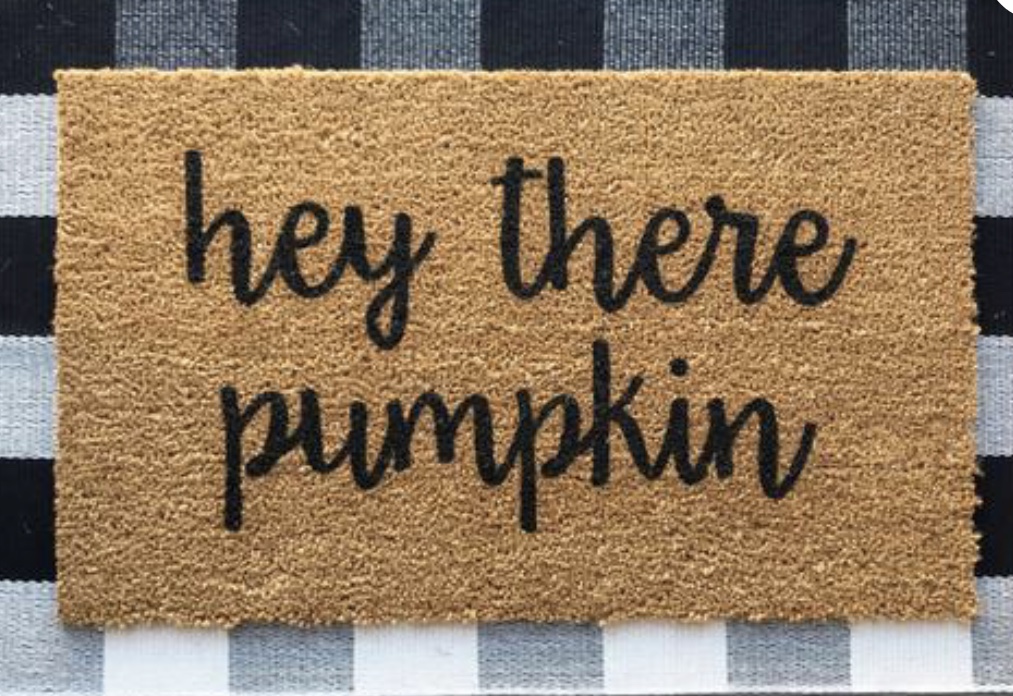
Give your classroom entrance a seasonal welcome with a fall-inspired mat placed just outside the door.
Choose a washable mat with pumpkins, leaves, acorns, or a simple autumn greeting.
A plain brown or neutral mat also works if you prefer a quieter look.
Pair it with a small pumpkin or seasonal sign beside the entrance for a little extra character.
Choose a low-profile design so students do not trip as they enter the room.
A washable material also makes sense for classrooms since the entrance sees plenty of daily traffic.
You could change the mat later in the season when winter decorations begin appearing.
The small addition makes the entrance feel connected to the seasonal décor inside.
Styling Tip: Pick a mat with a non-slip backing so it stays firmly in place during busy arrival and dismissal periods.
12. Printable Fall Classroom Posters
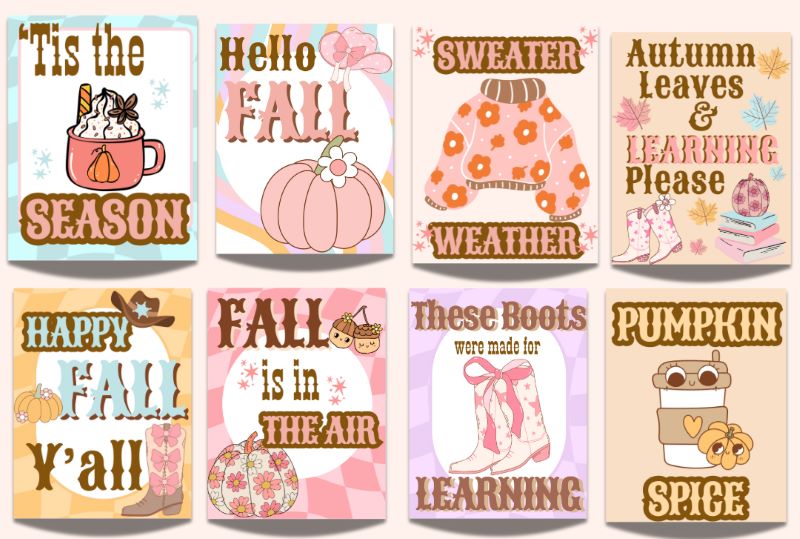
Printable fall posters offer a quick way to refresh empty walls with seasonal messages and learning content.
Choose designs that match your grade level, then print them on sturdy cardstock for better durability.
Posters featuring leaves, pumpkins, apples, or woodland animals suit the season nicely.
You could use motivational messages for vocabulary, math facts, and reading reminders for older classes.
Mix larger posters with smaller prints so the arrangement does not look too repetitive.
Place the most important messages at eye level where students see them during the school day.
Swap a few posters every couple of weeks to keep the room looking fresh.
The biggest advantage is simple preparation since you only need to print, trim, and hang them.
Styling Tip: Print several designs in the same size and use simple frames for a more organized look.
13. Add Paper Pumpkin Lanterns
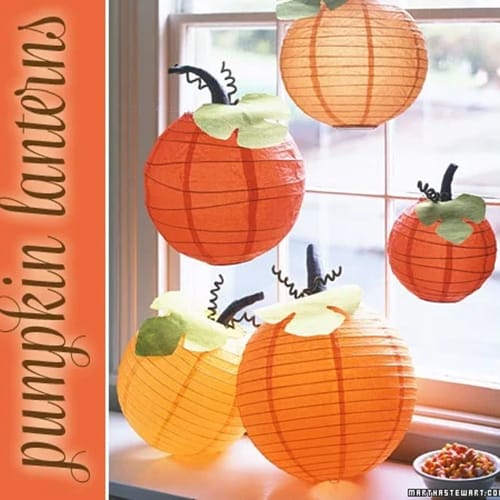
Paper pumpkin lanterns bring a warm autumn glow to the room without taking up much space.
Use orange construction paper to create simple lantern shapes, then add a brown stem and green paper leaf at the top.
For a classroom-safe version, place a battery-operated LED tea light inside each lantern.
Hang several from the ceiling near the entrance, across a window, or above a reading area.
Keep the lanterns high enough to stay out of students’ way during everyday activities.
You could also write a short fall word on each pumpkin for a simple vocabulary touch.
The soft light works best in a reading corner where students already spend time with books.
Choose lightweight paper so the decorations are easy to hang, remove, and store after the season ends.
Decor Tip: Use warm-white battery lights instead of real candles to avoid an open-flame hazard in the classroom.
14. Fall-Themed Number Line Banner
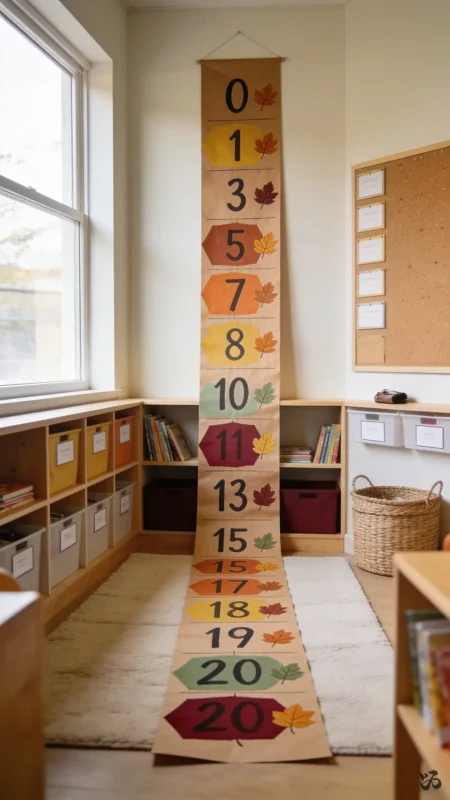
Make math practice part of your fall décor with a number line banner that stretches across an open wall.
Cut leaf shapes from cardstock, then write one number on each leaf in sequence.
Hang the leaves from a long piece of twine so students can see the numbers clearly from their seats.
For younger learners, start with numbers from 1 to 20.
Older students might benefit from larger numbers that match the skills being taught.
Leave enough space between each leaf so students can easily identify missing numbers during counting activities.
The banner also works as a quick reference during addition, subtraction, and ordering exercises.
Choose colors that contrast with the wall so the numbers remain readable throughout the day.
Styling Tip: Laminate the numbered leaves before hanging them so the banner stays usable through repeated lessons.
15. Gourd Shaped Name Tags on the Wall
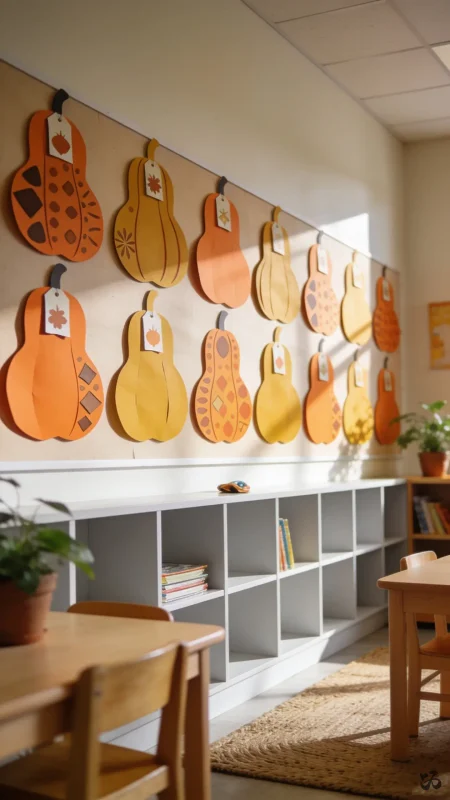
Turn student names into part of the autumn décor with gourd-shaped name tags arranged across an open wall.
Cut the shapes from orange cardstock, then write each student’s name in large, easy-to-read letters.
Arrange the gourds in rows, along a paper vine, or around a simple fall heading.
Keep the names large enough for students to recognize from several feet away.
The tags work nicely near cubbies, assigned seats, or a classroom entrance where names already serve a purpose.
Add a small paper stem to each gourd for a finished pumpkin-inspired look.
Students could decorate their own name shapes during an art activity before they go on the wall.
That personal touch turns a basic name display into seasonal student work.
Decor Tip: Use removable adhesive so the name tags come down easily when you change the wall for winter.
16. A Few Simple Lanterns Near a Reading Corner
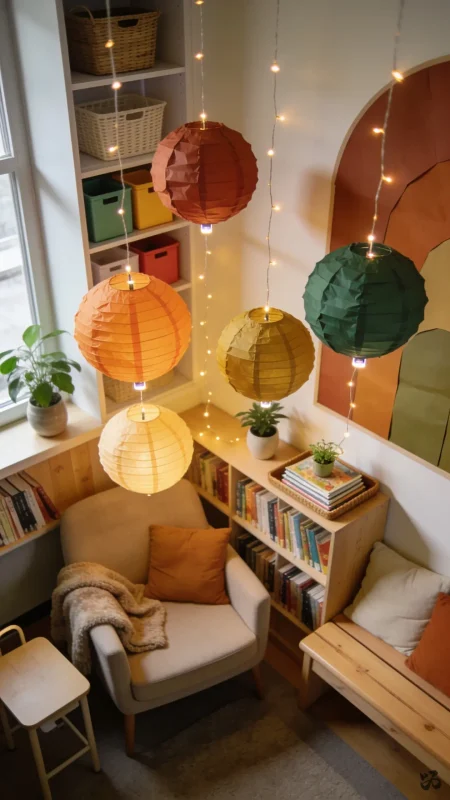
A small cluster of lanterns can give a reading corner a cozy fall accent without crowding the space.
Choose lightweight paper lanterns in warm autumn shades, then hang them above the bookshelf or beside the reading area.
Battery-operated lights work well if you want a gentle glow during quiet reading periods.
Keep the lanterns high enough that students cannot reach them from the floor or seating.
Three lanterns arranged at different heights give the corner some dimension without filling every available spot.
Pair the lights with a small stack of seasonal books to connect the decoration with the purpose of the space.
Keep the surrounding area clear so students still have comfortable access to books and seating.
Styling Tip: Hang the lanterns slightly away from the bookshelf so they do not interfere with book access.
17. Fall Leaf Shapes into Class Windows
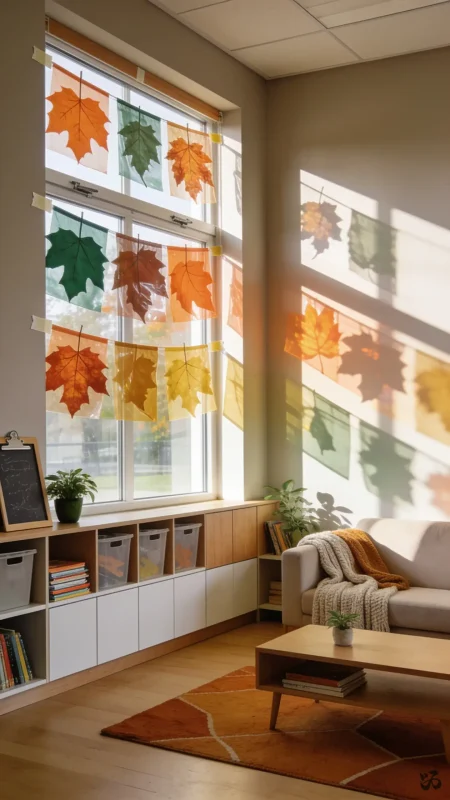
Fill the windows with colorful fall leaves to bring a simple seasonal scene into the classroom.
Cut leaf shapes from translucent colored paper so daylight passes through the designs.
Choose a few leaf shapes in different sizes, then arrange them across the lower section of the window.
Students could write their names, favorite fall words, or short messages on the leaves before they go up.
The transparent paper looks striking when sunlight shines through it during the school day.
Leave the upper part of the glass clear so natural light still reaches the room.
Use removable adhesive to attach each leaf securely without leaving a permanent mark on the window.
Once the season ends, the leaves come down easily for storage or replacement with a new classroom theme.
Decor Tip: Leave small spaces between the leaves so each shape remains distinct instead of forming one solid block of color.
Frequently Asked Questions
How can I decorate my classroom for fall on a budget?
Paper leaves, pumpkins, banners, and student-made artwork are affordable choices that add seasonal color without requiring expensive supplies.
Reusing cardstock from previous years also helps reduce costs.
How do I keep fall decorations from distracting students?
Limit decorations to selected areas instead of covering every wall. Keep instructional spaces clear, place important materials at eye level, and avoid hanging items where they block students’ view.
When should I take down fall classroom decorations?
Fall decorations usually work well through November, then you can gradually replace them with a winter theme.