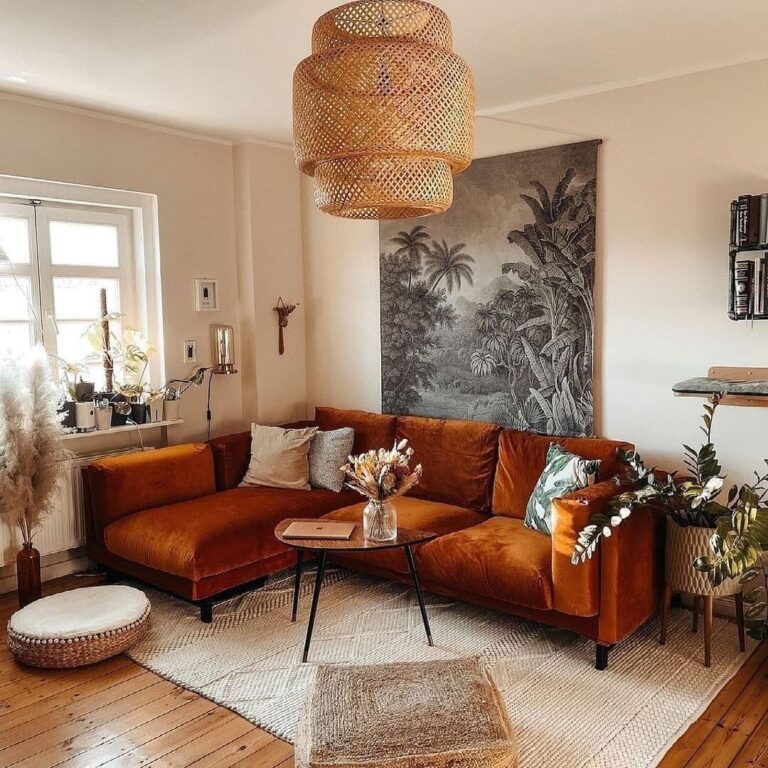
16 Clever Guest Room Office Combo Ideas For Dual Functionality

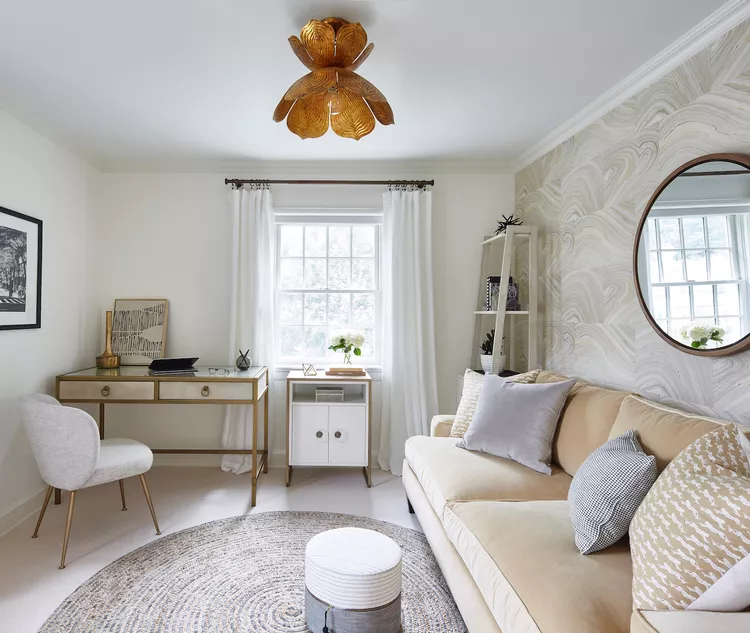
Fitting a home office into a guest room can solve more problems than it seems at first.
A single room can handle daily work, then shift into a comfortable spot for visitors when needed.
The difference comes down to layout, furniture choices, and how the space is used throughout the day.
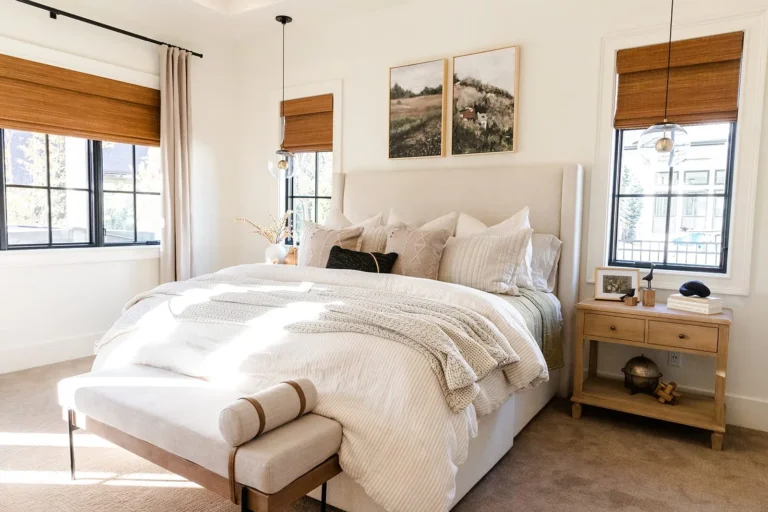
When done right, the room shifts easily between work hours and guest use, offering comfort in both roles.
The 17 guest room office combo ideas I am about show how to create a space that works smoothly without sacrificing comfort or style.
Why Have a Guest Room Office?
A guest room office is common where extra space is limited but daily needs keep growing. Here is the reason for creating a guest room office combo:
- To utilize space efficiently
A guest room office makes use of space that sits idle for long stretches. Instead of dedicating an entire room to occasional visitors, the same area supports daily work routines.
A desk fits naturally into a corner, leaving enough room for a bed without crowding the layout. Storage solutions help keep work items contained so the sleeping area stays clear when guests arrive.
- Flexibility
This type of room adjusts to different needs throughout the day. In the morning, it supports focus and productivity. Later, it transitions into a calm space for rest.
Furniture choice plays a key role in this shift. Pieces that serve more than one function reduce the need for constant rearrangement.
- Dual functionality
A successful guest room office relies on design decisions that support both work and rest. Each element needs to serve a clear role.
Lighting, furniture placement, and storage all work together to define zones within the room. A desk area signals work time, while a bed area maintains a restful atmosphere.
13 Ways to Fit an Office in A Guest Room
1. Scandinavian Serenity Guest Room Office Combo
A Scandinavian serenity guest room office combo brings together calm tones, simple furniture, and a layout that supports rest.
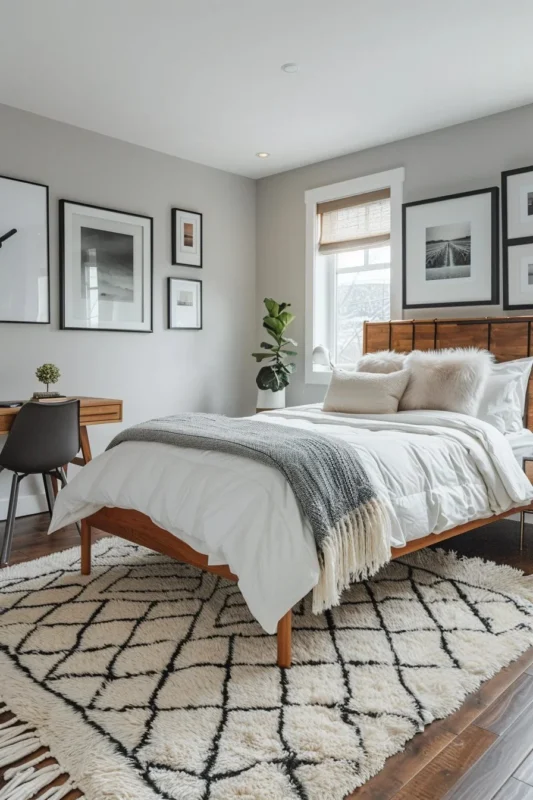
The space relies on a neutral palette, often built around soft whites, pale grays, and light wood finishes.
Furniture stays minimal, with clean lines that keep the room open and easy to move through.
A low-profile bed, a simple desk, and a streamlined chair create structure without crowding the space.
Wood accents introduce warmth and prevent the room from looking flat. Soft textiles, such as woven throws or light bedding, add comfort and balance the clean surfaces.
Natural light plays a key role here. Keep window areas clear so daylight can move freely across the room, helping the workspace stay bright during the day.
Storage blends into the design. Wall-mounted shelves and hidden compartments keep essentials close but out of sight, so the room stays tidy.
Pro Tip: Mount your desk perpendicular to the bed to create two clear zones. This layout keeps the room open but separates work from rest.
What To Avoid: Avoid heavy curtains or dark wood finishes. They can weigh down the space and disrupt the light, airy look this style depends on.
2. Repurpose The Antique Table
An antique table can anchor a guest room office combo with a sense of history and character.
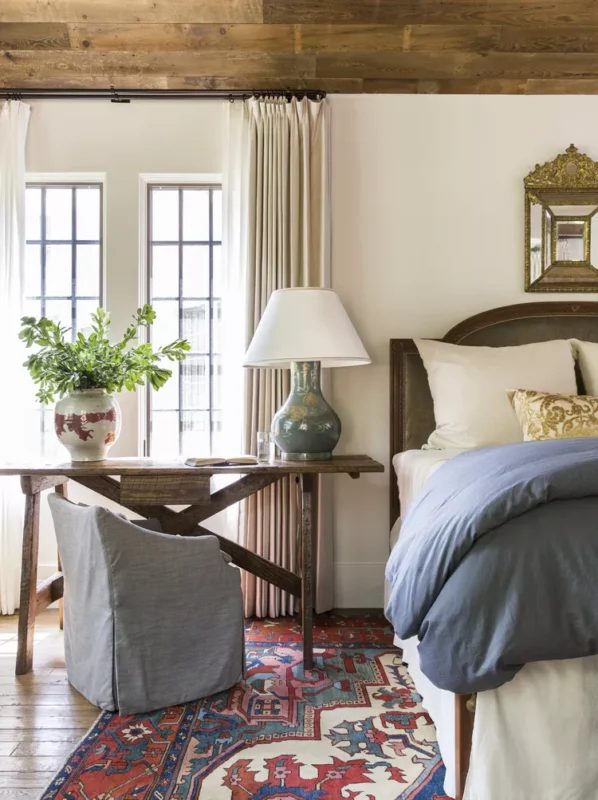
Instead of bringing in a standard desk, this approach introduces a piece that already carries texture, patina, and visual interest.
The table becomes the focal point of the workspace. Its worn edges, carved details, or aged finish add depth that newer furniture often lacks. This helps the room avoid a staged.
Function still matters, so consider the table’s height and surface area. It should support daily tasks like writing, laptop use, or light organization without feeling cramped.
Pair it with a simple chair that does not compete for attention. This keeps the focus on the table while maintaining balance across the room.
Storage can stay nearby but separate. A small cabinet or wall shelf keeps supplies within reach without altering the table’s original form.
Pro Tip: Add a slim drawer organizer or tray on top to keep work essentials tidy without modifying the antique piece.
What To Avoid: Avoid sanding or refinishing the table too heavily. Its worn surface adds character and should remain part of the design.
3. Use a Console Table as a Compact Desk Solution
A console table offers a smart solution for smaller guest room office combos. Its narrow depth allows it to fit along a wall or under a window without taking over the room.
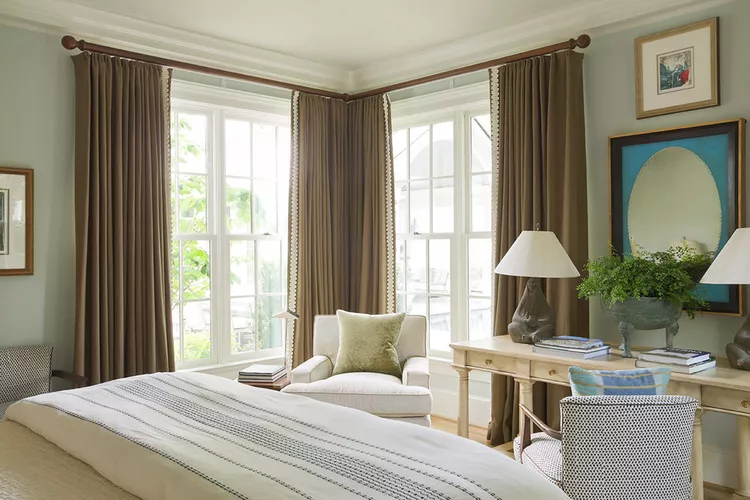
This setup keeps the workspace light and unobtrusive. Guests still have room to move around, and the area does not shift entirely into office mode.
The surface works well for a laptop, notebook, or a small lamp. It supports essential tasks without encouraging clutter.
Because console tables often come in simple designs, they blend easily with existing décor. Wood, metal, or painted finishes can match the tone of the room.
Keep the area above the table clean or lightly styled. A single piece of artwork or a small shelf can define the workspace without crowding it.
Pro Tip: Place the console table near a power outlet so cords stay short and easy to manage.
What To Avoid: Avoid overloading the surface with office supplies. Too many items can make the desk look cramped and distract from the room’s dual purpose.
4. Include Comfy Seating
Seating plays a key role in making a guest room office combo feel complete. A comfortable chair or small lounge seat can support work tasks.
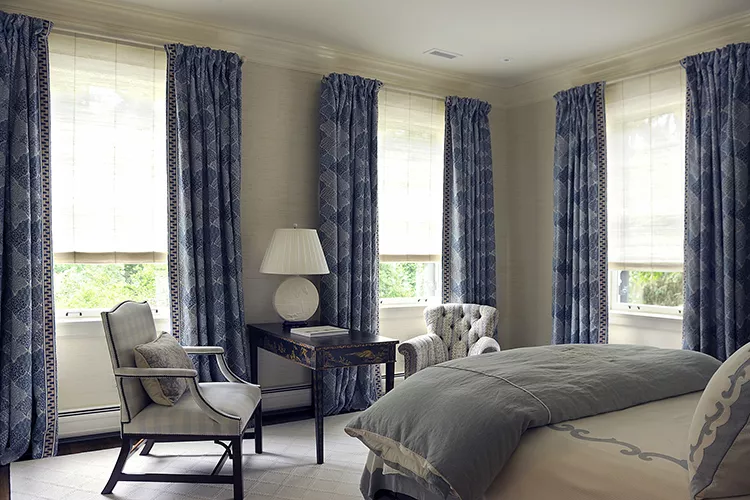
A well-chosen chair invites use beyond the desk. Guests can read, rest, or take a break without needing to sit on the bed.
Upholstered chairs in soft fabrics add warmth to the room. They also balance the harder surfaces of desks, shelves, and flooring.
Placement matters here. Position the chair near a window or corner to create a small retreat within the room.
The design should stay simple so it fits both purposes. A chair that looks too formal may not suit the relaxed side of the space.
Pro Tip: Add a small side table next to the chair to create a functional spot for books, drinks, or personal items.
What To Avoid: Avoid bulky seating that takes up too much floor space. It can limit movement and make the room feel crowded.
5. Build Space for Two
A shared workspace can work well in a guest room when planned carefully. Creating space for two allows the room to support more than one person during work hours.
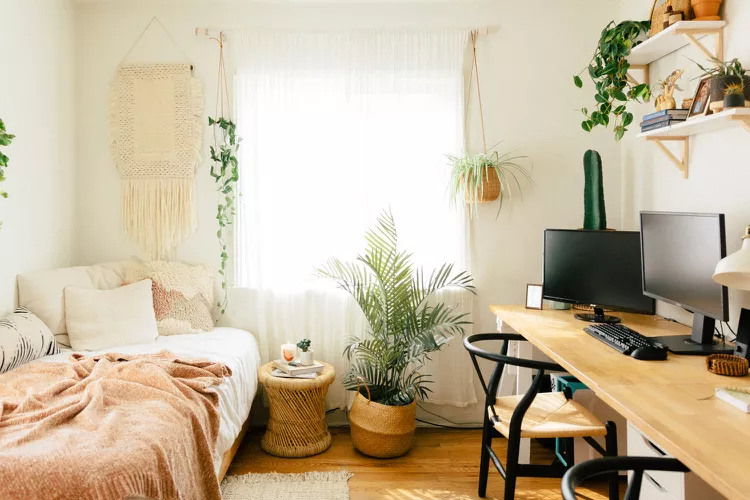
Start with a longer desk or two smaller desks placed side by side. This gives each person a defined area without needing separate rooms.
Keep the layout simple so the room stays open. Clear pathways help maintain balance between the sleeping area and the workspace.
Matching chairs or coordinated finishes create a sense of unity. The setup looks intentional rather than pieced together.
Storage should serve both users. Shelves or drawers placed within reach help keep the surface clear and organized.
Pro Tip: Use a single long light fixture above the desk to provide even lighting for both work areas.
What To Avoid: Avoid placing desks back-to-back in a tight room. This can disrupt flow and make the space harder to navigate.
6. Choose a Pull-Out Sofa
A pull-out sofa offers a practical solution for combining a guest room with an office. It allows the room to shift function based on need.
During the day, the sofa acts as seating for reading or short breaks. At night, it converts into a bed for guests.
This setup frees up space that a permanent bed would occupy. The room remains open and adaptable for work tasks.
Design matters here as well. A simple sofa with clean lines blends easily into the workspace without drawing too much attention.
Keep nearby surfaces clear so the transition from sofa to bed stays easy. A small table or shelf can hold essentials without blocking movement.
Pro Tip: Choose a pull-out design with a supportive mattress to ensure guests rest comfortably.
What To Avoid: Avoid oversized sofas that dominate the room. They can limit workspace options and reduce overall flexibility.
7. Create a Hallway Office
A hallway office can support a guest room without taking up space inside it. This approach works well when the bedroom needs to stay open and uncluttered.
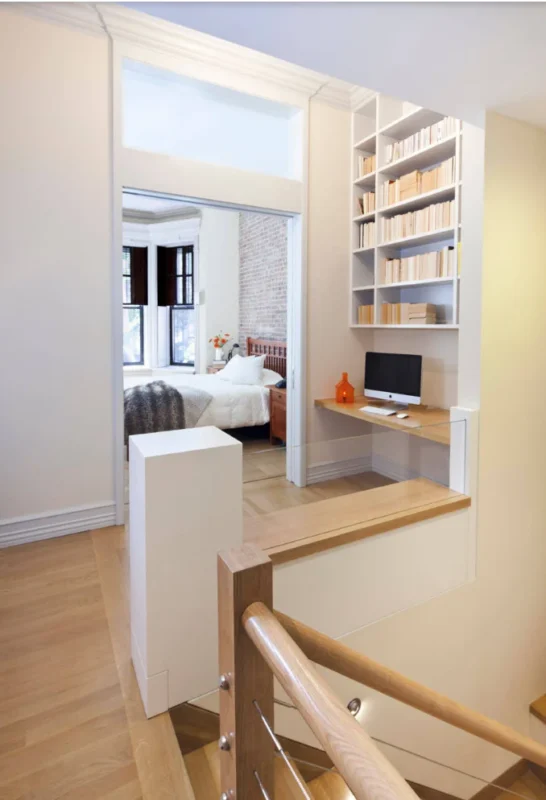
A slim desk placed along the hallway wall creates a quiet work zone just outside the sleeping area. It keeps work activity separate while staying close enough for convenience.
Lighting plays an important role here. A wall-mounted fixture or a small desk lamp can provide focused light without crowding the narrow space.
Keep the setup simple so the hallway remains easy to pass through. A chair that tucks fully under the desk helps maintain clear movement.
The design should match the nearby room. Similar finishes or colors create a smooth transition instead of a disconnected corner.
Pro Tip: Use wall-mounted storage above the desk to keep supplies organized without taking up floor space.
What To Avoid: Avoid deep desks or bulky chairs that block the walkway. A tight passage can quickly become uncomfortable.
8. Let a Vanity Double as a Work Space
A vanity can serve as both a personal grooming area and a functional desk. This setup works especially well in guest rooms where space needs to serve multiple purposes.
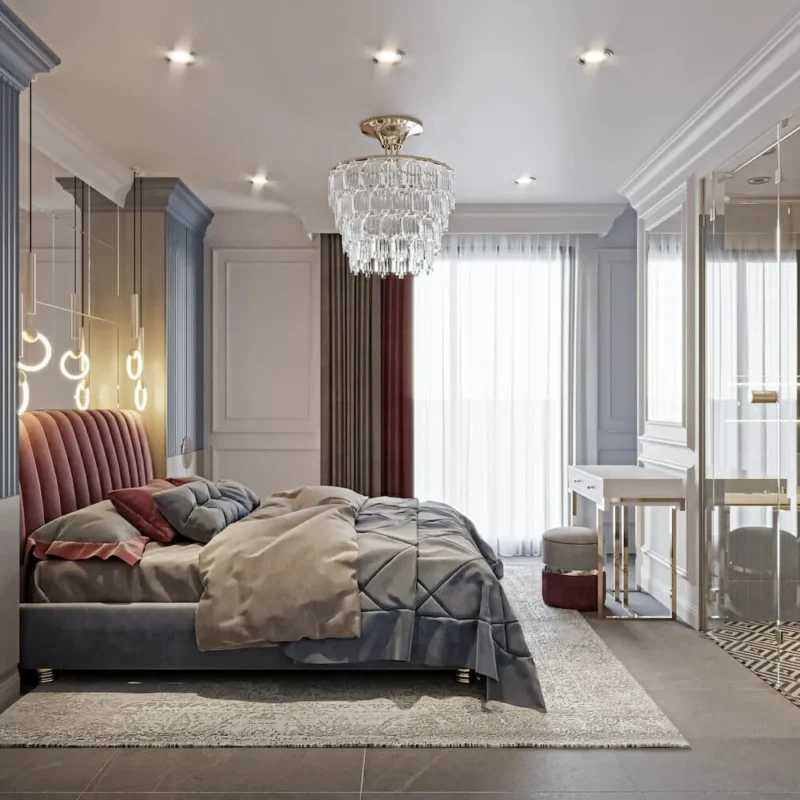
The surface offers enough room for a laptop, notebook, or light work tasks. At the same time, it remains suitable for daily routines like getting ready.
A mirror above the vanity adds brightness and reflects light across the room. It also helps the space appear larger and more open.
Choose a stool or chair that fits both uses. It should be comfortable for sitting longer periods but still compact enough to slide under the table.
Keep items organized in small trays or drawers. This allows the surface to shift between uses without looking cluttered.
Pro Tip: Use a mirror with a simple frame so it blends easily with both work and personal use.
What To Avoid: Avoid overcrowding the surface with beauty products or office supplies. Too many items can limit its flexibility.
9. Build a Strong Lighting Plan
Lighting shapes how a guest room office combo functions throughout the day. A well-planned setup supports both productivity and relaxation.
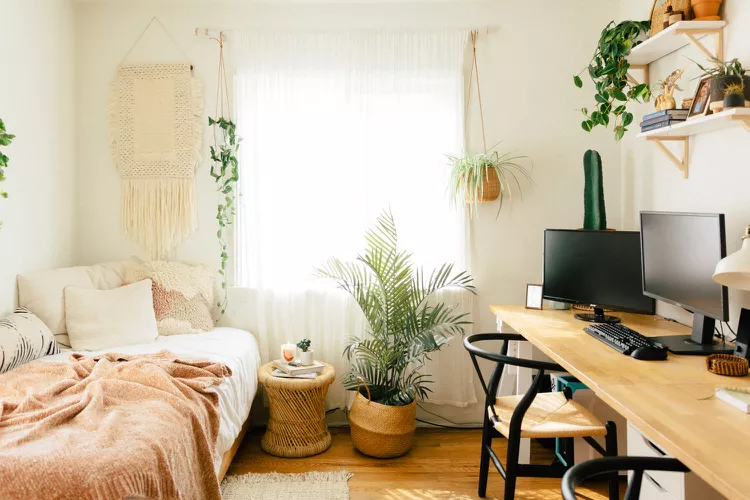
Start with a main ceiling light that provides general brightness. This ensures the room stays usable at any time.
Task lighting at the desk helps with focused work. A small lamp or adjustable fixture directs light exactly where it is needed.
Soft lighting near the bed creates a calm setting for evenings. A bedside lamp or wall light helps define the sleeping area.
Natural light should remain a priority. Keep windows clear so daylight can move across the room during work hours.
Each light source should serve a clear purpose. This keeps the room balanced and prevents harsh or uneven lighting.
Pro Tip: Use warm-toned bulbs for bedside lighting and cooler tones for the desk to support different activities.
What To Avoid: Avoid relying on a single overhead light. It can create shadows and make the space less comfortable for both work and rest.
10. Choose Dual Purpose Furniture
Dual purpose furniture helps a guest room office combo stay practical and organized. Each piece serves more than one role, reducing the need for extra items.
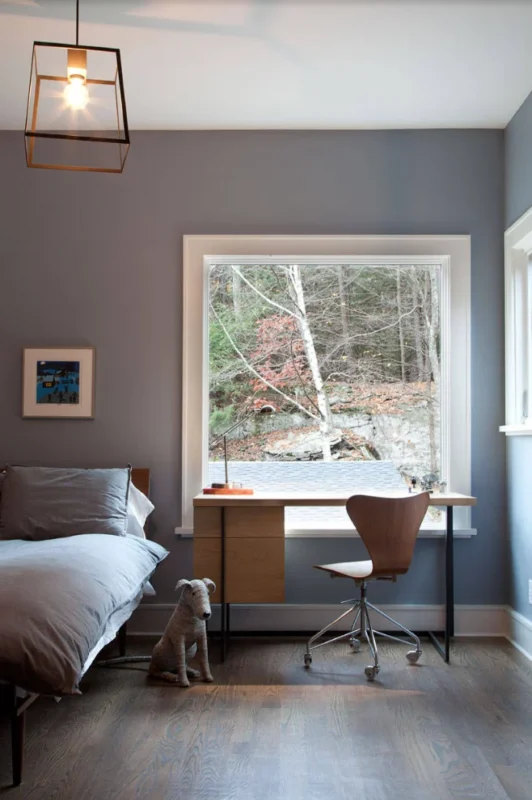
A desk with built-in drawers can store office supplies while also holding personal items for guests. This keeps everything within reach.
Foldable or extendable pieces add flexibility. They can adjust based on daily needs without taking up permanent space.
Storage benches or ottomans can hold bedding or work materials. At the same time, they offer seating when needed.
The goal is to keep the room functional without filling it with separate pieces for every task. Each item should earn its place.
Pro Tip: Look for furniture with hidden storage to keep the room tidy and easy to maintain.
What To Avoid: Avoid oversized multifunction pieces that try to do too much. They can take over the room and limit movement.
11. Coastal Comfort Combo with Light and Airy Details
A coastal comfort guest room office combo brings in light tones and breezy textures. The space draws inspiration from seaside settings with a calm look.
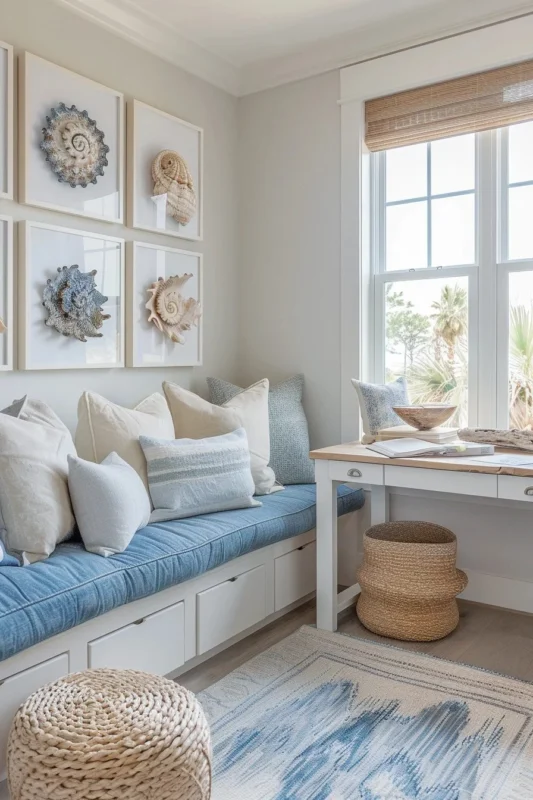
Soft colors such as white, sand, and pale blue create a bright foundation. These tones reflect light and help the room appear larger.
Natural materials like rattan, light wood, or woven fabrics add texture. They introduce detail without making the room look heavy.
Keep furniture simple and well-spaced. A clean layout allows the room to support both work and rest with ease.
Decor should stay minimal. A few coastal accents, such as framed prints or simple ceramics, add character without clutter.
The overall setup supports daily use while maintaining a light and easy atmosphere.
Pro Tip: Use sheer curtains to let in natural light while maintaining privacy.
What To Avoid: Avoid dark furniture or heavy fabrics. They can disrupt the light and open look this style depends on.
12. Include a Contemporary Cozy Corner
A contemporary cozy corner brings together modern lines with soft textures to create a balanced guest room office combo. The design focuses on comfort without losing structure.
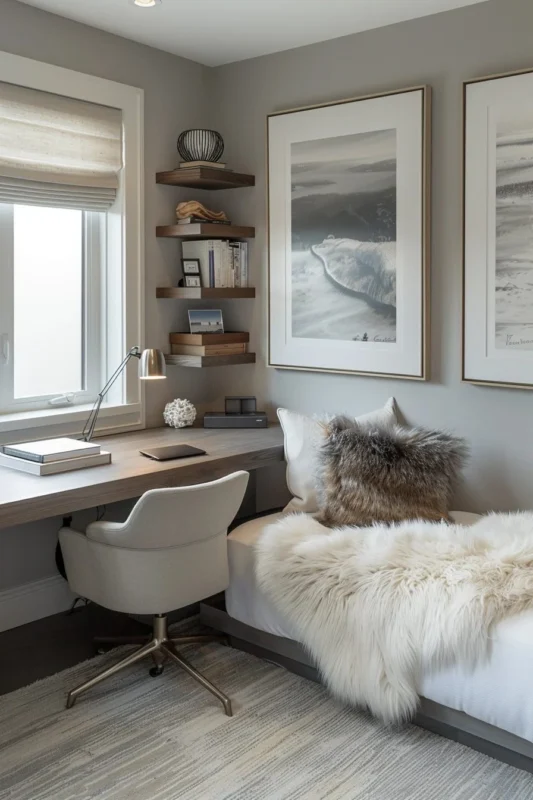
A compact desk fits neatly into one corner, leaving the rest of the room open. This keeps the workspace defined but not overpowering.
Seating plays an important role here. A cushioned chair or upholstered piece adds comfort and supports longer use.
Neutral tones mixed with a few darker accents create contrast. This adds interest without making the room look busy.
Layered lighting helps shape the mood. A desk lamp paired with soft ambient lighting supports both work and rest.
Pro Tip: Use a rug to define the workspace area within the room. This helps separate functions visually without adding physical barriers.
What To Avoid: Avoid overly sleek furniture with no texture. It can make the room appear cold and less inviting.
13. Rustic Elegance Room with Natural Character
A rustic elegance room combines natural materials with refined details to create a balanced guest room office combo. Wood surfaces and soft fabrics shape the overall look.
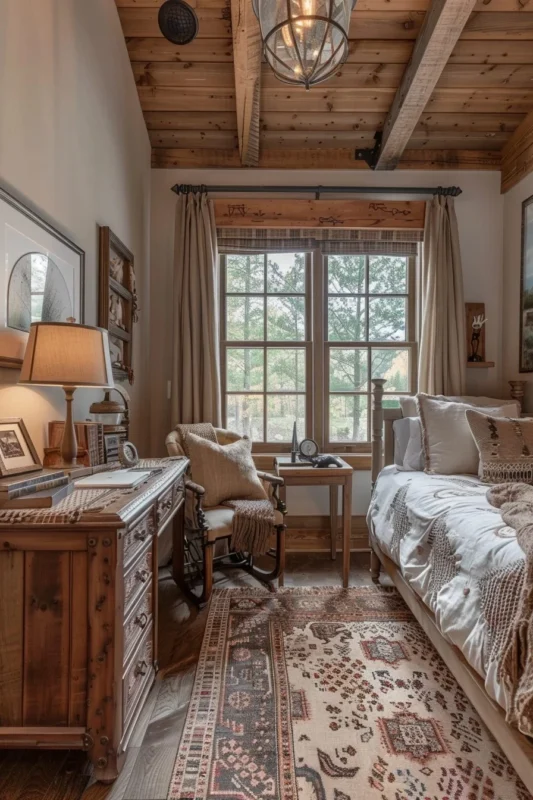
A wooden desk or table anchors the workspace. Its texture adds depth and connects the room to a natural theme.
The bed area can include layered bedding in neutral tones. This keeps the space cohesive and comfortable.
Metal accents, such as a lamp or hardware, introduce contrast. They add interest without overpowering the design.
Keep the layout simple so each element has room to stand out. This approach prevents the space from looking crowded.
Pro Tip: Mix one refined element, such as a tailored chair or structured lighting, with rustic pieces to create contrast that elevates the entire room.
What To Avoid: Avoid overly distressed finishes on every piece. Too much texture can make the room appear unbalanced.
14. Bright and Airy Dual Space Matters
A bright and airy guest room office combo focuses on openness and light. The design keeps the space clear so it supports both work and rest.
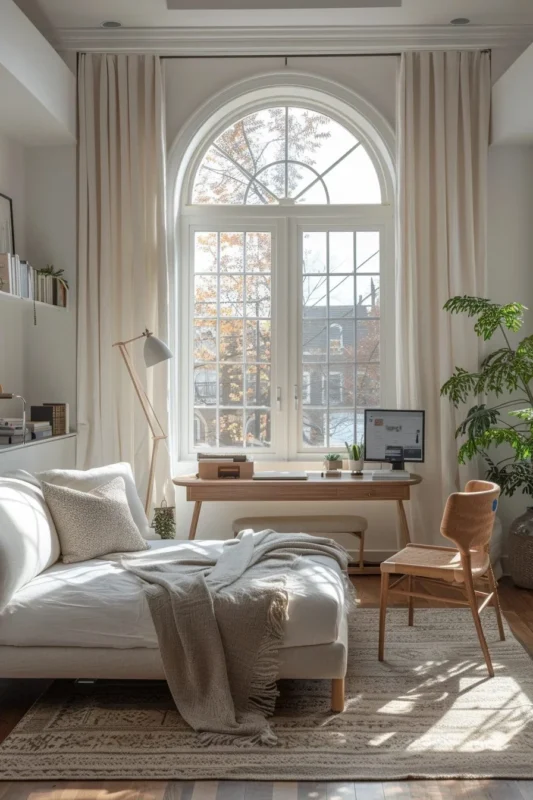
Light-colored walls reflect natural light and help the room appear larger. This creates a strong base for the rest of the design.
Furniture stays minimal and well-spaced. A simple desk and bed allow easy movement across the room.
Soft fabrics add comfort without weighing down the space. Linen bedding or light curtains support the overall look.
Keep décor limited to a few key pieces. This prevents distraction and keeps the room clean.
Pro Tip: Place a mirror across from the window to reflect natural light deeper into the room. This helps brighten both the workspace and sleeping area.
What To Avoid: Avoid blocking windows with large furniture. It can reduce light and make the room appear closed in.
15. Mid-Century Modern Mix
A mid-century modern guest room office combo brings in clean lines, warm wood tones, and simple forms. The design feels structured and easy to maintain.
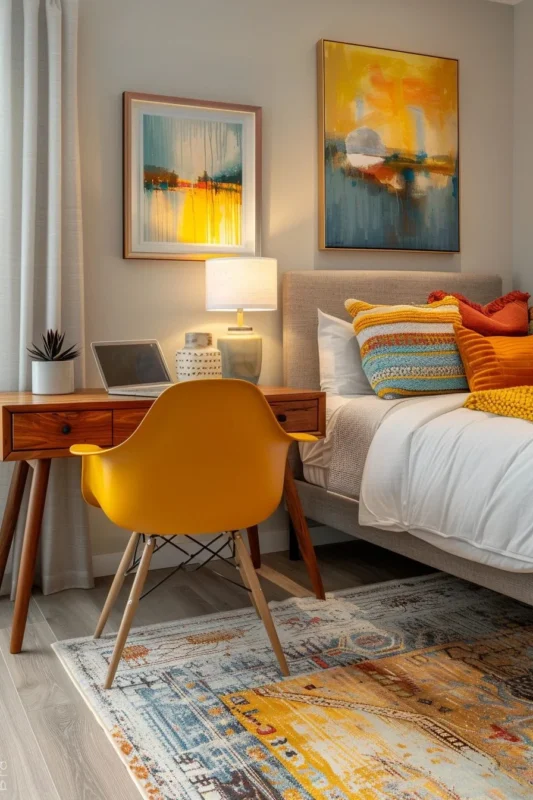
Furniture often features tapered legs and smooth surfaces. A desk with these details adds character without taking up too much space.
The color palette can include warm neutrals with a few bold accents. This creates contrast while keeping the room balanced.
Keep the layout open so each piece stands on its own. This approach prevents visual clutter.
Lighting with simple shapes supports the design. A small desk lamp or floor lamp fits well within this style.
Pro Tip: Choose one statement piece, such as a mid-century desk or chair, and let it define the workspace while the rest of the room stays simple.
What To Avoid: Avoid mixing too many styles in one space. It can disrupt the clean and structured look.
16. Urban Elegance Enclave with Refined Details
An urban elegance guest room office combo blends modern finishes with a polished layout. The space focuses on clean lines and subtle contrast.
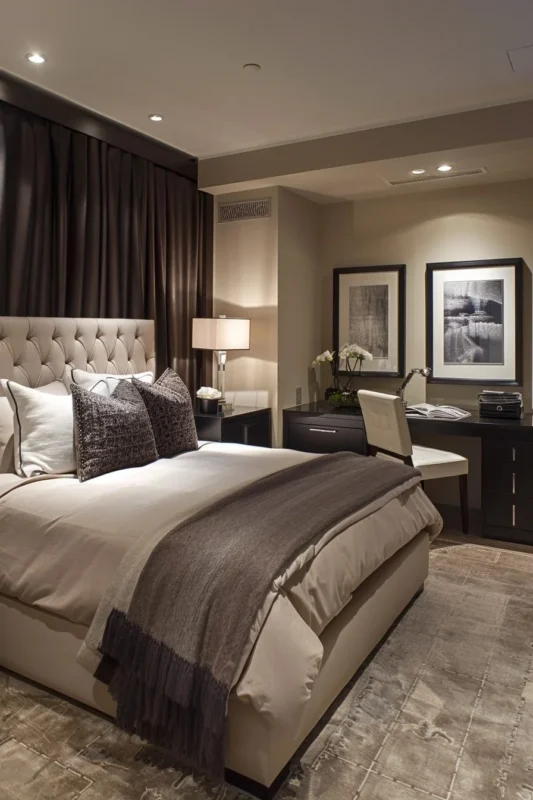
A sleek desk paired with a comfortable chair creates a strong workspace. The design stays simple but purposeful.
Neutral tones such as gray, black, and white form the base. These colors create a calm and organized setting.
Soft textiles help balance the sharper lines. Bedding or curtains add comfort and soften the overall look.
Keep surfaces clear so the room maintains a tidy appearance. This supports both work tasks and guest use.
Pro Tip: Incorporate layered lighting, including overhead, task, and accent lighting, to create depth and support different activities throughout the day.
What To Avoid: Avoid overcrowding the room with decorative items. Too many accents can take away from the clean and refined look.