Small Walk-in Shower Ideas – 12+ Ways To Transform Your Bathroom Space

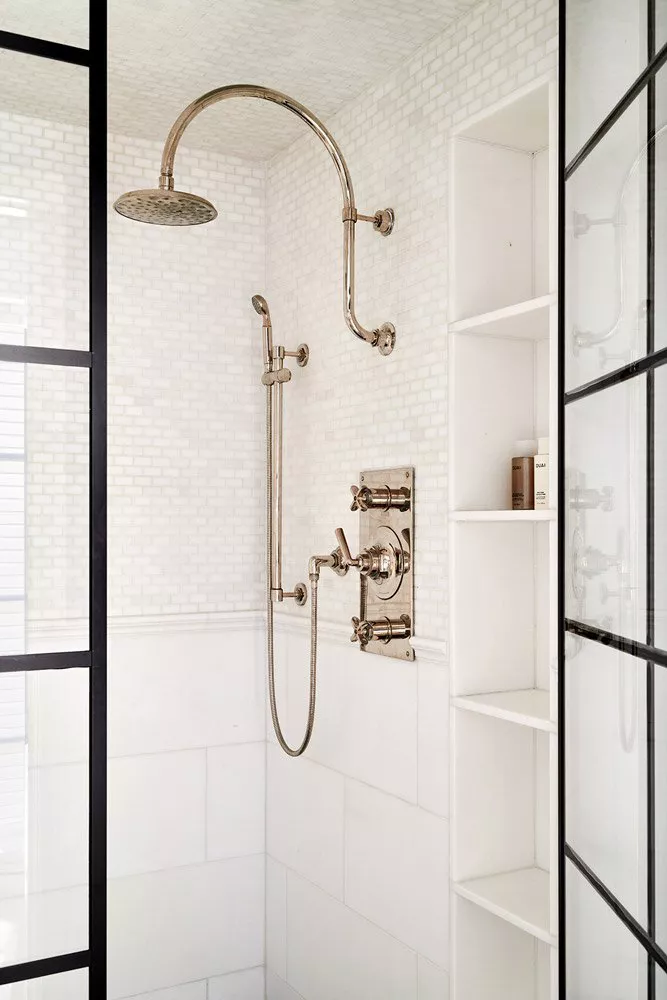
Small bathrooms can be tricky, but a tiny walk in shower can still look surprisingly good.
I actually love seeing how much difference a few thoughtful choices can make in a cramped bathroom.
A clear glass screen, a pretty tile, or a little built in shelf can change the whole experience.
Suddenly, the shower does not seem like it is taking up half the bathroom.
If you are trying to squeeze a walk in shower into a small space, these ideas are worth saving.
Some are simple, some are a little bolder, but all show what is possible with limited room.
Effective Walk-In Shower Ideas for Small Bathrooms
1. Squeeze a Shower into a Corner

That awkward corner of a small bathroom might be all the room you need for a walk in shower.
Tucking the shower into one corner keeps the rest of the floor open, which makes a big difference when space is tight.
A simple glass screen can separate the shower from the toilet or vanity area.
Light colored tiles can help the corner blend into the rest of the bathroom instead of making it look like a bulky addition.
I’d keep the fixtures compact here. A wall mounted showerhead, slim controls, and a small recessed shelf can give you everything needed for a comfortable shower.
Pro Tip: Check the door swing of nearby fixtures before settling on the corner. A few inches can make the difference between a bathroom that is easy to move around and one that feels awkward.
2. Install a Glass Door Wall
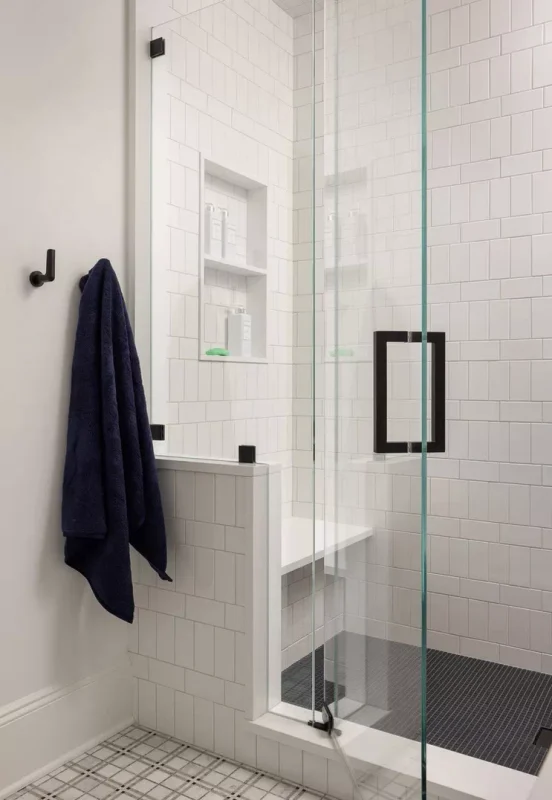
A glass wall is one of those small bathroom choices that can make you wonder why you did not think of it sooner.
It separates the shower area from the rest of the bathroom, but your eyes can still travel across the entire floor.
Clear glass is a great choice for a tiny shower because it does not add another visual barrier.
The bathroom stays connected, and your tiles remain visible from outside the shower.
For a cleaner appearance, pair the glass with simple hardware and a frameless or minimally framed design. A white tiled wall behind it can make the shower look even brighter.
Pro Tip: Leave enough clearance around the glass entrance for comfortable movement. A beautiful glass wall is not much help if getting in and out becomes a daily struggle.
3. Build in Storage Like Shelves
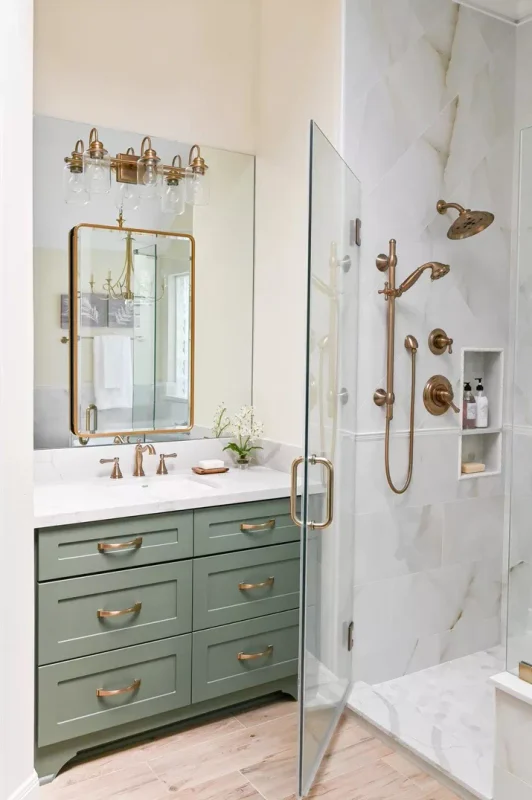
Nothing makes a small shower feel more cramped than bottles sitting on the floor. A built in shelf gives shampoos, soaps, and shower essentials their own place and keeps them out of the way.
A recessed niche built into the wall is my favorite option for a small shower. It uses space that would otherwise go unused, and there is no shelf sticking into your showering area.
Tile the niche in the same material as the shower wall for a simple appearance. A contrasting tile can be fun too if you want the storage area to have a little personality.
Think about what you actually reach for every day before deciding how large the shelves should be.
There is no point giving precious wall space to a huge niche that ends up half empty.
Pro Tip: Position the niche at a comfortable height and check where the plumbing runs before cutting into the wall. A little planning here can save a costly headache later.
4. Incorporate Geometric Patterns
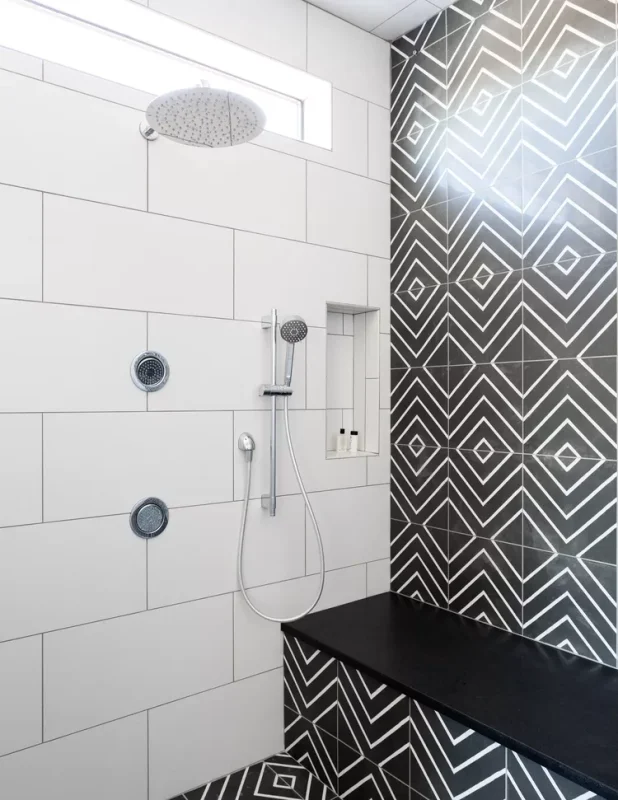
A small shower does not need a plain wall to look spacious. Geometric tiles can give it some character, especially when the rest of the bathroom is kept fairly simple.
Hexagons, diamonds, squares, and playful repeating shapes all bring something different. I’d lean toward a smaller pattern if the shower is really tight, since huge shapes can look a little awkward on narrow walls.
There is something nice about stepping into a shower where the tile gives you something interesting to look at. Keep the fixtures simple and let the pattern do the talking.
Pro Tip: Stick to a limited color palette if the pattern is bold. Too many colors can make a small shower look busier than it needs to be.
5. Tile the Shower from Floor to Ceiling
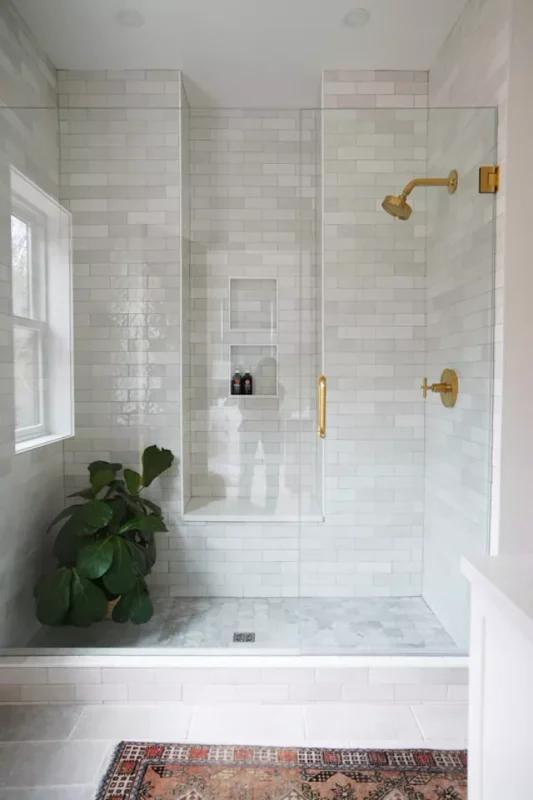
Floor to ceiling tile has a way of making a small shower look taller. Your eyes naturally follow the tiles upward, so the walls do not seem to stop halfway up.
I particularly like this idea with simple white or softly colored tiles. The continuous surface gives the shower a clean appearance and makes the enclosure look like a proper part of the bathroom.
There is room to have a little fun with the finish too. Glossy tiles bounce light around, while handmade or textured tiles give the walls a less uniform appearance.
Pro Tip: Carrying the same tile across the shower floor and walls can make the area look more connected. Just make sure the floor tile has a suitable slip resistant finish.
6. Grey Tiles for a Modern Look
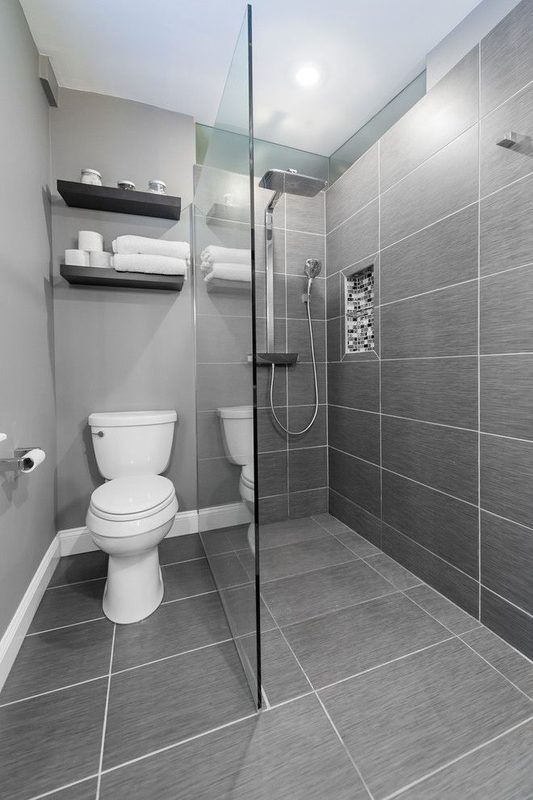
Grey tile is a safe choice, but that does not mean it has to look boring. A soft concrete gray can give a small shower a modern edge, especially beside white fixtures and clear glass.
Dark charcoal tiles have a completely different effect. They look dramatic and rich, although I’d reserve them for bathrooms with plenty of natural or artificial light.
For something softer, mix several gray tones through the tile, grout, and accessories. A wooden stool or warm colored bath mat can stop the bathroom from looking too cold.
Pro Tip: Look at gray tile samples under your bathroom lighting. Some shades have blue or brown undertones that become surprisingly noticeable once installed.
7. Go for a Chevron Tile Arrangement
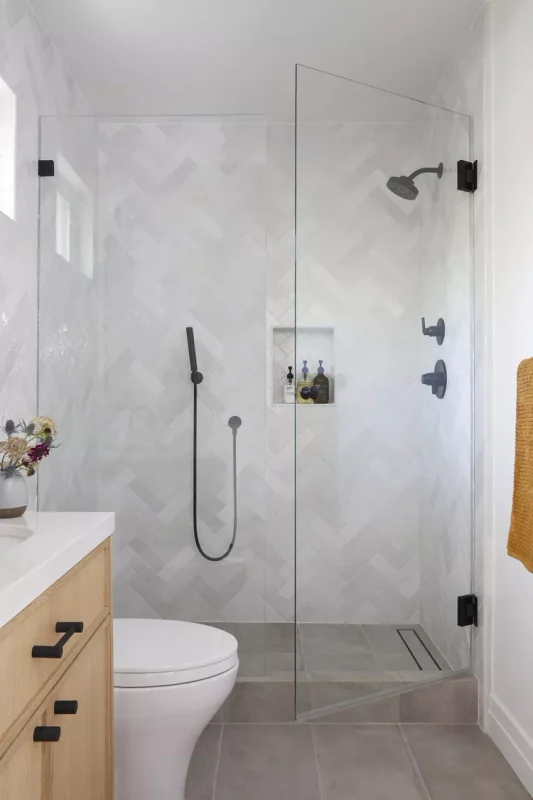
Chevron tiles bring a little movement to a small shower, which is handy when you want something more interesting than a straight tile layout.
The angled pattern draws attention to the wall and gives the shower a custom feel.
White tiles with a dark grout line make the pattern easy to see.
For something softer, choose tiles in two closely related shades so the chevron remains noticeable but does not dominate the bathroom.
I like this arrangement behind the shower controls or on the main wall. It gives that one area a little extra character while the surrounding surfaces can stay simple.
Pro Tip: Let the chevron pattern be the star. Pair it with straightforward fixtures and fewer competing patterns elsewhere in the bathroom.
8. Stack Subway Tile for a Clean Update
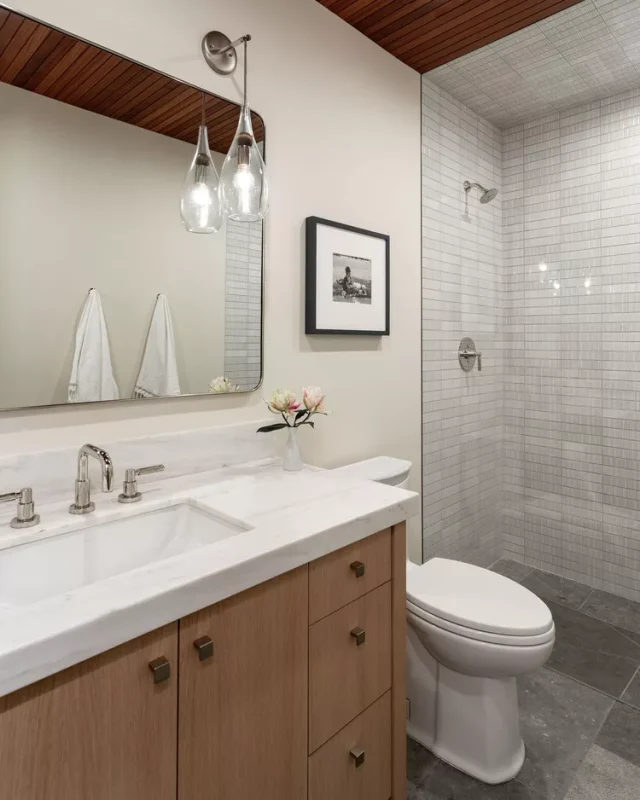
Stacked subway tile is a small change that can make a familiar bathroom tile look surprisingly fresh.
Instead of the traditional staggered arrangement, the tiles line up neatly in rows.
White subway tile gives a small shower a bright, straightforward appearance.
Try a pale blue, sage, or soft gray if you want the same clean arrangement with a little color.
The simplicity is part of its appeal. A stacked wall looks great with black fixtures, brushed metal hardware, or warm wood accessories, depending on the direction of the bathroom.
Pro Tip: Choose a grout color that gives you the amount of contrast you want. Matching grout keeps the wall quieter, while darker grout makes every tile line easier to see.
9. Use Textured Tile
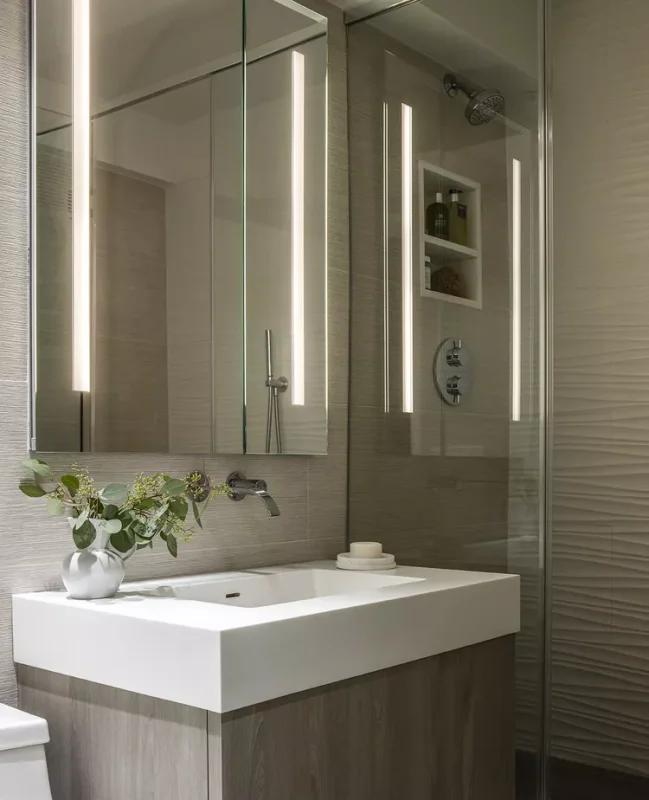
Plain tile has its place, but a little texture can give a small shower so much more character.
Fluted, handmade, stone look, or lightly ridged tiles can make the walls interesting even when the color is simple.
I’d choose a texture that looks good up close, since a small shower puts you right beside the wall.
Soft white, warm beige, and pale gray are lovely choices if you want the texture to do the talking.
There is also something satisfying about how textured tile catches the bathroom light. It adds interest during the day and looks different once the lights come on at night.
Pro Tip: Avoid very deep grooves in areas that get constant water. Shallow textures are easier to keep clean and still give the wall plenty of character.
10. Install a Built In Floating Bench

A floating bench can turn a tiny shower into a much nicer place to spend time. It gives you somewhere to sit, shave your legs, wash your feet, or simply rest for a moment.
Because the bench is attached to the wall, the floor stays open underneath. That small detail matters in a compact shower because the extra visible floor helps the area look less crowded.
Match the bench to the shower walls for a quiet appearance, or use a contrasting slab if you want it to become a feature. I’m also a fan of adding a small ledge beside it for toiletries.
Pro Tip: Keep the bench size proportional to the shower. A narrow floating seat can be surprisingly useful when every inch matters.
11. Add a Grid Door
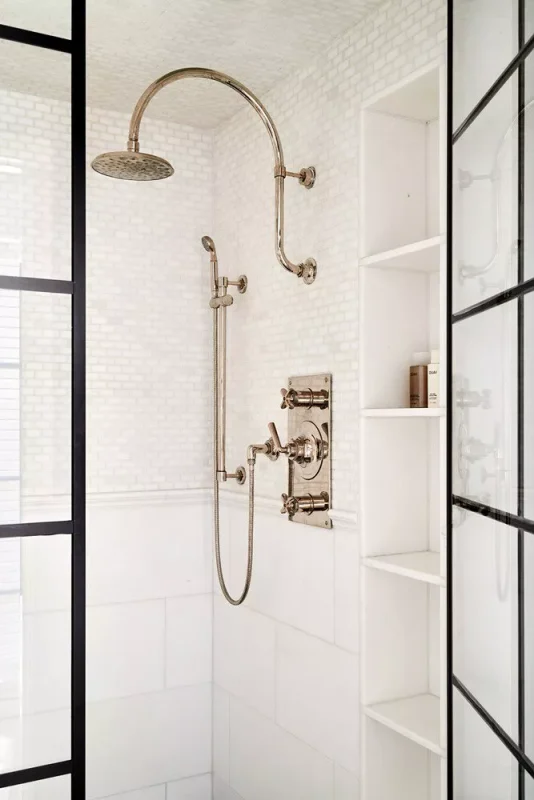
There is something charming about a black grid shower door. It gives a small bathroom a little bit of character and makes an ordinary glass enclosure look much less plain.
The black lines can echo other details around the bathroom, such as cabinet handles, faucets, mirrors, or light fixtures. That repetition makes the door look like it belongs there.
I’d pair it with simple tiles if you want the grid pattern to remain the main feature. White subway tile is a classic choice, though larger stone look tiles can give it a more modern direction.
Pro Tip: Keep the grid pattern fairly simple in a small shower. Too many narrow lines can make the enclosure look visually busy.
12. Protect Your Modesty
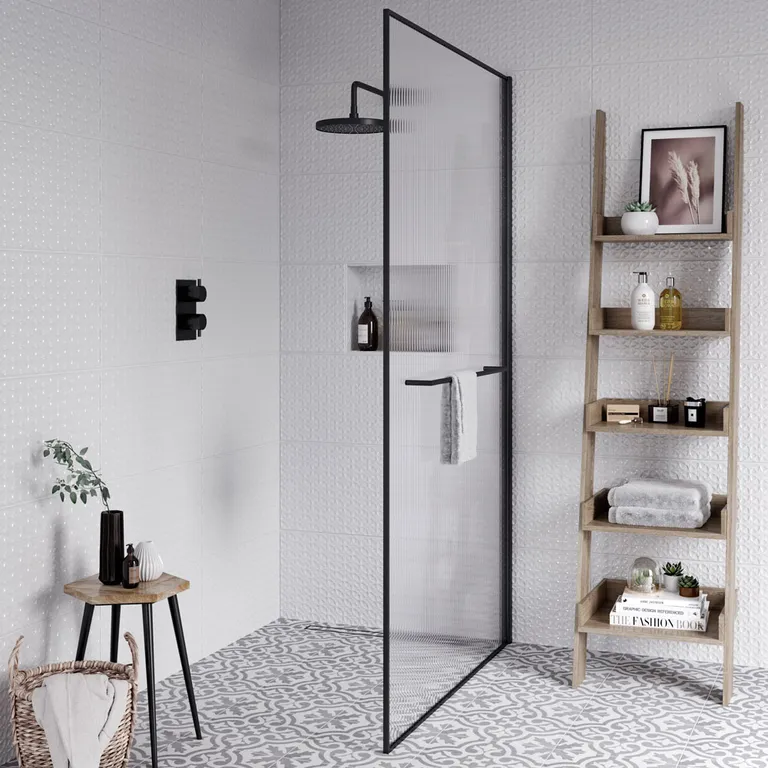
A walk in shower does not have to mean giving up privacy.
Frosted glass, reeded glass, textured glass, or a partial privacy wall can give you some coverage while keeping the bathroom bright.
Reeded glass is a favorite of mine for this. It lets light pass through, but the vertical texture makes the shower less exposed from the rest of the bathroom.
A half wall can work beautifully too, particularly if it is tiled to match the shower. It gives you a little separation and can double as a handy ledge for toiletries.
Pro Tip: Think about what someone standing outside the bathroom can actually see before choosing your glass. Privacy is easier to plan than fix later.
13. Choose Sleek, Seamless Walls

If grout lines are not your thing, large format wall panels are worth considering for a small shower. With fewer joins across the walls, the whole area has a cleaner and quieter appearance.
Marble look panels, concrete finishes, stone patterns, and plain colors give you plenty of options.
I particularly like soft stone shades because they add interest without filling the shower with lots of lines.
The result can look wonderfully simple, especially with frameless glass and understated fixtures.
There is also less grout to scrub, which is a very welcome bonus in a shower you use every day.
Pro Tip: Check the panel dimensions against your shower walls before choosing a design. Fewer cuts and joins can give you the seamless appearance you are after.
Frequently Asked Questions
Is a Walk In Shower a Good Idea?
Yes. Walk in showers are a great choice for small bathrooms because they can make the area feel more open and are easier to access. They also offer plenty of options for glass, tile, storage, and seating.
How Much Does It Cost to Install a Walk In Shower?
Installation can cost anywhere from $500 to $12,000, depending on the size, materials, fixtures, and type of shower. Prefabricated models are generally cheaper than custom showers with high end finishes.
What Is the Best Flooring for a Walk In Shower?
Porcelain and ceramic tiles are excellent choices because they are durable, water resistant, and available in many designs. Porcelain is denser and more durable, while ceramic tends to be more affordable.