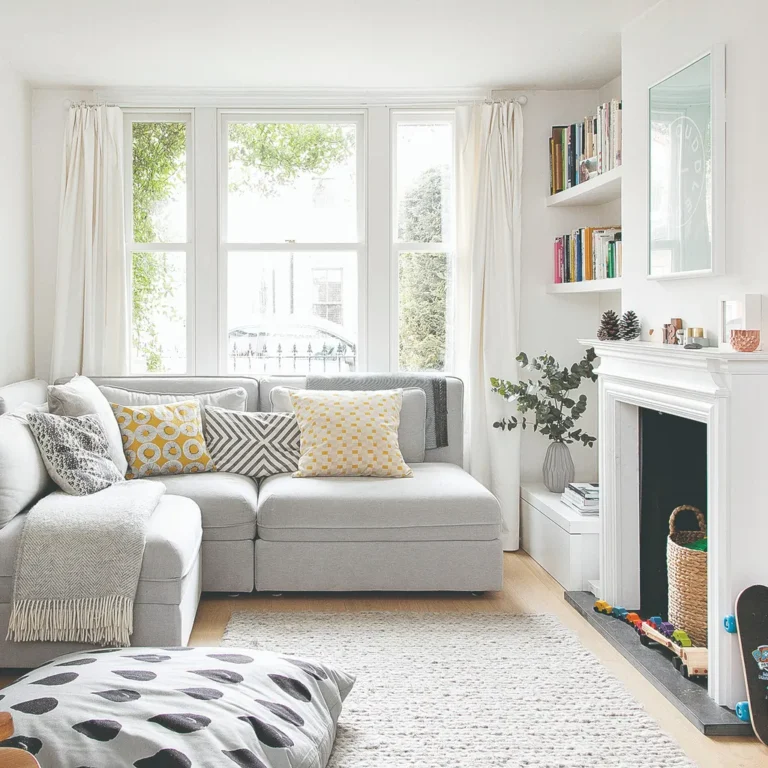
15 Warm Rustic Living Room Ideas That Feels Welcoming

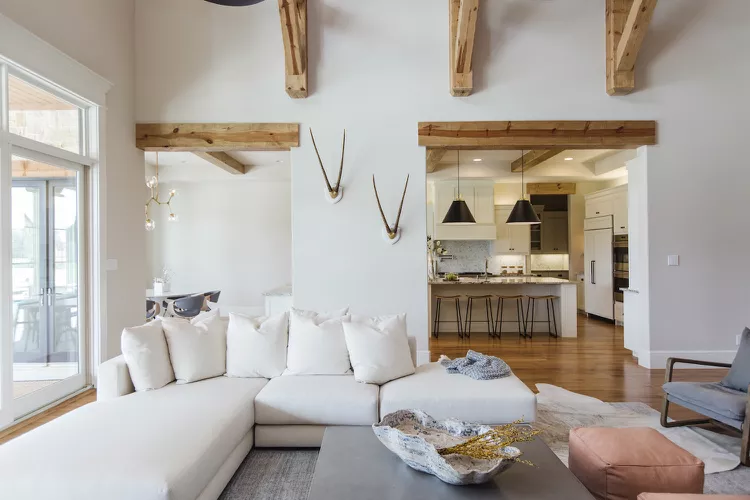
A rustic living room creates a warm space that feels settled to spend time in.
Natural materials like wood set the tone while soft lighting and earthy colors bring calm.
This style focuses on comfort over perfection. Simple furniture, textured fabrics, and handmade details add character. Nothing looks overly styled.
Every element works together to create a relaxed space. A place meant for slow mornings, quiet evenings, and easy conversations.
Read on these 15 warm rustic living room ideas to get inspired.
Rustic Living Room Ideas
Add Wood Beam Ceilings
Wood beam ceilings change the way a living room is experienced from the moment you walk in.
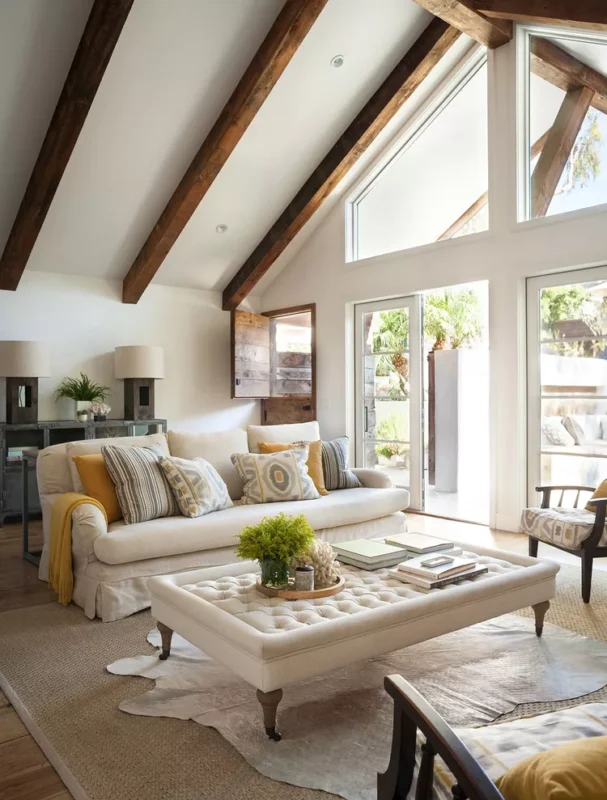
The eye naturally lifts upward, and the space starts to feel more established, almost as if it has been there for years.
Exposed beams bring a sense of structure that plain ceilings often lack. Even in a simple room, they break up large flat surfaces that would otherwise go unnoticed.
The wood itself carries the detail. Grain patterns, slight imperfections, and natural color shifts give each beam its own presence. So, the ceiling becomes part of the design instead of just a background.
In older homes, beams often come with wear that tells a story. In newer spaces, reclaimed wood can create that same effect, giving the room a lived-in quality that doesn’t feel manufactured.
The result is a living room that feels rooted, where the ceiling quietly adds character.
Embrace Natural Wood Furniture
Natural wood furniture sets the tone for a rustic living room in a way that glossy finishes rarely achieve. It brings warmth, but more importantly, it carries a sense of history.
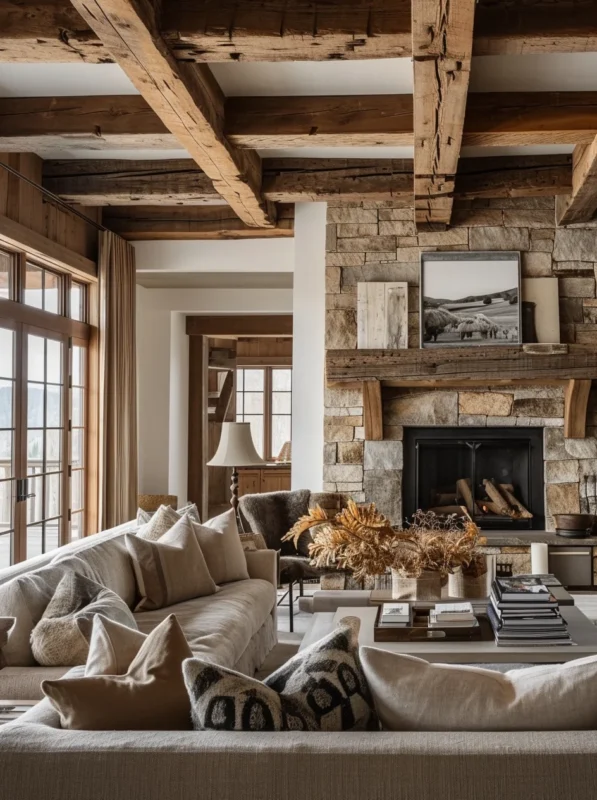
Pieces that show wear tend to stand out more than perfectly finished ones. Scratches, uneven tones, and softened edges make the furniture look like it has been appreciated over time.
A solid wood coffee table often becomes the center of the room. Its surface gathers small marks through daily use, slowly adding value.
Chairs, cabinets, or side tables follow the same idea. When the wood is left close to its original state, the room feels less staged.
This approach creates a space that feels settled. Nothing looks overly polished, and that is exactly what gives the room its rustic appeal.
Embrace Log Cabin Details
Log cabin details bring a distinct character that instantly defines a rustic living room. The structure itself becomes part of the design, not just the setting.
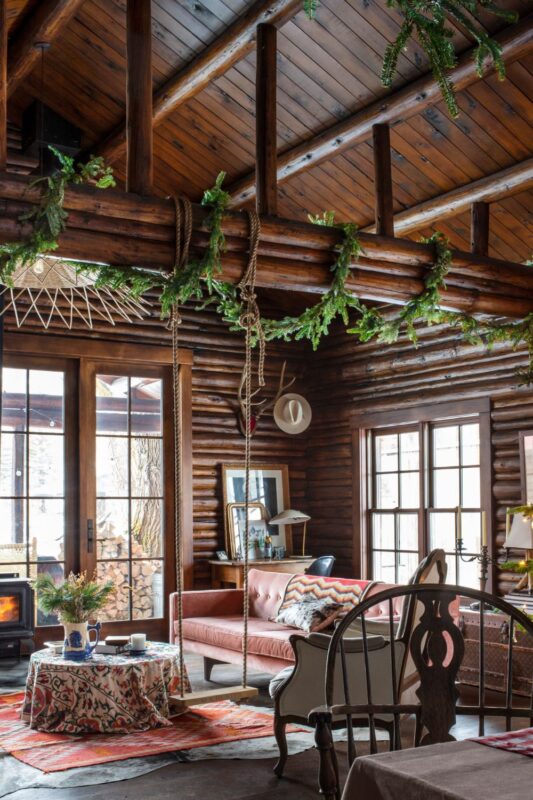
Rounded logs, visible joints, and thick wooden frames create a sense of enclosure that is dependable. The room starts to take on the look of a retreat, even in a modern home.
Walls built or styled to resemble log construction carry a strong visual weight.
They introduce pattern through repetition, yet the natural variation in each log keeps it from feeling uniform.
Furniture choices tend to follow this direction. Heavier pieces with simple forms fit into the space more naturally than anything too delicate.
The overall effect leans toward comfort that comes from familiarity. The room feels like a place meant for long evenings, quiet conversations, and time spent away from anything rushed.
Build a Rustic Stone Accent Wall
A stone accent wall brings a sense of permanence into a living room. It draws attention immediately and does so in a way that is natural.
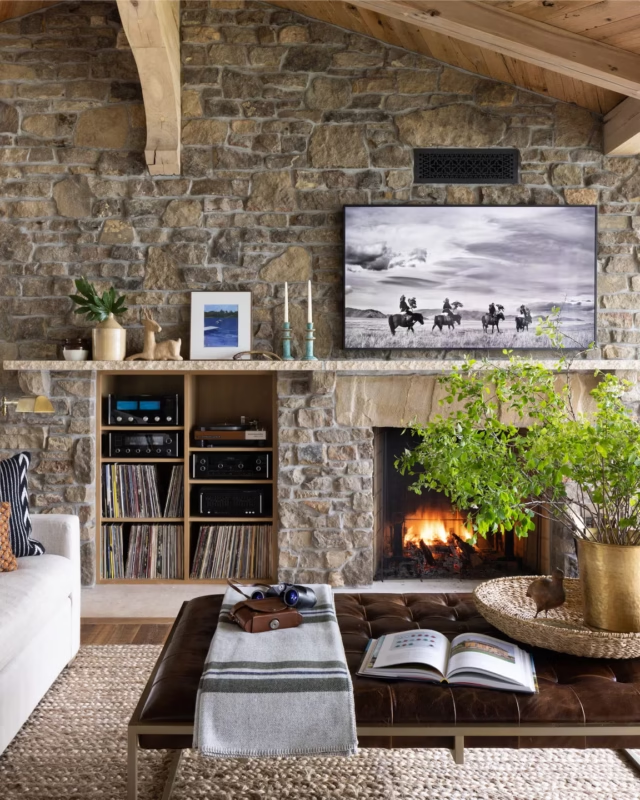
Each stone carries its own shape. When placed together, they form a surface that is layered, giving the room a strong visual anchor.
Fireplaces often become the center of this feature. The stone surrounds the area, turning it into a focal point that naturally gathers attention.
The variation in color across the stones keeps the wall from looking flat. Subtle shifts in tone create depth that changes slightly depending on the light in the room.
This kind of feature adds weight to the space. The room starts to feel grounded, as if it has a connection to the outdoors that goes beyond simple decoration.
Use Dark Wood Finishes
Dark wood finishes bring a deeper tone into a rustic living room, shaping a space that feels more enclosed.
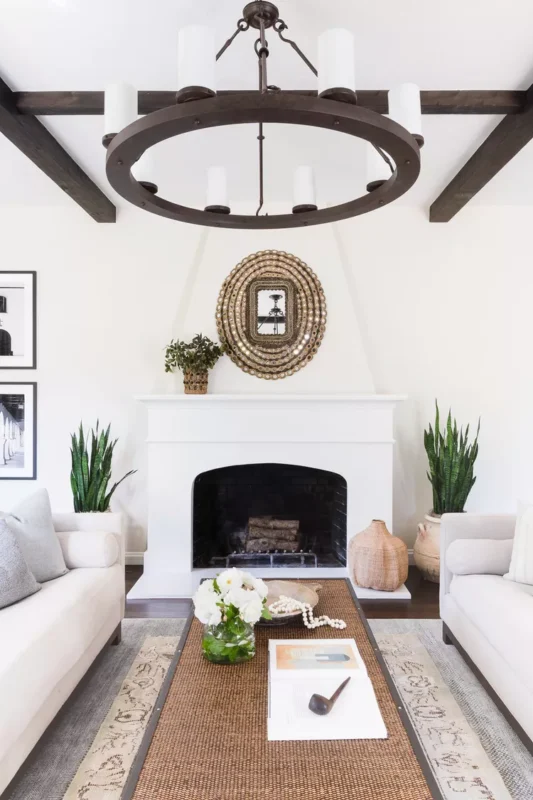
Cabinets, shelving, or large furniture pieces finished in darker stains create contrast against lighter walls or fabrics. This balance keeps the room from looking flat.
The richness of the wood becomes noticeable as light moves across it. Highlights appear along edges and grain patterns, adding quiet detail to the space.
Used carefully, darker finishes can define certain areas of the room. A media console or bookshelf in a deeper tone naturally draws the eye.
The overall atmosphere becomes cool. The space holds a steady presence, making it easier to relax into the room at any time of day.
Focus on a Light Palette
A rustic living room does not always lean dark. Lighter tones can shift the space in a completely different direction when the goal is to keep things easy to move through.
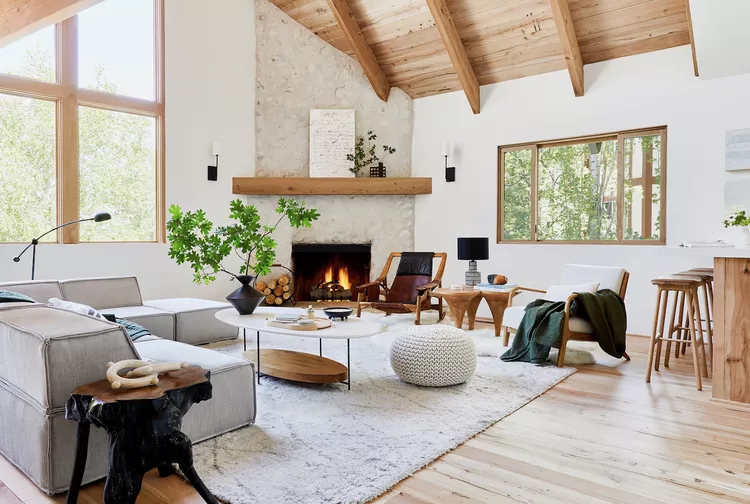
Pale walls set the stage first. Soft whites, faded beige, or chalky finishes reflect daylight across the room, making everything appear clearer.
Wood elements still play a role, though the tones stay on the lighter side. Washed oak or sun-faded pine keeps the rustic character intact.
Textiles follow the same path. Rugs carry gentle color that blends into the room instead of standing apart from it.
The room starts to read as spacious. Nothing competes for attention, and the overall setting feels easy to settle into during any part of the day.
Add Organic Shapes
Rustic spaces rely on sturdy furniture, but too many straight edges can make the room look rigid. Organic shapes step in to soften that structure.
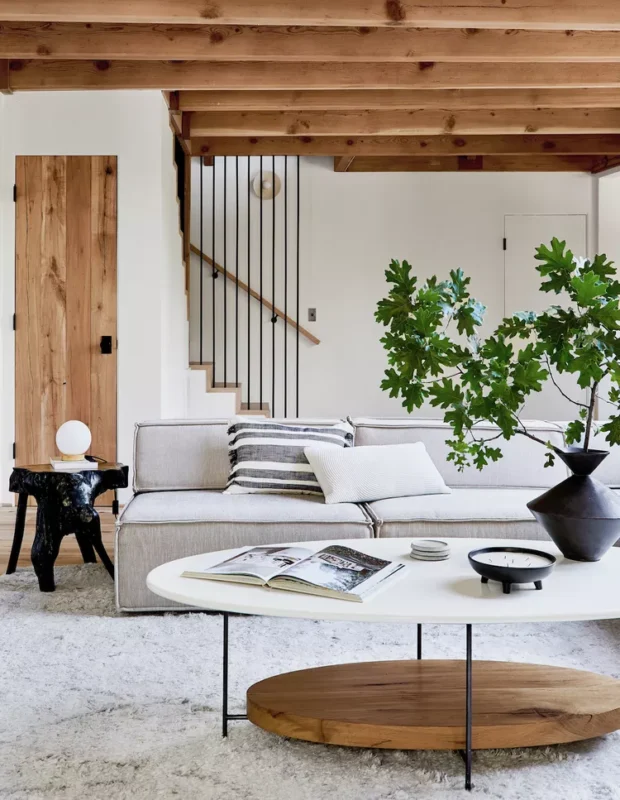
A round coffee table changes how the seating area comes together. Movement around it becomes easier, and the space looks less boxed in.
Curved armchairs with softer lines introduce variation across the room. These pieces contrast nicely with heavier wooden elements to create a calm layout.
Decor also important. Hand-shaped ceramics, uneven bowls, or carved wooden pieces bring in small irregular details that catch the eye.
The room begins to shift away from strict lines. It takes on a more natural flow, closer to how forms appear in nature.
Make It Lodge Style
Lodge style leans into a rustic setting that feels collected. The space carries a sense of comfort built through layers of materials and familiar elements.
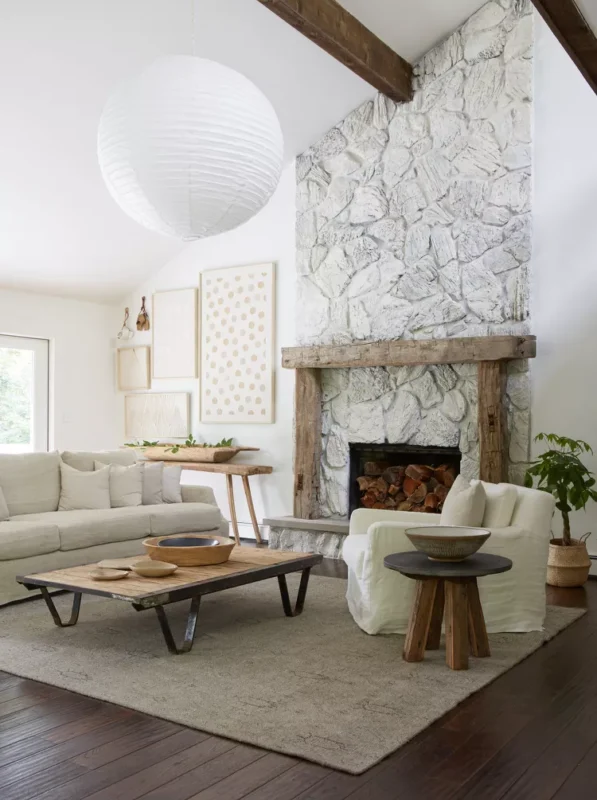
Large seating pieces take center stage. Deep sofas create a place where people naturally gather during long evenings.
Wood appears across multiple surfaces, from floors to furniture. The tones may vary, though they stay within a similar range so the room holds together visually.
Textiles add another layer. Thick throws, woven blankets, and patterned cushions introduce variation that keeps the room from looking flat.
Decor tends to reflect outdoor influences. Antlers, vintage finds, or nature-inspired pieces add character.
The space reads as somewhere meant for staying in, not passing through.
Add Texture
Texture plays a major role in shaping a rustic living room. It changes how surfaces are seen, even before color comes into focus.
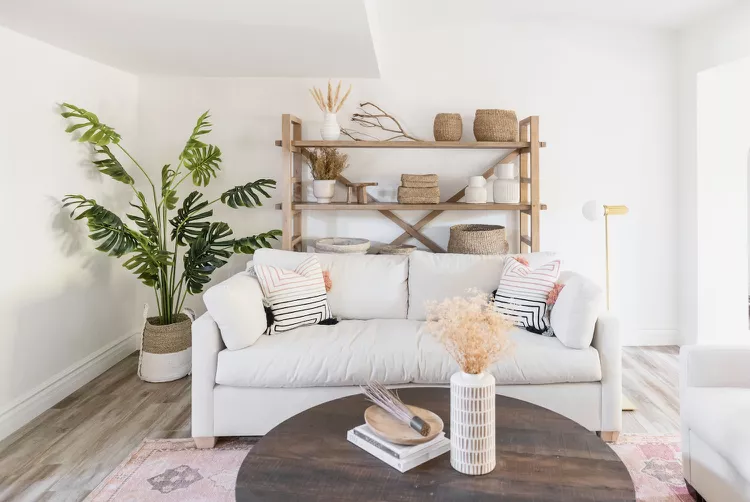
Rough wood, woven fabrics, and natural fibers create contrast across the space. Each surface carries its own character so that the room more interesting at a closer look.
Layering helps build this effect. A soft rug underfoot, a heavier throw across the sofa, and cushions with visible weave all contribute to the overall setting.
Walls can join in as well. Plaster finishes, wood paneling, or exposed brick introduce another level of detail that flat paint alone cannot achieve.
As these elements come together, the room starts to show variation in every direction. Nothing appears flat or overly smooth, and that shift changes how the entire space comes across.
Earth-Tone Living Room
Earth tones shape a rustic living room by pulling colors directly from nature. Browns, muted greens, clay shades, and soft neutrals create a palette that is connected to the outdoors.
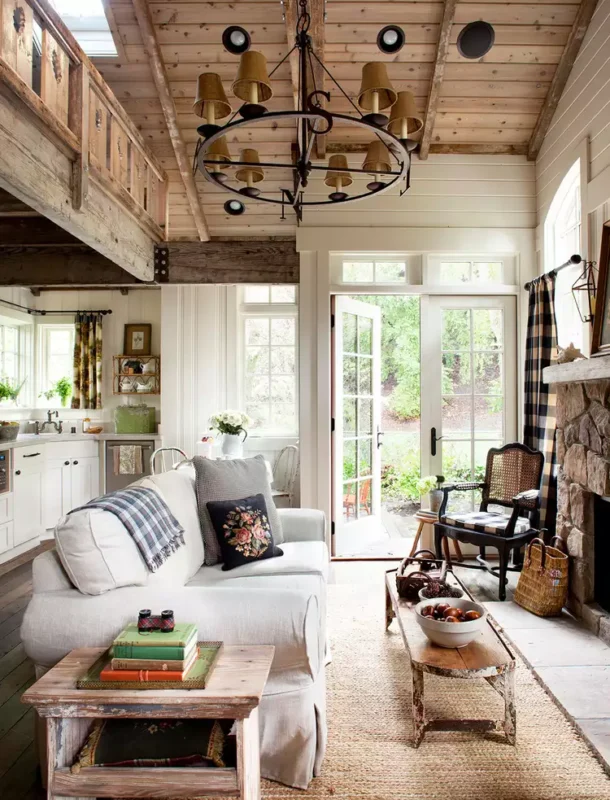
Walls or larger furniture pieces often carry the base color. From there, smaller elements build on the same range, creating a consistent look across the room.
Wood fits easily into this palette. Its natural variation blends with surrounding tones, helping the space come together without sharp contrast.
Textiles follow a similar direction. Upholstery, rugs, and cushions stay within the same color family.
The room begins to mirror natural surroundings in a quiet way. The colors do not compete or distract, allowing the space to settle into a more relaxed state.
Decorating with Neutrals
Neutral colors can carry a rustic living room when they are used with intention. They create a steady backdrop that allows materials and shapes to stand out.
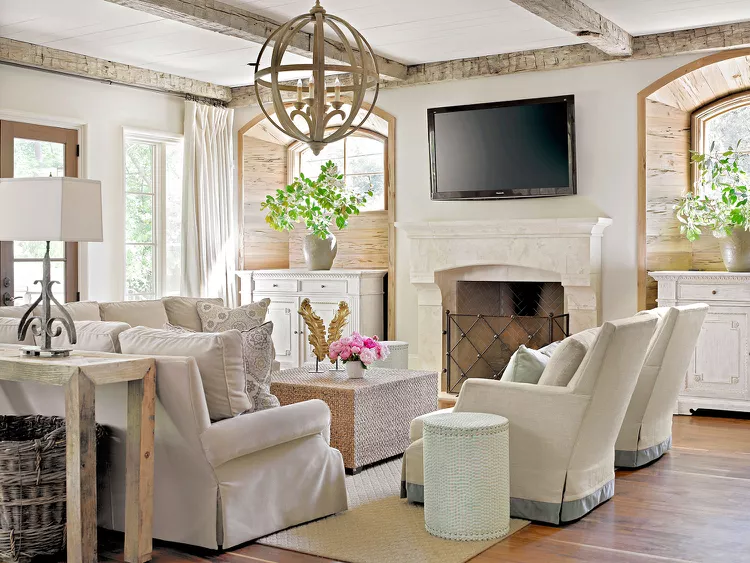
Soft beige walls or warm off-white paint set a quiet base. The room looks brighter, and the space opens up in a natural way.
Furniture in similar tones keeps everything connected. A cream sofa or a light fabric chair blends into the room instead of pulling attention in one direction.
Wood pieces break up the palette. A coffee table or sideboard adds contrast through tone and surface detail, which keeps the room from looking flat.
Textiles help complete the setting. A woven rug or a simple throw introduces variation across the space.
The result is a room that feels settled and easy to spend time in. Nothing looks forced, and the space holds together from one side to the other.
Create a Rustic Focal Point
Every rustic living room benefits from a clear focal point. It gives the space direction and keeps the layout from feeling scattered.
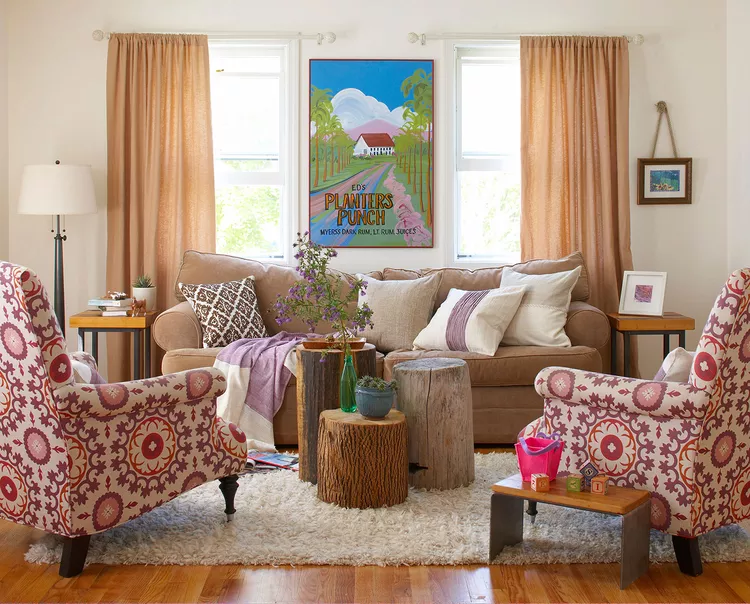
A fireplace often takes this role. Stone or brick around the opening creates a strong visual center that naturally draws attention.
If a fireplace is not part of the room, a large wooden cabinet or a statement wall can take its place. The key is scale. The piece needs enough presence to anchor the space.
Seating usually forms around this area. Chairs and sofas face toward it, which helps the room come together in a simple way.
Decor stays controlled around the focal point. A few well-chosen pieces work better than a crowded setup.
The room starts to read clearly. Your eye knows where to land, and the space feels more complete.
Include Hardwood Floors
Hardwood floors bring lasting character into a rustic living room. They form the base that everything else builds on.
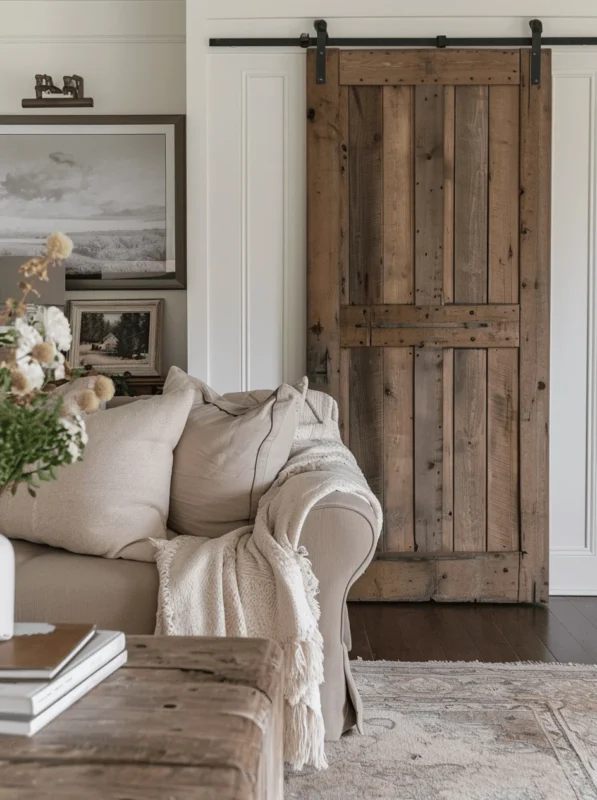
Natural wood planks show variation in tone and grain. Each board adds its own detail, so the floor never looks uniform.
As the years pass, the surface changes. Small marks and shifts in color become part of the room’s story instead of flaws.
Area rugs help define certain sections. A rug under the seating area creates a clear zone without covering the entire floor.
Lighter walls or furniture allow the flooring to stand out more. The contrast keeps the room balanced.
The space gains a sense of continuity. The floor connects each part of the room and holds everything in place.
Use Vintage Décor
Vintage décor adds personality to a rustic living room in a way new pieces often cannot match. Each item carries a past that shows through its design and condition.
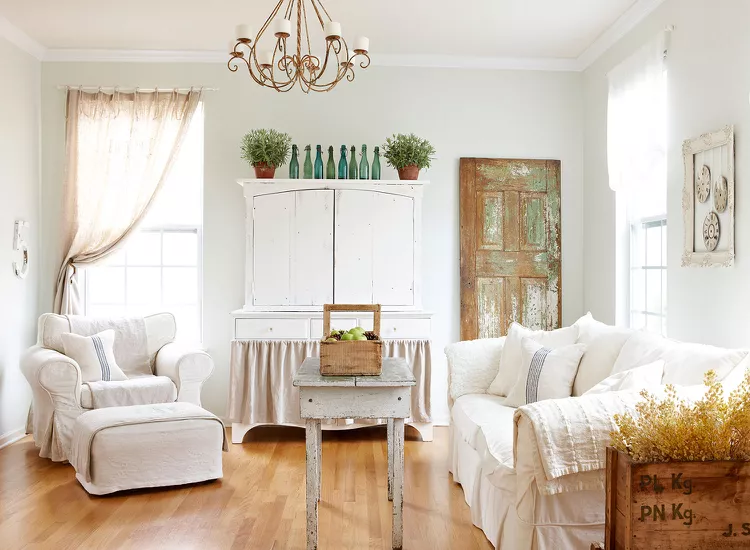
A weathered trunk can serve as a coffee table. Old books, framed photos, or worn metal pieces can sit on top, creating a setup that feels personal.
Shelves offer another place to display these items. Mixing different objects keeps the arrangement interesting without turning it into a collection display.
The key is restraint. A few meaningful pieces create more impact than filling every surface.
Wood furniture pairs naturally with vintage items. The shared sense of age helps the room come together.
The space starts to tell a story through its details. Nothing looks staged, and each piece adds a small layer of character.
Lived-In Charm
A rustic living room gains its charm from signs of daily use. Perfect surfaces rarely create the same effect.
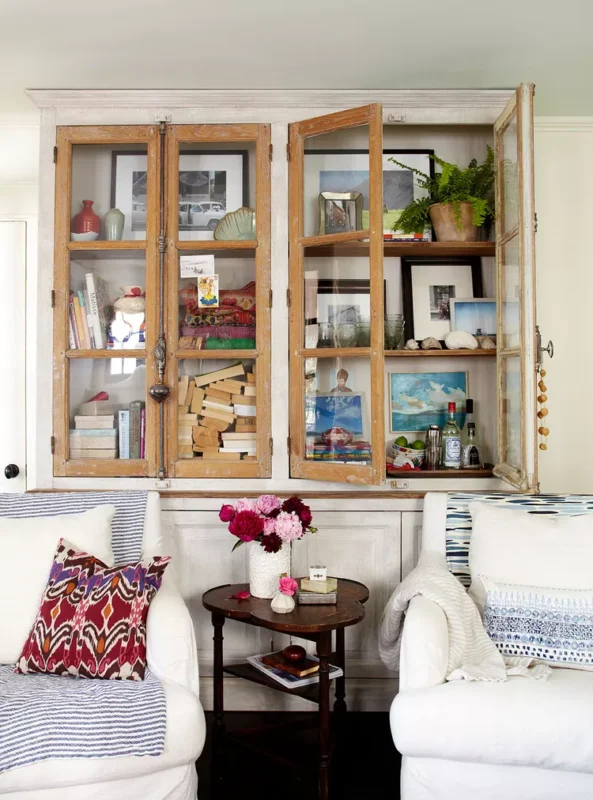
Furniture shows wear over time. Cushions soften, wood edges smooth out, and fabrics settle into place through regular use.
Books left on a table or a blanket draped across a chair add to this atmosphere. These details reflect how the room is actually used.
The arrangement stays relaxed. Items sit where they are needed instead of following a strict layout.
Lighting also plays a role. Warm lamps create a setting that suits evenings spent at home.
The room becomes more than a styled space. It reflects real life, and that is what gives it lasting character.
FAQs
What defines a rustic living room style?
A rustic living room centers on natural materials, aged finishes, and simple forms. Wood, stone, and vintage elements shape the space, often with visible wear that adds character.
Can a rustic living room work in a modern home?
Yes. Even in a newer space, you can introduce wood furniture, textured fabrics, and a few older pieces to create that same sense of warmth and history.
How do I keep a rustic living room from looking too heavy?
Balance darker materials with lighter walls or fabrics. Let natural light in, and keep the layout open so the room does not feel closed in.