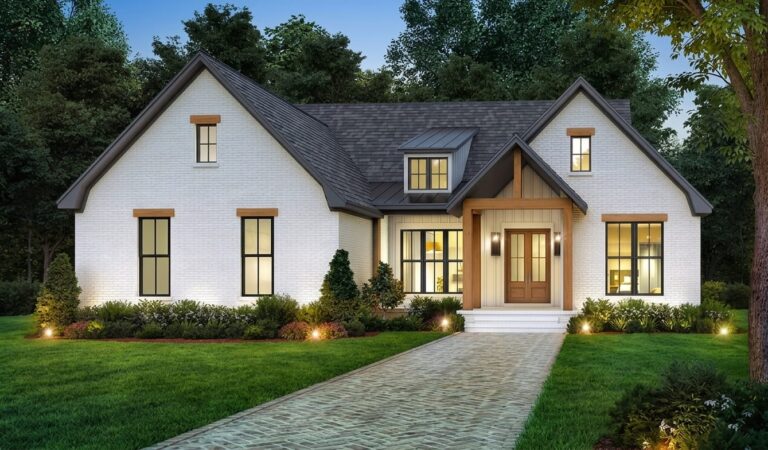
1500 Sq Ft House Plans That Feel Bigger Than They Are

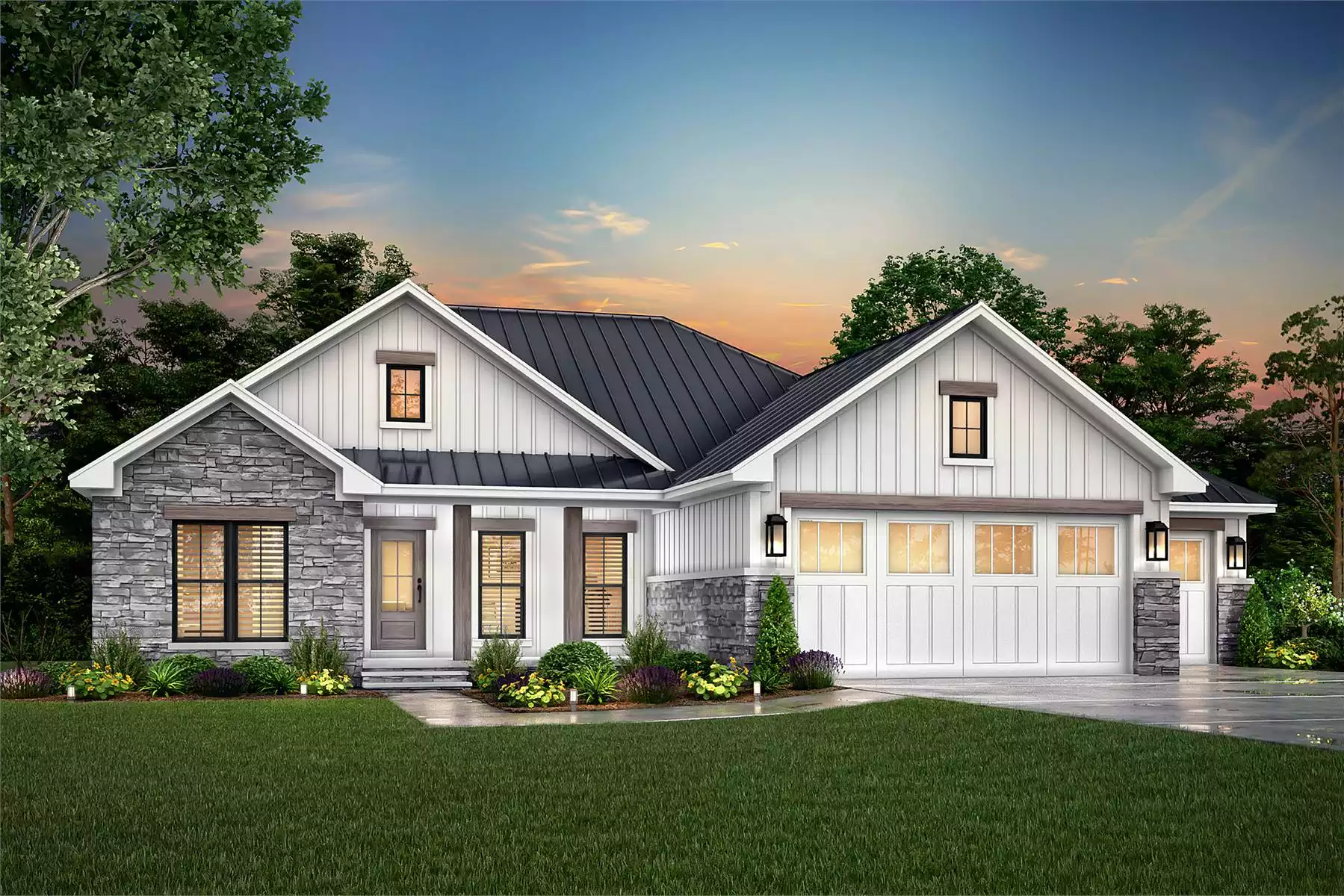
A 1500 sq ft home can feel surprisingly spacious when the layout is done right.
The secret comes down to flow, smart room placement, and how each area connects.
In this post, I share 1500 sq ft house plans that feels open, functional, and easy to live in, no matter your lifestyle.
1500 Sq Ft Modern House Plans
Open Concept 3 Bedroom Layout
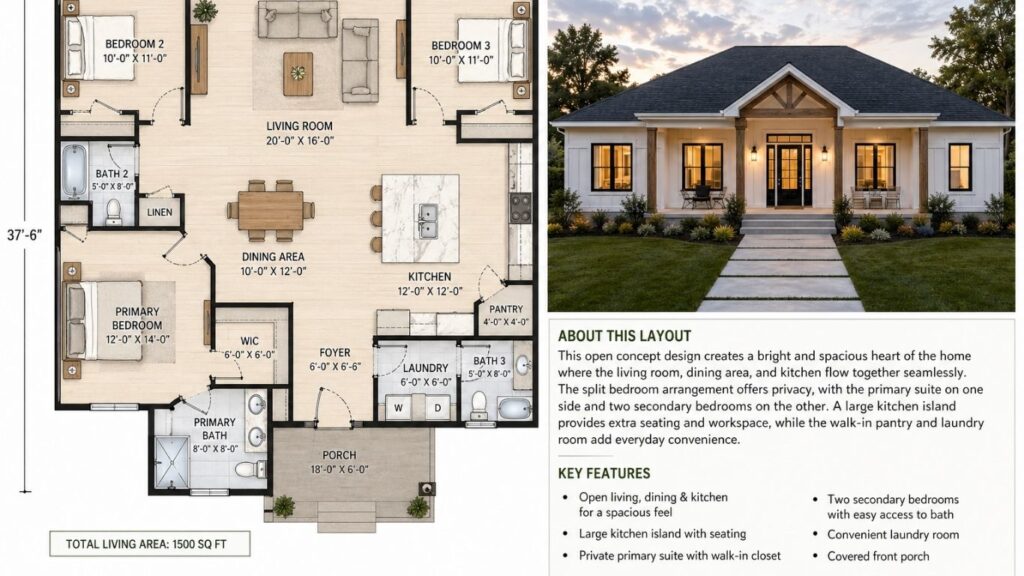
This layout focuses on creating one large central space where the living room, dining area, and kitchen flow together without barriers.
The open middle section typically spans around 20 by 25 feet, giving enough room for a full sofa set, dining table, and kitchen island.
Bedrooms are placed along the outer edges, with two smaller rooms measuring about 10 by 11 feet each, while the primary bedroom sits slightly apart at around 12 by 14 feet.
Furniture placement stays simple, with seating facing inward to define the living area.
The kitchen island acts as both a divider and gathering spot, making the entire space feel connected, functional, and naturally spacious.
Split Bedroom Floor Plan
This design separates the primary bedroom from the other two bedrooms by placing them on opposite ends of the house.
The central space, usually around 18 by 20 feet, holds the living, dining, and kitchen areas.
On one side, two bedrooms share a bathroom, each sized roughly 10 by 11 feet, making them ideal for children or guests.
On the opposite side, the primary suite measures about 13 by 14 feet, often including a walk in closet and private bathroom.
Furniture in the living area is arranged to maintain clear walking paths between both wings.
This layout creates privacy without sacrificing openness, making it practical for families who want both shared and personal space.
2 Bedroom Plus Home Office Plan
This plan replaces one bedroom with a dedicated office, making it ideal for remote work or flexible use.
The office usually measures around 9 by 10 feet, enough for a desk, shelving, and storage.
The main living area sits at the center, about 18 by 22 feet, combining the kitchen, dining, and lounge space.
Primary bedroom remains spacious at approximately 12 by 14 feet, while the second bedroom is slightly smaller.
Furniture placement focuses on function, with the office positioned in a quieter corner of the home.
The open living space allows for easy movement, while the office adds a clear separation between work and relaxation with no increase in the overall square footage.
Modern Minimalist Design
This layout emphasizes clean lines, open space, and minimal division between areas.
The central living, dining, and kitchen zone usually measures about 20 by 24 feet, with furniture kept low profile to maintain a sense of openness.
Bedrooms are arranged in a simple row along one side, each around 10 by 11 feet, with the primary bedroom slightly larger at 12 by 13 feet.
Storage is built into walls to reduce clutter and free up floor space. Furniture placement is intentional, with fewer pieces that serve multiple functions.
Large windows often replace extra decor, allowing natural light to define the space and make the home feel larger, calmer, and easier to maintain.
Farmhouse Style Plan
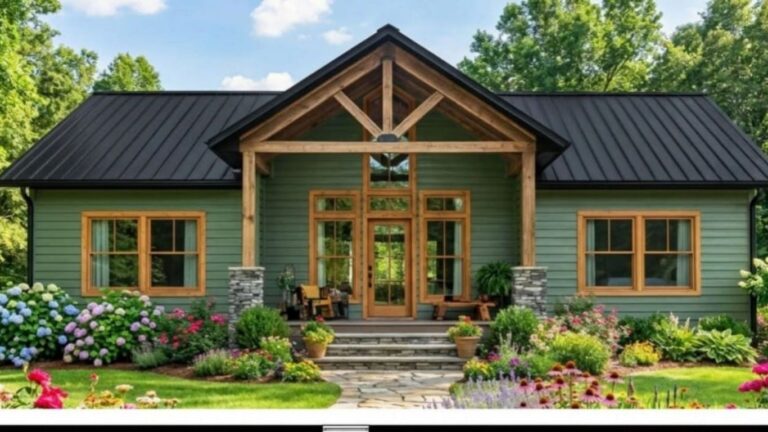
This layout combines comfort with a slightly traditional structure, often featuring a front porch that leads directly into the living room.
The living area measures around 16 by 18 feet and flows into a dining space and kitchen at the back.
The kitchen typically includes a central island and plenty of cabinet storage.
Bedrooms are grouped on one side, with two smaller rooms around 10 by 11 feet and a primary bedroom at 13 by 13 feet.
Furniture placement focuses on warmth, with larger sofas, wooden tables, and layered textures.
The porch extends usable space outdoors, creating a natural transition between inside and outside living areas.
Single Story Easy Living
This plan keeps everything on one level with a straightforward layout that prioritizes accessibility.
The central living space, about 18 by 20 feet, connects directly to the kitchen and dining area, allowing for easy movement throughout the home.
Bedrooms are positioned along a hallway, with two smaller rooms around 10 by 11 feet and a primary bedroom closer to 12 by 14 feet.
Furniture is arranged to keep pathways clear, making the home feel open and easy to navigate.
The absence of stairs allows more usable square footage, while compact storage solutions help maintain organization without adding extra rooms.
2-Story Compact Layout
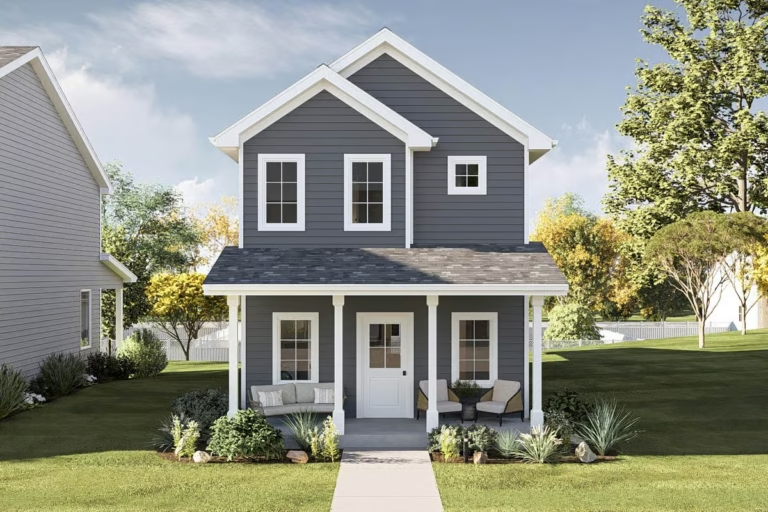
This layout divides the home into two levels to maximize space on a smaller footprint.
The ground floor, typically around 750 sq ft, includes a living room measuring 16 by 18 feet, along with a dining area and kitchen arranged in an open flow.
Furniture is placed to define each section without walls. Upstairs, the remaining square footage holds three bedrooms, including a primary bedroom around 12 by 14 feet and two smaller rooms.
A shared bathroom connects the secondary bedrooms. This separation creates a clear boundary between social and private areas, making the home organized while still maintaining a comfortable amount of space.
L-Shaped Layout
This design forms an L shape that naturally separates living and sleeping areas while creating a private outdoor section.
The main living space sits in one wing, about 18 by 20 feet, with the kitchen and dining area flowing alongside it.
The other wing holds the bedrooms, with two smaller rooms around 10 by 11 feet and a primary bedroom near 13 by 14 feet.
The inner corner of the L often opens to a patio or garden space.
Furniture is arranged to face inward toward this outdoor area, strengthening the connection between indoor and outdoor.
Narrow Lot House Plan
This layout is designed for tight spaces, with a long and linear structure that typically measures around 20 to 25 feet wide.
Rooms are arranged in sequence, starting with the living room at the front, followed by the dining area and kitchen.
Bedrooms are placed toward the back for privacy, with sizes ranging from 10 by 10 feet to a primary bedroom at about 12 by 13 feet.
Furniture placement focuses on keeping pathways clear, often aligning pieces along walls to maximize walking space.
Vertical storage and multi-use furniture play a key role, helping the home feel functional without feeling cramped.
Indoor Outdoor Living Focus
This plan is designed to extend the living space beyond the interior by connecting it to an outdoor area.
The main living room, around 16 by 20 feet, features large sliding doors that open directly onto a patio or deck.
The dining area often sits near this opening, making it easy to move between indoor and outdoor spaces.
Bedrooms are placed along one side of the house, with the primary bedroom slightly separated for privacy.
Furniture is arranged to face outward toward the patio, encouraging natural light and airflow.
This layout works especially well in warm climates where outdoor living becomes part of daily life.
Budget-Friendly Efficient Plan
This layout keeps construction simple by using a compact rectangular shape and minimizing structural complexity.
The main living area, around 16 by 18 feet, combines the kitchen and dining space in a straightforward arrangement.
Bedrooms are placed along one side, with two smaller rooms around 10 by 10 feet and a primary bedroom slightly larger.
Furniture placement remains practical, focusing on essential pieces that do not overcrowd the space.
Storage is built into key areas to reduce the need for extra furniture. This design delivers a comfortable, functional home that meets every day needs.
Small Luxury Layout
This plan focuses on making a smaller home feel more refined by prioritizing key areas.
The living room is slightly larger than average at around 18 by 20 feet, often featuring statement furniture and better spacing between pieces.
The kitchen includes an island and upgraded finishes, connecting smoothly to the dining area. The primary suite stands out at about 14 by 14 feet, with a walk-in closet and a more spacious bathroom.
Secondary bedrooms remain compact but functional. Furniture placement emphasizes comfort and openness, allowing each space to feel intentional.
Small details, like lighting and layout balance, create a more elevated overall feel.
FAQs
What are the advantages of choosing a home in this size range?
Homes around 1500 sq ft are easier to maintain, more affordable to build, and still offer enough space for comfortable daily living. They encourage efficient layouts with minimal wasted space.
Can I customize these house plans?
Yes, most house plans can be adjusted to fit your needs. You can modify room sizes, add features like an office, or change finishes depending on your budget and lifestyle.
Are homes in this size range suitable for families?
Yes, they work well for small to medium-sized families. With 2 to 3 bedrooms and smart layouts, they provide enough space for privacy and shared living.
Are these house plans budget-friendly?
Generally, yes. Smaller size means lower construction, utility, and maintenance costs compared to larger homes, making them a practical choice.
Can I build one of these homes on a small lot?
Yes, many of these plans are designed for compact or narrow lots. Options like two-story or narrow layouts help maximize space on smaller land.