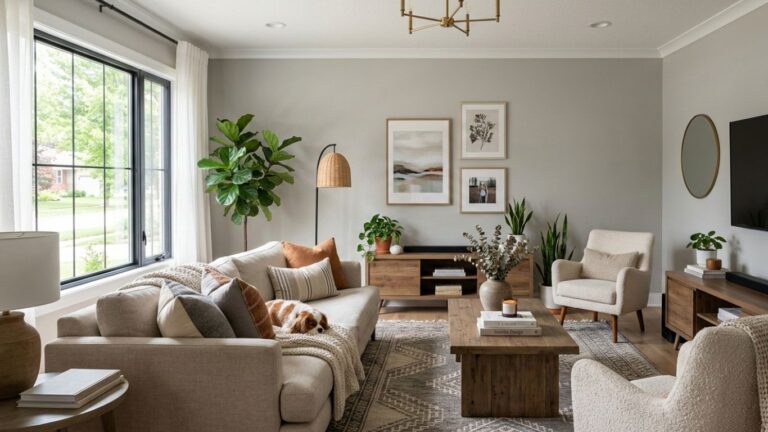
14 Trendy Living Room Ideas With An Orange Couch

When I first owned a living room with an orange couch, I quickly realized how much personality it brings to a space.
They’re surprisingly versatile when paired with the right colors and textures.
Probably you already own one, but you’re wondering how to style the rest of the room around it.
I’ve gathered several orange couch living room ideas that show you how a sofa can guide the overall design direction.
Orange Couch Living Room Ideas
Pair an Orange Couch with Deep Navy Walls
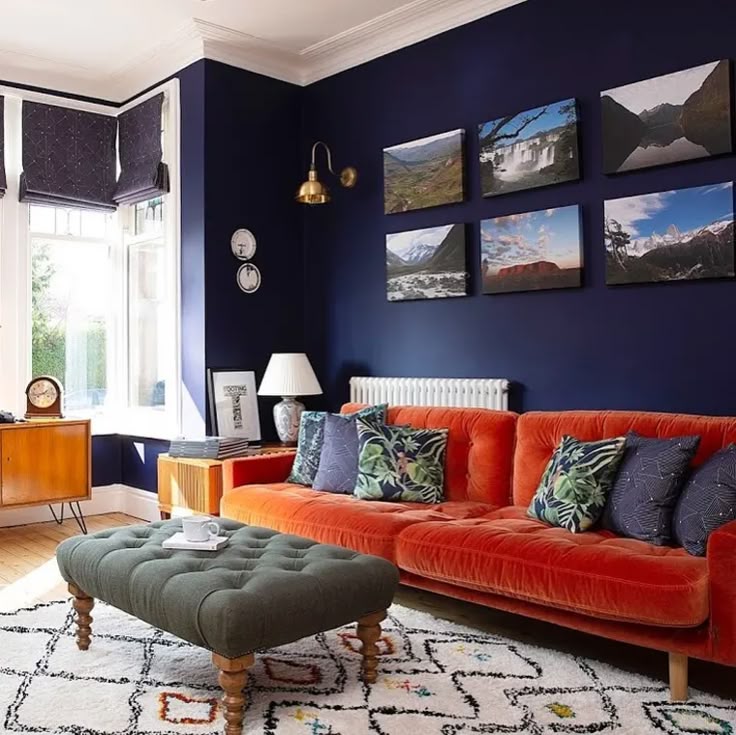
An orange couch becomes far more striking when placed against deep navy walls. The darker backdrop allows the warm upholstery to stand out in a way that lighter paint colors cannot achieve.
Designers often use this combination because the contrast is strong but still balanced.
Start with a navy or midnight-blue wall behind the sofa. This instantly frames the couch and creates a focal point in the room.
If painting the entire room in navy feels too heavy, a single accent wall works just as well.
Furniture around the space should stay simple. A walnut coffee table keeps the attention centered on the sofa.
Textiles can help soften the contrast. A cream throw blanket or light neutral rug helps break up the dark floor area.
Artwork above the couch can pull both colors together. Abstract prints with navy, rust, and soft beige tones tie the palette together and keep the wall from looking empty.
The end result is a living room that carries strong visual contrast and at the same time maintain a polished appearance.
Surround the Couch with Earthy Tones
An orange couch blends naturally into a palette built around earthy tones. Shades like clay, sand, olive, and terracotta create a grounded setting that echoes colors often found in nature.
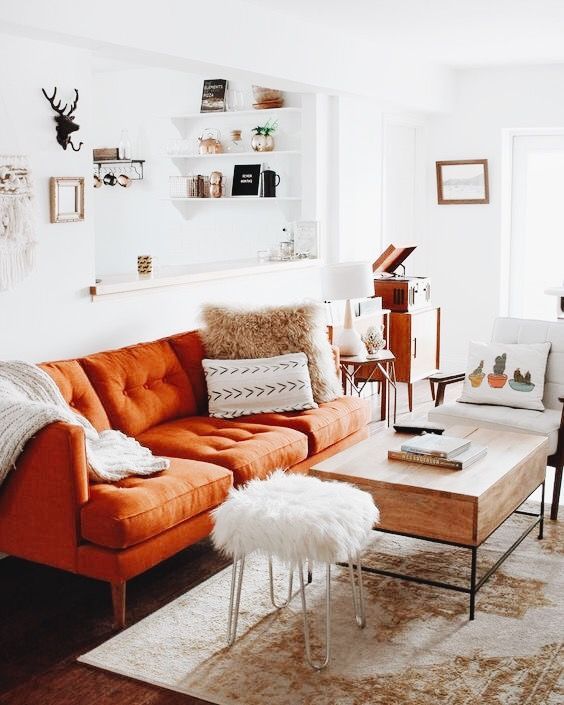
Start with a neutral base such as warm beige or soft taupe walls. These shades calm the brightness of the couch while keeping the room warm.
Wood furniture strengthens the palette. Oak or walnut pieces introduce natural texture and complement the orange upholstery.
A large woven rug works well in this setup. Jute or wool rugs with subtle patterns add depth to the floor while maintaining the organic look of the space.
Decor elements should echo the same color family. Terracotta vases, ceramic bowls, and clay planters reinforce the warm palette.
Indoor plants also help break up the colors while adding natural greenery.
Lighting plays a role here too. Table lamps with linen shades soften the overall atmosphere in the evening.
When all these elements come together, the orange couch blends smoothly into the room.
Add Midcentury Furniture Around the Sofa
An orange couch fits naturally into a midcentury-inspired living room. During the early days, furniture designers frequently experimented with warm tones such as rust.
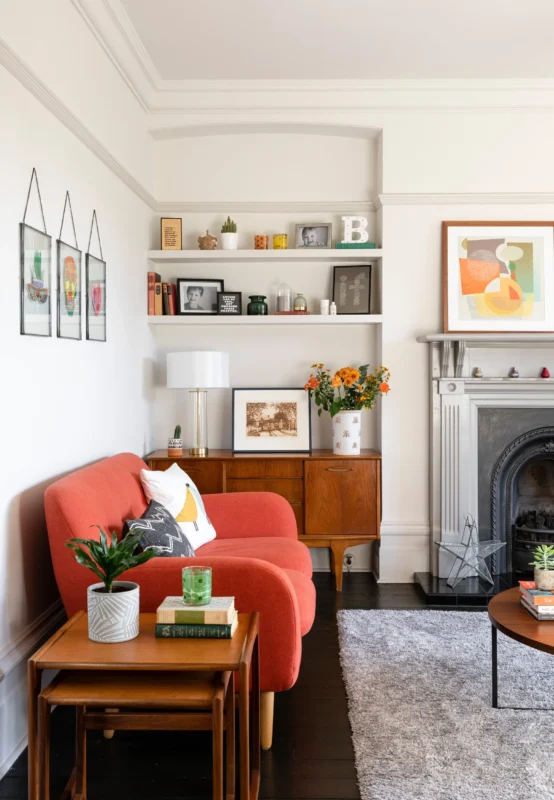
Pair the couch with furniture that reflects that era. Walnut coffee tables, tapered-leg armchairs, and low-profile media consoles help build the right atmosphere. These shapes emphasize clean lines.
Lighting can reinforce the theme. A classic arc floor lamp or a sputnik-style ceiling fixture adds visual interest while echoing midcentury design language.
Wall art also contributes to the overall direction. Abstract prints or geometric patterns work well.
Frames in wood or thin black metal keep the artwork consistent with the rest of the furniture.
To finish the space, add a patterned area rug with subtle retro motifs. Designs that include rust, cream, and muted blue help connect the couch to the rest of the room.
The orange sofa then becomes part of a broader retro composition rather than the only standout element.
Create a Light Neutral Backdrop
A neutral room can gain a lot of character from an orange couch. When the rest of the space uses soft shades like white, cream, or pale beige, the couch naturally becomes the central feature.
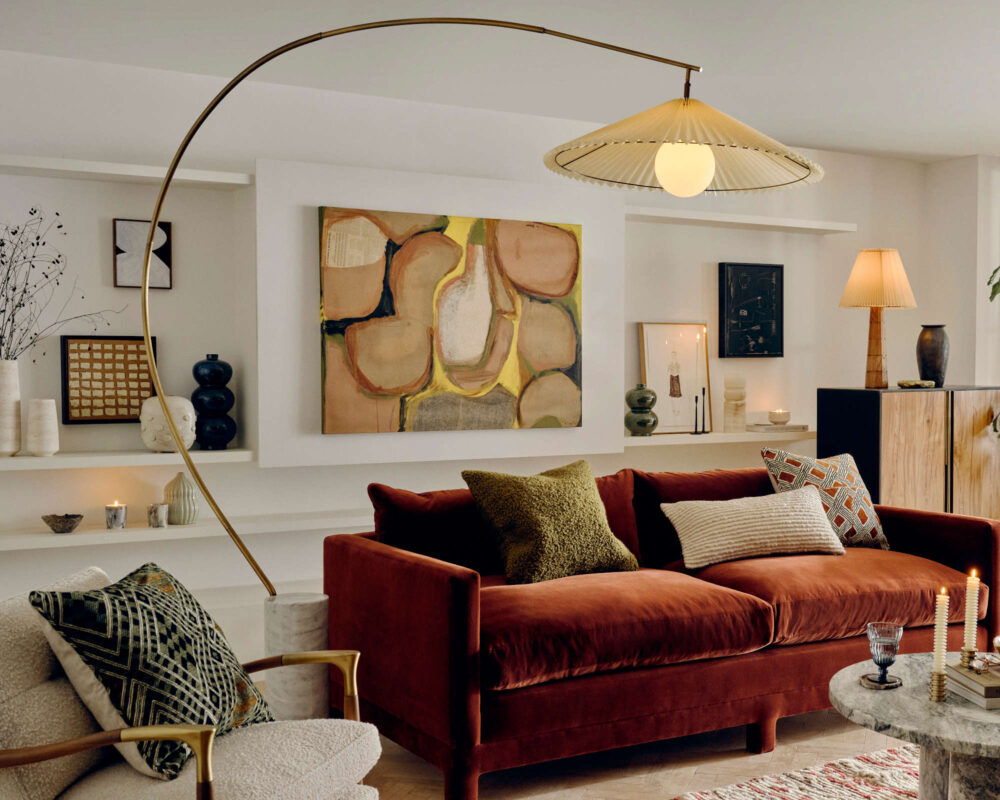
Walls painted in warm white create a bright background that keeps the room open and airy. Light-colored curtains allow natural daylight to fill the space during the day.
Furniture can follow the same neutral approach. A pale wood coffee table or light oak shelving maintains the calm palette while introducing texture.
Upholstered chairs in linen or cotton blend easily with the rest of the design.
Decor accessories should stay restrained so the couch remains the highlight. A few ceramic vases, a neutral woven rug, and simple wall art provide structure without crowding the space.
Green plants also play a helpful role here. Their color contrasts nicely with the orange upholstery and adds freshness to the room.
This setup works particularly well in smaller living rooms because the light palette keeps the space open.
Combine the Couch with Patterned Textiles
Patterned textiles can add depth to a living room centered around an orange couch.
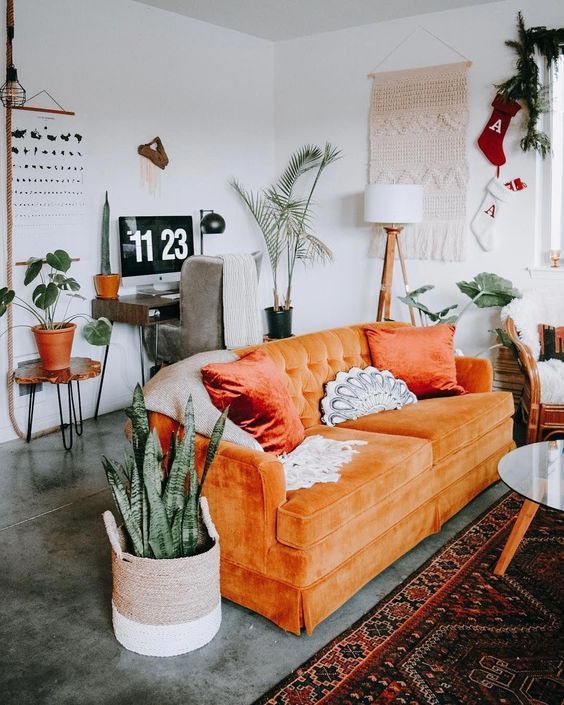
Because orange is already a strong color, carefully chosen patterns help distribute energy across the room.
Start with a large patterned rug beneath the seating area. Persian-style rugs or geometric designs work well because they include several complementary colors.
Look for patterns that incorporate rust, cream, or deep blue to connect with the sofa.
Throw pillows offer another opportunity to introduce pattern. Mixing stripes, small florals, or tribal prints adds variation across the couch surface.
The key is keeping the color palette related so the room remains cohesive.
Window treatments can also carry subtle pattern. Linen curtains with a faint stripe or texture.
Even small accents can follow this idea. Patterned poufs, woven baskets, or embroidered throws continue the theme across the space.
With these layered textiles, the orange couch becomes part of a lively and textured living room.
Embrace Warm Wood Tones Around the Couch
An orange couch works naturally with wood furniture. Both elements carry warmth, which helps the room appear grounded.
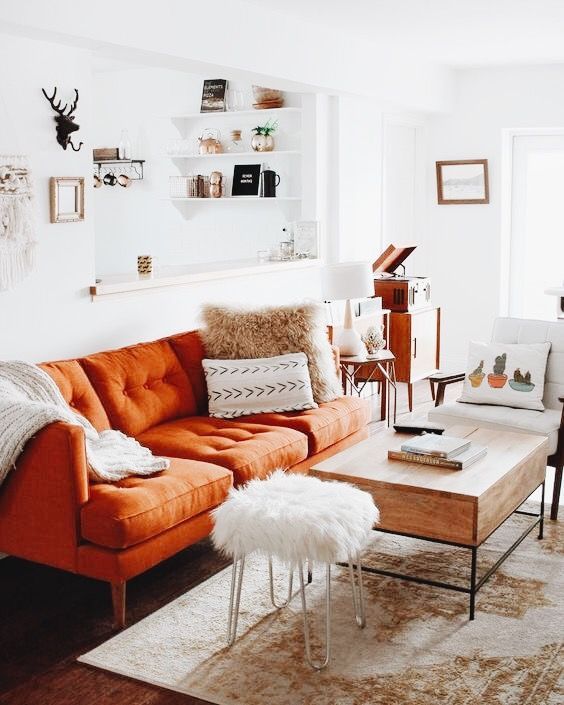
When these tones sit together in one space, the palette looks easy on the eyes.
Start with a wooden coffee table placed in front of the couch. Oak pieces add rich grain patterns that complement the upholstery. A matching console or media cabinet nearby continues the theme across the room.
Shelving can also introduce wood texture. Floating shelves provide space for books, pottery, and framed photos. These pieces bring personality while reinforcing the warm palette.
Flooring also plays a role. Hardwood floors deepen the atmosphere when paired with a neutral rug that softens the area around the seating.
Decor items can stay simple. Ceramic bowls, woven baskets, and small sculptures help build character while echoing natural materials.
With wood furniture surrounding the couch, the room carries a layered warmth that suits everyday living.
Add Emerald Green Accents
Orange and emerald green form a striking pair. The deep green tone balances the energy of the couch.
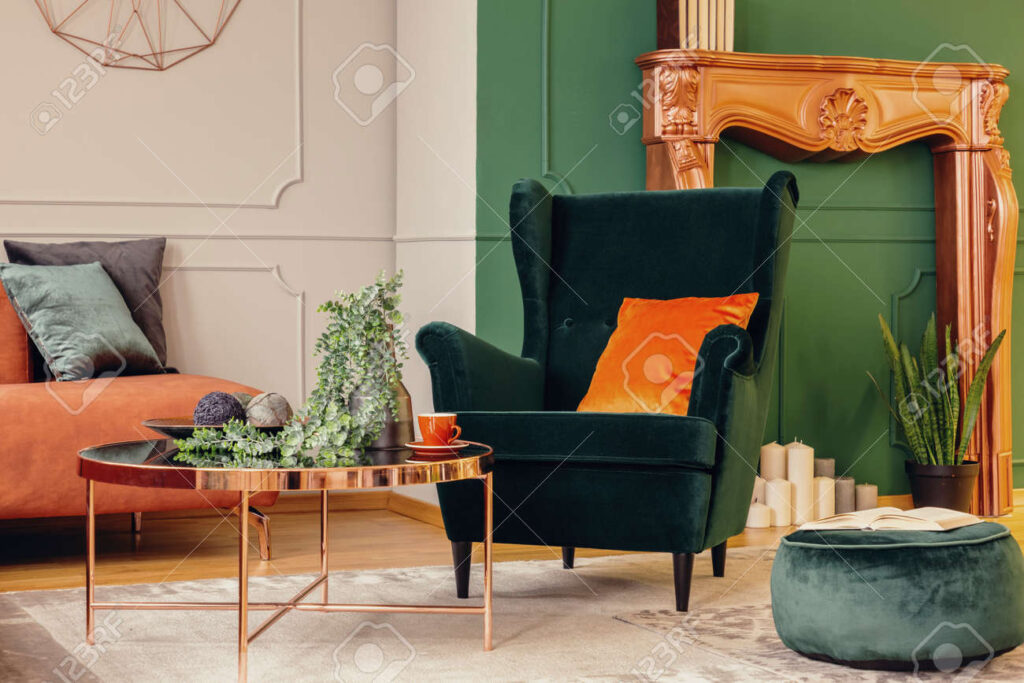
One of the easiest ways to introduce this color is through accent chairs. A velvet chair in emerald green placed near the couch builds contrast while adding extra seating.
Throw pillows offer another opportunity. Green cushions scattered across the sofa soften the strong orange tone and create harmony between the colors.
Artwork also helps connect the palette. Abstract prints that feature orange, green, and neutral tones pull the room together while filling the wall above the couch.
Plants naturally echo the same color. A large fiddle-leaf fig or rubber plant placed beside the sofa strengthens the green presence.
The combination of orange upholstery and deep green accents creates a lively space with a bold color story.
Use Black Metal Elements for Contrast
Black metal details introduce strong contrast around an orange couch. The darker tone anchors the room and highlights the brightness of the upholstery.
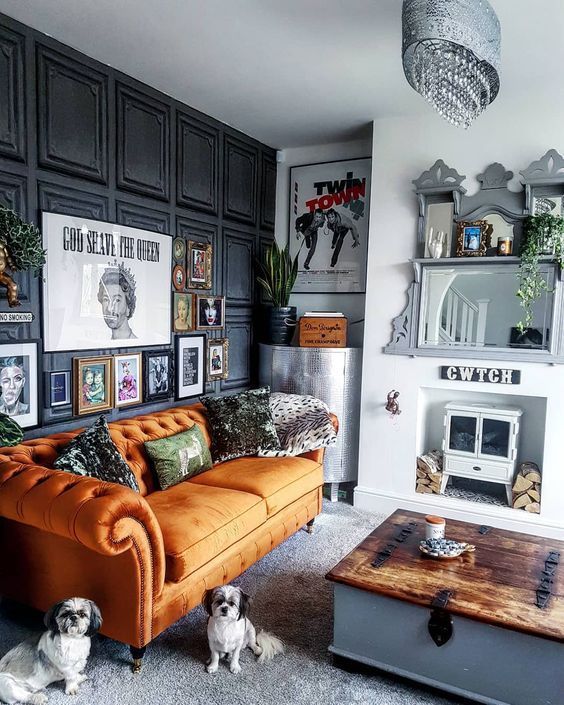
A black metal coffee table works well as the central piece in front of the sofa. Many designs include thin frames paired with glass or wood tops, which keeps the furniture light in appearance.
Lighting can follow the same idea. Floor lamps with matte black stems help distribute the color across the space.
Shelving units built with metal frames and wood boards also reinforce the contrast. These pieces bring storage while continuing the black accents.
Wall décor may include framed artwork with black borders. These additions echo the same tone and create a consistent thread through the room.
The contrast between the bold couch and dark metal elements gives the space a strong, structured appearance.
Introduce Layered Neutral Rugs
Layered rugs can soften the floor area around an orange couch and bring extra texture into the room.
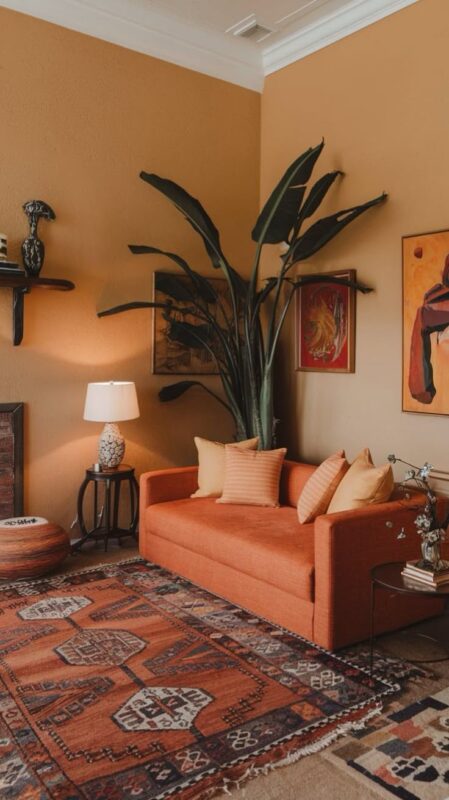
This approach works well in larger living areas where the seating zone needs clear definition.
Start with a large base rug such as jute or sisal. These natural fibers introduce texture and anchor the seating arrangement. Their sandy color also pairs easily with orange upholstery.
A second rug placed on top adds pattern and comfort. Persian-style or vintage rugs often include rust, cream, and muted blue tones that connect nicely with the couch.
Position the layered rugs beneath the coffee table and front legs of the sofa. This arrangement keeps the seating area unified.
Throw blankets and cushions in related shades can echo the rug colors across the couch. This spreads the palette through the room.
The layered rug setup adds depth to the floor area and frames the orange couch as the center of the living space.
Surround the Couch with Built-In Shelving
Built-in shelving around an orange couch can turn the wall into a feature that draws attention across the entire living room.
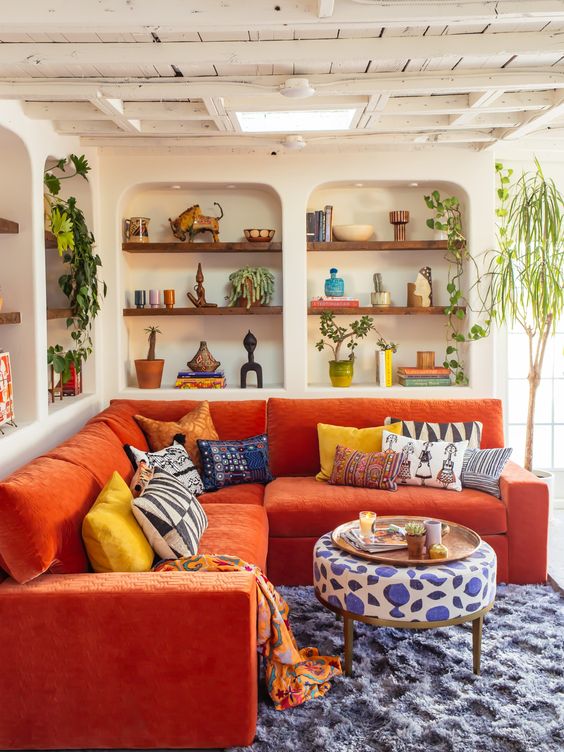
The shelving frames the seating area and provides space for books and decorative objects.
Install shelves on both sides of the couch or across the full wall behind it. Painted wood shelves keep the structure clean and allow decorative pieces to stand out.
Books arranged vertically and horizontally create rhythm across the shelves. Mixing in ceramic vases, framed photographs, and small sculptures adds variety.
Lighting can also enhance the display. Small picture lights highlight selected objects and create a soft glow in the evening.
The orange couch sits at the center of this arrangement, grounded by the structure of the shelving around it.
This setup works especially well in living rooms that double as reading areas, giving the space practical storage.
Frame the Couch with Large Wall Art
A large artwork above an orange couch can shift the entire mood of a living room. Instead of filling the wall with several small frames, one oversized piece draws attention.
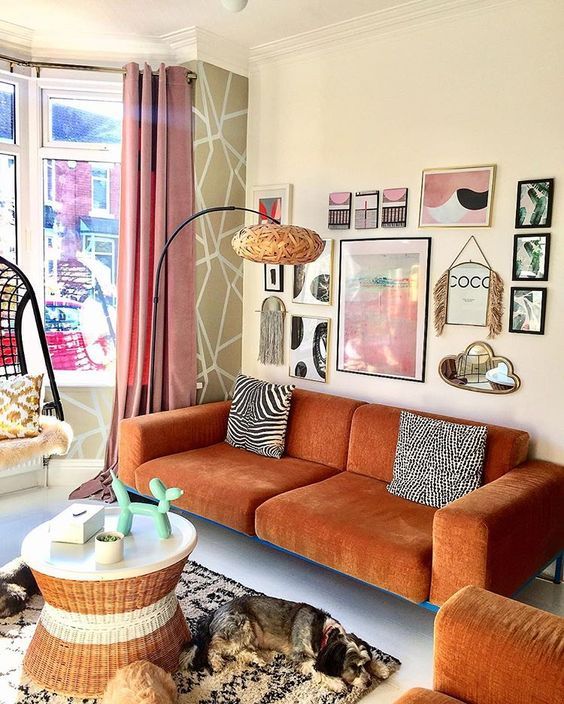
Abstract paintings work especially well in this setting. Many include warm tones that echo the couch while introducing additional color.
A canvas with hints of rust, deep blue, or cream can help tie the room together.
The size of the artwork matters. The piece should stretch across a good portion of the wall so it relates to the scale of the sofa beneath it.
When the artwork is too small, the wall can appear disconnected from the furniture.
Framing also plays a role. A slim wooden frame connects nicely with natural furniture in the room, while a black frame creates stronger contrast.
This arrangement works particularly well in modern apartments where wall décor carries much of the design character.
The couch anchors the room while the artwork completes the composition.
Introduce Soft Lighting Around the Seating Area
Lighting can completely change the way an orange couch appears during the evening hours. Soft illumination adds warmth to the room.
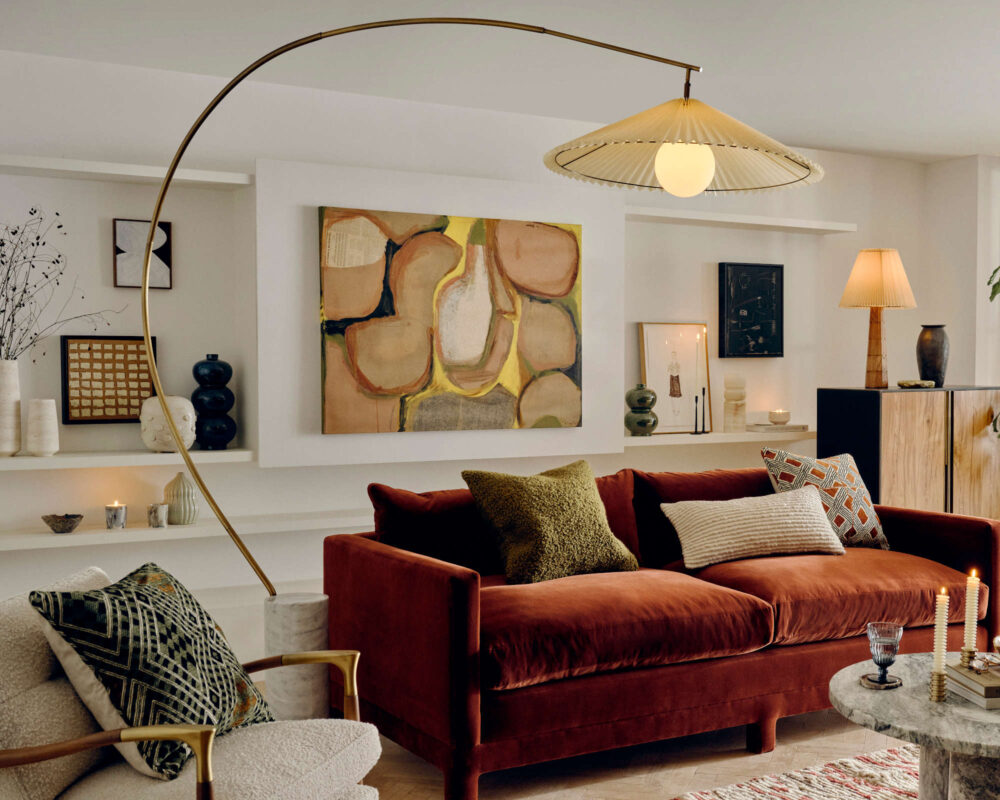
A floor lamp placed beside the sofa provides a gentle pool of light that spreads across the seating area. Lamps with fabric shades create a warm glow that suits relaxed evenings.
Table lamps placed on nearby side tables continue the same lighting tone across the room. When several light sources work together, the space gains depth and atmosphere.
Wall sconces can also help frame the couch. Mounted slightly above eye level, they introduce a soft glow that spreads across the wall behind the sofa.
This layered lighting arrangement transforms the living room once daylight fades. The orange couch takes on a deeper tone in the evening, giving the room a rich appearance.
Place the Couch Against a Textured Wall
A textured wall behind an orange couch adds depth and character to the living room.
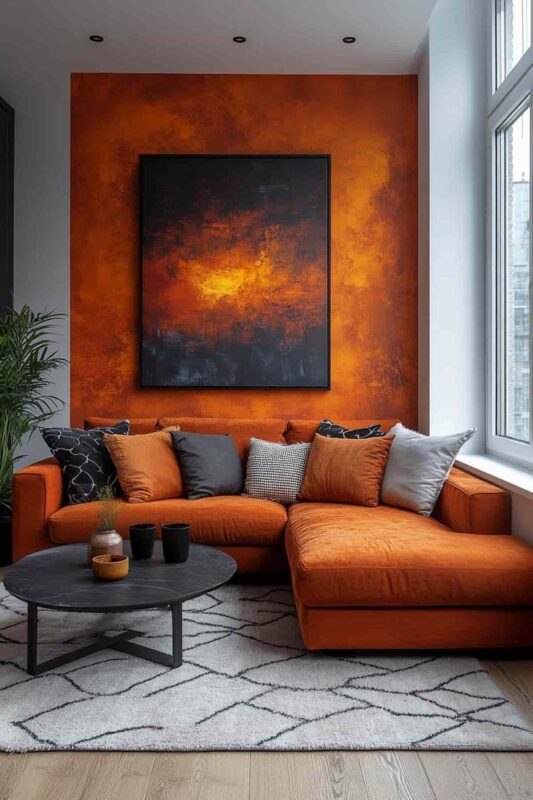
Materials such as brick, plaster, or stone introduce an architectural element that changes the way the seating area looks.
Exposed brick walls often pair well with orange upholstery. The natural red tones echo the warmth of the couch while the rough surface brings a sense of history to the room.
Plaster walls create a different atmosphere. Their slightly uneven surface catches light throughout the day, producing gentle shadows across the wall.
Stone accent walls bring a heavier presence to the room. When combined with warm lighting and natural wood furniture, the result carries a strong sense of structure.
With a textured wall in place, the couch appears more integrated into the space. The background adds depth while the sofa stands out as the main seating feature.
Anchor the Room with a Large Area Rug
A large area rug can ground the entire seating arrangement around an orange couch.
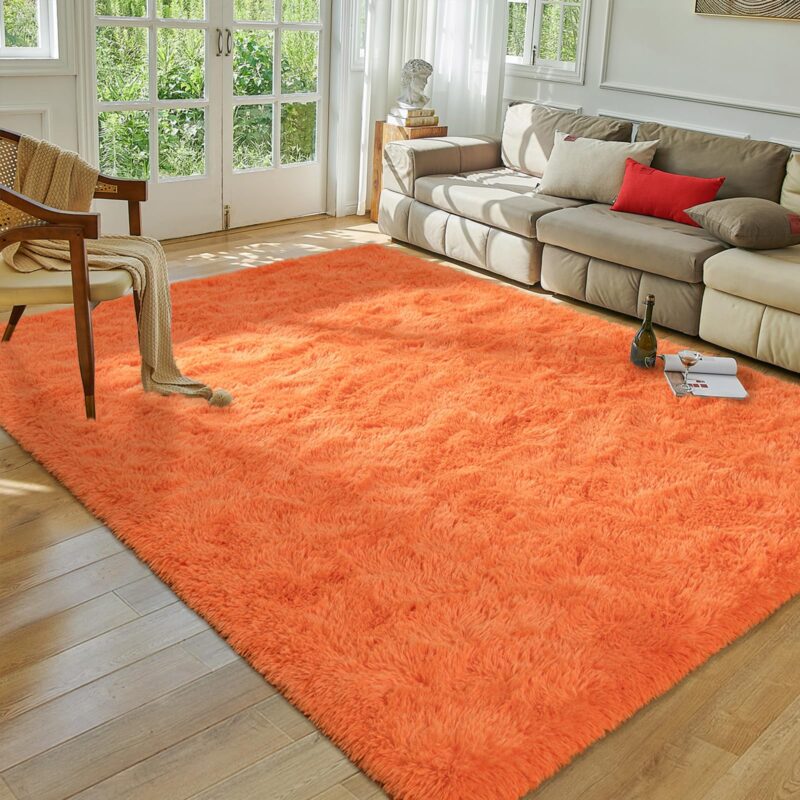
When the rug extends beyond the edges of the sofa and nearby chairs, the living room appears more organized.
Neutral rugs often work well because they balance the strong color of the couch. A light beige rug creates contrast and brightens the floor area.
Patterned rugs can also complement the couch when the colors relate to the rest of the room. Vintage designs include warm tones that connect naturally with orange upholstery.
The rug should sit beneath the front legs of the sofa and nearby chairs. This layout keeps the furniture visually connected instead of scattered across the floor.
Once the rug anchors the space, the orange couch becomes part of a complete seating area rather than a single standout object.