13+ Accent Wall Ideas For Your Boring Bedroom

Have you noticed that the quickest way to refresh a bedroom is by changing what’s right in front of you.
One wall can shift the entire look of the space when it’s done right. And you start seeing a more balanced look.
I’ve tried a few of these ideas myself, and the difference is immediate.
For those looking to update their bedroom, these accent wall ideas are worth exploring.
Top Bedroom Accent Wall Ideas
Deep Chocolate Panel Accent Wall
A deep chocolate panel wall can shift the mood of a bedroom in a strong way. This style works best behind the bed, where it naturally draws attention and anchors the entire space.
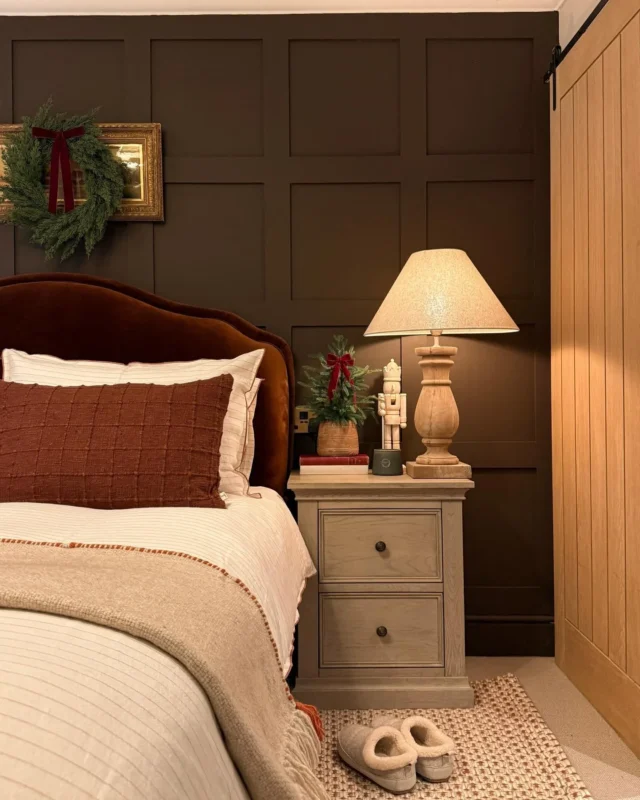
Wood paneling painted in a rich brown tone adds depth that plain paint cannot match.
I’ve seen this approach turn simple bedrooms into spaces that look more complete. The panels introduce lines that guide the eye, giving the wall more presence.
To keep the room balanced, lighter bedding and soft textiles help break up the darker backdrop. Crisp white sheets or warm beige tones stand out clearly against the wall, making the bed amazing.
Lighting also plays an important role here. Wall sconces or bedside lamps highlight the panel texture and bring out variations in the color.
Furniture can stay simple so the wall remains the main feature. A low-profile bed frame or a wooden bench at the foot of the bed works well.
This idea suits anyone who wants a bold accent wall without relying on bright colors or busy patterns.
Soft Contrast Backdrop Accent Wall
A soft contrast accent wall offers a quieter way to add interest to a bedroom. Instead of strong color differences, this idea focuses on gentle shifts between tones.
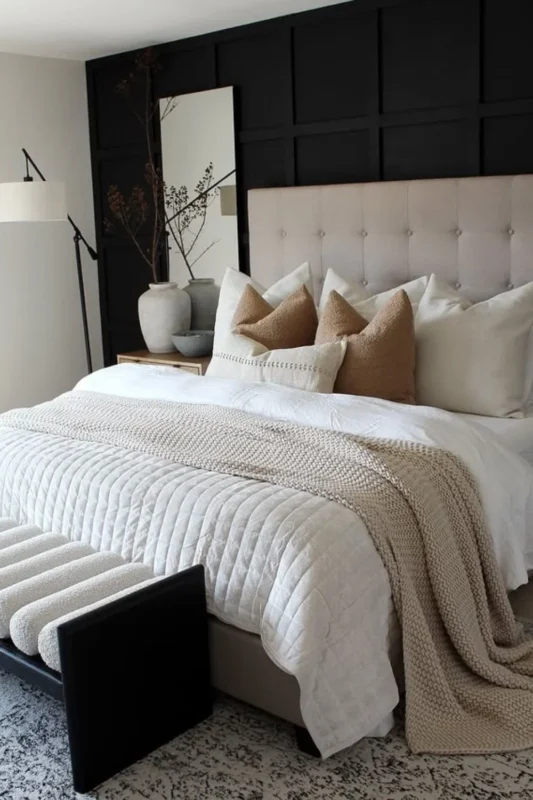
Painting the wall behind the bed in a shade slightly deeper than the surrounding walls creates a layered look.
Many designed have used this method in smaller rooms where bold colors felt too heavy.
The key is choosing colors that sit close to each other on the palette. For example, a warm taupe wall paired with lighter beige walls can create a calm transition.
Textiles help reinforce the contrast. Bedding, cushions, and throws can echo the accent wall tone, tying everything together.
Artwork or framed prints can sit against the accent wall to add detail. The softer background allows these pieces to suffice more clearly.
This approach suits those who want a subtle change that improves the overall look of the bedroom with not making the wall too dominant.
Bold Grid Wall
A bold grid wall introduces structure and pattern into a bedroom using simple lines. This design often involves adding thin molding strips to form square or rectangular sections across the wall.
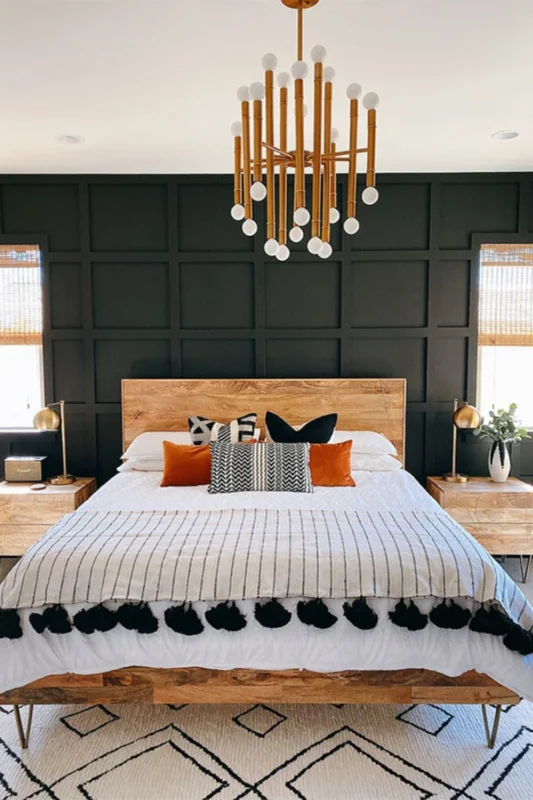
Once painted, the grid pattern creates a strong visual effect. I’ve seen this style used in both modern and classic bedrooms, and it is suitable in each setting.
The layout gives the wall a tailored appearance that stands out immediately.
Dark paint colors tend to highlight the grid pattern more clearly. However, lighter shades can also work if the goal is a softer look.
The bed usually sits directly in front of this wall, allowing the pattern to frame it naturally. A simple headboard is best so the grid remains visible.
Lighting can enhance the effect. Side lamps or sconces cast gentle shadows along the molding, making the pattern more noticeable.
This idea suits anyone who wants a structured accent wall that adds interest through shape rather than artwork or bold prints.
Dreamy Pastel Mural
A pastel mural can bring a softer, artistic touch to a bedroom accent wall. Instead of sharp patterns, this idea focuses on blended colors that create a relaxed backdrop.
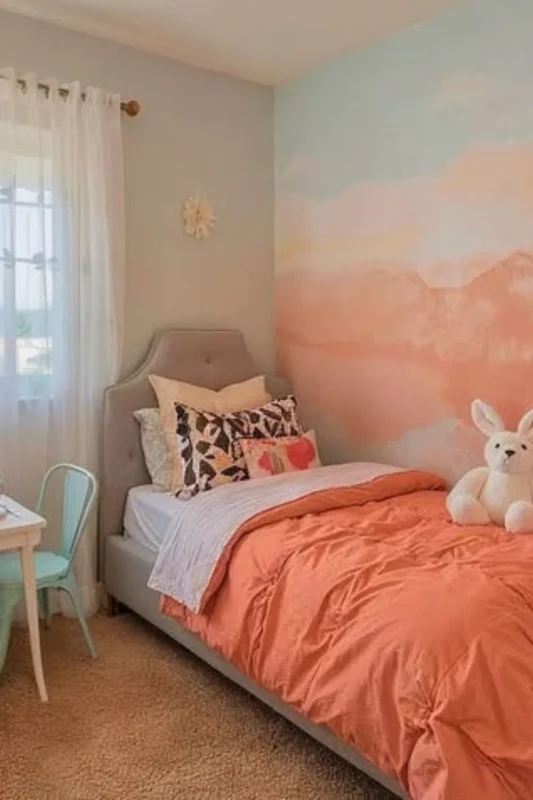
Soft tones such as blush pink, pale blue, or muted lavender can be painted in abstract shapes or flowing patterns.
Designers say that these murals are a good choice for bedrooms meant for rest, as the colors do not overpower the space.
The wall behind the bed is usually the best place for this design. It becomes a gentle focal point that draws attention.
Furniture and bedding should stay fairly simple to let the mural stand out. Neutral tones help balance the color and keep the room from looking too busy.
Lighting can change how the mural appears throughout the day. Natural light brings out the softer tones, while evening lighting creates a warmer look.
Navy Framed Accent Wall
A navy framed accent wall combines deep color with clean structure. This design uses molding or trim to create panels, then finishes the wall in a rich navy shade.
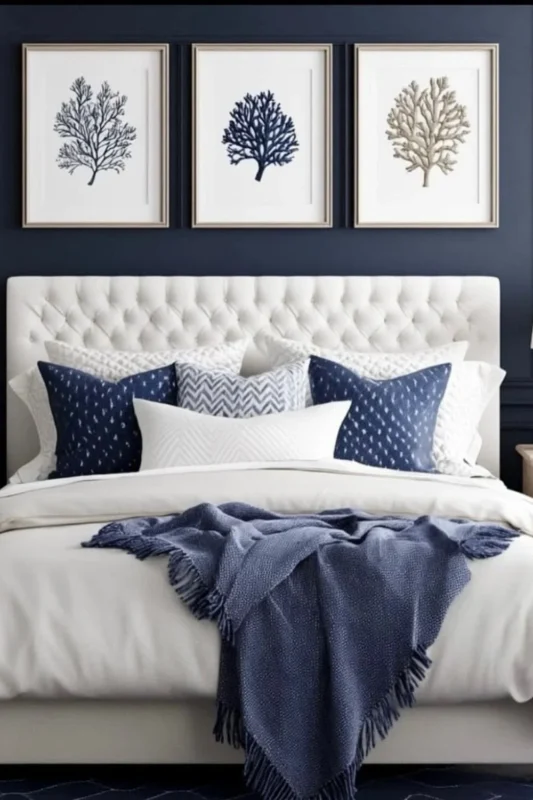
I’ve seen this idea look amazing in bedrooms with good natural light. The darker color adds boldness.
The panels can be arranged in simple rectangular shapes. This gives the wall a sense of order and makes the design look intentional.
Lighter bedding stands out clearly against navy. Whites, creams, and soft grays help balance the darker tone and keep the room from looking too heavy.
Metal accents such as brass lamps or handles can add contrast. They catch light and bring a bit of brightness to the overall setup.
This type of accent wall is a win for those who want a bold color paired with a structured layout. It adds character.
Warm White Paneling with Textured Neutrals
Warm white paneling can shift a plain bedroom wall into something more detailed.
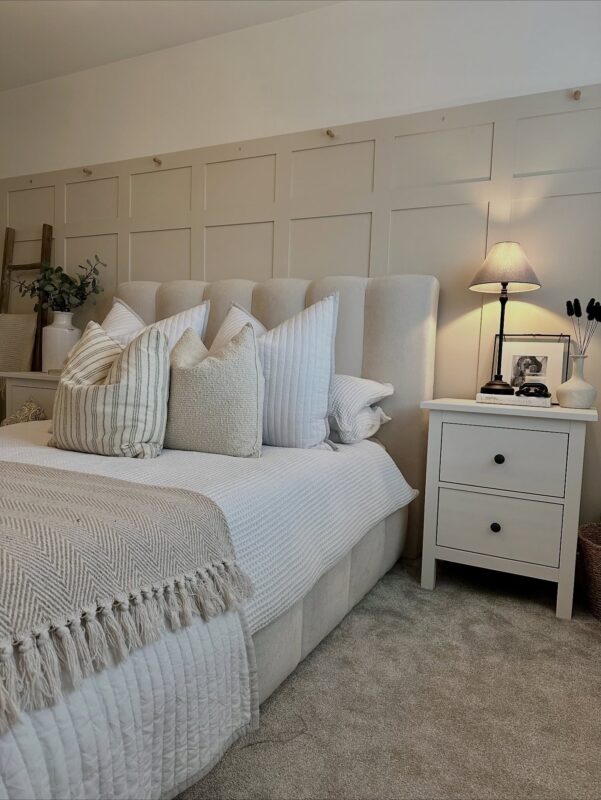
Instead of a flat painted surface, the paneling introduces structure through vertical or rectangular sections. The warm tone keeps the wall from looking stark.
I’ve found this being the best choice in rooms that already lean toward neutral décor.
The paneling adds interest, but it doesn’t compete with furniture or bedding. It quietly supports the rest of the space.
Texture plays a big role here. Linen bedding, woven throws, and soft rugs help build a layered look around the wall.
These materials bring variation, which prevents the room from looking too plain.
Lighting also matters. A pair of bedside lamps can highlight the panel lines in the evening. During the day, natural light brings out the softness of the paint.
Furniture choices can stay relaxed. Light wood tones or upholstered pieces fit naturally with this setup.
This idea suits anyone who prefers a calm bedroom with a bit more detail than standard painted walls.
Taupe Panel Accent Wall
A taupe panel accent wall offers a balanced option for those who want a deeper tone but not something too dark.
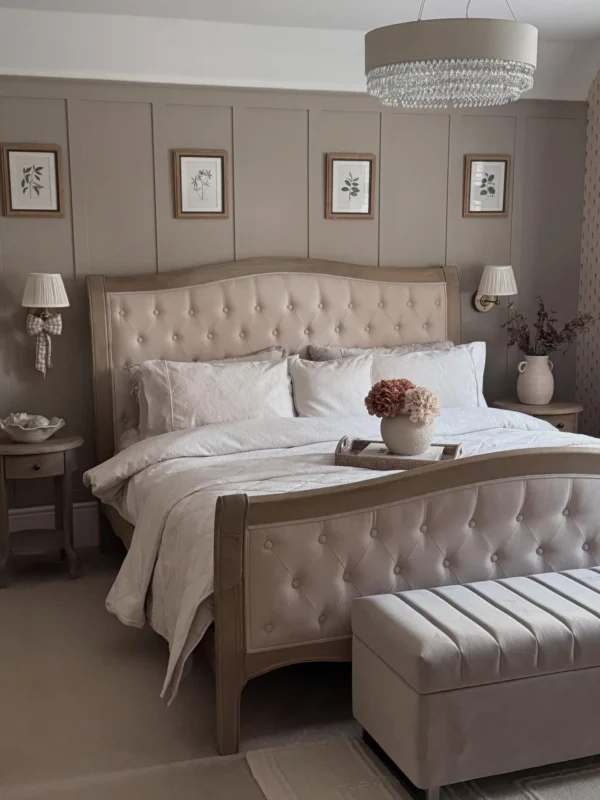
The color sits comfortably between gray and brown, which makes it easy to pair with many finishes.
Paneling gives the wall structure. Simple rectangular frames or vertical boards can define the space behind the bed and make the area look more complete.
I’ve seen taupe performs in bedrooms that need warmth but also want to stay neutral.
It doesn’t draw too much attention, but it still changes the look of the room in a noticeable way.
Soft textiles help tie everything together. Upholstered headboards, layered bedding, and curtains in similar tones can build a consistent palette.
Lighting can shift how taupe appears. In daylight, it may lean slightly gray. In the evening, it often takes on a warmer tone.
This approach belongs to people wanting a refined accent wall that fits easily into an existing bedroom setup.
Cream Paneling with Classic Country Influence
Cream paneling can bring a classic country look into a bedroom without making the space look dated. The color is softer than pure white to gives the room a warmer appearance.
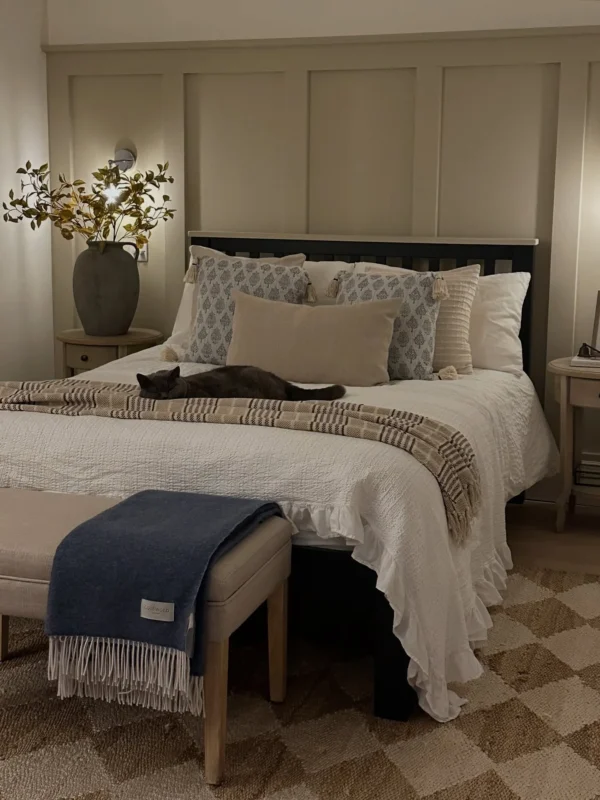
Paneling styles such as vertical boards or simple framed sections can help shape the wall. These details add character and connect the space to traditional design.
I’ve noticed this style is for homes that use natural materials. Wooden furniture, soft cotton bedding, and simple décor pieces complement the paneling nicely.
Adding a few vintage-inspired touches can strengthen the overall look. A bedside table with a slightly worn finish or a small table lamp with a fabric shade can fit well here.
Natural light enhances the cream tone during the day. In the evening, warm lighting keeps the room comfortable and relaxed.
This idea suits anyone who appreciates a traditional bedroom style with an approachable look.
Soft Beige Panel Wall with Layered Texture
A soft beige panel wall can bring warmth into a bedroom while keeping the overall look light. The paneling adds definition, which helps the wall shine more than plain paint.
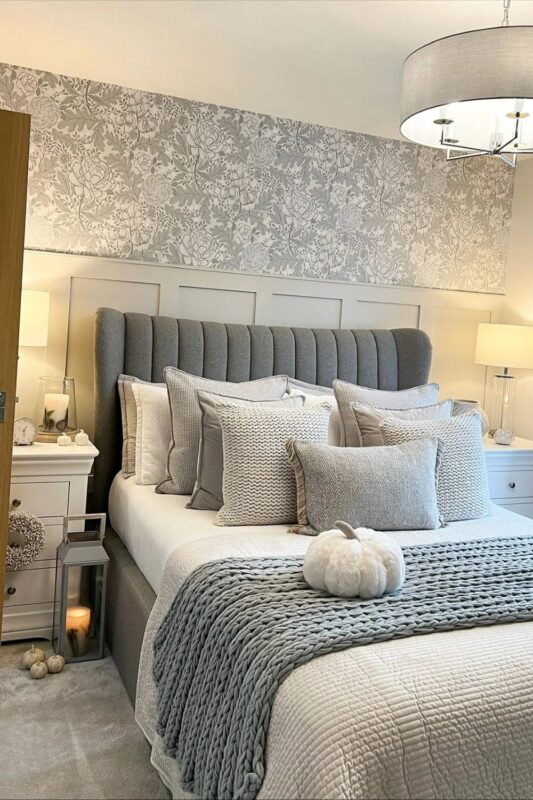
When paired with different textures, it looks awesome. Layered bedding, a woven rug, and fabric cushions can build a more interesting setup around the wall.
The panel design does not need to be complex. Simple lines or evenly spaced sections can create a neat and structured appearance.
Lighting can change how beige appears. Daylight keeps it bright, while evening lighting adds a slightly deeper tone.
Furniture can stay in a similar color range for a cohesive look. Upholstered headboards, wooden nightstands, or neutral curtains can support the overall style.
Light Greige Paneling
Light greige paneling works well for bedrooms that need a calm base with a bit more character than plain paint. The mix of gray and beige helps the wall sit comfortably with many color schemes.

Paneling brings structure to the space. Vertical boards or simple framed sections can guide the eye and make the wall behind the bed look more defined.
I’ve used this tone in rooms where stronger colors felt too heavy. Greige holds its own without drawing too much attention, which makes it easier to update bedding or décor later.
Fabric choices can shape the overall look. Soft cotton sheets, a lightly textured throw, and neutral cushions help build a relaxed setting around the wall.
Lighting shifts the tone throughout the day. Morning light keeps it fresh, while evening lamps bring out a warmer side.
This idea suits anyone who wants a steady, adaptable backdrop that works with different styles over time.
Moody Navy Frames
A navy framed accent wall can bring structure and contrast into a bedroom. The deep blue color stands out, especially when paired with panel molding that creates defined sections across the wall.
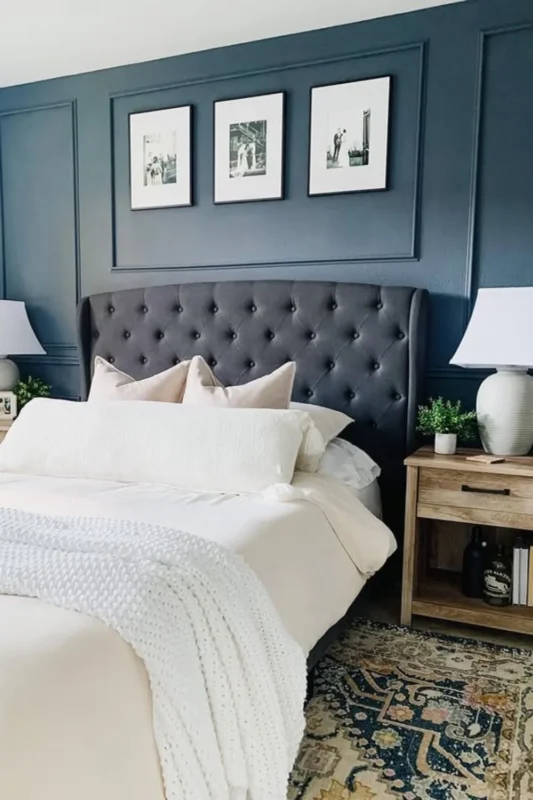
This style works best behind the bed, where it can act as a strong focal point. The panel frames give the wall a tailored look that feels intentional.
I’ve seen navy walls transform plain bedrooms into more grounded spaces. The color adds weight, which can make the room feel more settled.
Lighter bedding helps balance the look. Crisp white or soft neutral fabrics stand out clearly against the darker background.
Metal accents does well here. Brass or warm-toned lamps catch light and break up the darker surface.
Good lighting is important. Natural light softens the color during the day, and warm lamps help maintain a comfortable atmosphere at night.
This approach suits anyone who wants a bold wall with clear structure and a strong presence.
Terracotta Focal Wall
A terracotta accent wall introduces warmth in a way that feels earthy and grounded.
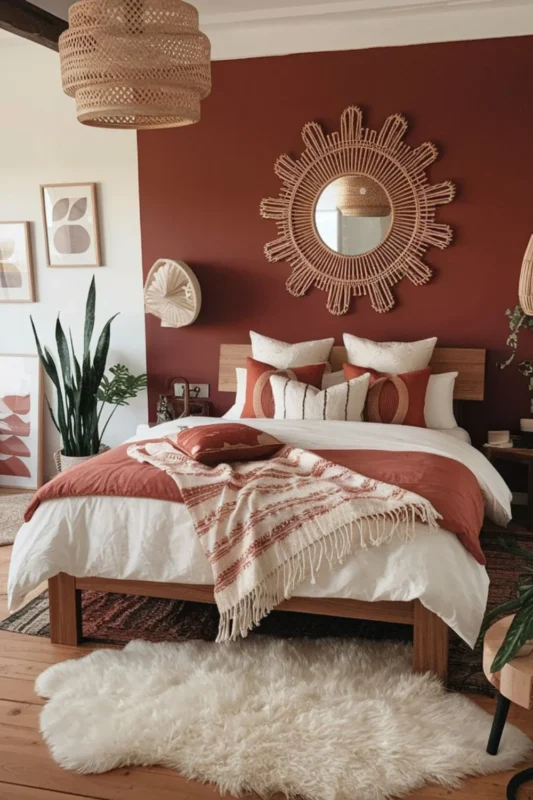
This shade sits between orange and brown, which gives it a natural look that pairs well with many materials.
I’ve noticed this color works especially well in bedrooms that use wood furniture or woven textiles. The tones connect easily, making the room feel more unified.
The wall behind the bed is usually the best spot for this color. It draws attention without needing extra decoration.
Bedding in soft neutrals helps balance the richness of terracotta. Light fabrics prevent the room from looking too heavy.
Texture can enhance the effect. A woven headboard, a patterned rug, or a clay vase can echo the warmth of the wall.
Lighting plays a role as well. Daylight brings out the natural tone, while evening light deepens the color slightly.
Deep Green Framing
Deep green panel framing can bring a rich, grounded look to a bedroom. The color connects well with natural elements, which makes it a strong choice for spaces that include wood or plant life.
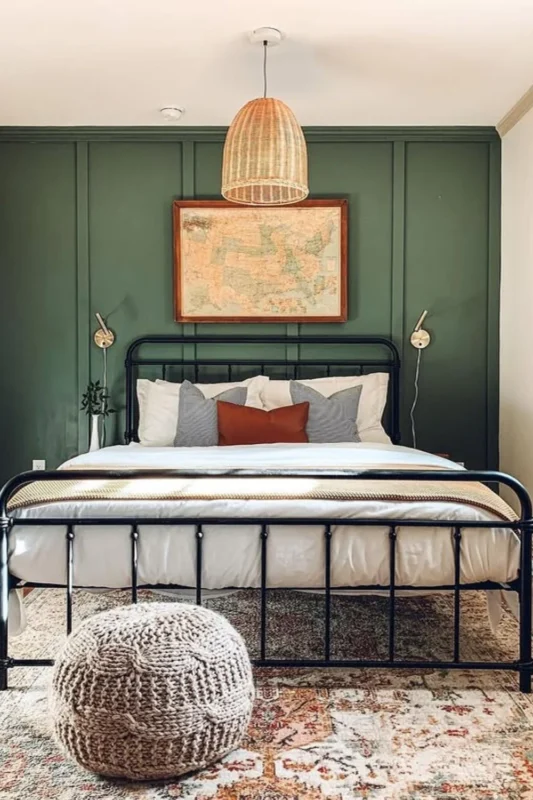
Panel molding adds structure to the wall. Rectangular frames or vertical lines help organize the surface and give it a more finished appearance.
Lighter fabrics can help balance the color. Neutral bedding and soft curtains allow the wall to stand out without making the room feel heavy.
Natural materials fit well with this setup. Wooden nightstands or woven accents can tie the whole look together.
Lighting changes how the green appears. Daylight can make it look fresher, while evening light brings out a deeper tone.
This idea suits anyone who wants a bold accent wall that connects well with natural textures and materials.
Light Blue Serenity
A light blue accent wall can bring a calm and relaxed tone into a bedroom. The color reflects light in a soft way, which helps keep the space open and easy to live in.
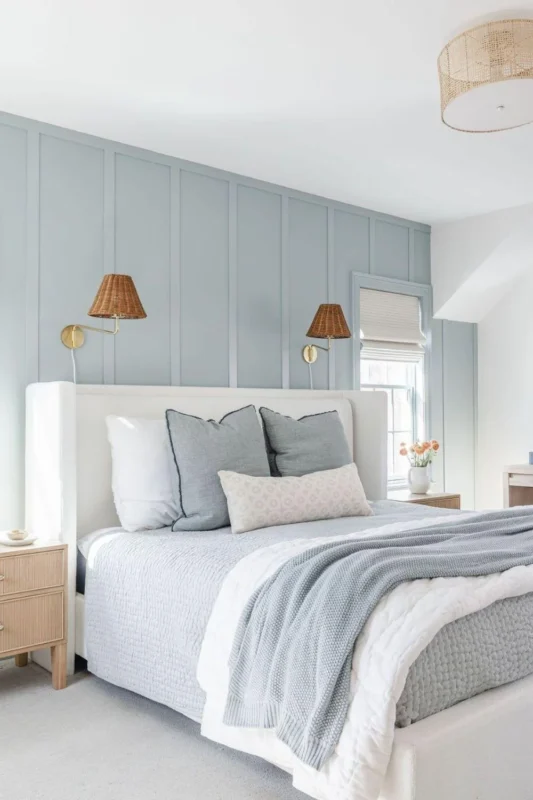
Paneling or simple paint can be used here. Even a plain wall in this color can shift the overall mood of the room.
Bedding in whites or soft neutrals pairs well with light blue. These tones keep the space looking clean and balanced.
Small details can enhance the look. A light wood bedside table or a simple lamp can support the overall style.
The result is a bedroom that leans toward calm and comfort. This idea performs for anyone who wants a gentle color that doesn’t overpower the rest of the space.
FAQs
Which wall works best for an accent wall in a bedroom?
The wall behind the bed is usually the easiest choice since it naturally draws attention. It helps frame the bed and gives the room a clear direction.
Should I go for a dark or light accent wall?
Dark shades add contrast and stand out more. Lighter tones keep the room bright and relaxed. The right choice depends on your lighting and existing décor.
Are accent walls still a good idea today?
Yes, they are still widely used. Current styles focus more on paneling, soft colors, and texture instead of bold patterns.