13 Clever Mini Walk-In Closet Ideas (How To Maximize The Storage Space)

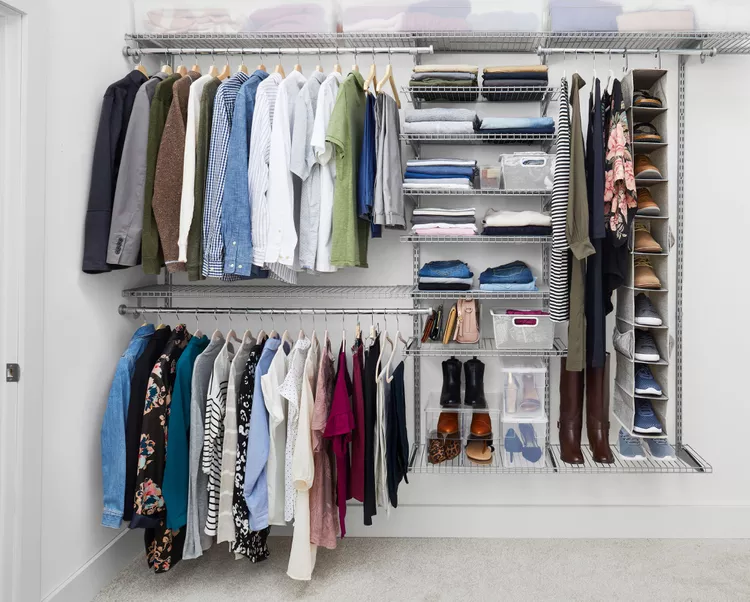
A small walk-in closet can either feel cramped or surprisingly polished depending on how the space is arranged.
Recently I transformed my mini closet with better shelving and smarter storage placement. Frankly speaking, the difference looked almost unreal.
A closet doesn’t need huge square footage to look functional. The right layout and storage tricks can completely change how the space looks and functions daily.
Today, I will share small walk-in closet ideas that focus on maximizing storage while still keeping the space organized.
How To Organize A Small Walk-in Closet
These tips will help you maximize every inch of your closet without making it feel like a cluttered mess:
Organize Walls of Shelves and Bins
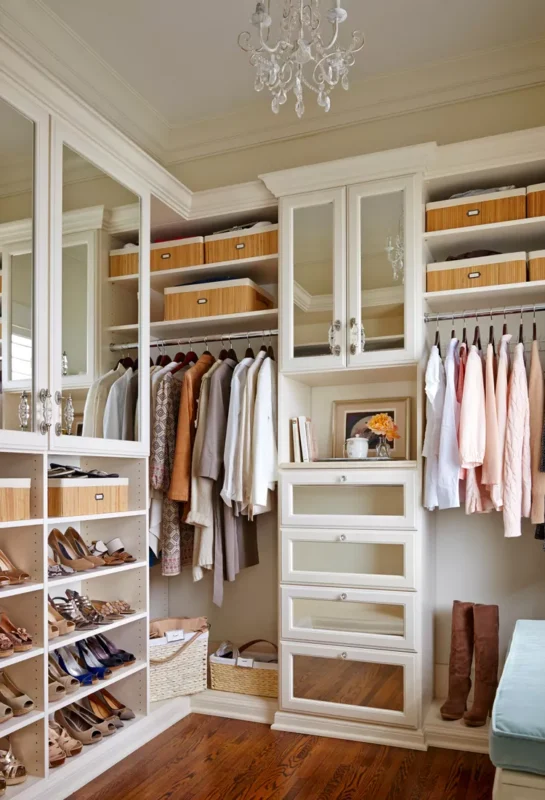
Wall shelving turns a small walk-in closet into a structured storage system that uses vertical space instead of floor space.
When everything moves upward, the floor stays open, which instantly improves movement inside a tight area.
Bins help break storage into categories. Seasonal wear, accessories, and daily essentials can each sit in separate containers, making retrieval faster and reducing visual clutter.
Uniform bins also keep the space visually steady, especially when shelves are exposed.
Open shelving can display frequently used items, while closed bins hide less attractive storage pieces. Mixing both creates balance between practicality and presentation.
Labeling adds another layer of control in compact closets where items can easily overlap or get misplaced.
Pro Tip: Organize frequently used items at eye level shelves, while storing seasonal or rarely used items on the top rows to maintain easy daily access.
Add Floor-to-Ceiling Storage
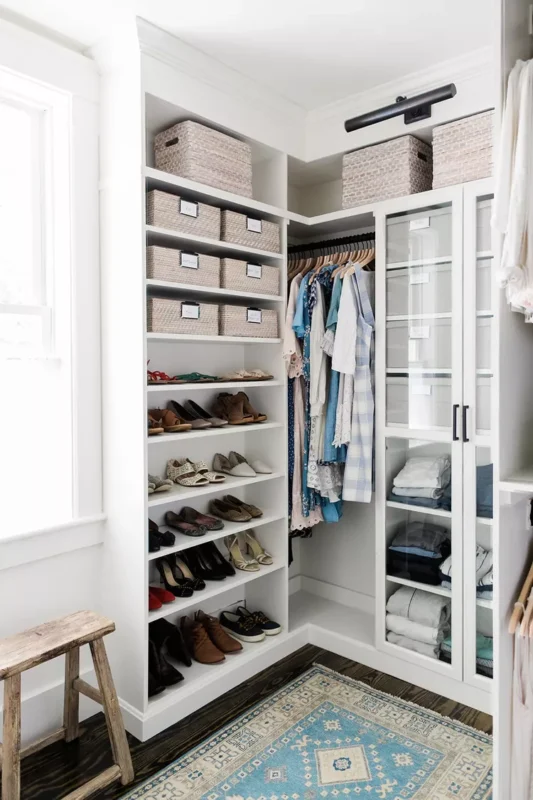
Floor-to-ceiling storage maximizes every inch of vertical space in a mini walk-in closet. Instead of leaving unused gaps above eye level, tall cabinets extend all the way upward, creating a more complete storage wall.
Lower sections usually hold daily clothing and accessories, while upper compartments store seasonal items, extra bedding, or rarely used pieces. This separation helps reduce clutter in the most accessible zones.
The visual impact of tall storage also makes the closet appear more intentional and built-in, even when the space itself is small.
Consistent finishes across the entire height help the structure look unified instead of fragmented.
Slim profiles are often preferred so the storage does not overwhelm narrow layouts.
Pro Tip: Keep heavier items in lower compartments to maintain stability and avoid unnecessary strain when accessing upper storage.
Double Space with Mirrors
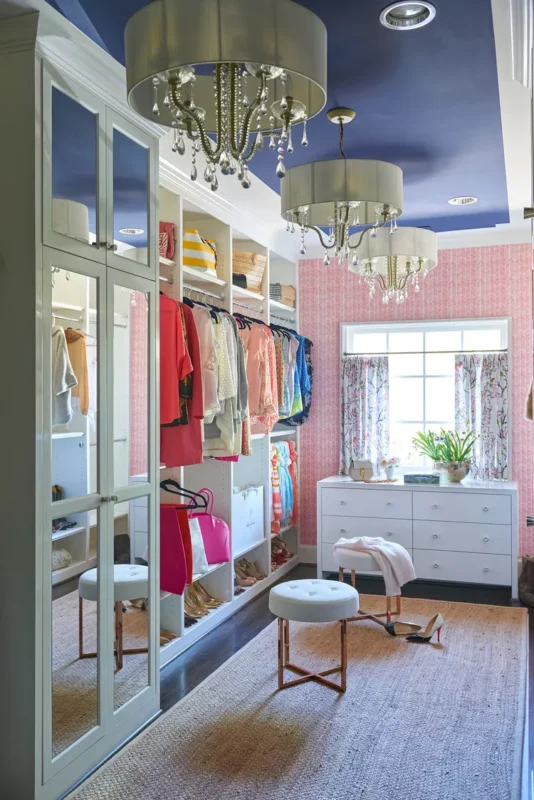
Mirrors change how a small walk-in closet is perceived by visually expanding the room. Reflective surfaces create the illusion of depth, making tight spaces appear wider.
A full-length mirror on one wall can double the sense of space instantly. Mirrored cabinet doors also serve a dual purpose by hiding storage while still reflecting light around the room.
Lighting plays an important role here. When placed near mirrors, natural or artificial light spreads more evenly, reducing dark corners and improving visibility inside the closet.
Mirrors also support outfit planning since they allow full-body viewing without leaving the space. This makes dressing more efficient in compact layouts.
Pro Tip: Position mirrors opposite a light source or window to maximize brightness reflection and enhance the sense of depth in narrow closets.
Over-the-Door Hook Strip & Wire Baskets
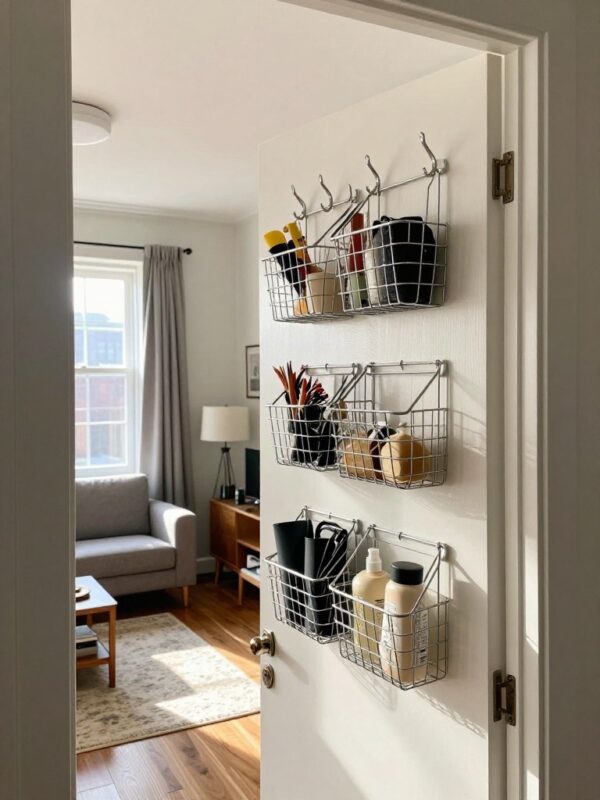
Over-the-door storage introduces extra functionality with no taking up floor or wall space.
Hook strips can hold bags, belts, scarves, or frequently used clothing items, keeping them within reach but off main shelving areas.
Wire baskets add another layer of organization. Smaller items such as socks or folded essentials can sit inside these baskets, creating quick-access storage zones that do not require drawer space.
This setup works especially well in tight walk-in closets where traditional furniture cannot fit comfortably.
It uses an often overlooked surface while keeping the central area uncluttered.
The open design of wire baskets also allows visibility, which reduces time spent searching for items.
Pro Tip: Place heavier items in lower baskets or hooks to maintain balance and prevent strain on the door structure over time.
Implement a Clear Vanity
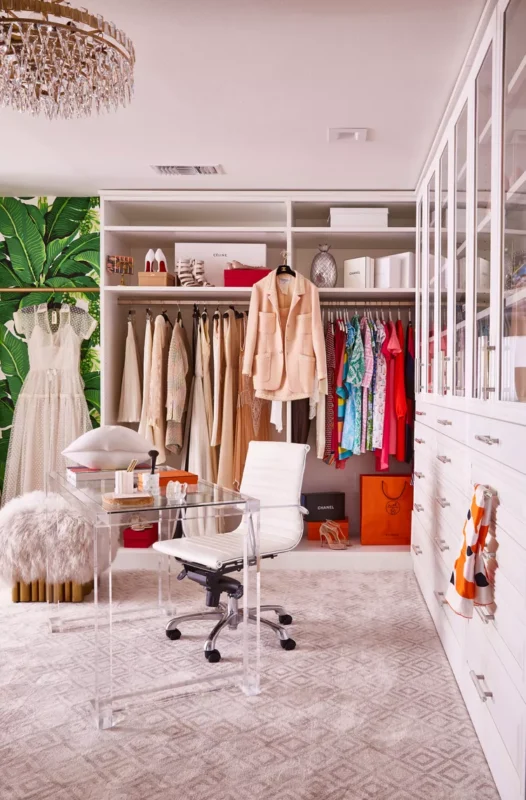
A clear vanity inside a small walk-in closet helps maintain openness while still providing a dedicated grooming or styling area.
Transparent materials like acrylic or glass reduce visual heaviness, which is important in compact spaces.
The vanity can double as a storage station when paired with minimal drawers or trays. Makeup, jewelry, and small accessories can be organized without creating bulk.
Keeping the surface uncluttered ensures the space remains functional rather than crowded.
Light-colored seating or stools further reduce visual weight, helping the vanity blend into the closet environment instead of dominating it.
Good lighting around the vanity also improves usability and makes the space feel more open and refined.
Pro Tip: Place the vanity near a light source or add soft vertical lighting on both sides to reduce shadows and improve visibility during use.
Hang Fabric Bins & Label Maker
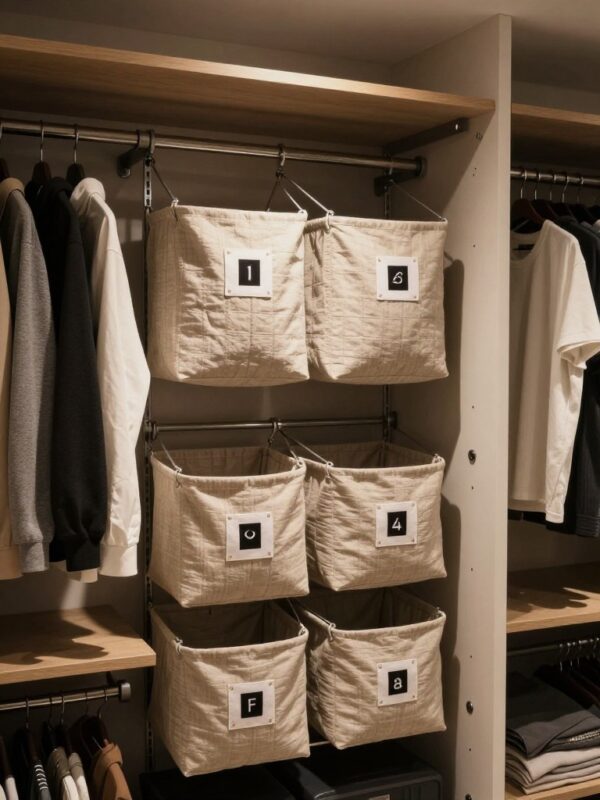
Hanging fabric bins bring soft storage into a small walk-in closet where rigid furniture might overwhelm the space.
They work well on rods or hooks, turning unused vertical sections into functional compartments for lightweight items.
Each bin can hold accessories, folded clothes, or seasonal pieces that do not require deep storage. Fabric construction keeps the setup flexible, so adjustments can be made as needs change over time.
A label maker introduces structure to this system. Clear labels reduce confusion and speed up daily dressing routines.
Rather than opening multiple bins, identification becomes immediate, which is especially helpful in compact layouts.
Neutral or matching fabric tones help maintain visual calmness, especially when multiple bins are stacked together.
Pro Tip: Group similar categories in adjacent bins rather than scattering them across different areas to maintain a predictable storage flow.
Pair Metal Shelves, Clothing Rods, and Drawers
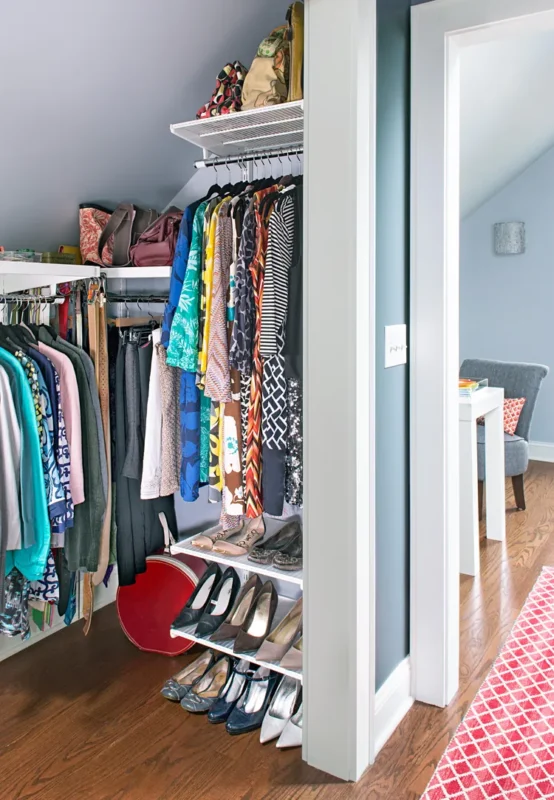
Combining metal shelves, rods, and drawers creates a layered storage system that maximizes both visibility and concealment. Each component serves a distinct role within a small walk-in closet.
Clothing rods handle hanging garments, keeping frequently used pieces easy to access.
Metal shelves support folded items or storage boxes, offering open visibility.
Drawers handle items that require privacy or protection from dust.
The mix of materials also introduces contrast when metal finishes are paired with wood or matte surfaces. This adds structure without visually crowding the space.
Arranging these elements in zones helps maintain order. Hanging sections, folded storage, and hidden compartments each get a defined area, which reduces clutter buildup.
Pro Tip: Position rods at varying heights to create a double-hanging system, freeing lower space for drawers or shoe storage.
Add Shoe Bins and Shelves
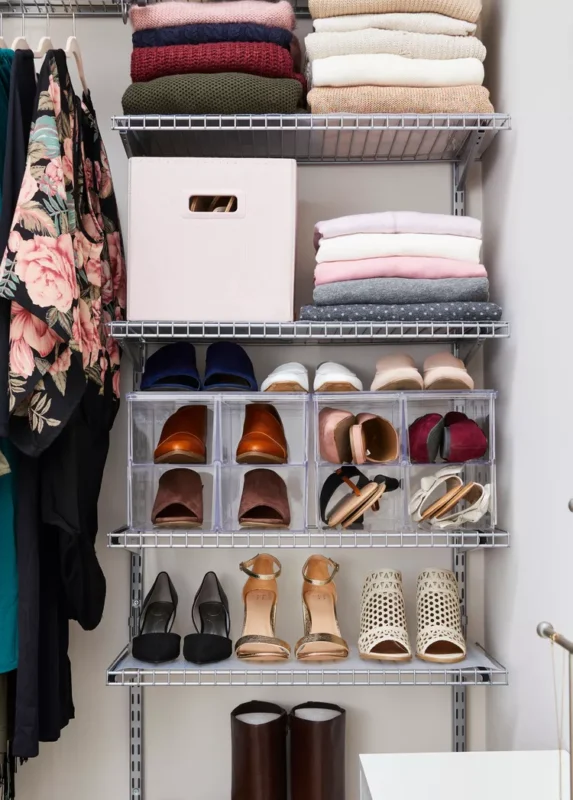
Shoe storage often becomes a major challenge in compact walk-in closets. Dedicated bins and shelves solve this by giving footwear a controlled zone.
Open shelves work well for frequently worn shoes since visibility makes selection faster. Bins, on the other hand, protect seasonal or less-used pairs from dust and visual clutter.
Stackable designs help maximize vertical space, especially in narrow closets where floor area is limited.
Clear bins improve identification, while opaque ones maintain a cleaner visual appearance.
Grouping shoes by category, such as casual, formal, or seasonal, keeps the system efficient to maintain over time.
Pro Tip: Angle shoe shelves slightly upward so pairs remain visible at a glance and do not require full removal to identify.
Utilize Wall Space with Hooks
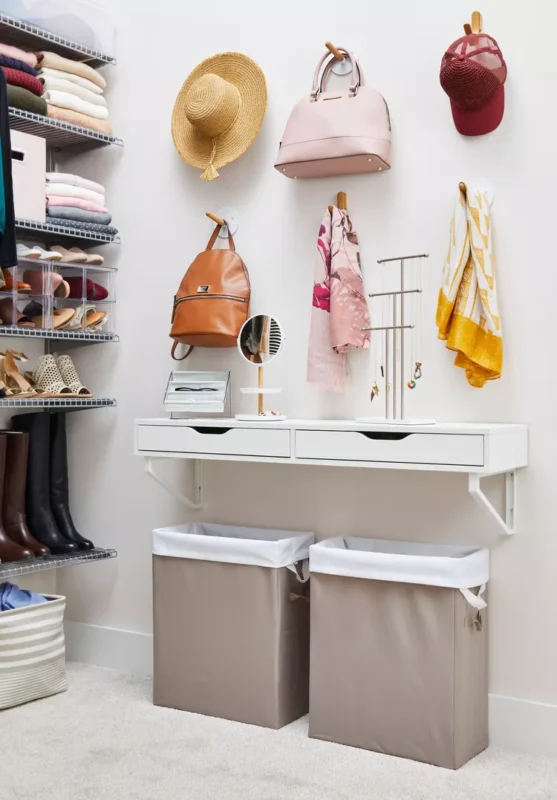
Wall hooks turn unused vertical surfaces into practical storage zones. In a small walk-in closet, this approach helps reduce pressure on shelves and drawers by distributing items across different areas.
Hooks can support bags, belts, hats, scarves, or even frequently worn outfits. This keeps high-use items accessible while freeing up enclosed storage for less immediate needs.
Spacing matters in this setup. Even distribution prevents overcrowding and keeps the wall visually balanced.
Grouping similar items together also improves usability and reduces visual noise.
Hooks work especially well near entry points or dressing zones, where quick access is important during daily routines.
Pro Tip: Install hooks at multiple heights to accommodate both long and short items while making full use of vertical wall space.
Focus on Efficiency
Efficiency in a small walk-in closet centers on reducing unnecessary movement and simplifying decision-making.
Every section should serve a clear purpose, from hanging space to folded storage and accessory zones.
A streamlined layout prevents overcrowding and ensures items are easy to locate. When storage has a defined structure, daily routines become faster.
Reducing duplicate categories also improves flow. Instead of spreading similar items across multiple areas, grouping them together keeps the system predictable.
Lighting and visibility also contribute to efficiency. Clear sightlines reduce searching time and help maintain order over time.
Pro Tip: Design storage around daily habits first, then allocate space for occasional items afterward to keep the system practical and easy to maintain.
Embellish a Modular System
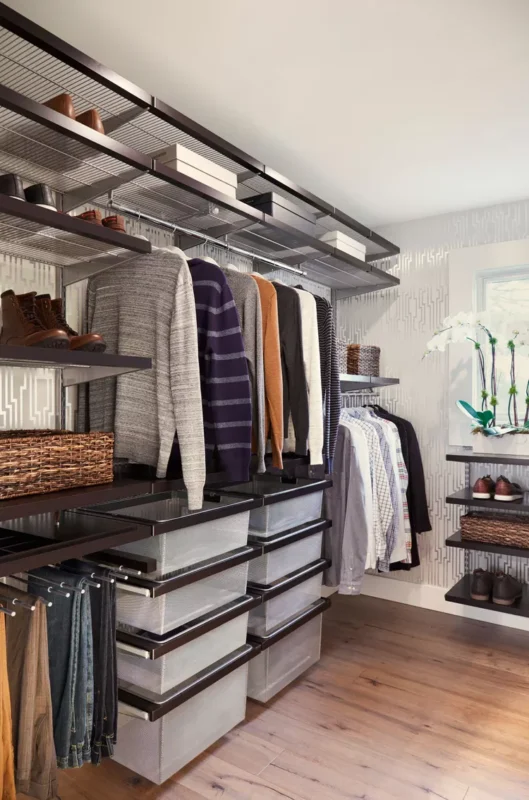
A modular system turns a tiny walk-in closet into a flexible setup that adapts as storage needs shift.
Choose interchangeable units because they allow shelves, drawers, and hanging sections to be rearranged over time.
This approach suits evolving wardrobes because storage can expand or contract depending on season or lifestyle changes. Compact modules also prevent wasted corners, which often happen in rigid layouts.
Stackable units create vertical growth, while slim frames keep the space from feeling crowded.
Materials like light wood, matte metal, or neutral laminates help maintain visual order even when multiple components are combined.
The real advantage comes from control. Every section can be adjusted to match clothing types or daily habits, reducing clutter buildup.
Pro Tip: Start with core modules for daily essentials first, then expand upward or sideways only when storage demand increases.
Add Mood Lighting
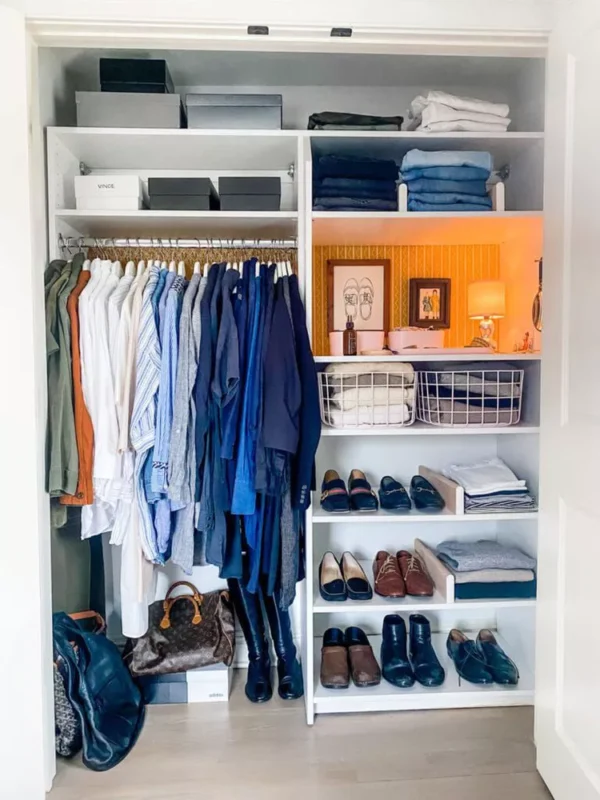
Mood lighting changes how a small walk-in closet is experienced, shifting it from purely functional to visually inviting. Soft illumination highlights clothing textures to improve visibility in tight corners.
LED strips along shelves or rods create even lighting that reduces shadows. Warm tones often bring a calmer atmosphere, while cooler lighting supports clearer color accuracy when selecting outfits.
Layered lighting works best in compact spaces. Overhead fixtures handle general brightness, while accent lights define shelves or display areas.
This separation prevents harsh glare and keeps the environment balanced.
Lighting also influences perception of space. Brighter corners tend to make the closet appear larger and more open.
Pro Tip: Install dimmable lighting to adjust brightness levels depending on time of day and outfit selection needs.
Install a Sliding Glass Door
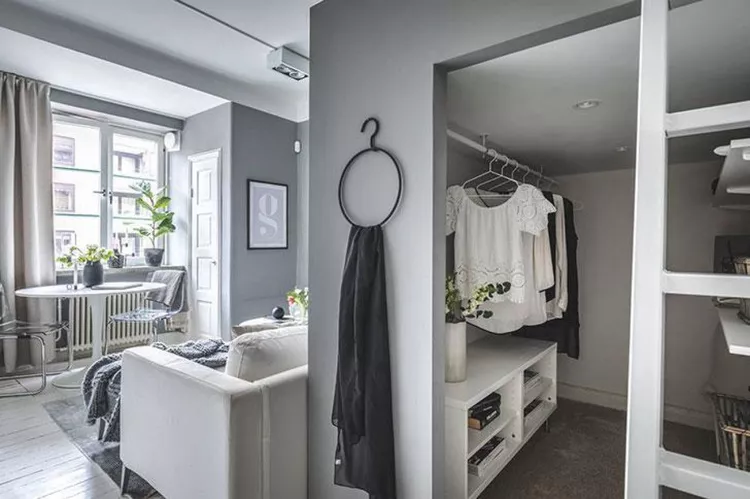
A sliding glass door introduces transparency and separation at the same time.
It divides the closet from the bedroom while still allowing light to pass through, which helps maintain openness in smaller layouts.
Frosted glass options add privacy while still preserving brightness. Clear glass creates a more open visual flow, especially in modern interiors.
Sliding mechanisms also save space compared to traditional swing doors, making them ideal for compact rooms where every inch matters.
The reflective surface can subtly expand the visual perception of the room, especially when paired with good interior lighting inside the closet.
Pro Tip: Choose frameless or slim-frame designs to keep the door visually light and prevent it from dominating the room.
Try a U-Shaped Layout
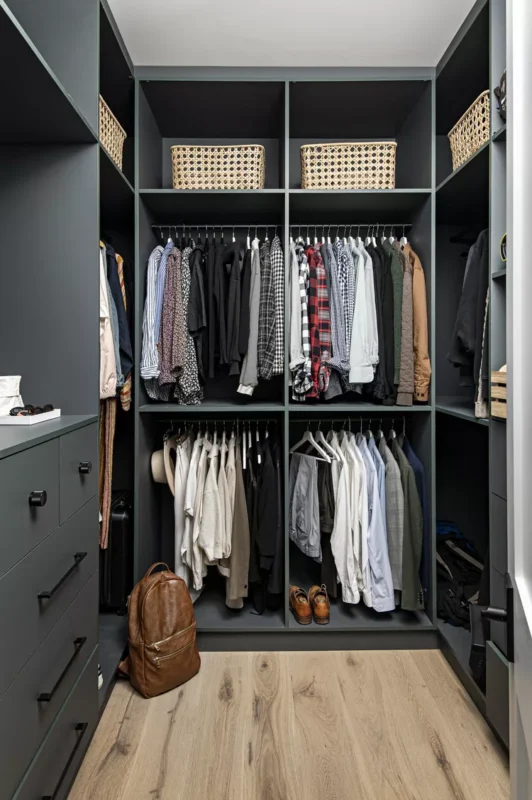
A U-shaped layout maximizes storage on three connected walls, turning a small walk-in closet into a highly efficient zone.
This arrangement keeps everything within arm’s reach while clearly separating storage categories.
One side can handle hanging clothes, another can focus on folded storage, and the third can support accessories or shoes. This division reduces overlap.
The central floor area remains open for movement, which is important in tighter spaces. Even narrow closets benefit from this structure when proportions are carefully planned.
Consistency in shelving height and depth helps maintain visual balance across all three sides.
Pro Tip: Keep the most frequently used items on the side closest to the entry point to streamline daily access.
Ladder for Tall Spaces
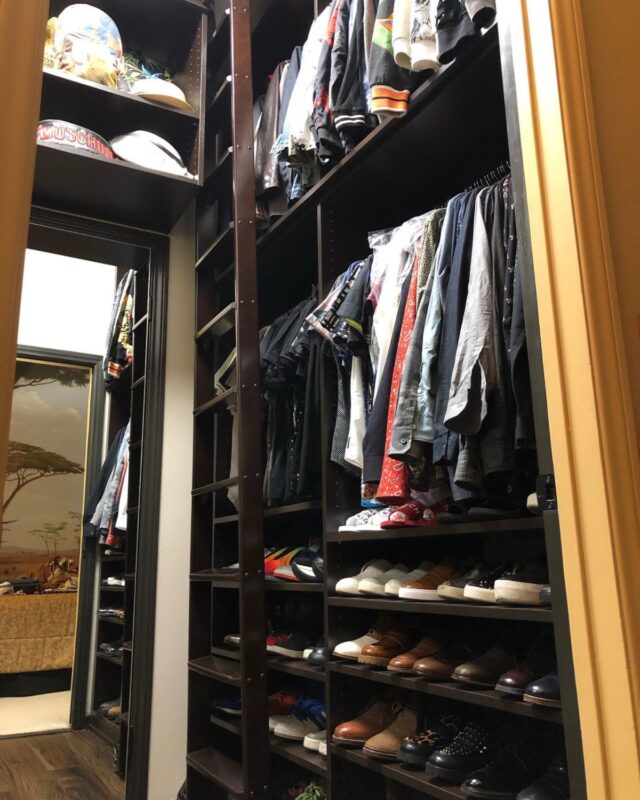
A ladder adds both function and style to a small walk-in closet with vertical storage. It allows easy access to high shelves that would otherwise be difficult to reach in compact layouts.
Slim wooden or metal ladders fit well in tight spaces without blocking movement. When not in use, they can be leaned against a wall or stored vertically as part of the design.
Beyond practicality, the ladder also introduces a decorative element, especially in closets with open shelving or loft-style setups.
This approach makes upper storage more usable instead of purely decorative or hard to access.
Pro Tip: Choose a lightweight ladder with rubber grips at the base to prevent slipping and protect flooring surfaces.
FAQs
What size is considered a small walk-in closet?
A walk-in closet is typically considered small if it starts around 4 feet deep, with many averaging about 25 square feet. This allows just enough room to step inside and hang essential clothing.
Where should shoes be stored in a small closet?
Shoes can be stored using space-saving options like over-the-door racks, slim bins, wall shelves, or multi-use furniture. Under-bed storage is also useful when closet space is fully limited.
How can out-of-season clothes be stored efficiently?
Seasonal clothing can be kept in sealed bins, suitcases, or fabric garment bags. These can be placed under beds, in storage rooms, or wardrobes, helping free up valuable closet space.