13 Camping Organization Tips That Make Your Next Trip Easier

I’m already counting down the days until our next camping trip because there’s just something about getting away from everyday life.
The campfire dinners, quiet mornings with coffee, and evenings under the stars never get old.
In our last camping trip, we spent nearly 15 minutes searching for a flashlight in the dark.
That little moment taught me that camping gets a lot more enjoyable when everything has a place.
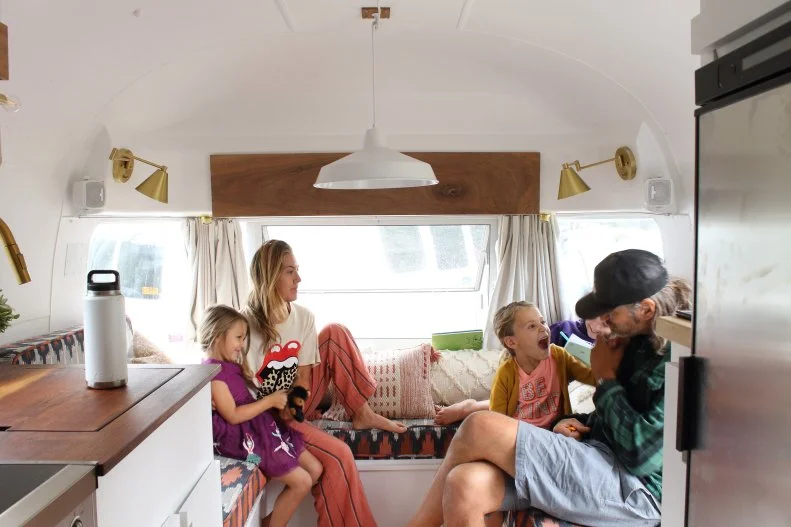
So, before our next adventure, I’m determined to not only decorate my small camper but make life at the campsite much easier as well.
If you’re obsessed with camping like me, these camping organization tips might be exactly what you need.
The Camping Organization Hacks You’ll Love
During summer, which I just a few weeks away, most seasoned camper will be heading out for a weekend getaway or a longer adventure.
You’re lucky, these camping organization hacks can help you spend less time searching for things.
RELATED: 13 Small Camper Interior Ideas That Make Tiny Spaces Feel Bigger
Carry Collapsible Storage Bins
You never realize how much space empty containers waste until you’re packing up camp and trying to squeeze everything back inside.
One minute the camper looks organized, and the next you’re playing a game of storage Tetris with bins, bags, and loose gear.
That’s why collapsible storage bins are such a smart camping companion.
They give you a designated place for supplies during the trip, then fold down when they’re no longer needed.
That flexibility is a big deal in small campers where every inch counts.
I usually use them for pantry items, extra clothing, kids’ toys, fire-starting supplies, or even the random odds.
It’s a simple change, but you’ll appreciate it every time you’re loading up for your next adventure.
Pro Tip: Choose collapsible bins with built-in handles so you can easily carry them between your camper, picnic table, and campsite throughout the day.
Give Every Item a Home
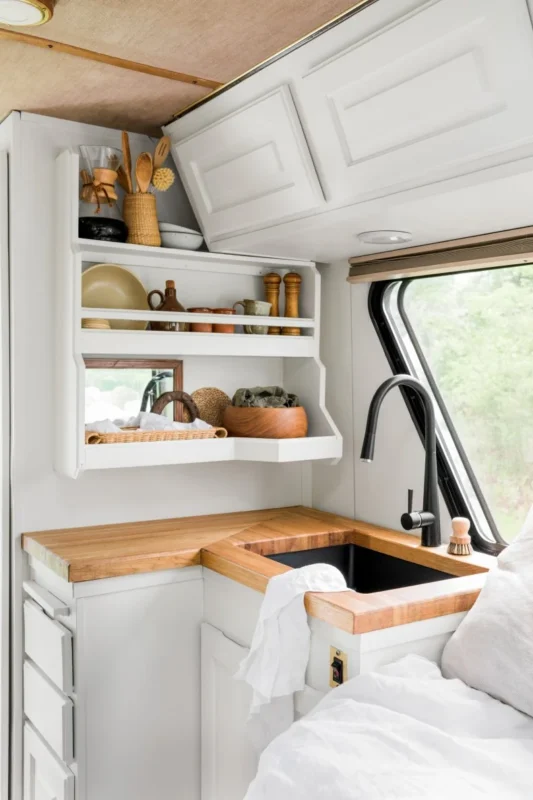
Nothing slows you down faster in a camper than reaching for something and not knowing where it ended up.
That is why giving every item a home is the simplest organization tips you can rely on.
When you decide a fixed spot for everything before the trip begins, the entire space starts to run on predictability instead of guessing.
Kitchen tools stay in one zone (large tactical camping kitchen organizer), toiletries stay grouped together (over-the-door organizers), and daily essentials remain exactly where you expect them.
You stop opening multiple cabinets just to find a single item, which saves time during busy mornings and meal prep.
In many camper setups, this small system quietly changes how smoothly the whole trip runs.
Even pack-up at the end of the trip is quicker because everything already has a return point.
Pro Tip: Label storage spots clearly so every item always returns to the same place, even when other people help pack or unpack.
Camp Kitchen Box
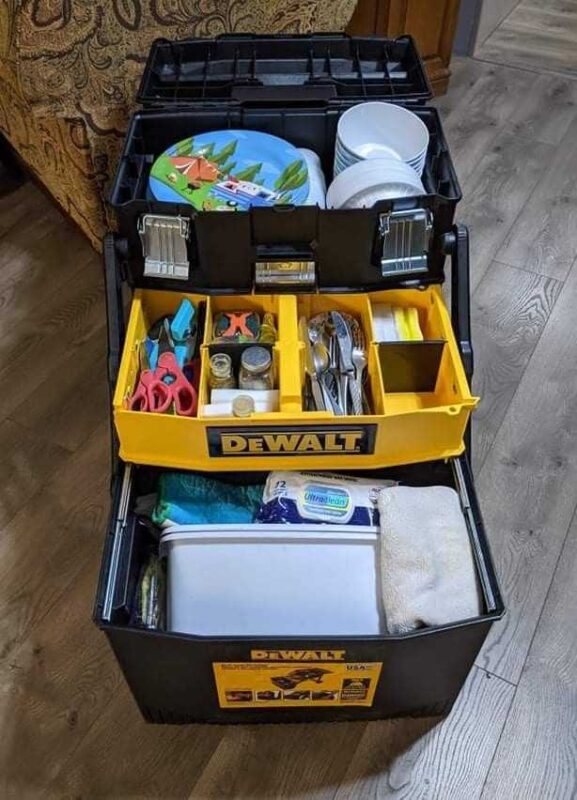
A dedicated camp kitchen box changes that entire routine. Thankfully, it groups everything you need in one portable setup.
You can keep cooking tools, spices, utensils, and basic supplies inside a single container that moves with you from camper to picnic table.
Everything stays ready in one place.
Meal prep are made faster because you are not switching between compartments or forgetting where items were stored.
This box is the most used item simply because it removes unnecessary steps during cooking.
It also works well for quick pack-up since you only need to grab one box instead of multiple items scattered around.
Even first-time campers quickly notice how much smoother outdoor cooking becomes with this approach.
Pro Tip: Choose a waterproof box with dividers inside so items stay separated and protected during transport.
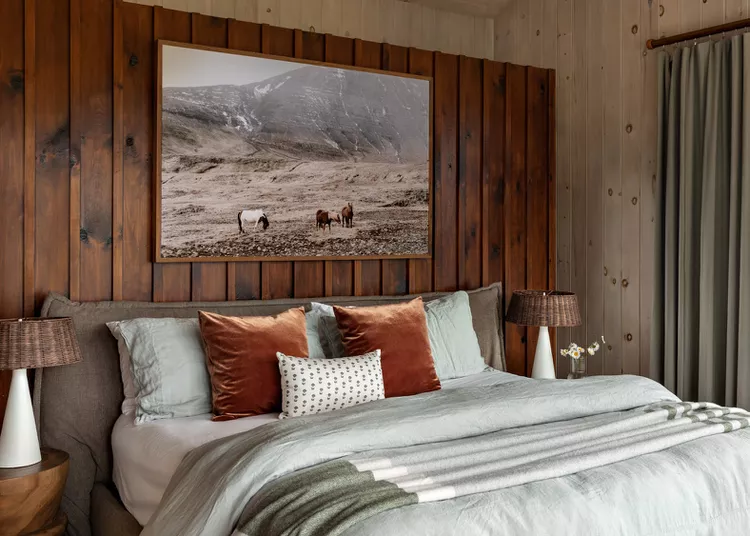
Cozy Up Your Sleep Area
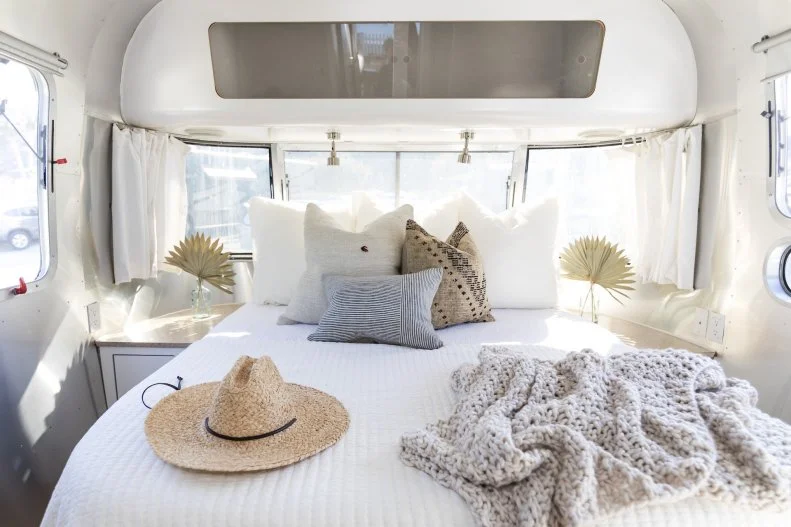
We’ve layered soft bedding and thoughtful textures so that our sleeping space feels relaxed.
You notice how blankets (Bedsure GentleSoft Fleece Blanket), soft throw pillows, and gentle lighting change how that corner is used throughout the day.
You naturally spend more time there reading, resting, or winding down after outdoor activities.
Small details like a folded throw at the end of the bed arranged at different angles make the area more welcoming.
Even compact camper layouts benefit from this approach because it separates sleep space from the rest of the interior visually.
It is a quiet retreat inside the camper that feels calm compared to the rest of the setup.
Pro Tip: Stick to two or three coordinated fabric tones so the bed area stays calm instead of overly busy.
Mesh Laundry Bags for Dirty Clothes
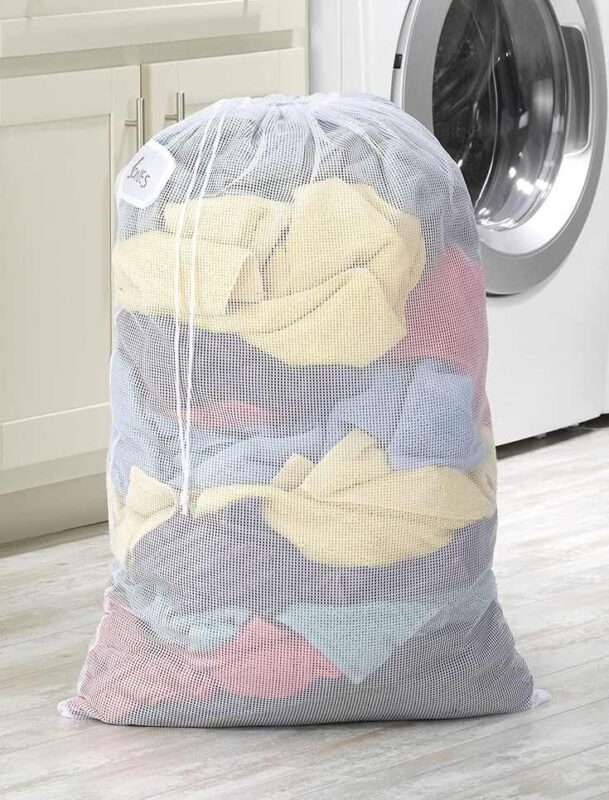
Dirty clothes can take over a camper faster than any other item if there is no system in place.
Mesh laundry bags offer a simple way to separate worn clothing from clean items without taking up much space.
You can hang them on hooks, tuck them inside cabinets, or keep them near the sleeping area for easy access.
Unlike bulky hampers, they stay flexible, which makes them ideal for compact camper layouts.
Once used consistently, they prevent the common issue of clothes ending up mixed with clean storage during a trip.
They also make pack-up easier since everything dirty is already grouped in one place. It is a small habit that reduces clutter more than expected on longer trips.
Even kids can follow the system easily since it does not require complicated sorting.
Pro Tip: Use color-coded mesh bags so each person in the camper can keep their laundry separate without confusion.
Add a Rug to Ground the Space
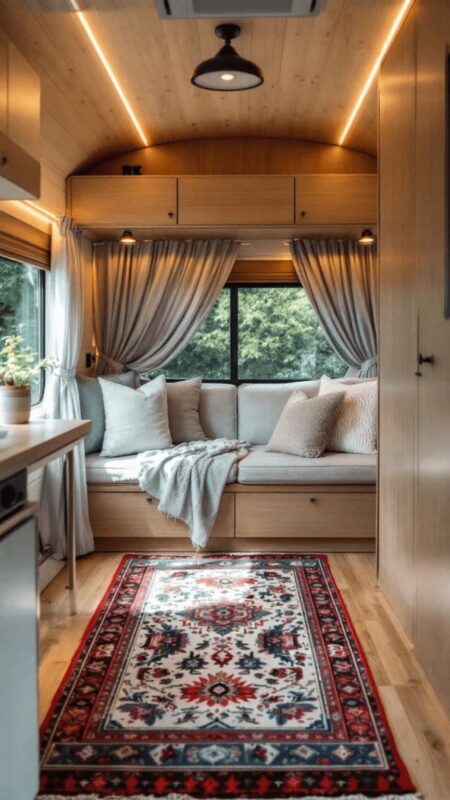
A camper interior can sometimes be disconnected when everything sits on the same flat level.
Adding an outdoor rug immediately anchors the space. It gives each area a clearer sense of purpose.
You start noticing how a simple floor layer can separate the seating area from the walkway.
It also adds warmth underfoot, which is noticeable during early mornings or cooler evenings.
Beyond comfort, rugs help reduce the “bare” look that small interiors often struggle with.
Even a simple pattern or neutral tone can define the layout. I like this single addition as it ties furniture and decor together.
Pro Tip: Choose a low-pile, easy-to-clean rug so it handles dirt and movement from outdoor trips without constant maintenance.
Stay Organized with Labeled Storage Bins
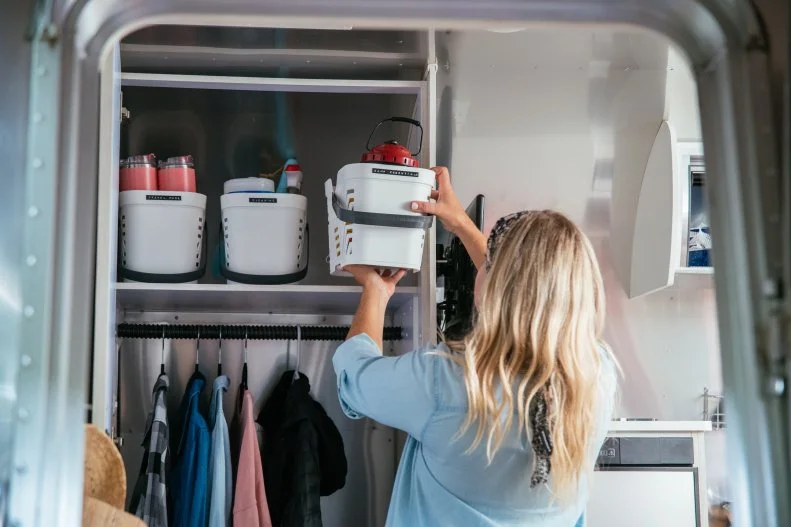
Searching through multiple identical bins turns simple tasks into unnecessary frustration inside a camper.
Labeled storage bins remove that guesswork. They clearly show what belongs where before you even open them.
Once everything has a visible label, your hands stop digging randomly through containers during packing.
Pantry items stay separated from tools, clothing stays distinct from gear, and small essentials never get lost in mixed storage.
Even shared campers benefit from this system as everyone follows the same visual guide rather than asking where things are kept.
The overall space starts to run more predictably since every item has a defined return point.
Pro Tip: Use waterproof labels or printed tags so names stay readable even in humid or outdoor camping conditions.
Install a Tile Backsplash
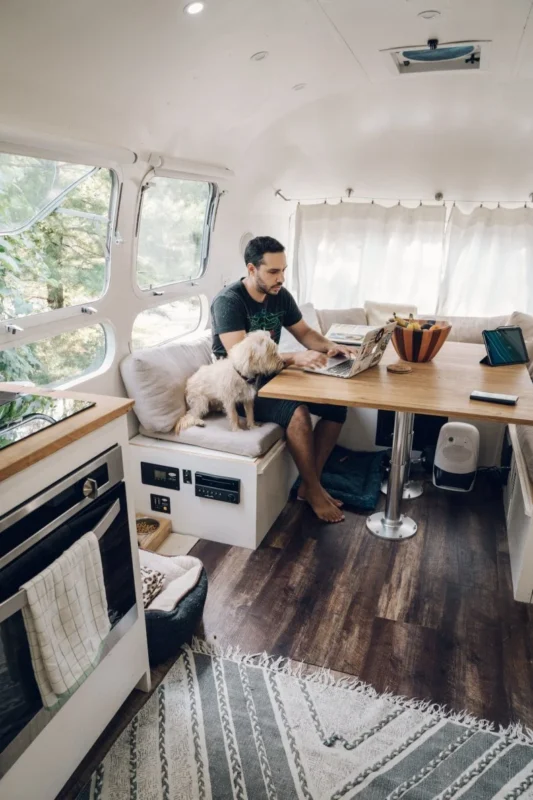
A camper kitchen instantly changes character the moment the wall behind it stops looking plain.
A tile backsplash for kitchen adds structure to that space while also protecting the most active cooking zone from splashes and heat.
Your eyes naturally settle on that surface once it carries pattern, texture, or subtle shine.
Even compact cooking areas start to look more intentional when the wall behind the stove has definition instead of a flat panel.
Cleaning is easier since spills wipe off tile faster than painted surfaces during travel cooking.
That small upgrade shifts how the entire kitchen corner is perceived inside the camper.
Pro Tip: Peel-and-stick tiles work well for campers since they install quickly and can be replaced without damaging original surfaces.
Install Fall-Proof Shelving
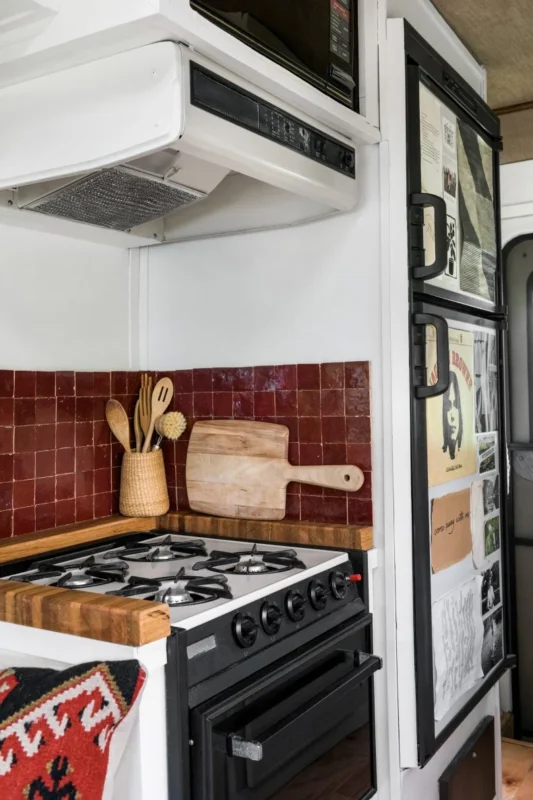
Opening a cabinet and watching everything slide out in one sudden mess. Ruins a calm campsite setup.
That is where fall-proof shelving comes in as one of the smartest camping organization tips you can use inside a moving space.
Secure shelves, non-slip liners, and raised edges keep items in place even when the road gets uneven.
Instead of constantly re-stacking containers after every drive, your storage stays predictable.
You can store dishes, pantry items, or small gear without worrying that everything will shift mid-travel.
To me, this small upgrade quietly removes one of the most common sources of frustration during unpacking.
It also makes daily use easier because you’re not constantly rebalancing items after opening doors.
Once everything stays exactly where you left it, the entire kitchen area starts to function with far less interruption.
Pro Tip: Add adhesive shelf liners with a textured grip surface so items stay stable even on sharp turns or rough roads.
Have a Drop-Down Table
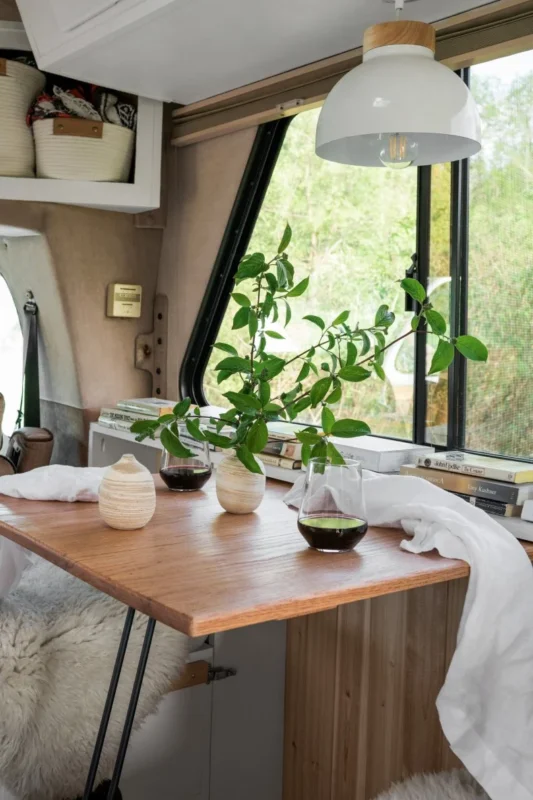
I prefer a drop-down table because it gives you surface space only when it is actually needed.
During meals, the table results in a functional prep area that supports daily routines.
A foldable RV table opens the floor completely to creates room for movement through tight interiors.
That flexibility is insightful in narrow layouts where every inch matters during busy camping days.
The transition between open and closed use also keeps the camper lighter throughout the day.
Instead of one permanent block of furniture, you get a space that adjusts to your activities.
Pro Tip: Mount the table at elbow height when seated so meals and work sessions remain comfortable over longer periods.
Ensure Behind Door Storage
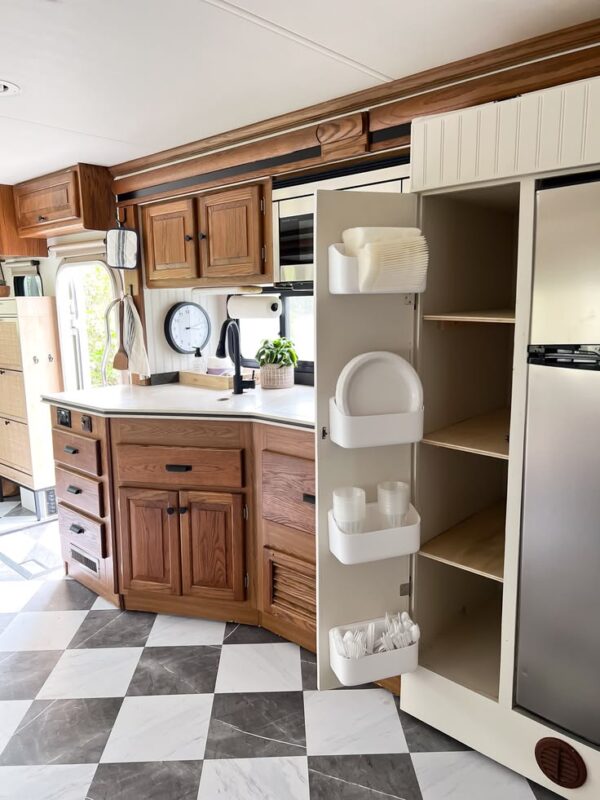
The space behind camper doors often goes unnoticed, yet it can quietly solve a lot of storage issues.
Once you start using that vertical surface, everyday items stop competing for counter space.
Hooks, slim racks, or pocket organizers turn that area into a practical extension of your storage system.
Shop the best product here.
You can keep cleaning supplies, small tools, or travel essentials right where you naturally reach for them.
That placement reduces unnecessary movement around the camper during busy routines like cooking.
Even small items that usually get misplaced now have a fixed location.
The interior starts to function efficiently once vertical surfaces are included in the organization plan.
Pro Tip: Choose slim organizers so doors still close smoothly and no adding pressure on hinges or handles.
Create a Slide-Out Pantry
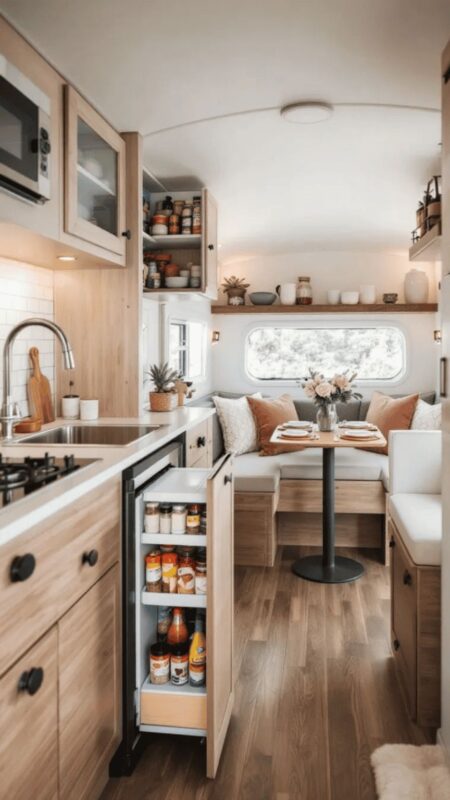
A cramped camper kitchen changes the moment storage starts moving toward you.
A slide-out pantry turns tight storage into something you can actually access in seconds.
You just pull it forward, scan everything at once, then slide it back when done.
That simple motion removes the usual digging through stacked items at the back of dark corners.
Dry goods, snacks, and cooking staples stay arranged in a single vertical system that stays consistent during travel.
It also keeps items from getting forgotten at the back of cabinets where they disappear until the trip ends.
That kind of setup changes how quickly meals come together since everything stays lined up in one pull-out section.
Pro Tip: Use clear bins inside the slide-out frame so smaller items don’t tip or shift during movement.
Park Clear Containers
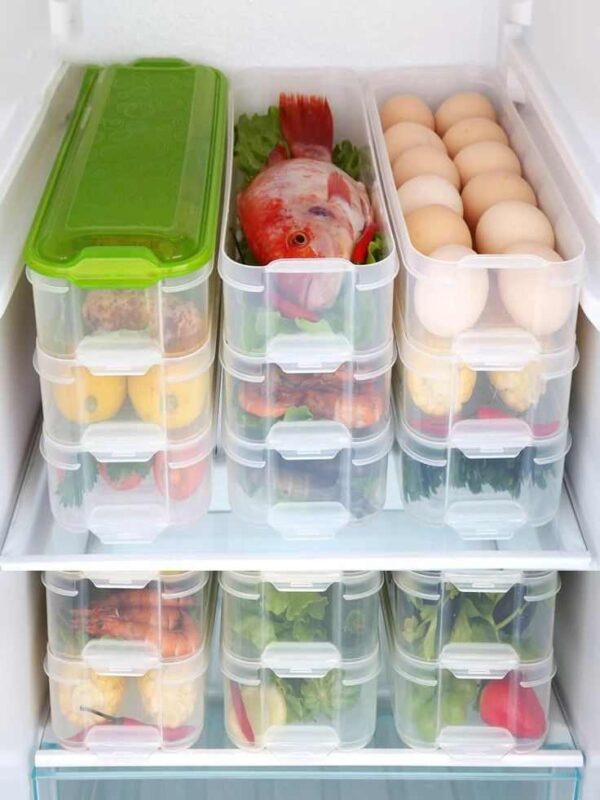
Clear storage bins remove the guessing game. They show exactly what sits inside each box before it is opened.
You can scan the contents at a glance instead of opening multiple bins just to locate one item.
That small change saves time during cooking, packing, or setting up camp after a long drive.
Food items, toiletries, and gear each stay separated while still remaining easy to identify.
It also reduces overpacking as you can immediately notice when something is already available.
During travel days, this setup keeps storage predictable even when items are moved around frequently.
Pro Tip: Stack containers with similar shapes so they lock neatly and do not slide during transit.
Hang Shoe Organizer for Holding Small Essentials
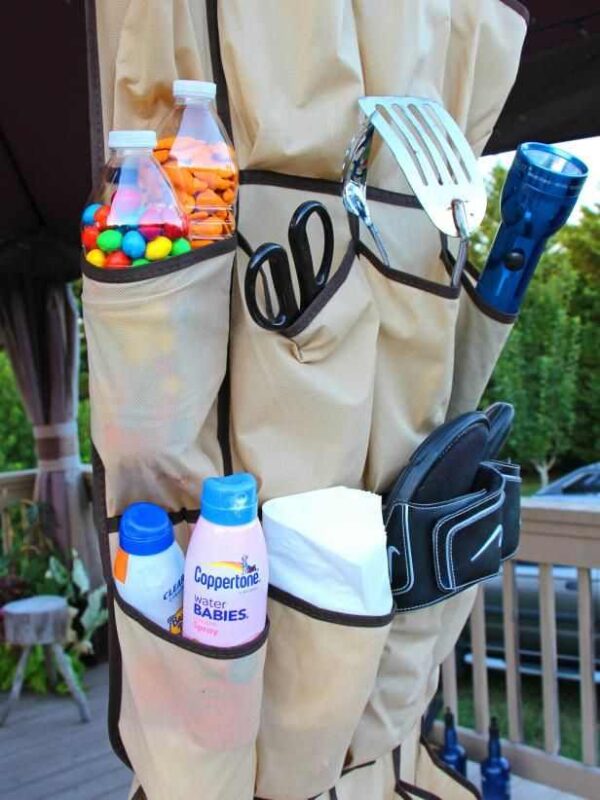
A hanging shoe organizer turns unused vertical space into a structured storage zone for small essentials.
Each pocket holds different items like flashlights, sunscreen, snacks, cords, or travel tools.
You don’t have to scatter those items across counters because everything stays grouped in one place.
This tip is useful near entry doors or sleeping areas where quick access matters most.
During a packed trip, this kind of setup keeps small items from disappearing into deeper storage spaces.
Pro Tip: Choose clear-pocket versions so you can spot items instantly without opening each compartment.
FAQs
How do you keep a campsite or camper organized during a trip?
The easiest approach is to give every item a designated spot before your trip begins. Use storage bins, hooks, hanging organizers, and portable containers so gear always returns to the same place.
What are the best space-saving storage ideas for camping?
Vertical storage usually makes the biggest difference in small spaces. Hanging shoe organizers, behind-door racks, slide-out pantries, collapsible bins, and clear containers help you store more gear while keeping essentials easy to grab.