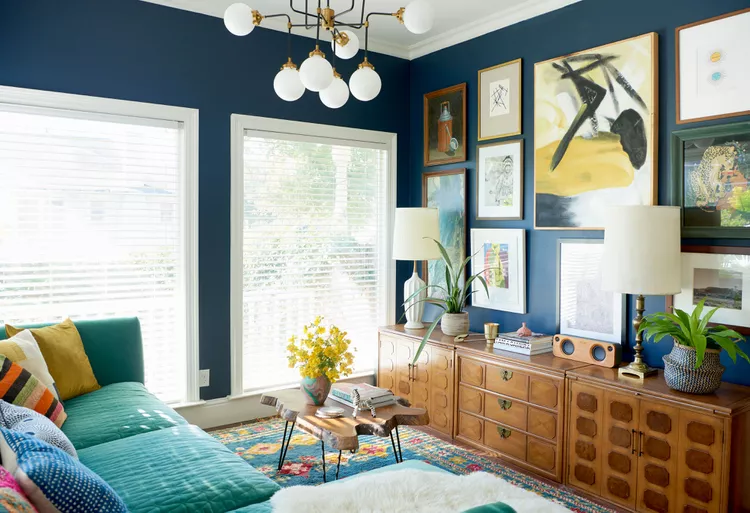
How To Decorate A Small Camper For Your Next Trip

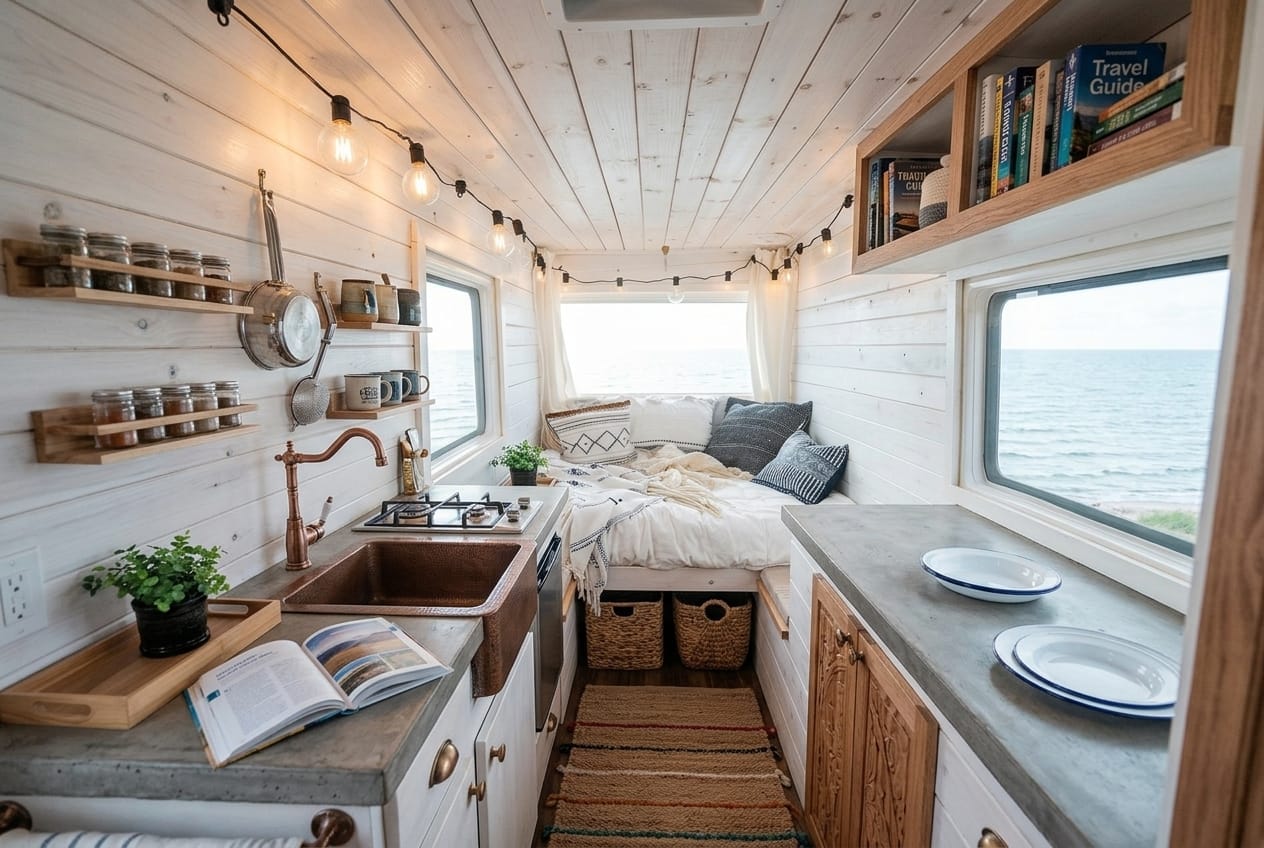
I’m already thinking about my next family road trip. My BLACK DIAMOND Spot 400 Headlamp is ready to help organize gear in case of low light.
Every time the camper comes out of storage, I start noticing things I want to change.
A camper throw blanket here, new lighting there, maybe a better way to use that tiny corner space that always ends up cluttered.
Small camper decor ideas have basically taken over my search history lately.
Some are simple cozy touches, others turn the whole interior into something that looks completely different.
I just want a space that feels organized, and good to spend time in after a long day outside.
So, I pulled together some of the best small camper decor ideas that actually make a small space work better.
13 Small Camper Decorating Ideas
Our annual camping getaway is just around the corner, and I’m already planning a fresh new look for our tiny camper.
A few simple updates can completely transform the space, making it feel fulfilling.
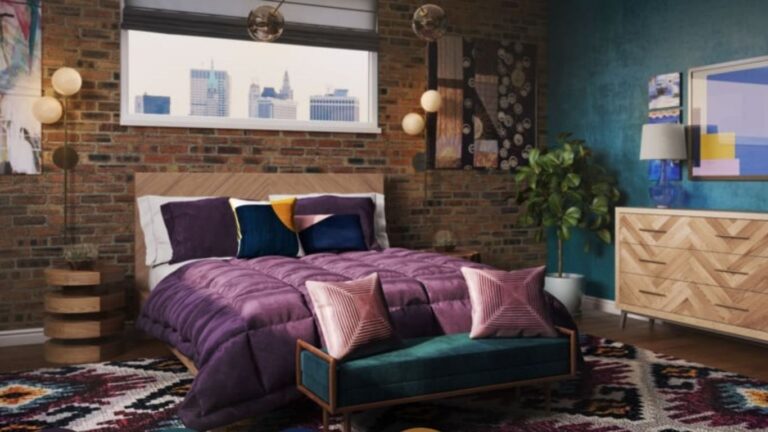
If you love the relaxed charm of a boho home, many of those same design ideas work beautifully in a camper too.
Incorporate Cozy Layered Textiles
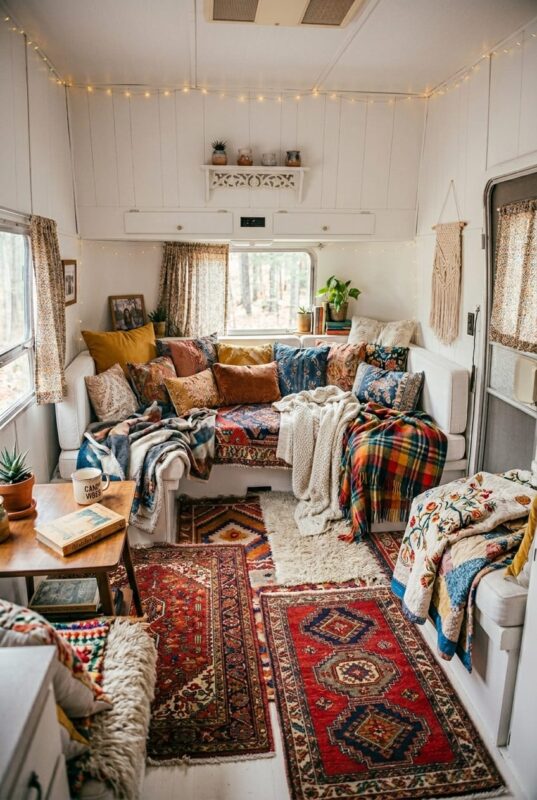
It only takes one colorful piece to make your camper look completely different the moment you walk in.
A bold mix and match rug can draw attention away from plain flooring and instantly give the interior more character.
Throw pillows tossed across a bench create a welcoming look that makes the space seem lived-in.
Colorful curtains for camper are one of my favorite updates because you can swap them out whenever you want a fresh look.
The trick is to let a few standout pieces do the heavy lifting instead of scattering color across every surface.
When your accent shades work together, the camper looks thoughtfully decorated instead of randomly assembled.
This simple strategy gives you plenty of freedom to refresh the interior throughout the year.
Pro Tip: Pick three accent colors and repeat them through rugs, pillows, and throws for a polished look.
Choose a Bright and Airy Crisp, White Theme
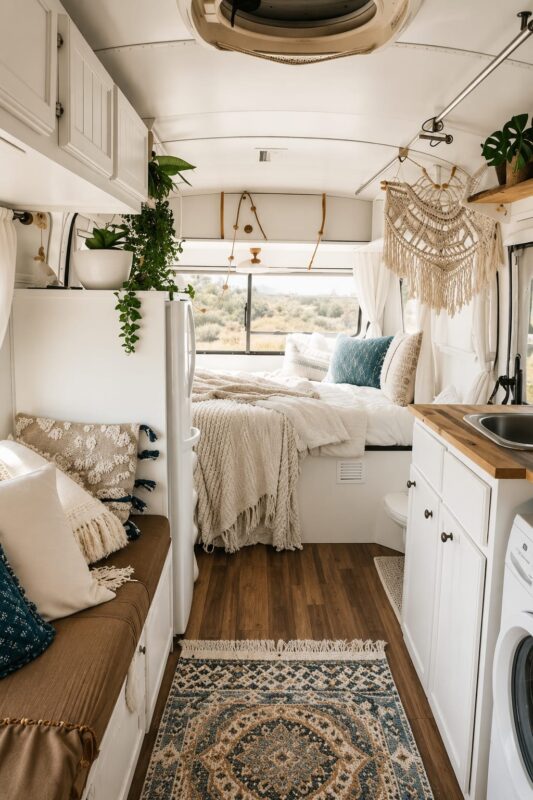
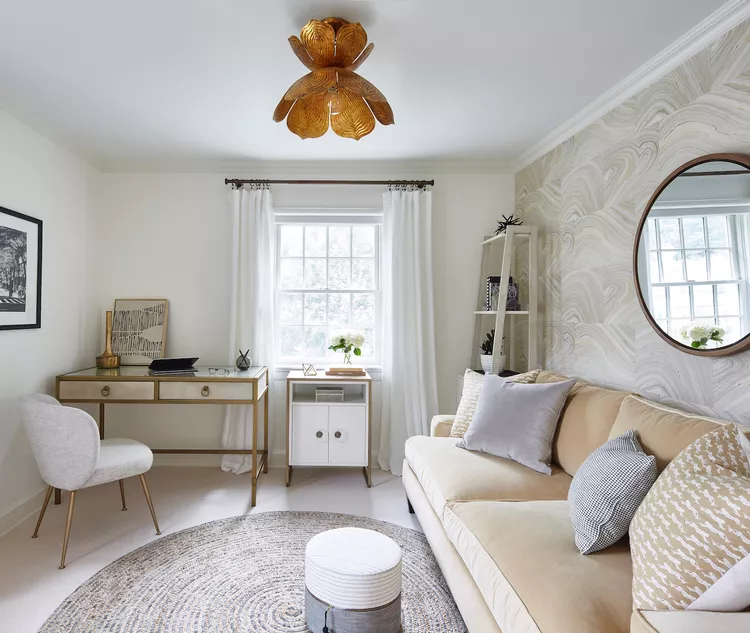
A crisp white interior can change the entire reading of a small camper from the moment you step inside.
Light surfaces push daylight deeper into tight corners and reduce the sense of visual interruption across walls and storage zones.
Cabinetry, ceilings, and soft furnishings in matching tones help your layout read as one continuous volume.
Texture carries most of the visual interest here, with woven fabrics, matte finishes, and subtle grain adding depth.
Even simple choices like cream bedding or unbleached curtains soften transitions between functional zones such as sleeping, seating, and storage.
A restrained palette also prevents small objects and built-ins from competing for attention, which keeps the interior composition orderly.
Over time, this approach allows decoration updates. It doesn’t disrupt the core design language of the camper.
Pro Tip: Keep three closely related light tones across all major surfaces, then rely on natural material variation like linen, rattan, or brushed wood so the interior gains quiet depth.
Add Boho Aesthetic View for a Dreamy Dining Experience
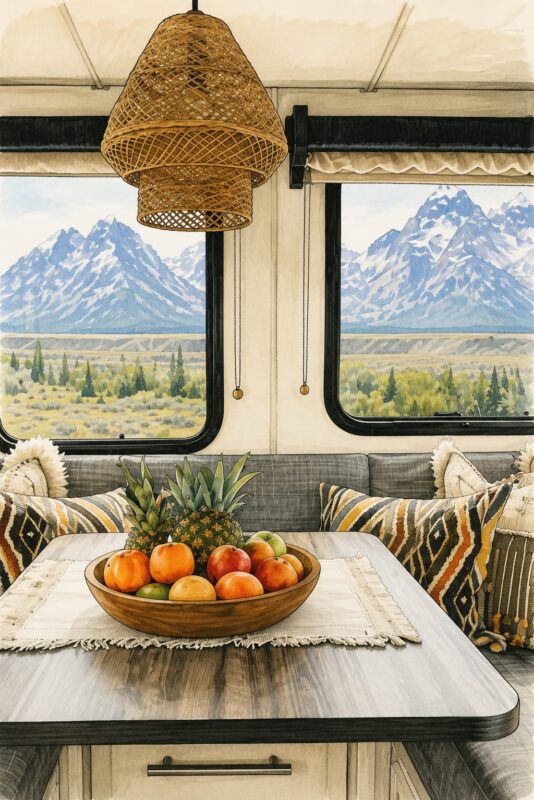
Your dining nook can become the most inviting corner of the camper with a few carefully chosen boho touches.
Woven textures immediately add warmth and help the space look relaxed.
Rattan chairs, textured placemats, and natural wood details create an easygoing atmosphere that suits life on the road.
A patterned table runner can introduce personality and give the table a curated appearance.
I always find that a small plant brings extra charm and helps break up hard surfaces around the dining area.
Soft earth-inspired colors tie everything together. Before long, your simple dining corner starts to resemble a cozy café tucked inside your camper.
Pro Tip: Start with woven textures and add one standout boho accent to anchor the dining space.
Lightweight Acrylic Mirrors to Maximize the Small Space
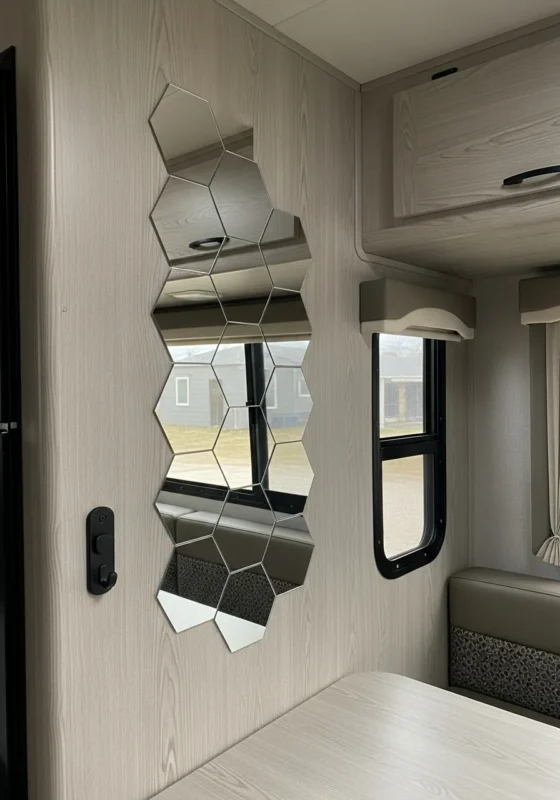
One mirror can completely change how large your camper appears at first glance.
Acrylic mirrors reflect light across the interior and help brighten areas that often seem dark or cramped.
Because they weigh far less than traditional glass, installation is usually much easier in a mobile space.
A mirror placed across from a window can make daylight travel farther through the cabin. You can also mount one near a seating area to create the impression of extra room.
Simple frames tend to work best because they keep attention on the reflective surface itself. For such a small upgrade, the visual impact can be surprisingly dramatic.
Pro Tip: Mount an acrylic mirror opposite your largest window to spread daylight across the camper.
Install Interior Lighting for a Cozy Feel
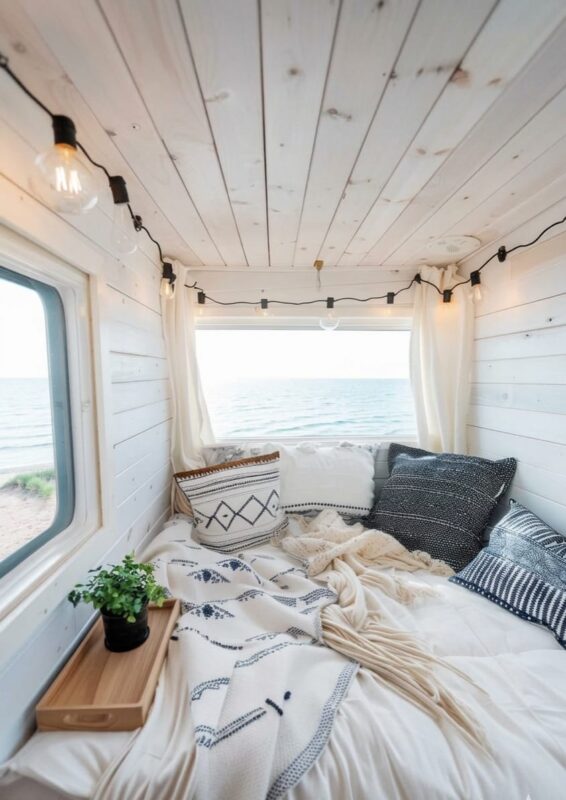
The right lighting can make your camper look completely different after sunset.
Many campers rely on a single overhead fixture, but that often leaves parts of the interior looking dull.
Adding wall sconces, strip lights, and small lamps creates a richer atmosphere. Warm bulbs help soften the overall look and make evenings inside far more enjoyable.
Kitchen task lights can improve visibility and make meal prep much easier after dark.
I also like placing a small lamp near a reading spot because it creates a comfortable place to unwind.
Once several light sources work together, the entire camper becomes welcoming at night.
Pro Tip: Combine overhead lights, task lights, and accent lamps to create a comfortable evening atmosphere.
Incorporate Blue Accents for a Modern Look
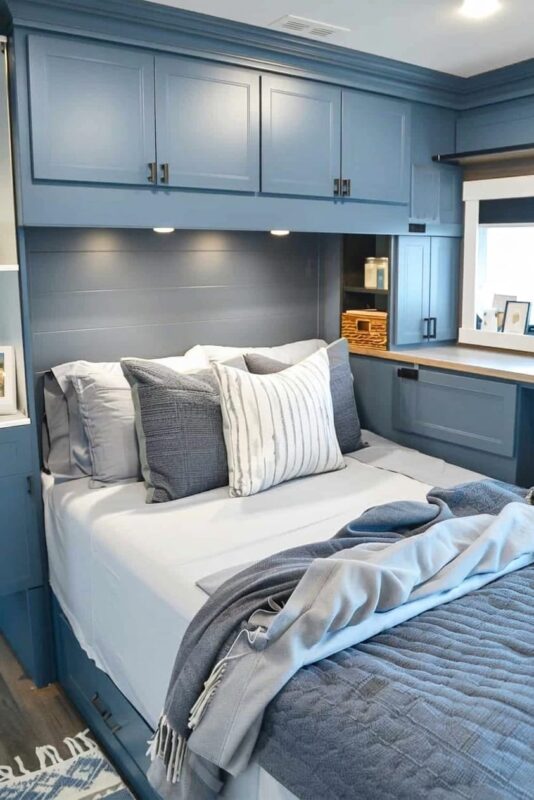
Blue accents can shift a camper interior toward a cleaner, modern direction without overwhelming the limited space.
A navy throw or set of cushions introduces depth that contrasts well with neutral walls and light wood finishes.
Soft sky-blue textiles can brighten seating areas and create a calmer visual rhythm across compact layouts.
Even small details like patterned mugs or storage bins help repeat the color in subtle, intentional ways.
The key lies in balance, where blue appears in select moments rather than covering every surface in the camper.
When repeated across a few focal points, the color begins to unify the interior. This approach suits minimalist camper designs.
Pro Tip: Use one primary blue shade and repeat it in textiles, storage pieces, and small decorative accents for consistency.
Add Plants and Greenery
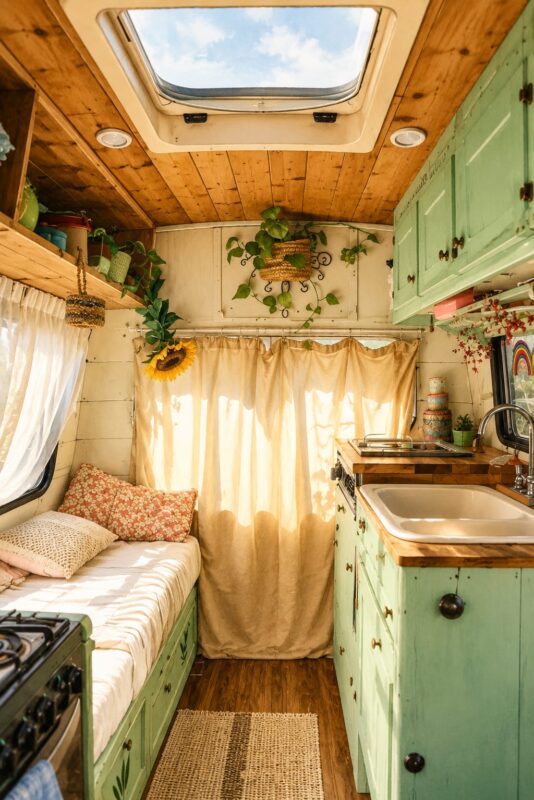
Greenery brings life into a camper interior where hard surfaces often dominate the visual experience.
Small potted plants placed near windows introduce natural movement and soften the edges of compact furniture layouts.
Hanging planters can be used to save counter space while still adding a fresh organic touch overhead.
Artificial plants also work well when maintenance is a concern during long trips or limited sunlight conditions.
A mix of heights and leaf shapes keeps the arrangement from appearing repetitive or static.
Even a single plant on a table can shift the atmosphere toward something welcoming. Over time, greenery becomes a subtle anchor that ties the entire interior together.
Pro Tip: Place one low-maintenance plant near natural light and pair it with a hanging planter to save surface space.
Modernize Your Camper Bathroom with Farmhouse Touches
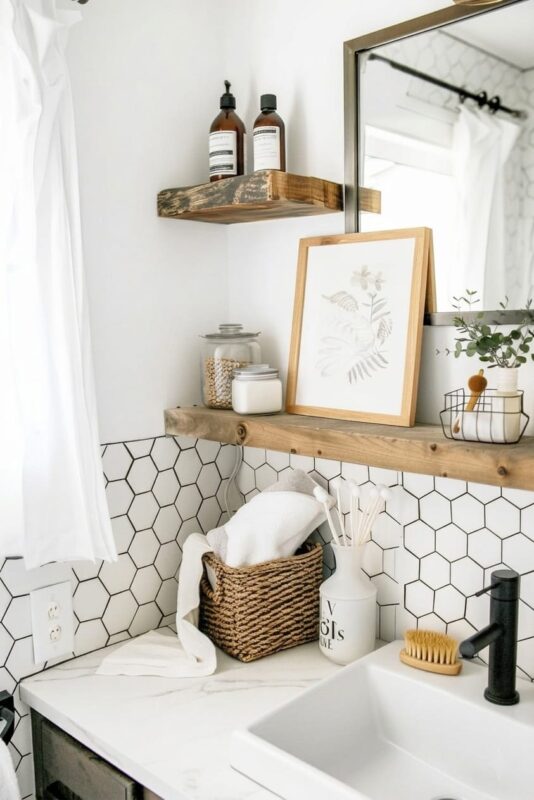
A camper bathroom gains character quickly when simple farmhouse elements are introduced into the design.
Matte black fixtures paired with light shiplap-style walls create a clean contrast that suits small spaces well.
Open wood shelving above the toilet or sink provides storage. A compact mirror with a simple frame helps maintain visual clarity.
Soft textiles in neutral tones keep the space cohesive and reduce the harshness of hard surfaces.
Even small upgrades like matching soap dispensers or storage jars help unify the overall look. The result is a bathroom that looks amazing.
Pro Tip: Combine black fixtures with light wood accents to create a balanced farmhouse-modern bathroom style in compact campers.
Install a Tile Backsplash
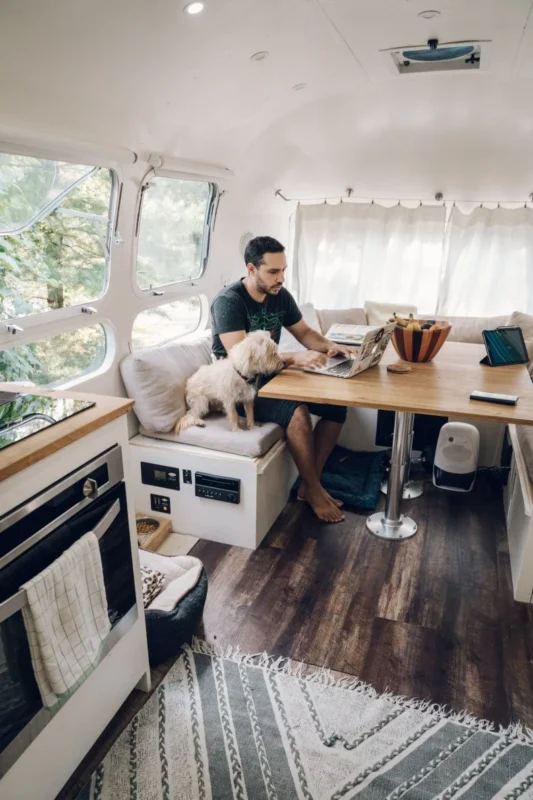
A tile backsplash can redefine a camper kitchen area by introducing texture and structure to a compact cooking zone.
Glossy tiles reflect light and help brighten areas that often lack natural illumination near countertops.
Subway tiles remain a popular choice because they keep the design simple. Smaller mosaic patterns can introduce detail.
Neutral tones work best when the goal is longevity and design flexibility over time.
A backsplash also protects surfaces from daily cooking wear, which becomes important in compact layouts.
This small upgrade changes the entire perception of the kitchen area.
Pro Tip: Choose light-colored tiles with a glossy finish to reflect light and visually expand the kitchen space.
Display Lightweight Art and Photos on Wall
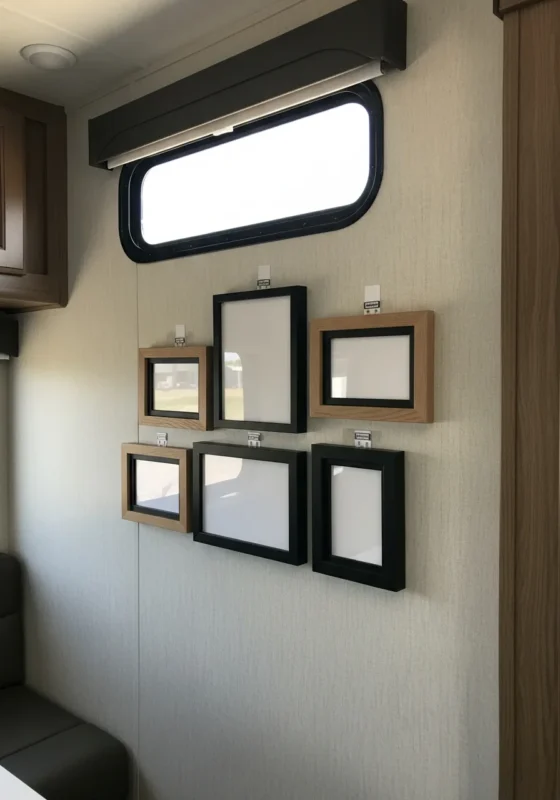
Wall decor plays a major role in adding personality to a camper without taking up valuable floor space.
Lightweight framed prints or fabric art pieces can be mounted. Personal photos arranged in a small gallery layout bring familiarity into compact living zones.
Neutral frames help maintain visual order while still allowing the artwork to stand out.
Spacing matters more than quantity, since overcrowding can quickly make the interior feel tight.
Rotating artwork seasonally keeps the space fresh. Even a single well-placed piece can define the tone of an entire wall.
Pro Tip: Use lightweight frames and keep spacing consistent between pieces to maintain a clean wall display.
Carry Woven Floor Baskets for Additional Storage
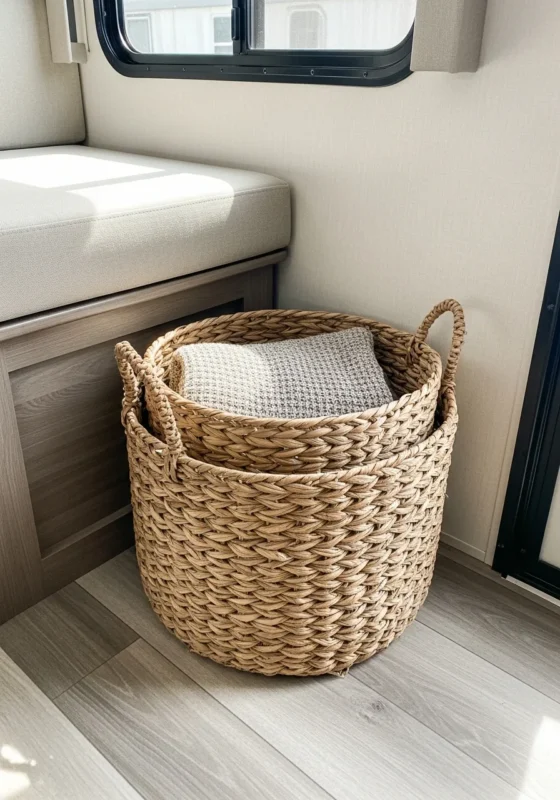
I learned this trick after spending an entire trip shuffling loose items from one seat to another.
In a small camper, clutter spreads fast.
A pair of woven floor baskets instantly gave everything a home.
Use one for extra blankets and sweatshirts, and another for shoes and outdoor gear.
The biggest surprise was how much they changed the look of the space.
Plastic bins solved the storage problem, but they made the camper feel temporary.
Woven baskets add texture and warmth, so the interior feels closer to a tiny cabin than a utility box.
Choose baskets with sturdy handles so you can move them outside while cleaning or repacking.
Low, wide shapes work best in campers because they slide under dinette tables, benches, or beside the bed without blocking the walkway.
When not in use, they still look intentional instead of looking like storage overflow.
Pro Tip: Measure the floor space before buying baskets. Leave at least 3-4 in of clearance around doors, drawers, and slide-outs so the baskets never interfere with daily movement.
Add Natural Elements
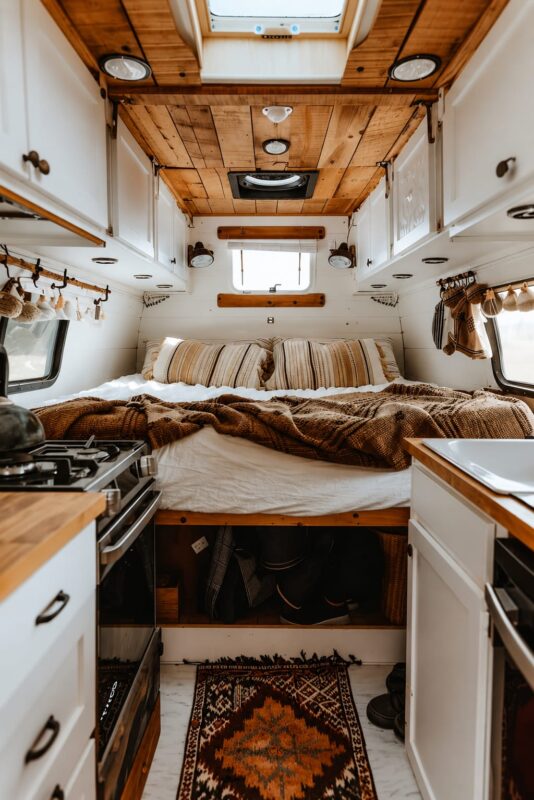
The easiest way I’ve found to make a camper feel less manufactured is to bring in a few natural materials.
You don’t need a full renovation.
A small wood tray on the counter, a linen table runner, a tiny potted plant, and a woven basket can completely soften the space.
When I first tried this, the camper immediately felt calmer.
The glossy surfaces and hard edges stopped dominating the room.
Choose just two or three natural textures and repeating them throughout the camper so it feels cohesive.
Light wood, rattan, cotton, and linen are easy choices because they stay light in a small footprint.
If you travel often, use faux greenery or low-maintenance plants that tolerate temperature swings.
Even a single stem in a simple vase near a window can make the interior alive during longer stays.
Pro Tip: Limit yourself to one wood tone and one woven texture. Too many competing natural finishes can make a tiny camper visually busy.
Use Tension Rod Curtains
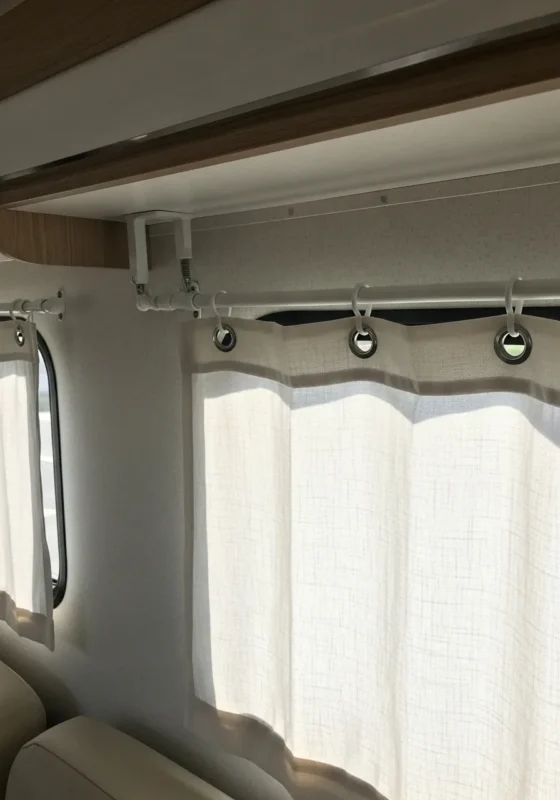
I’m a huge fan of tension rods because they add privacy without turning a camper project into a drilling project.
The first time I installed them, I used a simple rod inside the window frame and hung lightweight linen-look curtains.
The difference was immediate.
The camper felt softer, quieter, and far less exposed at crowded campgrounds.
Tension rods are also easy to remove if you need access to window hardware or want to wash the curtains.
For bed alcoves, I’ve used them to create a quick sleeping nook that feels surprisingly cozy at night.
In rentals or older RVs, that no-drill setup is a major advantage because you avoid new holes and potential wall damage.
Stick with lightweight fabrics so the rod stays secure during travel.
Neutral curtains tend to brighten the space, while heavier dark fabrics can make a compact camper feel smaller during the day.
Pro Tip: Choose a rod rated for more weight than you think you need, then test it with the curtains installed before hitting the road.