Small Walk-In Pantry Ideas That Double Your Storage Space

I’ve been dreaming of having a beautiful walk-in pantry for months, but mine is small.
After rearranging shelves, moving baskets around, the pantry still feels crowded.
No matter how much I organize, snacks keep disappearing into the back and probably there’s never enough room for everyday items.
Lately, I’ve been collecting small walk-in pantry ideas that have made the space look cleaner, work harder, and finally stop the shelf chaos.
If your pantry is starting to overflow too, these ideas may be just what you need.
How To Organize Your Small Walk In Pantry
Whether you’re dealing with awkward corners, crowded shelves, or limited storage, there are plenty of ways to make every inch count.
The following small walk-in pantry ideas may be exactly what your pantry has been missing.
Use Open Pantry Shelves for Accessibility
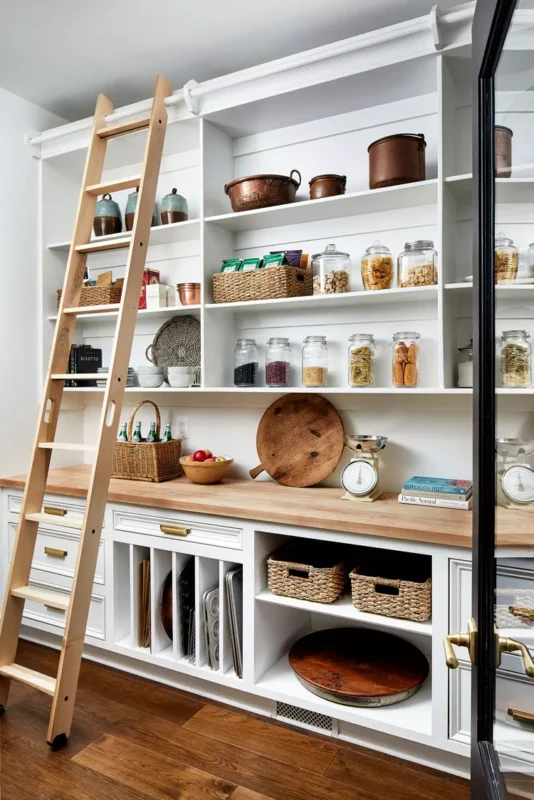
Reaching into a crowded pantry and knocking over three items just to grab one ingredient gets old fast.
Open pantry shelves change that experience. It keeps everything in plain sight and easy to access in seconds.
Instead of stacking items behind closed doors, you arrange them where nothing gets buried.
Jars, boxes, and baskets stay visible at all times, which naturally pushes you to keep things more intentional.
I’ve noticed open shelving also changes how a pantry is maintained. The clutter becomes obvious immediately rather than hiding behind cabinet doors.
You end up thinking more carefully about what stays and what actually gets used.
Clear grouping works especially well here, like keeping baking items together or grouping everyday snacks on one dedicated shelf.
Even small pantries start to feel functional because movement is faster.
Pro Tip: Stick to matching containers or coordinated baskets so open shelves look organized instead of visually busy.
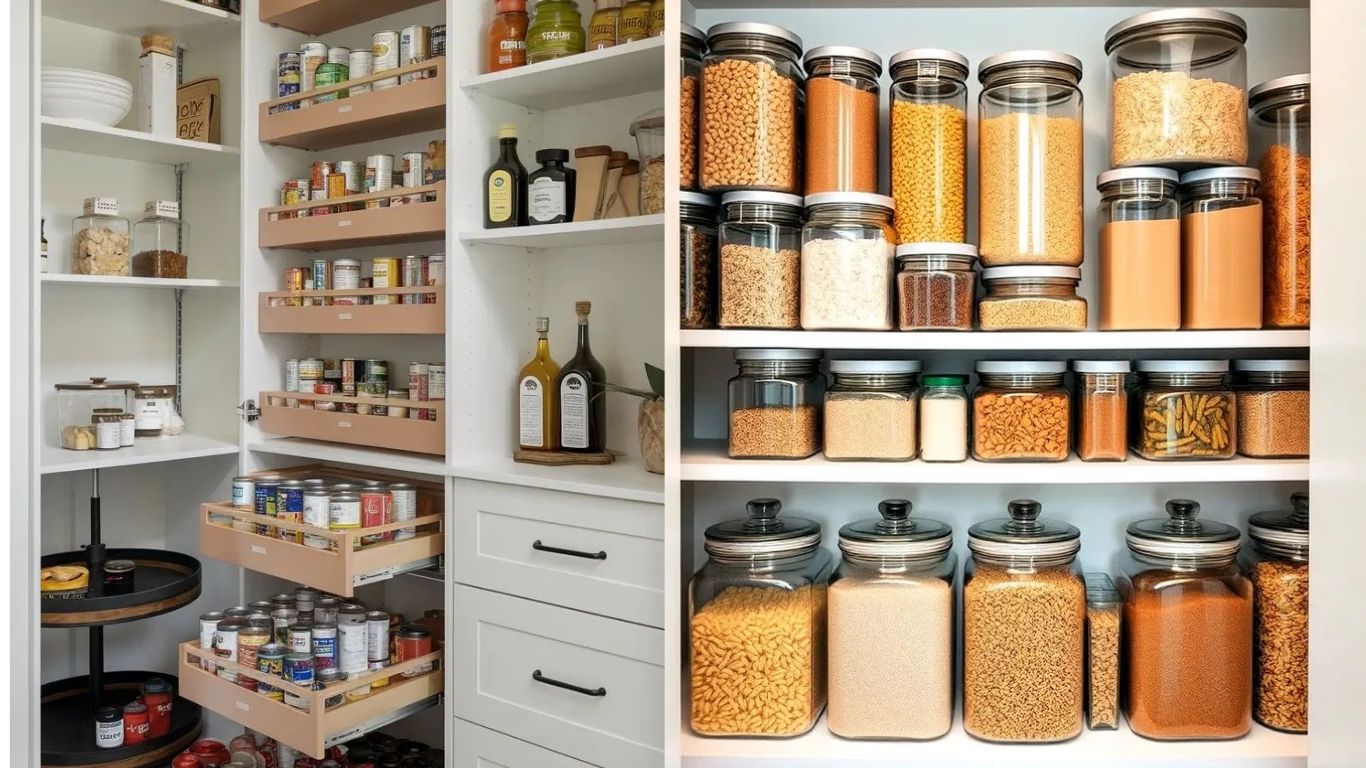
Package Glass Storage Containers
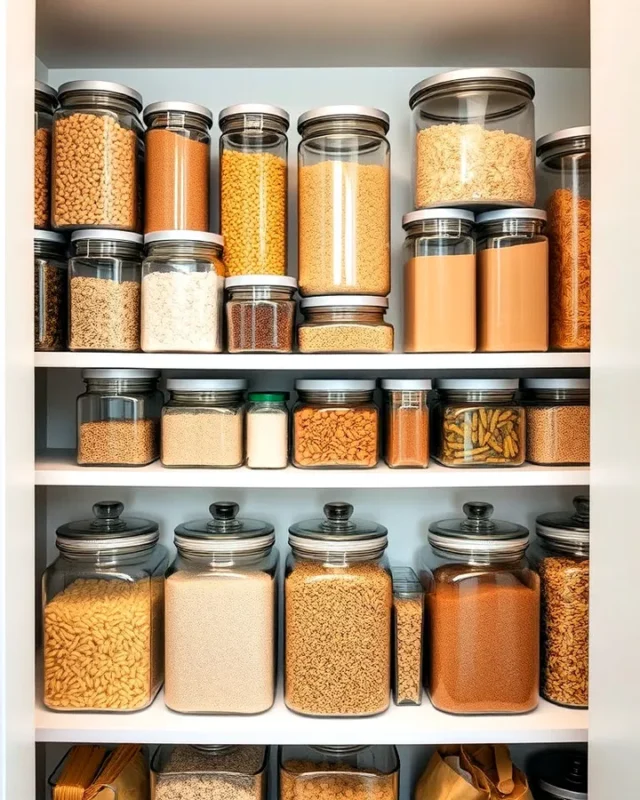
In my opinion, a pantry starts to look instantly more organized the moment plastic chaos gets replaced with clean glass containers.
You can finally see exactly what you have and this removes the guessing game every time you cook or restock groceries.
Glass jars keep dry goods like pasta, rice, flour, and cereal neatly separated.
The uniform shape helps shelves look calmer as everything follows a consistent structure.
Most moms will like how glass makes it easier to notice when something is running low before it becomes an emergency mid-recipe situation.
Over time, your pantry will feel less like storage overflow and more like a curated food space.
Pro Tip: Choose airtight glass containers with square edges so they stack efficiently and save shelf space.
Place Lazy Susans Strategically on Corners
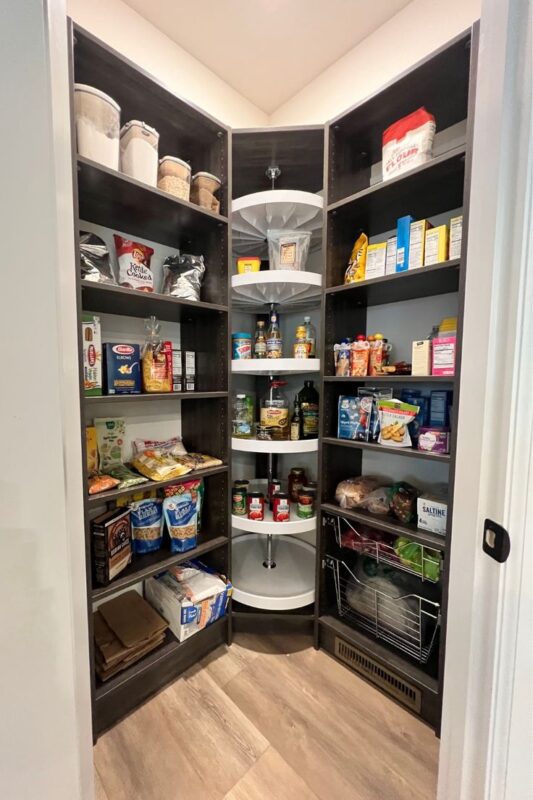
Corner spaces inside a pantry are usually where ingredients go to disappear.
A Lazy Susan brings everything into a rotating system that puts every item within reach.
Rather than digging through stacked cans or pushing items aside, you simply grab what you need.
This is best for oils, sauces, spices, and baking essentials that tend to get lost behind taller items.
Once placed on lower or corner shelves, it is easier to keep track of what you actually own.
With this, you end up using more of your pantry since nothing sits hidden in the back collecting dust.
Pro Tip: Use non-slip pads underneath the Lazy Susan so it stays stable when spinning on smooth pantry shelves.
Adopt Pantry Zone Storage
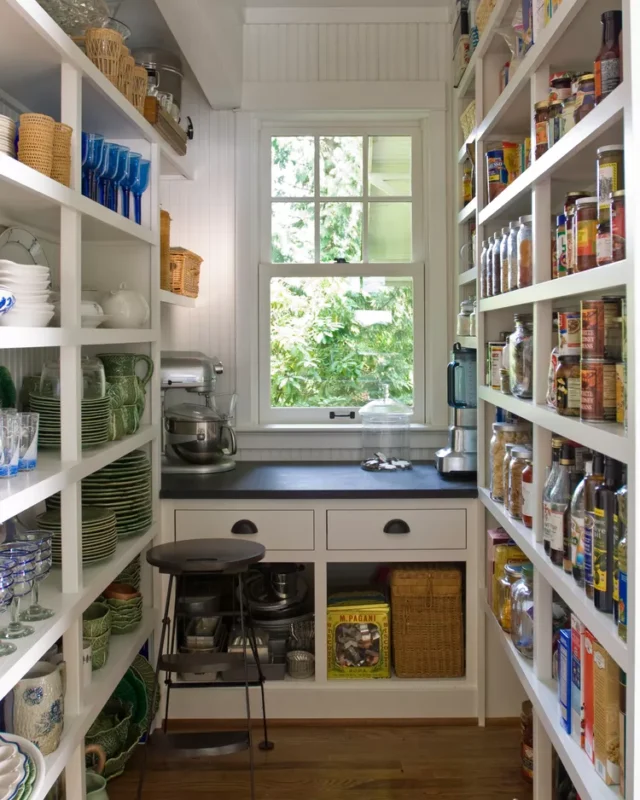
A spacious pantry can still turn confusing when everything ends up competing for the same shelf space.
Creating clear zones brings order by assigning each section a purpose that guides how items are placed.
In my pantry, one side holds everyday essentials like snacks and breakfast items. I use the other area to store baking ingredients.
This separation not only removes the constant searching but also keeps categories predictable every time you open the door.
Movement inside the pantry starts to make more sense. remember each step leads you toward a specific group of items.
You’ll enjoy better grocery habits since you naturally return items to their designated section after use.
During busy weeks, this structure reduces the frustration of misplaced ingredients.
Pro Tip: Label each zone clearly at eye level so every household member follows the same placement system.
Utilize Mix-and-Match Baskets
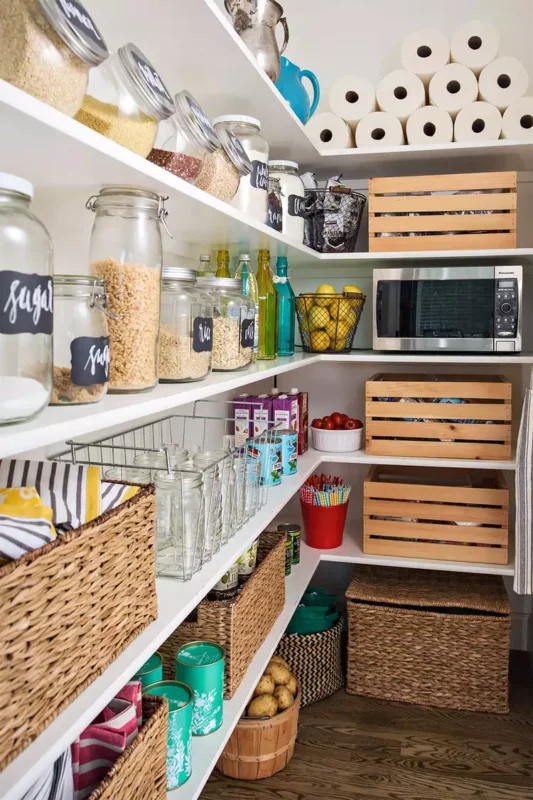
A pantry starts to look far more organized when storage containers stop competing for attention and start working together.
Mix-and-match baskets lets you group items based on size, category, or frequency of use.
You can combine different shapes or materials while still keeping a consistent color palette for a balanced look.
This approach makes it easier to fit awkward items that don’t belong in standard containers.
Items stay grouped neatly, yet there’s still enough variation to adjust storage as needs change.
It’s a simple shift that keeps the pantry adaptable without losing structure.
Pro Tip: Stick to two or three basket styles so the space stays cohesive rather than visually scattered.
Add Inside-the-Door Storage

Pantry doors often stay unused even though they hold valuable vertical space for light storage.
Adding racks or slim organizers on the inside transforms that surface into a practical extension of your shelving.
Small packets, spices, foil, or cleaning supplies can all be stored within easy reach.
This setup keeps frequently used items accessible while freeing deeper shelves for bulk storage.
To many, it reduces the number of times you need to search through stacked items for everyday essentials.
Once installed, the door is part of the storage system rather than just an entry point.
Pro Tip: Choose slim, lightweight organizers so the door closes smoothly without strain on hinges.
Designate a Chaos Drop Shelf
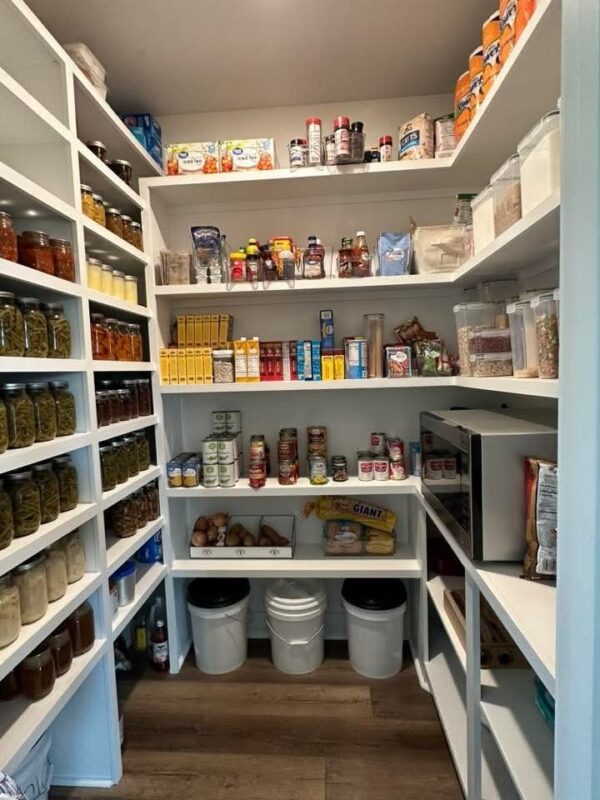
Every pantry has items that never seem to have a permanent home, especially during busy days.
A designated chaos drop shelf creates one controlled space for temporary storage to solve this problem.
I usually place grocery bags, half-used ingredients, or items waiting to be sorted into proper sections.
This prevents random clutter from spreading across multiple shelves. On top of that, it makes cleaning faster because there is a single area that needs attention.
The rest of the pantry stays structured while that one shelf handles short-term overflow.
Pro Tip: Limit this shelf to a single level so it doesn’t become a long-term dumping zone.
Add Pull-Out Drawers for Weight
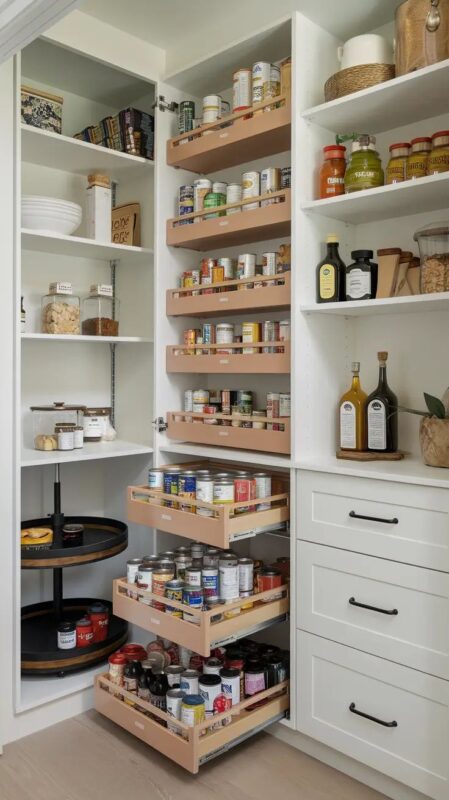
Pull-out drawers bring the full load forward so nothing stays hidden or hard to reach.
Most people use them to store canned goods, bottles, or bulk ingredients. You don’t have to worry about lifting items from the back.
The sliding motion makes access smoother and reduces strain when reaching heavier products.
Even deeper pantry layouts are easier to use when weight is distributed into movable compartments.
Pro Tip: Install heavy-duty drawer slides rated for full load capacity to handle canned goods and bulk storage safely.
Clearly Label Items and Containers
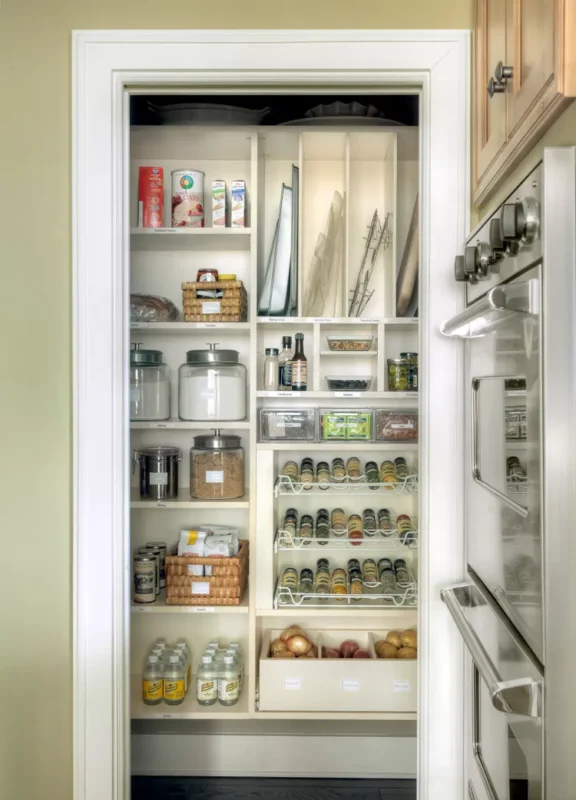
A pantry is easier to manage when every container clearly identifies its contents at a glance.
Labels eliminate uncertainty and allow you to move through shelves with direct intention rather than opening multiple items for confirmation.
You can locate what you need immediately, return it to its proper place, and maintain order. No second-guessing storage locations.
This approach prevents gradual clutter buildup caused by misplaced or misidentified ingredients.
Households benefit from the same structure simply because everyone follows a consistent system.
Even containers that look nearly identical remain distinguishable when clear labeling is applied consistently across all storage.
Pro Tip: Use durable, moisture-resistant labels so text remains legible in humid or high-use kitchen environments.
Ensure Floor-to-Ceiling Storage
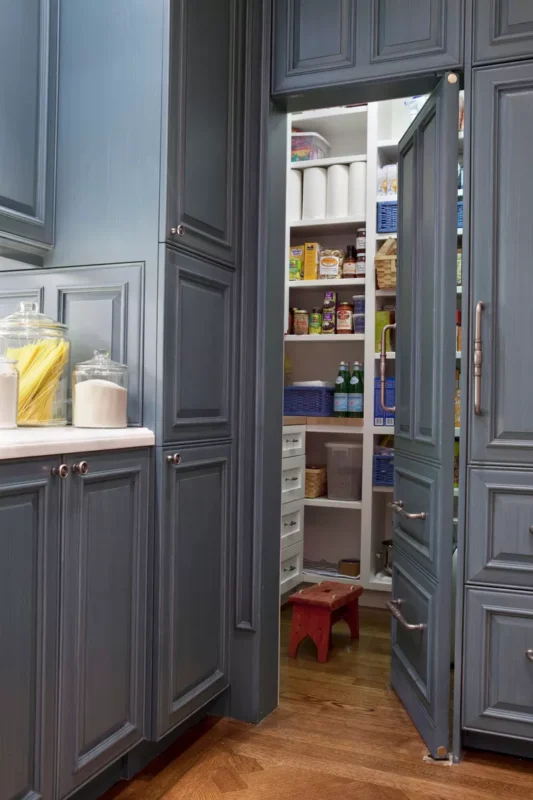
Effective pantry design depends heavily on how well vertical space is utilized from floor level to the top shelf.
Full-height shelving allows storage to be divided into functional zones based on frequency and weight of use.
Heavier items remain on lower levels for stability, while you keep occasional-use goods in higher shelves.
This arrangement reduces unnecessary shifting. It keeps the overall structure predictable during daily use, too.
Empty vertical gaps may contribute to clutter because available space is not being used strategically.
Pro Tip: Position frequently used items between waist and eye level to maintain smooth and efficient access.
Keep a Dedicated Step Stool
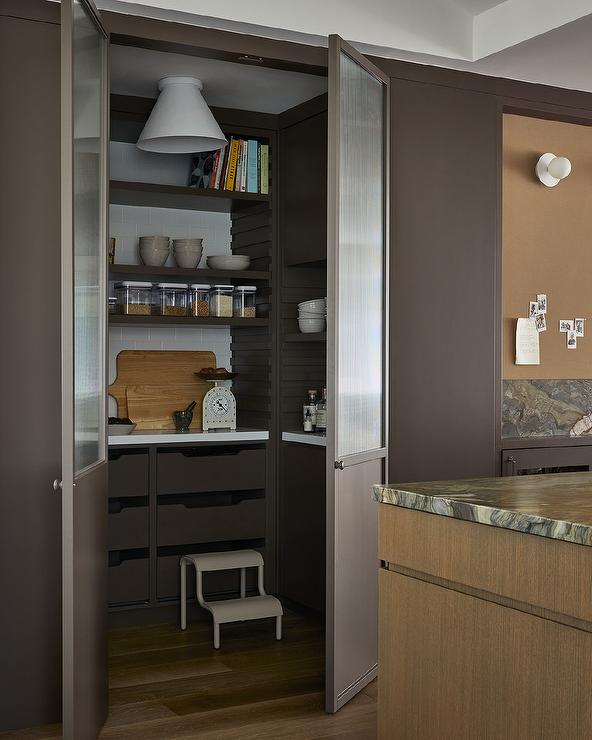
Upper shelves often remain underused simply because access requires additional effort.
A dedicated step stool removes that limitation and extends the usable range of the entire pantry.
Higher sections are practical storage for bulk goods, seasonal items, or overflow supplies that do not require daily access.
Keep stool inside the pantry to ensure immediate availability whenever elevated storage is needed.
This small addition changes how storage is planned.
Vertical capacity is fully activated when reaching higher areas no longer interrupts routine movement.
Pro Tip: Select a foldable step stool with a secure locking mechanism for stability during use and compact storage when not needed.
Store Root Veggies in Crates
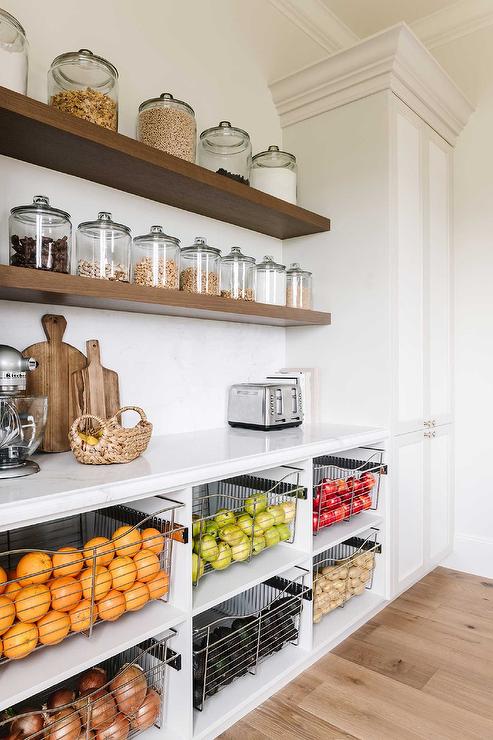
Root vegetables hold up far better when air can circulate freely around them instead of being sealed in tight containers.
Crates made from wood or breathable material give potatoes, onions, and garlic a structured home.
Placing them on a lower pantry level keeps heavier produce grounded. On the other hand, opening up upper shelves for lighter groceries you reach for more often.
Each crate can carry a single category, so you avoid digging through mixed produce just to find one item.
That separation keeps textures intact, since softening tends to happen faster when different vegetables are packed together.
A simple system like this makes restocking easier. You can quickly see what needs replacing.
Personally, this setup changed how organized the pantry felt during weekly grocery cycles.
Pro Tip: Use breathable liners such as mesh or kraft paper to reduce moisture buildup and extend freshness.
Hooks for Bags, Aprons, and Reusable Totes
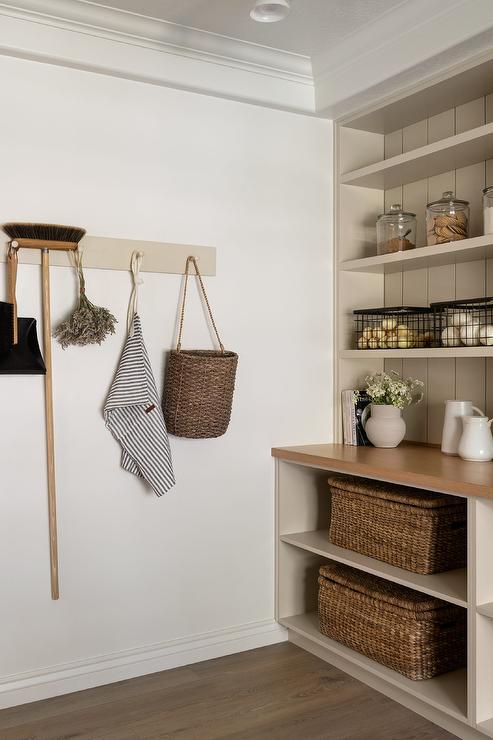
Clutter starts at the pantry entrance where soft items end up stacked, folded, or left on counters.
Thankfully, hooks create a direct storage solution that keeps bags, aprons, and reusable totes in one consistent vertical line.
You can place them near the pantry door or along a side wall so that daily essentials stay within immediate reach.
Reusable shopping bags remain ready for quick errands. My aprons stay accessible during cooking sessions.
That small shift removes loose items that usually spread across countertops during busy hours.
I started using hooks because my tote bags ended up crumpled in corners. Now the pantry entrance stays clearer.
Pro Tip: Install hooks at varying heights so multiple items can hang independently without overlapping or tangling.
FAQs
Should a walk-in pantry door swing in or out?
A walk-in pantry door works best when it swings outward because it frees up interior wall space for shelving and storage. This layout prevents the door from blocking access to items.
Should a walk-in pantry have a window?
A window is optional in a walk-in pantry, depending on how the space is used. Natural light and airflow can make the area more comfortable to navigate.
However, some setups prioritize cool, dark storage conditions for food items that need stable temperatures.
Does a walk-in pantry need a sink?
A walk-in pantry does not require a sink since its main role is food and supply storage. Keeping the space free of plumbing fixtures allows you to dedicate all available room to shelving and bins.