How To Remodel Your Small Bathroom (13 Budget-Friendly Ideas)

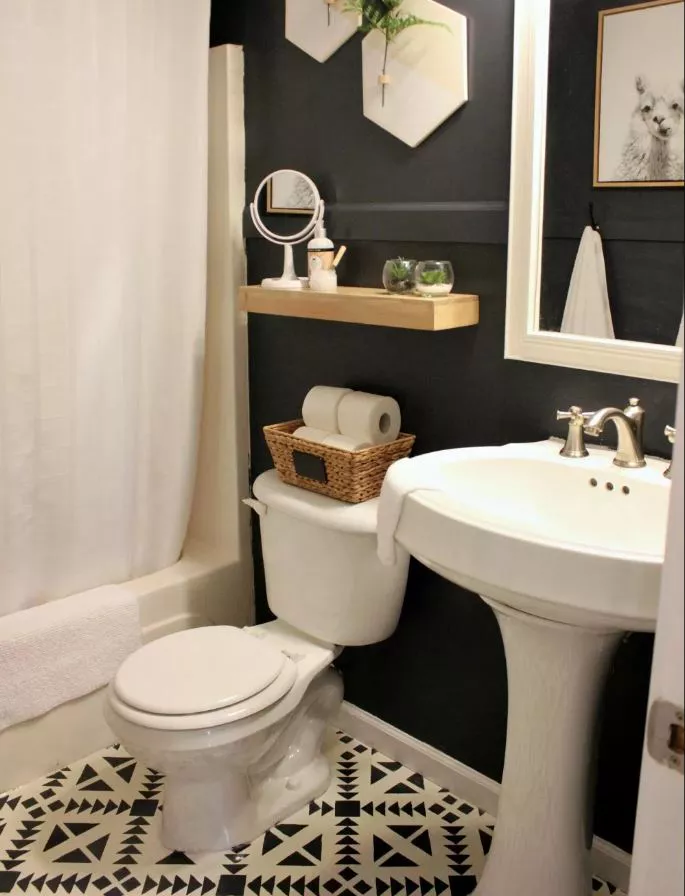
Some of the smartest bathroom upgrades have nothing to do with adding square footage.
A few changes can turn a cramped space into one that feels easier to use every single day.
I’ve walked into plenty of small bathrooms that looked tired simply because the layout, lighting, or storage worked against them.
Once those problems are fixed, the room becomes completely different. No walls moved. No expensive expansion. Just better choices.
If your small bathroom is dated, these remodel ideas will help you make the most of every inch and create a space that looks far more practical.
RELATED: How to Choose Bathroom Tiles That Actually Make Cleaning Easier
Budget-Friendly Remodel Ideas for Small Bathrooms
1. Brighten It Up With the Right Lighting

You don’t always notice bad bathroom lighting until you’re trying to shave, put on makeup, or find something that fell on the floor.
I learned this after replacing a single ceiling fixture in a tiny guest bathroom. The room hadn’t changed, but everyone who walked in asked if we’d remodeled it.
The old light left dark corners and strange shadows across the mirror. The new setup made every surface look cleaner from the moment the switch flipped on.
Instead of depending on one light, spread the brightness around the room. Wall lights beside the mirror make morning routines much easier, and a recessed ceiling light fills the rest of the space.
If your bathroom has a niche or open shelf, a small accent light can quietly highlight that area after sunset.
Good lighting doesn’t hide a small bathroom. It helps you notice everything that was already there.
Pro Tip: Pick bulbs with the same color temperature throughout the room. Mixing warm and cool bulbs can make the bathroom look uneven.
2. Refresh the Walls with Wallpaper and Color
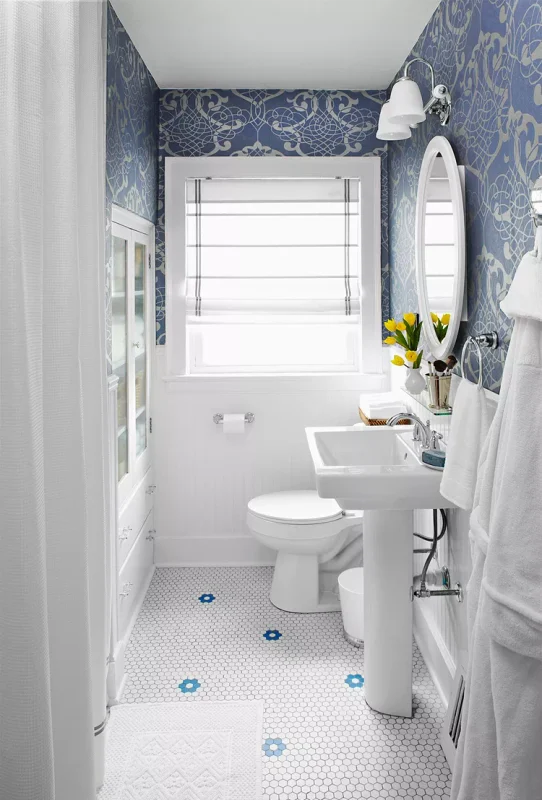
Paint isn’t the only thing that can wake up a tired bathroom.
A friend covered one wall behind her vanity with a soft botanical wallpaper, and it became the first thing people commented on.
Before that, the room looked plain. Afterward, it had personality, even though the vanity, floor, and mirror stayed exactly the same.
The trick is knowing when to stop. One feature wall is usually enough in a compact bathroom.
Covering every wall with a bold pattern can make the room look busy instead of welcoming.
Pair that wallpaper with quiet paint colors like warm white, pale sage, or light sand, and the pattern gets the attention it deserves.
This is one of those updates that doesn’t require major construction, yet it changes the room every time you open the door.
Pro Tip: Always buy wallpaper made for humid rooms. It handles steam far better than standard paper and stays looking fresh much longer.
3. Move Fixtures off the Floor

Cleaning around bulky bathroom cabinets can test anyone’s patience.
I didn’t realize how much dust collected around the vanity until we replaced it with a floating version.
Suddenly the mop reached every corner in one sweep, and the bathroom looked less crowded despite staying exactly the same size.
Wall-mounted vanities are a smart choice in compact spaces because more flooring stays visible.
That uninterrupted line of tile gives the room a lighter appearance. The same idea applies to floating toilets where plumbing allows the installation.
Even smaller details make a difference. Wall-mounted faucets free up countertop space, and towel bars attached to the wall keep everyday items where you need them instead of piling everything on the vanity.
Small bathrooms don’t always need bigger fixtures. Sometimes they simply need fewer things touching the floor.
Pro Tip: Ask your contractor to reinforce the wall before installing floating fixtures. Solid support prevents future problems and keeps everything secure for years.
4. Swap the Bulky Vanity for a Pedestal Sink
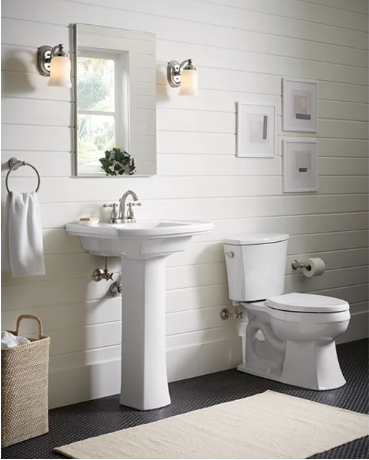
Ever walked into a tiny bathroom and felt like the vanity was taking over the whole room?
That happened in my first home. The cabinet was useful, but it swallowed precious floor space.
Replacing it with a pedestal sink changed the room overnight. Suddenly there was open space underneath, and the bathroom stopped feeling boxed in.
A pedestal sink suits powder rooms and smaller bathrooms where storage isn’t the biggest concern. The slimmer profile gives the room breathing room, making it easier to move around during busy mornings.
If you still need a place for toiletries, look elsewhere. A recessed medicine cabinet, floating shelves, or a slim storage unit can handle those items without bringing back the visual weight of a large vanity.
Sometimes removing one bulky feature has a bigger impact than adding three new ones.
Pro Tip: Measure the distance between the sink and the toilet before buying a pedestal sink. A few extra inches can make everyday use much more comfortable.
5. Add a Few Everyday Luxuries
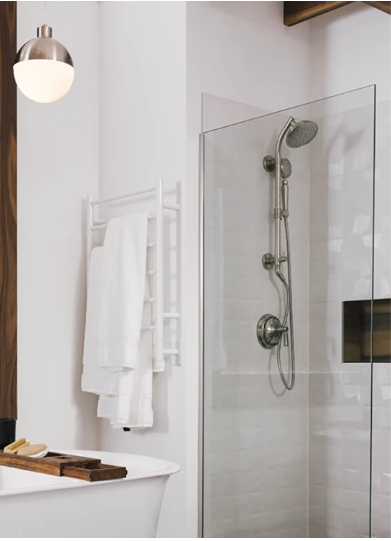
The smallest upgrades are sometimes the ones you appreciate every single day.
A heated towel rail, a dimmable mirror, or a rainfall showerhead won’t increase the size of your bathroom.
They do change how the room feels during your morning routine. Those little moments quickly become part of your day, and you’ll wonder why you waited so long.
Luxury doesn’t have to mean expensive marble or custom cabinetry. Thick towels, matching soap dispensers, a wooden bath tray, or a quality mirror can lift the whole room.
The goal isn’t to fill every corner with decorative pieces. It’s to choose a handful of items that make the bathroom enjoyable each time you step inside.
A compact room deserves the same attention as any larger space.
Pro Tip: Spend your budget on items you touch every day, like towels, faucets, or showerheads. They make a far bigger difference than decorative accessories.
6. Replace the Curtain with Frameless Shower Glass
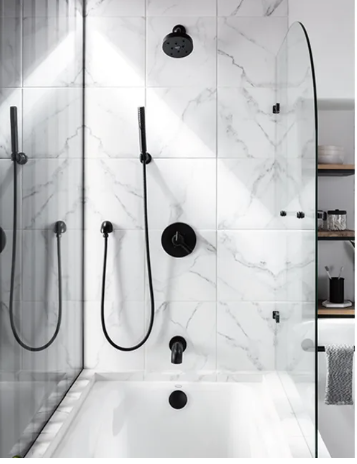
A shower curtain can quietly make a small bathroom look tighter than it really is.
I noticed this during a renovation where the only major change was replacing the curtain with frameless glass.
The bathroom suddenly looked more open because nothing interrupted the view from one wall to the other.
Glass allows tile, flooring, and wall finishes to remain visible across the room. Your eyes aren’t stopped halfway by fabric hanging across the shower.
That uninterrupted view gives the entire space a lighter appearance.
Frameless panels also suit modern bathrooms because they stay simple. Heavy metal frames can draw unnecessary attention, while clear glass blends into the background.
It’s one of those upgrades that people notice immediately, even if they can’t explain why the room suddenly looks different.
Pro Tip:: Apply a protective glass coating after installation. It helps reduce water spots and cuts down the time spent cleaning.
7. Don’t Be Afraid of Bold Choices

Small bathrooms don’t always need plain colors and safe finishes.
One of my favorite remodels included deep green walls, matte black fixtures, and a striking stone-look tile.
Everyone warned the room would look smaller. The opposite happened. The bathroom gained character, and visitors remembered it long after leaving the house.
Bold design works when the choices connect with one another. A rich wall color, modern lighting, and clean-lined hardware can completely change the mood.
Trying to play it too safe sometimes leaves a bathroom looking forgettable. A compact space gives you the chance to experiment because you’re working with fewer materials.
If you’ve always wanted to try something different, this is probably the room to do it.
Pro Tip: Choose one bold feature to lead the design. Let the remaining finishes support it instead of competing for attention.
8. Add Vertical Shiplap to the Walls

The walls in a small bathroom don’t have to sit quietly in the background.
I remember walking into a powder room where the owner had installed vertical shiplap from floor to ceiling.
The room wasn’t any taller than before, but it certainly looked that way. Those long lines quietly pulled your attention upward the moment you stepped inside.
Vertical shiplap also brings texture without making the walls look busy. Painted in white, soft gray, or muted sage, it gives the bathroom character that plain drywall can’t match.
It blends with modern, farmhouse, or coastal interiors, so you’re not locked into one decorating style.
If your bathroom has a low ceiling, this upgrade can make a noticeable difference. It’s subtle enough to stay timeless but interesting enough to stop the room from looking flat.
Pro Tip: Use moisture-resistant shiplap products made for bathrooms. They handle steam much better and hold their finish for years.
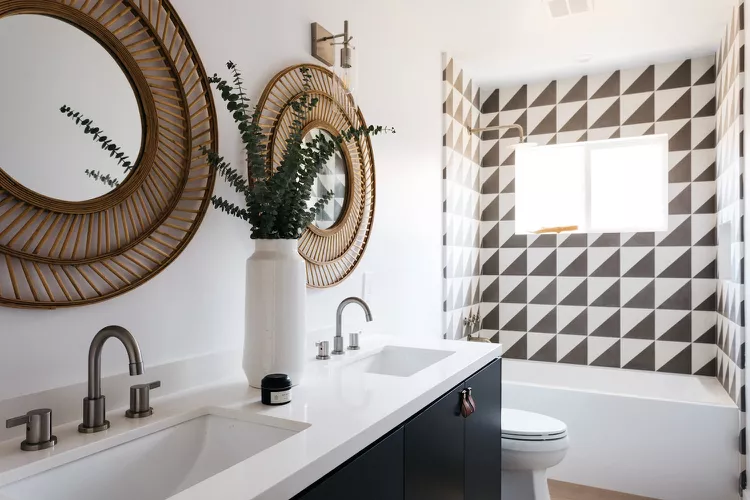
9. Hang a Large Mirror
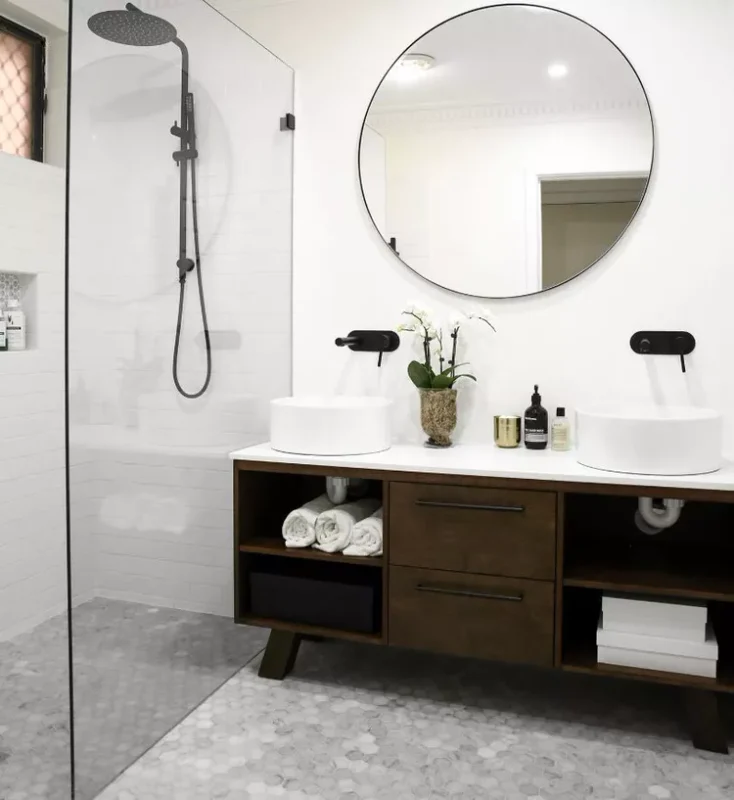
One oversized mirror can completely change your first impression of a small bathroom.
The difference becomes obvious the second you walk in. Instead of stopping at the vanity, your eyes travel farther because the mirror reflects the rest of the room.
Even daylight from a tiny window suddenly reaches corners that once looked dull.
Don’t be afraid to go bigger than you think. A mirror that stretches across the vanity creates a cleaner, more open appearance than a small decorative one floating in the middle of the wall.
Make sure your bathroom has good lighting because this reflects doubles the impact.
Framed mirrors bring personality, while frameless versions lean toward a cleaner, contemporary look. Both work beautifully when they’re sized correctly.
Sometimes the smartest remodel isn’t adding something new. It’s replacing something that’s simply too small.
Pro Tip: Position the mirror where it can reflect natural light from a nearby window. The room will appear brighter throughout the day.
10. Run Subway Tiles from Floor to Ceiling
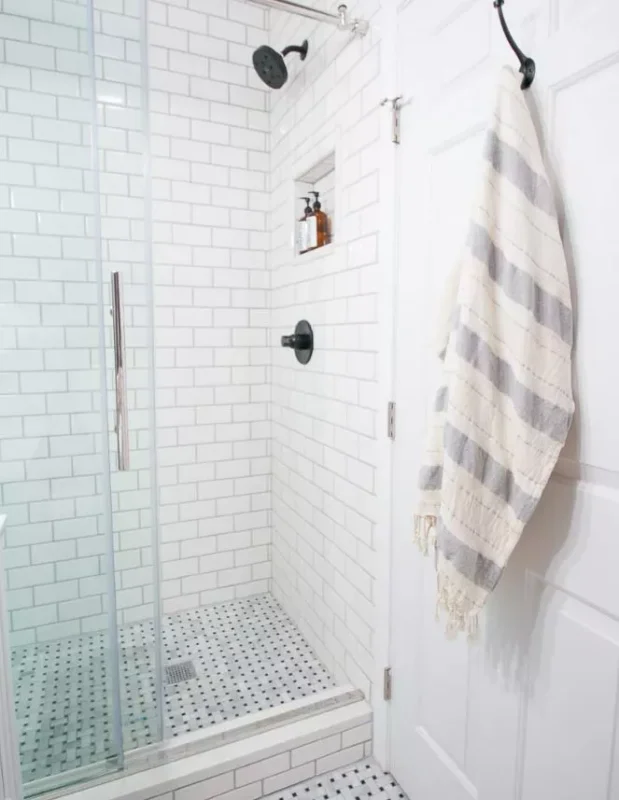
Half-tiled walls can make a bathroom look like the remodel stopped halfway through.
Running subway tiles from the floor all the way to the ceiling tells a different story. The walls become one continuous surface, giving the room a cleaner.
Your eyes naturally follow the tile upward instead of stopping at a painted border.
Classic white subway tiles remain a favorite because they never seem to date, but they aren’t your only option.
Soft gray, warm beige, deep green, or handmade-look tiles can give the bathroom a completely different personality.
Grout color matters too. Matching grout creates a smoother appearance, while contrasting grout highlights every individual tile for a more graphic look.
This upgrade requires more material, but the final result can completely change how a small bathroom is perceived.
Pro Tip: Lay out a few rows of tile before installation begins. Seeing the pattern on the floor helps you choose the grout color with much confidence.
11. Install Eye-Catching Details
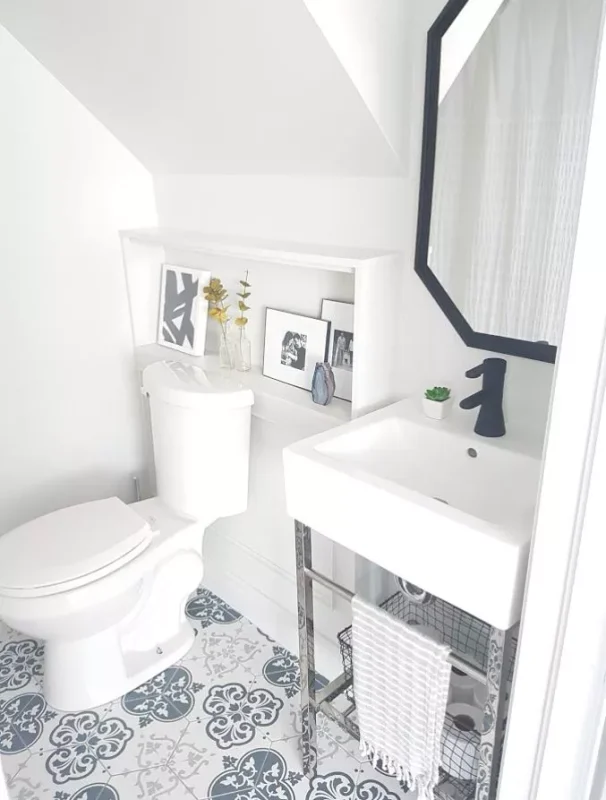
Some bathrooms don’t need another cabinet or a bigger shower. They just need one feature that makes people stop for a second.
I visited a home where the remodel wasn’t expensive at all, yet everyone talked about the brushed brass faucet.
In another bathroom, it was a fluted vanity front that caught every visitor’s attention. Those details gave each room its own identity, even though the layouts were quite ordinary.
Look for pieces that naturally draw attention when someone opens the door. A sculptural pendant light, a textured vanity, striking cabinet hardware, or an unusual sink can completely change the mood.
The trick is knowing when to stop. Too many statement pieces compete with one another, and the room starts looking cluttered instead of thoughtfully designed.
One memorable detail is almost always stronger than five average ones.
Pro Tip:: Choose a feature you’ll still enjoy years from now. Trendy pieces come and go, but timeless craftsmanship rarely loses its appeal.
12. Create a Modern Black-and-White Bathroom
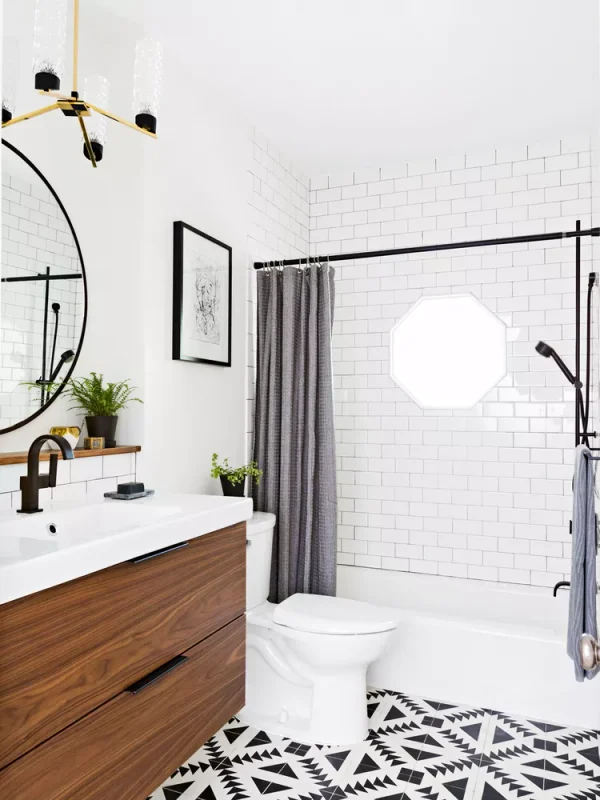
Black and white has stayed popular for decades because it never depends on passing trends.
The secret isn’t using equal amounts of each color. Let one take the lead.
White walls and tiles can keep the room bright, while black fixtures, mirror frames, and cabinet handles introduce contrast that gives the bathroom a crisp, modern edge.
Texture keeps the palette from looking flat. Matte black taps, glossy subway tiles, ribbed cabinetry, or patterned floor tiles add interest without introducing another color.
Even a simple black wall sconce can shift the entire atmosphere.
This combination suits compact bathrooms because it looks clean and organized from every angle.
The design speaks for itself, so there is no need to crowd the room with extra decoration.
Pro Tip:: Add one natural element, such as a wooden stool or woven basket. It softens the contrast and stops the room from looking too stark.
13. Embrace Darker Hues
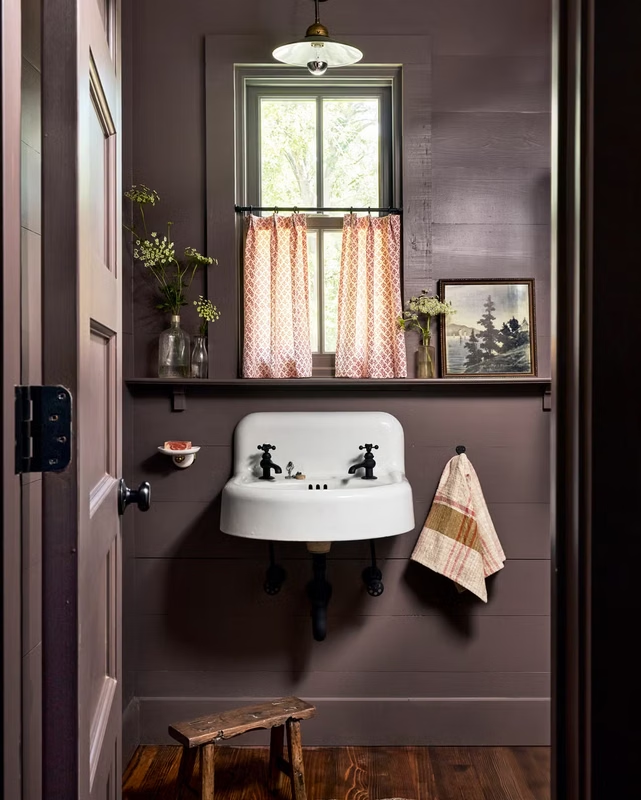
Many people avoid dark paint in a small bathroom because they’re convinced it will make the room shrink.
I’ve seen the opposite happen when the color is used with confidence. Deep charcoal, forest green, navy, or rich brown can wrap the room in character.
Rather than noticing the size first, your attention shifts to the color and the atmosphere it creates.
Good lighting becomes even more important here. Wall sconces, a bright mirror, or ceiling lighting stop the room from looking dim.
Pair darker walls with lighter countertops, a white toilet, or pale flooring to create contrast that keeps everything balanced.
If bold colors have been sitting on your wish list, a small bathroom is a great place to experiment.
It takes less paint, less time, and far less commitment than repainting an entire living room.
Pro Tip: Test your paint sample at different times of the day. A color that looks rich in daylight can appear very different under evening lighting.
FAQS
What is the average cost of a small bathroom remodel?
A small bathroom remodel typically costs $1,000–$20,000, depending on the project scope. Costs can be reduced by keeping the existing layout, plumbing, and structural walls, choosing prefabricated showers or tubs, and refinishing existing cabinets.
How long does it take to remodel a small bathroom?
A small bathroom remodel generally takes 1–7 weeks, depending on the project’s complexity. The timeline includes demolition, preparation, installation, and finishing, even when materials and fixtures are readily available.
Which upgrades add the most value to a small bathroom?
The most valuable upgrades include repairing leaks and ventilation, updating floors and countertops, improving the shower or tub, upgrading lighting, and adding storage. Affordable improvements such as painting, replacing the mirror, and updating cabinet hardware can also increase the bathroom’s appeal and value.