13 Gorgeous DIY Fall Décor Ideas For Your Home

I love the fall season. And I’m already getting that little urge to change things around the house.
I’ve been thinking about all those little touches that make the house look ready for the season.
There’s just something fun about decorating for fall. I never seem to stop at the front porch either.
Before long, I’m moving things around in my living room and small bathroom, playing with my front door, and looking for an empty corner that needs a little autumn touch.
Sure, you can find plenty of fall decorations in stores.
But making a few pieces yourself is where the fun really begins.
After trying different DIY projects over time, I’ve come to appreciate the ones that look special but don’t require a whole weekend to make.
So, if you’re ready to bring a little fall into your home, here are some DIY fall home décor ideas to try.
RELATED: 15 Easy DIY Fall Wreath Ideas For A Front Door
Fall Décor Ideas Worth DIYing
1. Layer Pumpkins on the Doorway
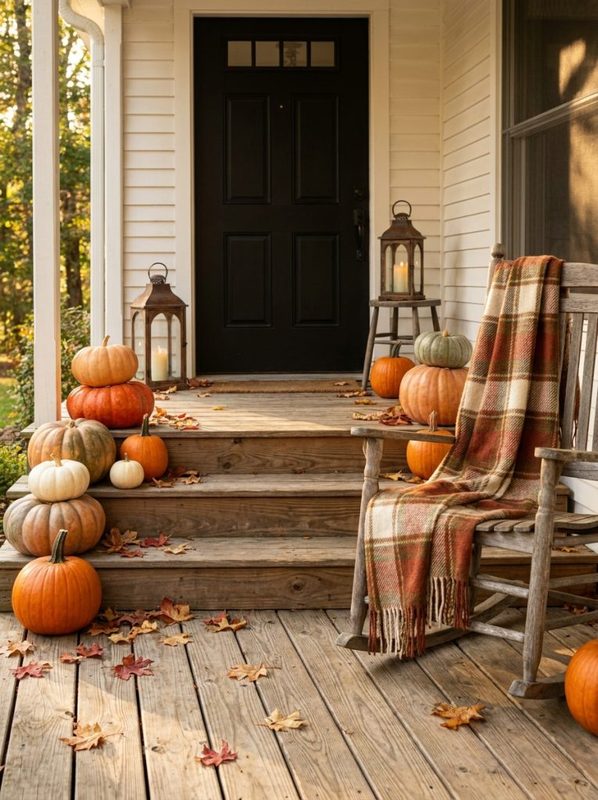
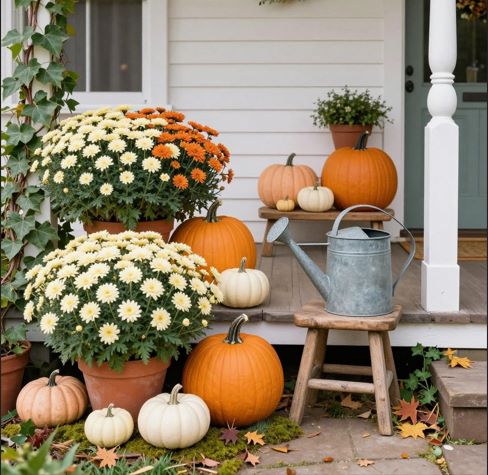
A pile of pumpkins around the front door can give a plain entry plenty of fall character.
The trick is to build the arrangement in layers instead of placing every pumpkin directly on the porch floor.
Start with a few large pumpkins at the back, then bring smaller ones toward the front.
I’ve used this approach on porch displays where the doorway needed some seasonal color but there wasn’t enough room for a large wreath or elaborate decoration.
Different shapes keep the grouping from looking like a row of store-bought decorations.
Round orange pumpkins can sit beside squat white varieties, ribbed heirloom pumpkins, or a few small gourds for a collected look.
Wooden crates and shallow baskets can lift some pieces higher, giving the display a stepped appearance.
For a farmhouse entry, dried corn stalks or wheat stems can fill the taller spaces and connect the pumpkins to the rest of the porch.
Leave enough clearance around the threshold for opening the door and walking through comfortably.
On a narrow entry, concentrating the pumpkins along one side usually gives you a fuller display without taking over the walkway.
Pro Tip: Turn a few pumpkins slightly sideways instead of facing every stem toward the street.
2. Include Autumn Glow Tray
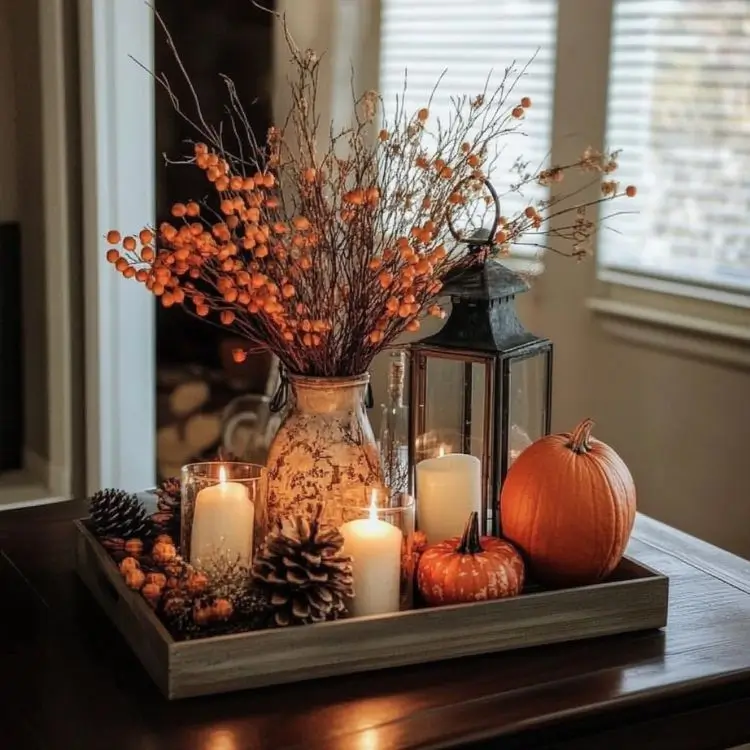
An autumn glow tray can turn a small table, porch bench, or entry console into a warm seasonal display.
Use this ideas when you want fall decorating to stay contained instead of spreading across the entire entryway.
For the tray, start with a shallow wooden, metal, or woven piece that has enough room for several small decorations.
A few battery-operated candles, miniature pumpkins, dried leaves, and pinecones can fill the surface while leaving enough open space for the light to stand out.
Last year, I used a similar arrangement on a narrow console where larger decorations would have crowded the surface.
Keeping the pieces inside one tray made the display easier to move when the space needed to be cleared.
Copper, amber, bronze, and natural wood tones pair nicely with the soft glow from the candles.
A small glass jar filled with acorns or dried seed pods can add another texture without making the tray look cluttered.
Pro Tip: Choose battery-operated candles for an outdoor tray, particularly if the display will sit beneath an uncovered porch. You can leave them in place without worrying about an open flame.
3. Display Mason Jar Lanterns
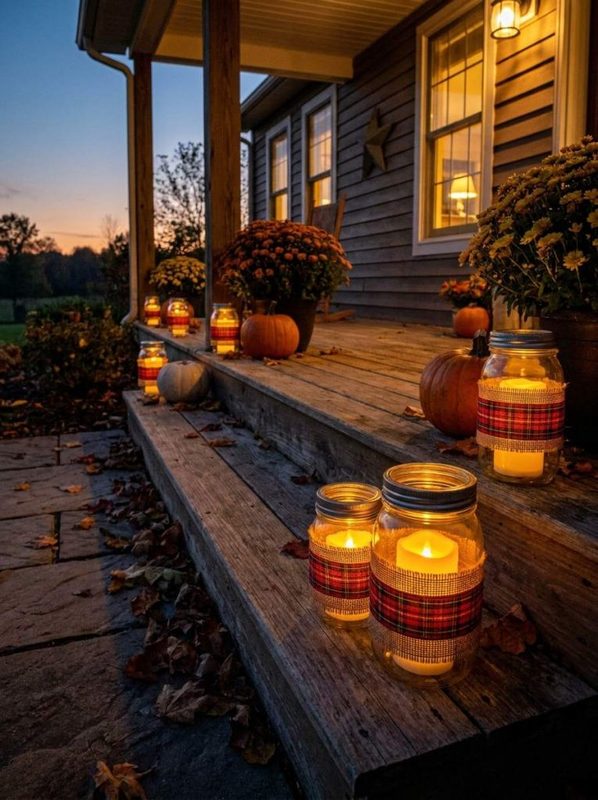
Mason jar lanterns are an inexpensive way to bring a little light to a fall porch.
Their familiar glass shape works with farmhouse, rustic, cottage, and even simpler modern decorating styles.
For a quick DIY version, place a battery-operated tea light inside each jar and wrap the outside with twine.
Dried leaves, tiny pinecones, or a short piece of burlap ribbon can decorate the jars, although keeping the glass mostly visible lets the light shine through.
A set of lanterns does not need to be identical. Different jar sizes can sit together on a step or tabletop, with the tallest one toward the back and the smaller jars gathered around it.
I’ve found this works well along a porch edge where the jars can mark the boundary of the sitting area.
Their small footprint makes them useful when there is little space for pumpkins or large containers.
Pro Tip: Battery-operated lights are safer and give you the freedom to position the lanterns wherever the display needs them.
4. Make a Harvest Lantern Fall Display
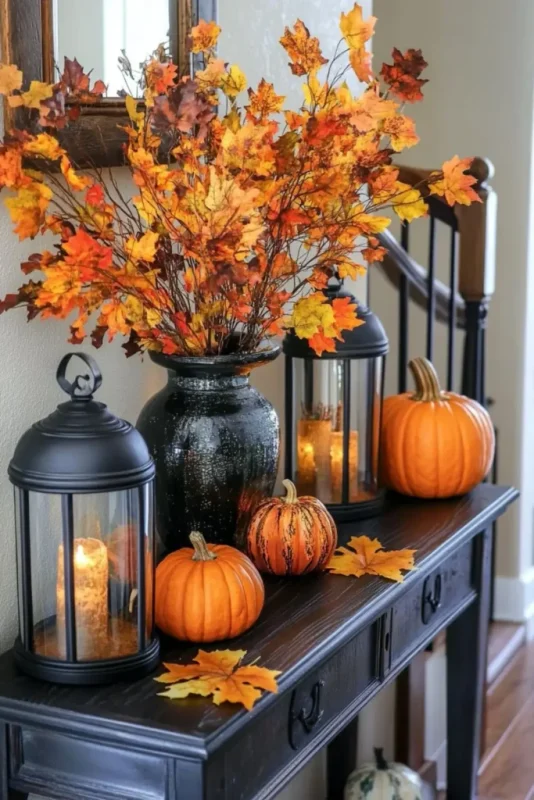
A harvest lantern makes a useful centerpiece for fall decorating because it gives you an enclosed structure to build around.
Instead of filling the porch with separate decorations, one lantern can anchor a small seasonal arrangement.
Choose a lantern with an opening large enough to hold a few miniature pumpkins, pinecones, faux leaves, or dried berries.
A battery-operated candle in the center provides the glow, while the surrounding pieces give the lantern its harvest character.
One arrangement I’ve put together used a black metal lantern with small cream pumpkins and dried wheat tucked around the base.
The darker frame gave the lighter decorations enough contrast to stand out after sunset.
Set the finished lantern on a porch table, beside a planter, or on a stack of wooden crates near the door.
Larger lanterns can stand on the floor, although they should stay far enough from the walkway that nobody catches a foot on the display.
Pro Tip: Packing every corner with fall pieces can block the glow and make the lantern look stuffed instead of decorative.
5. String Dried Leaves to Make a Garland
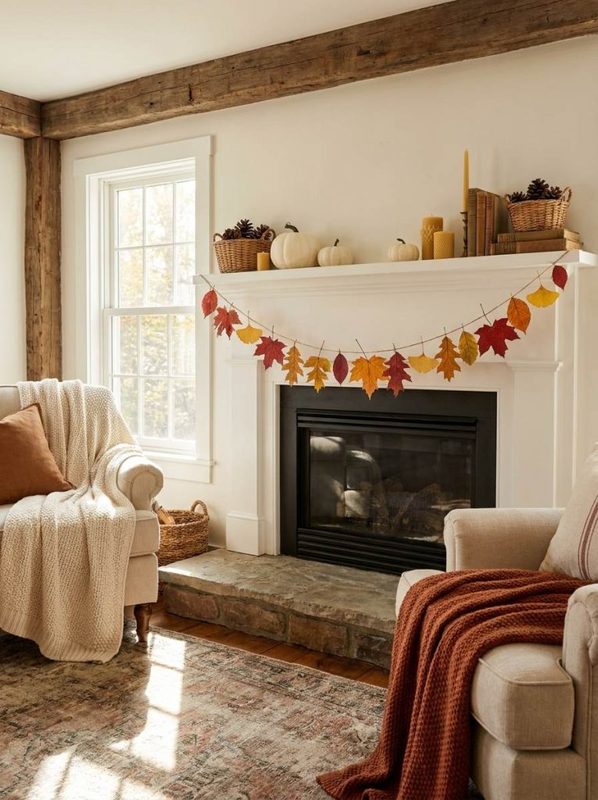
A dried leaf garland brings an unmistakable fall touch to a doorway, railing, or covered porch.
It is one of the simpler projects to make because the leaves provide most of the decoration on their own.
Collect sturdy dried leaves in several autumn shades, then attach them to twine with small clips or secure them with a needle and strong thread.
Leaves with different shapes and sizes give the finished garland a less uniform appearance.
For a porch display, combine leaves from several trees instead of using one variety throughout.
Maple, oak, and smaller rounded leaves can sit together, giving the garland the kind of variation you would see in a natural fall landscape.
Drape the finished strand loosely across the top of the doorway or along a porch railing.
A shorter garland can frame one section of the entry, while a longer strand can follow the curve of a covered porch.
Pro Tip: Spray the finished leaves with a light coat of clear craft sealer before hanging them. It helps delicate leaves survive the season a little longer.
6. The Pumpkin Glow Mantel Display
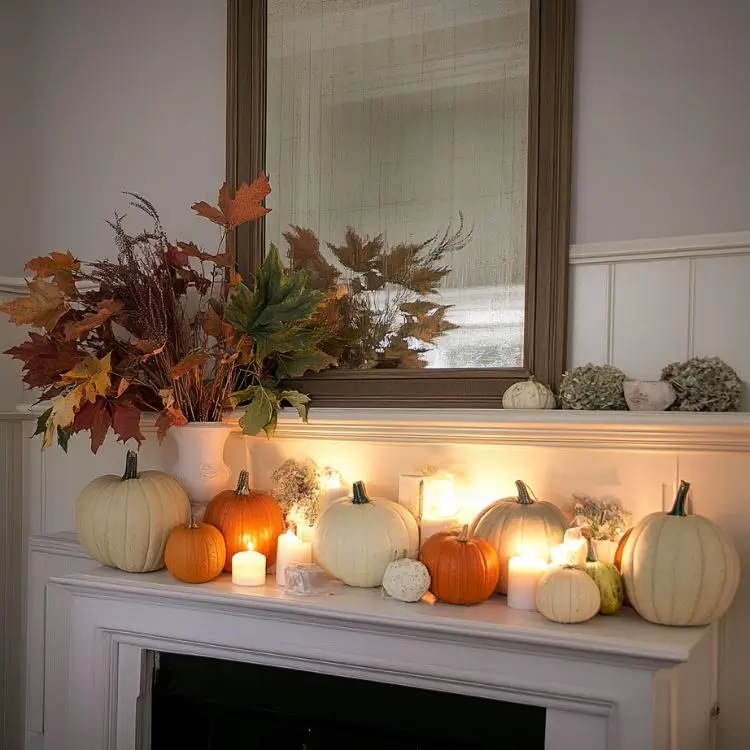
A mantel becomes an easy place to gather fall colors, candlelight, and a few seasonal treasures.
Pumpkins arranged around a warm light source can give the display a cozy autumn character without requiring a large collection of decorations.
Begin with pumpkins in different sizes and finishes, then place the tallest pieces toward the back of the mantel.
Small gourds can fill the gaps between them, while a string of warm fairy lights tucked behind the arrangement gives the display a gentle glow after dark.
I’ve used miniature pumpkins on mantels where a traditional autumn arrangement would have looked too heavy.
Their smaller scale leaves room for candlesticks, framed artwork, or a vase of dried branches.
For a richer harvest look, bring in muted orange, cream, sage, and brown.
A few dried leaves scattered around the base can tie the colors together without covering the mantel surface.
Pro Tip: Keep the center slightly lower if there is artwork or a mirror above the mantel. The open space gives the arrangement room to breathe and keeps the wall feature visible.
7. Hang DIY Wreath on the Front Door
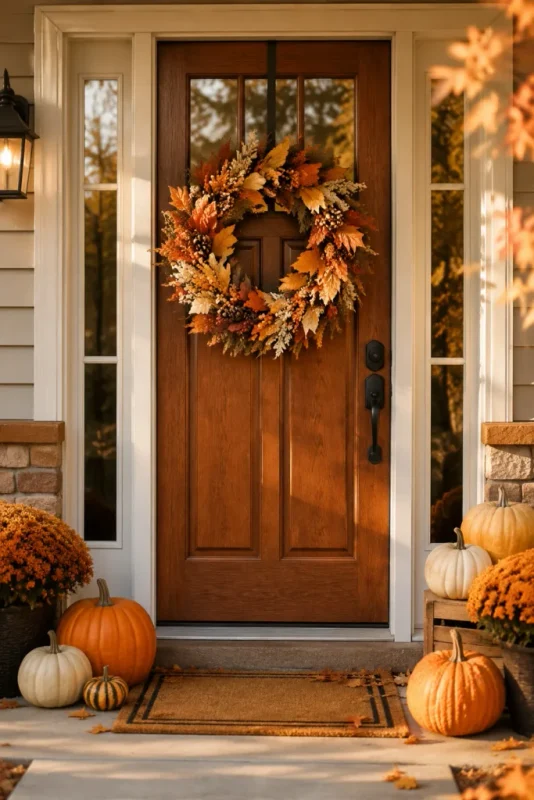
A homemade wreath gives the front door a personal fall touch, particularly when you build it around materials you already have.
Dried leaves, small pinecones, twigs, berries, fabric scraps, and miniature pumpkins can all become part of the arrangement.
For the base, a grapevine ring is easy to work with because stems and decorative pieces can be tucked directly between the branches.
Start by attaching the larger elements first, then fill the open areas with smaller leaves and natural details.
One wreath I made looked too crowded when the decorations were distributed evenly around the entire circle.
Concentrating the fuller section toward one side gave the finished piece a looser, handmade appearance.
A simple ribbon can finish the wreath, although the choice of material changes the character considerably.
Frayed linen suits a relaxed farmhouse entry, whereas velvet gives the same arrangement a dressier autumn look.
Pro Tip: Test the wreath on the door before adding the final pieces. You’ll see immediately whether its size and fullness suit the doorway.
8. Neutral Fall Porch with Cornstalks
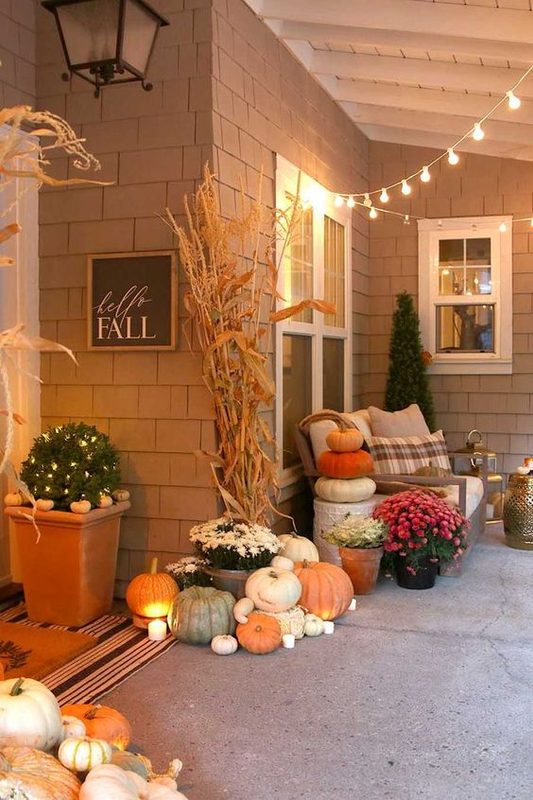
Cornstalks can bring height to a neutral fall porch while keeping the color palette away from the usual bright orange.
The dried tan color pairs naturally with cream pumpkins, woven baskets, wood, and muted greenery.
Tie several stalks together and place them beside the front door or at the end of the porch steps.
A wide piece of linen or simple twine can hold the bundle together while keeping the arrangement casual.
Neutral displays does best when the materials have plenty of texture.
A smooth white pumpkin beside rough cornstalks and a woven basket has enough contrast to keep the porch interesting, even when the colors stay restrained.
Add a few pumpkins at the base of the stalks rather than scattering decorations across the entire porch.
This gives the tall bundle an anchored appearance and keeps the arrangement connected to the doorway.
Pro Tip: Trim the bottom of the stalks to a similar length before tying them together. The bundle will stand straighter and look cleaner when positioned beside the door.
9. The Enchanting Fall Porch Entrance
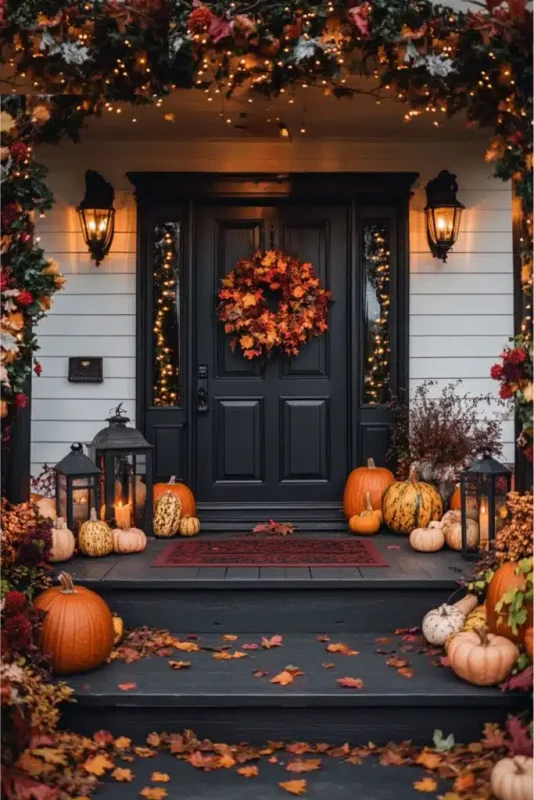
An enchanting fall entrance comes together when several small details work as one scene.
Black lanterns, a welcome mat, scattered fall leaves, twinkle lights, and a wreath can transform an ordinary doorway into a layered autumn display.
Start with the wreath as the main feature on the door, then build outward from there.
Place black lanterns beside the entrance, arrange pumpkins at different heights near their base, and lay a seasonal welcome mat directly in front of the threshold.
Adding string twinkle lights along the door frame changes the display once evening arrives.
The tiny points of light pick up the pumpkins and lanterns instead of competing with them.
A handful of faux or dried fall leaves can fill the spaces between the larger pieces.
Keep them concentrated around the steps and planters rather than spreading them across the walking path, where they can quickly make the entry look untidy.
Pro Tip: Repeat one color in at least three places. Black lanterns, a darker detail in the wreath, and lettering on the welcome mat can give the entire entrance a connected look.
10. Chalkboard Welcome Fall Sign
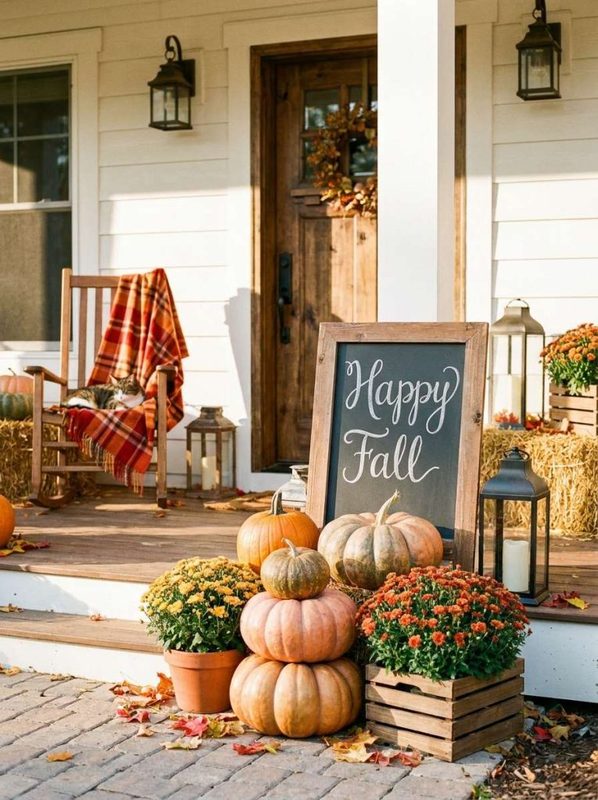
A chalkboard welcome sign gives you a simple way to bring a personal message into your fall decorating.
The dark surface also provides a strong backdrop for pale lettering, dried leaves, pumpkins, and other seasonal accents.
Use a framed chalkboard or paint a piece of smooth wood with chalkboard paint for a DIY version.
Write a short fall greeting in large lettering, then decorate one corner with small leaves, a drawn pumpkin, or a few dried stems.
The sign does not need elaborate artwork to look finished. You’ll realize that simple lettering with one decorative detail often looks cleaner on a porch than trying to fill every section of the board.
Lean it against the wall beside a planter or place it on a small easel near the doorway.
A wooden frame suits a rustic porch, while a black frame can tie the sign into darker lanterns.
Pro Tip: Use a chalk marker if you want crisp lettering that photographs well. Test it on a small hidden area first, since some markers are harder to remove than ordinary chalk.
11. Replace Summer Greenery with Autumn Foliage
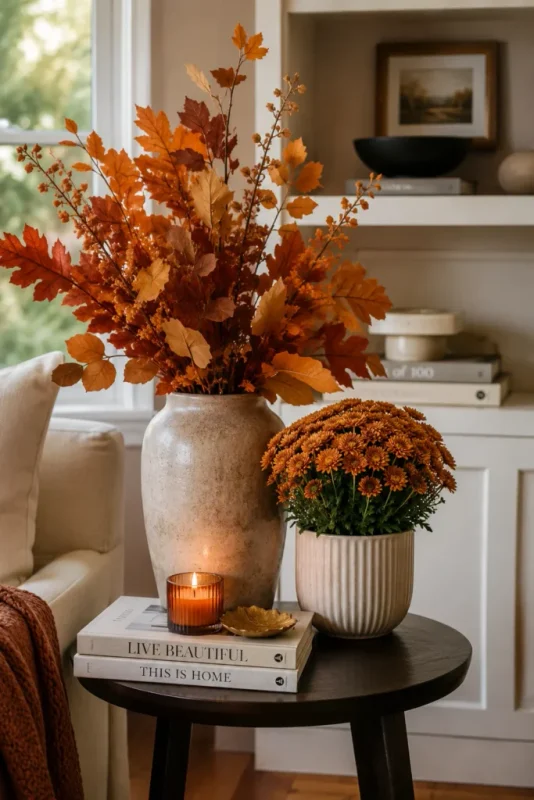
Swapping out summer greenery is one of the quickest ways to shift a room into fall.
You do not need to replace every decoration; changing the foliage on a mantel, dining table, entry console, or Kitchen Island can alter the whole arrangement.
Look for branches with copper, russet, burgundy, and golden tones, then mix them with foliage that has already dried to a softer brown.
A ceramic pitcher or stoneware vase makes a simple container for taller branches when the arrangement needs some height.
When refreshing seasonal displays, the biggest difference often comes from removing a few pieces before adding anything new.
Too much greenery can compete with autumn foliage, so clear away the brightest summer stems and leave a little breathing room around the new arrangement.
For a natural look, combine branches of different lengths instead of trimming everything to the same height.
A few leaves extending beyond the vase give the arrangement an effortless shape.
Pro Tip: Save healthy summer stems that can transition into early fall. Reusing a few pieces alongside new autumn foliage keeps the change from looking abrupt.
12. Add Fall-Inspired Wall Art
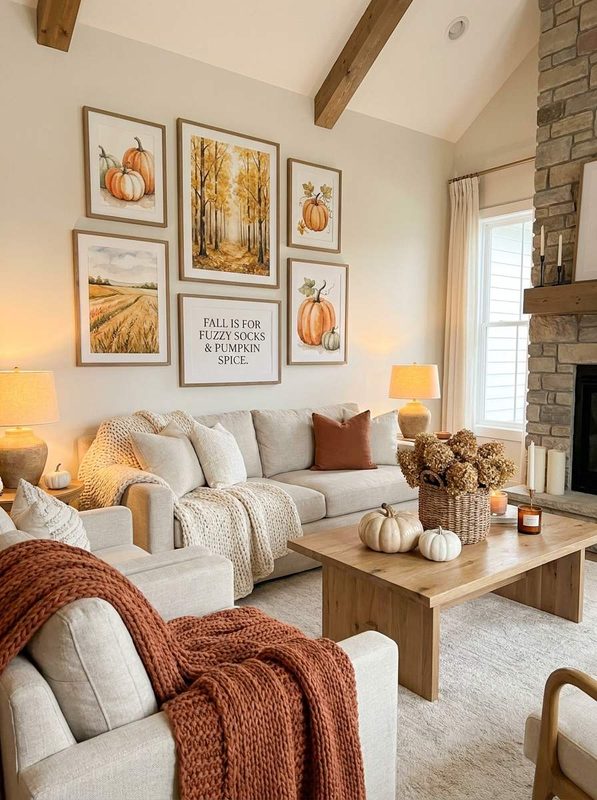
Fall wall art can change the character of a room with very little effort.
A seasonal print, vintage harvest illustration, botanical sketch, or framed landscape can bring autumn into a space that already has a neutral color scheme.
You can make your own artwork by pressing dried leaves between sheets of paper.
An old frame from another room can take on a completely different purpose once paired with seasonal artwork.
For a gallery wall, resist the temptation to replace every picture. Two autumn pieces mixed among existing artwork can look far less staged.
A large print can anchor a dining room or living room wall, while smaller pieces suit an entryway shelf or kitchen nook.
Choose artwork that picks up colors already present in the room so the seasonal addition has a clear connection to its surroundings.
Pro Tip: Before hanging anything, place the frames on the floor and rearrange them until the spacing feels right. You can test several layouts before putting a single nail in the wall.
13. Dried Lunaria Floral Arrangements
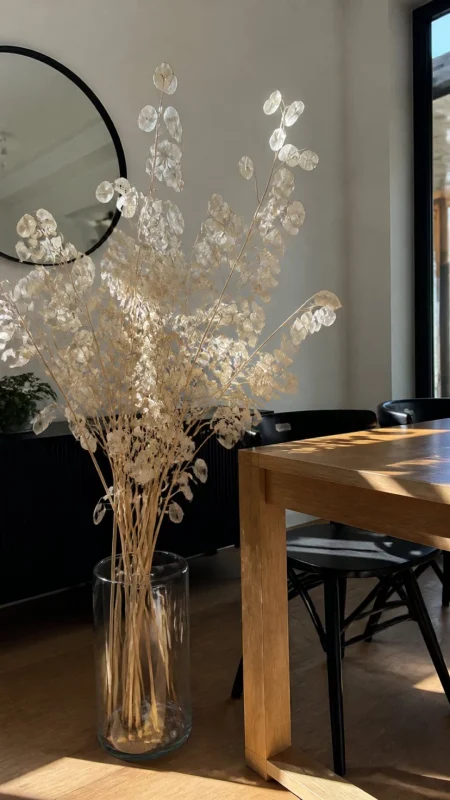
Dried lunaria brings an unusual texture to fall decorating through its delicate, translucent seed pods.
The papery discs catch natural light beautifully and can give a simple arrangement an almost antique quality.
Place several stems in a tall ceramic vase where the pods have enough room to spread apart.
Lunaria does not need a crowded companion arrangement, although dried grasses, eucalyptus, or slender branches can give the display a fuller silhouette.
Its pale, silvery appearance suits rooms where strong orange and red decorations would look out of place.
Pair it with cream pottery, weathered wood, linen, or darker vessels for a seasonal arrangement that stays on the quieter side.
The stems are delicate, so handle them gently when arranging the branches.
A narrow-necked vase can hold them securely while keeping the individual pods visible instead of allowing the whole bunch to collapse outward.
Pro Tip: Keep dried lunaria away from damp areas and direct contact with water. The seed pods are fragile and can lose their crisp texture when exposed to moisture.
14. Bales of Hay on Entryway
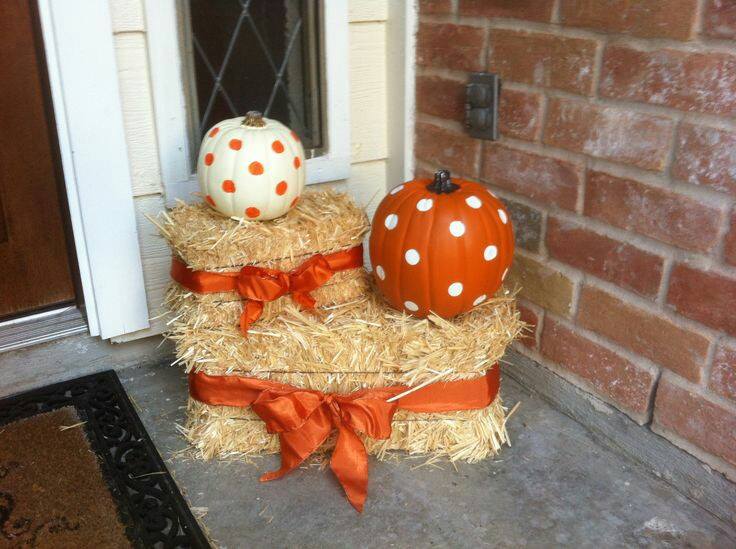
A small hay bale can give an entryway that unmistakable harvest-season look when you want the porch to have a rustic country character.
One or two bales can serve as sturdy bases for pumpkins, lanterns, baskets, or seasonal signs.
Place a bale near the steps or beside the doorway, then build the decoration upward from there.
A few pumpkins tucked against the straw can soften its rectangular shape, while a wooden sign or galvanized bucket can add another material to the arrangement.
For a recent autumn display, the hay worked best as a background element instead of the main attraction.
Once pumpkins and dried foliage were piled too heavily on top, the texture of the straw disappeared and the arrangement became visually crowded.
Choose tightly bound bales if they will sit outdoors for several weeks.
Loose straw tends to shed across the porch when the display is exposed to wind or frequent foot traffic.
Pro Tip: Place a waterproof board or tray beneath the bale when it sits on a finished porch surface. It keeps moisture and stray straw from collecting directly on the floor.
15. Layer in Wheat and Dried Grasses on a Banister
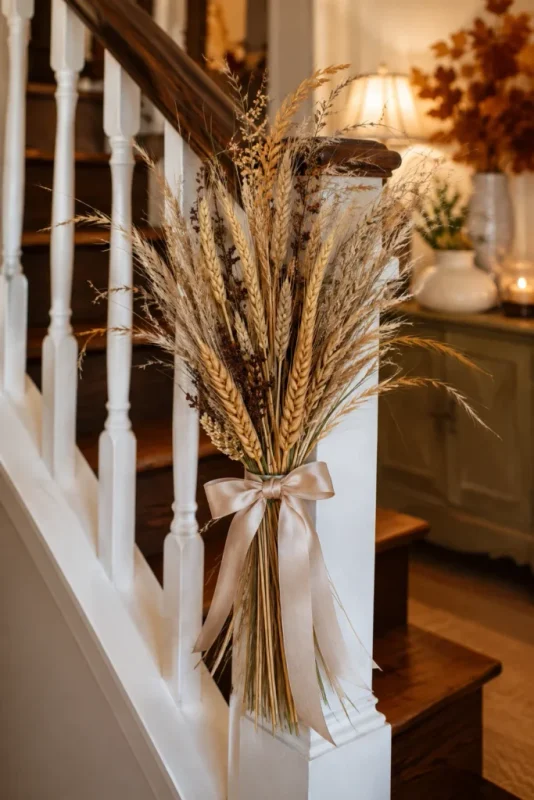
Wheat and dried grasses can turn an ordinary banister into a long, textured fall accent.
Their warm neutral shades suit rustic spaces, but the arrangement can look just as polished on a simple staircase with white walls and dark woodwork.
Bundle the stems loosely and secure them along the banister with twine, floral wire, or discreet clips.
Let some pieces extend higher and others fall slightly lower so the line does not resemble a perfectly trimmed hedge.
A staircase I once styled had a particularly narrow railing, so bulky bunches made the passage feel cramped.
Smaller clusters spaced along the length gave the same seasonal effect and left plenty of room for hands to grip the rail.
Mixing wheat with pampas grass, bunny tails, or slender dried branches introduces differences in texture and shape.
Keep the palette restrained if the staircase already has patterned flooring or a decorative runner.
Pro Tip: Secure each bundle firmly at several points instead of tying only the ends. This keeps the stems from rotating or sliding when the banister is used.
Final Thoughts
Fall decorating does not require an expensive shopping list or a complete home makeover.
As explained, a few pumpkins, dried leaves, warm lighting, seasonal foliage, and handmade accents can shift your space into autumn beautifully.
Choose pieces that suit your home, layer textures gradually, and give each arrangement enough room to stand out.