13 Elegant Blue Tile Bathroom Ideas That WOW

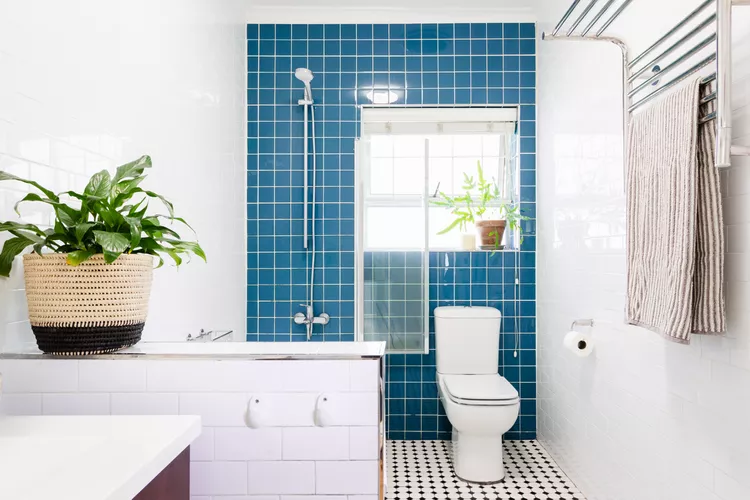
After working with bathroom tile, I can admit that blue is one of those colors that can look completely different once it reaches the wall.
The shade, finish, grout, and bathroom lighting all play a part.
Deeper shades looked incredible against warm wood and brass fixtures. Those details matter when choosing tile for a real remodel.
From classic subway patterns to dramatic navy walls and small mosaic designs, blue offers plenty of directions.
These blue tile bathroom ideas show how to use it with confidence.
Blue Bathroom Tile Ideas for Shower Walls
1. Pale Sky Blue Shower Tiles for Coastal Bathroom Feel

Pale sky blue tiles are an easy way to bring a coastal mood into the bathroom without covering the room in obvious beach decor.
The color has enough freshness for a shower, yet it stays quiet enough to pair with white walls, light oak, or natural stone.
For a convincing coastal bathroom, tile finish matters just as much as color. A slightly glossy surface catches daylight well in a shower with a window or glass enclosure.
White grout can emphasize the individual tiles and keep the installation looking crisp.
I’d pair this shade with brushed nickel or aged brass fixtures, depending on how warm you want the room to look.
Add a woven bath mat or a simple wood stool, and the coastal reference becomes clear without relying on seashells or nautical accessories.
Why this works: Pale blue borrows the look of open sky and shallow water, giving the shower a relaxed character that stays easy to live with.
2. Soft Blue Square Tiles in Glass Shower
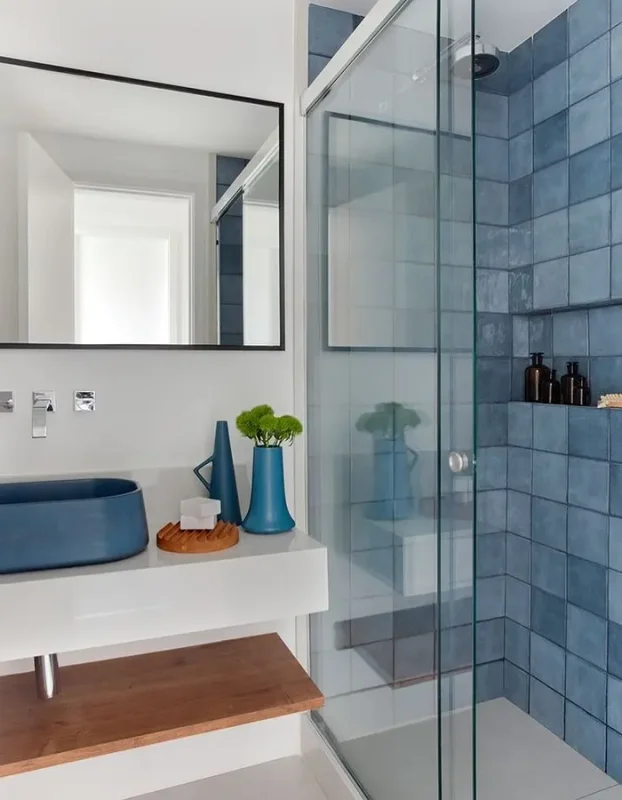
Square tiles have a slightly different personality from the familiar subway shape, and soft blue makes them easy to style.
Inside a glass shower, the repeated grid gives the walls some definition while the transparent enclosure keeps the bathroom from looking chopped up.
Tile size can change the effect considerably. Smaller squares suit a traditional bathroom with chrome fixtures, whereas larger squares give the shower a cleaner direction.
Pay attention to grout here because the lines become part of the design. White grout keeps the blue gentle, while a slightly darker grout color makes the grid easier to notice.
A glass shower door is a smart companion for this tile choice because the blue remains visible from across the bathroom.
That connection matters in smaller bathrooms where every wall counts.
Why this works: The glass enclosure keeps the tile visible from different angles, so the soft blue becomes part of the bathroom instead of staying hidden inside the shower.
3. Patterned Blue and White Tile Feature Wall
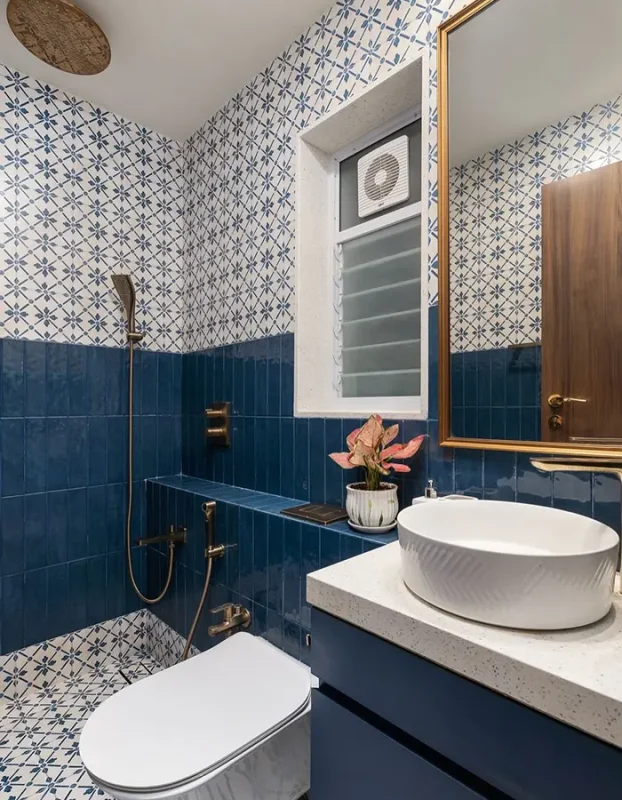
A patterned blue and white tile wall can turn an otherwise straightforward bathroom into something with real personality.
This is where I’d let the tile do the talking and keep the surrounding finishes relatively simple.
Geometric patterns, floral motifs, Moroccan-inspired shapes, and traditional encaustic-style designs can all take the room in different directions.
The trick is choosing one pattern you genuinely want to see every day, since a feature wall naturally draws attention.
A shower wall behind the vanity can be a great location when you want the pattern visible as soon as someone walks in.
Pair it with a simple white vanity, understated hardware, and a solid-colored floor so the competing finishes do not fight for attention.
Blue and white also give you plenty of flexibility when selecting towels and accessories.
You can pull a softer blue from the pattern for textiles or introduce natural wood for a warmer contrast.
Why this works: The pattern supplies the decorative detail, so the rest of the bathroom can stay restrained and let the tile remain the main attraction.
4. Navy Blue Shower Tiles for Moody Bathroom Vibe
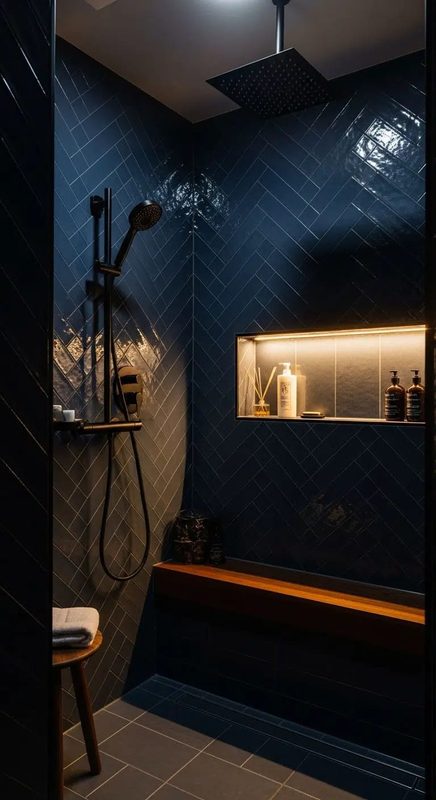
Navy tile can take a bathroom in a completely different direction from the pale blues used in coastal designs.
It has enough visual weight to make a shower feel dramatic, intimate, and a little luxurious.
For a moody bathroom, I’d look beyond plain white fixtures. A walnut vanity or charcoal floor tile can support the deeper color and prevent the shower from looking disconnected.
Lighting deserves some attention here. A dark shower needs good illumination, particularly around the ceiling and vanity, so the navy remains rich instead of reading almost black.
Glossy navy tile can reflect small amounts of light across the walls, while a matte finish has a quieter appearance.
Large-format pieces also reduce grout lines when you want the color to take center stage.
Why this works: Navy has enough depth to anchor a bathroom, giving lighter fixtures and warm wood finishes something strong to contrast against.
5. Light Blue Vertical Shower Tiles with Tub

Changing the direction of your tile can change the proportions of the entire bathroom.
Vertical light blue tiles draw the eye upward, making them a smart choice for a shower positioned beside a bathtub.
This arrangement suits bathrooms with standard-height ceilings that need a little extra visual lift.
Keep the vertical pattern running from the tub edge toward the ceiling for a continuous line that makes the bathing area look taller.
A freestanding tub can sit nicely against this treatment when its shape contrasts with the straight tile lines.
White porcelain, pale stone, or a soft neutral tub keeps the blue as the main color story.
For hardware, chrome gives the room a cooler appearance, while brass introduces some warmth.
I’d also keep the floor pattern simple so the vertical tile remains easy to appreciate.
Why this works: Vertical lines naturally direct attention upward, which can make a compact bathroom appear taller while tying the shower and tub into one composition.
6. Handmade Ceramic Blue Tiles
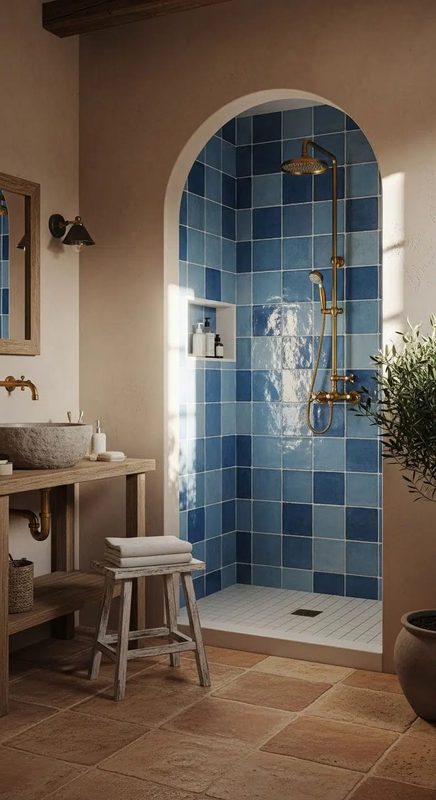
Handmade ceramic tiles bring small variations that factory-perfect tile cannot quite reproduce.
You may notice slight differences in glaze, edges, or surface texture from one piece to the next.
Those irregularities become part of the design, giving a blue tiled wall a collected, handcrafted quality.
They suit farmhouse bathrooms, Mediterranean-inspired spaces, and older homes where perfectly uniform finishes can look out of place.
Most homeowners prefer keeping the surrounding materials fairly straightforward.
Natural wood, unlacquered brass, limestone, or simple white fixtures give the ceramic tile room to carry the decorative interest.
The glaze also deserves careful consideration. Some handmade blue tiles have a watery variation across the surface, which becomes striking when light hits the wall from different angles.
Why this works: Small differences between individual tiles keep a large blue wall from looking mechanically repeated, giving the installation a distinctly handcrafted appearance.
7. Light Blue Beadboard-Style Tiles Bring Charm
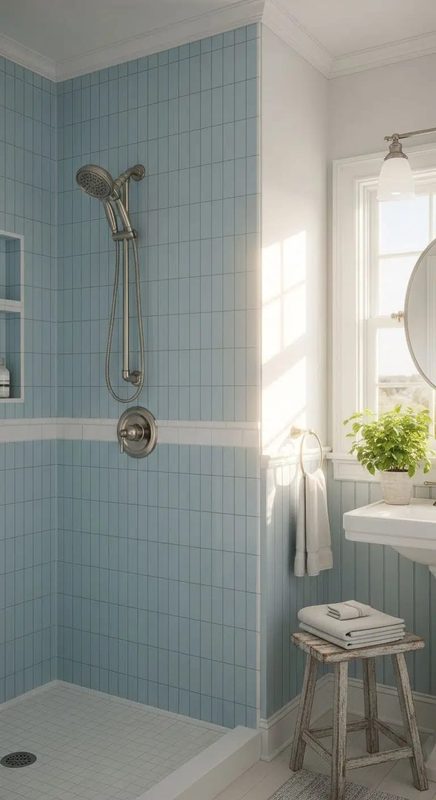
Beadboard is a familiar choice in cottage and traditional bathrooms, so translating that look into tile brings a practical advantage.
You get the vertical detailing associated with painted paneling, but the surface suits a wet area much better.
Light blue is a natural match for this approach. It recalls painted cabinetry and classic coastal interiors when paired with white trim, a pedestal sink, or a furniture-style vanity.
The tile can run around the lower portion of the bathroom or climb behind the vanity and tub.
Pay close attention to the transition between the tiled section and painted wall above it.
A simple chair rail or matching trim piece can give that transition a finished appearance.
Keep the floor fairly quiet so the beadboard pattern does not compete with another strong geometric element.
Why this works: The panel-like pattern introduces traditional architectural detail while the tile construction makes the treatment suitable for bathroom conditions.
8. Soft Sky Blue Subway Shower With Coastal Vanity

A soft sky blue subway shower pairs naturally with a coastal vanity, but the combination does not need to look like a beach rental. The secret sits in the materials surrounding the tile.
Try a vanity in light oak, whitewashed wood, or a muted painted finish. Then bring in simple hardware and a woven element through the mirror frame.
For the shower itself, traditional subway tile gives the blue a familiar foundation.
A slightly irregular edge or glossy glaze can keep the wall from looking too flat.
Make sure to carry one or two colors from the vanity area into the shower accessories so the two zones relate to each other.
Keep nautical decorations to a minimum and let the color palette handle the coastal reference.
Why this works: The sky blue and natural vanity materials suggest the coast through color and texture, giving the bathroom that connection without turning it into a themed room.
9. Vertical Mint Blue Tiles Framing Bathtub Window

A bathtub window deserves some attention because it naturally draws the eye toward the wall.
Running mint blue tiles vertically around that opening can turn an ordinary bathing area into a deliberate architectural feature.
Treat the window as part of the tile plan from the beginning. Keeping the vertical lines aligned on either side of the frame looks cleaner than cutting random pieces around the glass.
Mint blue suits this arrangement because it stays light enough for a windowless section of wall to remain fresh.
White trim around the window can sharpen the transition and keep the tile from blending into the frame.
For a softer bathroom, pair the tile with pale wood, white linen, and simple nickel hardware.
A deeper green vanity could also pull the mint shade toward a richer, botanical direction.
Why this works: The vertical tile lines frame the window instead of competing with it, turning an ordinary architectural opening into part of the bathroom design.
10. Retro Blue Tile Bathroom With Brass Fixtures
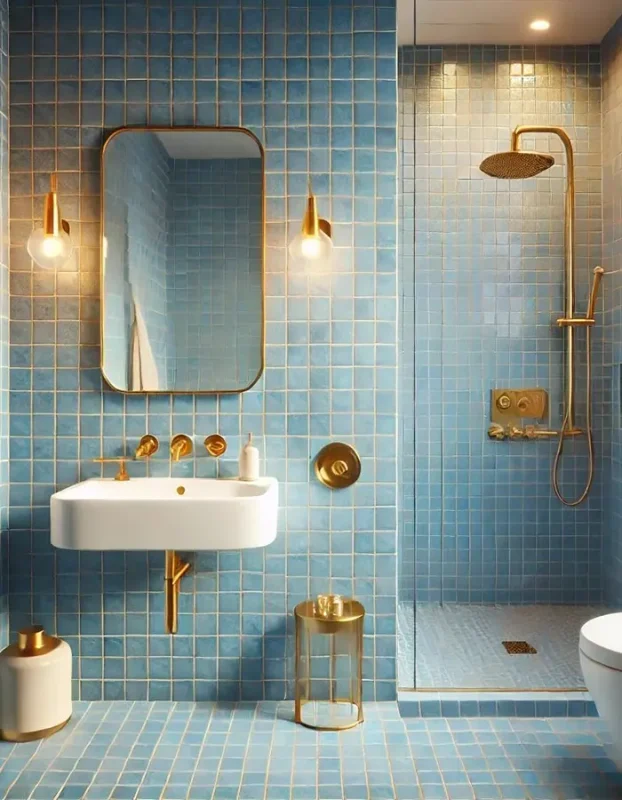
A retro blue bathroom has a certain charm that comes from committing to the era instead of mixing random vintage-looking pieces together.
Think small blue tiles, rounded mirrors, classic plumbing shapes, and warm brass hardware.
Cobalt, powder blue, or medium-toned blue can all suit this look. The right shade depends on whether you want something closer to a 1950s bathroom.
Brass is important here because its warmer color breaks up the cooler tile. Try a brass faucet, exposed shower hardware, or a simple framed mirror rather than covering every surface with metallic accents.
For the floor, penny tile or small checkerboard patterns can reinforce the retro direction.
Keep modern accessories out of sight where possible, since contemporary storage pieces can quickly undermine the old-school atmosphere.
Why this works: The blue tile establishes the period, while brass hardware supplies the warm metallic detail associated with classic bathroom interiors.
11. Large-Format Pale Blue Tiles Create Clean Lines
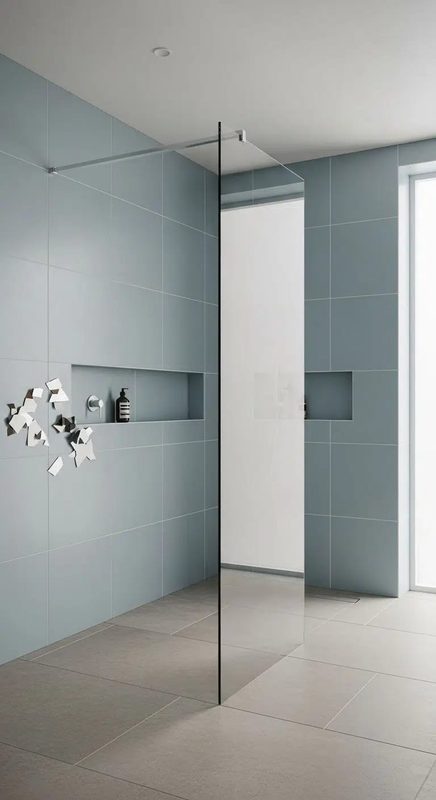
Large-format pale blue tile is worth considering when you want the bathroom to look calm and uncluttered.
Fewer grout joints mean the walls have fewer visual interruptions, which can be useful in a compact room.
The tile size needs to suit the wall dimensions. Oversized pieces may require awkward cuts around niches, plumbing, or corners, so careful planning matters before installation begins.
Pale blue also gives you room to introduce stronger materials elsewhere. A dark wood vanity can add contrast, or a white vanity can keep the entire bathroom light.
Rectangular formats can be installed horizontally for a wider appearance or vertically for greater height.
That decision should follow the proportions of the room instead of simply copying a popular installation pattern.
Why this works: Fewer grout lines simplify the wall surface, giving pale blue tile a cleaner appearance and reducing the visual busyness of a small bathroom.
12. Navy Subway Tile Tub With Patterned Curtain
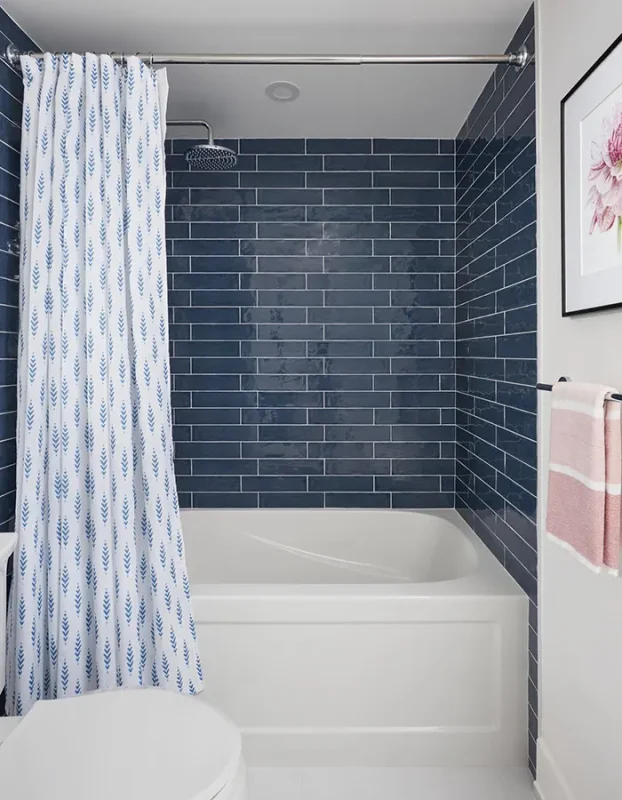
Navy subway tile around a tub makes a strong backdrop for a patterned shower curtain.
That combination is a nice alternative to the usual glass enclosure, particularly in bathrooms where you want a little more personality.
Since the navy already carries plenty of color, the curtain can introduce the pattern.
Look for small-scale stripes, botanical prints, geometric shapes, or vintage motifs that include a touch of navy.
Let the rest of the room fairly straightforward. White walls, simple chrome fixtures, and a pale floor give the tub area room to do its job visually.
The curtain itself becomes easy to change later. That matters if your taste shifts, because swapping fabric costs considerably less than replacing a tiled wall.
Why this works: The solid navy backdrop gives a patterned curtain a strong setting, letting you experiment with prints without committing them to the permanent finishes.
13. Matte Blue Tile Wall with Freestanding Tub

A matte blue tile wall can make a freestanding tub look less like a separate object and more like part of a considered bathroom composition.
The low-sheen surface also has a softer appearance than glossy tile.
This approach suits deeper blue shades well. A muted indigo or dusty blue can sit behind a white tub and establish a strong contrast between the two surfaces.
Pay attention to the tub silhouette when selecting the tile format. Long rectangular pieces suit a streamlined tub while smaller tiles can echo a more traditional clawfoot shape.
A wood vanity or woven storage basket can introduce a warmer material nearby.
Brass hardware also pairs nicely with matte blue, particularly when the room has natural daylight.
Why this works: The matte wall provides a quiet backdrop for the freestanding tub, letting its shape become part of the room’s overall composition.
Final Thoughts
Blue tile gives you plenty of room to shape the bathroom around your taste, from soft coastal shades to deep navy walls.
The trick is choosing a color, pattern, and finish that suit the room itself.
Look at your lighting, fixtures, and existing finishes before settling on a tile you’ll live with every day.