15 Small Living Room Layout Ideas To Maximize Your Only Space

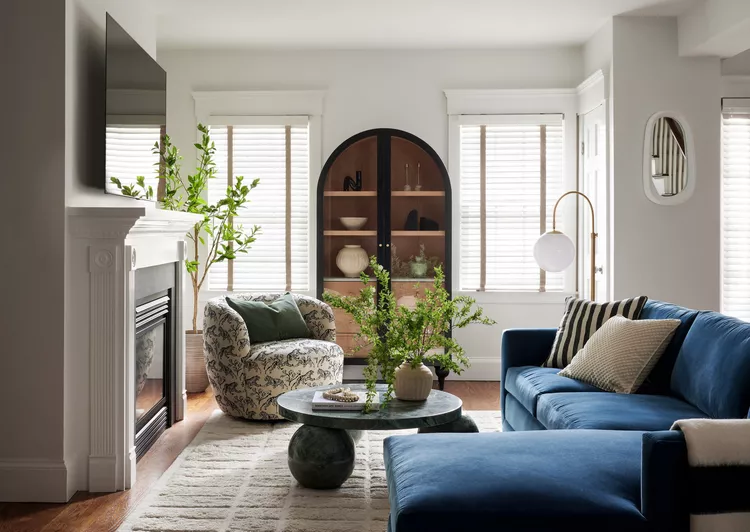
I used to think my small living room needed smaller furniture.
Then I spent an entire afternoon rearranging everything and realized the furniture wasn’t the problem at all.
The layout was.
The sofa blocked the natural walkway.
A chair sat in a corner that nobody used.
The coffee table occupied valuable floor space but added very little function.
Once I repositioned a few pieces, the room suddenly felt easier to move through and much more comfortable to spend time in.
That experience should completely change how you think about compact spaces.
A well-planned layout can make a small living room feel surprisingly spacious.
These following layout ideas prove that you can style your small living room to maximize space.
Clever Layout Ideas For Your Small Living Room
These small living room layout ideas will help you maximize every inch while creating a space that feels comfortable.
Add Multiple Focal Points
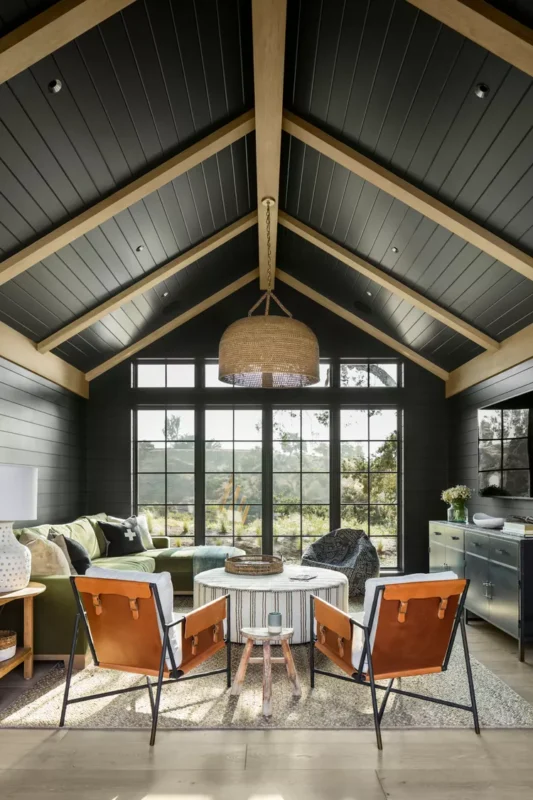
A small living room often struggles when everything competes for attention in one corner.
I’ve seen spaces where the TV dominates, leaving the rest of the room visually flat and unbalanced.
Introducing more than one focal point changes that experience completely.
A fireplace, a bold artwork, or even a styled bookshelf can share attention with the TV.
Each element guides the eye in a different direction, which prevents the room from feeling compressed into a single visual block.
Two or three strong anchors usually create enough interest without overwhelming the layout. The goal is to let the room “move” visually instead of pulling everything toward one wall.
When focal points are spaced thoughtfully, seating naturally becomes more flexible. The room starts to feel layered.
Designer Hack: Place your strongest visual feature on the longest wall, then support it with a secondary focal point on a perpendicular side for better visual flow.
Let Accent Chair Face the Sofa

Many small living rooms are disconnected because seating is pushed against walls without intention.
Turning an accent chair toward the sofa immediately changes how the space functions.
This simple adjustment creates a natural conversation zone. The arrangement becomes more inviting and connected.
A slight turn rather than a full 90-degree rotation keeps the layout open and avoids blocking pathways.
It also softens the geometry of the room, which helps tight spaces feel less rigid.
This setup works especially well when a coffee table sits between the two pieces. It anchors the seating and gives both sides a shared focus point.
Even in compact layouts, this approach encourages interaction and improves flow without adding extra furniture.
Designer Hack: Use a lightweight or armless accent chair so you can adjust positioning easily depending on traffic flow or seasonal layout changes.
Use an L-Shaped Sofa
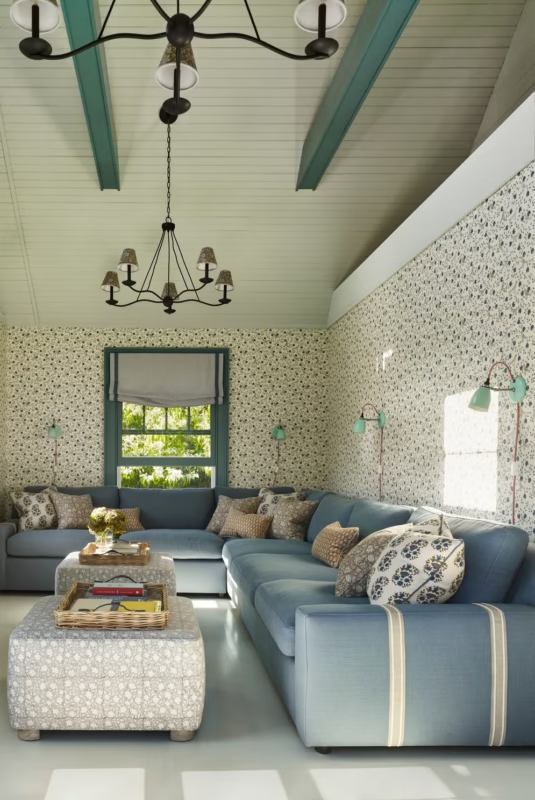
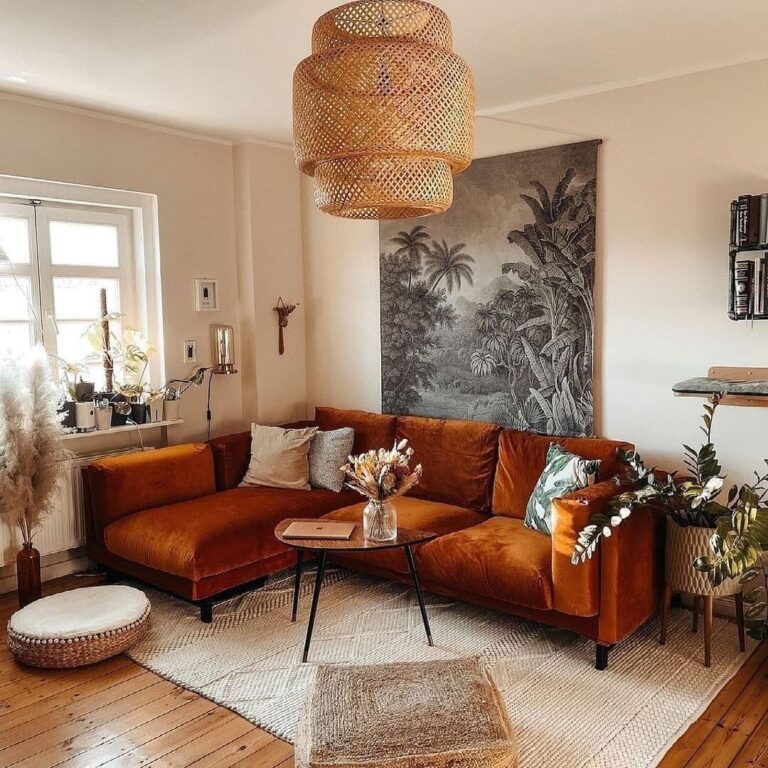
An L-shaped sofa can completely reshape a small living room when used correctly. Many compact spaces improve instantly once seating was consolidated into a single corner-friendly piece.
Instead of scattering multiple chairs around the room, this layout creates one unified seating zone. That frees up floor space and reduces visual clutter.
The placement usually works best when one side of the sofa runs along a wall while the shorter section defines the corner. This naturally frames the living area without needing extra dividers.
It also helps direct movement around the room. Walkways stay clearer because seating no longer interrupts the center of the space.
Styling becomes easier too. A single sofa allows rugs, tables, and lighting to anchor around one central zone instead of multiple scattered points.
Designer Hack: Choose a low-profile L-shaped sofa with visible legs so the floor stays visible underneath, which helps the room appear more open.
Anchor with Statement Rug

A statement rug often becomes the hidden structure behind a well-balanced small living room.
Basically, when a rug is too small or poorly placed, the entire layout is disconnected.
A properly sized rug pulls furniture together into one cohesive zone. It visually defines the living area even when walls are close or awkwardly shaped.
Subtle geometric designs or textured neutrals can guide attention without overpowering the space. Strong patterns can work too, but they need room to breathe.
Positioning matters just as much as design. Ideally, front legs of seating should sit on the rug to tie everything together naturally.
This creates a grounded effect where furniture is intentionally arranged. The room becomes easier to read visually.
Designer Hack: Go slightly larger than expected with your rug size so furniture edges sit comfortably on top instead of floating around it.
Proper, Ambient Lighting
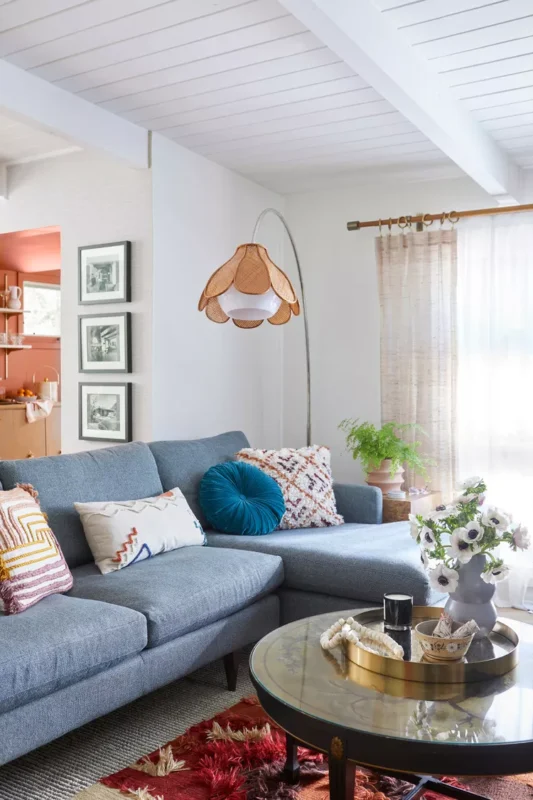
Lighting decides how spacious a small living room looks. I’ve walked into rooms that were beautifully arranged but still felt tight because the lighting was too harsh or uneven.
Layered lighting changes that completely. Overhead lighting alone flattens a space, while combining it with floor lamps and table lamps adds softness.
Corner lighting is especially important in compact rooms. A dark corner can visually shrink the entire layout, even if everything else is well designed.
Warm tones tend to create a relaxed atmosphere, while cooler tones highlight structure. Mixing both in different zones can add subtle variation.
Lighting also helps guide how people move through the space. Brighter zones naturally become gathering areas, while softer pockets create calm corners.
Designer Hack: Place a floor lamp behind or beside seating instead of against the wall to add glow depth and reduce harsh shadows in tight layouts.
Stick to a Neutral Color Palette
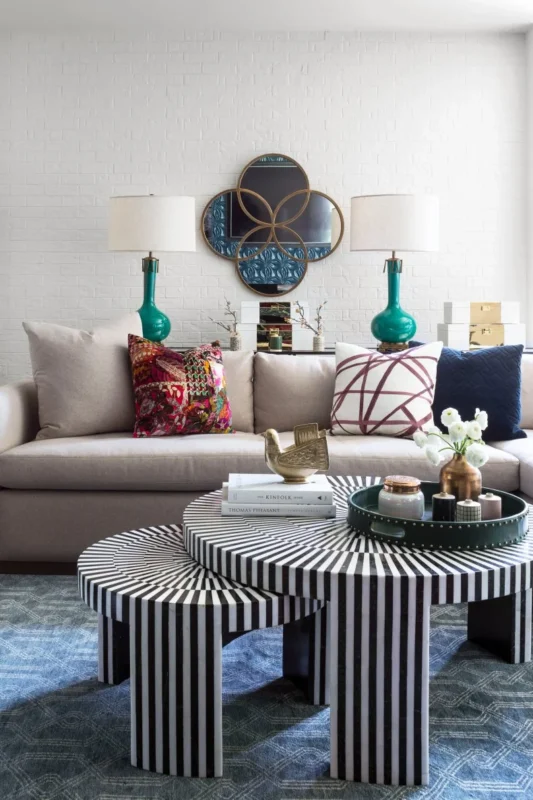
Small living rooms gain clarity when color stays consistent. A neutral palette creates a visual rhythm that prevents the space from feeling fragmented.
Soft tones such as beige, warm whites, greige, and muted taupe establish continuity across walls, furniture, and textiles.
This continuity reduces visual interruptions that can make compact rooms appear busier than they are.
Layering different neutral shades adds subtle variation without introducing clutter. A cream sofa against an off-white wall, paired with sandy or stone-toned accents, introduces quiet contrast.
Linen cushions, woven throws, and natural fiber rugs introduce texture without shifting the overall tone.
Instead of competing colors pulling attention in different directions, the room reads as one cohesive environment. That unity helps the layout take center stage.
Designer Hack: Use three neutral tones max – light, mid, and deep – to maintain structure without drifting into visual noise.
Pull Furniture Toward the Center
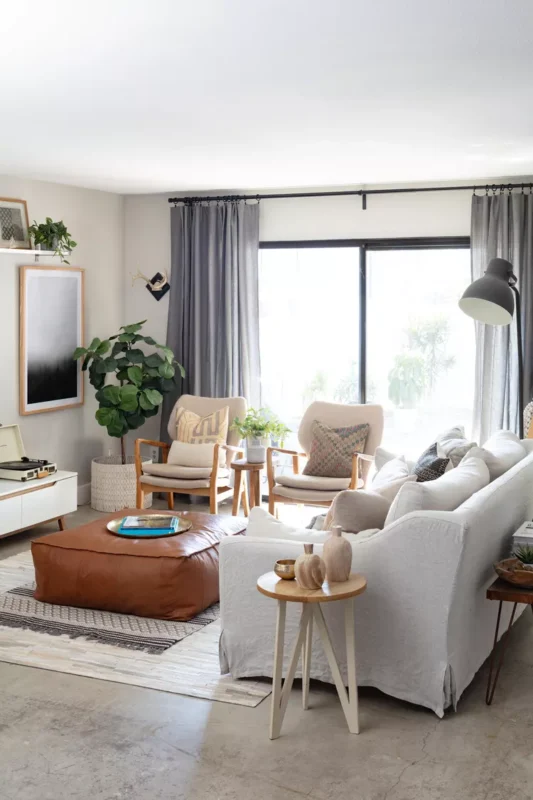
Pushing everything against the walls is a common habit in compact rooms, but it flattens the layout.
Bringing furniture toward the center creates an intentional arrangement.
A central seating cluster introduces a defined conversation zone. This shift improves how the room functions when hosting.
A rug can act as the anchor for this setup. Once seating aligns around it, the room gains structure and separation from surrounding edges.
Walking paths naturally form around the arrangement, which improves circulation without relying on rigid placement along walls.
The room also gains a sense of openness because the perimeter is no longer overcrowded with heavy furniture.
Designer Hack: Leave a small breathing gap between furniture and walls to create visual depth and avoid a boxed-in appearance.
Decorate Around the TV
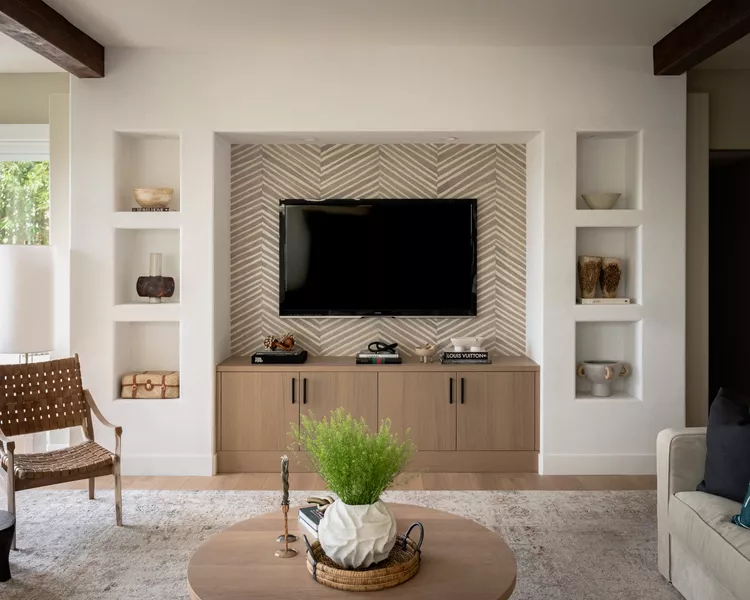
The TV often dominates small living rooms, turning it into the only visual focus. Building décor around it shifts that imbalance and integrates it into the overall design.
Floating shelves, framed artwork, or wall panels can soften its presence. Surrounding elements help the TV blend into a styled feature wall instead of standing alone.
Symmetry can create order, while asymmetrical arrangements add a more relaxed, curated look. Either approach works depending on the room’s personality.
Soft wall sconces or LED backlighting reduce harsh contrast and help the TV area merge with surrounding décor.
When the wall is treated as a complete composition, the screen becomes part of the design.
Designer Hack: Frame the TV with décor elements at similar visual weight so it blends into the wall instead of standing isolated.
Make Use of the Corners
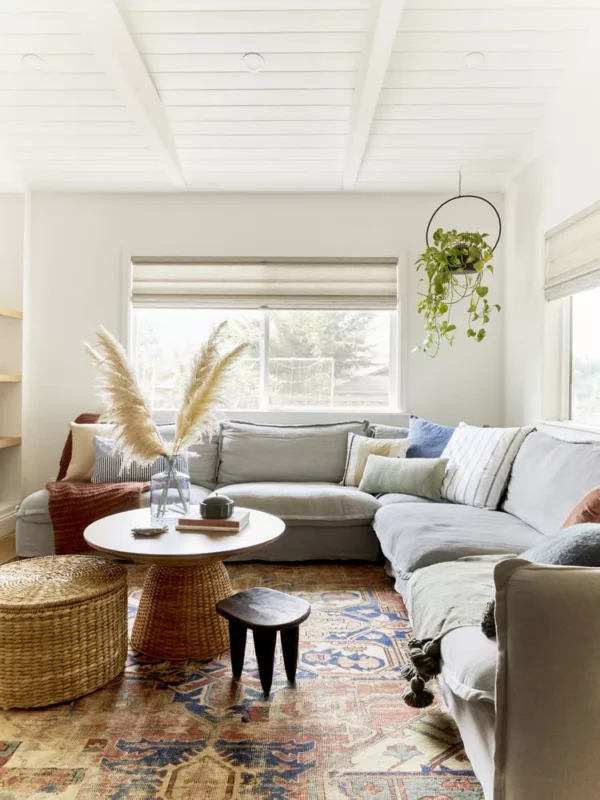
Corners often remain unused in small living rooms, even though they hold strong design potential. Activating them changes how efficiently the space performs.
An armchair, a compact reading nook, or a corner shelf unit can turn empty angles into functional zones. This reduces pressure on central areas.
Corner lighting adds another layer of usefulness. A tall floor lamp can soften dark edges and improve overall brightness distribution.
Plants also do well in corners since they introduce height without occupying much floor area. Tall greenery can break rigid wall lines.
Instead of leaving corners as dead zones, they become part of the room’s working layout, improving balance and flow.
Designer Hack: Use diagonal placement in corners to open sightlines instead of pushing items flush against both walls.
Utilize Vertical Wall Space
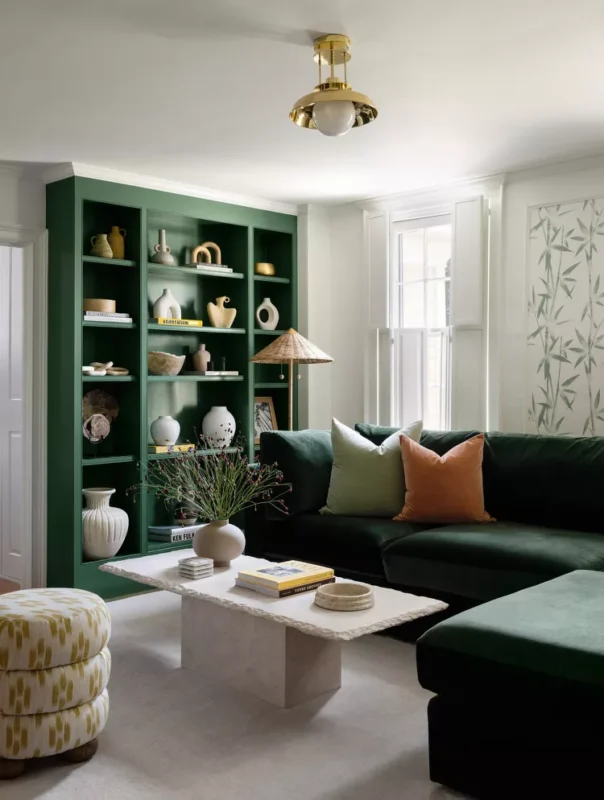
Small living rooms often struggle because everything is concentrated at floor level. Shifting attention upward instantly changes spatial perception.
Tall shelving units, wall-mounted storage, and vertical artwork draw the eye upward, creating a sense of height. This reduces the pressure on limited floor space.
Floating shelves can hold décor, books, or small plants without occupying walking areas. They also keep surfaces clear, which helps reduce clutter visually.
Vertical layering introduces rhythm along the walls. Instead of one dense horizontal band of furniture, the eye moves upward through multiple levels.
This approach frees up valuable floor space for seating and movement while still maintaining storage and style.
Designer Hack: Stagger wall-mounted elements at different heights rather than aligning everything in a straight line to create vertical movement and depth.
Opt for an Open-Plan Layout

Removing rigid divisions changes how a small living room operates. An open-plan layout connects seating, dining, or work zones into one continuous space.
Furniture placement defines zones instead of walls. A sofa can separate the living area from a dining corner, while a rug signals where each function begins.
Traffic moves more freely across the room since there are fewer barriers breaking the floor path.
Light spreads farther across connected areas, giving the entire space a more even tone. Compact rooms benefit strongly from that continuity.
Cohesion comes from repetition of materials and tones across zones. Matching wood finishes or consistent textiles help unify the space.
Designer Hack: Use a low-back sofa or open shelving as a soft divider to separate zones without blocking sightlines.
Hang a TV Above the Fireplace
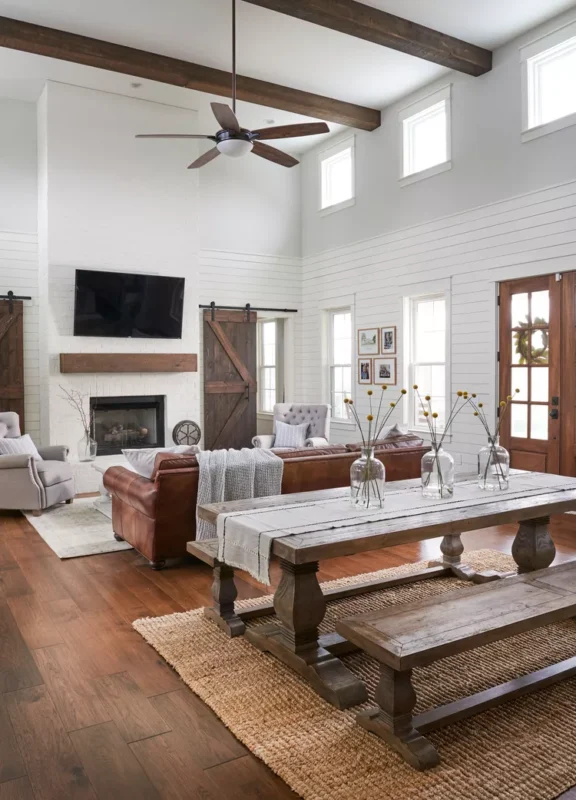
Placing a TV above the fireplace consolidates two strong focal points into one vertical zone. That setup frees up surrounding walls for seating or storage.
The wall becomes a central anchor, drawing attention upward and reducing scattered visual weight across the room.
Mounting height needs balance. Eye level from seating keeps viewing comfortable while preserving proportions around the fireplace opening.
Cable management and clean framing help the wall look intentional rather than crowded. Built-in surrounds or trim can refine the composition.
This arrangement works best in compact rooms where wall space is limited and multiple focal points compete for attention.
Designer Hack: Add a slim shelf or mantle extension between the fireplace and TV to create separation and improve visual layering.
Focus on the View

A strong external view changes how a small living room is arranged. Furniture should support the line of sight toward windows, balconies, or outdoor scenery.
Seating angles work better when directed toward natural light or landscape features. That orientation expands perceived space beyond the walls.
Low-profile furniture keeps sightlines open across the room. Tall pieces interrupt the connection between interior and exterior.
Window treatments stay minimal to preserve brightness and visibility. Sheer fabrics or adjustable blinds maintain flexibility.
The room gains a sense of extension when the eye moves beyond glass instead of stopping at interior walls.
Designer Hack: Position the main seating piece parallel to the largest window so the view becomes the natural focal direction.
Incorporate Built-Ins
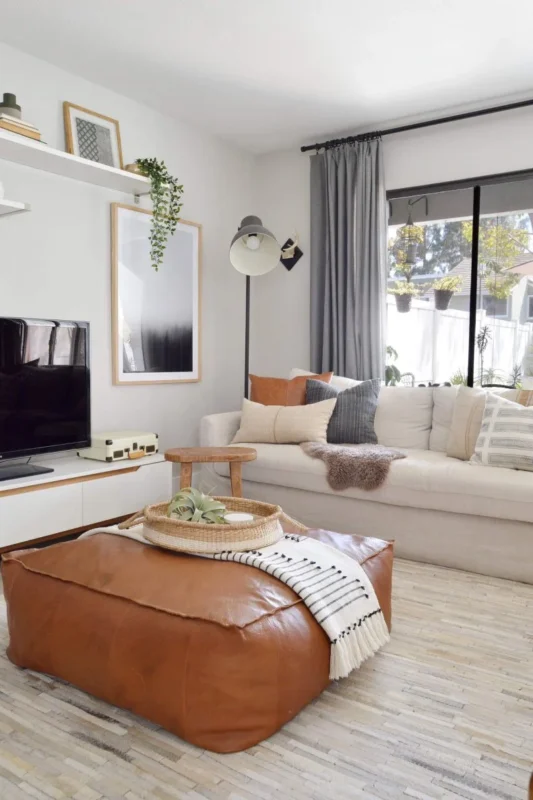
Built-in furniture solves storage pressure in compact living rooms. Wall-integrated shelving or seating removes the need for bulky standalone pieces.
Custom units follow the shape of the room, using awkward corners or narrow walls that regular furniture cannot utilize efficiently.
Storage, display, and seating combine into a single structure. That reduces clutter across the floor area and improves overall organization.
Books, décor, and media equipment gain designated spaces, which keeps surfaces clear.
Built-ins also create architectural interest, turning blank walls into functional design features.
Designer Hack: Paint built-ins the same color as the wall to keep them visually recessed and reduce heavy contrast.
Choose Furniture with Dual Function
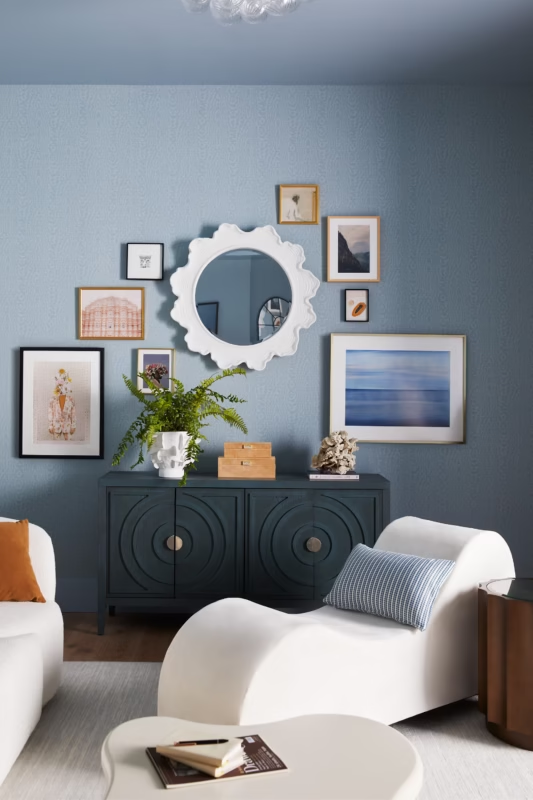
Small living rooms gain efficiency when every piece serves more than one purpose. Dual-function furniture reduces the need for excess items.
Storage ottomans replace coffee tables while hiding blankets or accessories. Sofa beds convert seating into guest accommodation when needed.
Nesting tables adjust to different uses, expanding for gatherings and stacking when space is limited. Lift-top coffee tables add hidden storage without adding bulk.
This approach keeps the room flexible across daily routines. Seating, storage, and surface space work together in a compact footprint.
Clean lines and simple shapes prevent multi-use pieces from looking cluttered.
Designer Hack: Select furniture with hidden storage compartments first, then build seating layout around those pieces to maximize efficiency from the start.