How To Create a Whimsical Kids Room (11 Practical Ideas & 5 Mistakes To Avoid)

Childhood is full of magic, so why should a kid’s bedroom feel ordinary?
The most memorable rooms are the ones that spark imagination the moment a child walks through the door.
A reading nook can become a secret hideout. A canopy can feel like a castle tower. Even a simple wall mural can turn an afternoon into an adventure.
There are plenty of good colors. There are a lot of ideas online. And if you mess, the kid room will start to feel cluttered rather than whimsical.
In this post, I will go over 11 whimsical children room ideas are designed to create a space where creativity runs wild.
11 Whimsical Kids Room Ideas
Built-in Storybook Reading Nook
Some childhood memories begin with a single shelf full of books and a corner that is like it belongs to no one else.
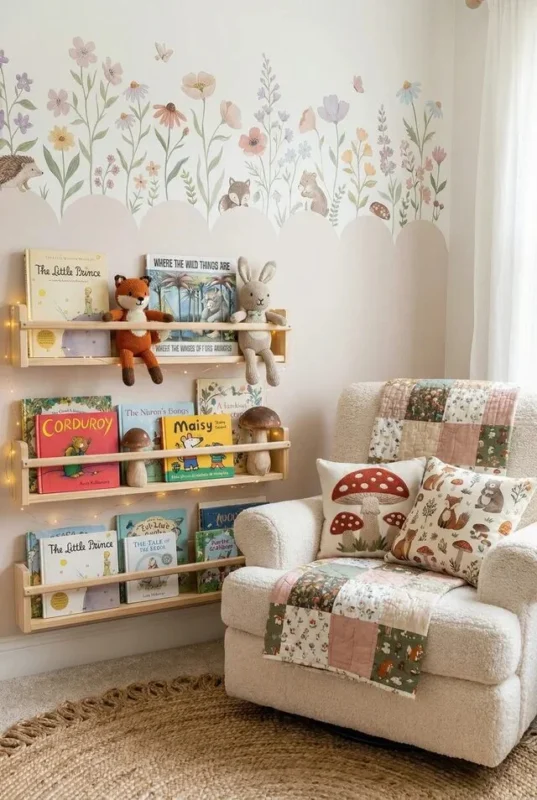
A built-in storybook reading nook has a way of becoming that place. Tucked beneath a window, nestled between bookshelves, or carved into an unused wall recess, it instantly feels separate from the rest of the room.
That sense of retreat is what makes it special. Picture a cushioned bench piled with soft pillows, a basket overflowing with favorite stories.
Suddenly, reading no longer feels like an activity. It feels like an adventure waiting to begin.
The surrounding shelves can become part of the magic. Colorful book spines, tiny collectibles, woodland figurines, and framed illustrations help build a world around the child.
What makes this idea truly whimsical is how it encourages imagination without needing elaborate decorations.
A child can curl up with a book about dragons, pirates, or enchanted forests.
Years later, the room may change, but that cozy little hideaway often remains one of the most cherished parts of childhood.
Pastel Balloon Wallpaper

At first glance, it almost looks as if hundreds of balloons are floating gently across the walls.
Pastel balloon wallpaper introduces an immediate sense of joy into a kid’s room. The soft colors keep the design from feeling overwhelming, while the playful shapes add movement to the space.
There is something wonderfully lighthearted about it. Instead of bold patterns demanding attention, the floating balloons create a dreamy backdrop that sparks curiosity every time a child enters the room.
Pale pinks, buttery yellows, mint greens, sky blues, and lavender tones work beautifully together. The combination resembles a birthday party frozen in time.
Furniture choices can stay fairly simple because the wallpaper already carries much of the room’s character.
A white bed frame, light wood furniture, and a few coordinating textiles allow the walls to remain the star attraction.
The effect becomes even more charming when sunlight filters through the room during the day. The gentle colors seem to shift to give the entire space an airy atmosphere.
It is the kind of design that is playful enough for young children but sophisticated enough to grow with them for years.
Outer Space Galaxy Accent Wall
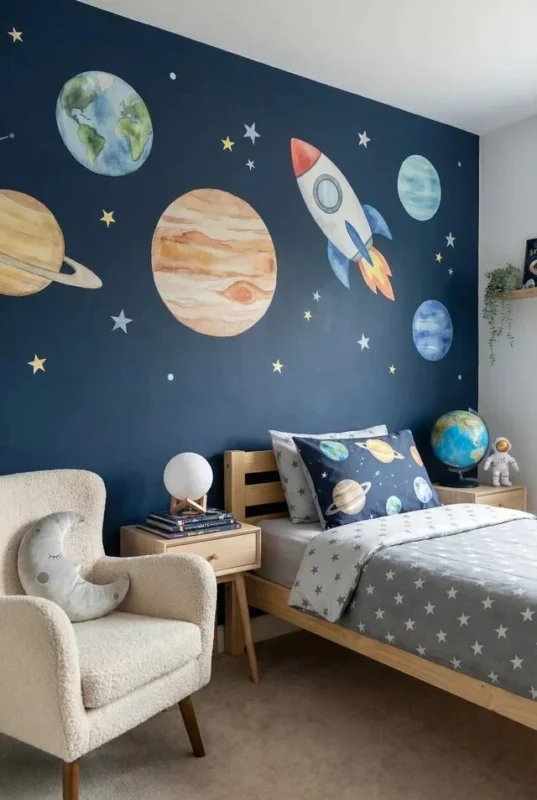
One wall can completely change the way a child sees their room.
An outer space galaxy accent wall turns an ordinary bedroom into a launchpad for imagination.
Deep navy tones, swirling purples, scattered stars, and distant planets create a scene that is endless.
Children are naturally fascinated by space. There is mystery, adventure, and the excitement of discovering something unknown.
Bringing those elements into the bedroom gives them a daily reminder that the universe is far bigger than what they can see from their window.
Some designs feature detailed murals with rockets and astronauts. Others focus on a realistic galaxy filled with constellations and glowing stars.
The beauty of this idea comes alive at night. When paired with star projectors or tiny twinkle lights, the room takes on an entirely different personality after sunset.
Shadows soften, stars begin to sparkle, and bedtime suddenly feels much more exciting.
It becomes a place where stories about moon landings, alien worlds, and distant galaxies seem perfectly possible.
For a child with a curious mind, few room themes capture wonder quite like space.
Muted Circus-Inspired Corner
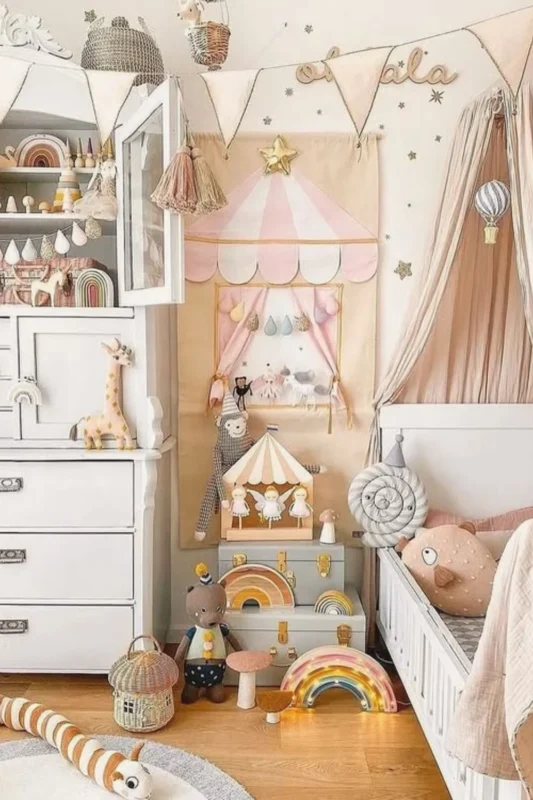
Not every circus-themed room needs bright primary colors and oversized decorations.
A muted circus-inspired corner takes the charm of vintage carnival design and gives it a softer, storybook-like personality.
Dusty reds, faded blues, warm creams, and gentle mustard tones replace the loud color palettes associated with circus décor.
That subtle shift changes everything.
A striped canopy draped above a reading chair can resemble a miniature circus tent.
Wooden toy animals, vintage posters, and whimsical bunting help reinforce the theme without making the space look overly themed.
The magic comes from the details. A carousel horse illustration hanging on the wall or a small collection of circus animal figurines can spark countless imaginative games throughout the day.
There is also a nostalgic quality to this look. It feels as though the room borrowed pieces from an old traveling circus and transformed them into something more magical.
Colorful Bunk Bed Havens
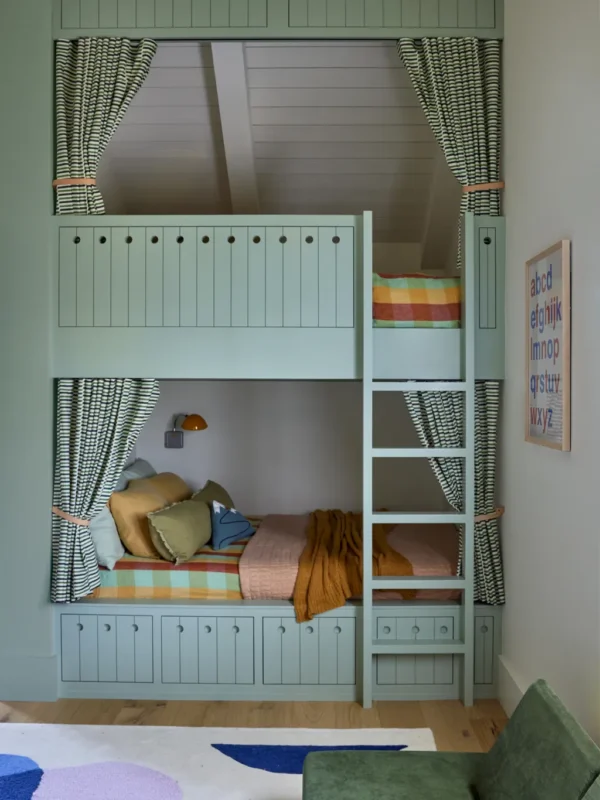
The top bunk quickly becomes prime real estate the moment children step into the room.
Colorful bunk beds naturally create a sense of adventure because they transform sleeping spaces into personal hideouts.
One child claims the upper level. Another decorates the lower bunk. Suddenly, the room contains two separate worlds within a single piece of furniture.
Painted frames in cheerful shades, colorful bedding, patterned curtains, and playful wall art bring each bunk to life.
Every layer contributes to the feeling that these are not simply beds but miniature retreats.
Some families add privacy curtains. Others install small shelves for books, treasures, and stuffed animals. Tiny reading lights can make each bunk feel even more personal.
The beauty of this idea lies in how it combines function with imagination.
Children see castles, forts, treehouses, and secret hideouts. Adults see smart use of space.
The best whimsical rooms often blur the line between furniture and play, and colorful bunk beds accomplish that effortlessly.
They create a setting where everyday routines where bedtime is rarely boring.
Rainbow Drawers
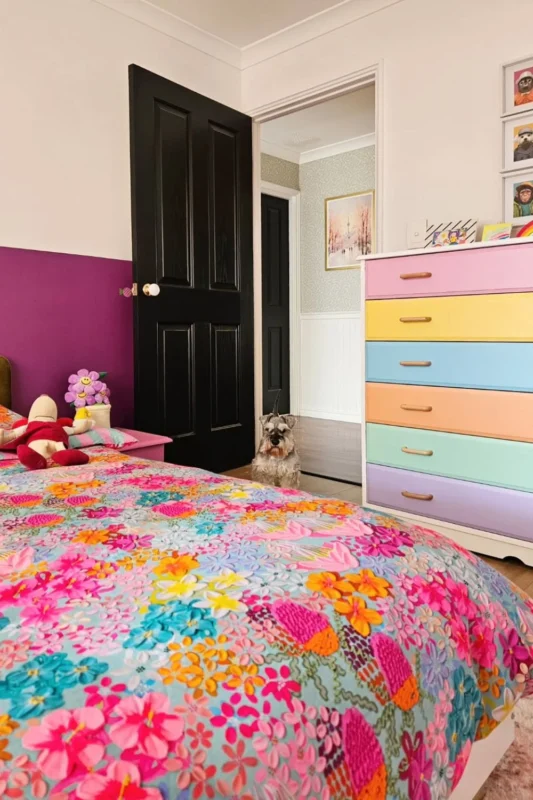
A plain storage unit turns into the loudest statement in the room the moment every drawer shifts into a different color.
Rainbow drawers bring structure and surprise into one piece of furniture. Each pull-out section carries its own shade, forming a vertical spectrum that kids notice instantly when they walk in.
The order can follow a natural rainbow flow or break into a more scattered sequence depending on how bold the setup should be.
Some designs keep the frame white so the colors carry all the visual weight, while others go fully painted for a saturated block effect.
What makes this idea interesting is how functional it remains. Clothes, toys, school supplies, and tiny treasures all disappear into color-coded compartments that are easy to recognize.
Even a simple bedroom corner changes once this piece is added. It stops acting like storage and becomes part of the room’s personality, especially when sunlight hits the glossy paint in the day.
Scattered Star Decals Across Plain Walls
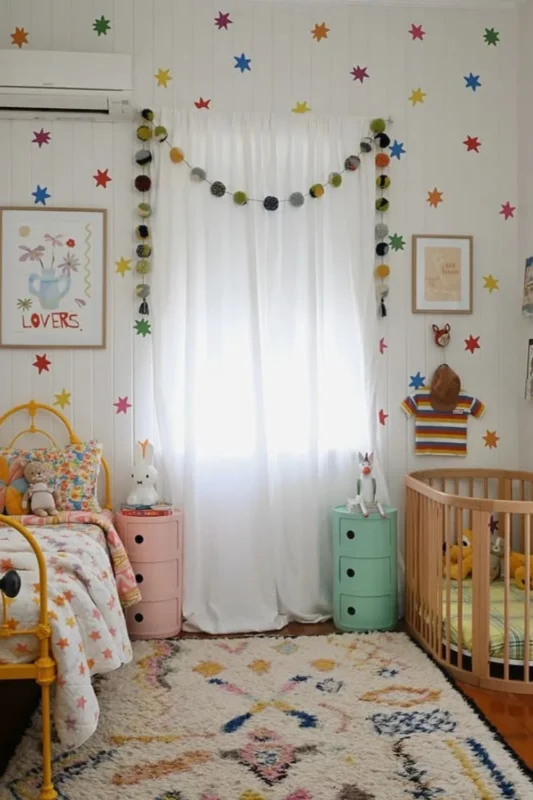
A blank wall turns into a night sky the moment small stars begin appearing in uneven clusters.
Scattered star decals work because they reject perfect alignment. Some sit close together, others drift apart, and a few end up near corners where no one expects decoration.
That irregular placement creates movement across an otherwise flat surface.
Different finishes change the entire effect. Metallic gold stars reflect light near windows, while soft white or pastel versions fade gently into painted walls, appearing almost like floating shapes.
Kids tend to interact with this design more than expected. They trace patterns between stars, invent constellations, or point out “hidden shapes” that only exist in their imagination.
The rest of the room can stay simple since the wall already carries enough visual activity. Beds, shelves, and rugs remain grounded while the stars handle the storytelling.
At night, low lighting shifts the appearance again. Shadows soften, edges blur slightly, and the wall starts to resemble a quiet galaxy that stretches across the entire room.
Gallery and Story Wall
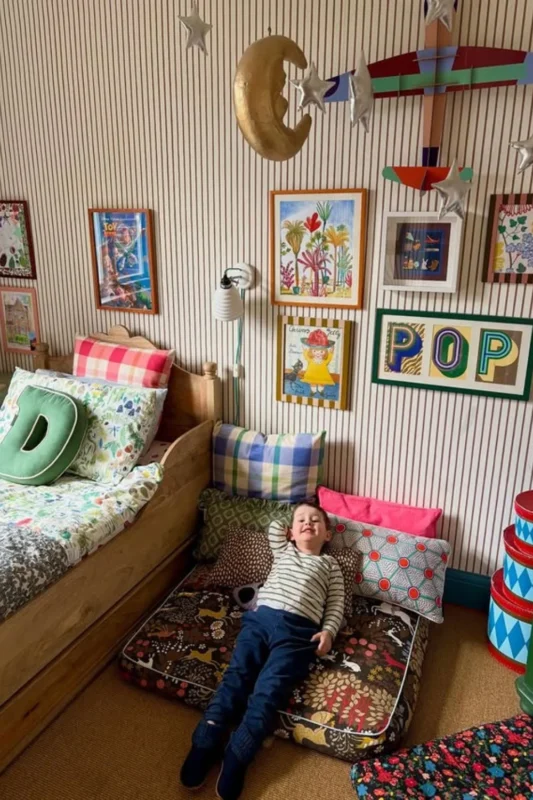
One wall turns into a living archive of drawings, memories, and small creative experiments.
A gallery and story wall is less about perfect framing and more about collecting pieces over time.
Children’s sketches, cut-out illustrations, favorite book pages, and photos sit side by side in an evolving arrangement.
Nothing stays fixed forever. New pieces replace older ones, and spacing changes as the collection grows.
That ongoing shift gives the wall a sense of movement that static décor cannot replicate.
Frames vary in size, color, and shape. Some sections might hold polished prints, while others display taped artwork. That contrast keeps the display from feeling overly structured.
The wall becomes a reflection of personality instead of decoration alone. Every item carries a moment, whether it came from school, a bedtime drawing session, or a spontaneous creative burst.
As the child grows, the wall quietly tracks that progression. It shifts from scattered drawings into a timeline of creativity, turning the room into something deeply constantly evolving.
Cozy, Warm Lighting
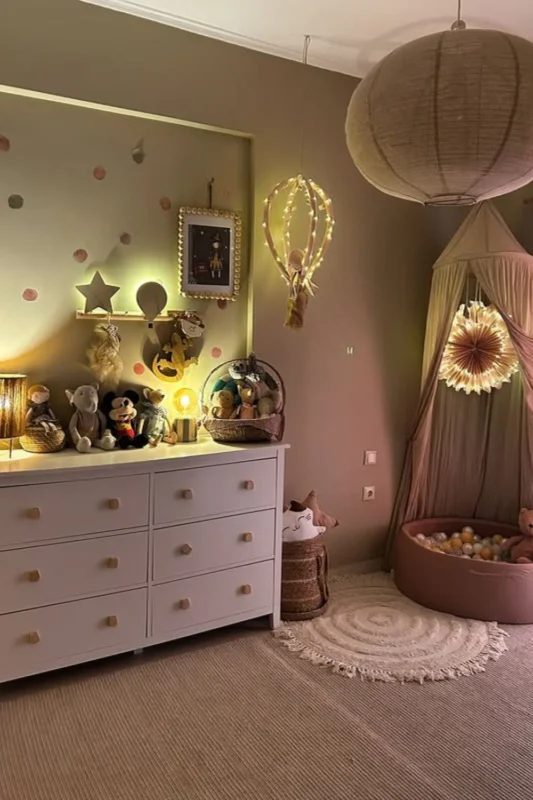
A room changes character the moment harsh brightness is replaced with softer layers of glow.
Cozy lighting in a kid’s room comes from multiple small sources instead of one central fixture.
Table lamps, string lights, wall sconces, and even night lights work together to build depth across the space.
Each light creates its own pocket of warmth. One corner might hold a soft lamp beside a reading chair, while another glows faintly from fairy lights draped along a shelf.
The effect becomes most noticeable at night. Shadows no longer feel sharp. Instead, edges blur slightly, and the room takes on a slower, calmer rhythm.
Warm-toned bulbs shift the entire atmosphere. White surfaces turn creamier, colors deepen, and textures become more visible under gentle illumination.
Children often respond to this kind of environment with calmer bedtime routines.
The room no longer feels like a space that switches on and off. It is quietly inviting at the end of the day.
Twin-Bed Retreat
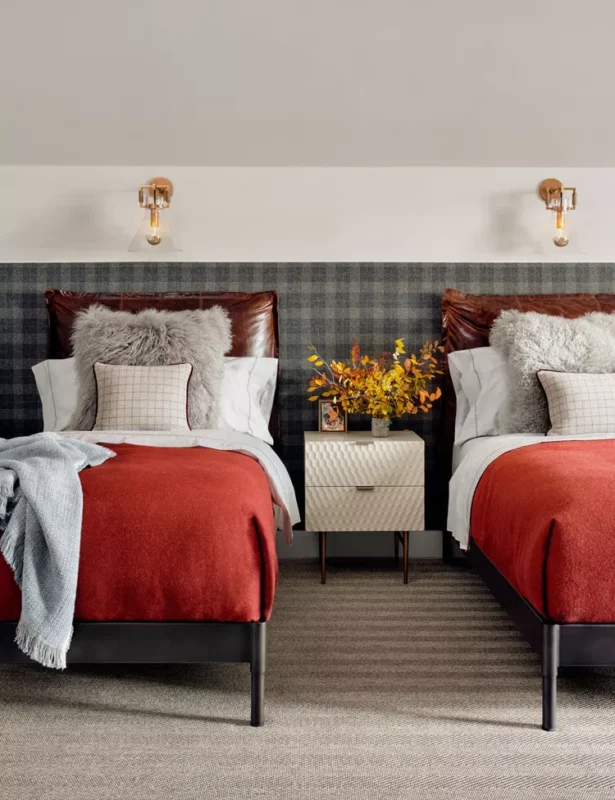
Two beds side by side can turn a shared room into something that is intentionally designed rather than divided.
A twin-bed retreat often starts with symmetry. Matching headboards, coordinated bedding, or mirrored placement create a sense of balance across the space.
But the personality appears in how each side is customized.
One bed might carry bold prints while the other leans into softer tones. Shared rugs and central lighting tie everything together so the room still reads as one space.
The middle area becomes important. Sometimes a shared table sits between the beds, holding books, night lamps, or small personal items that both children can access.
The structure naturally encourages interaction. Late-night conversations, shared stories, and small routines develop around the layout.
Even storage becomes part of the design. Under-bed drawers, side shelves, and wall-mounted organizers keep belongings separated but visually connected.
The result is a room that supports individuality while maintaining unity, turning shared living into something organized rather than chaotic.
A Monochromatic Theme
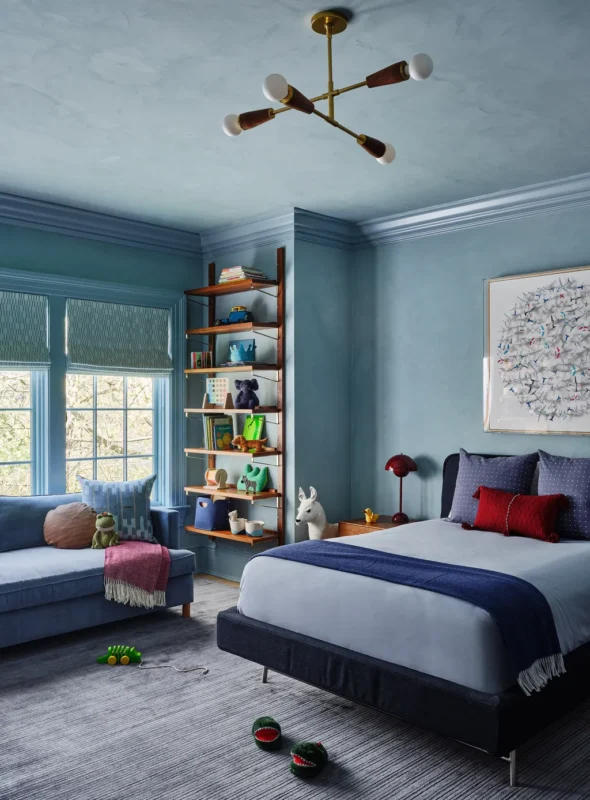
One color takes over the entire room and suddenly every detail starts speaking the same visual language.
A monochromatic theme builds depth through variation instead of contrast. Different shades, tones, and textures of a single color shape the entire environment.
A soft pink room might include blush bedding, dusty rose storage bins, and deeper coral accents. A blue version could move from pale sky tones to rich navy details across furniture and décor.
What makes this approach interesting is how texture replaces color variety. Ribbed fabrics, painted wood, soft rugs, and matte finishes keep the space visually layered even when everything sits within one palette.
Children often respond to the simplicity in surprising ways. Instead of visual clutter, the room becomes easier to navigate and personalize.
Small accent pieces still stand out, but only because they sit within a controlled color environment. A toy, book cover, or artwork instantly becomes part of the overall composition.
The final result is calm but not flat, structured but still expressive, built entirely through tone.
5 Biggest Mistakes in Designing a Whimsical Kids Room
Overloading the Space with Themes
A common mistake is trying to combine too many ideas in one room. Rainbows, space, animals, and castles end up competing for attention.
The space loses direction, and nothing stands out. A single guiding concept creates a clearer, more memorable room that children can actually connect with.
Choosing Style Over Function
Some rooms look impressive but fail in everyday use. Storage gets ignored, shelves sit too high, and seating becomes impractical.
Whimsical design should still support play, rest, and organization. A room that looks good but frustrates daily routines quickly loses its charm for both kids and parents.
Ignoring Lighting Layers
Relying on one ceiling light flattens the entire room. Whimsical spaces need variation through lamps, soft glows, and night lighting. Without layers, murals and decor lose depth.
Thoughtful lighting helps highlight details and creates a shifting atmosphere from daytime play to calm nighttime routines.
Using Furniture That Kids Quickly Outgrow
Highly specific character beds or overly themed furniture can age poorly. As interests change, the room starts to feel outdated.
Choosing adaptable pieces allows the space to evolve over time. Whimsy should live in decor and accents, not permanent large furniture investments.
Forgetting Room for Imagination to Evolve
Over-decorating every surface leaves no mental space for creativity. Kids need visual breathing room to project their own ideas into the space.
When every corner is filled, the imagination has nowhere to go. Balanced design allows the room to grow with the child’s changing interests.