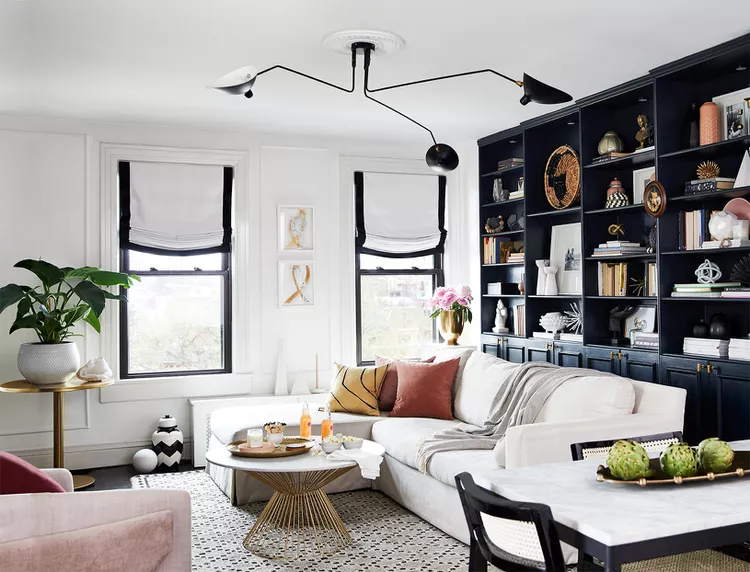
15 Coastal Living Room Ideas For A Beach Vibe

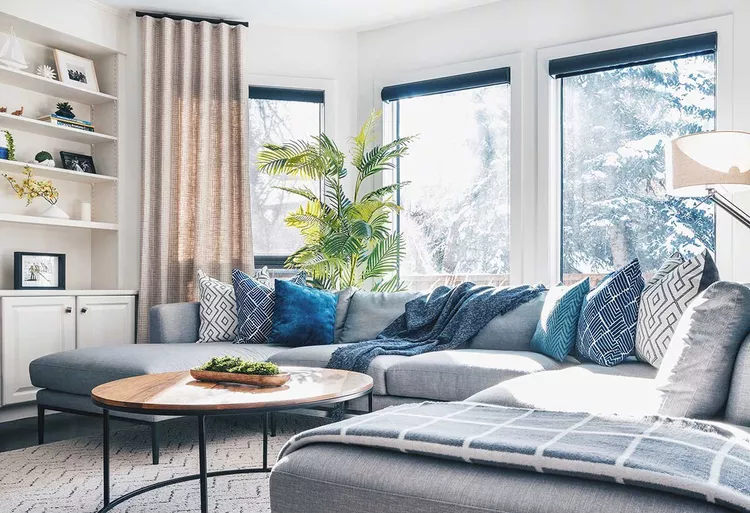
Coastal living rooms carry a calm that comes from light, texture, and color working in quiet harmony.
You start noticing how soft blues, natural materials, and open spaces shift the atmosphere of an entire home.
It is all about creating a setting that reflects the rhythm of the coast. These following 15 ideas explore different ways to bring that coastal character into your home.
RELATED: 9 Best Coastal Area Rugs for Modern Homes
Best Decor Ideas For A Coastal Living Room
Draw Colors from the View
A coastal living room often begins right outside the window. Ocean tones, sandy shores, or greenery can guide the entire interior palette.
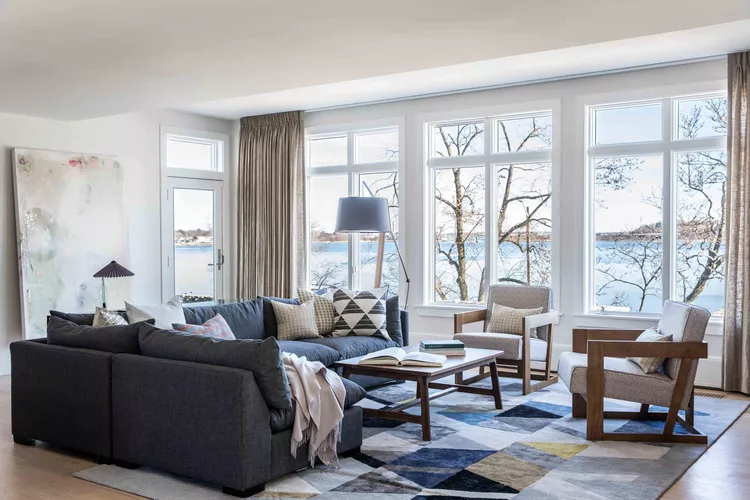
When you bring those outside shades indoors, the space gains a natural rhythm that connects interior life with the landscape beyond.
Soft blues taken from water reflections can sit alongside warm beige tones inspired by sand.
These combinations create a steady visual flow that guides the eye across the room. Furniture, textiles, and décor can all echo these hues in different intensities.
You can also pull accent colors from sunsets or coastal vegetation. A muted coral cushion or seafoam green vase introduces variation.
Natural light plays a major role in this approach. It highlights color shifts throughout the day, giving the room a changing character.
Avoid this: Introducing unrelated bold colors can break the harmony created by the surrounding view.
Paint Walls Sky Blue
Sky blue walls can shift a living room into a calm coastal direction immediately. The tone recalls open horizons and clear seaside skies, setting a consistent backdrop for the rest of the design.
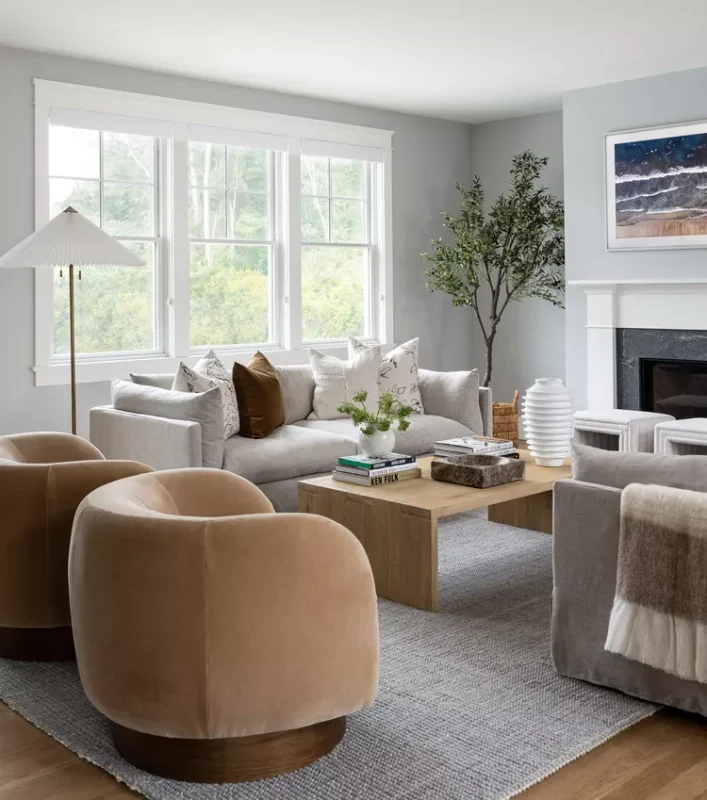
This shade works well with both light and natural materials. White furniture, rattan accents, and soft wood finishes all complement the wall color.
You can vary intensity by selecting lighter or slightly muted versions of blue. Lighter tones open up the space visually, while deeper shades add presence.
Artwork featuring coastal scenes or abstract ocean tones can enhance the theme. Textiles in off-white or sandy hues help balance the overall composition.
Lighting also changes how the color behaves. Morning light brings out freshness, while evening tones soften the atmosphere.
Avoid this: Pairing sky blue walls with overly dark furniture can create harsh contrast that disrupts visual balance.
Mix With Midcentury Modern
Coastal style gains structure when paired with midcentury modern design. Clean lines and tapered furniture introduce order, while coastal elements soften the overall direction.
Wood plays a key role in this combination. Teak, oak, or walnut finishes add warmth that pairs naturally with coastal-inspired tones. Upholstery in light fabrics keeps the layout open and balanced.
You can introduce coastal character through accessories. Woven textures, driftwood décor, or ocean-inspired artwork blend easily with midcentury silhouettes.
Shapes remain important. Low-profile sofas and angular coffee tables create visual clarity, while softer accents prevent the space from feeling rigid.
This mix allows flexibility across seasons. The foundation stays structured, while decorative elements can shift with ease.
Avoid this: Overloading the room with heavy vintage furniture can overpower the coastal direction.
Layer Area Rugs
Layering rugs adds dimension to a coastal living room without overwhelming the space. A natural fiber base such as jute or sisal can set a grounded foundation that reflects sandy textures.
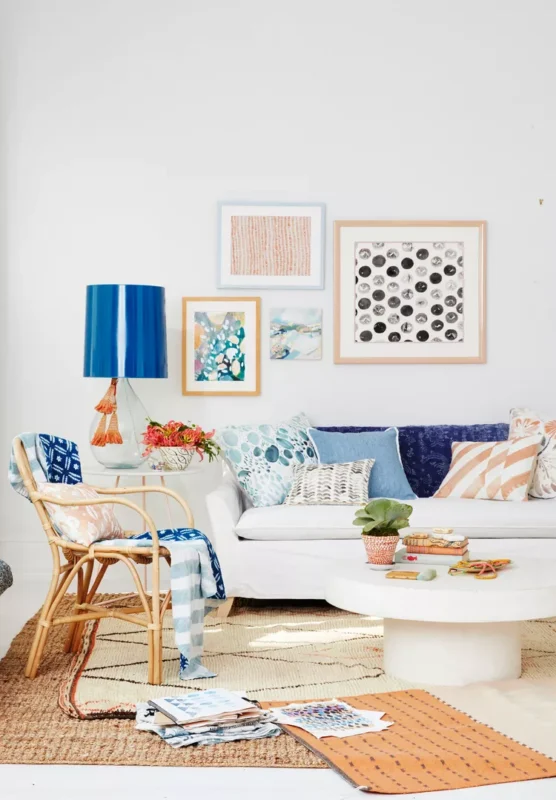
On top of that, a lighter patterned rug introduces variation in tone and design. This combination creates visual depth while keeping the palette connected to coastal influences.
You can play with scale by pairing larger neutral rugs with smaller accent pieces. This helps define seating zones.
Texture becomes a central element here. Rough natural fibers paired with softer woven materials create contrast that feels balanced.
Furniture placement should sit comfortably on the layered surfaces to maintain structure across the room.
Avoid this: Using rugs with competing bold patterns can create visual confusion instead of layering harmony.
Choose Denim Fabrics
Denim fabrics bring an unexpected coastal edge to a living room. The material’s soft blue tone naturally aligns with ocean-inspired palettes while adding casual texture to seating and décor.
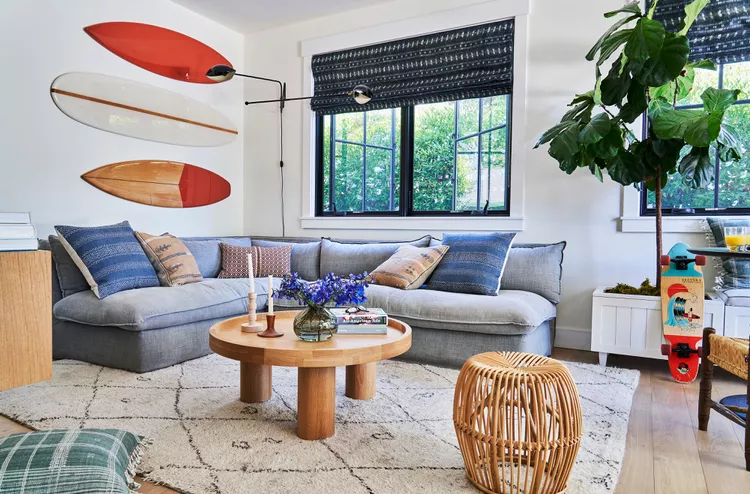
Cushions, upholstery, or throws in denim shades introduce variation without disrupting the overall theme.
The fabric works well alongside white, sand, and light wood tones commonly found in coastal interiors.
You can also mix washed denim with softer linens to create contrast in texture. This keeps the seating area visually engaging.
Denim’s durability makes it practical for everyday use, especially in high-traffic living spaces. Over time, the fabric develops character that complements relaxed coastal styling.
Accents such as rope details or woven baskets enhance the overall direction of the room.
Avoid this: Combining denim with overly dark or heavy fabrics can weaken the airy coastal impression.
Incorporate Natural Materials
A coastal living room gains its strongest identity when natural materials take center stage. Wood, rattan, linen, and stone introduce a grounded texture that connects the space back to the shoreline environment.
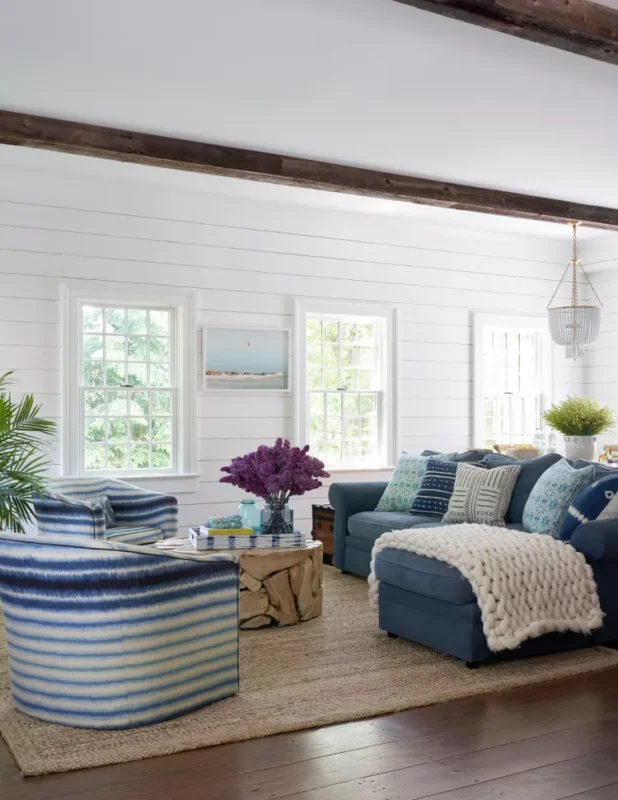
Driftwood-inspired finishes on furniture bring a weathered character that suits the theme.
Stone accents in coffee tables or décor pieces introduce a quiet solidity that balances softer elements.
Rattan chairs or woven baskets add light texture across the room. These details prevent the space from being flat while keeping the overall palette calm and cohesive.
You can also introduce natural wood beams or raw-edge furniture pieces for a more organic direction. These elements carry subtle variation that enriches the design.
Light plays an important role here, highlighting grain, weave, and surface detail throughout the day.
Avoid this: Synthetic glossy finishes can break the natural coastal atmosphere and disrupt material harmony.
Use Natural Fibers
Natural fibers shape the foundation of a coastal-inspired interior. Materials like jute, sisal, cotton, and linen introduce texture that is connected to the seaside environment.
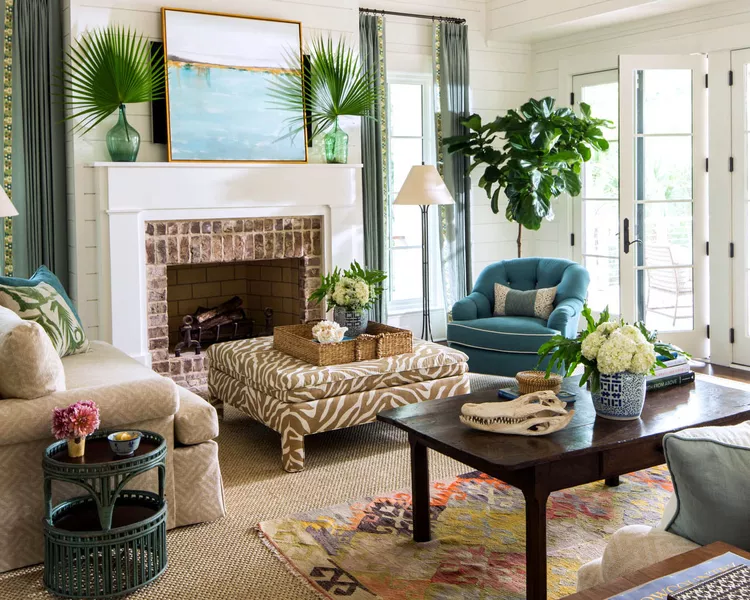
Rugs made from jute can anchor seating areas with a rough, earthy surface that contrasts softer upholstery. Linen curtains move gently with air, adding subtle motion across the room.
Cotton cushions bring comfort. These materials work together to create layered texture across different surfaces.
You can mix fibers in small doses across the space. A woven basket beside a linen sofa or a sisal rug under a wooden table creates quiet variety.
The strength of this approach lies in restraint. Each fiber contributes a distinct texture.
Avoid this: Overusing synthetic materials can weaken the organic coastal direction and flatten the visual character.
Layer Your Neutrals
Neutrals form the backbone of coastal living room design. Layering different shades such as ivory, sand, taupe, and soft gray builds depth.
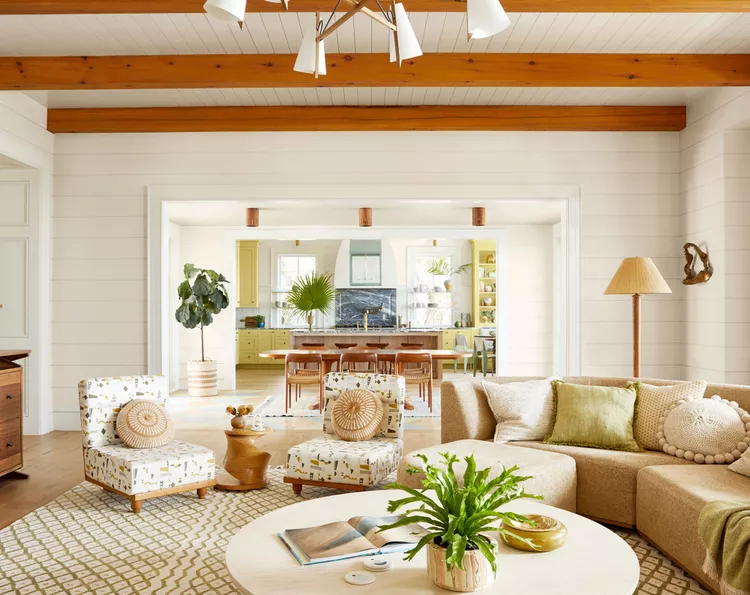
Start with a base tone on walls or large furniture pieces. From there, introduce variations through textiles, rugs, and décor items. Each layer should carry a slightly different tone or texture.
This approach allows subtle contrast to develop across the room. Linen cushions, wool throws, and cotton upholstery each contribute their own variation within the same palette.
Lighting influences how these tones appear throughout the day. Natural light highlights softness, while warmer evening lighting deepens the atmosphere.
You can also introduce minimal accent colors, though they should remain secondary to the neutral foundation.
Avoid this: Sticking to a single neutral shade across all surfaces can leave the space visually flat.
Decorate with Beach-Inspired Accents
Beach-inspired accents bring personality into a coastal living room. These details can be small but still carry strong thematic influence.
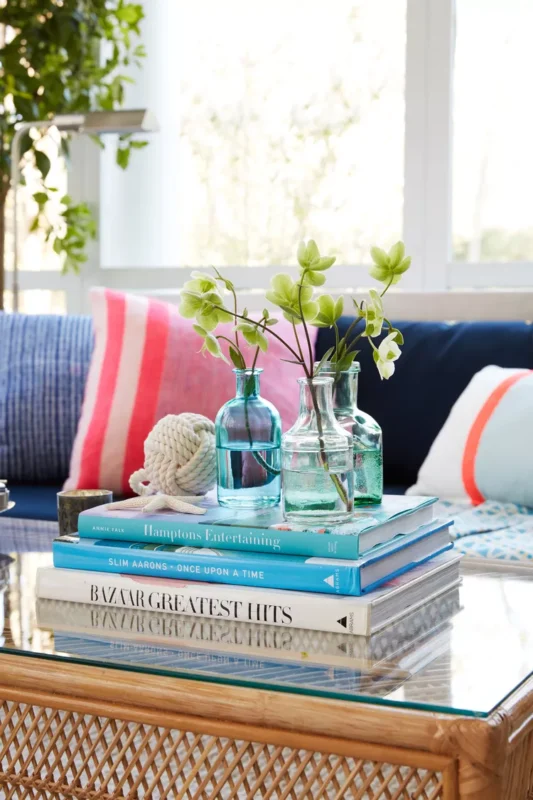
Think of objects like coral sculptures, shell-inspired décor, glass vases with sandy tones, or artwork featuring coastal scenes. Each piece adds a reference to the seaside environment.
Placement matters as much as selection. Spreading accents across shelves, coffee tables, and wall spaces creates balance rather than clustering everything in one area.
Natural textures such as driftwood or woven décor pieces can blend these accents into the wider design scheme.
Scatter pops of blue
Blue accents can shift a neutral living room toward a coastal direction with very little effort. Small touches placed across the space create rhythm that ties the theme together.
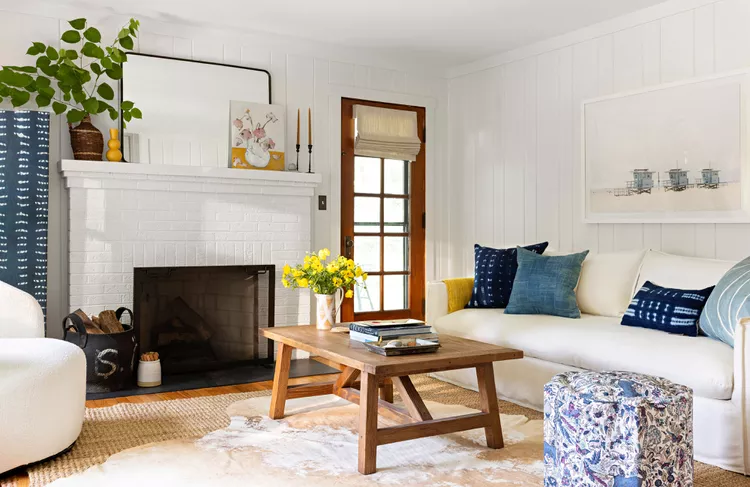
Cushions on the sofa can introduce different shades such as sky blue, navy, or faded aqua.
These variations keep the eye moving while still staying connected to a coastal story. A single throw blanket draped over a chair can carry the same effect.
Decor pieces also play a role here. Ceramic vases, glass objects, or framed artwork with blue tones can be placed at different points in the room. This spreads the color evenly instead of concentrating it in one spot.
Even smaller details like patterned ceramics or table décor can reinforce the theme in a subtle way. The key lies in repetition across separate areas.
Avoid this: Clustering all blue elements in one corner can make the room unbalanced and visually heavy.
Maximize Light and Views
Natural light can completely reshape a coastal living room. Large windows become part of the design, drawing attention outward and bringing brightness into the space throughout the day.
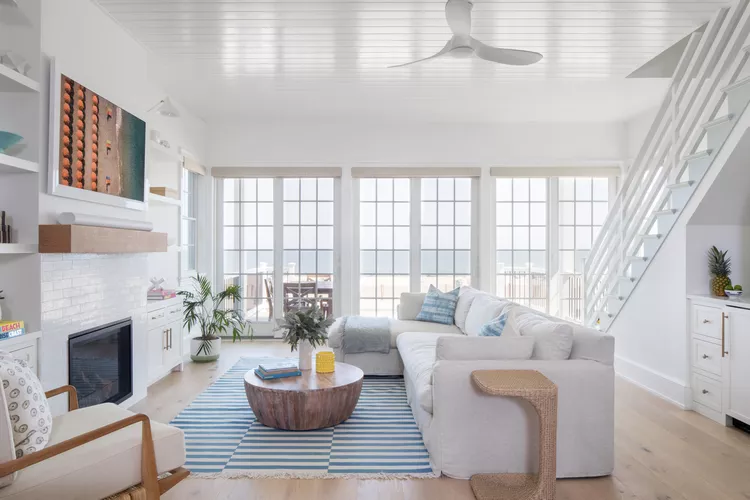
Sheer curtains or light fabric treatments allow sunlight to filter through softly. This keeps the room bright while still offering a sense of privacy. Heavy window coverings tend to interrupt this flow.
Furniture placement should respect sightlines toward outdoor views. Positioning seating to face windows creates a strong connection between interior and exterior spaces.
Reflective surfaces such as glass tables or light-toned finishes can help distribute brightness across the room. This keeps darker corners from feeling disconnected.
Minimal obstruction near windows allows the view to remain the focal point. Plants placed near openings can frame the scenery.
Avoid this: Blocking windows with bulky furniture reduces natural light and weakens the coastal atmosphere.
Mix With Earth Tones
Earth tones bring balance into a coastal living room by grounding lighter ocean-inspired colors. Shades like terracotta, warm beige, clay, and muted brown introduce depth that seems stable.
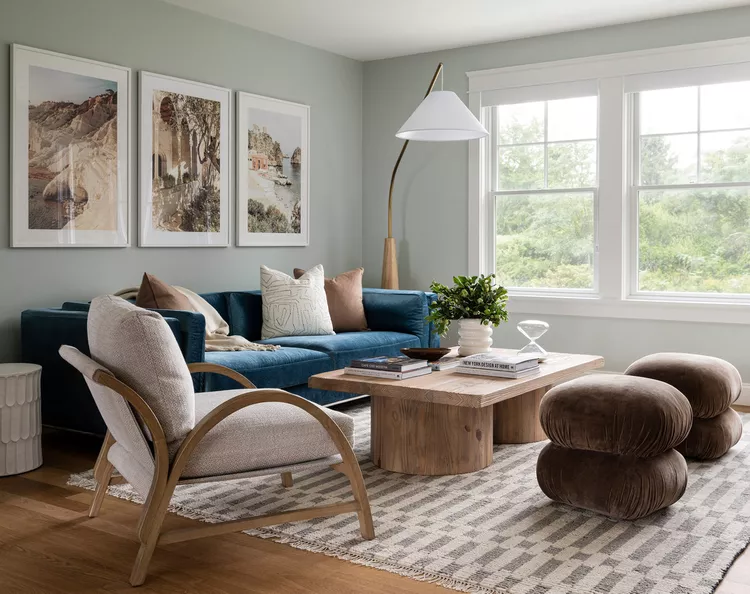
These tones work well when layered with soft blues or sandy neutrals. The combination reflects both land and sea influences, creating a more complete visual story.
Wood finishes in furniture naturally support this direction. Oak, walnut, or reclaimed textures help tie earthy elements into the overall design.
Textiles can also carry earthy shades through cushions, rugs, or throws. These details soften brighter coastal colors and keep the palette visually steady.
Artwork featuring natural landscapes or abstract warm tones can further reinforce the theme.
Avoid this: Introducing overly saturated warm colors can disrupt the calm coastal balance and dominate the palette.
Style the Built-Ins
Built-in shelves can shift a coastal living room from simple to curated when styled with intention. They act as a visual frame for the room, drawing attention to selected décor.
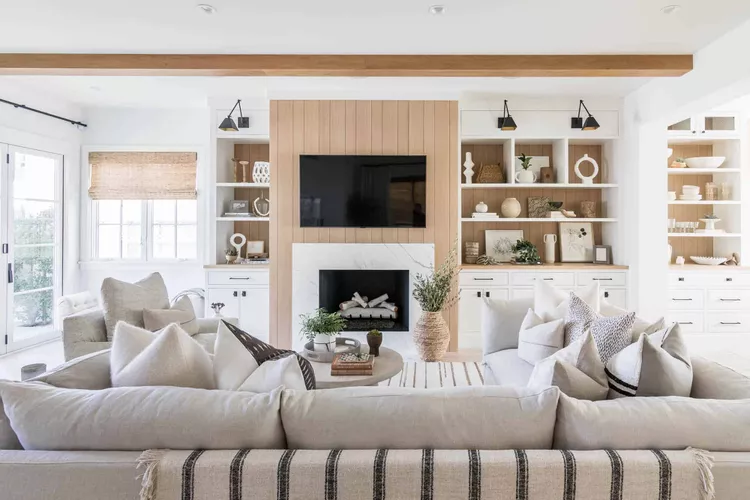
Start with a mix of textures. Woven baskets, ceramic pieces, glass accents, and driftwood-inspired objects bring variety while keeping the coastal direction intact.
Alternating materials across shelves helps avoid repetition in appearance.
Books placed both vertically and horizontally add structure. A few neutral-toned covers can blend into the palette, while soft blue or sandy tones echo coastal color themes.
Spacing plays a quiet role in how the shelves read. Leaving sections open allows the eye to rest and gives each object its own presence.
Lighting inside or near built-ins can highlight details during evening hours, adding dimension to the display.
Avoid this: Filling every shelf edge-to-edge removes contrast and turns curated styling into visual clutter.
Decorate with Turquoise
Turquoise brings a vibrant coastal note into a living room. Its connection to sea tones makes it a natural fit for this style direction.
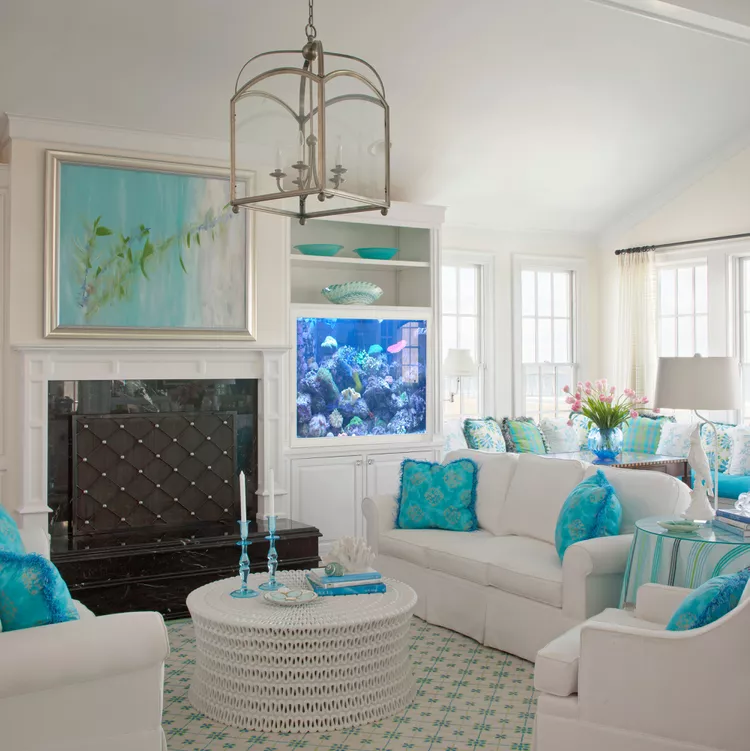
Cushions, vases, or small décor pieces in turquoise can be placed across different areas of the room. This distribution helps the color flow.
Pairing turquoise with soft neutrals like white, beige, or light wood keeps the space balanced. These tones allow the color to stand out.
Artwork featuring turquoise accents can reinforce the theme on walls. Even subtle strokes in prints or abstract pieces can tie the look together.
Glass décor items in turquoise shades can reflect light, adding a gentle shimmer during the day.
Avoid this: Overloading the room with strong turquoise surfaces can overpower the softer coastal palette and reduce visual harmony.
Try Coastal Farmhouse
Coastal farmhouse design blends relaxed seaside elements with rustic farmhouse structure. The result feels layered through texture.
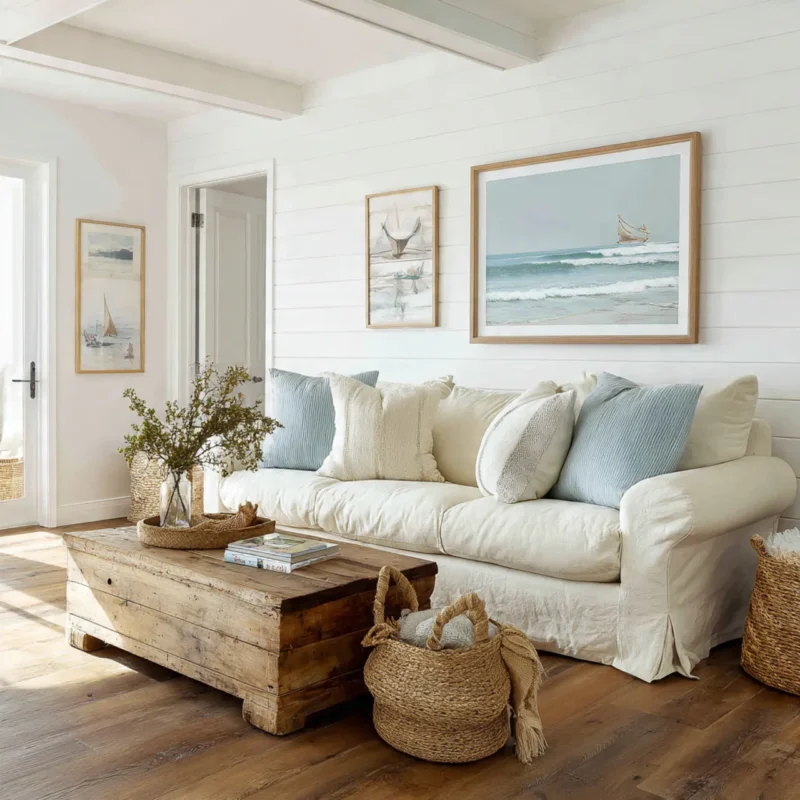
Whitewashed wood often forms the base of this style. It introduces brightness while still carrying a slightly weathered character. Pairing it with soft blue accents reinforces the coastal influence.
Natural materials such as linen, jute, and raw wood add depth across furniture and textiles. These textures help create a lived-in atmosphere.
Furniture tends to lean simple in shape, with subtle detailing that reflects farmhouse influence. Sofas and chairs in neutral tones keep the palette steady.
Decor can include ceramic pieces, woven baskets, or vintage-inspired accents that support both style directions.
Avoid this: Mixing overly polished modern finishes can disrupt the rustic-coastal balance and weaken the farmhouse character.