19 Victorian Cottage Interior Designs You Need To See

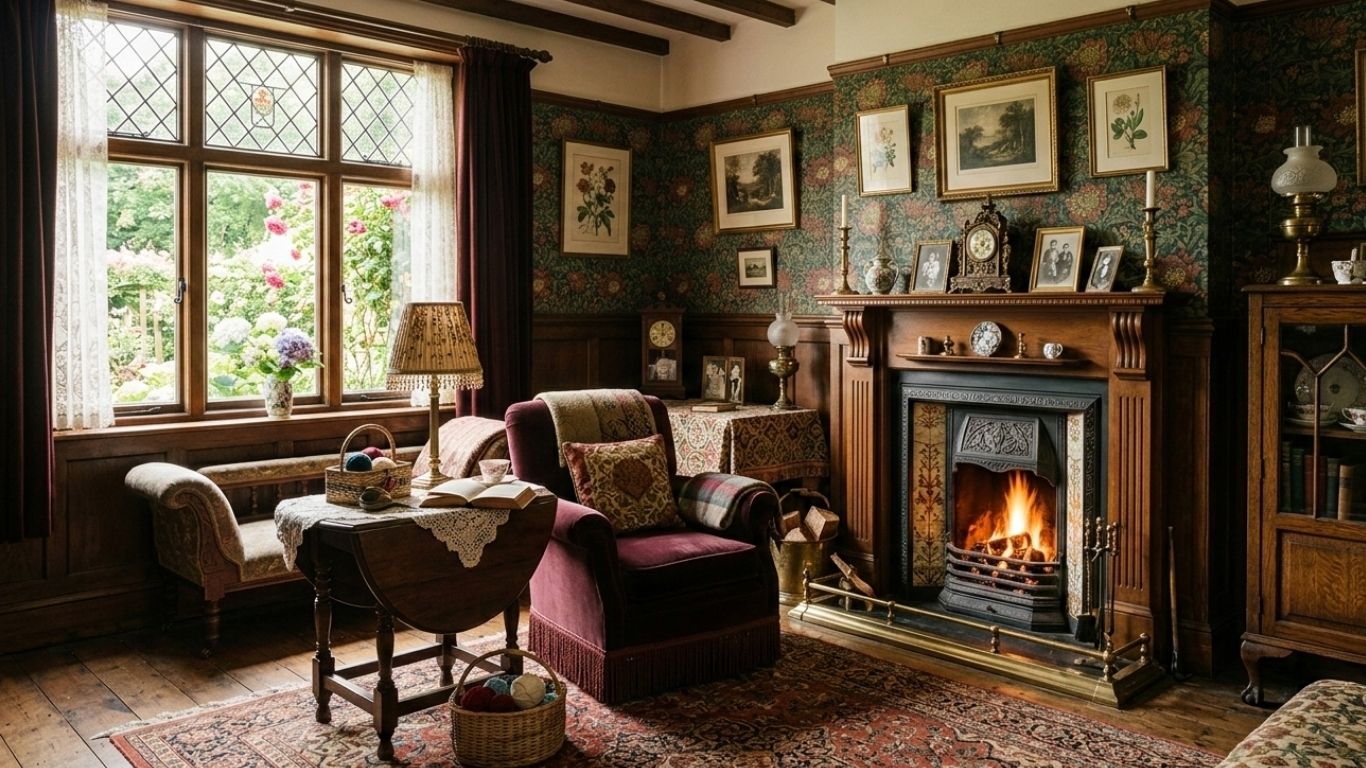
I have always loved stepping into spaces that feel layered with history.
Victorian Cottage Interiors capture that feeling the moment you walk in.
You notice the carved wood, the patterned wallpaper, the quiet glow from a fireplace.
When you bring this style into your own home, you start to appreciate the details.
You slow down.
You arrange chairs for conversation and let natural light highlight the textures.
The following Victorian Cottage Interiors are not about excess. They are about comfort shaped by craftsmanship.
Cozy Ways to Master Victorian Cottage Interior Designs
Classic Victorian Details with Everyday Ease
This room captures the warmth of a Victorian cottage without turning it into a museum.
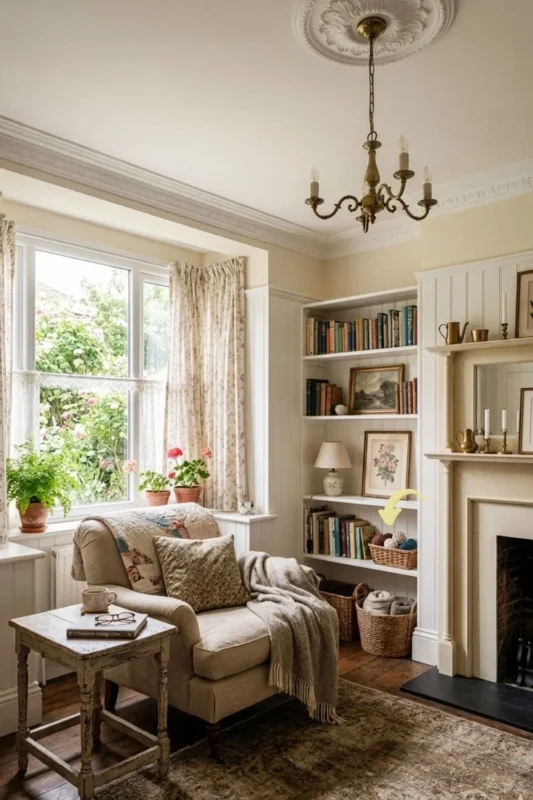
A sturdy wooden table sits at the center, dressed in a simple checkered cloth that suggests daily use rather than formal display.
Shelves lined with blue and white porcelain bring subtle pattern to the walls and hint at long-held traditions. A striped couch rests nearby, offering a comfortable place to read or share conversation.
The bay window draws in generous daylight, brightening the carved trim and polished wood surfaces.
Overhead, a modest chandelier adds soft illumination once evening settles in. The space works because it feels lived in.
Historic touches remain intact, yet the layout supports modern routines. You can set down your bag, pour tea, and settle into the room without ceremony.
It honors the past while accommodating present-day comfort in a practical way.
A Fireside Kitchen Nook with Heritage Character
This kitchen leans into its age with confidence. Exposed wooden beams stretch across the ceiling, grounding the room in craftsmanship that speaks to another century.
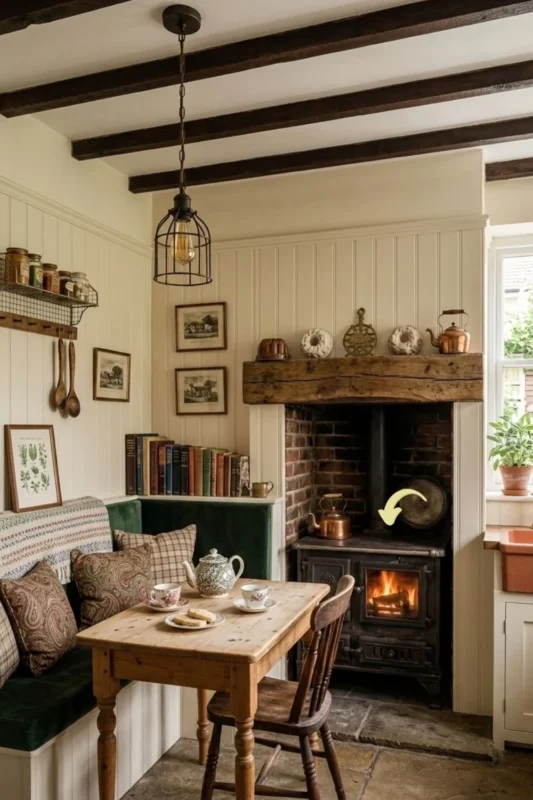
Beneath them, the layout remains simple and purposeful. A large window brings in steady light, which softens the weight of the timber overhead.
A tall grandfather clock stands near the wall, its steady ticking adding rhythm to the quiet space.
The furnishings feel sturdy and dependable, chosen for use rather than display. Surfaces show subtle wear, which adds credibility instead of distraction.
You can imagine bread cooling on the counter or tea steeping near the stove.
The charm lies in restraint. There is no need for excessive ornamentation. The architectural bones carry the design.
This kind of Victorian cottage kitchen invites you to slow down, prepare meals from scratch, and enjoy the steady comfort of a room shaped by time.
Dining in a Room Rooted in History
This Victorian dining space centers around a long wooden table covered in a yellow gingham cloth. The setting feels ready for an unhurried meal shared with family.
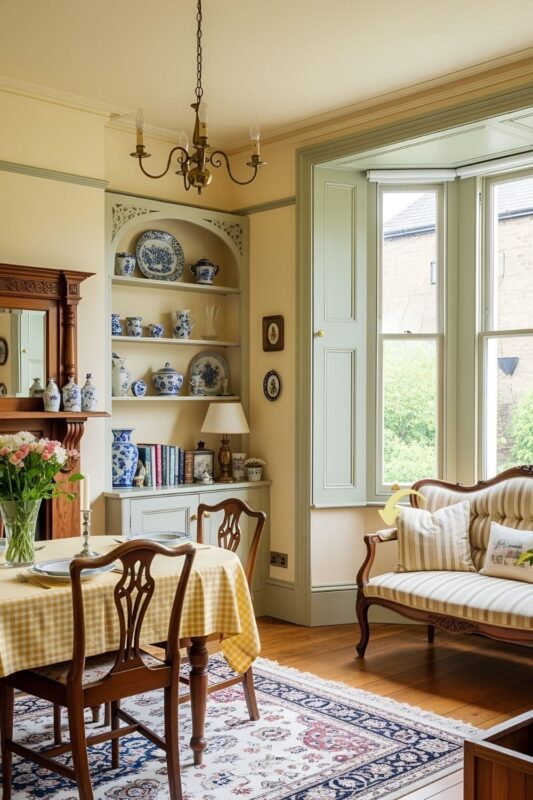
Sunlight filters through the window and settles across shelves lined with ceramics, books, and collected keepsakes.
A mantle clock presides over the fireplace, offering a quiet reminder of passing hours. Nearby, a chaise lounge sits close to the bay window, positioned for rest or reflection.
The carved woodwork frames the room with detail that rewards a second glance. Above, a chandelier provides measured light once daylight fades.
The arrangement remains balanced without appearing staged. Each object appears chosen over time, not purchased in a single afternoon.
This dining room encourages conversation and lingering at the table. It reflects a period when meals unfolded slowly and rooms were designed to support that rhythm.
Floral Walls with Heirloom Accents
Floral wallpaper sets the tone in this Victorian cottage interior. The pattern carries movement across the walls and immediately establishes a sense of age.
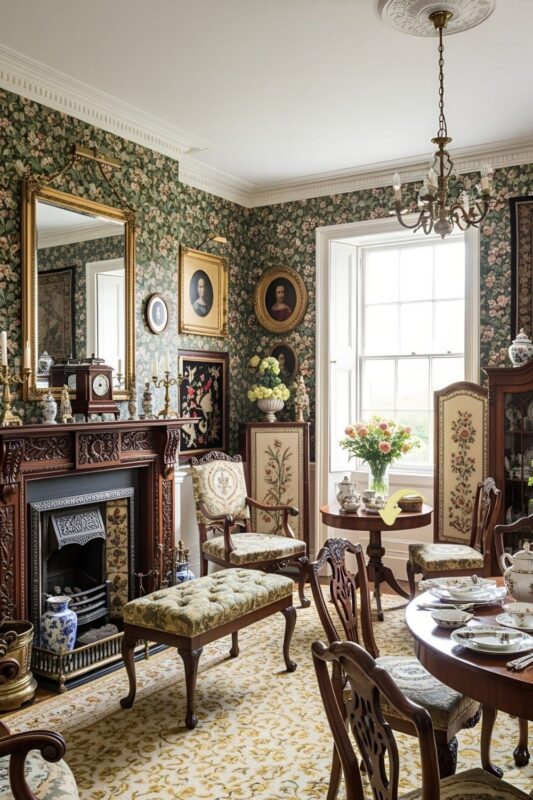
Rather than overwhelming the room, it works in harmony with carved wooden furniture placed throughout the space.
An ornate mirror hangs above the fireplace, reflecting framed portraits arranged in measured clusters.
The gold frames add warmth against the patterned backdrop. The fireplace itself features detailed carving, acting as a central architectural anchor.
Seating appears formal at first glance, yet the arrangement remains approachable. You can sit comfortably without feeling as though you are disturbing a display.
Decorative pieces feel inherited, not newly acquired. The room succeeds because it balances ornament with restraint.
Floral surfaces, antique furnishings, and layered frames combine to create a setting that respects Victorian design while remaining usable for everyday life.
A Brick Hearth at the Heart of the Room
In this Victorian cottage dining area, the brick fireplace commands attention. Its textured surface introduces warmth and anchors the entire layout.
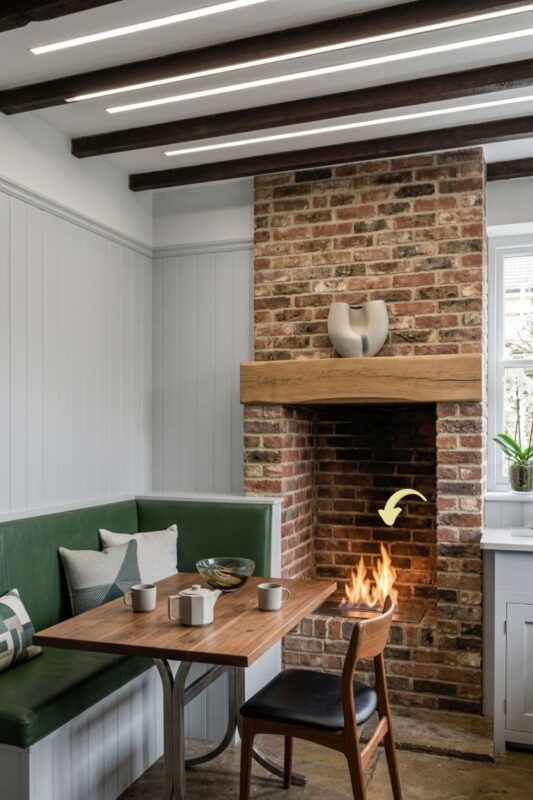
A rustic wooden table stands nearby, dressed in a floral cloth that adds quiet pattern without dominating the space.
Open shelving above displays neatly arranged crockery, each piece visible and within reach. Nothing feels hidden away.
The design celebrates practical objects as part of the decor. Chairs surround the table in an uncomplicated arrangement that encourages shared meals.
Natural light moves across the brickwork during the day, highlighting its uneven surface. At night, firelight would bring a softer glow to the room.
The setting feels steady. This type of Victorian interior does not rely on excess. It depends on strong materials, familiar rituals, and a fireplace that continues to gather people together.
Refined Victorian Parlor with Ornate Details
This Victorian parlor centers on craftsmanship. Floral wallpaper in deep green tones sets a formal backdrop. The pattern draws your eye upward and highlights the height of the walls.
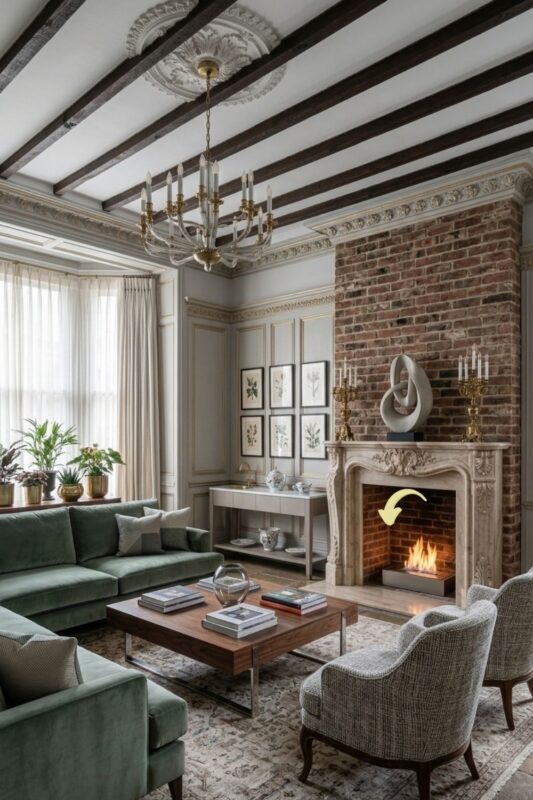
Framed portraits line the space with intention. Their gilded edges introduce warmth and structure. Each piece feels carefully placed, not crowded.
The fireplace acts as the room’s anchor. Its carved surround displays careful workmanship that reflects the era’s attention to detail.
A collection of vintage clocks rests along the mantel, adding symmetry and quiet presence.
Seating remains arranged for conversation. Upholstered chairs face one another, encouraging quiet discussion near the hearth.
The lighting stays soft, filtered through curtains that temper daylight.
This type of parlor does not rush you. It invites you to sit upright, pour tea, and take in the layered textures. The elegance comes from craftsmanship and proportion, not excess.
Layered Comfort in a Victorian Sitting Room
This sitting room balances softness with structure. Plush sofas create a welcoming base for daily life.
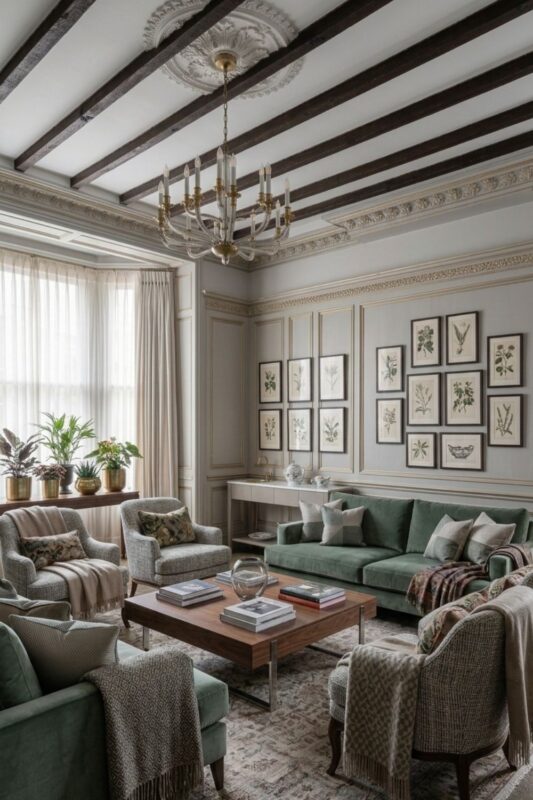
A plaid ottoman rests at the center, offering function and subtle pattern.
Exposed wooden beams stretch across the ceiling. They ground the space and remind you of the home’s age. Their natural tone contrasts gently with painted walls.
Artwork fills the vertical space. Landscapes and portraits hang in modest frames, arranged in a collected manner. The walls feel active without appearing cluttered.
Large windows allow steady daylight to move across the room. The light reveals textures in upholstery and wood grain. It also keeps darker finishes from feeling heavy.
The arrangement supports comfort. Seating faces inward, forming a practical layout for conversation or reading. This Victorian living room respects its architectural roots while still accommodating relaxed, everyday use.
Lace Accents and a Statement Hearth
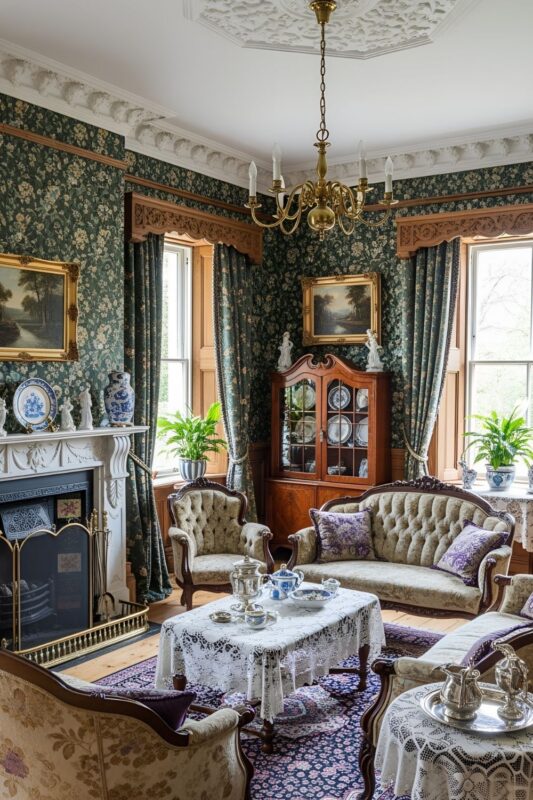
Floral wallpaper establishes a clear Victorian influence. The pattern is detailed yet measured, covering the walls without overwhelming the room.
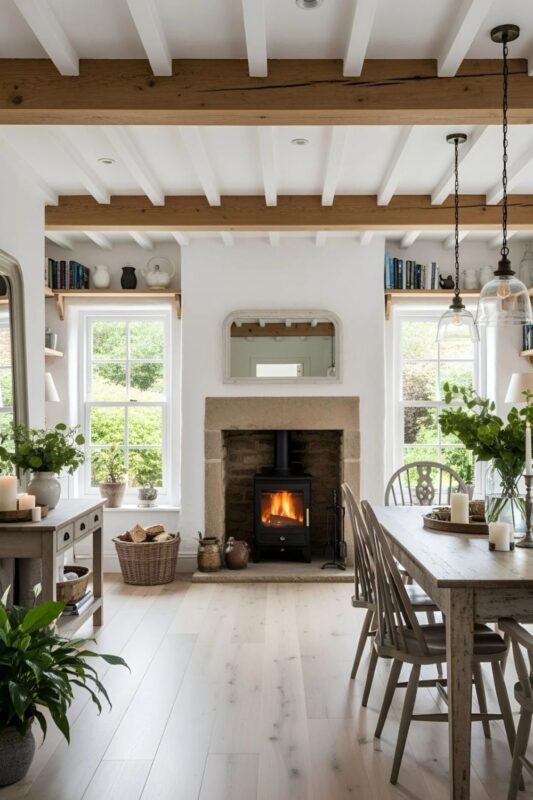
Intricate crown molding frames the ceiling. A chandelier hangs at the center, casting even light across the space. Its presence reinforces the room’s formal structure.
Lace doilies rest on side tables and armrests. They introduce delicacy through texture. Beneath them, polished wood surfaces reflect years of care.
The fireplace stands prominently along one wall. Its surround features carved detailing that draws attention without competing with the wallpaper. Decorative China lines the mantel, displayed with purpose.
Potted plants soften the setting. Their greenery offsets the ornamentation and adds subtle movement.
This interior succeeds because each element has space to breathe. The lace, the carved wood, and the floral walls work together to create a composed Victorian cottage room grounded in tradition.
Mantel Moments and Tea Table Traditions
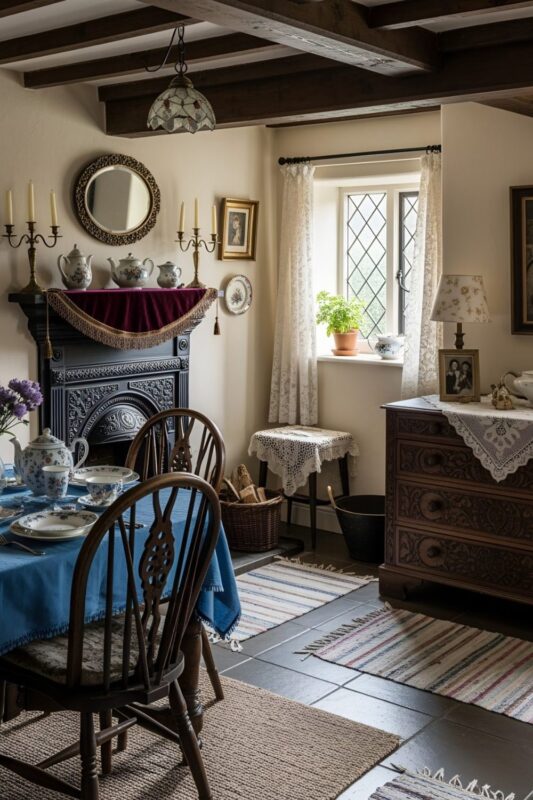
The fireplace mantel becomes the focal point in this Victorian cottage setting. A deep red cloth stretches across its surface, introducing controlled color into the room.
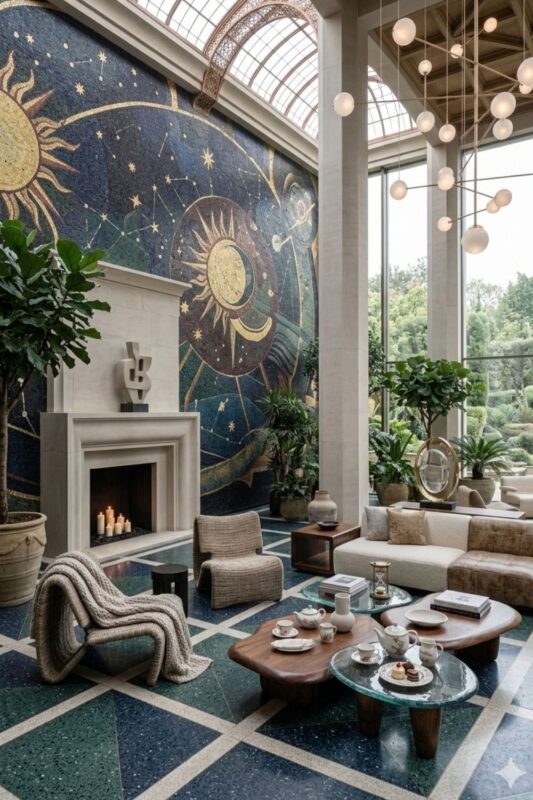
Tall candelabras frame the arrangement. Their metal forms add height and structure. When lit, they would cast a steady glow across the carved surround.
Nearby, a wooden table stands prepared for tea. Delicate cups and saucers rest in place, suggesting an afternoon ritual.
The chairs surrounding it display curved backs and turned legs shaped by careful craftsmanship.
The room encourages gathering. Seating remains close enough for conversation. Decorative accents appear chosen over time, not staged.
Light filters in gently, illuminating the mantel display and tabletop setting. This design centers on routine and hospitality.
It honors the Victorian habit of turning everyday moments into intentional gatherings.
Bright Cottage Corner with Period Character
This Victorian cottage nook combines rustic structure with refined detail. White-painted ceiling beams lift the room visually. They introduce contrast against darker furnishings below.
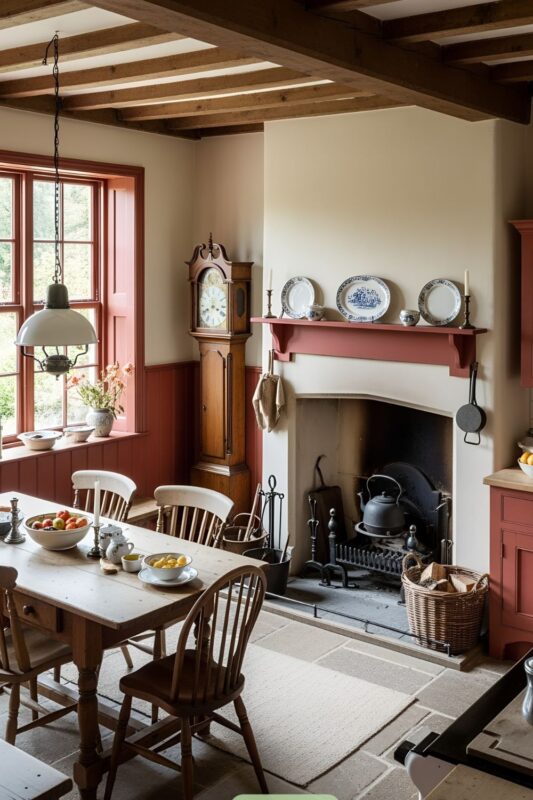
A modest fireplace sits along one wall. Its brick surround adds texture and quiet strength.
The hearth creates a natural focal point within the compact layout.
Large windows allow daylight to fill the room. Sunlight highlights the grain of wooden furniture and supports indoor plants placed near the sill. Greenery softens the architectural lines.
A small table stands ready for simple meals or evening conversation. Candles placed at its center suggest unhurried dinners.
The balance between exposed beams and decorative accents defines the space. It feels suitable for daily life.
This type of Victorian cottage interior favors proportion, light, and steady craftsmanship over unnecessary embellishment.
Brick Hearth with Heirloom Touches
This Victorian cottage room centers on a solid brick fireplace. Its texture grounds the space and adds a sense of permanence.
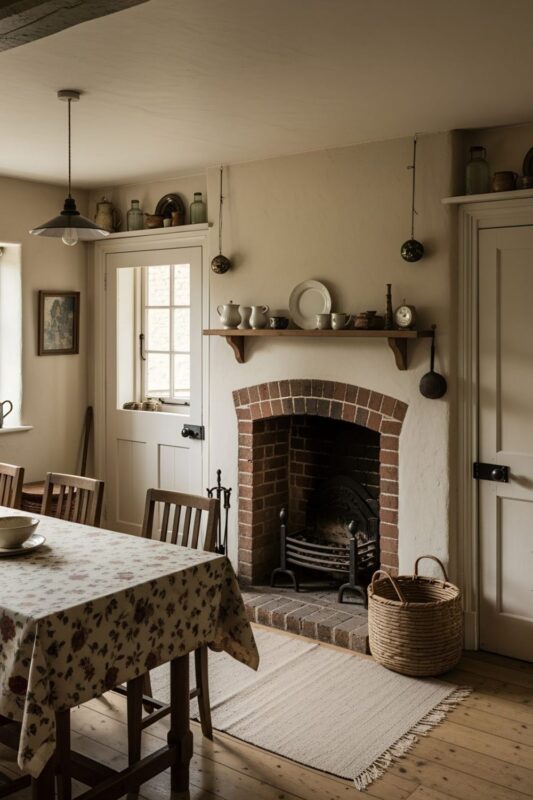
Small figurines line the mantel, arranged with care rather than symmetry.
Above the hearth hangs an ornate mirror. It reflects the floral wallpaper and expands the room visually.
The pattern on the walls introduces movement without overpowering the furnishings.
Armchairs upholstered in muted fabrics sit nearby. Lace doilies rest over their arms and along side tables.
Antique trinkets occupy corners, shelves, and tabletops, each one contributing to the layered atmosphere.
A few potted plants bring subtle freshness to the room. Their green leaves contrast gently with the warm brick and patterned walls.
The design feels personal. Nothing appears rushed or overly styled.
This interior relies on collected objects, solid materials, and placement to create a setting shaped by memory.
Floral Walls Framing a Classic Fireplace
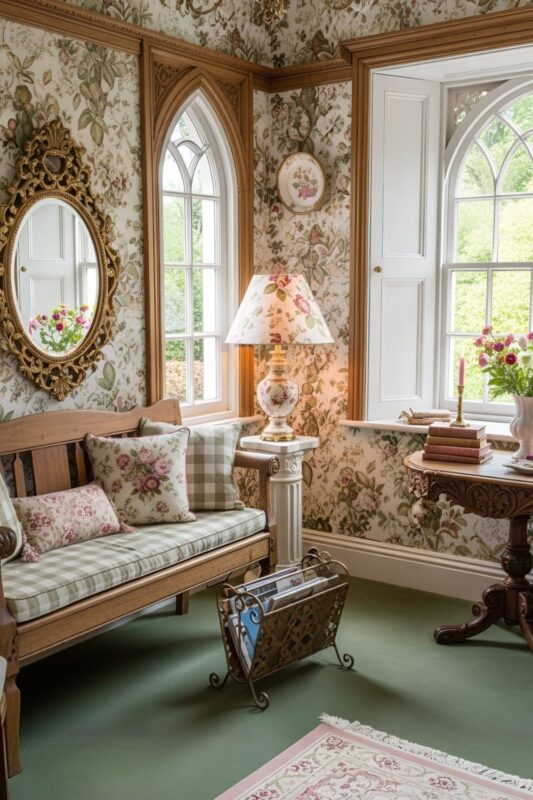
Floral wallpaper establishes the tone in this Victorian interior. The pattern stretches across the walls with detail and repetition.
It creates a decorative backdrop that defines the room immediately.
At the center stands a sturdy brick fireplace. Its straightforward construction balances the ornate surroundings.
A traditional clock rests above it, adding structure and visual height.
Framed portraits in carved frames hang nearby. They introduce formality and reinforce the historical character of the space. Their darker tones contrast against the patterned walls.
A richly woven rug covers the wooden floor. Its presence softens footsteps and adds warmth underfoot.
Chairs with embroidered upholstery sit arranged for conversation, their detailing echoing the wallpaper’s motif.
The room feels composed and intentional. Every element supports the fireplace as the focal point.
Pattern, brick, and wood work together to create a Victorian setting rooted in craftsmanship.
Sunlit Sitting Room with Gilded Accents
Tall bay windows define this Victorian sitting room. Daylight pours in steadily, illuminating carved woodwork and detailed moldings.
The natural light keeps the space open and balanced.
An elaborate fireplace anchors the far wall. Its surround features decorative carving that draws attention without excess. Above it, gilded mirrors reflect light back into the room.
Small sculptures rest along the mantel. Their presence adds dimension and quiet ornamentation. They remain spaced carefully to avoid crowding.
Seating is arranged to take advantage of the window view.
Upholstered chairs face inward, encouraging conversation while remaining close to the hearth. Side tables hold books and modest decorative objects.
The combination of strong architecture and controlled embellishment defines the room.
Light, symmetry, and craftsmanship shape the experience. This Victorian interior values proportion and detail while maintaining a calm and structured environment.
Bedroom Elegance with Ornate Focal Points
This Victorian bedroom centers on a substantial bed frame. Its carved headboard establishes the room’s formality. Patterned armchairs sit nearby, positioned for quiet reading.
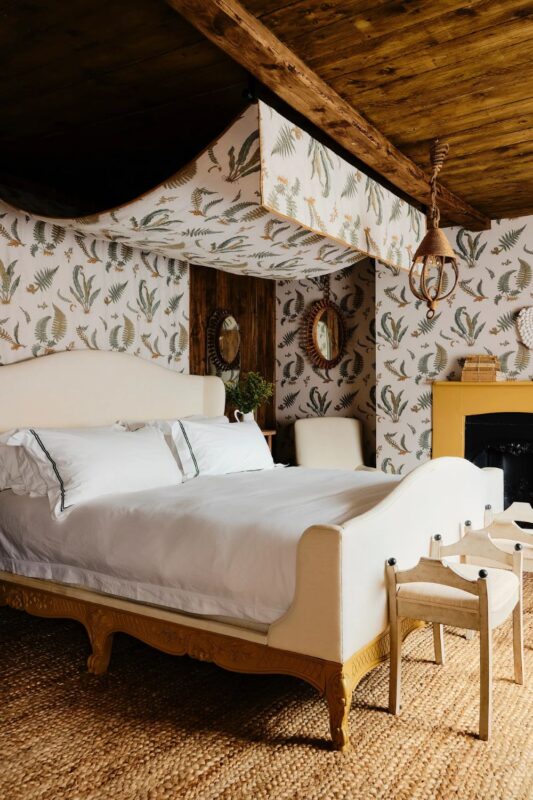
Floral wallpaper covers the walls in measured repetition. The design adds softness while reinforcing the period character.
Decorative plates and framed artwork fill select spaces without overwhelming the layout.
The fireplace introduces architectural weight. A traditional clock and sculpted busts rest above it, creating a composed mantel arrangement. These details draw attention without clutter.
Heavy drapery frames the windows. The fabric falls in long panels, adding vertical emphasis. When closed, it creates a more intimate atmosphere.
The room succeeds because of balance. Furniture remains proportionate to the space. Ornamentation appears deliberate.
This Victorian interior respects structure while allowing decorative elements to enhance, not dominate, the setting.
Rustic Kitchen with Traditional Table Setting
Exposed wooden beams stretch across the ceiling of this Victorian kitchen. Their natural finish contrasts with lighter walls and brings depth to the room.
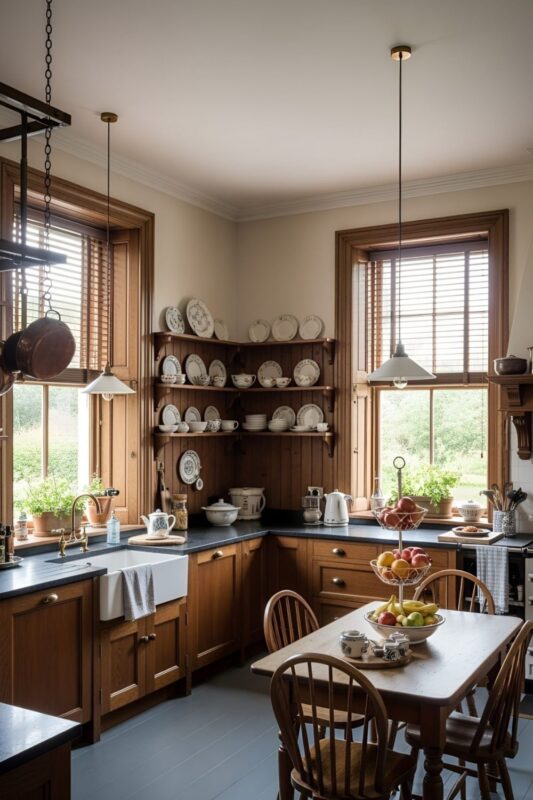
At the center stands a sturdy wooden table. Mismatched chairs surround it, each one slightly different in shape.
Shelves display blue and white China in tidy stacks. The arrangement appears practical, not decorative alone. Everyday items remain within reach.
A modest fireplace or stove anchors one side of the kitchen. Its presence reinforces the room’s function as a gathering space.
Light enters through nearby windows, illuminating the grain of the wood surfaces.
The layout encourages shared meals and steady routines. Nothing feels excessive. This
Victorian cottage kitchen focuses on durable materials, useful furniture, and simple arrangements that support daily life while honoring historic design.
Lace, Light, and a Graceful Victorian Revival
This Victorian cottage room leans into softness. Floral armchairs rest on polished wooden floors that reflect the light from overhead fixtures.
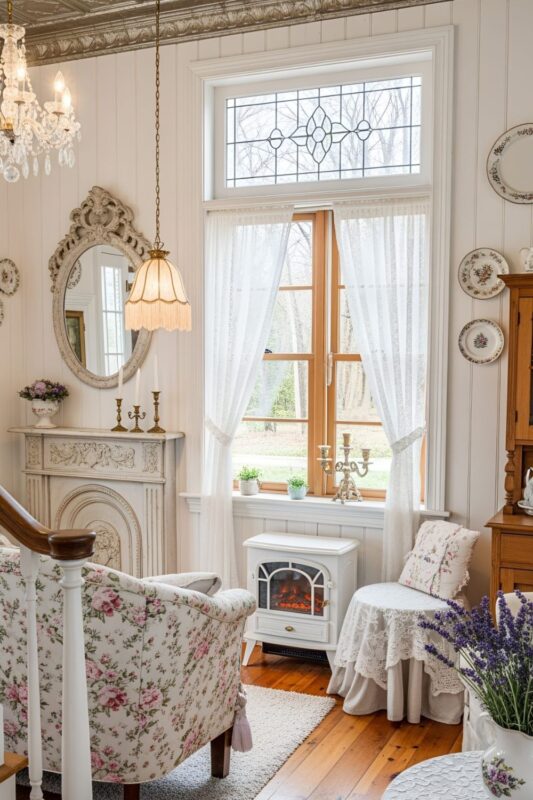
A carved fireplace anchors one wall. Its surround features detailed molding that draws attention even without a fire burning inside.
The mantel holds a few porcelain pieces arranged with restraint.
Vintage mirrors hang strategically, catching the glow from a modest chandelier. Their placement expands the room visually and highlights the patterned wallpaper.
Lace curtains frame the windows. They filter daylight gently and move slightly when the air shifts.
Decorative plates line one section of wall, displayed in a measured formation that avoids clutter.
The room does not overwhelm. Each ornate element has breathing room. The balance between carved wood, delicate fabric, and filtered light defines the setting.
It captures Victorian romance through texture and proportion rather than excess ornament.
A Layered Parlor with Heritage Character
This Victorian parlor combines warmth with detail. A plush red chair sits prominently, dressed with patterned cushions that introduce subtle contrast.
The walls carry muted yellow and green tones. Framed paintings hang in arrangements, each one spaced to maintain order.
Their subjects reinforce the period influence without crowding the room.
Polished wood flooring runs throughout the space. It leads toward double glass-paneled doors that connect this room to the next.
The transparency adds depth while preserving separation.
A small side table stands near the seating area. Its floral inlay reflects the decorative themes found elsewhere in the room. The piece feels intentional, not ornamental for its own sake.
This interior succeeds through balance. Color remains controlled. Furniture stays proportionate.
The room feels collected over time, shaped by use and memory rather than display alone.
Portrait Walls and Polished Wood Gatherings
This Victorian interior centers on a polished wooden table surrounded by antique armchairs. Their carved frames provide structure, while floral cushions introduce softness.
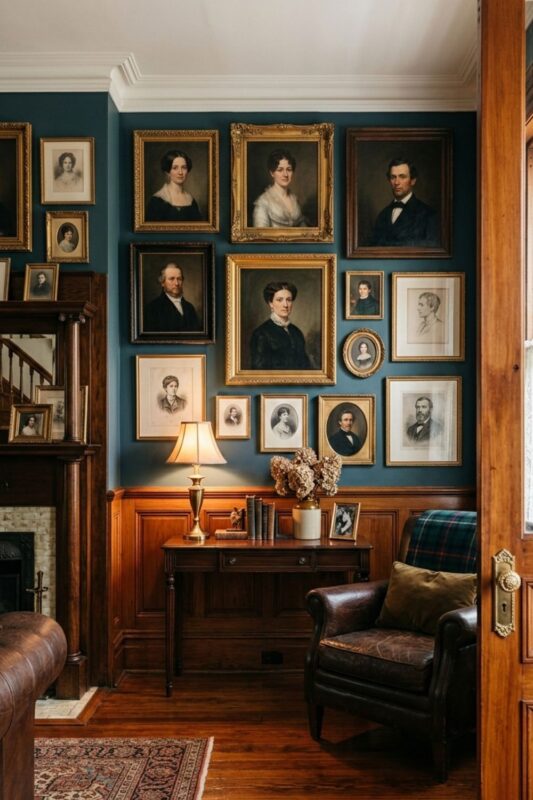
The walls are lined with framed portraits. They vary in size but share similar tones, creating cohesion across the arrangement. Each frame contributes to the layered atmosphere.
Fresh flowers placed in simple vases add life to the room. Their color breaks up the darker finishes without disrupting the historical character.
A lantern-style light fixture hangs above, casting steady illumination over the table.
The seating remains arranged for discussion. Chairs face inward, keeping the table as the focal point. Decorative objects remain minimal to preserve clarity.
This design relies on strong materials and measured ornament. Wood, fabric, and framed art work together to establish a Victorian setting that values craftsmanship.
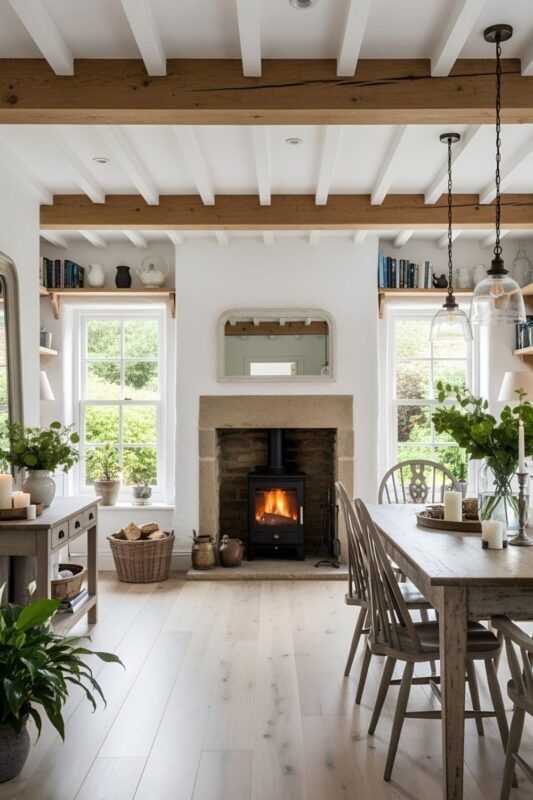
Whitewashed Beams with Floral Restraint
Whitewashed walls brighten this Victorian cottage space. The lighter backdrop allows carved furniture to stand out clearly.
Exposed ceiling beams add architectural interest. Their structure contrasts with delicate lace accents placed on tables and sideboards. The mix of sturdy wood and fine fabric creates quiet tension.
A chandelier hangs overhead, distributing light evenly. Beneath it, upholstered armchairs and a lace-draped table form a modest seating arrangement.
A vintage china cabinet lines one wall, displaying crockery in neat rows.
Fresh flowers appear in select corners. Their presence softens the geometry of beams and cabinetry. The patterned rug underfoot defines the seating zone without dominating the floor.
This room maintains discipline in its layout. Decorative details remain controlled. The result is a Victorian cottage interior that feels bright.
A Blue Armchair Framed by Tile and Timber
Painted walls provide depth in this Victorian nook. Framed artwork lines the surface in balanced groupings, reinforcing the period style.
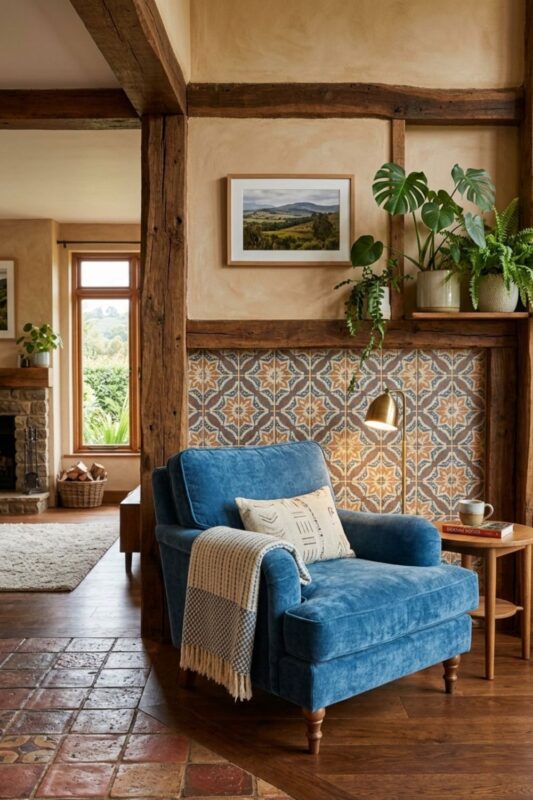
A blue armchair occupies the corner. Draped with a patchwork throw, it becomes an inviting reading spot. The textile adds subtle color variation without overwhelming the palette.
The fireplace features decorative tilework within its surround. The patterned tiles introduce detail at eye level. Crockery displayed along the mantel echoes the room’s historic tone.
Natural light enters through a large window. It highlights the texture of the walls and the grain of nearby furniture.
A patterned rug anchors the seating area, defining the space clearly.
This interior focuses on proportion and placement. Each element serves a purpose.
The result is a Victorian cottage corner designed for quiet moments, supported by good arrangement