13 Mid-Century Modern House Exteriors For Curb Appeal

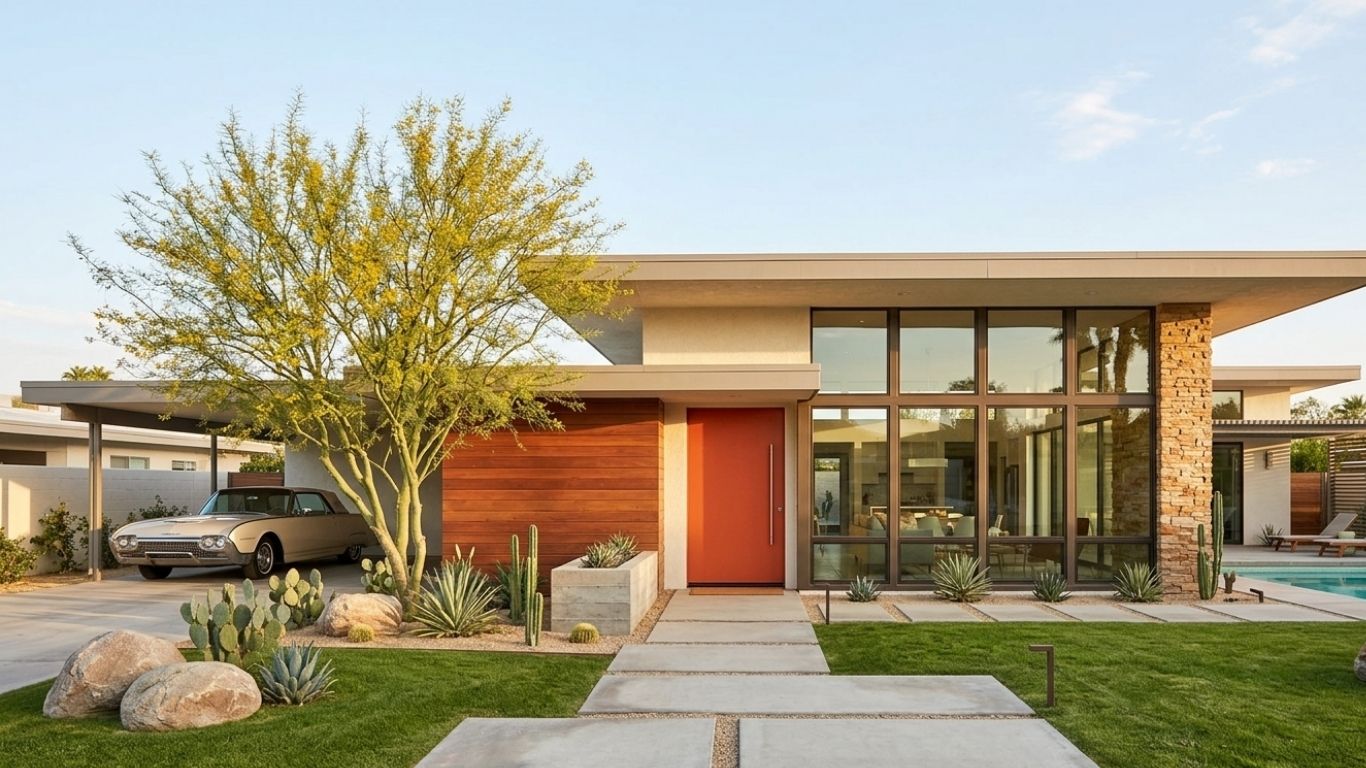
If you’ve already designed your midcentury modern living room or styled a midcentury modern dining room, the exterior is the next step to think about.
Much like mid century lighting, the exterior sets the tone before anyone even walks inside. From rooflines to materials, each choice shapes how your home is seen and experienced.
I’ve found that even small updates outside can shift the entire look of a house.
As you go through these ideas, you’ll see how simple changes can help you create a clear midcentury impression.
How Do You Make the Exterior of a House Look Midcentury Modern?
Focus on clean lines and simple forms. Start with the shape of the house, especially the roof. Flat, low-pitched, or angled roofs help set the tone right away.
Next, look at materials. Wood, stone, and glass are key elements. Use them in a way that feels natural.
Windows also matter. Floor-to-ceiling designs can open up the space and connect the house to its surroundings.
Keep the layout simple and avoid adding too many details. When each part has a clear purpose, the overall design comes together easily.
Here are a few exterior ideas you can embrace;
RELATED: 16 Mid Century Modern Bedroom Ideas That Actually Feel Cozy
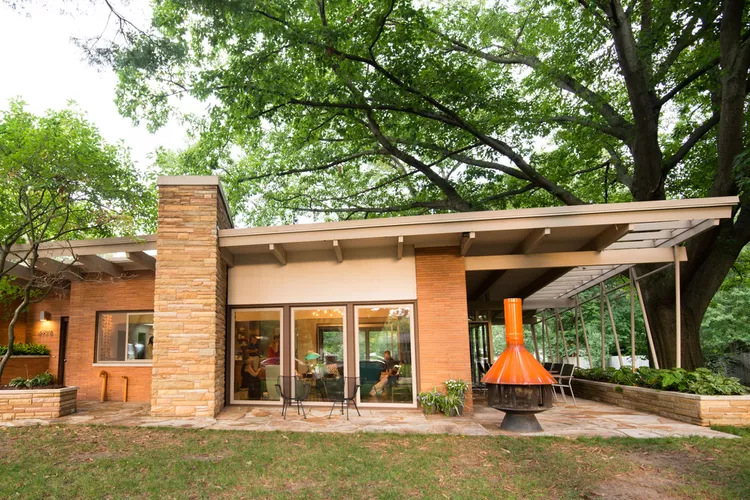
Single-Level Home with a Pitched Roof
A single-level home gives you a clear, grounded look right from the start. Everything sits on one plane, so the structure feels easy to understand when you approach it.
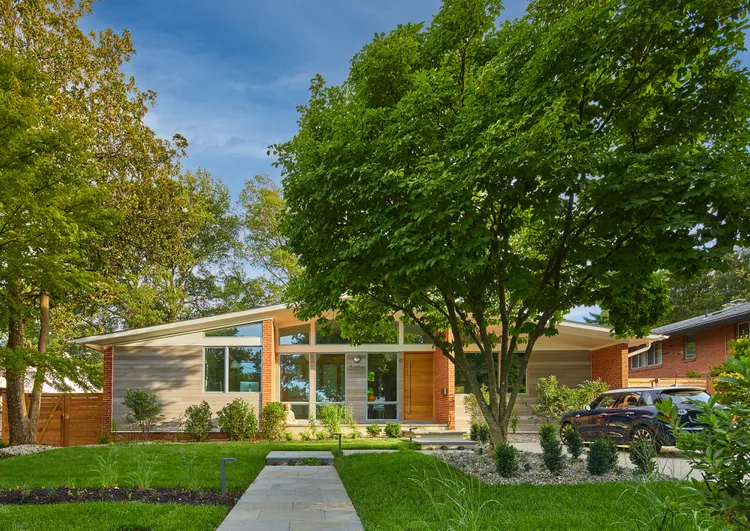
The pitched roof adds just enough shape to keep things from looking flat. It draws your eye upward, then brings it back down across the length of the house.
You can stretch the design further with wide front windows that run along the façade. This let in light and open up the exterior view in a way that feels connected to the surroundings.
Materials matter here, and this is where you can make it your own. Brick adds weight. Wood brings warmth.
A mix of the two can create a balanced front that doesn’t rely on decoration to stand out.
Keep the entry simple so the roofline and layout remain the focus.
When everything comes together, you get a home that feels calm, clear, and easy to live with from the outside in.
Midcentury A-Frame
The A-frame has a strong presence the moment you see it. Its triangular shape cuts through the usual rooflines and gives the house a clear identity.
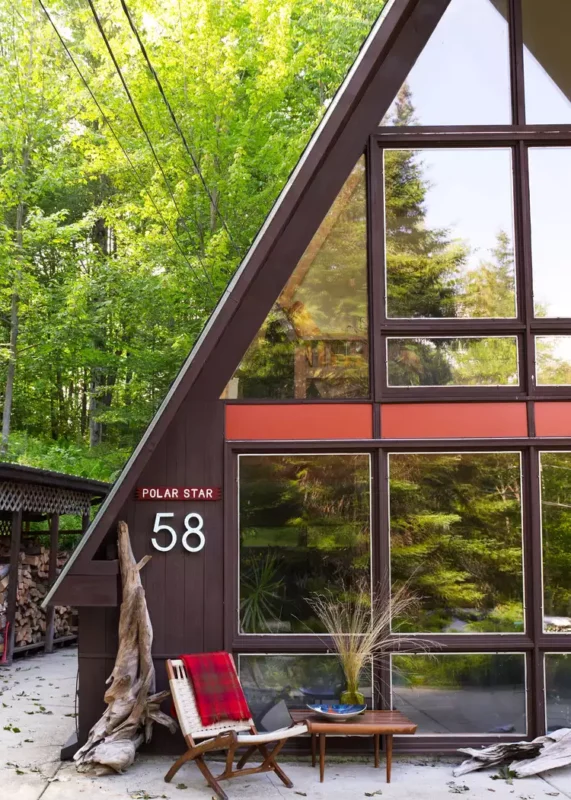
That steep angle is the main feature, so you don’t need to add much else to make it work.
Glass plays a big role in this style. Large front panels can open up the entire façade and give you a direct view inside, which makes the home feel less closed off from the outside.
Wood siding helps balance the sharp lines. It softens the structure and adds a natural layer that fits well with outdoor surroundings.
You can keep the rest of the design simple, letting the shape do most of the work.
This kind of home suits you if you want something bold but still practical, with a design that stands on its own without extra effort.
Angled Roof with a Warm Wood Front
An angled roof shifts the entire look of a house in a subtle but clear way. It creates direction and gives the structure a bit of movement from the outside.
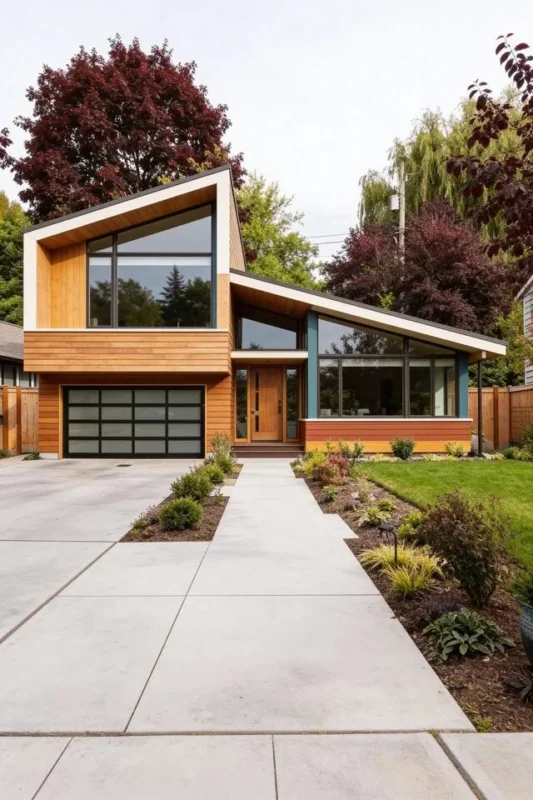
Pairing that with a wood façade brings everything back to a natural tone.
Horizontal wood panels can stretch the front visually, making the home appear wider than it is. This works well for midcentury layouts that sit low to the ground.
You can frame windows in darker tones to define the lines and help the angles read more clearly from a distance.
A simple pathway and low greenery can support the look without pulling attention away from the main structure.
The mix of sharp lines and warm material creates a house that feels strong but still easy to approach, giving you a design that holds attention in a confident way.
Butterfly Roof with Glass Walls
The butterfly roof flips the usual idea of a roof. It dips in the center and lifts at the edges instead of rising to a peak, creating a shape that wins.
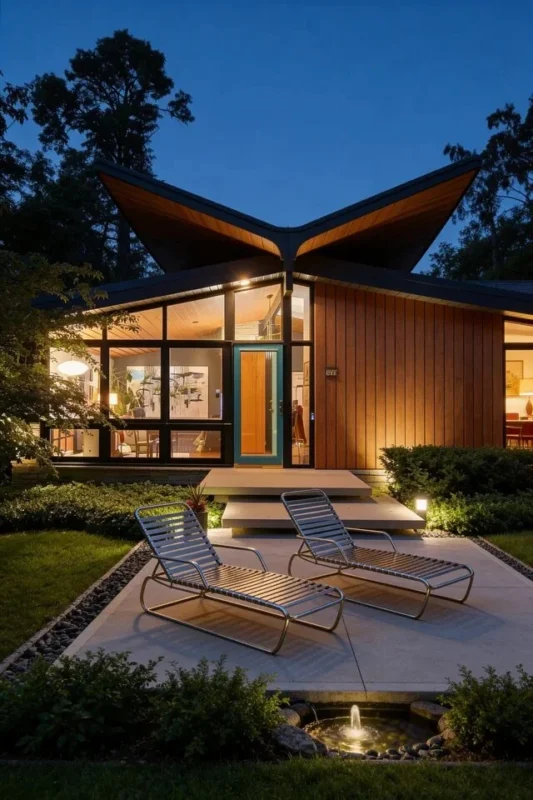
That form works even better when paired with large glass walls that open up the entire exterior.
From outside, you can catch glimpses of the interior, which makes the house feel more open and connected to its setting in a very direct manner.
The roof also has a practical side. Rainwater moves toward the center, which can be managed through a simple drainage system or even a small feature like a central channel.
Keep the rest of the materials quiet so the structure remains the focus.
This design gives you a home that looks different from every angle, with a clear identity that doesn’t need extra detail to make an impact.
Stone Columns Framing the Entry
Stone columns can shape the entrance in a strong and simple way. They guide your attention straight to the front door as you approach.
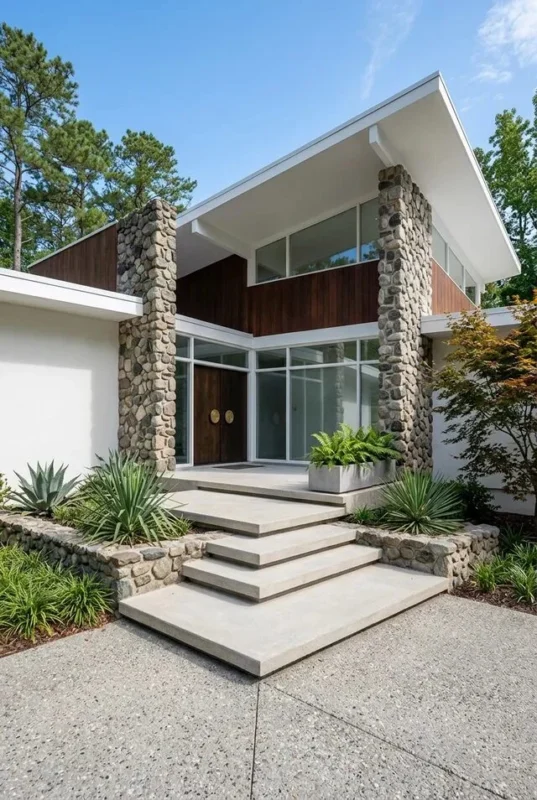
This kind of structure creates a sense of arrival before you even step inside.
You can use rough stone for texture, which contrasts nicely with smoother surfaces like wood panels or glass sections around the entry.
The door itself should stay clean in design so it doesn’t compete with the columns.
A small overhead cover or slight recess can add another layer to the entry and make it feel more defined.
This setup is the best if you want the entrance to stand out in a clear, structured way, giving the home a solid and well-framed appearance from the first glance.
Dramatic Glass Corner Mid-Century Statement
A glass corner can change how your home looks from the outside. Instead of a solid edge, you get a clear view that opens up both sides of the structure.
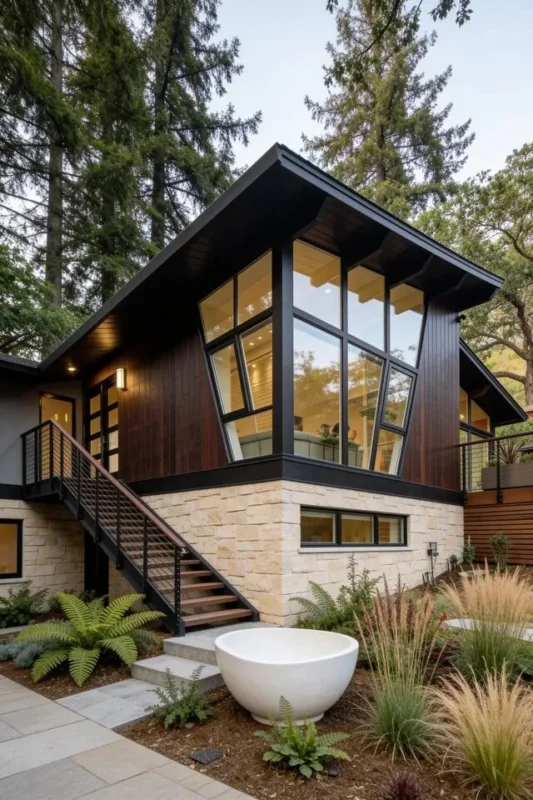
This works best when the glass wraps around the corner with little to no visible support.
It creates a sharp, clean break from traditional walls.
From the street, that corner becomes the main feature. It draws attention right away and gives the house a lighter appearance.
You can frame the glass with dark trim to define the edges and keep the lines crisp.
Inside, that same corner brings in more daylight and gives you wider views of your surroundings.
This approach suits you if you want something striking but still tied to midcentury design, using simple forms to create a strong visual effect.
Crisp White Angled Mid-Century Modern Façade
A white exterior can sharpen the look of a mid-century home, especially when paired with angled rooflines. The clean surface makes every line more visible.
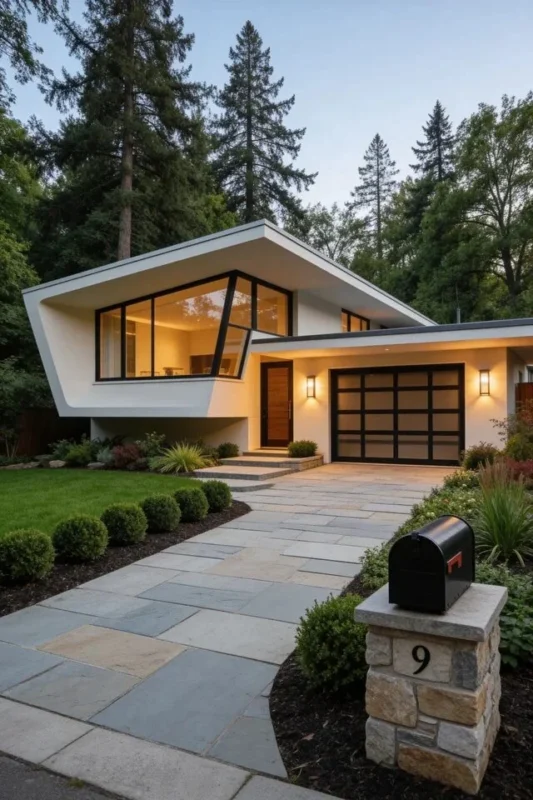
Angles become the main feature here.
When light hits the façade, shadows form along the edges, which adds depth even though the color stays simple.
You can pair white walls with dark window frames or a wood entry door to create contrast. This helps break up the surface and keeps the design from looking plain.
Keep landscaping minimal so the structure stays in focus.
This style suits when you want a bright, sharp exterior that highlights the architecture through shape and light instead of heavy materials.
Plants, Natural Light, and a Saturated Door Color
A bold front door can shift the mood of your exterior right away. Deep blue, burnt orange, or even mustard yellow can create an amazing look.
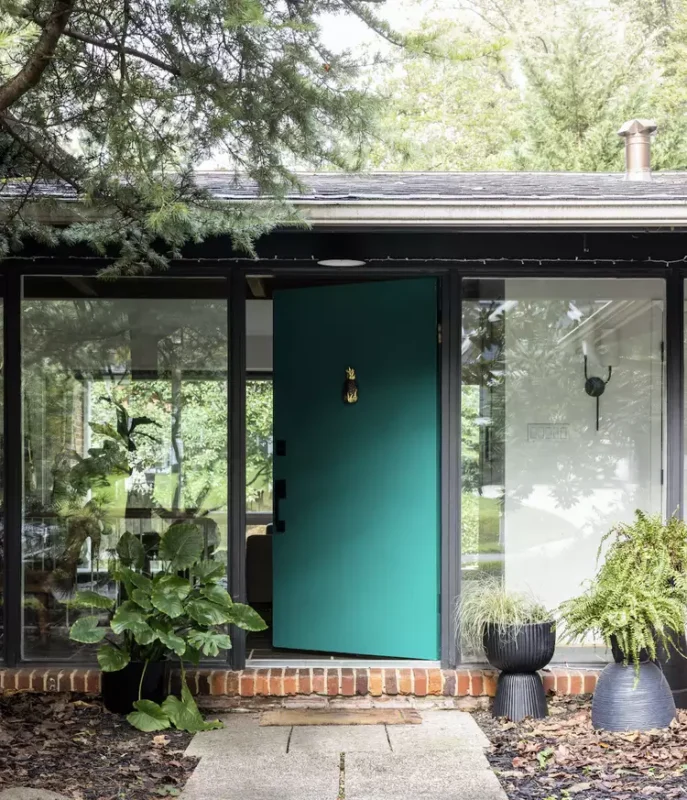
Around that, plants can soften the structure and add life to the space.
You don’t need a full garden. A few well-placed planters or low greenery near the entry can frame the door and guide the eye toward it.
Large windows help bring in light and connect the interior with the exterior.
When these elements come together, the house feels more active and personal.
This setup shines if you want a mix of structure and color, giving your home a clear point of focus that stands out as soon as you approach.
Glass Exterior
A glass-heavy exterior changes how a home interacts with its surroundings. It replaces solid walls with open views, making the structure appear lighter.
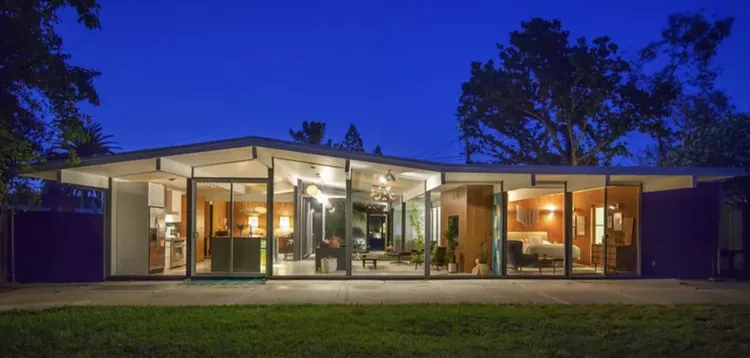
This design stands out in areas where privacy is not a major concern.
Large panels can stretch across the front or wrap around sections of the house, creating a continuous surface.
Frames should stay thin to keep the look clean and focused on the openness.
You can balance the glass with wood or stone sections to anchor the design.
The result is a home that feels connected, giving you a direct link between indoor spaces and the outdoors.
Wood Finishes
Wood finishes bring warmth and texture to a midcentury exterior. They can cover large sections of the façade or appear in smaller details like panels or trim.
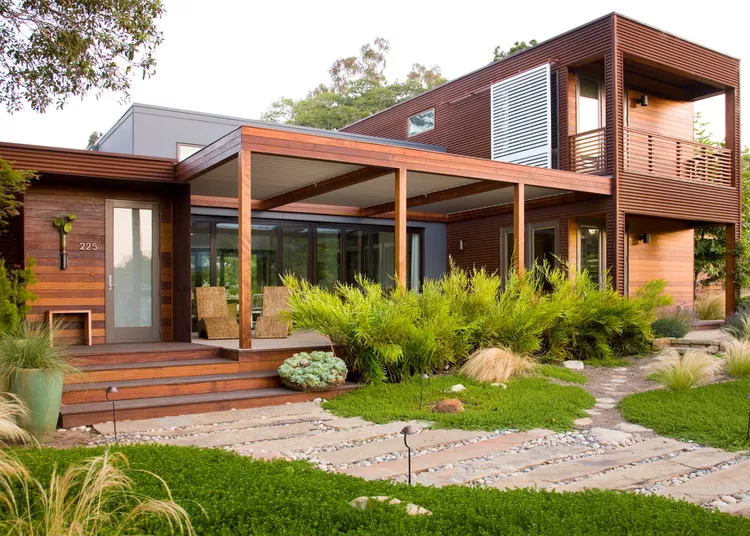
Different tones can change the overall look.
Darker woods give a richer appearance, while lighter tones create a softer, more relaxed feel.
You can run the panels horizontally to stretch the home visually, which wins for low-profile designs.
Pair wood with simple landscaping and clean lines to keep the focus on the material.
This approach gives you a natural, grounded exterior that stays true to mid-century style through its use of honest materials and simple forms.
Midcentury Color Palette
Color plays a quiet but important role in how your exterior comes together. You don’t need a wide mix. A few well-chosen tones can shape the entire look.
Start with a neutral base like white, beige, or soft gray. This gives you a clean backdrop that lets other elements come through clearly.
From there, you can bring in deeper shades through the door, trim, or even window frames.
Think olive green, rust, or muted blue. These colors add contrast but still stay in line with midcentury style.
You can also repeat one tone in small ways across the exterior. A planter, a railing, or even outdoor furniture can tie things together.
Keep the palette tight so nothing feels out of place.
When the colors work together, the house looks settled and complete, giving you a design that reads well from every angle.
Multi-Level Home with Wood and Brick
A multi-level layout adds depth to a mid century exterior. Instead of a flat front, you get layers that step forward and back, which makes the house more interesting as you move around it.
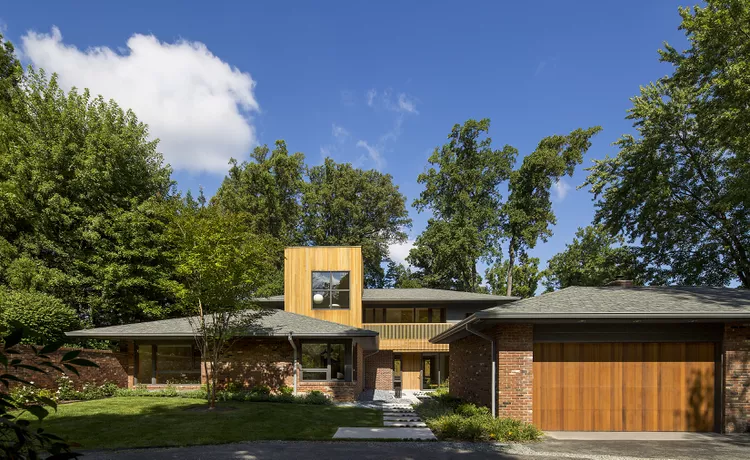
This structure works well on sloped land, but you can also use it on a flat lot to break up the shape.
Brick and wood are a strong combination here. Brick brings a solid base, especially on the lower level. Wood can then cover the upper sections, adding warmth and contrast.
You can separate the levels visually by changing materials or slightly shifting the rooflines.
Windows placed across different levels help balance the design and keep the exterior from feeling too heavy.
A simple staircase or pathway can guide the eye toward the entry, tying everything together.
This approach gives you a home that feels structured and layered, with clear sections that still connect as one complete design.
Natural Wood Accents
Wood accents can shift the tone of your exterior in a very direct way. Even small touches can make the house look warmer and more inviting.
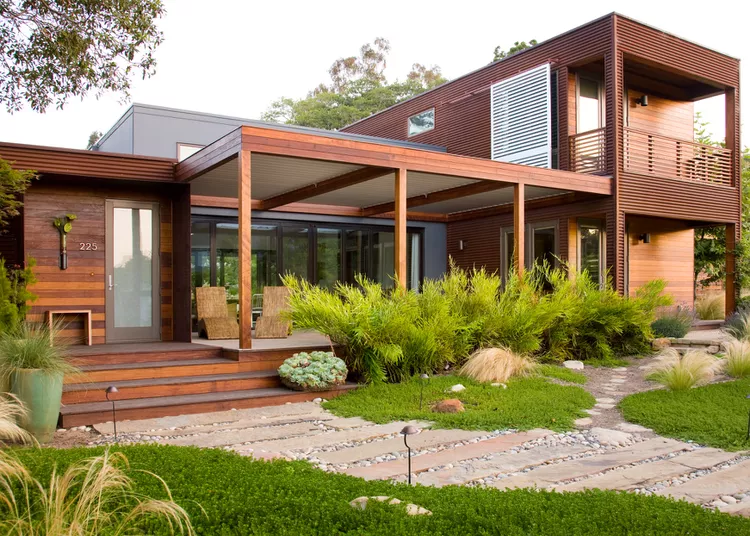
You don’t have to cover the entire façade.
A section near the entry, a set of vertical panels, or even wood framing around windows can be enough to make an impact.
The grain and tone of the wood add detail that paint alone cannot provide.
You can pair these accents with neutral walls to create contrast and keep the design balanced.
Over time, the wood may change slightly in color to add character to the home.
This approach is perfect want to introduce warmth while keeping the overall structure true to midcentury design.
FAQ
What are the best colors for midcentury houses?
Stick to a neutral base like white, gray, or beige. Add a few deeper tones such as olive, rust, or muted blue in small areas like the door or trim. Keep the palette simple.
Can you update an older home to look midcentury modern?
Yes. You can refresh the look with small changes. Try a new color, update the door, add wood accents, and adjust lighting or landscaping.
What materials are commonly used in midcentury house exteriors?
Midcentury homes often use materials that show their natural character. Wood, stone, brick, and glass are the main choices. Use them in a simple way to keep the design clear.