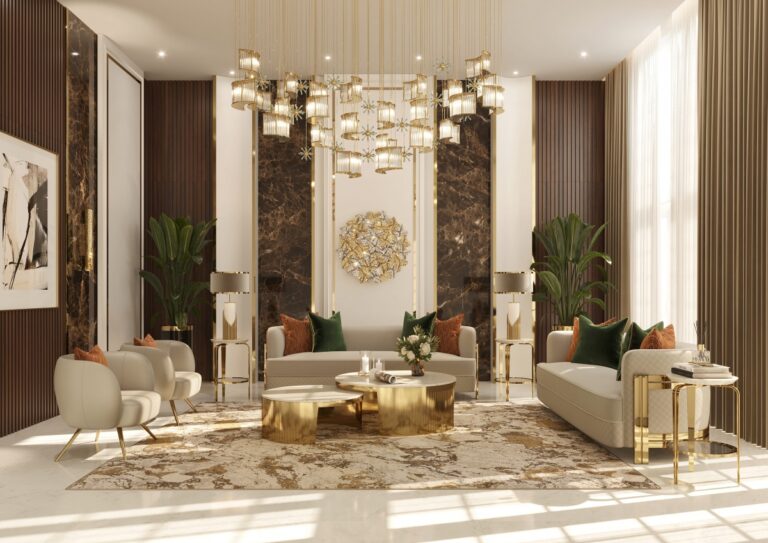
11 Dark Green Couch Living Room Ideas

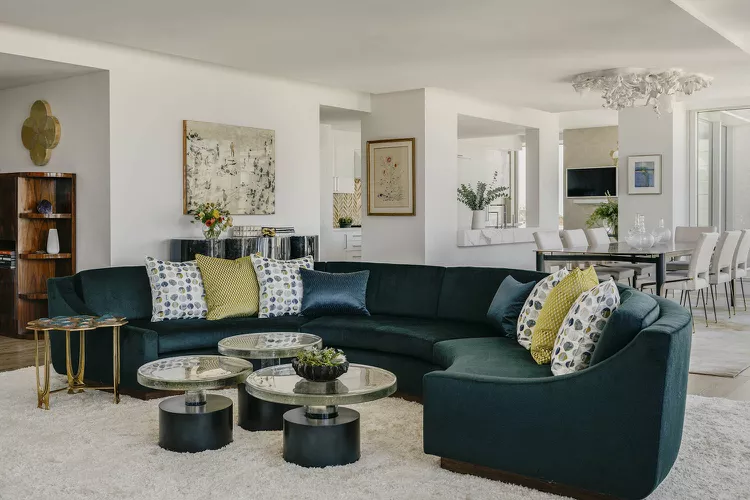
Today, a dark green couch can completely shift the look of your living room.
It brings depth, character, and a strong sense of style right from the start.
The challenge is knowing how to build around it without making the space look too mismatched.
With the right mix of colors, textures, and layout choices, you can turn it into the highlight of the room.
Read these dark green couch living room ideas so that you style your space in a way that looks gorgeous.
How To Style a Living Room with a Dark Green Couch
Emerald Green Sofa Against White Shiplap Walls
An emerald green sofa instantly draws attention when placed against white shiplap walls. The contrast is sharp and clean, giving the room a clear sense of direction.
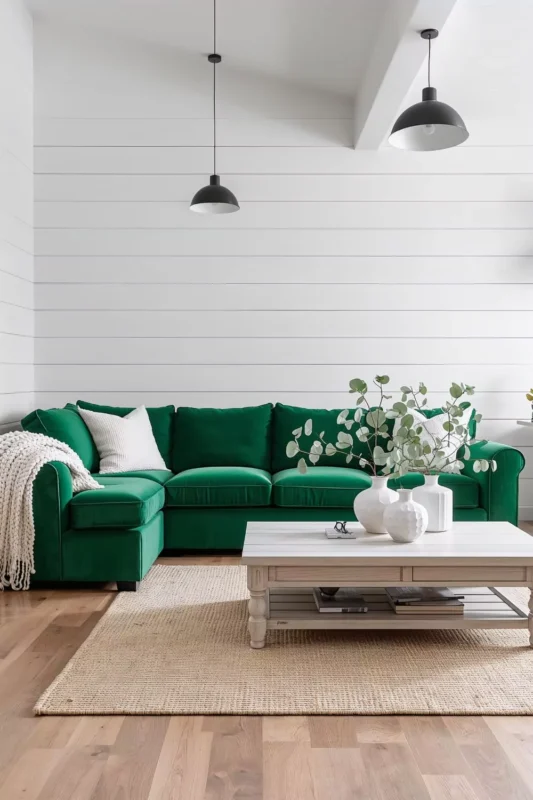
The vertical or horizontal lines of the shiplap also introduce structure, which keeps the bold color from overwhelming the space.
This setup works best when the surrounding elements stay simple. A neutral rug, light-toned flooring, and minimal décor help maintain balance. The sofa becomes the main feature, so there is no need to compete with it.
Natural light plays an important role here. White walls reflect light across the room, which helps highlight the richness of the green upholstery throughout the day.
A few dark accents, such as a black lamp or framed artwork, can add definition and tie the look together.
Pro Tip: Repeat the green tone in small accents like a vase or artwork to create consistency across the room.
Avoid This: Avoid overcrowding the walls with décor, as it can distract from the clean contrast.
Forest Green Sectional with Natural Wood Tables
A forest green sectional pairs naturally with wood furniture, creating a grounded and cohesive living room.
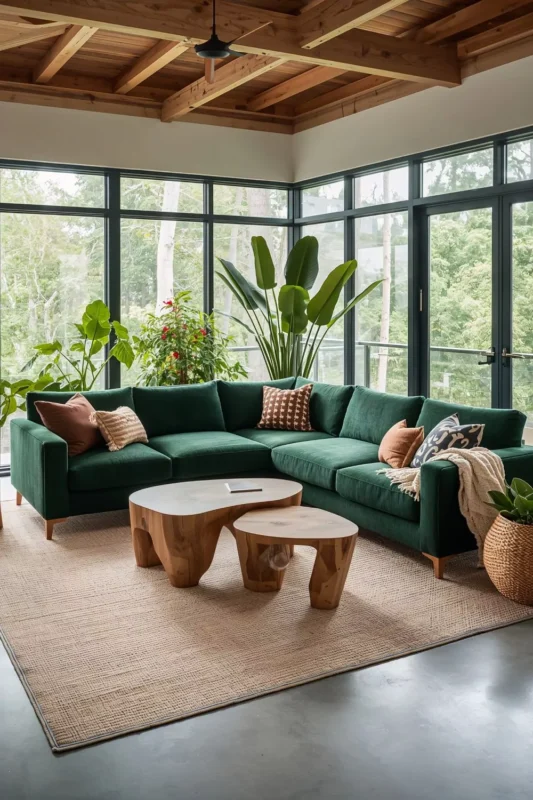
The depth of the green works well alongside the warmth of natural wood tones.
A solid wood coffee table can anchor the seating area and bring the layout together.
Lighter wood finishes can brighten the space, while deeper tones create a richer look. Mixing both can add variety when done carefully.
Keep other elements simple. Neutral textiles, woven materials, and soft fabrics can support the overall palette without adding visual clutter.
Adding a few plants can strengthen the connection between the furniture and natural elements, making the room look more complete.
This approach creates a steady and balanced space that relies on material contrast instead of bold color shifts.
Pro Tip: Choose wood pieces with visible grain to add texture and prevent the space from looking flat.
Avoid This: Avoid overly glossy finishes, as they can clash with the natural look of the wood.
Dark Green Sofa with Mocha Leather Chairs
A dark green sofa paired with mocha leather chairs creates a rich and structured seating arrangement. The two tones complement each other while maintaining their own presence.
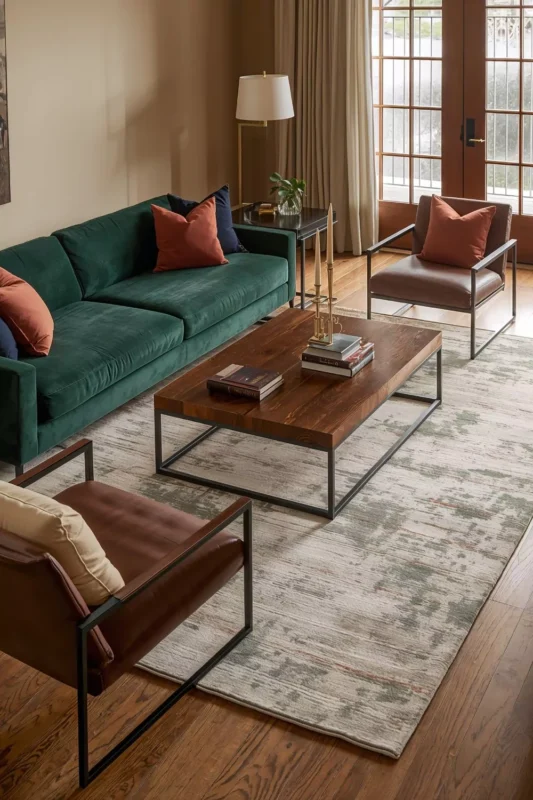
Positioning the chairs across from the sofa helps form a clear conversation area. This layout works well in both small and large living rooms.
A neutral rug can help tie the seating together and keep the darker tones from dominating the space. It also adds a soft layer underfoot that balances the heavier materials.
Metal accents, such as a floor lamp or side table, can introduce contrast. Keeping the finish consistent helps maintain a clean look.
This setup brings together texture and color in a way that looks intentional and well-planned.
Pro Tip: Use a lighter rug to break up the darker seating and create visual balance.
Avoid This: Avoid placing too many dark elements in one area, as it can make the room appear heavy.
Sage Green Couch with Blush Pink Accents
A sage green couch offers a softer approach to green seating, and blush pink accents can introduce a gentle contrast. This combination creates a calm and balanced palette.
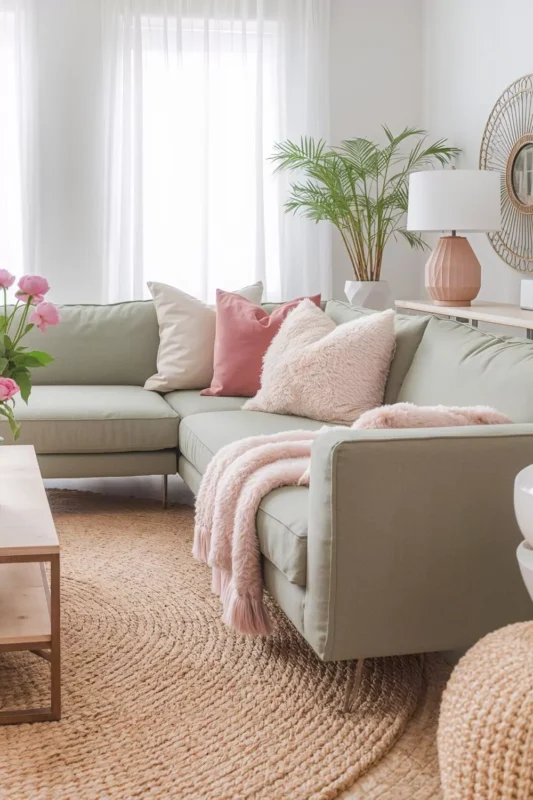
Blush pillows or a throw can add just enough color to stand out against the muted green. Keeping these accents minimal helps maintain a clean look.
Light wood furniture or white finishes can support the palette and keep the room bright. A simple rug in a neutral tone can help define the seating area.
Artwork or decorative pieces can repeat the blush tone in small amounts, creating a connection across the space.
This setup works well for those who prefer a lighter and more relaxed color scheme.
Pro Tip: Limit blush accents to a few key pieces so the color remains intentional.
Avoid This: Avoid mixing too many soft pastel tones, as it can make the space look overly delicate.
Dark Green Velvet Sectional with Brass Accents
A dark green velvet sectional introduces texture and richness, and brass accents can elevate the overall design.
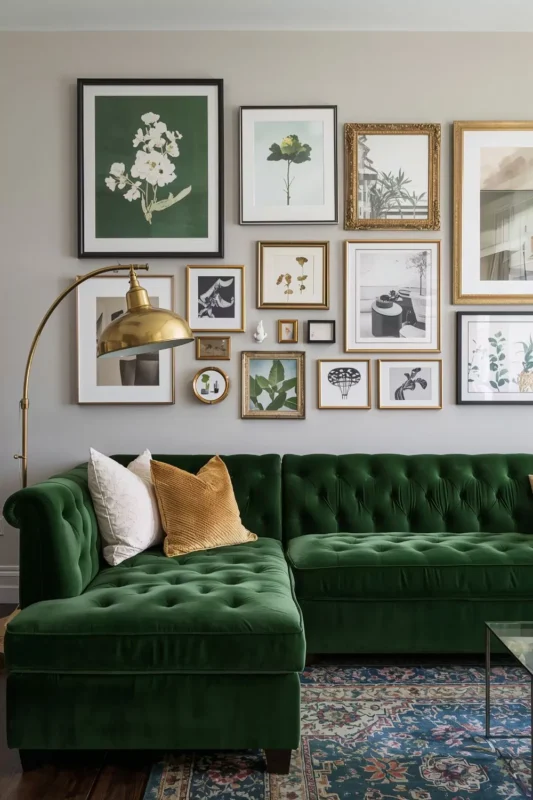
The contrast between soft fabric and metallic surfaces creates a strong visual pairing.
Brass side tables or lighting fixtures can reflect light and add brightness to the space. These elements help break up the darker tones of the sectional.
Keep the rest of the room simple. Neutral walls and understated décor allow the materials to stand out without distraction.
A rug with a subtle pattern can tie the seating area together and add another layer of interest.
This setup creates a polished look that remains practical for everyday use.
Pro Tip: Use brass in a few key areas to highlight the space without overwhelming it.
Avoid This: Avoid mixing multiple metallic finishes, as it can make the design look inconsistent.
Art Deco-Inspired Green Sofa Setup
A dark green couch fits naturally into an Art Deco setting, especially when paired with bold shapes and polished finishes.
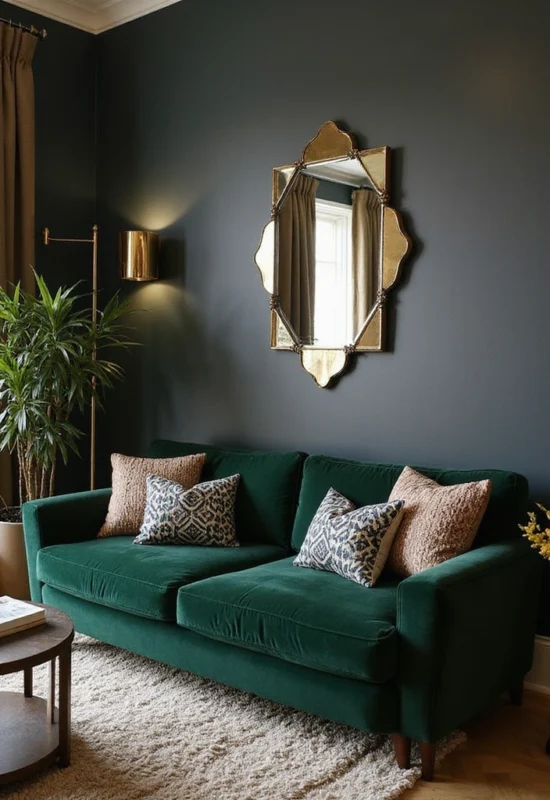
The color already carries a sense of drama, so the surrounding pieces should match that energy through form and detail.
Start with strong lines. A geometric rug or patterned wallpaper can introduce structure that echoes classic Art Deco design.
Furniture with curved edges or sculpted arms can soften the look and keep it from appearing too rigid.
Gold or brass accents help complete the style. A side table, lamp, or mirror with metallic detail can bring in contrast and highlight the richness of the green upholstery.
Keep the palette controlled. Black, cream, and metallic tones can support the design without pulling attention away from the main pieces.
This setup creates a living room that looks bold, intentional, and visually striking.
Pro Tip: Use symmetry in your layout to reinforce the structured look that defines Art Deco interiors.
Avoid This: Avoid mixing too many design styles, as it can weaken the strong visual identity.
Coastal-Inspired Living Room with a Green Couch
A dark green couch can still work in a coastal setting when paired with lighter elements. The key is to balance the depth of the sofa with airy textures and soft tones.
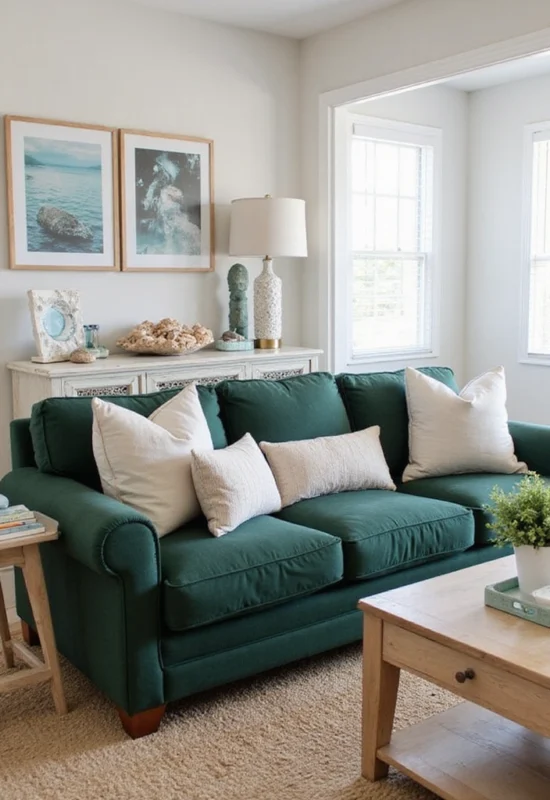
Start with a light base. White or off-white walls help open up the space and keep it bright.
Natural fiber rugs, such as jute or sisal, can introduce texture that fits the coastal theme.
Wood furniture in lighter finishes can help soften the overall look. Driftwood tones or weathered finishes work particularly well here.
Blue accents, whether in cushions or artwork, can connect the design to coastal influences. Keep these touches minimal so the room stays balanced.
The result is a space that blends depth and brightness, offering a relaxed but structured look.
Pro Tip: Use natural textures like woven baskets or linen fabrics to support the coastal theme.
Avoid This: Avoid heavy or dark décor pieces that can overpower the lighter elements.
Mid-Century Modern Green Sofa Layout
A dark green couch fits seamlessly into a mid-century modern layout. The clean lines and simple forms of this style pair well with the strong color.
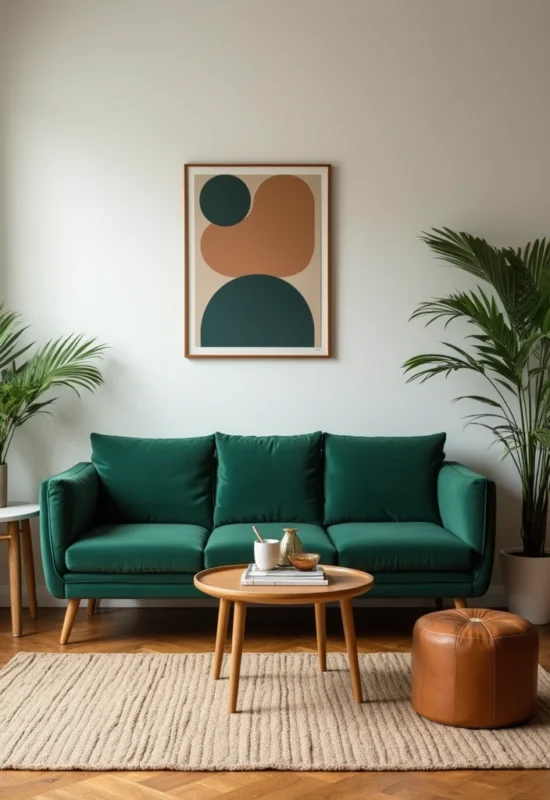
Look for furniture with tapered legs and streamlined shapes. A wooden coffee table or sideboard can anchor the space and connect with the mid-century aesthetic.
Keep the color palette controlled. Warm wood tones, muted neutrals, and small pops of color can support the green without competing with it.
Lighting can also reinforce the look. A simple floor lamp with a sculptural base can add character while staying consistent with the style.
This approach creates a living room that looks organized, functional, and timeless.
Pro Tip: Choose furniture with low profiles to maintain the clean and open look associated with mid-century design.
Avoid This: Avoid bulky or oversized pieces that can disrupt the streamlined layout.
Maximalist Living Room with a Dark Green Sofa
A dark green sofa can anchor a maximalist living room filled with color, pattern, and personality.
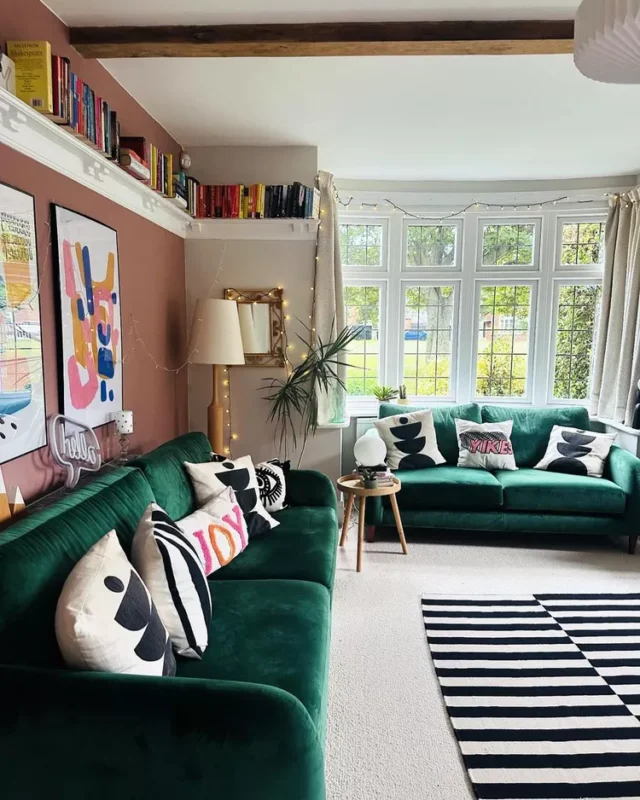
In this setup, the sofa acts as a strong base that supports layered design choices.
Start by building around the couch with bold textiles. Patterned rugs, colorful cushions, and textured throws can add depth and variety.
Artwork plays a major role here. A gallery wall with different frames and styles can create a dynamic backdrop.
Mixing materials also helps. Wood, metal, glass, and fabric can all work together when balanced carefully.
The goal is to create a space that looks collected and expressive, not random. Each piece should contribute to the overall look.
Pro Tip: Choose one main color palette and repeat it across the room to keep the design cohesive.
Avoid This: Avoid adding items without intention, as it can quickly turn the space into clutter.
Southwestern-Style Green Sofa Living Room
A dark green couch can fit well within a southwestern-inspired living room when paired with warm tones and natural textures. The combination creates a rich environment.
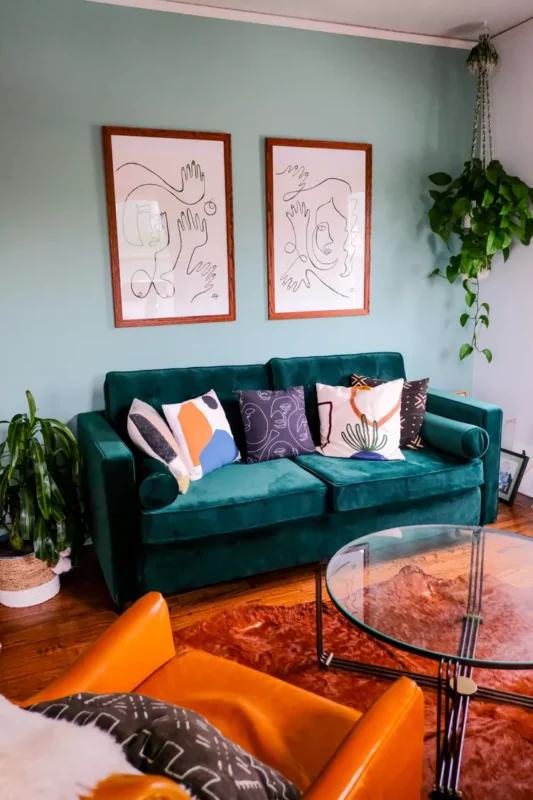
Start with earthy colors like terracotta, rust, and sand. These tones can appear in rugs, cushions, or decorative accents.
Patterned textiles with tribal or geometric designs can add character and tie the space together.
Wood furniture with a raw or slightly rugged finish works well in this style. It adds authenticity and complements the color palette.
Leather accents, whether in chairs or small décor pieces, can further enhance the look.
This setup creates a space that feels warm, layered, and connected to natural elements.
Pro Tip: Use a patterned rug as the centerpiece to anchor the room and guide your color choices.
Avoid This: Avoid overly modern or glossy finishes, as they can clash with the rustic elements.
Deep Green Velvet Couch with a Gallery Wall
A deep green velvet couch can anchor a room that features a full gallery wall.
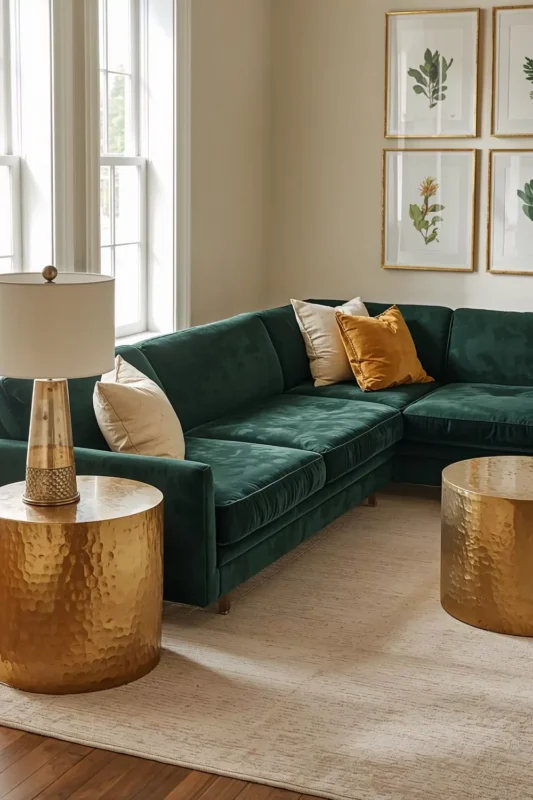
The richness of the fabric adds weight to the space, which helps balance the visual activity that comes from multiple frames and artworks.
Start by arranging your gallery wall with intention. Mix frame sizes, but keep a consistent color story such as black, wood, or brass. This keeps the display organized instead of chaotic.
The artwork itself can vary, but spacing should stay even so the wall reads as one composition.
Place the couch directly beneath the gallery wall to connect both elements. This creates a clear focal area that draws attention as soon as you enter the room.
Keep nearby furniture simple. A clean coffee table and minimal accessories allow the wall and sofa to stand out.
Lighting also matters. Picture lights or a nearby floor lamp can highlight the artwork and bring the entire setup together.
Pro Tip: Lay out your gallery wall on the floor first before hanging to get the arrangement right.
Avoid This: Avoid mixing too many frame finishes, as it can make the display look unstructured.
Farmhouse Fresh with a Dark Green Couch
A dark green couch can fit seamlessly into a farmhouse-style living room when paired with the right textures and finishes. The key lies in combining rustic elements with a simple layout.
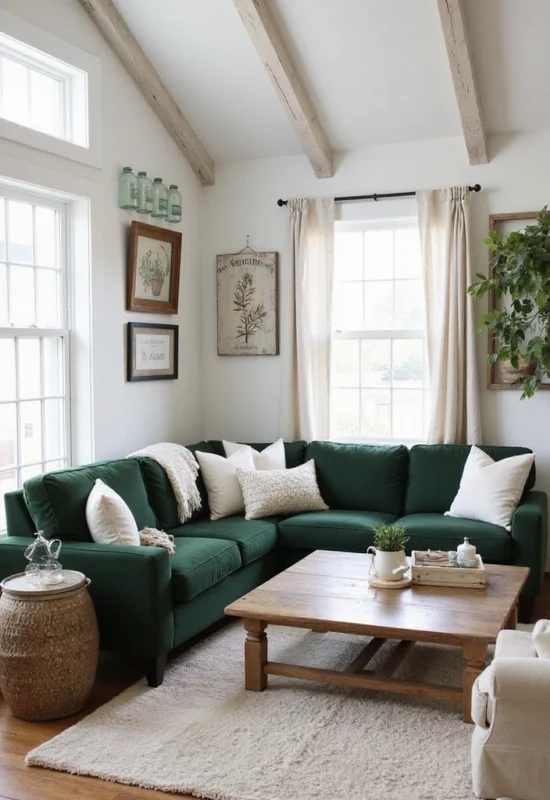
Start with a neutral base. White or cream walls provide a bright backdrop that keeps the space from looking heavy. Paneled walls can add subtle character.
Wood plays a major role in this style. A distressed coffee table with a natural finish can bring warmth into the room. Keep the finishes slightly worn or matte to stay true to the farmhouse look.
Soft textiles help complete the space. Think cotton throws, simple striped cushions, or a neutral rug that ties everything together.
Open shelving or a few vintage-style accents can add personality without overwhelming the room.
Pro Tip: Mix new pieces with a few vintage-style items to give the space a collected and authentic look.
Avoid This: Avoid overly polished or modern finishes, as they can take away from the farmhouse character.
FAQs
How do you style a room with a green sofa?
Start with a neutral base, then add complementary tones through cushions, rugs, and décor. Keep the layout simple so the sofa stands out.
Is green a good color for a sofa?
Yes. Green works well because it pairs easily with many colors and adds depth to a space.
Are green sofas on trend?
Yes. Green sofas continue to be popular, especially in modern and classic interiors.