15 Inviting Coastal Style Bedroom Ideas In 2026
Disclosure: This post may contain affiliate links. As an Amazon Associate, I earn a small commission from qualifying purchases at no extra cost to you. Thanks.
Waking up to a calm, airy bedroom changes everything. Bringing a coastal touch into a bedroom makes a difference.
The space will look lighter, more open, and far easier to unwind in after a long day.
Coastal bedrooms today aren’t built around obvious beach decor. The focus leans toward soft color palettes, natural textures, and clean layouts that create a relaxed setting.
If you’re ready to refresh your space, these coastal bedroom ideas will help you create a room that looks well styled.
Coastal Bedroom Ideas
Some of the best ideas I collected include:
Add Chandelier as a Focal Point
A statement light fixture can instantly elevate a bedroom design. A chandelier adds structure overhead, drawing the eye upward and giving the space a defined center point.
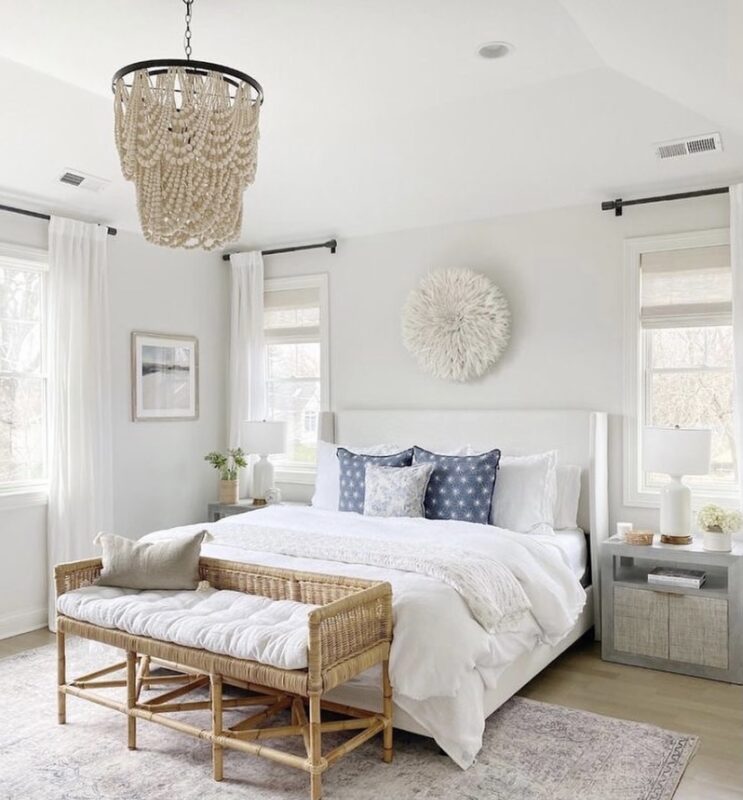
In a coastal bedroom, the style of the chandelier makes all the difference. Look for options that incorporate natural elements like wood, rope, or soft metallic finishes.
These materials blend into the overall theme while still standing out as a feature.
Placement also shapes the impact. Centering the chandelier above the bed or main area creates a strong visual anchor.
It gives the room a sense of order and intention, especially in spaces that lean minimal in decor.
This idea works well when the rest of the room stays simple. Clean bedding, soft tones, and minimal accessories allow the light fixture to take attention.
Pro Tip: Choose a chandelier size that fits the room scale so it enhances the space rather than overpowering it.
Crisp White Bedroom with Bold Blue Coastal Patterns
White and blue create a classic coastal combination that still looks fresh. A crisp white base opens up the space, while bold blue patterns introduce contrast that catches the eye.
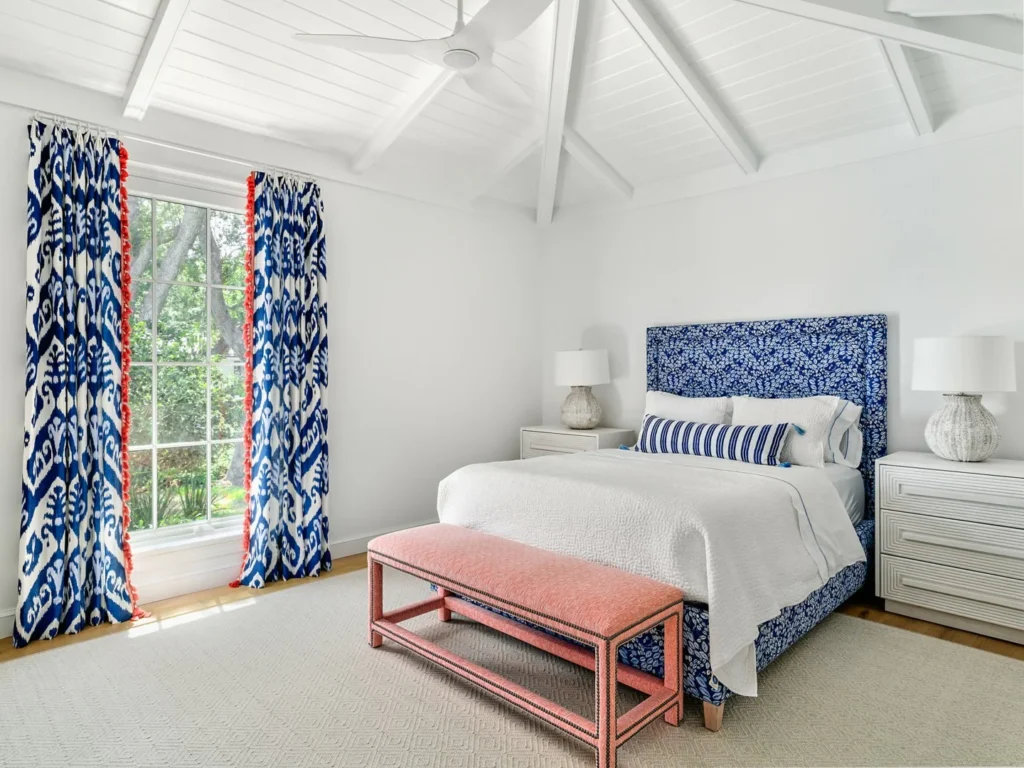
This setup works best when the white foundation remains clean and uninterrupted across walls, bedding, or furniture.
The blue pattern can then appear through pillows, throws, or accent pieces, adding visual interest in a controlled way.
Pattern choice makes a difference here. Stripes, abstract wave designs, or geometric coastal prints bring personality into the room while keeping the look refined.
This combination suits anyone who wants a coastal bedroom that carries a bit of energy while still maintaining a clean structure.
Pro Tip: Limit bold patterns to a few key areas so the room stays balanced and doesn’t lose its crisp foundation.
Bedding That Breathes and Washes Well
Comfort starts with the right bedding. In a coastal bedroom, fabrics should support airflow and stay easy to maintain over time.
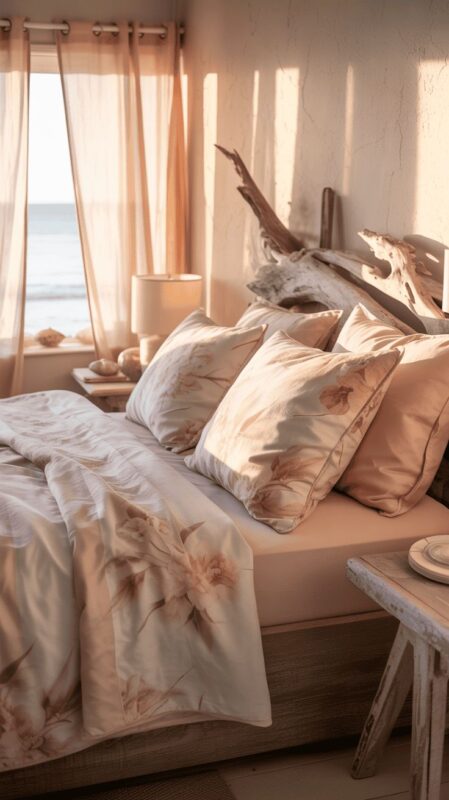
Materials like cotton, linen, or lightweight blends create a fresh sleeping environment that holds up through frequent washing.
Texture plays a part here as well. Slightly crinkled linen or soft cotton layers add depth to the bed. This keeps the overall look relaxed while still appearing put together.
Color choices should stay within a calm range. Whites, soft blues, or sandy tones help maintain the coastal direction while allowing the texture to win.
Practicality also matters in everyday use. Bedding that washes well and holds its shape keeps the room looking neat with minimal effort.
Pro Tip: Choose bedding with a slightly textured finish to add interest without needing extra layers or accessories.
Natural Fibers That Bring the Beach Inside
Natural materials can shift the entire tone of a bedroom. Elements like jute, rattan, wicker, and linen introduce texture that connects the space to coastal surroundings in a refined way.
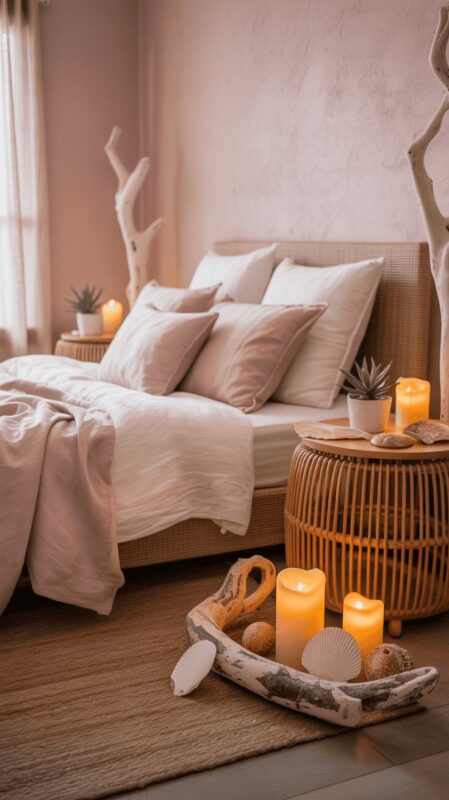
These fibers work best when used across different parts of the room. A woven headboard, a jute rug, or rattan storage pieces create variation.
The contrast between smooth surfaces and textured materials keeps the room visually engaging.
Light wood furniture paired with woven accents builds a layered look that feels considered.
This approach suits spaces that aim for a relaxed coastal style through material choice.
Pro Tip: Combine two or three different natural materials to create variety while keeping the overall look cohesive.
Natural Rattan Coastal Bedroom with Soft Neutrals
Rattan instantly changes the tone of a bedroom in the best way. A space built around this material paired with soft neutrals creates a calm, airy setup that looks effortless from every angle.
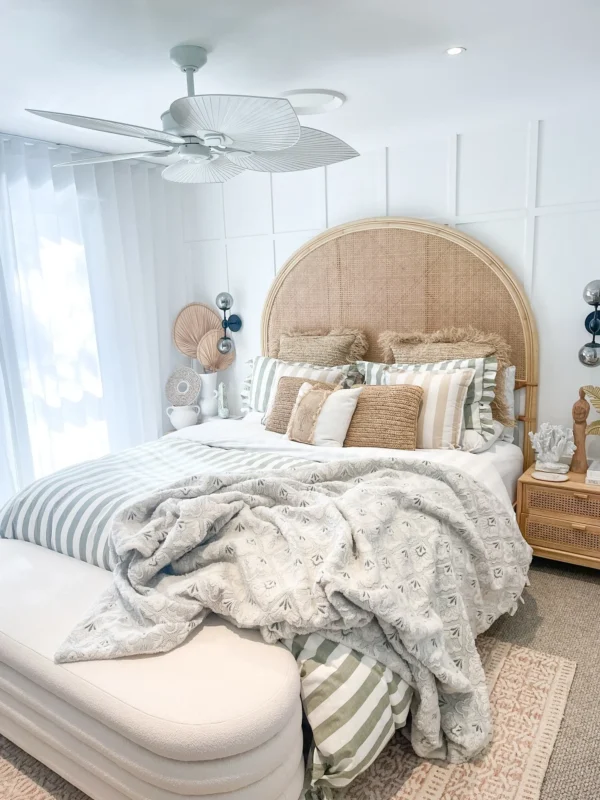
The woven texture adds depth, giving the room character without relying on bold color.
This idea works well when the palette stays within warm whites, beige, and light taupe.
Those shades allow the rattan details to stand out naturally, whether used in a headboard, side tables, or accent pieces.
The contrast between smooth walls and woven surfaces keeps the design visually interesting.
Layering becomes important here. Light bedding, a textured rug, and simple decor pieces help complete the look.
Each element should support the overall tone, creating a consistent and polished finish.
This setup suits anyone aiming for a bedroom that looks relaxed, refined, and easy to maintain.
Pro Tip: Pair rattan with soft fabrics like linen or cotton to balance texture and keep the space visually comfortable.
Curtains and Rugs That Soften Light and Sound
Textiles can completely change how a bedroom functions. Curtains and rugs do more than decorate, they shape how light enters the room and how sound travels within it.
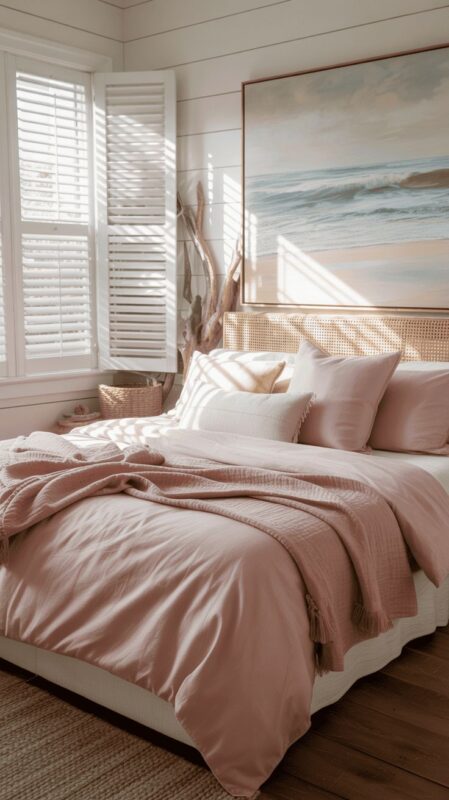
Light-filtering curtains allow daylight to pass through in a softer way, creating a calm atmosphere throughout the day.
They also add movement, giving the space a gentle flow as air passes through. Choosing the right fabric keeps the room bright while reducing harsh glare.
Rugs add another layer of comfort. A well-placed rug under the bed or seating area helps reduce noise and adds warmth to the floor.
It also visually anchors the space, tying together furniture and decor.
This combination works especially well in coastal bedrooms where softness and comfort take priority.
Pro Tip: Choose curtains that extend slightly beyond the window frame to create a fuller, more polished look.
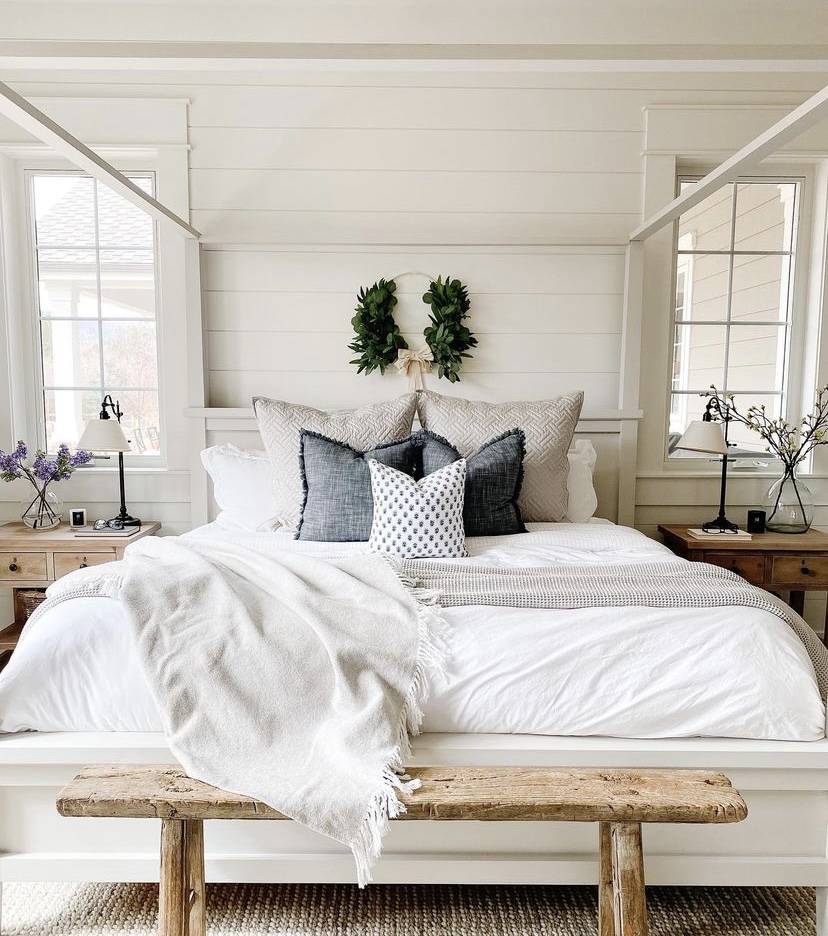
Four Poster Bedframes
A four-poster bed can completely transform a bedroom layout. Its structure draws attention instantly, creating a strong visual presence that anchors the entire space.
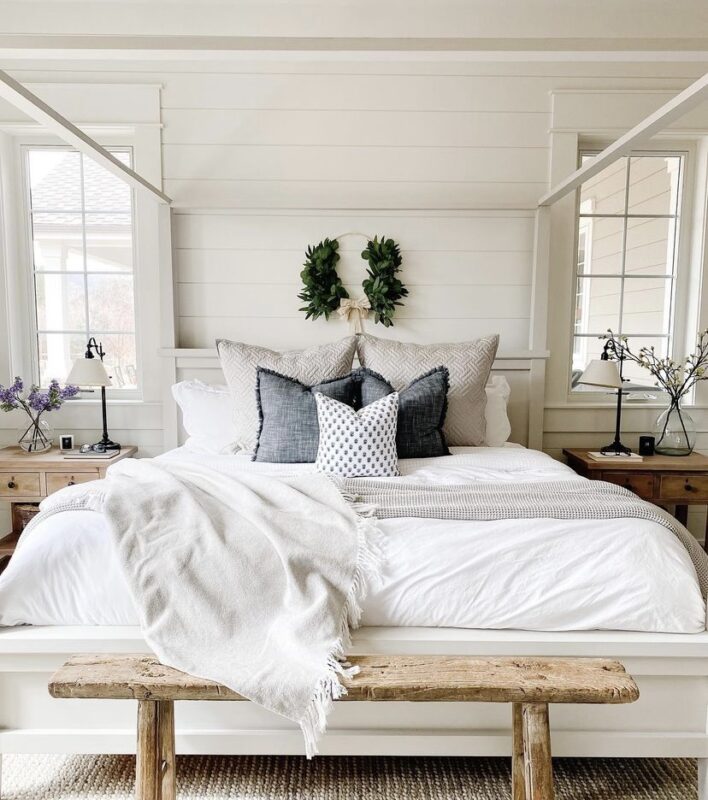
In a coastal setting, the design should stay light and refined. Slim wooden frames in soft finishes or painted tones work best, keeping the look open.
The height of the frame adds vertical interest, making the room appear more structured.
It also creates opportunities for layering, whether through light drapery or minimal styling around the frame.
Furniture around the bed should remain simple. Clean lines and neutral tones help maintain balance, allowing the bedframe to take center stage.
This idea suits bedrooms that need a focal point while still maintaining a relaxed coastal direction.
Pro Tip: Keep surrounding decor minimal so the bedframe remains the main visual feature.
Soft Seafoam and White Coastal Canopy
Seafoam tones paired with white create a fresh, airy bedroom palette. Adding a canopy into this mix introduces softness that elevates the entire space without making it look heavy.
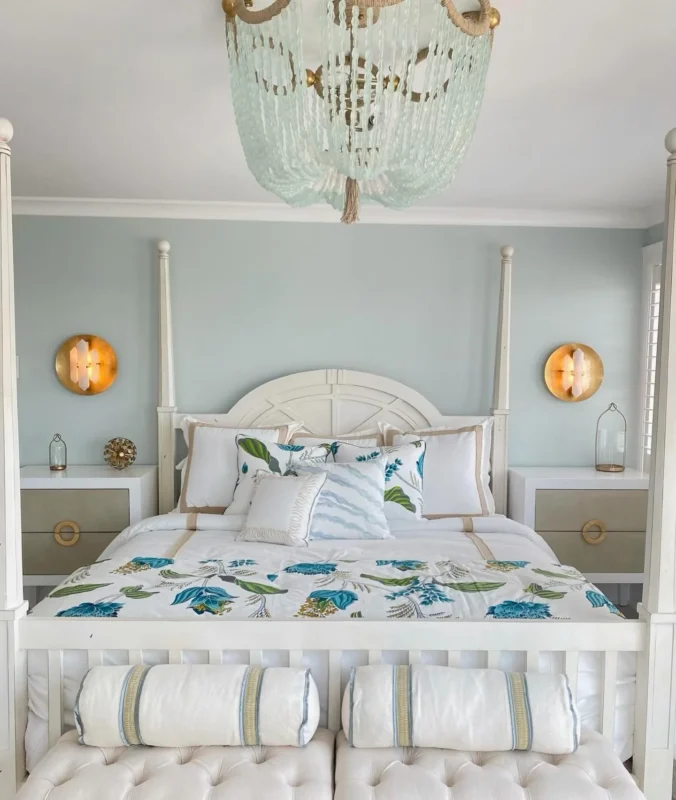
The canopy fabric should stay light and breathable. Draping it loosely over the bed creates movement and adds a layered look that feels polished.
The seafoam color brings in a gentle coastal touch that pairs naturally with crisp white bedding.
This combination works well in rooms that receive plenty of natural light. The colors reflect brightness, enhancing the open look of the space.
Even in smaller rooms, this palette can create a sense of expansion.
Accessories should remain minimal to keep the focus on the canopy and color combination. A few well-placed accents can complete the look.
Pro Tip: Use sheer or lightweight fabric for the canopy to maintain an airy and open appearance.
Blue Panel Accent Wall
A blue accent wall can instantly define a coastal bedroom. Paneling adds structure, giving the wall depth and texture that flat paint alone cannot achieve.
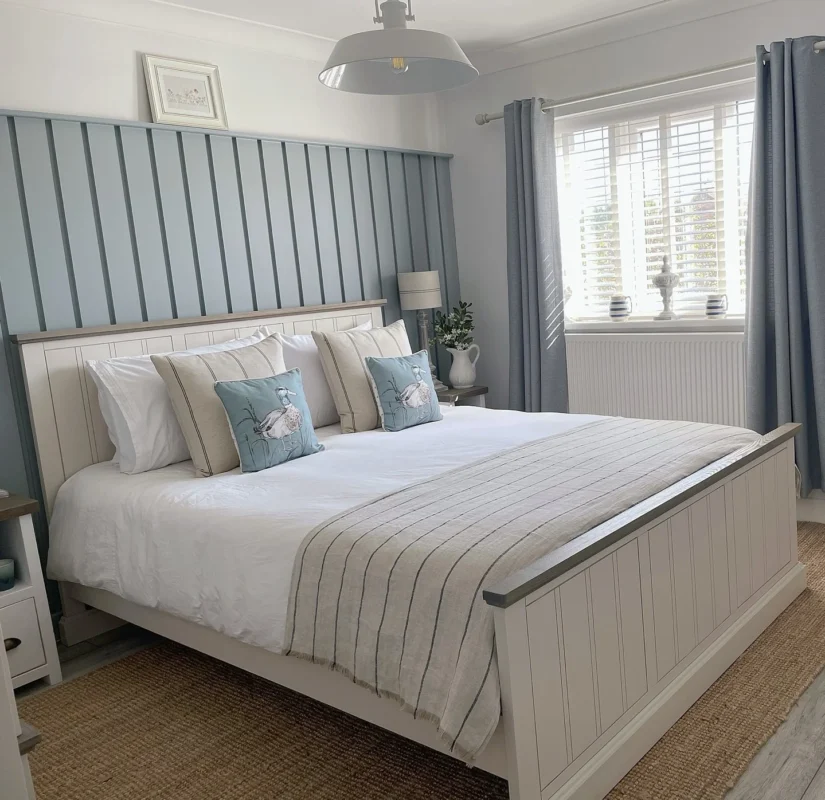
Choosing the right shade of blue is important. Soft navy, muted ocean tones, or slightly faded hues work best, creating contrast without overwhelming the space.
The panel design adds a tailored look, bringing a sense of order and refinement.
This feature works best behind the bed, acting as a backdrop that anchors the entire layout. It draws attention naturally and gives the room a clear focal point.
The rest of the room should stay lighter in tone to balance the deeper color. Neutral bedding, simple furniture, and minimal decor help maintain that balance.
Pro Tip: Keep panel spacing consistent and clean to achieve a polished, well-structured finish.
Airy Blue and White Coastal Suite with Bay Windows
Morning light pouring through bay windows can transform everything. A blue and white palette paired with that architectural feature creates a bedroom that looks bright.
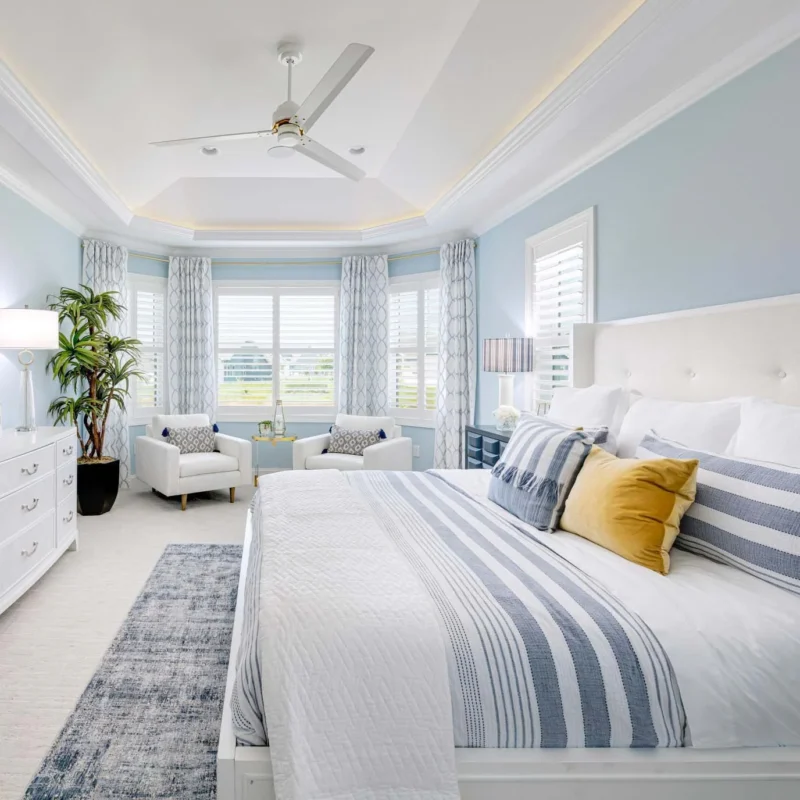
The windows naturally draw attention, so the design should support that focal point, not compete with it.
Soft blue accents across bedding or cushions can echo the sky outside, creating visual continuity between indoors and outdoors.
Crisp white walls and furniture help amplify light, giving the room a clean, expansive appearance throughout the day.
Furniture placement matters here. Keeping the area near the windows uncluttered allows light to move freely, enhancing the overall atmosphere.
A small seating nook or a simple bench can make use of the space without crowding it.
This layout suits anyone who wants a bedroom that highlights natural light and architectural detail.
Pro Tip: Position your bed or seating to face the windows so the view becomes part of the overall design.
Incorporate Neutral Color Palette
A neutral palette can reshape a bedroom into a calm, cohesive space.
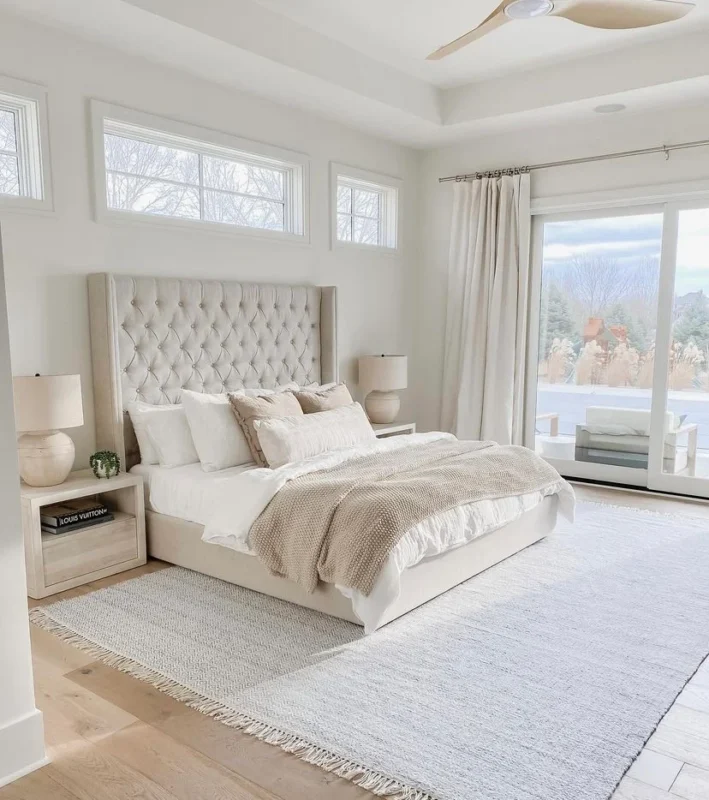
Coastal design often leans on soft tones like beige, cream, light gray, and warm white to create a clean foundation that doesn’t rely on bold color.
The strength of this approach comes from variation within the palette. Layering different neutral shades across bedding, walls, and furniture builds depth. Each tone adds a quiet shift that keeps the space visually engaging.
Textures also play an important part. Linen bedding, woven accents, and light wood finishes introduce contrast through material.
This creates a refined look that stays consistent across the room.
This direction suits anyone looking for a timeless bedroom that remains easy to update with small changes over time.
Pro Tip: Choose neutrals with similar undertones so everything blends smoothly across the space.
Match Bedroom Sets
Coordinated furniture can bring a sense of order to a bedroom. Matching sets create a unified look where each piece connects visually, giving the room a structured appearance.
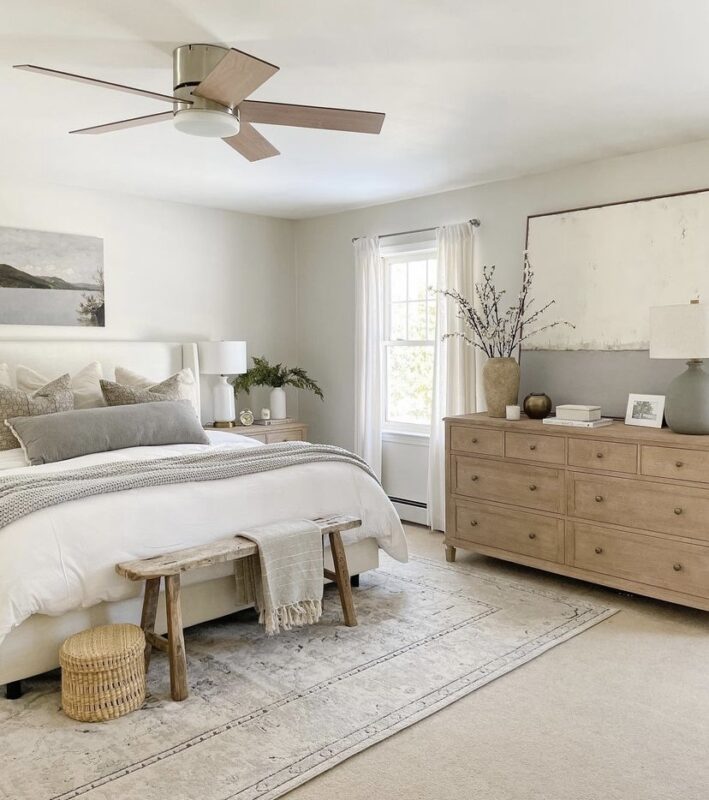
This approach works well when the design stays simple. Light wood finishes, painted surfaces, or soft neutral tones keep the set from appearing heavy.
Balance comes from how the pieces are arranged. Spacing them properly allows the room to breathe, preventing it from looking crowded.
Adding small accents like textiles or decor can break uniformity just enough to keep the space interesting.
This idea suits those who prefer a clean, organized layout where everything has a clear place.
Pro Tip: Introduce one or two contrasting elements, such as textured bedding or a statement lamp, to soften the uniform look.
Include Natural Materials & Jute Rug
Natural materials can shift a bedroom into a more relaxed, coastal-inspired space.
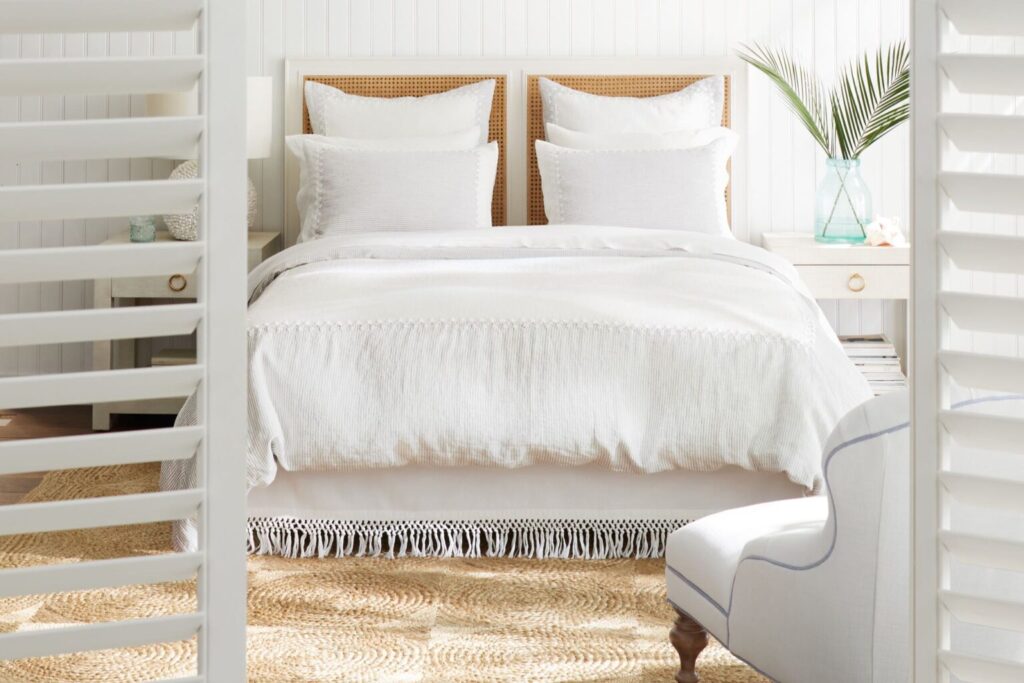
Adding elements like wood, linen, and a jute rug introduces texture that connects the room to organic surroundings.
A jute rug anchors the space visually, especially when placed under the bed or seating area.
Its woven surface adds depth, creating contrast against smoother finishes like painted furniture or soft bedding.
Layering materials enhances the overall look. A wooden bedframe, linen curtains, and woven baskets can work together to create a cohesive setup that looks intentional.
This approach suits bedrooms that rely on texture and material choice instead of bold decoration.
Pro Tip: Pair rougher textures like jute with softer fabrics to create contrast and keep the space comfortable.
Minimal Coastal Bedroom with White Spindle Bed
Clean lines can completely redefine a bedroom layout. A white spindle bed brings structure through its design while keeping the overall look light.
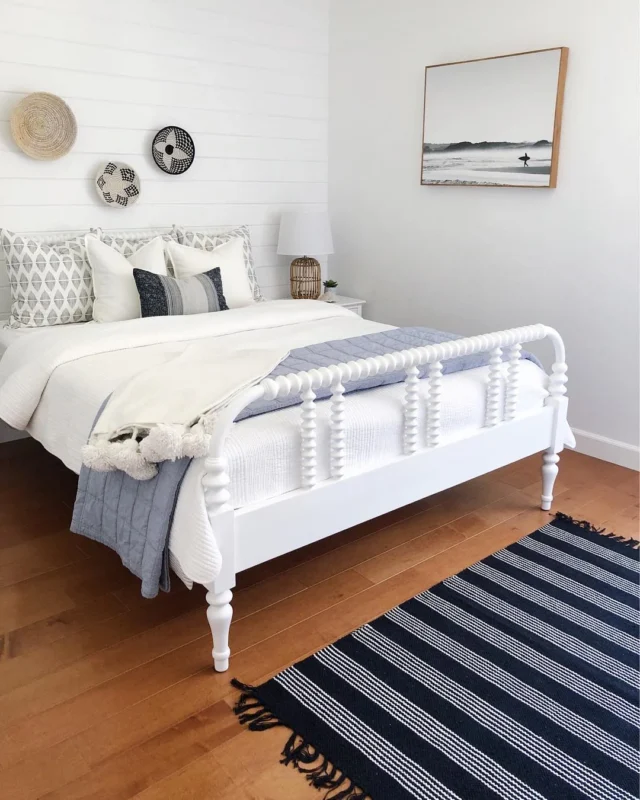
Its simple frame allows other elements in the room to stand out without visual competition.
This idea works best when the rest of the space stays minimal. Neutral bedding, light wood accents, and limited decor help maintain clarity across the room.
The spindle design adds just enough detail to keep the space from appearing plain.
Color choices should remain soft and consistent. Whites, pale blues, and sandy tones create a cohesive palette that supports the coastal direction.
This setup suits anyone who prefers a simple, uncluttered bedroom that still carries character through design details.
Pro Tip: Keep surrounding furniture low-profile so the spindle bed remains the visual highlight.
Balance with Coastal Neutrals so the Room Stays Light
Soft neutral tones can completely reshape how a bedroom looks. Coastal-inspired spaces rely on a calm palette that keeps everything easy on the eyes.
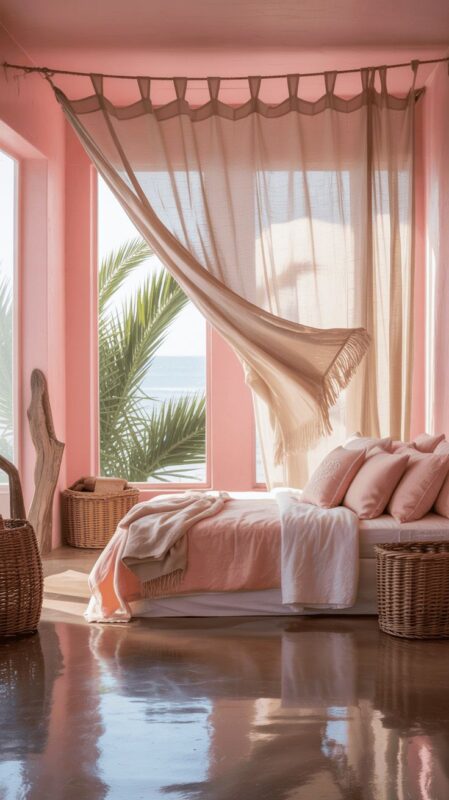
Shades like warm white, sand, light beige, and pale taupe create a base that allows the room to breathe visually.
This approach works best when tones are layered nicely. A light wall color paired with slightly deeper bedding, woven accents, or a textured rug builds quiet depth across the space.
It prevents the room from appearing flat while keeping the overall look cohesive.
Furniture should follow the same direction. Light wood finishes, simple silhouettes, and minimal contrast help maintain that airy atmosphere.
Every element should support the palette, creating a smooth visual flow from one area to another.
This type of setup suits anyone looking for a bedroom that looks calm, clean, and easy to unwind in at the end of the day.
Pro Tip: Mix warm and cool neutrals in small doses to create dimension while keeping the palette balanced.