13 Small Camper Interior Ideas That Make Tiny Spaces Feel Bigger (Without Major Reno)

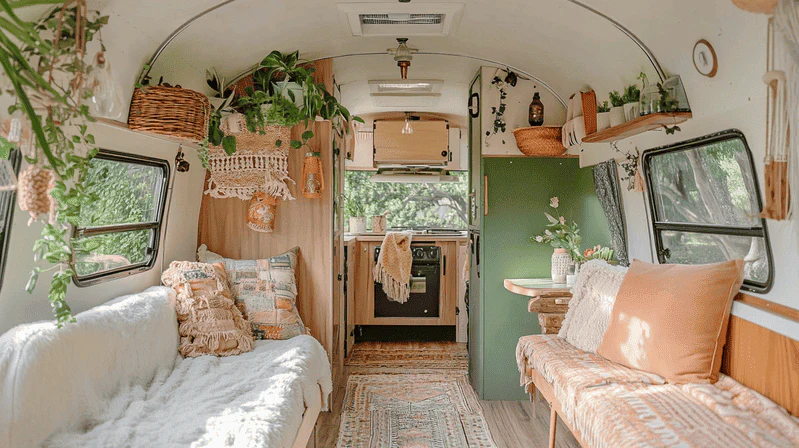
I still remember opening the camper door after a long drive and thinking, “Why does this space feel smaller every trip?”
Everything we needed was there, but it lacked that coziness that makes you want to stay inside after sunset.
That weekend, I moved a few things around, added softer textures, and suddenly the whole camper felt different.
It’s funny how small RV decorations can tun out to be charming with just a handful of thoughtful changes.
Out of experience, I will share creative small camper interior ideas that will inspire your next adventure on wheels.
How To Style Your Camper Van Interiors
Last summer, I swapped out a few accessories before a weekend trip, and the camper suddenly felt like a cozy cabin on wheels.
If you’re looking to design a camper interior, these ideas may spark your next makeover.
Hang Soft Twinkling Lights for Magical Glow
The first time I strung tiny lights around our camper windows, I wasn’t expecting much.
I thought they would just look pretty in photos.
Then evening came.
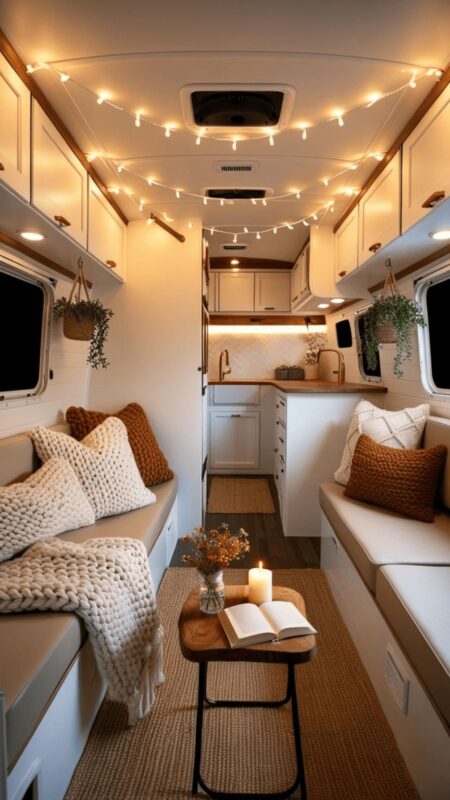
Instead of flipping on the harsh ceiling light, I switched on the string lights and suddenly the whole camper took on a completely different mood.
After long days hiking, that gentle glow became my favorite part of returning to camp.
There’s something special about sitting inside with a cup of tea while soft lights sparkle in the background.
Battery-operated fairy lights are easy to install and don’t take up precious space.
Weave them around shelves, window frames, or the edge of overhead cabinets.
On rainy nights, they bring a little magic indoors.
Some of my best camping memories involve quiet evenings under those tiny lights while listening to the sound of rain on the roof.
Pro Tip:: Choose warm white bulbs. Warm lighting gives campers a softer, cabin-inspired look that photographs beautifully at night.
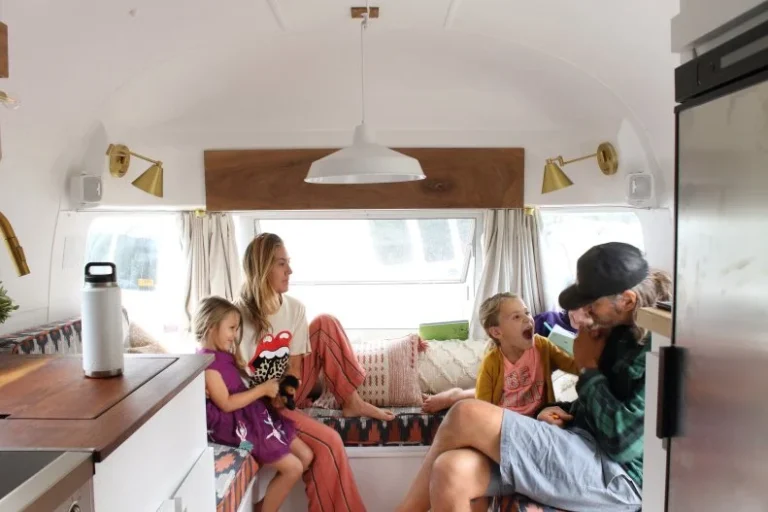
Bright White Walls for an Open, Airy Look
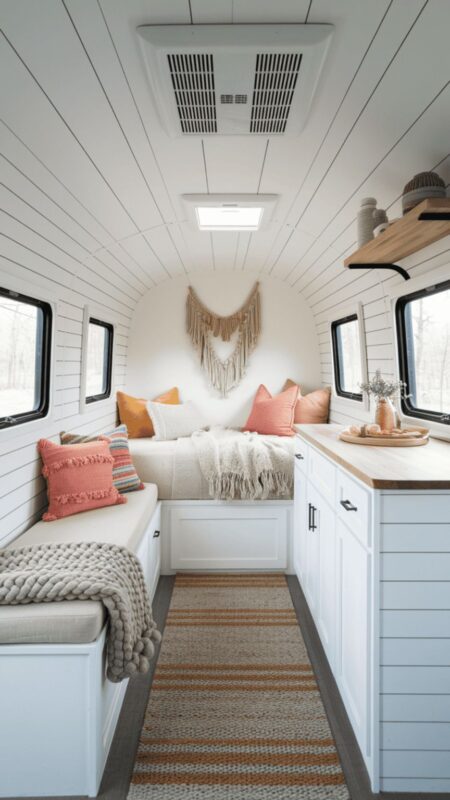
Wall color affects a camper until you step inside one painted bright white.
The difference is immediate. Natural light bounced around the interior, and every corner looked larger than it actually was.
Small campers can start to look crowded quickly, which is why lighter colors make such a difference.
White walls also give you a blank canvas for decorating.
Throw pillows, wood accents, woven baskets, and greenery stand out beautifully against a crisp backdrop.
When we updated part of our camper, I noticed the interior looked cleaner and brighter even on cloudy days.
If pure white feels too stark, try soft ivory or creamy white shades.
Those subtle tones still brighten the camper while introducing a gentler appearance.
It’s amazing how a simple paint change can completely refresh an older RV.
Pro Tip:: Use satin or eggshell paint because cleans up much easier after road trips and everyday camper life.
Switch Out Cabinet Doors for Curtains
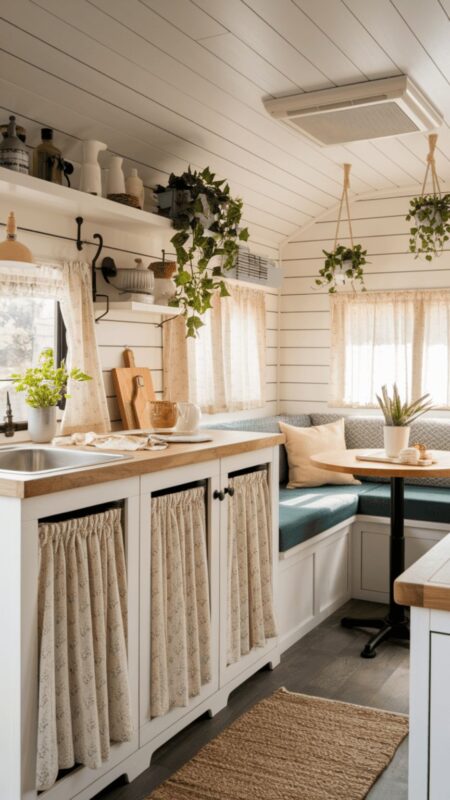
Cabinet doors take up more visual space in a small camper than most people realize.
Every solid panel adds structure that can start to make the interior look boxed in.
When you replace those doors with curtains, the entire storage area softens instantly.
Fabric breaks up those hard lines and introduces movement that is easier on the eyes in tight spaces.
You still get full storage, but access becomes quicker and less restrictive during daily use.
Nothing swings into narrow walkways, and everything stays more convenient when you’re moving around.
Light linen or cotton works best because it blends into the background.
After a full swap in one camper renovation, the difference in openness was noticeable the moment you stepped inside.
Pro Tip:: Choose lightweight fabrics that hang straight so they don’t bunch or create bulky folds after travel.
Add Woven Baskets for Practical Storage
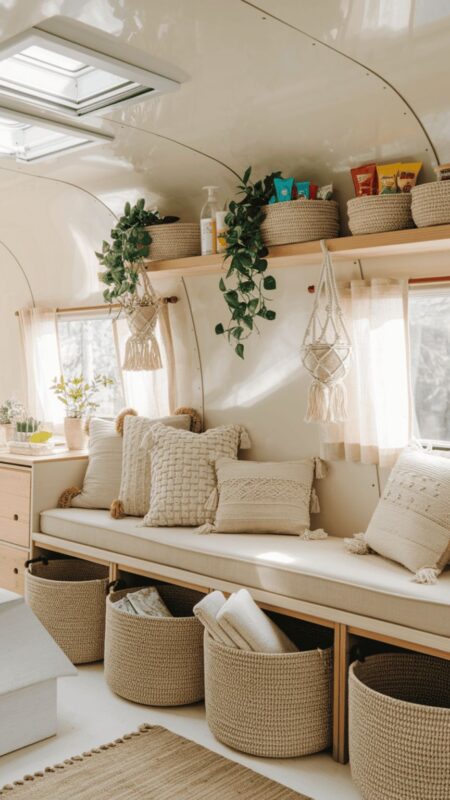
Clutter shows up fast inside a small camper, even when everything has its place.
You place one bag down, then another, and suddenly every surface starts collecting “temporary” items.
Woven baskets step in as quiet organizers that don’t fight the rest of your decor.
Tuck them under benches, beside the bed, or in open corners, and they give loose items a landing spot.
Blankets, shoes, chargers, and random travel bits suddenly have structure without needing bulky storage units.
What makes them useful is how they blend into the background while still doing real work.
On a rainy camping trip, you’ll notice how quickly everything stay under control once baskets were placed near the seating area.
Nothing felt scattered, even in a tight layout.
Pro Tip:: Choose baskets with handles so you can lift and move them easily when cleaning or rearranging your camper layout.
Carry Folding Tables And Desks To Save Space
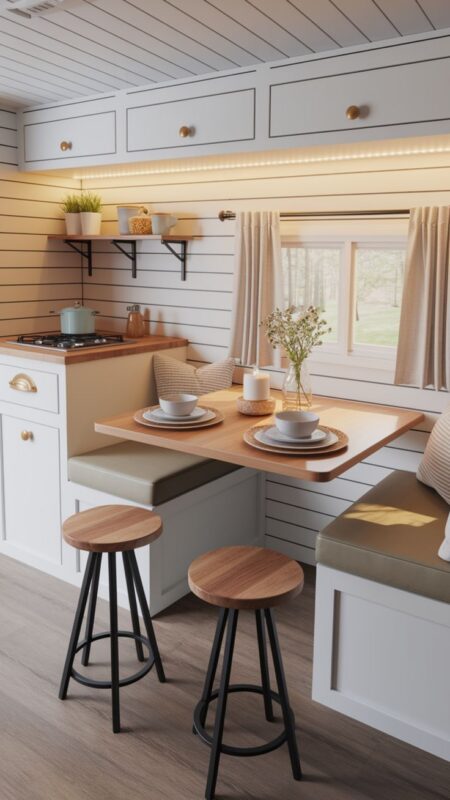
Every inch matters inside a camper, and a fixed table can quietly steal more space than you expect.
A fold-down table changes that balance by giving you surface area only when you actually need it.
When it’s up, it becomes your dining spot, workspace, or planning area for the next stop on your trip.
Once folded down, it opens the floor completely and makes movement easier through tight zones.
You immediately notice how much lighter the space is when nothing is sticking out into the walkway.
I’ve seen campers transform completely just by swapping a bulky table for a simple wall-mounted version.
Pro Tip:: Mount the table at elbow height when seated so you avoid strain during meals or long planning sessions.
Include Under Bed Storage Drawers
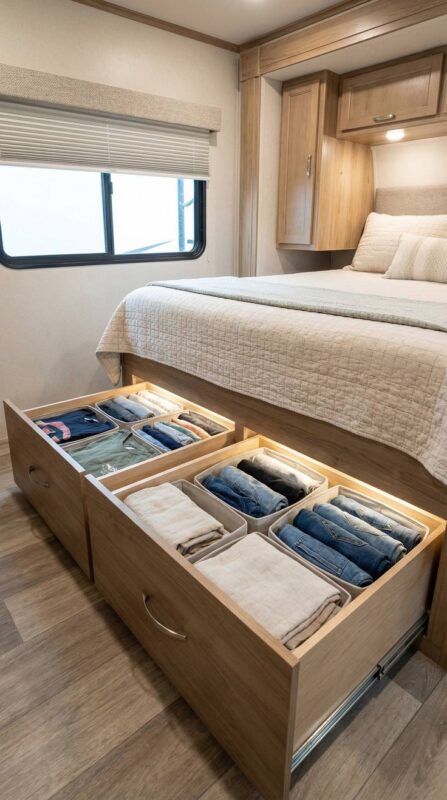
The space under your bed is usually the most underused part of a camper.
It sits there quietly while bags and loose items take over visible areas. Adding drawers or pull-out bins changes that in no time
Suddenly, everything from clothes to camping gear has a hidden home that doesn’t interrupt your living space.
It also helps you keep the main area visually cleaner since storage disappears out of sight.
On longer trips, this setup keeps things organized. Once you get used to it, you start relying on that hidden space more than any overhead cabinet.
A camper with deep under-bed storage changes how quickly everything can stay in order during travel days.
Pro Tip:: Use labeled bins inside drawers so you can find items quickly without pulling everything out during short stops.
Use Mirrors to Expand the Camper Space
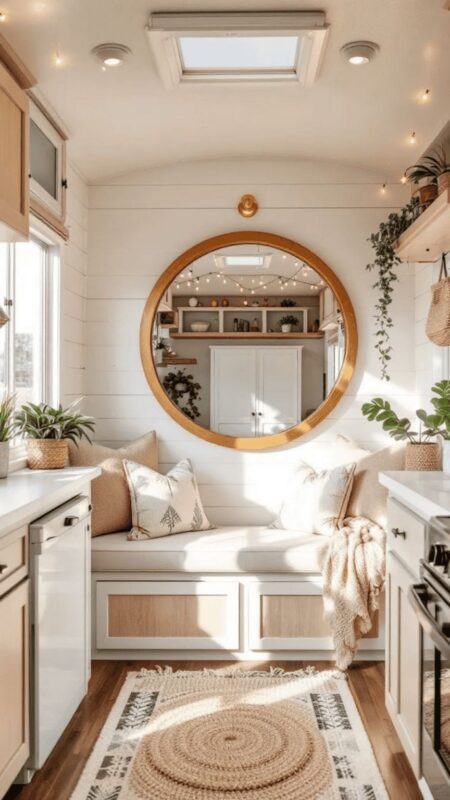
Small campers can sometimes tend to be compact than they actually are, depending on how the light moves inside.
Mirrors shift that perception immediately by bouncing light and extending visual depth.
When placed opposite a window or light source, they double the sense of openness.
You start noticing more brightness in corners that used to fade into shadow.
Even narrow walkways appear wider when reflections stretch the interior visually.
One well-placed mirror can change how you read the entire space the moment you walk in.
Pro Tip:: Position mirrors to reflect natural light rather than cluttered storage areas to keep the illusion clean and open.
Add Greenery with Faux Plants
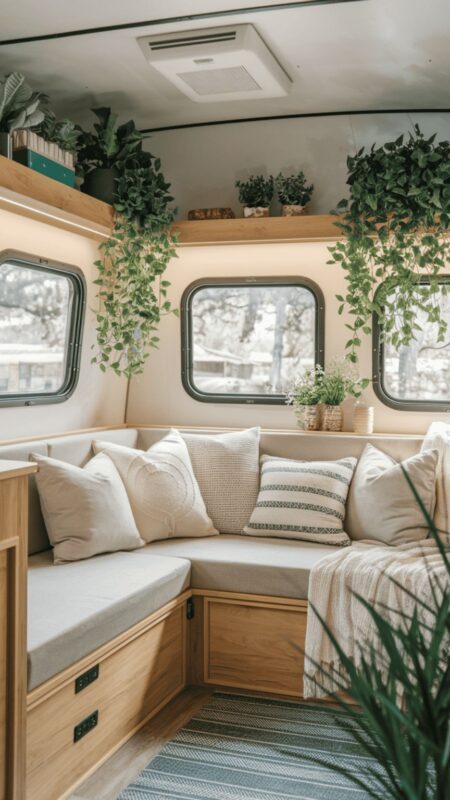
A camper interior can look clean and functional, but sometimes it needs a softer visual break.
Greenery adds that layer with little to no maintenance or extra effort during travel.
Faux plants work well in this setting because they stay consistent through heat, movement, and long road trips.
Place them on shelves, counters, or near windows, and they immediately break up hard surfaces.
Even small touches of greenery shift the visual tone of the interior in a subtle way.
On a long trip through dusty terrain, add a few faux stems near the sink area, and the space is amazing
It doesn’t overwhelm the layout, but it keeps the camper from looking too sterile.
Pro Tip:: Stick to realistic matte-finish faux plants so they don’t catch too much light or look overly glossy in small spaces.
Layer Soft Bedding for a Cozy Bed Nook
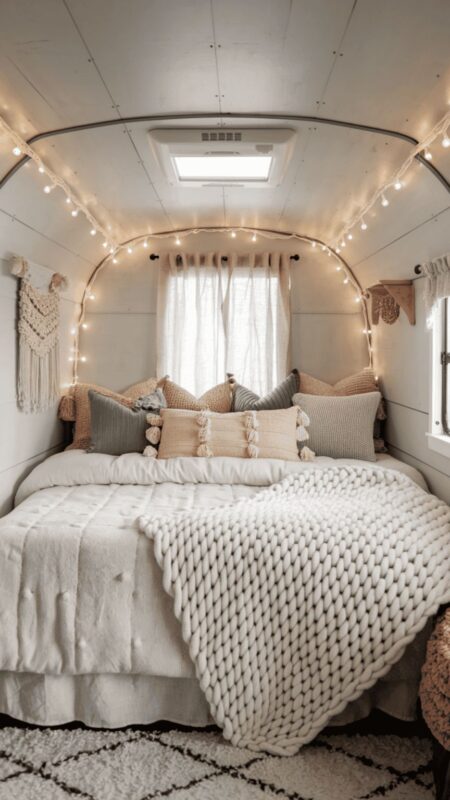
A camper bed can shift from basic sleeping space to a quiet retreat with the right layering approach.
You notice it the moment different textures start stacking.
Light quilts, soft sheets, and an extra throw introduce depth that changes how the bed is perceived inside a tight layout.
The sleeping area begins to look more intentional, almost like a small nook carved out for rest.
Soft folds also break up sharp lines from surrounding cabinetry and walls.
On quiet evenings, that layered setup becomes the spot that naturally draws attention first.
Some campers carry that inviting, tucked-in look simply from how bedding is arranged, not from added decor.
Pro Tip:: Mix two or three fabric textures like cotton, knit, and linen so the bed looks layered.
Choose Neutral Throw Pillows
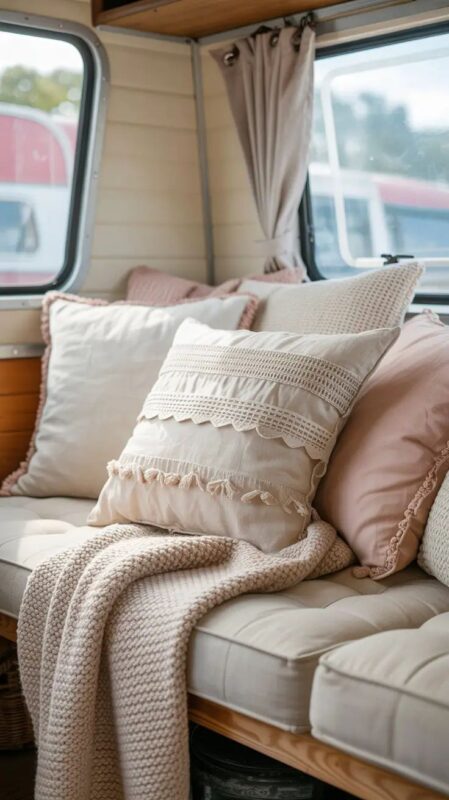
Bold colors can quickly overwhelm a small camper when every surface is close together.
Neutral throw pillows keep things calm while still adding softness to seating areas.
You start noticing how beige, cream, and muted tones blend into the overall layout.
The seating area becomes easier on the eyes, especially in compact dinette spaces where everything sits close together.
Even simple benches look more styled when pillows are arranged in uneven layers.
In many camper setups, this is the detail that quietly ties everything together.
It’s a small shift, but it changes how comfortable the seating area appears at first glance.
Pro Tip:: Stick to one main neutral tone and vary textures rather than mixing too many colors in a tight space.
Try Simple Wall Art
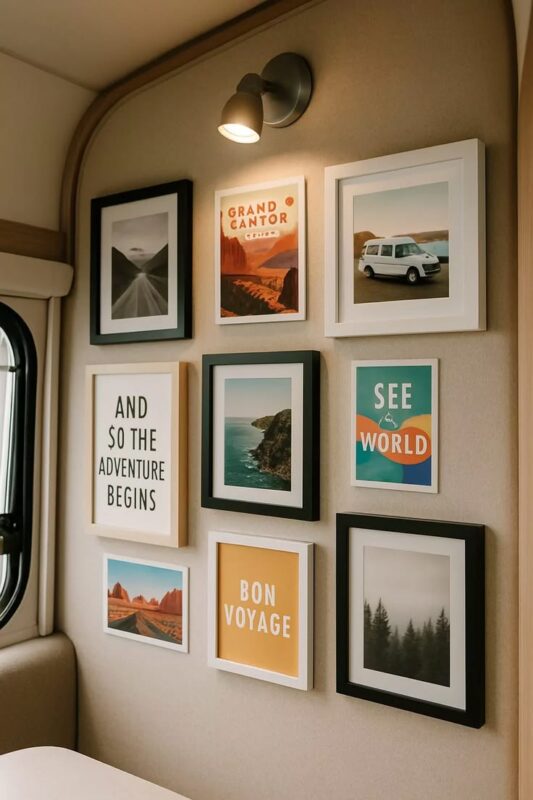
Blank walls inside a camper can make the space look unfinished even when everything else is in place.
Simple wall art introduces personality without overwhelming tight interiors.
You start noticing how even a small print or minimal illustration gives the walls a sense of direction.
Instead of staring at plain surfaces, your eyes move naturally across curated points of interest.
Framed pieces above seating areas or near the bed tend to work best in compact layouts.
The goal isn’t to fill every wall but to create small moments that break visual repetition.
In many camper interiors, a few well-placed frames are enough to shift the entire atmosphere.
Pro Tip:: Stick with lightweight frames so they stay secure during travel and don’t add unnecessary bulk to thin camper walls.
Magnetic Spice Tins to Save Space
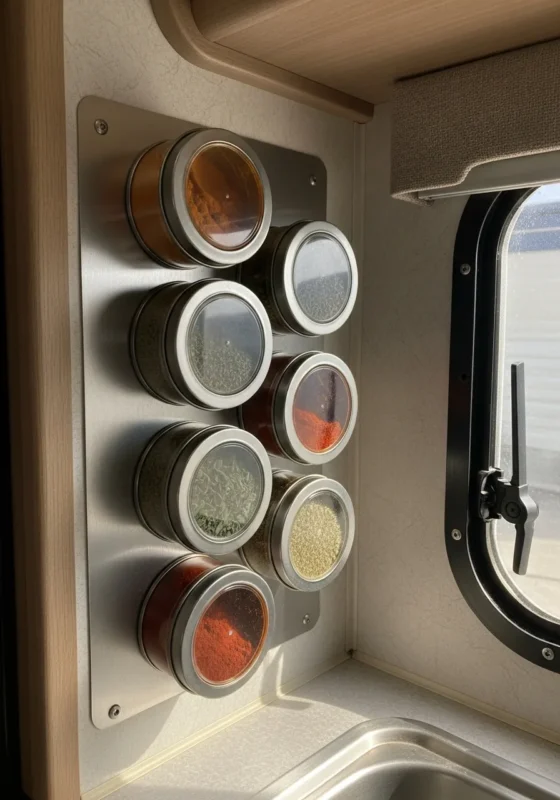
Small camper kitchens run out of counter space faster than you expect once cooking starts.
Spice jars are usually the first things to scatter across every surface.
Magnetic tins solve that problem by moving storage off the counter and onto vertical metal space.
Stick them on a fridge side panel or metal strip near the cooking area, and suddenly your prep zone stays clearer.
Labels stay visible at a glance, which saves time when meals come together in tight spaces.
The setup also adds a bit of order to what usually becomes a crowded corner during travel days.
Even a small row of tins can change how organized the kitchen area looks at first glance.
Pro Tip:: Use uniform container sizes so everything aligns neatly and doesn’t create uneven gaps on the magnetic surface.
Add Hooks for Easy Hanging
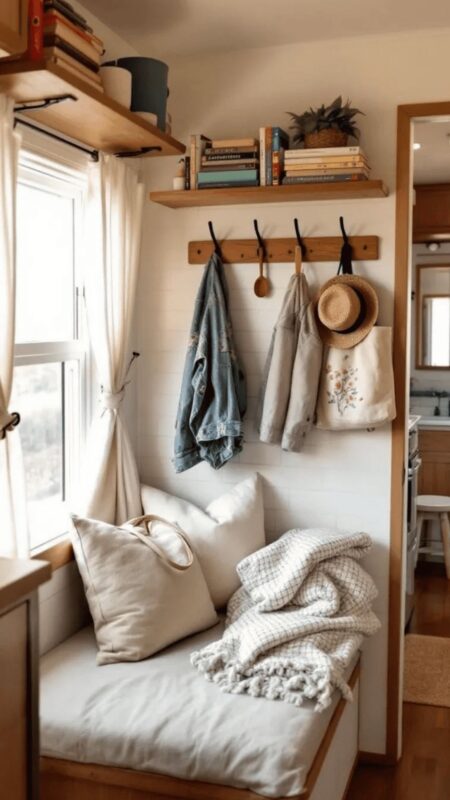
Counters inside a camper disappear quickly once daily items start piling up.
Hooks shift that storage upward and free up space you actually need for movement and prep.
You can line them near entry points, inside cabinet doors, or along empty wall sections that usually go unused.
Keys, mugs, small bags, and kitchen tools all find a place without cluttering flat surfaces.
Once items have a designated spot, the interior starts to stay visually calmer during busy travel days.
Even a simple row of hooks near the door changes how organized the space appears at first glance.
It becomes easier to move through the camper without constantly shifting things aside.
Pro Tip:: Space hooks evenly so items hang independently instead of clustering together in tight, overlapping groups.
Removable Wallpaper Accents
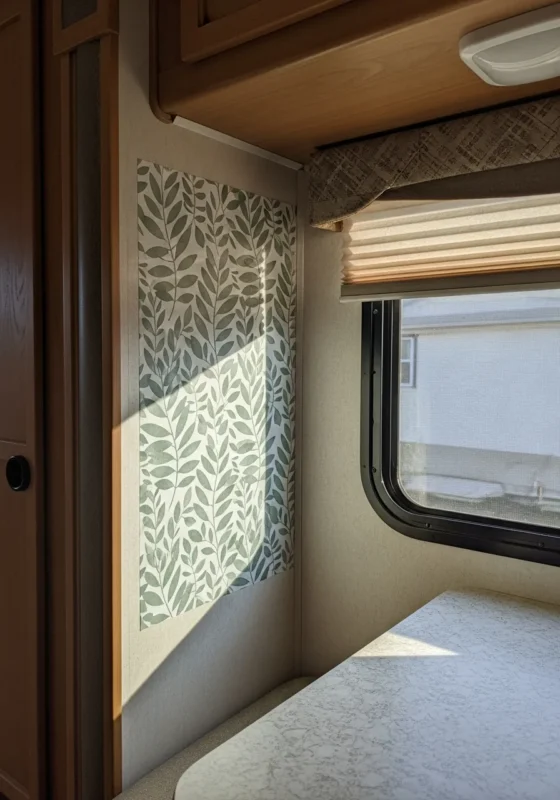
Camper walls can look plain once the furniture and storage are in place.
Removable wallpaper introduces pattern and character without committing to permanent changes.
You can apply it to a single wall, cabinet front, or small nook to break up repetitive surfaces.
The shift shows up immediately when light hits patterned areas instead of plain panels.
It also helps define zones inside compact layouts, such as sleeping corners or seating areas.
Some campers rely on just one accent wall to bring structure to the entire interior.
Patterns can stay bold depending on how much attention you want that area to carry.
The key is controlled placement rather than covering every surface.
Pro Tip: Stick to peel-and-stick wallpaper with matte finish so seams don’t reflect light or draw unnecessary attention in small interiors.
FAQs
What colors work best for small camper interiors?
Light tones like white, soft ivory, and muted neutrals tend to work best because they reflect light and keep the space visually open. Accent colors can still be added through pillows, art, and textiles
How do you make a small camper look less cluttered?
Focus on hidden storage, vertical solutions like hooks or magnetic systems, and reducing surface items. When fewer things sit on counters and tables, the entire interior reads organized at a glance.
Are decorations necessary in a camper interior?
Decor isn’t required, but small touches like lighting, textiles, and simple wall accents can change how the space is experienced.
Even minimal additions shift the atmosphere from purely functional to more inviting.