13 Beachy Boho Bedroom Ideas For Coastal Homes

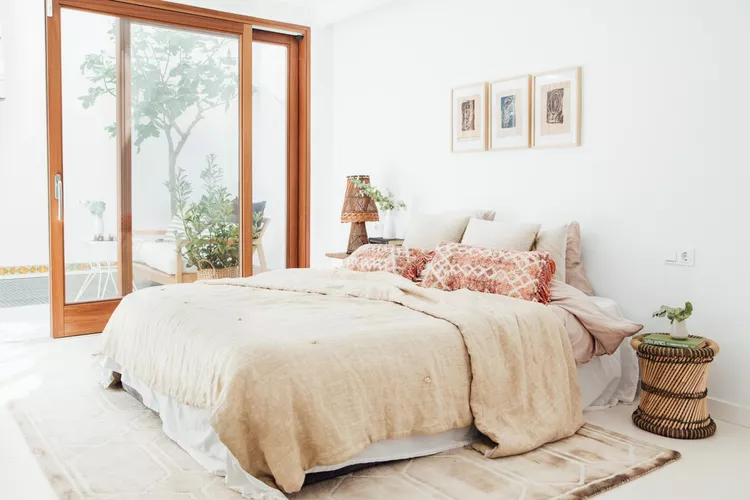
Salt in the air, sun spilling across linen sheets, and a bedroom that feels like a slow coastal morning.
Beachy boho style brings together relaxed textures, natural materials, and soft, sun-washed tones that echo life near the shore.
Think woven accents, airy fabrics, driftwood details, and colors pulled from sand and sea.
As a décor enthusiast, I will go over beachy boho bedroom ideas that carries that easy coastal rhythm in your space.
How To Achieve A Boho-Bedroom Style
The following ideas will transport you to a state of coastal bliss. They include:
Get Bohemian Patterned Throw Pillows
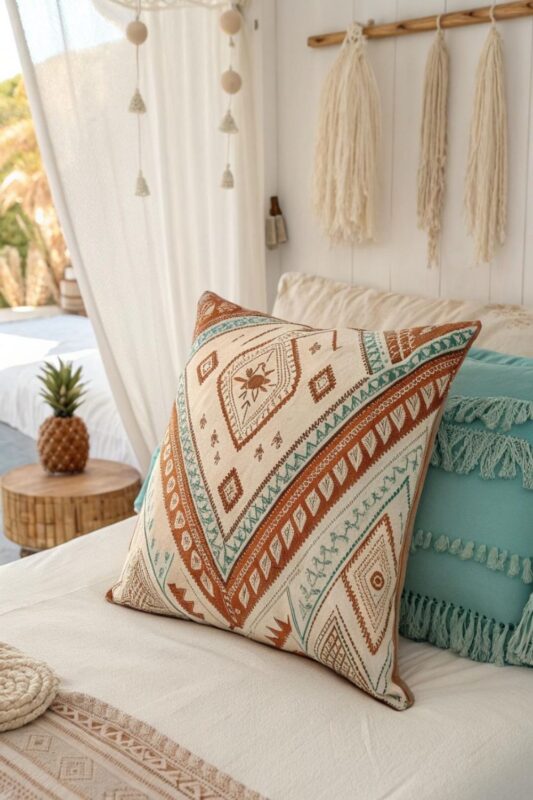
A plain bed turns interesting the moment mixed patterns land on it.
Bohemian throw pillows bring that layered, collected look that defines beachy boho bedrooms.
Stripes, tribal prints, faded florals, and woven textures sit together without needing to match perfectly.
The mix gives the bed a lived-in story, like pieces gathered from different coastal markets.
Placement changes everything. Two larger pillows at the back set a base, while smaller patterned ones sit in front, breaking symmetry and adding depth.
Linen covers keep the look grounded when paired with a light quilt or soft neutral bedding underneath.
Color does most of the work. Sand tones, ocean blues, muted rust, and sun-faded yellows create a palette that ties back to coastal inspiration.
Even a simple white duvet gains character once these accents are introduced.
The bed becomes the focal point of the room, not because it is loud, but because every pillow adds its own small detail to the story.
Pro Tip: Limit the palette to four main colors so the mix of patterns stays visually connected instead of chaotic.
Brightly Colored Macrame Wall Hangings
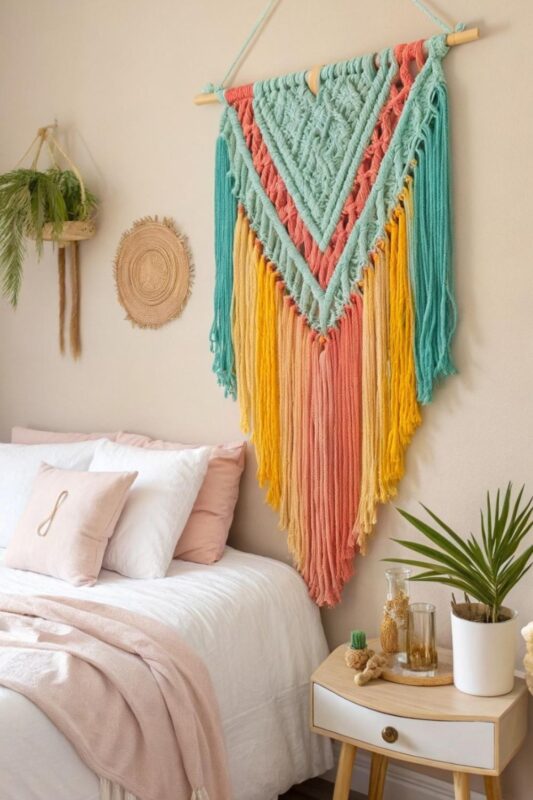
The wall changes instantly the moment woven art replaces blank space.
Bright macrame pieces introduce movement and texture that painted walls cannot achieve.
Unlike traditional neutral macrame, these versions lean into color, bringing coral, turquoise, or sun-bleached pink into soft knotted forms.
Hanging placement shapes the entire mood of the room. One large piece above the bed creates a clear focal point, while smaller clusters near a reading corner build a more relaxed, scattered effect.
The handmade quality adds character that feels tied to coastal craft culture.
Light interacts with the fibers in subtle ways throughout the day. Morning sun highlights raised knots, while evening lamps soften the colors into warmer tones.
The wall becomes something that shifts quietly as the day passes.
This kind of décor works best when surrounding furniture stays simple. Neutral bedding, light wood, and woven accents allow the macrame to stand forward without competition.
The result is a wall that feels alive with texture and color rather than flat decoration.
Pro Tip: Hang macrame slightly off-center above furniture for a more relaxed, boho-style composition.
Pair Vibrant Patterned Rug with Boho Wallpaper
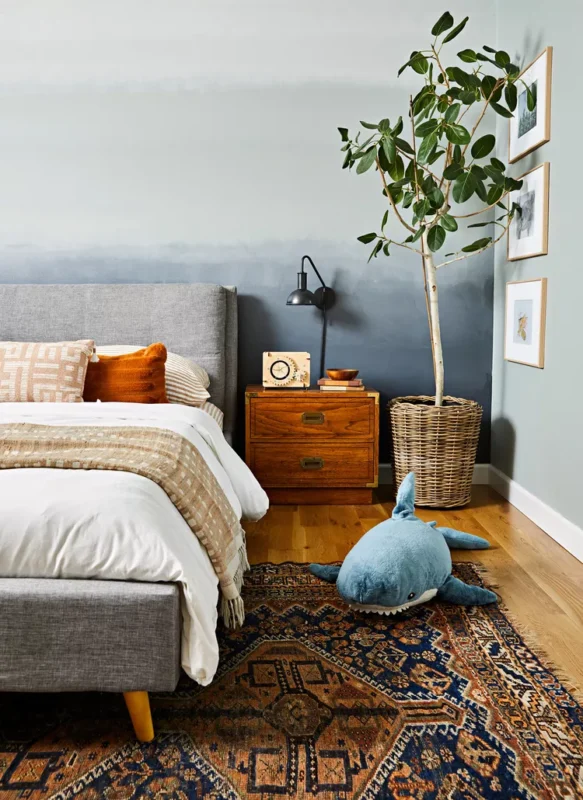
The floor and walls start talking to each other the moment patterns appear on both.
A vibrant rug sets the base of the room, pulling together colors that echo coastal sunsets and beachside markets.
Layering that with boho wallpaper creates a space that is visually rich from top to bottom.
The key is contrast in scale. Large wallpaper motifs paired with a smaller, detailed rug pattern prevent the room from feeling repetitive. One anchors the eye upward, the other grounds it below.
Furniture placement becomes simpler in this setup. Neutral beds, low-profile nightstands, and natural textures sit between the two patterned surfaces.
Sunlight during the day softens both rug and wallpaper tones, while evening lighting deepens their richness.
The result is a bedroom that carries energy without needing heavy décor. Every surface contributes to the overall story.
Pro Tip: Pick one shared color between rug and wallpaper to keep the entire room visually connected.
Add a French Touch
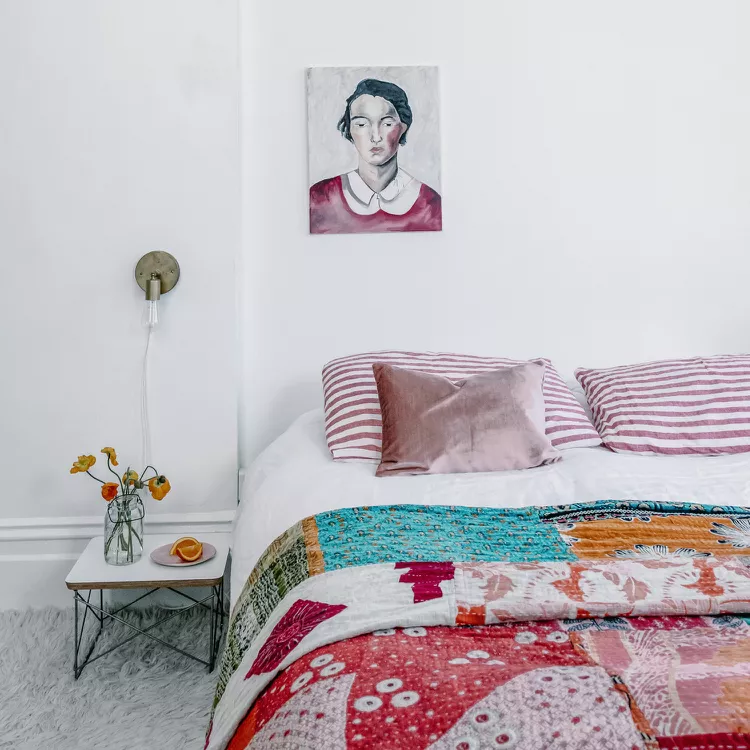
A coastal boho bedroom shifts direction the moment French-inspired details enter the space.
This style leans on quiet elegance rather than heavy decoration. Think curved furniture edges, linen drapes that fall loosely near the floor, and aged gold accents that catch soft light in small doses.
An upholstered headboard with soft curves or a vintage-style iron frame brings that Parisian influence into a beach-inspired setting. Paired with airy fabrics, the look stays relaxed.
Details matter more than quantity. A tall mirror leaning against the wall, a small gilded lamp on a nightstand, or an antique-style chair in the corner adds just enough character.
When blended with boho textures, the French influence softens the overall beachy look. The space carries both structure and ease, giving it a lived-in but refined presence.
Pro Tip: Stick to soft neutrals with one metallic accent so the French elements stay subtle rather than dominant.
Install Tall Bookshelves

Vertical storage changes the entire rhythm of a bedroom wall.
Tall bookshelves draw the eye upward, adding height and presence to a beachy boho space.
They create structure along the walls, leaving more open space for soft furnishings and woven décor.
Styling the shelves becomes part of the design itself. Books stacked both upright and horizontal break monotony, while woven baskets, small ceramics, and coastal objects add variation.
Driftwood pieces or sea-inspired décor tie everything back to the beach theme.
The shelves also act as a storytelling surface. Each level can hold a different mood, from travel books to personal keepsakes.
Lighting near the shelves enhances depth. A small lamp or hidden strip lighting highlights objects and casts gentle shadows that shift all day.
The result is storage that does more than hold items. It becomes a vertical feature that supports the entire bedroom design.
Pro Tip: Leave a few empty spaces between objects so the shelves do not look overcrowded or visually heavy.
Rattan Furniture for a Natural Touch
A rattan chair near a window. That’s usually the first thing that changes how the room reads.
Morning light slips through the weave and lands in uneven patterns across the floor.
Nothing about it is uniform, which is exactly why it draws attention. Even a small rattan stool can interrupt a plain corner and give it a point of interest.
Most rooms rely on heavier furniture to define space. Rattan does the opposite. It leaves gaps, air, and visibility between lines, so the bedroom never looks boxed in.
Pair it with cotton bedding or a simple linen throw and the contrast becomes clear: soft fabric against structured weave.
Pro Tip: Let rattan stand alone in one area instead of scattering it across the room.
Decorate With Indoor Plants
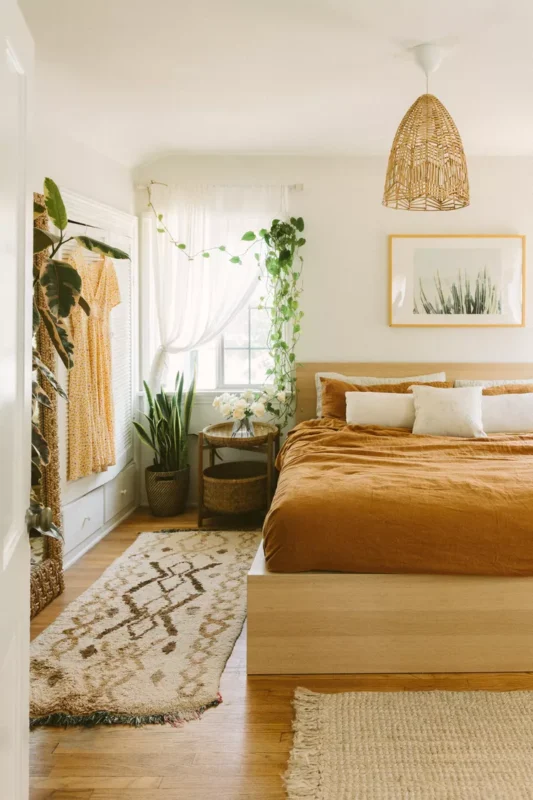
A tall plant in a bare corner shifts the entire geometry of a bedroom.
It reaches upward in a way furniture never does. Leaves spread unevenly, some catching light, others sitting in shadow.
That irregular shape breaks the straight lines of beds, shelves, and walls.
Smaller plants behave differently. One on a nightstand, another near a mirror, another on a shelf. Each one interrupts a flat surface with something living.
The room starts to pick up movement even when nothing is being moved. Shadows drift across walls as the day changes.
Not every corner needs one. A single strong plant often does more than a cluster of small ones.
Pro Tip: Place plants where sunlight already hits instead of forcing them into dark corners.
Layer Finishes and Décor
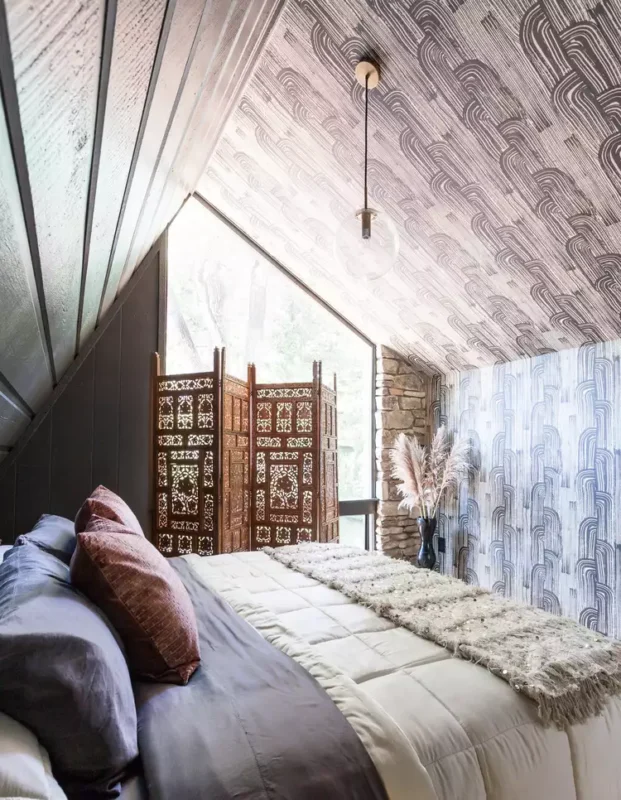
Wood meets fabric. Metal sits beside woven texture. Nothing matches completely.
That’s where depth starts to show. A jute rug softens a wooden floor. A metal lamp stands beside a ceramic vase.
Linen curtains fall next to a rattan chair. Each surface reacts differently to light.
The room stops looking flat because the eye keeps switching between materials.
Even small objects carry weight in this kind of setup. A tray, a basket, a framed print, all pulling from different finishes but still sharing space.
The trick is not coordination. It’s contrast that still makes sense when viewed as a whole.
Pro Tip: Repeat each material at least twice in the room so the mix feels intentional.
Apply Boho Wall Décor
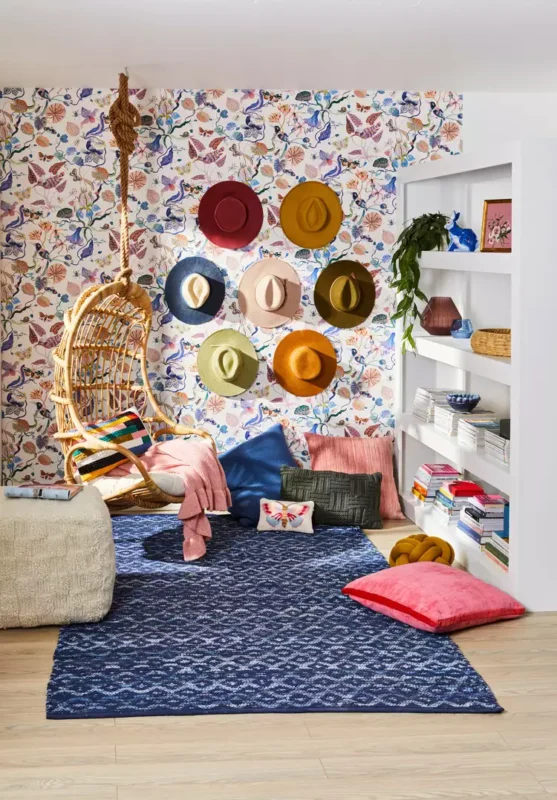
A wall covered in empty space behaves differently once texture enters it.
Woven baskets appear first. Then fabric hangings. Then pieces that sit slightly off the surface instead of flat against it.
The wall stops being background. It becomes part of the room’s structure.
Shapes vary: round, layered, uneven. Some pieces overlap; some sit alone. Nothing lines up perfectly, and that irregularity gives it character.
Even the spacing matters. Gaps between objects let the wall breathe instead of turning into a dense collage.
Light hitting woven fibers creates subtle shadow lines that shift during the day.
Pro Tip: Build wall décor around one central piece, then add smaller items outward instead of filling space evenly.
Blue Boho-Style Bedroom
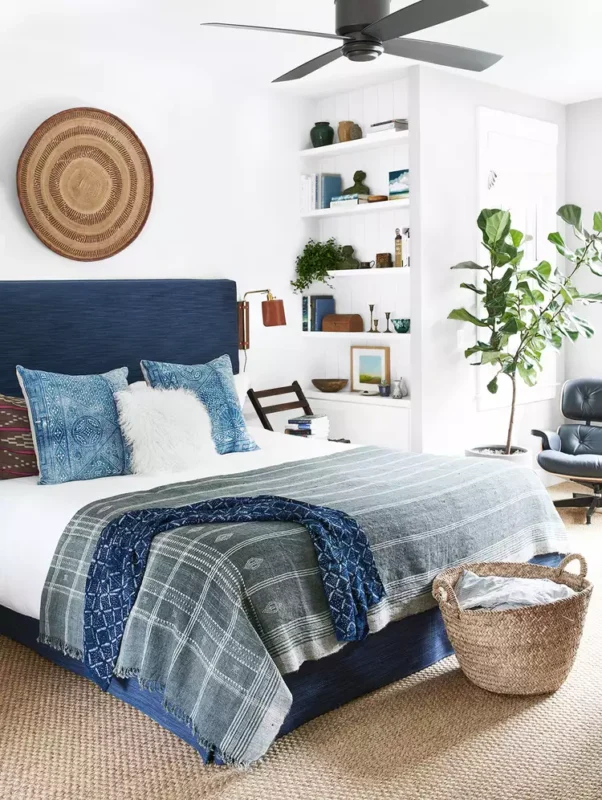
Blue changes how a boho bedroom behaves the moment it enters the space.
Not one shade. Several. Washed denim, faded ocean tones, soft sky hues.
A blue linen duvet sets the base. Nearby, patterned cushions introduce variation without strict matching.
The bed becomes the anchor, surrounded by shifting tones.
Rattan furniture and light wood interrupt the cool palette, keeping it from turning flat. That contrast is what keeps the room grounded.
Light behaves differently across blue surfaces. Morning light pushes it lighter. Evening light pulls it deeper.
The room never holds one fixed version of itself.
Pro Tip: Mix at least three tones of blue instead of relying on a single shade for a richer result.
Decorate with Baskets

A wall changes character the moment baskets start replacing flat décor.
Different sizes placed together create a rhythm that framed art cannot match. Some lean slightly off-center, others sit tightly grouped, each one bringing its own weave pattern into the mix.
The surface of a simple wall suddenly carries movement.
Baskets also shift function depending on placement. On the floor, they hold blankets or books.
Mounted high, they act as sculptural pieces that catch light differently across their curves. The woven detail becomes more noticeable as shadows fall into the gaps.
Nothing here relies on precision. Slight irregularity in spacing or size actually strengthens the look, giving it a collected feel.
The room picks up warmth from the natural tones in the weave, especially when paired with soft fabrics or pale walls.
Pro Tip: Mix flat baskets with deeper woven shapes so the wall has variation in shadow.
Vary Textures and Materials

A room starts to gain depth when surfaces stop behaving the same way.
Wood carries grain. Linen absorbs light. Metal reflects it. Woven pieces sit somewhere in between. Once these materials appear together, the space stops reading as flat.
A wooden bed frame next to a soft cotton throw already creates contrast. Add a ceramic lamp base and the layering becomes more noticeable.
Each material reacts differently depending on where you stand in the room.
This variation matters more than matching colors. Even a limited palette can look rich when textures are doing the work.
Over time, the eye begins to notice details in sequence instead of all at once. That gradual discovery gives the room uniform design ever could.
Pro Tip: Limit each material to two or three appearances so the mix stays controlled rather than scattered.
Layer White Linen Bedding
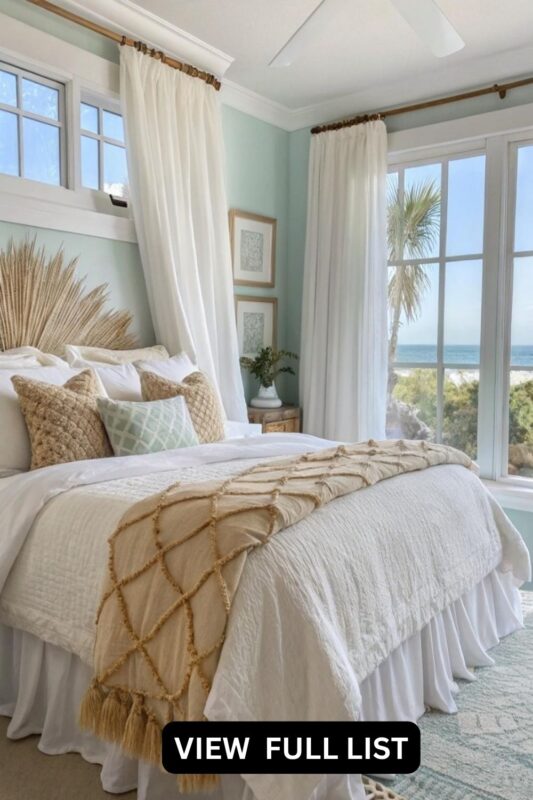
White bedding looks simple until layers start building on top of it.
A flat sheet alone gives a clean base, but adding a slightly rumpled linen duvet changes the entire surface. The fabric folds catch light in uneven ways, creating soft shifts across the bed.
One pillow is not enough. Multiple cushions in varying sizes introduce structure without breaking the calm tone.
Some sit upright, others rest lower, giving the bed a lived-in arrangement.
The appeal comes from texture rather than color. Even within one shade, linen, cotton, and gauze behave differently under light, adding quiet variation across the surface.
The bed becomes the center of the room without relying on pattern or bold accents. Everything else in the bedroom starts to orbit around it naturally.
Pro Tip: Stick to one fabric family for all bedding layers so the texture win instead of competing materials.
FAQs
What makes a beachy boho bedroom different from regular boho style?
Beachy boho blends relaxed bohemian textures with coastal tones like sand, soft blues, and sun-washed neutrals.
Which materials work best in a beachy boho bedroom?
Natural materials lead the style. Rattan, linen, jute, cotton, and light woods set the foundation. These textures pair well with woven décor and layered fabrics to create a relaxed coastal direction.
Can a beachy boho bedroom work in small spaces?
Yes. Lighter colors, woven furniture, and layered textiles help small rooms appear more open.
Keeping décor simple and focusing on texture instead of heavy furniture keeps the space less crowded.