15 Living Room Office Combo Ideas

Working from home means finding space for a desk where you can.
I’ve had to do the same in my own living room, and it’s surprising how many clever layouts can make the two functions work together.
With the right arrangement, a living room can support work tasks during the day and return to a relaxed setting later.
These living room office combo ideas show practical ways you can fit a workspace into your main living area without disrupting comfort.
Home Office Ideas In Living Room
1. Position the Desk Behind the Sofa
The space behind a sofa often goes unused, which makes it a smart location for a desk. A narrow table placed directly behind the couch can act as a small office area during the day.
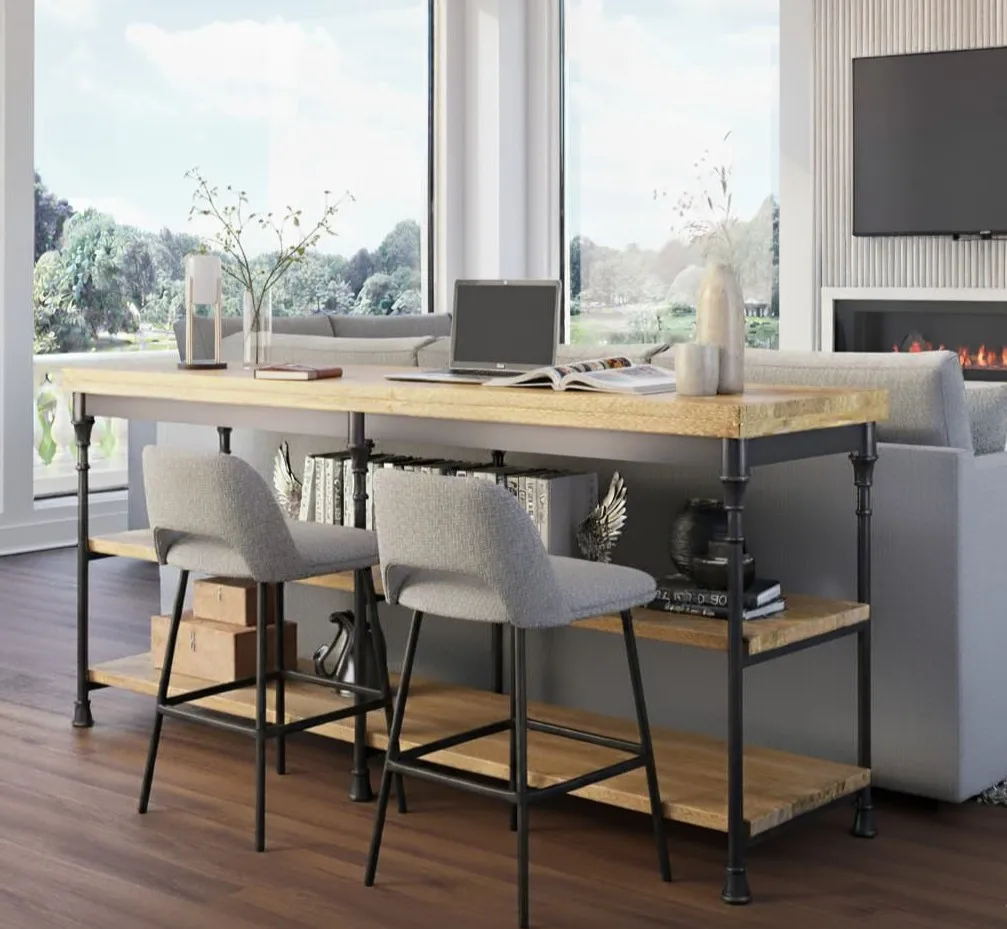
This layout keeps the work zone separate from the main seating arrangement. When you sit at the desk, the back of the sofa forms a natural divider.
I’ve seen this approach used often in open living rooms where the furniture floats in the center of the room instead of sitting against walls.
A slim desk works best so the walkway remains comfortable. Pair it with a supportive chair and a desk lamp to complete the workspace.
Because the desk sits within the living room layout, decorating it with neutral accessories helps everything blend together.
The arrangement creates a functional office area that feels integrated with the rest of the room.
2. Define the Workspace with a Slim Console Desk
A slim console desk can carve out a work area inside a living room without disrupting the main seating layout.
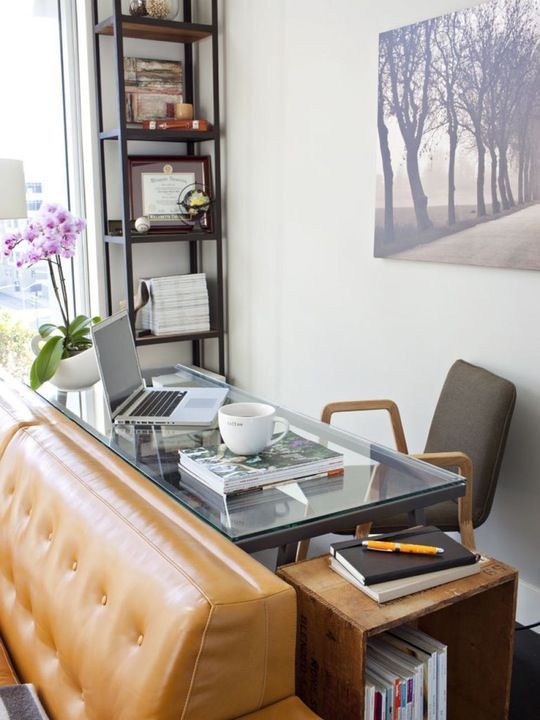
These desks fit neatly against a wall or behind a sofa, which allows the room to serve two purposes at the same time.
I often recommend this layout in apartments where a separate office room isn’t possible. The narrow desk keeps walkways open, so the space continues to function as a comfortable living room.
A simple chair that slides under the desk helps maintain a tidy appearance. When work is finished, the chair disappears under the console and the room quickly returns to its normal setup.
Lighting helps define the area. A compact desk lamp gives enough brightness for work tasks without changing the overall mood of the living room.
Decorating the desk lightly keeps it connected to the rest of the space. A small plant, framed photo, or stacked books usually works well.
This arrangement allows you to work comfortably while keeping the living room relaxed and organized.
3. Hide the Office in a Cabinet Desk
A cabinet desk is a clever solution for people who want their workspace hidden after the workday ends. At first glance, it looks like a standard storage cabinet placed in the living room.
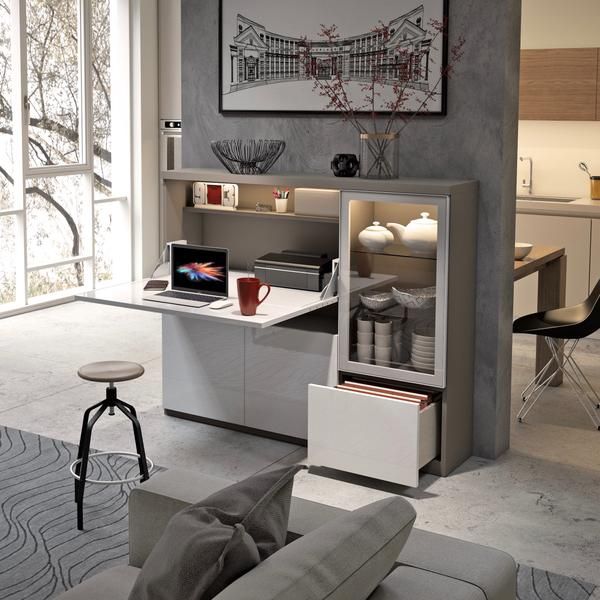
When the doors open, the inside reveals a compact desk surface along with shelves for office supplies. Laptops, notebooks, and chargers can stay organized inside the cabinet.
I’ve always liked how this design keeps work materials contained in one place. Once the cabinet doors close, the room instantly returns to a relaxed living room setting.
Many cabinet desks also include small compartments that make organizing paperwork easier.
Placing a comfortable chair nearby completes the setup. When it’s time to work, the cabinet opens and the space becomes a mini office.
This approach works well in apartments where the living room needs to serve multiple purposes throughout the day.
4. Turn an Empty Corner into a Work Nook
Unused corners in a living room can easily become productive work spots. A compact desk placed against two walls creates a practical nook that doesn’t interfere with the rest of the room.
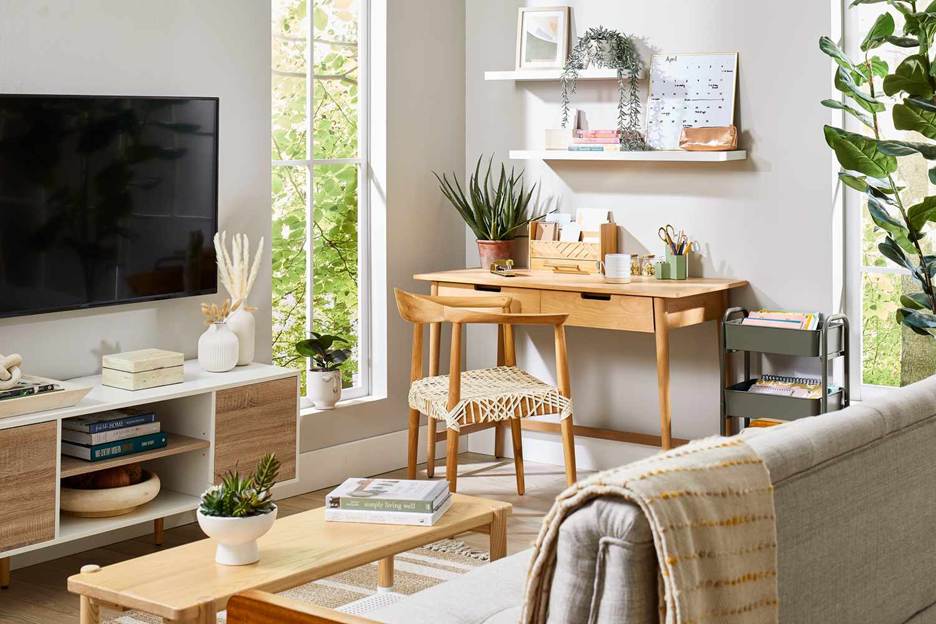
I’ve used this strategy in smaller homes where every square foot counts. A corner desk uses space efficiently and keeps the main seating area untouched.
Wall shelves above the desk provide storage for notebooks, planners, and office tools. This vertical storage keeps the desktop clear and prevents clutter from spreading.
The desk chair can remain lightweight so it moves easily when guests visit. Some people also choose a chair that matches the living room furniture to keep the room visually consistent.
Artwork or a pinboard above the desk helps the corner look intentional rather than temporary.
This simple transformation turns an overlooked corner into a functional workspace that blends naturally with the living room.
5. Maximize Space Using a Vertical Bookshelf Divider
A tall bookshelf divider can turn a single living room into two purposeful areas.
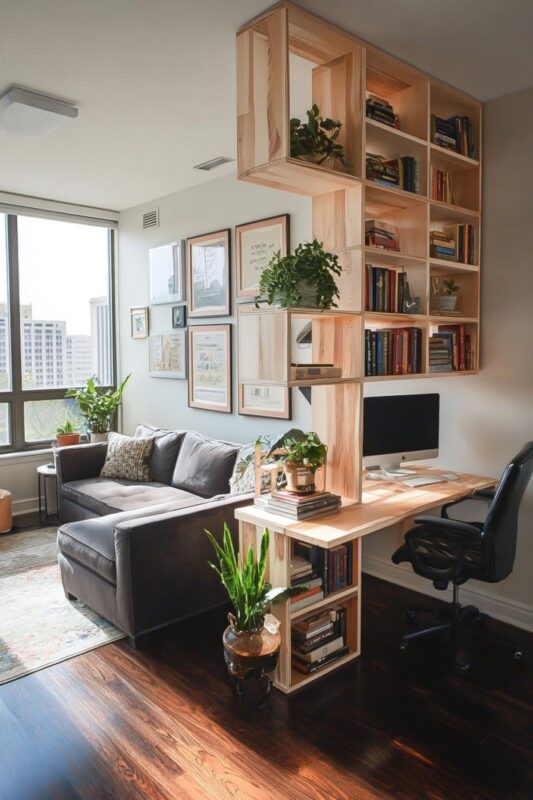
Instead of building a wall, a vertical bookcase splits the space in a practical way while keeping the room open.
I’ve seen this layout work especially well in apartments where the living room also needs to serve as a daily workspace.
The desk sits on one side of the shelf, while the sofa and coffee table remain on the other side. The separation helps you focus during work hours.
The shelves themselves become part of the décor. Books, plants, framed prints, and decorative boxes can fill the compartments and soften the look of the divider.
Storage baskets can also hide office supplies that you don’t want visible.
Because the shelf is open, natural light continues to travel across the room. This keeps the living area bright instead of making it feel closed off.
A comfortable desk chair and a small task lamp complete the office side. Once arranged properly, the bookshelf divider creates a natural transition between relaxation and productivity in the same room.
6. Style the Workspace with Open Shelving
Open shelving above a desk can turn a simple living room workspace into an organized and visually interesting area. Floating shelves keep the wall light.
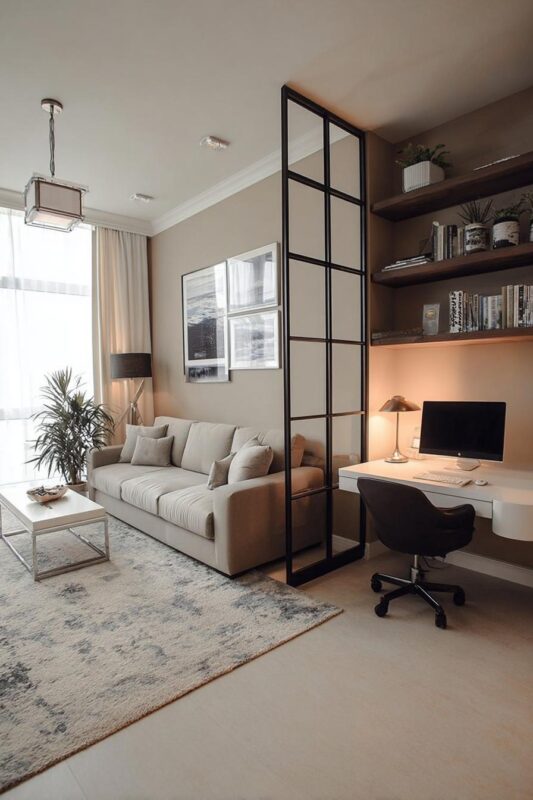
I like this idea because it allows the workspace to blend with the living room instead of standing out like a traditional office.
Books, small plants, framed photos, and decorative objects can sit alongside work essentials.
The shelves also help keep the desk clear. Notebooks, folders, and desk tools move upward onto the shelves, leaving the work surface free for daily tasks.
Placement plays an important role. Mounting the shelves slightly above eye level keeps the wall balanced and prevents the desk area from looking crowded.
Lighting can also enhance the display. A small desk lamp or wall light helps highlight the shelves in the evening.
This setup works especially well in apartments where every wall must serve a purpose. The open shelving stores office items while also contributing to the overall design of the living room.
7. Display Personal Collectibles on Wall Mounted Shelves
Wall-mounted shelves can bring personality into a living room office setup. Instead of leaving the workspace plain, these shelves provide a place to display meaningful items.
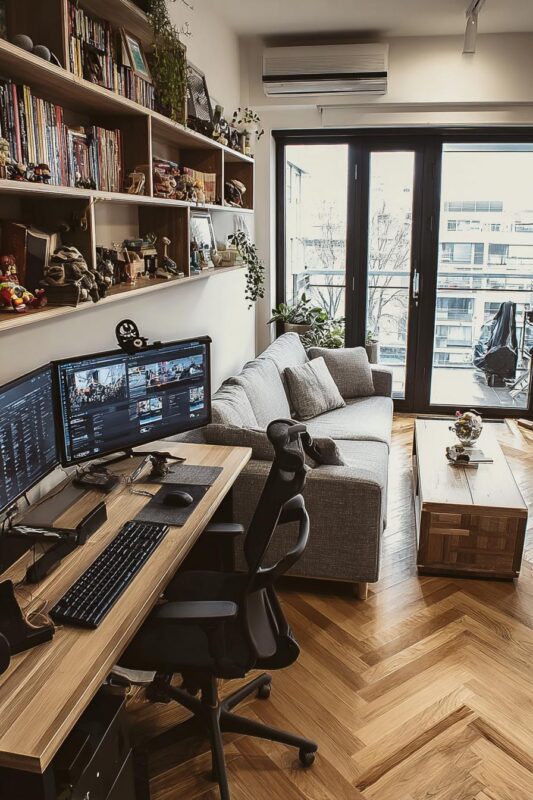
I’ve noticed that personal objects often make a workspace more enjoyable to spend time in. Travel souvenirs, framed photos, small sculptures, or vintage finds can sit beside practical office items.
Arranging collectibles carefully prevents the shelves from looking cluttered. Grouping objects by size or theme keeps the display organized while still allowing each piece to stand out.
These shelves also help integrate the office corner into the living room décor. Since the items reflect personal interests, the workspace begins to look like part of the home rather than a separate office.
Neutral shelf brackets or floating designs keep the structure simple so the objects remain the focus.
The result is a workspace that feels personal and lived-in. It encourages creativity while making the living room office combination look intentional and well styled.
8. Improve the Workspace Atmosphere with Under-Shelf Lighting
Lighting can completely change the mood of a living room workspace. One simple upgrade involves installing warm lights beneath floating shelves above the desk.
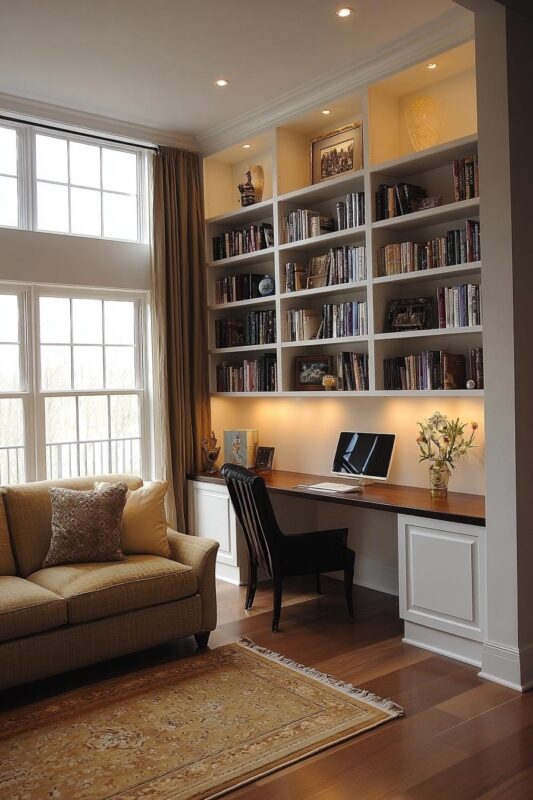
These small lights shine directly onto the desk surface, which helps during reading, writing, or laptop work. The glow also highlights the shelves and decorative items placed on them.
I’ve tried this lighting style in compact work corners, and it immediately made the desk area feel more defined. Instead of relying on one overhead light, the workspace receives its own gentle illumination.
Warm LED strips are a common choice because they produce a soft glow and remain energy efficient. Many versions attach easily under shelves with adhesive backing.
This type of lighting also helps in the evening. The rest of the living room can stay softly lit while the desk area remains bright enough for work tasks.
By adding under-shelf lighting, the office corner becomes more functional and comfortable while blending naturally into the living room environment.
9. Arrange a Cozy Leather Sectional Around the Workspace
A leather sectional can anchor the living room side of a combined living and office layout. Its generous seating creates a comfortable lounge area while the workspace sits nearby.
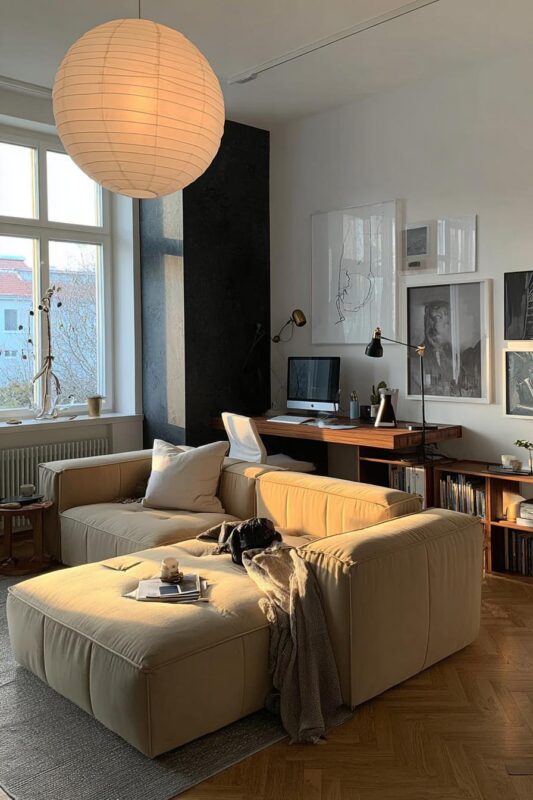
I’ve seen this arrangement work especially well in open apartment living rooms. The sectional forms a natural boundary that separates the relaxation area from the desk.
Positioning the desk along a nearby wall keeps the work zone accessible but not intrusive.
When you sit on the sofa, the office area stays slightly out of focus, which helps maintain the living room atmosphere.
Leather sectionals also bring durability and structure to the room. Their firm shape helps define the seating zone even when the workspace sits within the same area.
Adding a coffee table and a soft area rug completes the living room side of the layout. These elements help balance the practical nature of the desk nearby.
The result is a room that supports both work and downtime, giving the living room comfort while the workspace remains close at hand.
10. Position the Desk Between Two Windows
Placing a desk between two windows can turn an unused wall into a productive work zone.
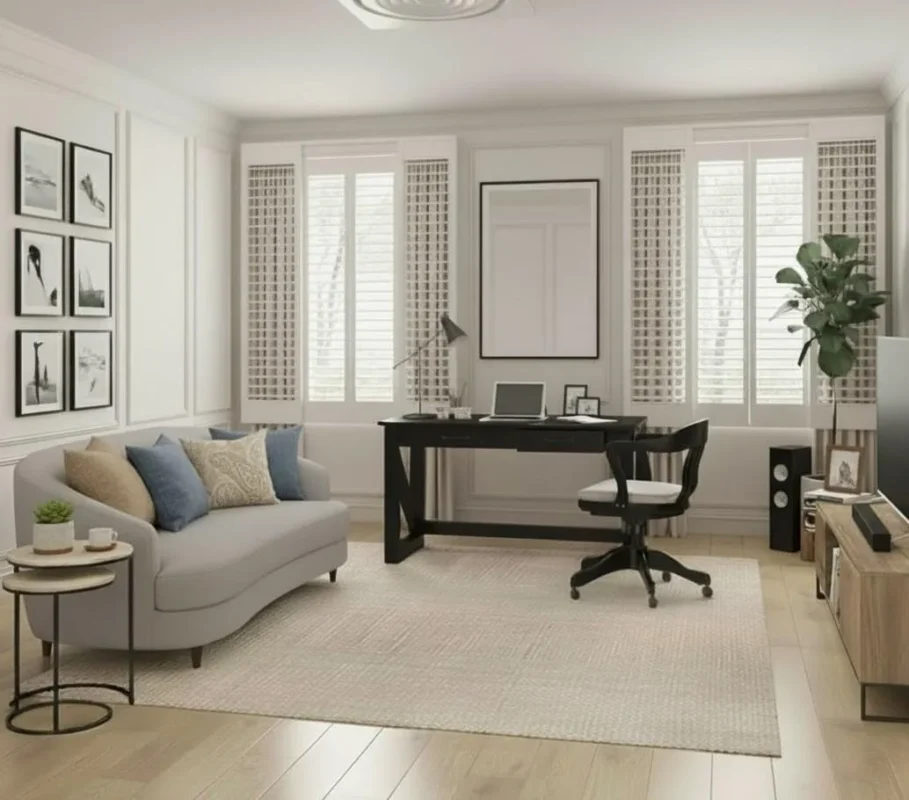
This setup works well in living rooms that already receive good daylight. The natural light brightens the desk area and helps create a pleasant place to work during the day.
I’ve seen this layout transform awkward wall spaces into practical office corners. The desk sits centered between the windows, which naturally frames the workspace.
The arrangement often looks balanced because the windows create symmetry around the desk.
Natural light also reduces the need for strong artificial lighting during the day. The view outside can provide a relaxing visual break when you step away from your laptop or paperwork.
A simple chair, a small desk lamp, and a few neatly arranged items can complete the space.
Plants or a framed picture on the desk can also help the workspace connect with the rest of the living room décor.
This arrangement keeps the desk visually light while giving you a comfortable place to focus. It blends easily into the living room layout and turns an empty wall into a useful part of the home.
11. Blend the Workspace with Art and Accessories
A living room office can look more natural when the desk area is styled with art and decorative pieces.
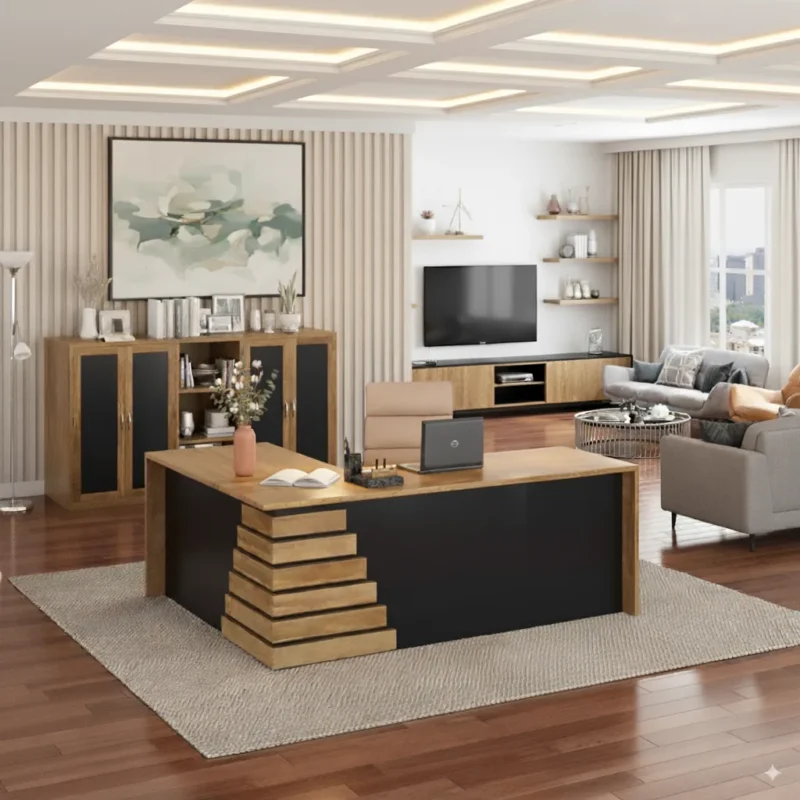
Rather than leaving the wall above the desk blank, artwork can help the workspace merge with the rest of the room.
I’ve noticed that a small gallery wall works particularly well for this idea. Framed prints, photographs, or illustrations arranged above the desk make the area look intentional rather than temporary.
Accessories also play a role in softening the office setup. A ceramic vase, a sculptural object, or a small stack of books can sit on the desk and tie into the living room’s overall design.
When the workspace includes decorative elements, it stops looking like a typical office corner. The desk becomes part of the room’s décor rather than a separate zone for work.
Lighting can also enhance the display. A desk lamp placed beside the artwork adds warmth and highlights the wall arrangement in the evening.
This approach helps the workspace feel connected to the living room, making the entire room look cohesive and thoughtfully arranged.
12. Install a Fold-Down Wall Desk
A fold-down wall desk offers a practical solution for living rooms that need flexible space. When closed, the desk sits flat against the wall and takes up very little room.
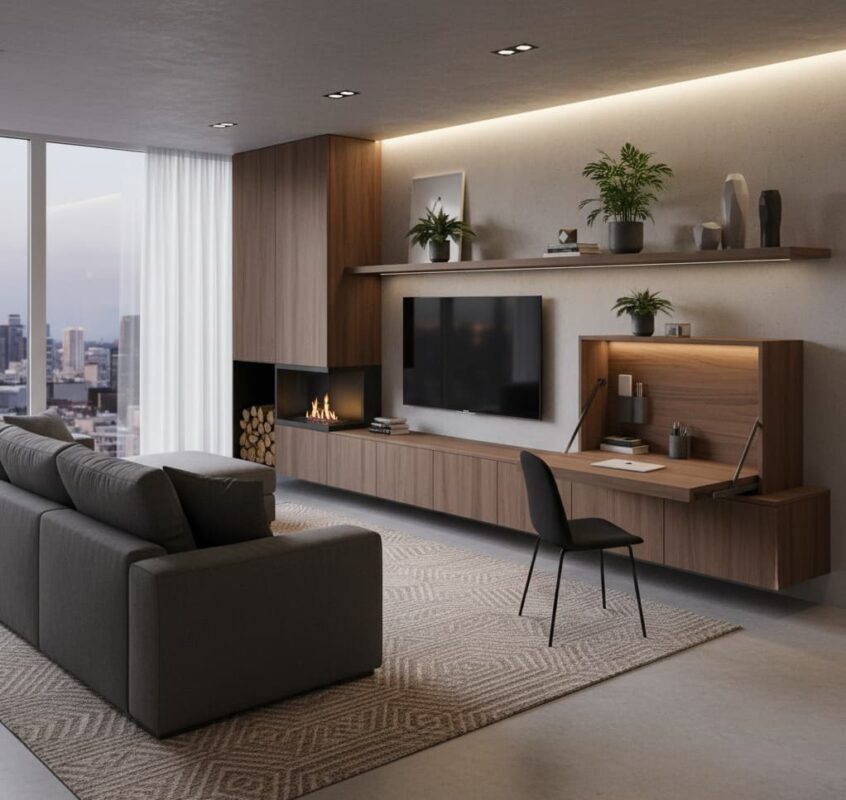
When opened, it provides a surface large enough for a laptop, notebook, or writing tasks.
This idea works well in small apartments where space needs to shift throughout the day. During work hours the desk functions like a mini office.
After finishing work, the surface folds back up and the room returns to a normal living area.
I’ve seen people install these desks in narrow corners or along small wall sections that otherwise remain unused.
Because the desk attaches directly to the wall, the floor space underneath stays open.
Some fold-down desks also include small shelves or storage compartments inside. These sections can hold office supplies, chargers, or documents.
A lightweight chair placed nearby can complete the setup. When the desk closes, the chair can move beside the sofa or under a console table.
This solution helps maintain a clean living room layout while still offering a practical place to work when needed.
13. Turn a Closet into a Compact Office Station
A small closet in the living room can become a surprisingly effective workspace.
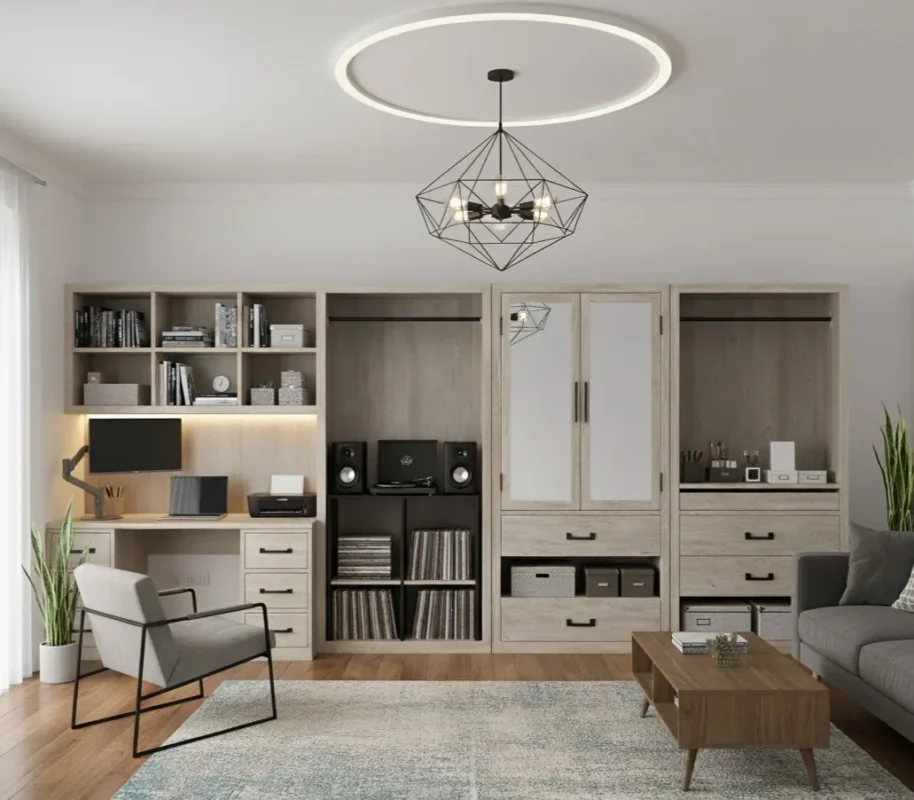
Removing the closet doors and adding a desk surface instantly creates a tucked-away office nook.
I’ve seen this approach used in apartments where extra rooms are not available. The closet becomes a contained workspace that doesn’t spread across the rest of the living room.
Shelves installed above the desk provide storage for office supplies, books, and paperwork.
Because the shelves sit inside the closet frame, everything stays neatly contained in one area.
Some people choose to repaint the inside of the closet or add wallpaper. This simple step makes the workspace stand out and gives it its own personality.
When the workday ends, curtains or sliding doors can cover the space again. This helps separate work from relaxation during the evening.
Transforming a closet into an office station allows the living room to keep its main function while still providing a dedicated place for daily tasks.
14. Use a Convertible Coffee Table for Work Tasks
A convertible coffee table can quietly double as a workspace inside the living room. At first glance it looks like a regular coffee table placed in front of the sofa.
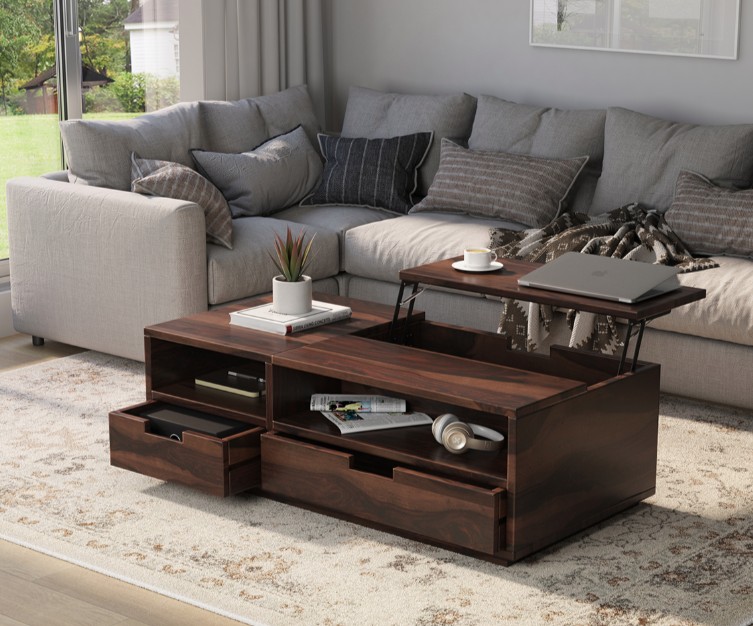
With a simple lift or extension, the surface rises to a comfortable height for working.
This design works well for people who prefer working from the sofa or armchair. Instead of setting up a permanent desk, the coffee table becomes the work surface when needed.
I’ve noticed that many modern versions include hidden storage inside the table. This space can hold notebooks, chargers, and office tools so they stay out of sight during the day.
The living room keeps its relaxed layout because the table blends with the rest of the furniture.
When the work session ends, the surface lowers again and the room looks exactly the same.
A comfortable sofa, a supportive cushion, and good lighting nearby can make the setup even more practical.
This approach allows the living room to remain a place for relaxation while quietly supporting daily work tasks.
15. Create a Double-Duty Dining Nook
A small dining nook can easily serve as a workspace during the day. A compact table placed near the living room seating area works for meals, but it can also become a productive spot for work tasks.
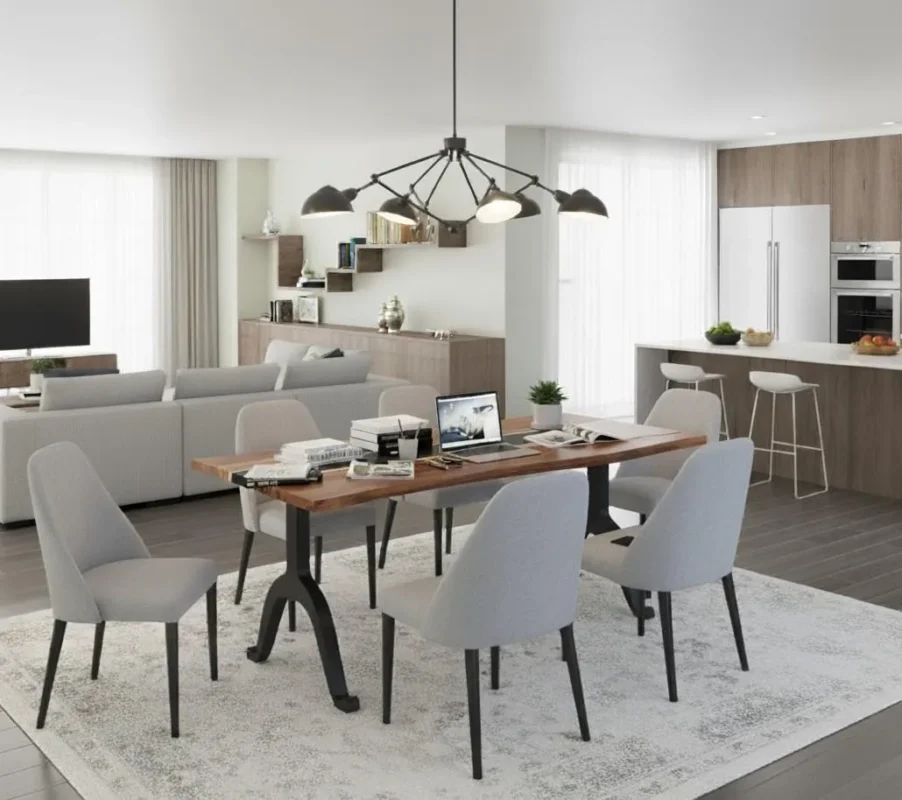
I’ve seen this setup used frequently in apartments where the dining table stays empty for most of the day. Turning it into a temporary desk makes better use of the space.
A comfortable dining chair can support laptop work or writing sessions. Adding a small desk lamp or placing the table near a window can improve lighting for daytime work.
Storage nearby helps keep the table organized. A sideboard, cabinet, or shelf can hold office supplies when they are not in use.
When work ends, the table returns to its original role as a dining area. The transition is simple because the furniture already fits naturally into the living room layout.
This arrangement allows one piece of furniture to serve two purposes, making the room more practical for everyday living.
Essential Tips Regarding Choosing the Right Furniture
Complete your living room office with the right furniture. The desk is only the beginning. The pieces around it shape how the space works and how it looks.
Choose a chair that supports your posture. An ergonomic office chair works well. You can also use a stylish accent chair that blends with your living room décor.
Lighting matters. Use soft ambient lighting for the room. Add a focused desk lamp for tasks like reading or working on a laptop.
Keep the space organized. Use baskets, decorative boxes, or a small filing cabinet. These simple storage options keep supplies nearby without making the room feel cluttered.
Think about your tech needs too. Make sure the desk sits near power outlets. Plan for internet access and tidy cable management.
Extra surfaces help. A small side table or rolling cart can hold notebooks, chargers, or office tools.
Aim for balance. Your space should look inviting but still support daily work. When design and function work together, the room serves both relaxation and productivity.
Start with the layout. Find a quiet corner or unused wall in the living room. Then add furniture and accessories that match your existing style.
Quality furniture can make the setup feel seamless. Brands like Sierra Living Concepts focus on custom-made solid wood pieces that fit specific spaces and design styles.
A built-in desk or a statement wood desk can anchor the room. Good craftsmanship adds durability and character at the same time.
With a few thoughtful choices, your living room can become a workspace that feels natural, stylish, and easy to use every day.