How To Design A Mid Century Modern Dining Room Like A Pro (17 Ideas)

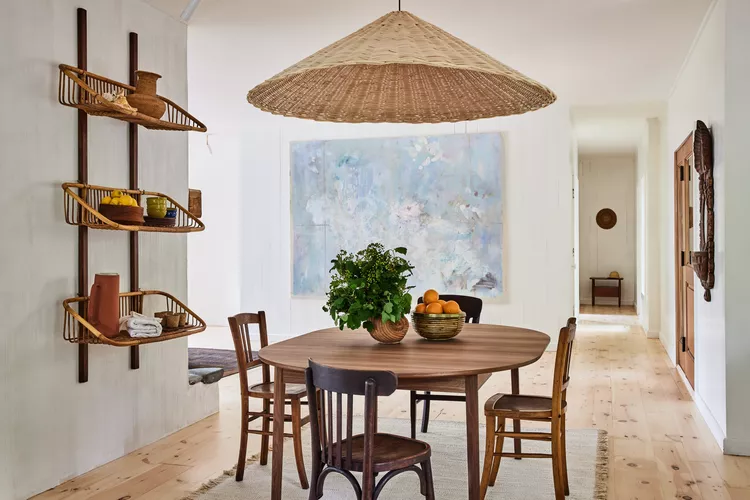
If you’ve worked on a midcentury modern living room, you know how small choices can change a space.
Lighting, furniture, and color all matter. The dining room deserves the same attention.
In my own home, adding midcentury lighting completely changed how I enjoy meals.
You create a space that’s stylish. Each piece has a role, and together they make the room feel connected to the rest of your home.
Keep reading to be inspired by these mid-century modern dining room ideas.
17 Mid Century Modern Dining Room Ideas
These ideas will marry form and function;
Bold Moves & Wishbone Grooves
A strong dining room starts with a table that holds attention the moment you walk in. Think solid wood with a clean shape and a rich tone.
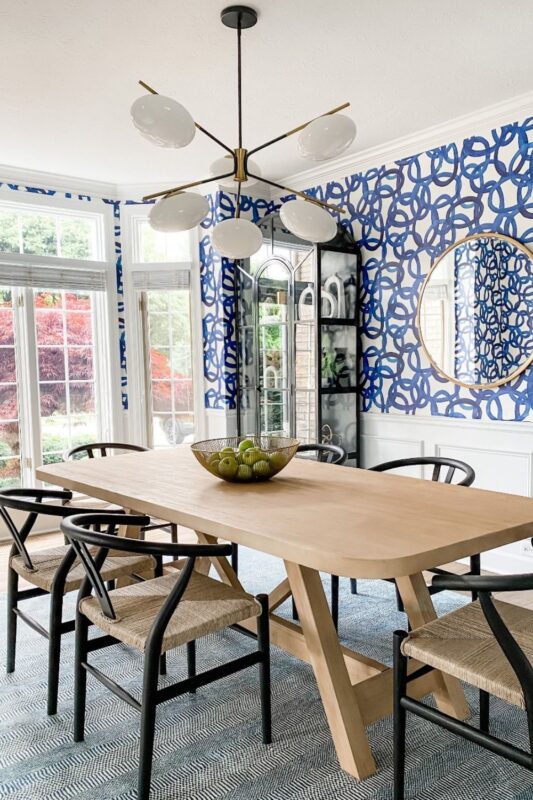
It gives the space weight. Once that anchor is in place, you can build around it with chairs that bring personality.
This is where wishbone chairs step in. Their curved backs and woven seats add detail without making the room busy.
The shape is distinct, yet it blends well with many table styles.
You can push things further by choosing bold upholstery for a couple of chairs at the ends.
A deep green or burnt orange works well here. It adds contrast and breaks the routine of matching pieces.
Keep the rest of the room steady so the statement pieces stand out. A simple rug under the table can tie everything together.
Wall decor should stay minimal. Let the furniture do the talking.
You get a space that looks styled, but still easy to live with every day.
Pastel Pop Meets Retro Cool
If you want a lighter mood, pastel tones can shift the entire dining room. Soft pink, mint, or pale blue can change how the space feels.
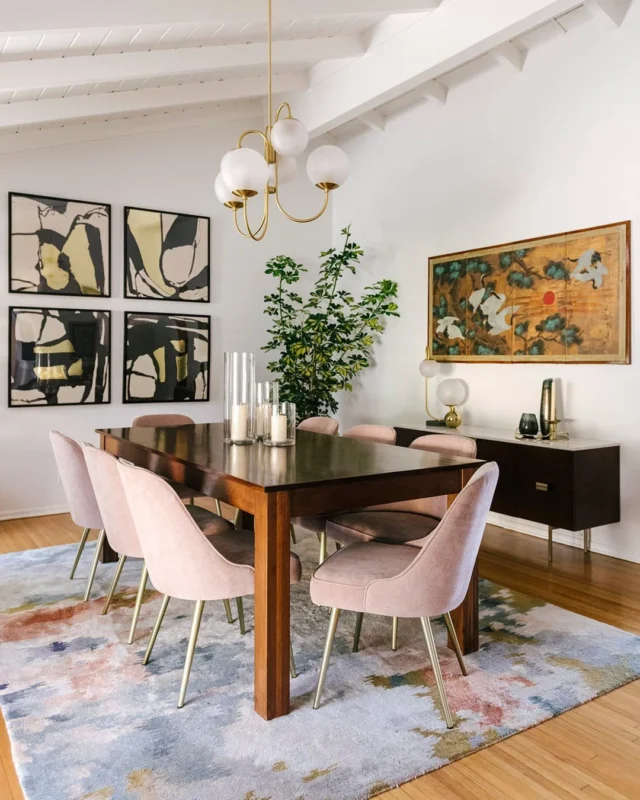
These shades bring a sense of freshness that works well with midcentury design.
Start small if you’re unsure. Dining chairs are an easy place to introduce color.
A set of pastel seats around a wood table creates a clear contrast. It keeps the room from feeling too serious.
You can echo those colors in simple ways. A ceramic vase, artwork, or even seat cushions can repeat the tone. The goal is balance, not a full color takeover.
Mixing pastels with classic midcentury shapes keeps the room grounded. Clean lines stop the space from feeling too soft or playful. It stays sharp and structured.
Lighting also plays a role here. Warm light helps soften the colors and makes them more inviting at night.
This approach works well if you want something relaxed but still stylish. It is fresh, easy, and a bit nostalgic at the same time.
Sun-Drenched Simplicity
Natural light can define your dining room more than any piece of furniture.
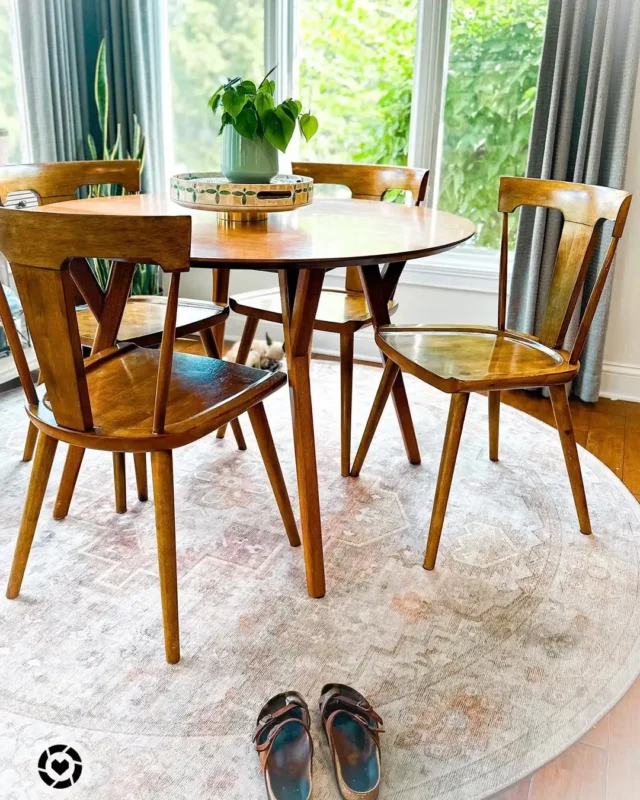
When sunlight fills the space, it highlights every texture and surface. That’s why keeping things simple works best here.
Start by clearing heavy window treatments. Let light move freely into the room. Sheer curtains can work if you need some privacy, but avoid anything thick or dark.
Choose a table with a light or medium wood tone. It reflects sunlight better and keeps the room open.
Pair it with chairs that don’t block the view. Slim legs and open backs help maintain that airy look.
Keep the color palette soft and neutral. Whites, beiges, and warm wood tones allow the light to bounce around the space. This creates a calm and steady atmosphere.
Decor should stay minimal. A single centerpiece, like a bowl or vase, is enough. Too many items will interrupt the clean look.
When the light shifts throughout the day, the room changes with it. That natural movement adds interest.
Highlight Natural Materials Like Woods
Wood is at the heart of midcentury design, so it deserves attention in your dining room.
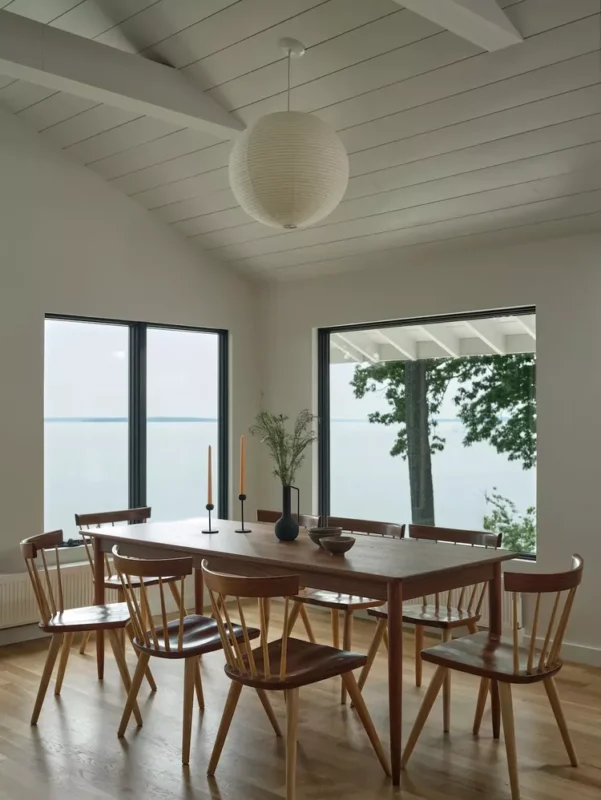
Instead of mixing too many finishes, focus on a few that work well together. This keeps the space clean and easy to read.
A dining table with visible grain can set the tone. Walnut and teak are popular choices because of their warm color and depth. They bring a sense of history into the room.
Chairs can either match or contrast slightly. A lighter wood next to a darker table can create a layered look. Just keep the tones within the same range so nothing feels out of place.
Storage pieces like sideboards are another chance to show off wood.
Look for simple designs with flat fronts and clean edges. These pieces add function while reinforcing the style.
Avoid covering too much of the wood with heavy fabrics or bold patterns. Let the material stand on its own.
A soft rug underneath is fine, but it should not compete for attention.
This approach creates a dining room that is timeless. The focus stays on quality materials and simple design choices.
Hang a Period Pendant Light
Lighting can change the entire mood of your dining room, and a well-chosen pendant can become the main feature.
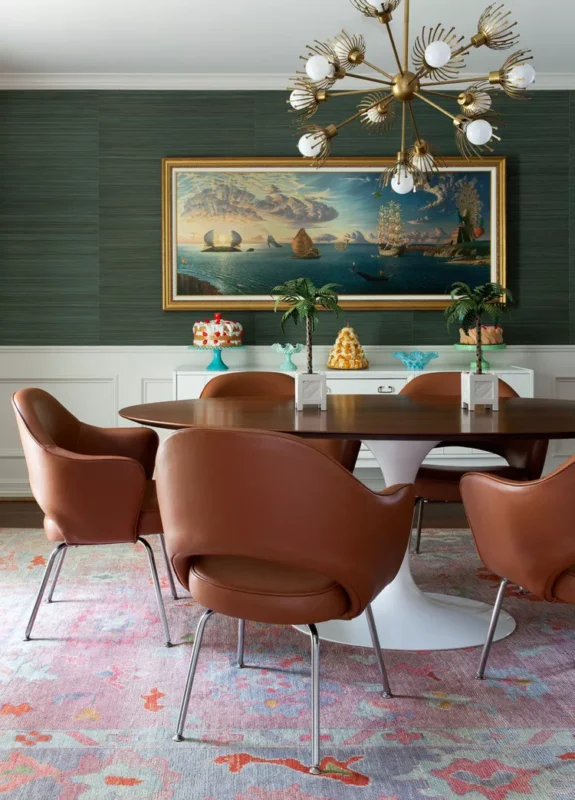
Midcentury designs often use bold shapes that draw the eye upward.
Start by placing the pendant directly above the dining table. It should sit low enough to define the space, but not block the view across the table.
Look for designs with clean lines and interesting forms. Metal shades, globe lights, or layered shapes all work well.
The finish matters too. Brass, black, or even matte white can tie in with the rest of your decor. Choose something that connects with your table or chairs.
Light quality is just as important as the fixture itself. Warm bulbs help create a relaxed setting, especially in the evening.
Once the light is in place, you’ll notice how it brings everything together. It frames the table and adds depth to the room.
Even a simple setup can feel complete with the right pendant above it.
Use Mismatched Chairs
A dining set does not have to match perfectly to look complete. In fact, mixing chairs can make the room less staged.
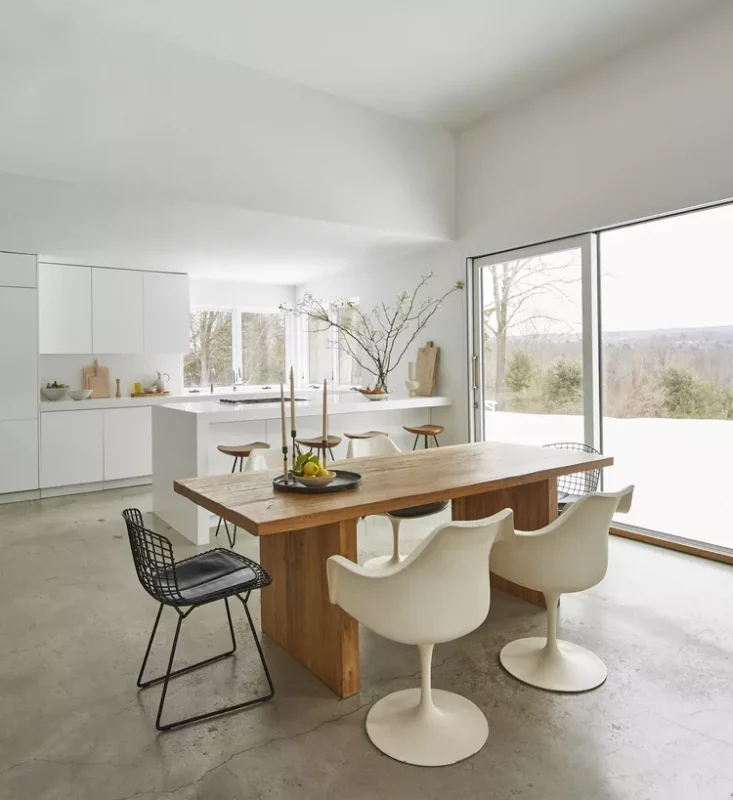
Start with a table that keeps things steady. Once that’s in place, you can bring in different chair styles that still share something in common, like wood tone or seat height.
You might pair two wishbone chairs at the ends with simpler side chairs along the sides.
Or mix wood with a couple of upholstered seats to break things up.
Keep the color palette controlled so the mix does not turn chaotic. When tones relate to each other, the space stays calm even with different shapes.
This approach works well if you like a collected look.
It also gives you flexibility. You can swap pieces over time without redoing the whole room.
Choose Vintage Accents
Vintage pieces bring a sense of history into a midcentury dining room. They add detail that newer items sometimes miss.
You do not need to fill the room with old furniture. A few well-chosen accents can shift the entire space.
A retro sideboard, an old clock, or even a set of ceramic dishes on display can do the job.
These items create small moments that catch your eye.
Look for pieces with simple lines so they blend in easily. Midcentury design works best when nothing feels too heavy or ornate.
Condition matters too. A bit of wear adds character, but it should still be usable and clean.
Create a Corner Nook
If your space allows it, a dining nook can change how the room is used. It creates a more relaxed spot for meals or coffee breaks.
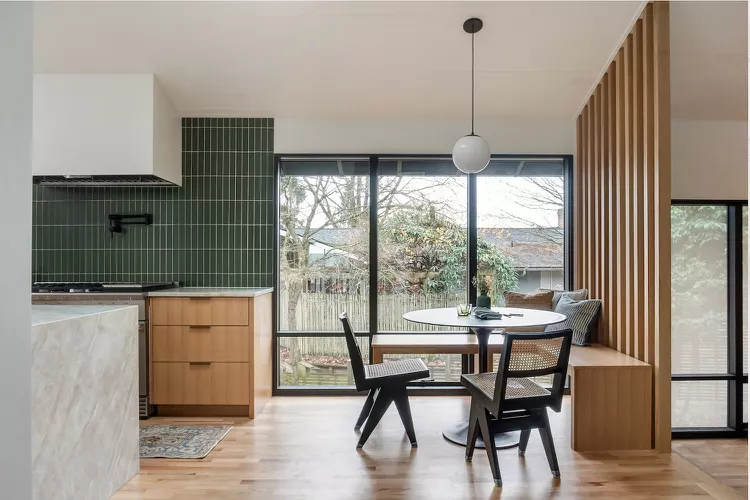
A built-in bench works well here. It saves space and gives you a chance to add cushions for comfort.
Pair it with a small table and a couple of chairs on the open side. This keeps the setup balanced and easy to move around.
Lighting should stay soft in this area. A small pendant or wall light can define the nook without overpowering it.
This setup feels more casual than a full dining layout.
It works well for smaller homes or anyone who wants a quiet corner within a larger space.
Mix With Modern Farmhouse
Midcentury style can blend well with modern farmhouse if you keep the balance right. The key is to let each style show without one taking over.
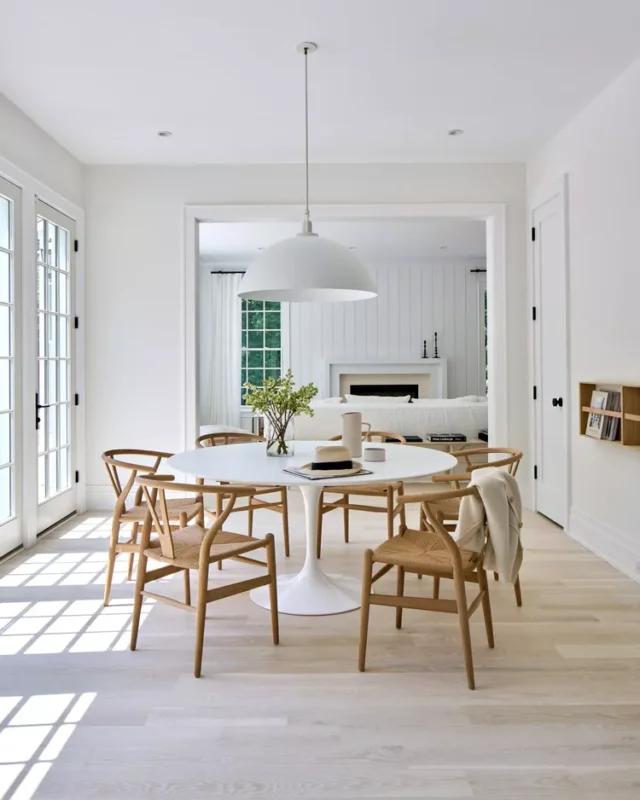
Start with mid-century furniture as your base. Clean lines and simple shapes keep the room structured.
Then layer in farmhouse elements through texture.
Think wood beams, a rustic table finish, or a soft neutral rug.
Avoid going too far into distressed finishes. A little texture adds warmth, but too much can clash with the clean lines.
Color helps tie everything together. Stick to warm neutrals with a few darker accents to ground the space.
Furniture with Organic Shapes
Midcentury design often uses furniture that moves away from sharp edges. Curved forms can make a dining room relaxed.
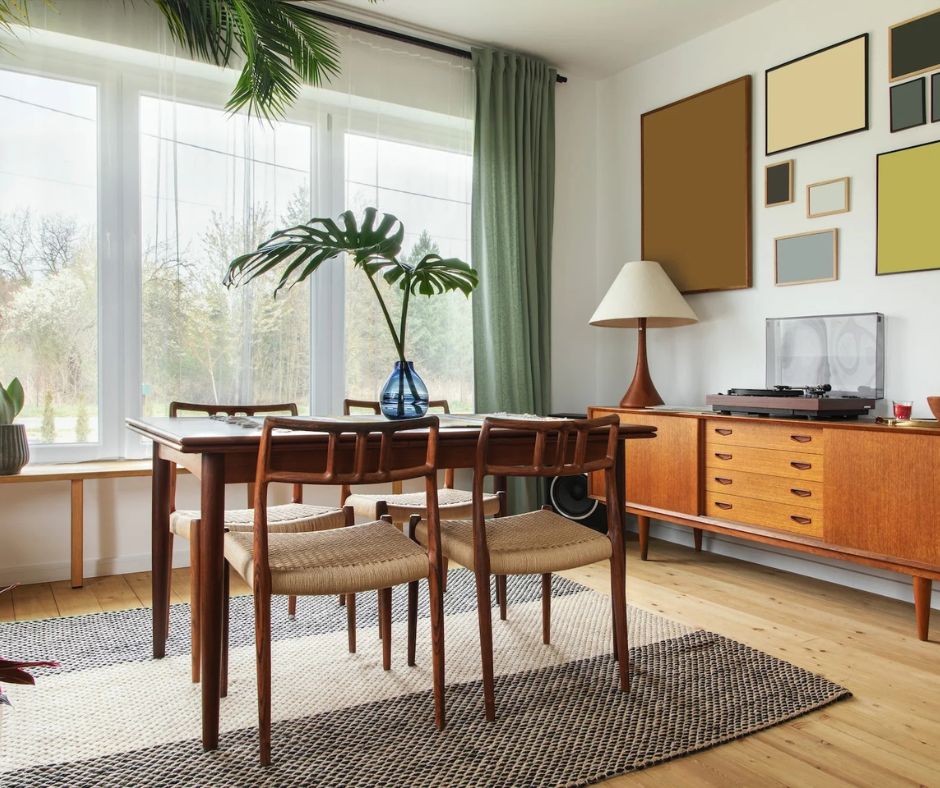
A round table is a simple place to start. It changes how people gather.
Chairs with curved backs or soft edges add to that effect. These shapes guide the eye and break the stiffness of straight lines.
You can also bring in a sideboard with rounded corners. It adds storage while keeping the look consistent.
Keep the rest of the space simple so the shapes stand out.
This approach works well if you want a softer look that still stays true to mid-century style.
Choose Streamlined Furnishings
Midcentury design celebrates clean, uncluttered lines. Selecting furniture with simple silhouettes instantly organizes the room visually.
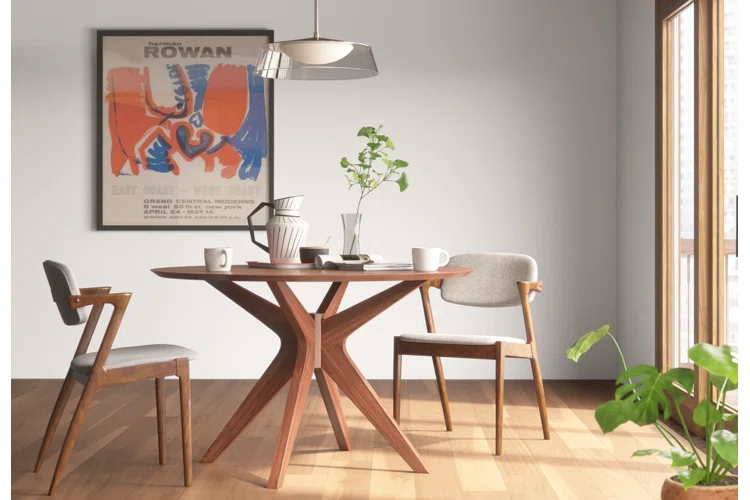
A narrow dining table paired with slender chairs can create an open impression. Even larger pieces, like a sideboard, can work if the shapes remain uncomplicated.
Look for tapered legs, they add interest without introducing heavy detailing. This style allows your space to feel intentional, letting other elements like lighting take the spotlight.
Every piece should serve a purpose. Streamlined furnishings guide movement through the room, leaving space to interact with the design.
By focusing on simplicity, you can create a dining room that looks considered, deliberate, and easy to arrange. It keeps attention on the structure
Add a Pop of Color
Injecting color into a midcentury dining room can energize the space. It doesn’t require a full makeover; a single bright hue can change the room’s personality.
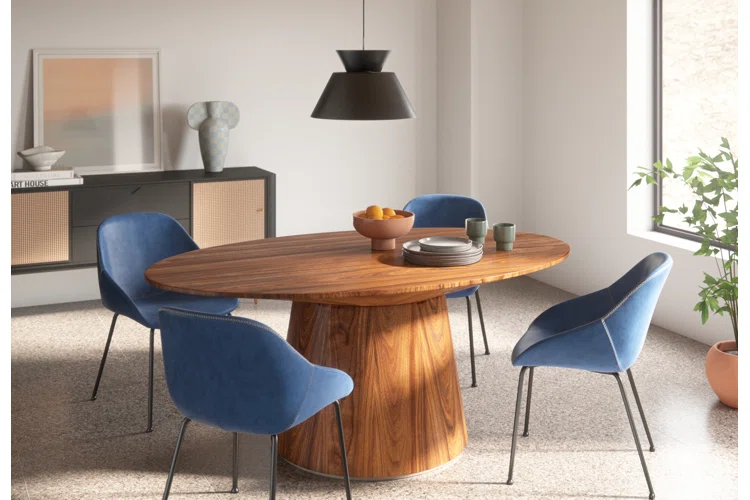
Consider one or two chairs in a colorful rug under the table. Accessories like vases, placemats, or small lamps allow you to introduce playful tones.
This technique is effective because the eye lands on the accent immediately, creating a sense of focus.
You can choose jewel tones, muted pastels, or warm shades depending on the mood you want.
The rest of the room can remain neutral, letting the accent feel intentional. Strategic color placement adds interest and guides attention naturally around the room.
By treating color as a tool rather than a cover, you make a statement.
Remember the Credenza
A credenza is more than storage; it anchors the dining room visually. Its long, low profile emphasizes horizontal lines and keeps the room balanced.
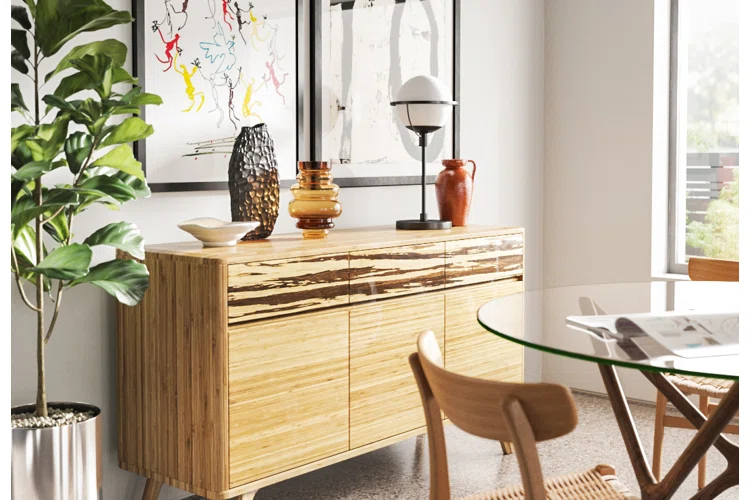
Choose one with minimal hardware and clean surfaces. Wood tones or matte finishes complement midcentury lines beautifully.
You can style the top with carefully chosen pieces – an art piece, a bowl, or a lamp, but resist overloading it. The negative space emphasizes shape and proportion.
A well-placed credenza provides function. It stores dishes, linens, or glassware while reinforcing the room’s rhythm and scale.
This piece connects the practical with the aesthetic, giving the room utility at the same time.
Hang Geometric Artwork
Artwork in geometric patterns can energize a midcentury dining room. Shapes like circles, triangles, and lines echo the era’s love for design simplicity.
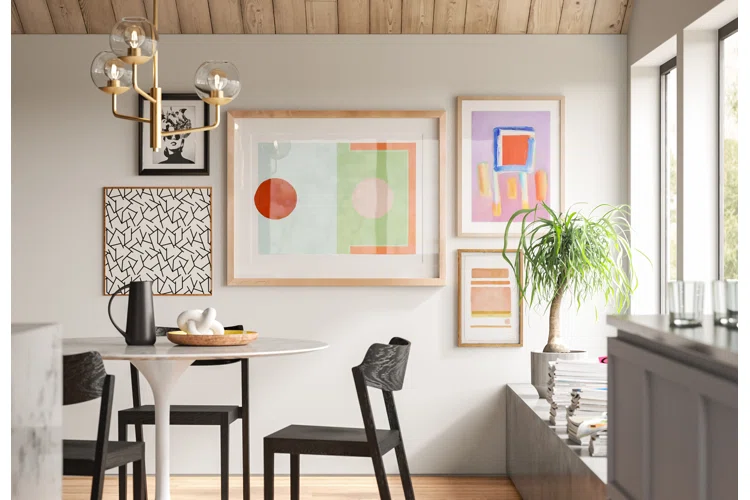
A single large canvas or a cluster of smaller pieces can define a wall. Keep the frames thin to maintain a lightweight, airy appearance.
Colors can tie into the room’s palette or provide contrast. Bold compositions work well above a table, creating a visual anchor for the space.
The arrangement doesn’t need symmetry. Staggered heights keep the display dynamic, reflecting the balance midcentury design seeks between order and play.
Artwork like this can transform a blank wall into a curated feature.
Vary Materials
Using multiple materials adds texture. Wood, metal, glass, and fabric can coexist in a mid-century dining room if chosen thoughtfully.
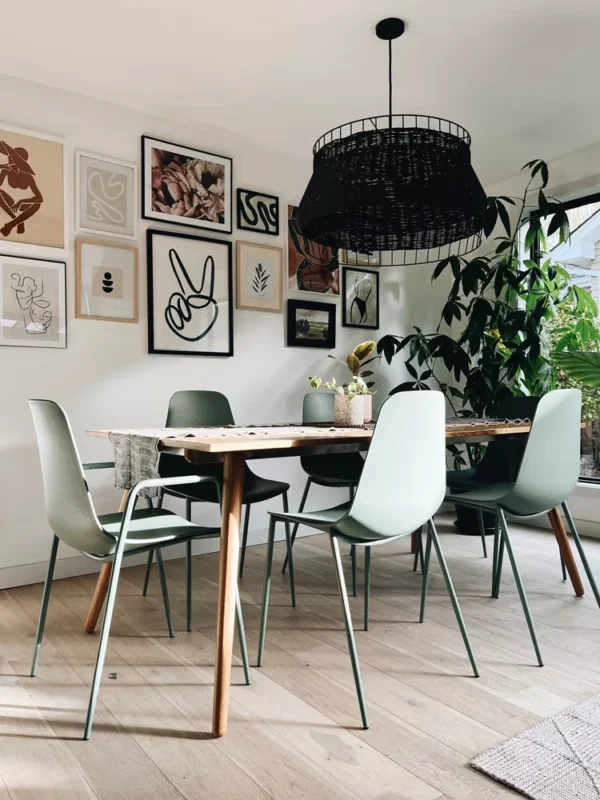
A wooden table with metal legs introduces contrast naturally. Pair it with fabric chairs or a woven rug to break monotony.
Small accents like glass vases, ceramic bowls, or stone coasters introduce subtle differences in surface and weight.
When materials interact, the space feels layered. Each piece contributes to a richer visual experience.
Varying materials encourages tactile interaction. Guests can notice differences, making the room engaging.
Hang a Shiny Brass Fixture
A brass pendant instantly signals mid-century influence. Its reflective surface draws light upward and creates a subtle glow around the room.
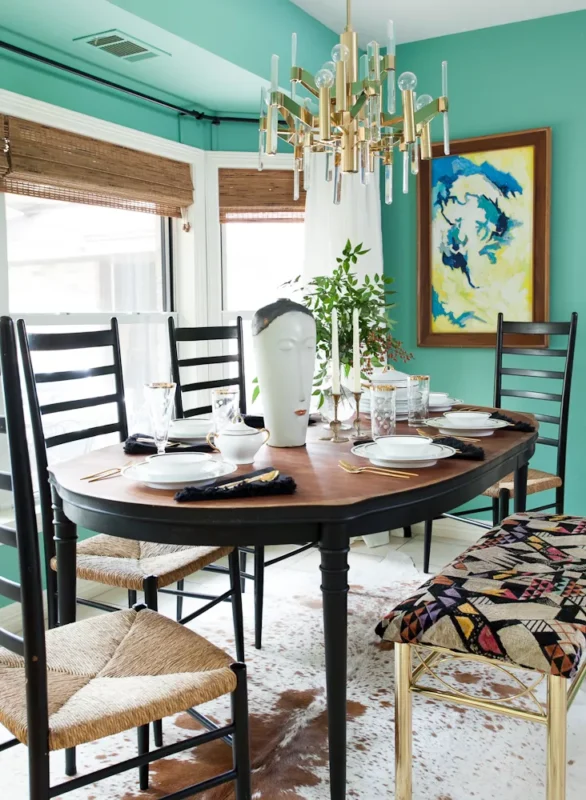
Choose a shape that complements your furniture. Globes, cones, or tiered designs pair well with tables and chairs that have slim, tapered profiles.
Brass can be mixed with other finishes. Wood, leather, or matte ceramics create balance, keeping the fixture from dominating the room.
The fixture defines the dining area in larger spaces. Even in a small room, it establishes a focal point, giving purpose to the table arrangement.
Lighting like this can elevate everyday dining into something visually compelling.
Use the Sunroom
If your dining area connects to a sunroom, let that influence the design. Natural light and garden views offer a backdrop that no artificial element can replicate.
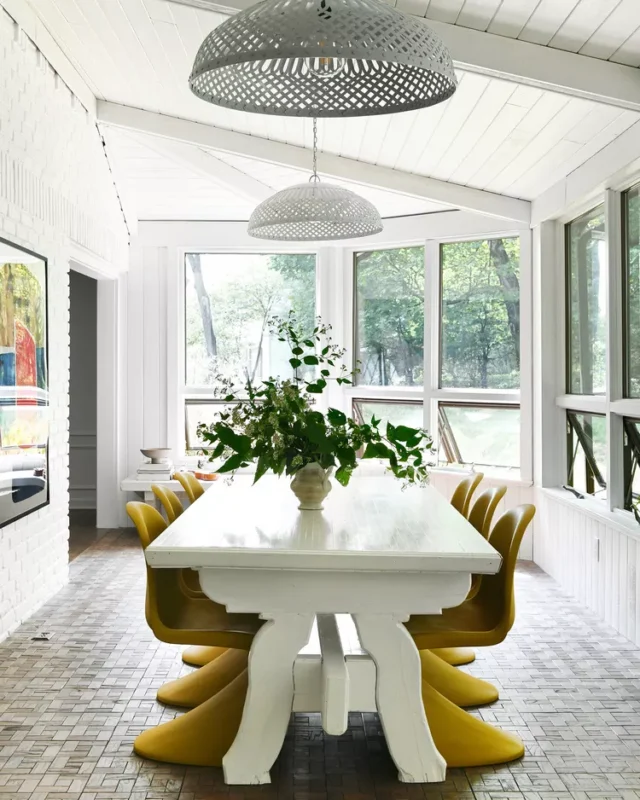
Light furniture works best here. Chairs with open frames with thin profiles maintain sightlines into the outdoors.
Plants or small greenery can extend the outdoor feeling into the dining space. Even a simple row of succulents on the table or windowsill enhances the connection.
Flooring should be light and breathable, complementing the airy atmosphere.
A sunroom integration makes meals feel like an experience. Actually, the dining room becomes a bridge to the outdoors.