
11 Clever Under Sink Bathroom Organization Ideas

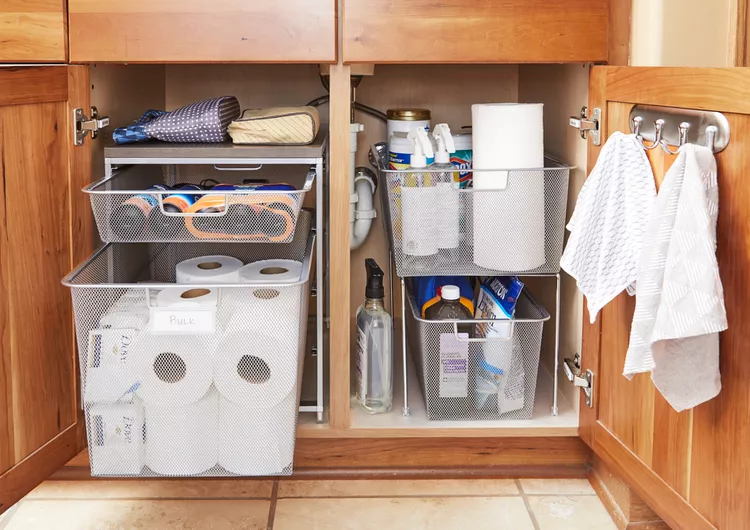
The cabinet beneath a bathroom sink can turn into a cluttered mess surprisingly fast.
I’ve opened mine looking for one bottle and ended up digging through cleaning supplies, extra toiletries, and things I forgot I had.
A smart organization can make that awkward cabinet much easier to manage. Bins, stackable drawers, and slim organizers help every item earn its own spot.
You don’t need an expensive storage system, either. Here are some practical under sink bathroom organization ideas that help you make better use of that overlooked cabinet.
How To Organize Under Sink Bathroom
1. Include Drawer Organizers
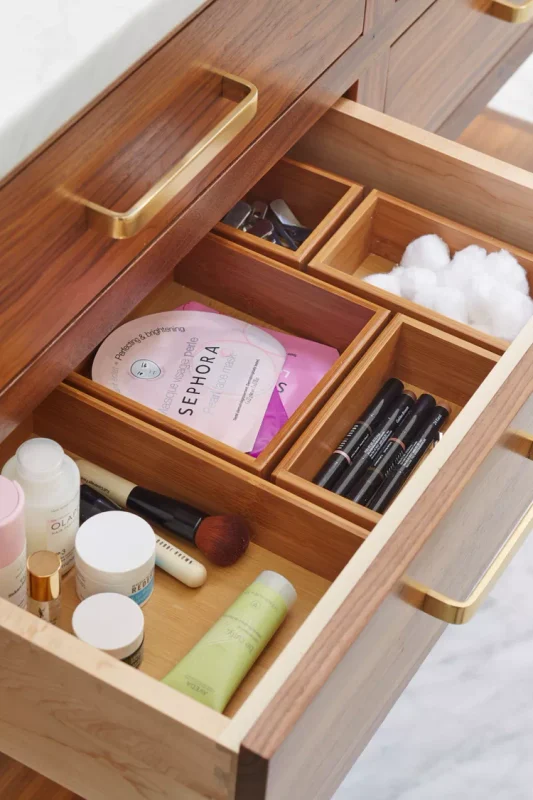
Drawer organizers can make a deep bathroom cabinet much easier to use.
Small trays give everyday items a designated spot, so you are not reaching past everything else to find one product.
Personally, I found them handy for hair ties, razors, makeup, nail supplies, and small grooming tools.
Instead of tossing those little items into one container, separate them by category.
Clear acrylic trays make it easy to see what is inside. Bamboo organizers bring a warmer touch, while plastic options are handy when the cabinet gets damp from plumbing or cleaning.
Measure around the sink pipes before buying anything. That awkward plumbing takes up valuable room, and a drawer that fits on paper may not slide properly once everything is installed.
Pro Tip: Reserve the shallowest drawers for tiny items. Put taller bottles and larger supplies in deeper sections so every inch beneath the sink serves a purpose.
2. Use Stacking Storage Bins
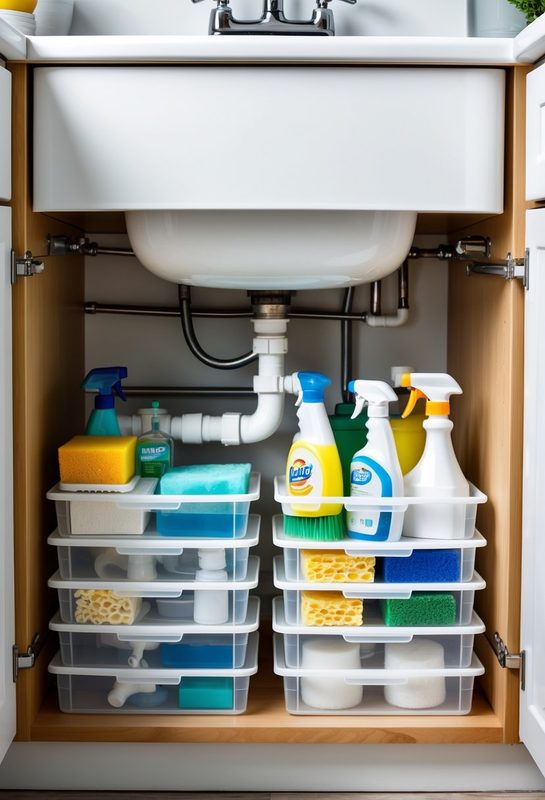
Stacking storage bins can turn the vertical room beneath your sink into useful storage. Simply stack containers to take advantage of the height.
I use this approach for cleaning supplies and backup toiletries that do not need to stay within arm’s reach.
One bin can hold extra soap, another can store toilet paper, and a third can house cleaning cloths.
Look for bins with open fronts or handles. You can reach inside or pull one forward when something sits toward the back of the cabinet.
Transparent bins are handy when you tend to forget what you have stored. Labeled opaque bins can also work when you prefer a tidier appearance.
Pro Tip: Keep heavier containers on the bottom. Lighter supplies should occupy the upper bins, making the stack easier to move when you need something underneath.
3. Get Stackable Drawer Organizers
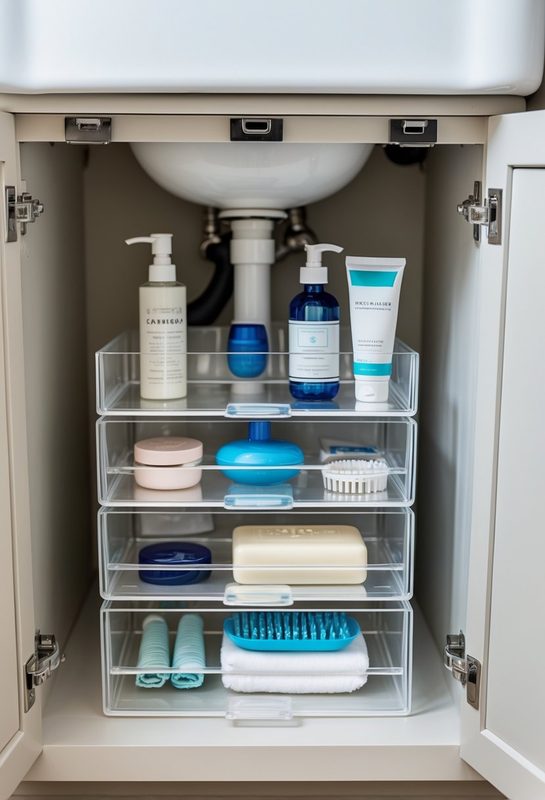
Stackable drawer organizers are useful when your bathroom cabinet has plenty of vertical room but limited floor area.
Several shallow drawers can hold small supplies while leaving room underneath for larger bottles.
This arrangement suits bathrooms where loose toiletries tend to disappear into the back of the cabinet.
Each drawer can handle a specific category, such as skincare, dental supplies, hair accessories, or first-aid items.
Choose drawers that slide smoothly and have enough clearance beneath the sink.
A compact unit can sit beside the plumbing, giving you storage in an area that might otherwise remain unused.
I’d also leave a little breathing room between the organizer and cabinet walls. That makes it easier to pull the drawers out and clean around them.
Pro Tip: Label each drawer based on its contents. A quick label can save time when several drawers hold small items that look similar.
4. Add Pull-Out Drawers
Deep bathroom cabinets have one annoying habit: the stuff at the back disappears.
Pull-out drawers solve that problem by bringing those hidden bottles and supplies right to the front.
A narrow drawer beside the plumbing can hold skincare products, hair tools, or extra toiletries.
Wider versions are handy for larger bottles, cleaning products, and backup supplies.
The real advantage becomes obvious when the cabinet is packed. You can slide the drawer forward, grab what you need, and push everything back into place.
Before buying one, measure the cabinet interior carefully. Pipes, hinges, and the sink basin can eat up several inches of usable room.
Choose a drawer with a raised edge for bottles that might tip over. Smooth-gliding hardware also makes daily use much less frustrating.
Pro Tip: Leave clearance around the plumbing before installation. A drawer that barely fits may become difficult to use once bottles and containers are inside.
5. Install Adhesive Hooks On The Cabinet Walls

Those bare cabinet walls can provide handy storage for small bathroom essentials.
A few adhesive hooks can hold items that would otherwise end up scattered across shelves or drawers.
Hairbrushes, cleaning gloves, small bags, and reusable cloths are good candidates. Hanging them on the sides also frees the cabinet floor for larger supplies.
This trick is useful in rental bathrooms because you can skip drilling holes.
Just make sure the cabinet surface is clean and dry before attaching the hooks.
Give the adhesive time to set according to the manufacturer’s directions. Rushing that step can cause the hook to fall once something is hanging from it.
Pro Tip: Check the weight rating before hanging anything. Lightweight accessories are safer choices, especially on adhesive hooks attached to laminate or painted cabinet surfaces.
6. Use Coordinated Containers
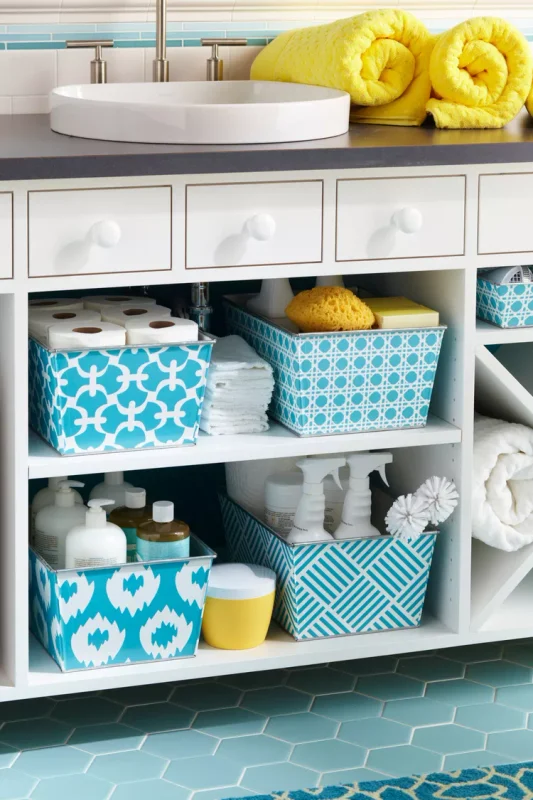
A collection of mismatched bottles can make even an organized cabinet seem chaotic.
Moving smaller supplies into a few coordinated containers can bring some order to the mess.
Clear containers are handy for cotton rounds, sponges, bath accessories, and other items you reach for regularly.
Opaque bins can hide less attractive supplies, such as replacement cleaning products.
Matching containers do not need to be identical. A few pieces from the same color family can bring enough consistency to make the cabinet easier on the eyes.
Labels help when several containers hold similar products. Simple words such as “Hair,” “Skincare,” or “Cleaning” make it quicker to grab what you need.
Pro Tip: Keep frequently used items in the front containers. Reserve the back section for backups and seasonal products that rarely need attention.
7. Group Similar Items in Matching Bins

Sorting bathroom supplies by purpose can save a surprising amount of time.
Put detergents and cleaning brushes together, then create separate bins for toiletries, hair products, and extra supplies.
This approach helped me stop buying duplicates simply because I could not remember what was hiding under the sink.
Once everything has a category, checking your inventory takes only a moment.
Use sturdy bins for heavier cleaning products. Smaller containers can handle brushes, sponges, gloves, and other loose accessories that tend to wander around the cabinet.
Keep a little room inside each bin for new purchases. An organizer becomes frustrating when every container is packed to the brim.
Pro Tip: Label bins on the front edge, not the lid. You can identify each category immediately, even when the containers sit beneath a deep sink.
8. Pack up Backstock Toiletries
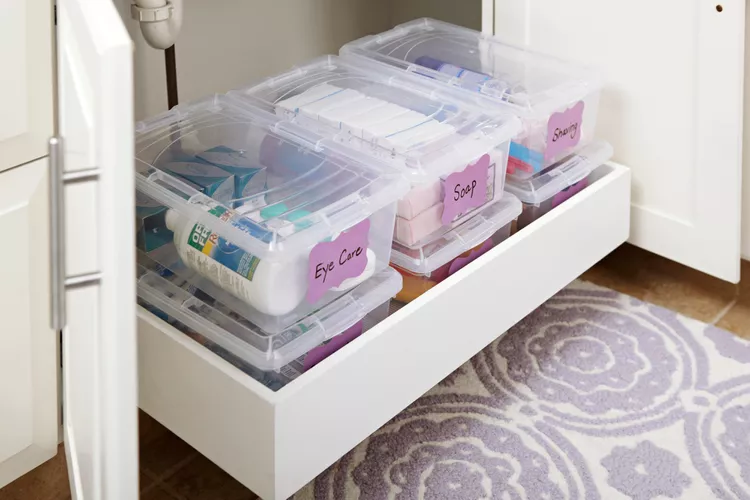
Buying toiletries in bulk saves extra trips to the store, but those unopened bottles can quickly take over the cabinet beneath the sink.
Keep backup shampoo, soap, toothpaste, lotion, and other unopened products together in one designated bin.
A medium-sized container makes it easier to see how much backstock you actually have.
Choose one with handles if the cabinet sits low, since pulling out an entire collection is easier than reaching behind several bottles.
Keep daily-use products separate from the backups so you are not digging through sealed packages every morning.
This also makes shopping trips simpler because a quick look inside the bin tells you what needs replacing.
A good rule is to avoid storing excessive quantities just because there is room.
Three bottles of the same shampoo may be reasonable, but twelve can turn a useful storage area into a crowded stockroom.
Pro Tip: Put newer purchases behind older ones so the products you bought first get used first.
9. Label Baskets for Easy Identification of Cleaning Supplies

Cleaning products tend to look surprisingly similar once they are tucked beneath the sink.
Labels take away the guesswork when several baskets hold small bottles, cloths, brushes, and other supplies.
Assign each basket a clear category based on how you actually clean.
One might hold bathroom cleaners, another could contain scrub brushes and sponges, and a third might be reserved for gloves and reusable cloths.
Choose labels that are easy to read from the front of the cabinet. A short word such as “Brushes” or “Cleaners” is far easier to scan than a detailed description.
This method also makes putting things away less tedious. Anyone else using the bathroom can see where an item belongs, so supplies are less likely to end up scattered across different corners.
Pro Tip: Place labels near eye level on each basket, especially when several containers sit behind one another.
10. Add A Lazy Susan For Easy Corner Access

That awkward corner beneath a sink is notorious for collecting bottles that rarely get touched.
A lazy Susan turns that forgotten area into a rotating station where smaller products stay within reach.
Round trays are particularly useful for skincare bottles, extra soap, hair products, or cleaning solutions.
Give the center section to taller bottles and keep shorter containers around the outer edge for quicker access.
Choose a tray with a raised rim to prevent bottles from sliding off when it turns.
Measure the cabinet first, paying attention to plumbing pipes and the door frame before buying one.
There is no need to fill every inch of the tray. Leaving a little breathing room makes rotating it easier and prevents bottles from catching against each other.
Pro Tip: Put the products you reach for least at the back and reserve the front edge for things used several times a week.
11. Use Small Plastic Containers for Loose Items
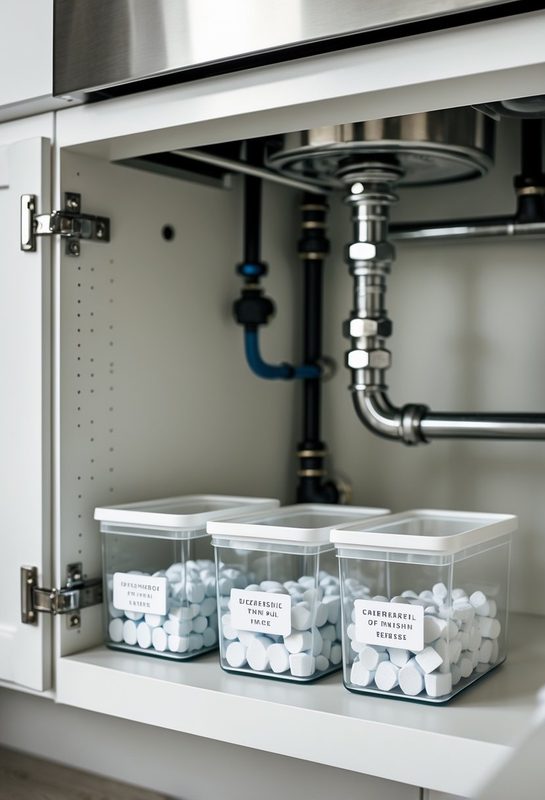
Small supplies can become the hardest things to control beneath a bathroom sink.
Dishwasher tabs, spare sponges, small scrubbers, clips, and similar pieces tend to scatter across the bottom of the cabinet.
Small plastic containers give those loose items a defined home. Pick containers with simple shapes that stack securely when the cabinet has limited vertical clearance.
For dishwasher tabs, choose an airtight container designed to keep moisture away from the contents.
Keep cleaning-related items together, but separate products that should never be mixed or confused.
Clear containers make sense for supplies you need to identify quickly. Opaque ones are better suited to items that look messy or need protection from light.
Pro Tip: Keep a little empty room inside each container so you can grab an item quickly instead of wrestling with an overfilled box.
Final Thoughts
A well-organized space beneath the bathroom sink makes everyday routines easier and cuts down on clutter.
Simple additions such as labeled baskets, rotating trays, small containers, and dedicated bins can turn a neglected cabinet into practical storage.
Start with what you already own, then add organizers where they solve specific problems.