11 Elegant Sage Green Bedroom Ideas To Elevate The Aesthetics


Some bedroom colors come and go, but sage green has a way of staying beautiful year after year.
There is something instantly calming about this muted shade. It brings the freshness of nature indoors while remaining elegant enough to work with a wide range of decorating styles.
You can pair sage green with warm wood tones, crisp white bedding, or vintage accents, and so on.
Today, I will share sage green bedroom ideas to show you how to use this versatile color to create a stylish space.
How To Design Your Bedroom With Sage Green Color
Sage green is perhaps the most stimulating bedroom color. The following ideas that enhance a natural feel:
Sage Green Accent Color

Sometimes a bedroom does not need a complete makeover. One carefully chosen color can change the entire atmosphere.
Sage green works beautifully as an accent because it draws attention without overpowering the room.
A sage green headboard, a painted nightstand, or even a set of throw pillows can instantly introduce a softer, more grounded look.
Many people hesitate to paint every wall or invest in large furniture pieces. Using sage green in smaller doses allows you to experiment with the color.
A neutral bedroom can benefit tremendously from this touch of green. Against crisp white bedding, sage green appears fresh.
During the day, natural light reveals its earthy undertones, giving the room a relaxed and polished appearance.
The color also transitions through the seasons. It looks equally appropriate during bright summer mornings hence a versatile accent color for a bedroom.
Pro Tip: Choose one standout sage green element and allow it to become the visual anchor of the room instead of scattering the color everywhere.
Rustic Sage Green Bedroom
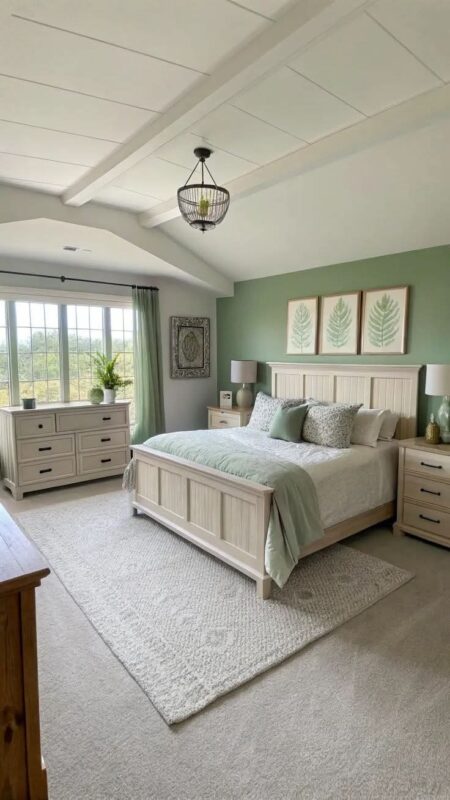
The first thing you notice is the warmth of the wood against the muted green backdrop.
A rustic sage green bedroom feels connected to nature in a way that never seems forced.
The combination of weathered wood, simple furnishings, and earthy color tones gives the space a welcoming character that remains timeless year after year.
Sage green walls pair beautifully with exposed wood beams, reclaimed furniture, or vintage-inspired pieces.
The green softens the rugged texture of rustic materials, resulting in a bedroom that is amazing.
One of the most appealing aspects of this style is its authenticity.
Nothing needs to look perfectly polished. Small imperfections in wood grain, aged finishes, and handcrafted details contribute to the room’s charm.
Morning light filtering across sage green walls and natural wood surfaces creates a beautiful contrast that changes throughout the day.
The overall effect is peaceful and lived-in, as though the bedroom has evolved naturally over time instead of being assembled all at once.
Pro Tip: Choose wood furniture with visible grain and texture to highlight the organic quality of the sage green palette.
Sage Green Room with Natural Accents

A few natural elements can completely transform the way sage green is experienced in a bedroom.
This design approach draws inspiration from the outdoors. The green walls act as a backdrop, allowing organic textures and materials to take center stage.
A woven pendant light hanging above the bed introduces visual interest immediately. Nearby, a potted plant adds shape and life to the room without requiring elaborate decoration.
The connection between sage green and natural materials feels effortless.
Linen bedding, woven baskets, and wooden accents all complement the color beautifully. Each element contributes texture, making the room layered.
The room becomes more interesting the longer you look at it.
Sunlight highlights the texture of the fabrics. Shadows move across natural surfaces throughout the day.
Every detail contributes to a bedroom that is connected to the world outside its walls.
The result is a space that celebrates simplicity while remaining visually rich.
Pro Tip: Use one large indoor plant instead of several smaller ones to create a stronger visual statement.
Modern Minimal Sage Green Bedroom

Walking into this bedroom is like stepping into a space where every item has earned its place.
A modern minimal sage green bedroom relies on restraint. The color itself becomes one of the primary design features, allowing the room to remain uncluttered.
Instead of filling shelves and surfaces with decorative objects, the focus stays on thoughtful selections.
A streamlined bed frame, a simple nightstand, and carefully chosen lighting often provide everything the room needs.
Sage green introduces depth without disrupting the minimalist aesthetic.
Against smooth walls and simple furnishings, the color provides enough visual interest to keep the room from appearing stark.
It softens the overall appearance and introduces a quiet sense of sophistication.
The absence of unnecessary clutter allows architectural details and textures to stand out.
As daylight moves through the room, subtle shifts in color and shadow become part of the experience.
Pro Tip: Limit decorative accessories to a few meaningful pieces so the sage green remains one of the room’s strongest visual elements.
Sage Green Kids Room

Not every kids’ room needs bright primary colors to be cheerful and engaging.
Sage green offers a refreshing alternative that grows alongside a child. It brings a sense of calm to the room while providing a beautiful backdrop for toys, books, artwork, and imaginative décor.
One of the biggest advantages of sage green is its flexibility.
As interests change over the years, the room can evolve without requiring a complete redesign.
Dinosaur posters, woodland themes, space-inspired décor, or whimsical artwork all work amazingly against this versatile shade.
The color also helps create a more balanced environment.
Busy toys and colorful accessories naturally become focal points, while the walls provide visual relief.
This balance prevents the room from being chaotic even when playtime is in full swing.
During quieter moments, the room takes on a softer appearance that supports reading, resting, and creative activities.
It is a color choice that remains relevant long after childhood trends come and go.
Pro Tip: Use sage green on the walls and introduce brighter colors through artwork and bedding that can be easily updated over time.
Mix Green, Black, Gray
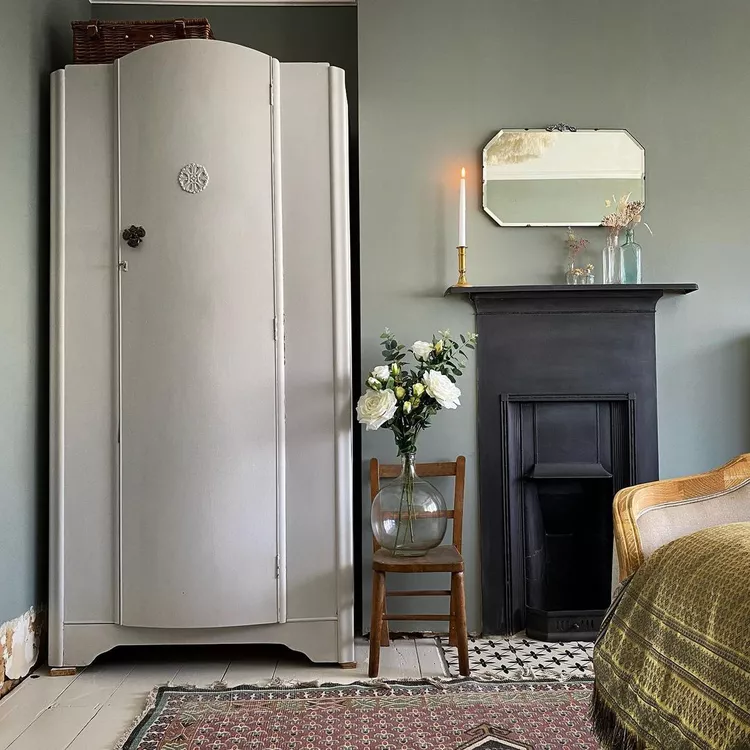
The room catches your attention before you even notice a single piece of furniture.
Sage green, black, and gray create a combination that looks polished from every angle. The green softens the sharper edges introduced by black, while gray bridges the gap between the two.
Together, they produce a bedroom that feels current without chasing trends.
Picture a sage green wall behind the bed.
A black metal bed frame sits against it, creating contrast that immediately draws the eye.
Nearby, charcoal bedding introduces depth and prevents the room from appearing flat.
This palette shines when natural light enters the room. Throughout the day, the green shifts slightly in appearance, while the darker elements remain steady anchors.
The contrast keeps the bedroom interesting even when the décor remains relatively simple.
What makes this combination successful is restraint. The room does not need dozens of decorative objects competing for attention. The color story already carries much of the design.
Every element appears intentional, giving the bedroom a refined appearance that remains relevant year after year.
Pro Tip: Keep larger furniture pieces dark and let sage green occupy the walls or textiles for a cleaner, more cohesive look.
Sage Green Mural Feature Wall
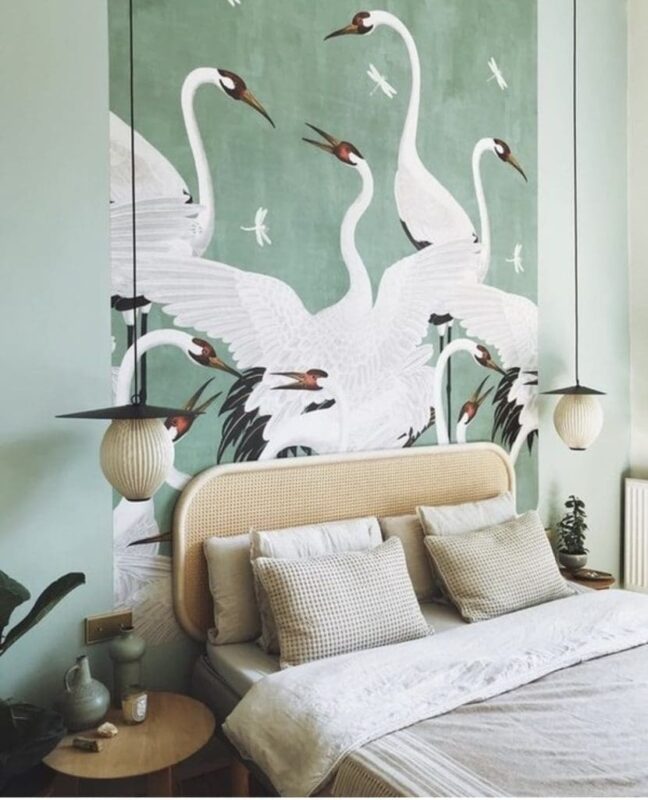
A blank wall becomes the star of the room when it starts telling a story.
A sage green mural introduces character in a way that ordinary paint simply cannot. The mural introduces movement, depth, and artistry.
Imagine oversized branches stretching across the wall behind the bed.
Their soft outlines create the impression of a landscape unfolding indoors. The room suddenly is far more custom than a standard painted bedroom.
The mural does not need to be dramatic to make an impact.
Even simple botanical sketches or watercolor-inspired designs can transform the entire space.
The artwork becomes part of the architecture rather than a separate decorative piece hanging on the wall.
Guests naturally notice it first. The eye travels across the design, discovering new details from different parts of the room.
Meanwhile, furniture can remain relatively simple because the mural already provides enough interest.
The result is a bedroom that is thoughtfully curated, almost as though it belongs in a boutique guesthouse or design magazine spread.
Pro Tip: Choose a mural with soft, flowing shapes so it complements the restful purpose of a bedroom.
Boho Interior Style
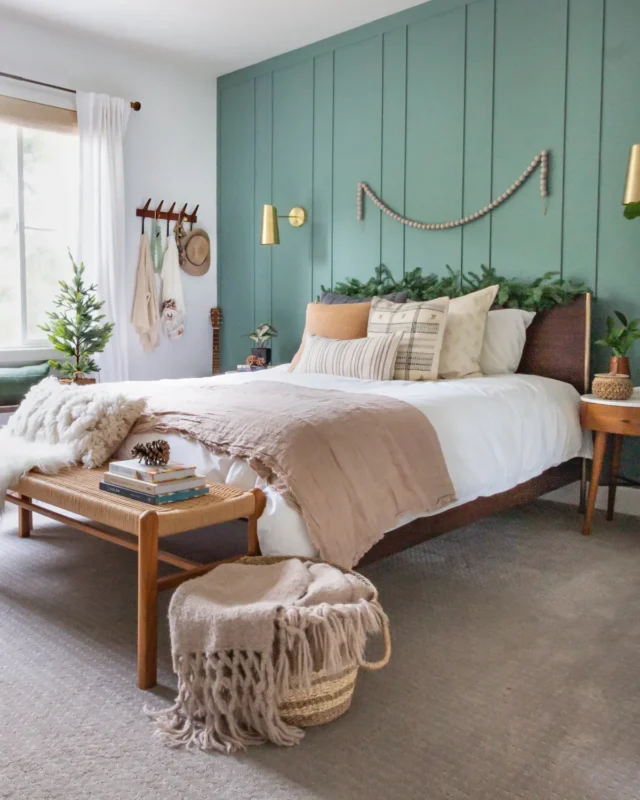
Some bedrooms look collected over time rather than assembled in a single shopping trip.
That is exactly what makes a sage green boho bedroom so appealing.
The color provides a beautiful backdrop for layered textiles, woven accents, and handcrafted décor.
Nothing appears overly coordinated, yet everything seems to belong together.
A rattan headboard instantly becomes a focal point.
Nearby, a textured throw draped across the bed introduces another layer of interest.
A woven pendant light hanging from the ceiling completes the scene without demanding attention.
This style thrives on details.
Books stacked casually on a nightstand, a handmade wall hanging, and a vintage-inspired rug all contribute to the room’s character.
Every item appears chosen for a reason rather than purchased to fill empty space.
Sage green helps tie everything together. It grounds the collection of textures and prevents the room from looking chaotic.
You can almost imagine spending a rainy afternoon here with a book and nowhere else to be.
Pro Tip: Focus on texture more than decoration. A few well-chosen woven pieces often have greater impact than dozens of accessories.
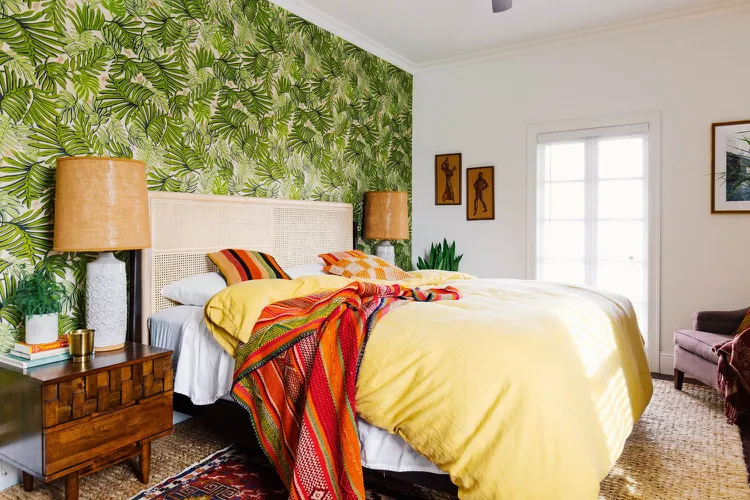
Sage Green Wallpaper
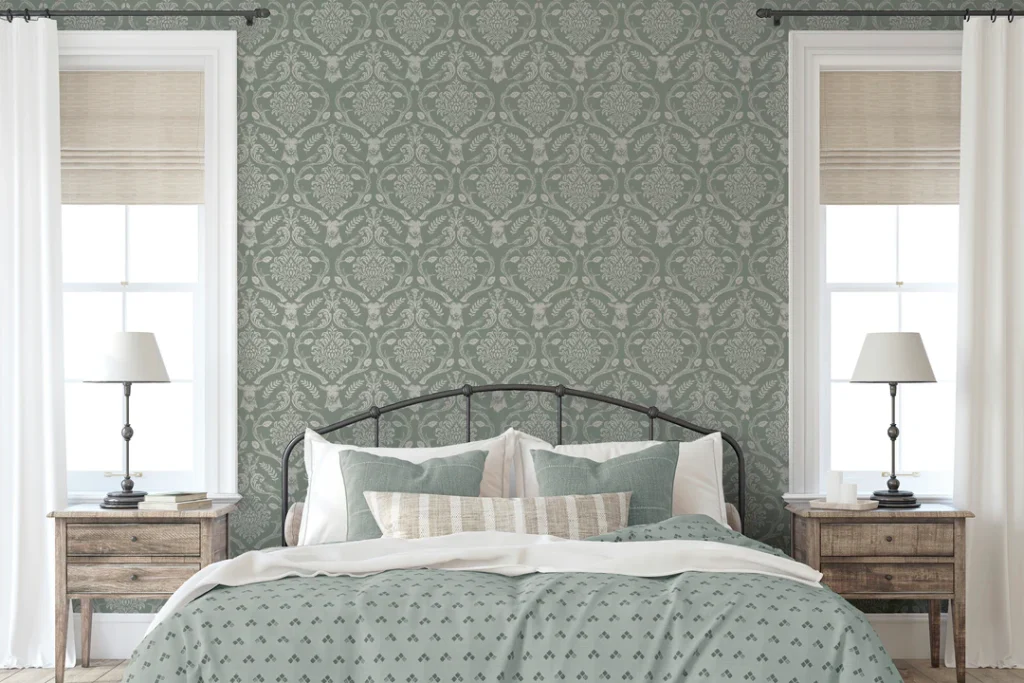
The walls become part of the décor the moment wallpaper enters the room.
Sage green wallpaper introduces detail before any furniture is even brought into the space. It instantly changes the character of a bedroom in a way that paint rarely can.
A delicate botanical print can make the room resemble a countryside retreat.
A vintage-inspired pattern may introduce old-world charm. Even a simple repeating design adds richness that a solid wall color cannot achieve.
Wallpaper has a unique ability to shape the mood of a room.
As daylight moves across the walls, the pattern becomes more noticeable in some areas and fades into the background in others.
That constant shift keeps the room interesting throughout the day.
The wallpaper also eliminates the need for excessive decoration.
The walls already tell a story, allowing furniture and bedding to remain simple. The bedroom feels finished from the moment you walk through the door.
Pro Tip: Install wallpaper on the wall behind the bed to create impact without overwhelming the entire room.
Half-Wall Calm
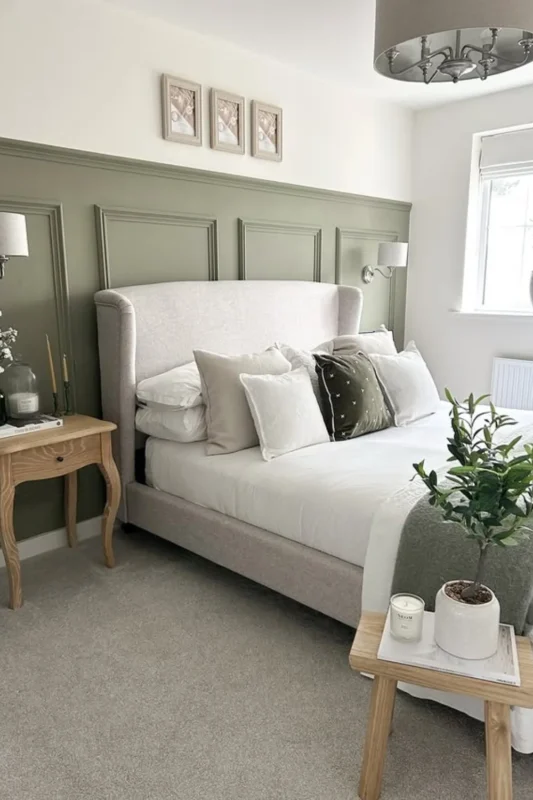
One of the smartest bedroom transformations often stops halfway up the wall.
A half-painted sage green wall introduces color in a way that is unexpected.
Instead of covering every surface, the paint creates a horizontal division that immediately catches the eye.
The lower section grounds the room. The upper portion remains light and airy, giving the space a brighter appearance than a fully painted room.
This contrast creates a beautiful sense of balance across the walls. The design works well behind a bed.
The painted section naturally frames the headboard, making the sleeping area look futuristic. It almost acts like built-in architectural detail.
There is also something incredibly timeless about this approach.
It remains surprisingly simple to achieve. The room gains color, structure, and interest through one straightforward design choice.
At times the most memorable bedrooms are not the ones filled with decoration. They are the ones where a single clever detail quietly transforms the entire space.
Pro Tip: Position the paint line slightly above the headboard height for a clean and intentional appearance.
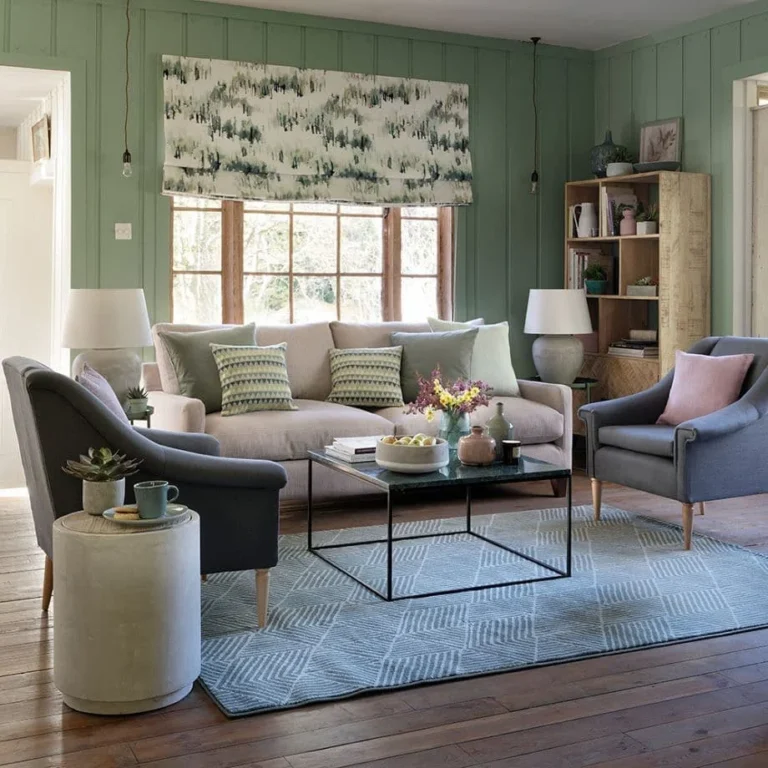
Cozy Sage Green Paneling

Wood paneling painted in sage green changes how a bedroom reads the moment you step inside.
Vertical lines guide the eye upward and give the room a taller presence. The color settles into the grooves of the panels, creating soft shifts between light and shadow across the surface.
A bed placed against this backdrop gains instant definition. Even simple bedding stands out once the textured wall enters the frame.
This style suits in rooms that lack architectural detail. Instead of adding décor, the wall itself becomes the feature.
Natural daylight highlights the panel edges during the day. At night, bedside lamps pull out deeper tones in the green to give the surface a richer appearance.
Pro Tip: Use matte paint on paneling so the texture stays visible under changing light.
Sage Green Ceiling
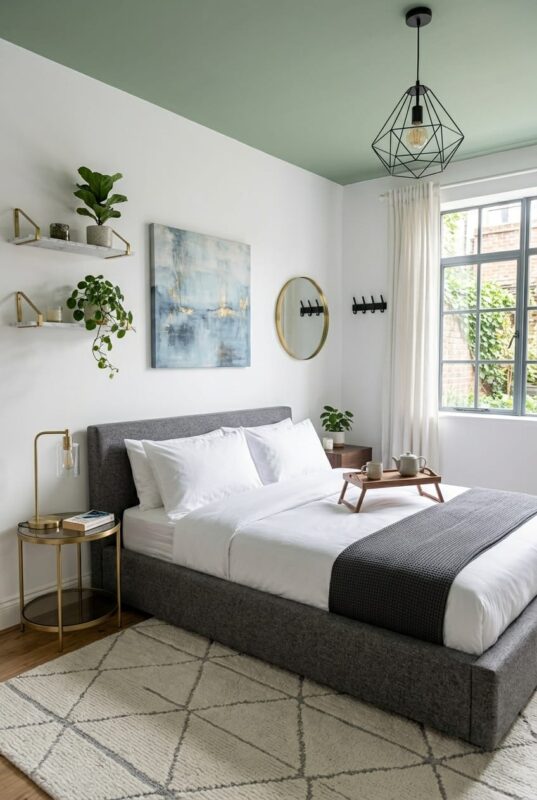
Most bedrooms stop at the walls, which is exactly why the ceiling becomes interesting here.
Painting the ceiling sage green changes how the entire room is perceived. The color draws attention upward in a controlled way to shift focus beyond standard wall boundaries.
From the bed, the ceiling becomes part of the visual experience rather than an empty surface.
Light fixtures hang against a soft green field that changes tone depending on time of day.
Morning light produces a muted, airy look. Evening lighting deepens the color, bringing a grounded presence to the upper part of the room.
White walls beneath keep the space open to prevent the ceiling color from overpowering the room.
This approach is great for bedrooms with simple layouts. The room gains interest through direction and surface treatment.
The ceiling becomes a quiet focal point that subtly reshapes the entire space.
Pro Tip: Pair a sage green ceiling with white walls and light wood furniture for visual balance.
Include a Bit of Art
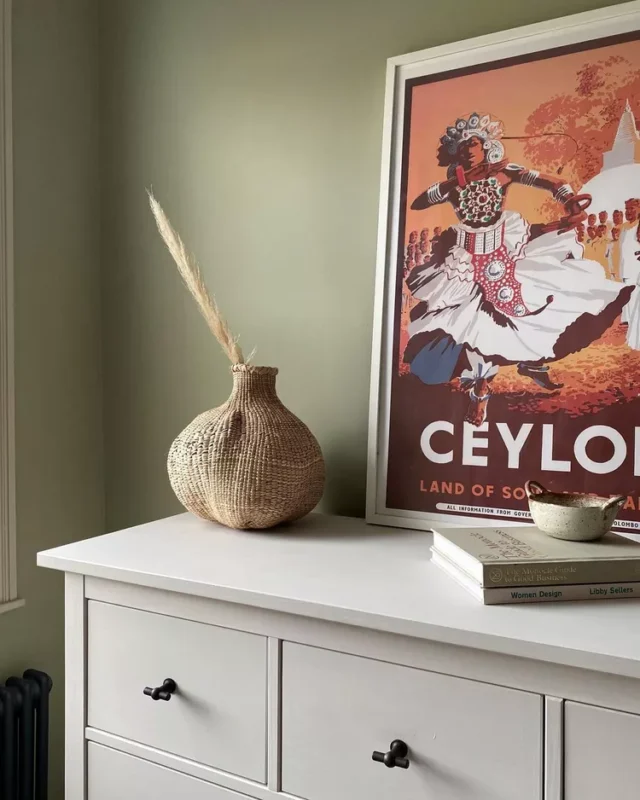
A bedroom gains identity the moment artwork enters the space.
Sage green walls create a calm backdrop that allows art pieces to stand out clearly. A single framed print above the bed can shift the entire tone of the room.
Some choose abstract line drawings, others lean toward botanical sketches or muted landscapes. Each option interacts differently with the green surface behind it.
Centered artwork above a headboard draws attention to the sleeping area. A gallery cluster near a reading corner turns a blank wall into a point of interest.
Frames in natural wood or soft black tones pair well with sage green, adding contrast without disrupting the room’s quiet palette.
Lighting also changes how the artwork reads. Daylight reveals detail and texture, while softer evening lighting introduces shadow around the frame.
The room gains personality through selection. One or two carefully chosen pieces often carry the entire visual story.
Pro Tip: Stick to a consistent frame color so the artwork ties together instead of competing visually.
Which colors pair well with sage green in a bedroom?
Sage green works like a soft neutral, which means it pairs easily with a wide range of tones. Lighter shades such as peachy pink and soft gray-blue keep the room airy.
Stronger contrasts like rusty orange or cobalt blue bring energy and allow sage green to sit back as a grounding base in the bedroom.
Traditional neutrals such as beige, white, and cream blend in naturally and keep the space calm and cohesive.
Purple tones also work well, with both soft lavender and deeper plum changing the overall mood depending on the direction you want for the room.
What type of bedding matches sage green walls the best?
Linen Bedding
Linen bedding brings a natural, lived-in texture that pairs smoothly with sage green walls. Its relaxed surface tone matches the understated quality of the color to give your room an easygoing character.
Classic White
White bedding remains a reliable choice alongside sage green. It offers a clean contrast that works in simple setups or more styled rooms.
Ruffles, embroidery, or smooth finishes can shift the look depending on personal preference.
Quilt
A quilt introduces pattern, warmth, and a more traditional touch. Patchwork designs sit comfortably against sage green in bedrooms inspired by rustic or cabin-style interiors.