
15 Modern Japandi Bedroom Ideas That Creates A Soothing Space

Designing a bedroom that feels calm at the end of a long day can be challenging.
Of course, you want a space that helps you slow down the moment you walk in.
That is exactly where modern Japandi style shines. A Japandi modern bedroom feels lighter, quieter, and easier to relax in.
Not just your bedroom, you can as well bring Japandi style to your kitchen. As well, Japandi living room gives an inviting vibe. .
You do not need complicated décor to achieve this look because the following ideas offers the solution.
Bedroom with These Beautiful Japandi Decorating Ideas
Earlier last month, I shared with you inspiring midcentury bedroom ideas, and now let us see what these Japandi bedroom designs have for us.
1. Use Earth Tone Textiles To Add Warmth
Earth tone textiles help a Japandi bedroom feel warm. The Japandi style blends Japanese calm with Scandinavian simplicity, so colors drawn from nature work nicely
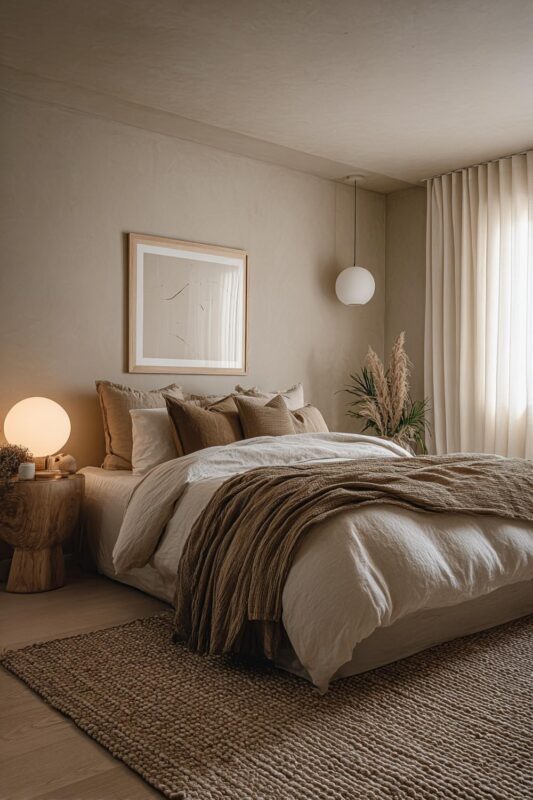
Shades like clay, warm beige, sand, muted brown, and olive bring softness into a bedroom that relies on simple forms and minimal décor.
Start with bedding because it sets the tone for the entire room. A duvet cover in warm beige creates a relaxed base.
Layer pillow covers in slightly different earth tones to build depth. The palette should stay quiet, yet varied enough so the bed does not look flat.
A textured throw blanket placed at the foot of the bed introduces extra warmth.
Materials like linen, cotton, or wool fit the Japandi approach because they feel natural.
Rugs can also support the palette. A woven rug in tan tones softens the floor and helps define the sleeping area.
These colors work well with wooden furniture, neutral walls, and simple lighting. The result is a bedroom that looks comfortable.
Earth tone textiles quietly enrich the space, making the room inviting without adding unnecessary decoration.
2. Layer Different Textures for a Calm but Rich Look
A Japandi bedroom relies on texture which prevents the space from looking plain. Combining several natural materials brings quiet depth to the room.
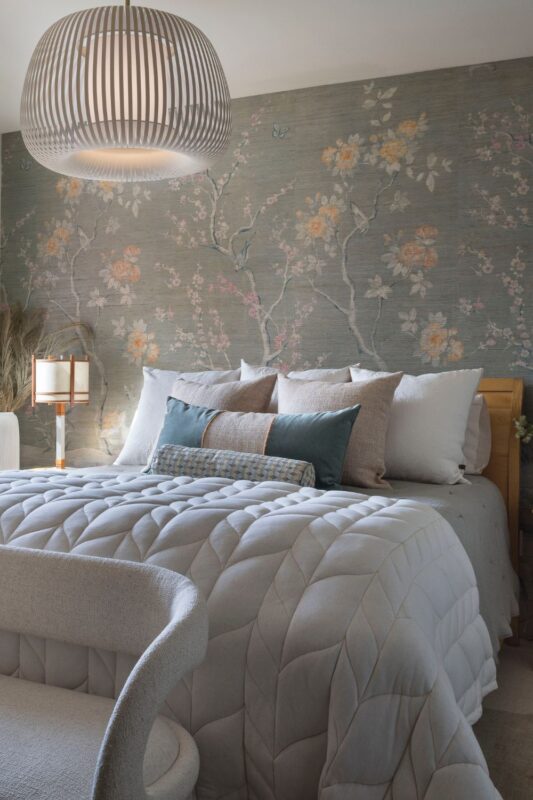
Even a neutral color scheme becomes interesting when different surfaces interact with each other.
Begin with the bed area. Linen bedding offers a relaxed surface that fits well within Japandi interiors.
Add a chunky knit throw or a woven blanket to introduce a contrasting texture. Cushion covers in cotton contribute another layer.
Furniture can also provide variation. A smooth wooden bed frame paired with a woven bench at the foot of the bed introduces contrast.
Rattan, bamboo, and cane details often appear in Japandi interiors because they connect the room to natural materials.
Floor coverings help complete the layered look. A handwoven rug softens the space beneath the bed.
The texture becomes noticeable when stepping into the room, adding warmth that bare floors cannot provide.
Wall décor can contribute texture as well. A simple woven panel adds interest while keeping the room peaceful.
Layering textures carefully helps a Japandi bedroom feel complete. The space remains clean.
On the other hand, the mix of natural materials prevents the design from appearing empty.
DONT MISS: How To Create A British Colonial Bedroom (13 Hacks)
3. Use Plenty of Natural Light for a Peaceful Atmosphere
Natural light plays a central role in Japandi interiors. A bright bedroom encourages calm and helps highlight the natural materials that define this design style.
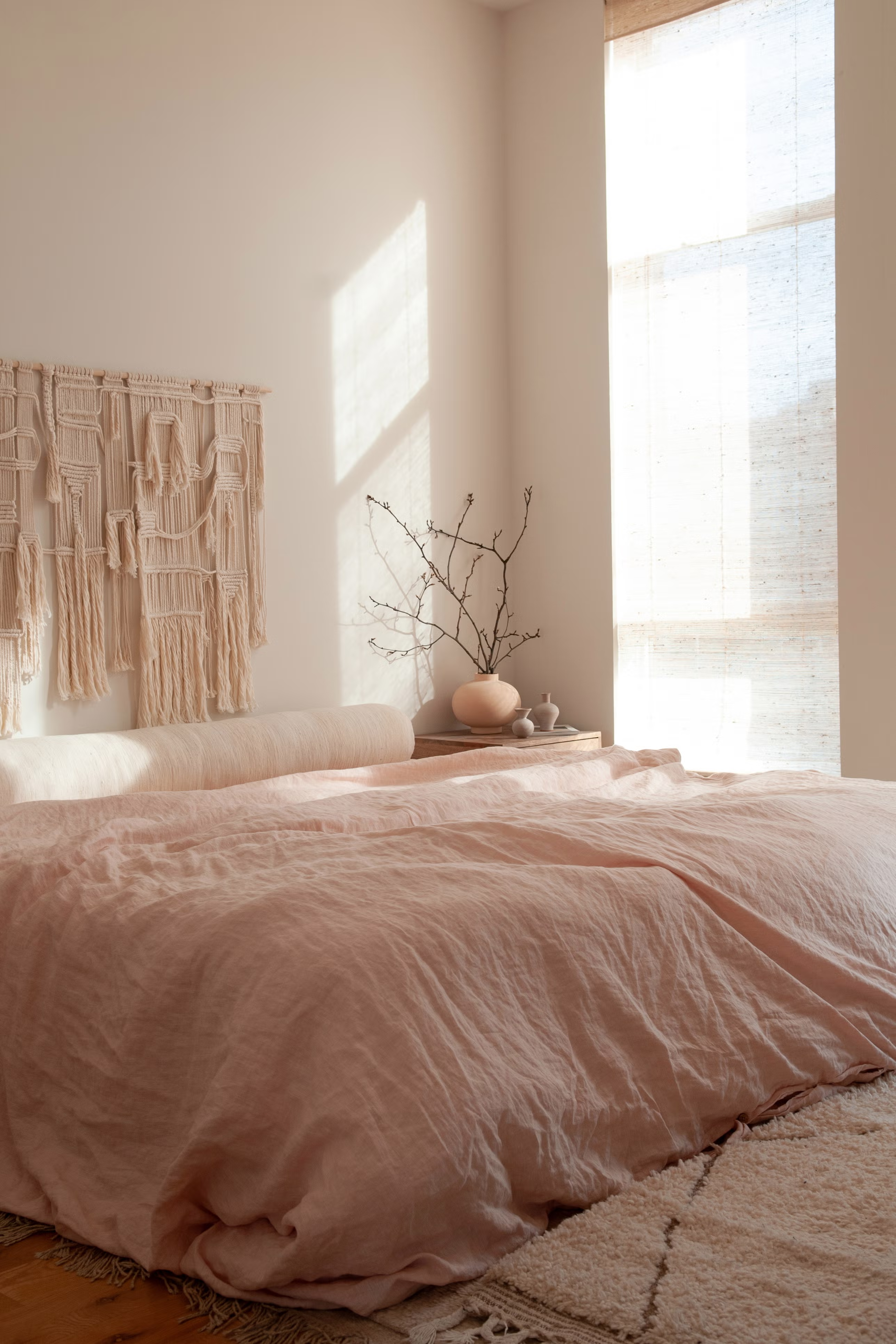
Soft daylight enhances wood tones, textiles, and neutral walls, giving the room a gentle character.
Large windows allow sunlight to fill the space during the day. Heavy window coverings often disrupt this effect, so lighter curtains work better.
Cotton curtains allow daylight to filter through the fabric, creating a calm glow across the room.
Window placement also influences furniture arrangement. Keeping large wardrobes or shelving away from windows allows light to move freely.
Beds placed where morning light can reach them often create a pleasant start to the day.
Light-colored walls support the effect. Soft beige, warm white, or pale greige reflect sunlight across the room, making the bedroom appear larger.
Mirrors can help distribute daylight as well. A mirror positioned across from a window reflects light deeper into the room.
This technique suits smaller bedrooms where brightness can make the space appear more spacious.
Natural light strengthens the calm environment that Japandi design aims to achieve. The bedroom becomes a place that encourages rest moments.
4. Add Interest Wall Art for Personality
Wall art adds personality to a Japandi bedroom when used carefully. This style avoids crowded gallery walls.
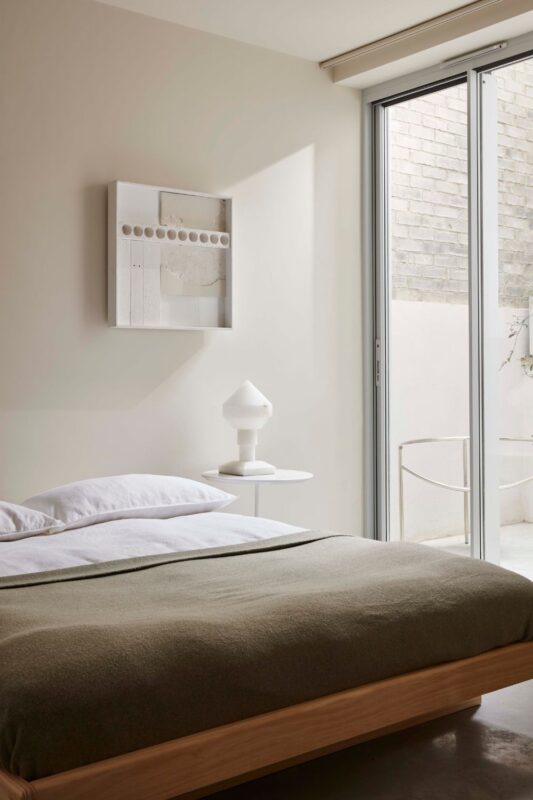
Instead, a few thoughtfully chosen pieces bring character while preserving the calm atmosphere of the room.
Large-scale artwork often works best. A single framed print above the bed can create a quiet focal point.
Nature-inspired artwork fits well. Landscape sketches, ink-style illustrations, or simple abstract forms align with the Japanese influence found in Japandi interiors.
Frame choice matters just as much as the artwork itself. Light wood frames reinforce the natural theme.
Black frames offer gentle contrast against neutral walls. Both options maintain the clean structure typical of this design approach.
Spacing around the artwork should remain generous. Leaving empty wall space helps the piece stand out.
The bedroom stays uncluttered, which supports the restful feeling Japandi design promotes.
Another option includes textile wall hangings. Fabric art pieces or woven panels introduce texture that complements wooden furniture and linen bedding.
Minimal wall art ensures the bedroom keeps its calm personality. The artwork enriches the space quietly, giving the room a thoughtful identity.
5. Embrace the Beauty of Wood for Natural Warmth
Wood plays a major role in Japandi bedroom design. Its natural grain and warm tones introduce character that suits the calm aesthetic perfectly.
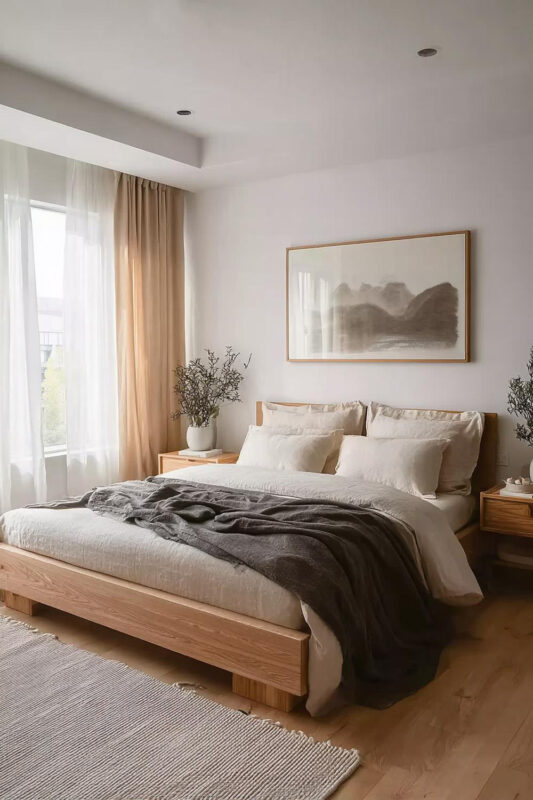
The material connects the room to nature, which is a central idea behind both Japanese and Scandinavian interiors.
Start with key furniture pieces. A low wooden platform bed immediately establishes the Japandi style.
These beds emphasize simple lines and a grounded appearance. Oak, ash, walnut, and maple are common choices because their grain patterns add interest.
Nightstands and benches can extend the theme. Small wooden side tables placed next to the bed maintain balance.
A wooden bench at the foot of the bed offers design value.
Wood can appear in smaller details too. Picture frames, lamps, trays, or shelving introduce additional touches of the material across the room. These accents help the bedroom look unified.
Keeping the wood finish natural works best. Matte finishes or lightly stained surfaces highlight the grain rather than hiding it.
A Japandi bedroom filled with natural wood creates a peaceful environment.
The material brings authenticity to the design, helping the room feel welcoming every day.
6. Have Textured Wallpaper for Quiet Depth
A modern Japandi bedroom often relies on calm surfaces. Textured wallpaper can introduce depth that paint alone cannot achieve. The key lies in choosing patterns that stay gentle.
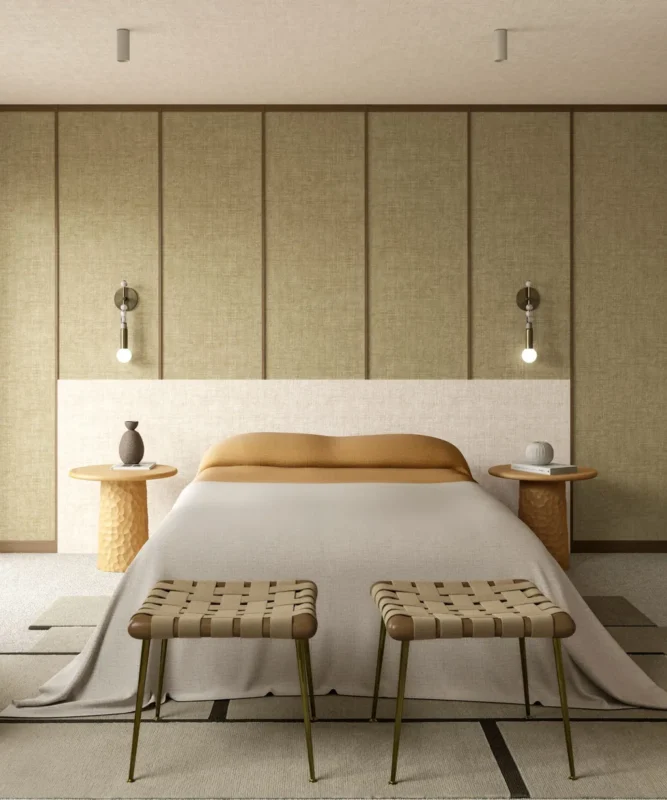
Grasscloth wallpaper suits this style. The natural fibers create a surface with soft irregular texture.
Light catches the material in different ways during the day, giving the wall quiet dimension. A neutral shade such as warm beige, soft taupe, or pale sand keeps the room calm.
Placement also matters. Covering one wall performs better than covering the entire room. The wall behind the bed usually becomes the best location because it forms a natural focal point.
This approach keeps the space balanced and prevents the room from looking busy.
Furniture stands out nicely against a textured surface. A wooden headboard gains extra presence once placed in front of a woven wallpaper background.
Lighting also becomes more interesting since soft shadows appear across the wall texture.
Subtle wallpaper allows a Japandi bedroom to stay minimal yet interesting. The room gains character through surface detail instead of heavy decoration.
READ ALSO: 13+ Accent Wall Ideas For Your Boring Bedroom
7. Balance Soft White Bedding with Warm Earth Tone Accents for a Calm Contrast
Soft white bedding creates a clean foundation in a Japandi bedroom. The color brightens the space and gives the bed a fresh appearance. This neutral base also allows accent colors to stand out more clearly.
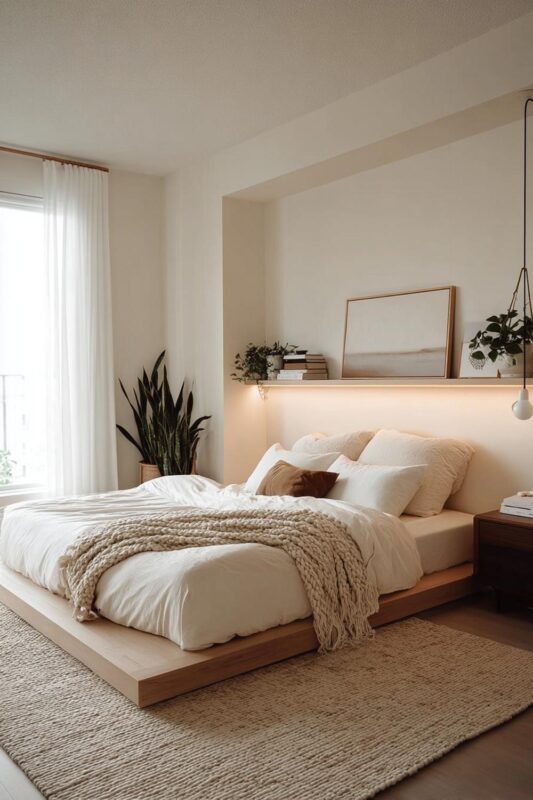
Warm earth tone accents help break up the brightness. A clay-colored throw at the foot of the bed introduces warmth.
A few cushions in muted brown or terracotta shift attention toward the center of the bed. The contrast remains gentle, which fits the calm nature of Japandi interiors.
Material choice plays a major role. Linen duvet covers add a relaxed surface that suits this style.
The slight texture prevents the bedding from appearing too crisp or formal. Cotton sheets support comfort during everyday use.
Nightstand décor can echo the accent tones. A ceramic vase in warm clay or a small lamp with a neutral fabric shade continues the palette across the room.
This balance between white bedding and warmer accents keeps the bedroom peaceful.
The space looks fresh, which makes the bed area the natural focal point of the room.
8. Include Soft Natural Linen Bedding to Create a Relaxing Ambience
Linen bedding fits naturally into a modern Japandi bedroom. The material carries a relaxed texture that supports the calm atmosphere this style aims to achieve.
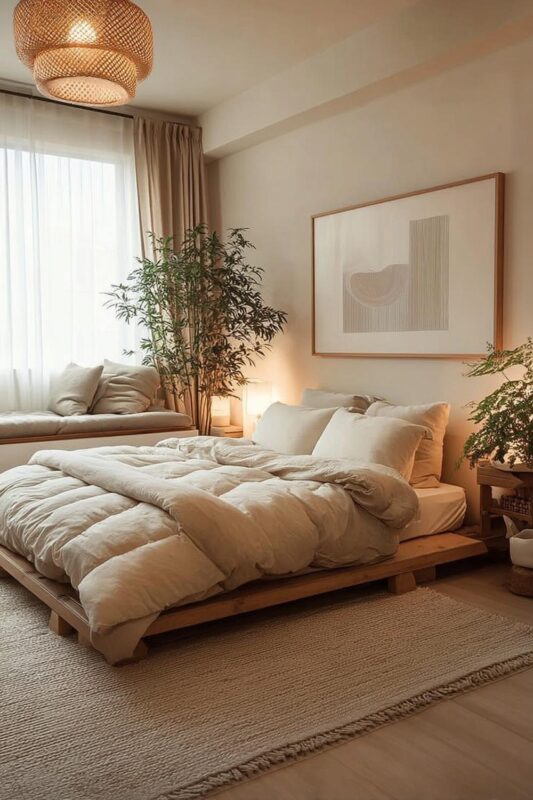
It also ages well, which makes it a practical choice for everyday living.
Linen sheets breathe easily. This quality helps regulate temperature during sleep. The fabric remains comfortable in warmer months but offers warmth during cooler nights.
Over time the material softens further, which improves comfort.
Color selection should remain simple. Soft shades such as warm white, light oatmeal, or pale beige complement wooden furniture and neutral walls.
These tones keep the bedroom peaceful and easy on the eyes.
Linen also introduces texture to the bed surface. The slight creasing of the fabric gives the bed a relaxed appearance. Perfectly pressed bedding often appears too formal for Japandi interiors.
A linen duvet cover paired with matching pillowcases provides enough texture for the bed. Additional layers remain optional depending on the season.
Natural linen helps create a bedroom environment that encourages rest. The material supports comfort while contributing to the simple aesthetic that defines Japandi design.
9. Add Textured Throws and Pillows for Comfort
Throws and pillows bring comfort into a Japandi bedroom. These small additions also provide texture that enriches the overall design.
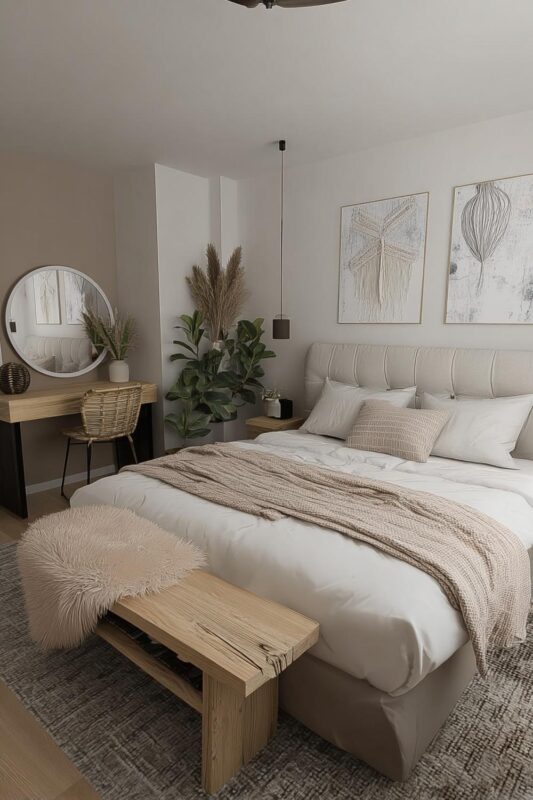
The bed becomes more inviting once a few carefully chosen layers appear.
A woven throw placed near the foot of the bed introduces warmth during cooler evenings.
The fabric can feature a slightly heavier weave that adds interest across the bedding surface. Neutral colors wins so the room keeps its calm mood.
Pillows provide another opportunity for texture. A pair of cushions in linen or cotton creates gentle contrast against smooth sheets.
A knitted cushion cover can introduce a deeper surface pattern that stands out slightly.
Placement should remain simple. Too many pillows can make the bed look crowded. Two or three decorative cushions provide enough presence.
The textures used in these pieces help soften the bedroom environment. The bed area looks welcoming and comfortable.
These small layers also help connect the textiles in the room with rugs or curtains nearby.
Thoughtful use of throws and pillows allows the bedroom to stay minimal.
RELATED: 13 Teen Boy Bedroom Ideas Any Mom Won’t Regret
10. Choose a Low Wooden Bed for a Calm Japandi Foundation
A low wooden bed forms the centerpiece of many Japandi bedrooms. This furniture style reflects Japanese interior traditions where sleeping surfaces sit closer to the floor.
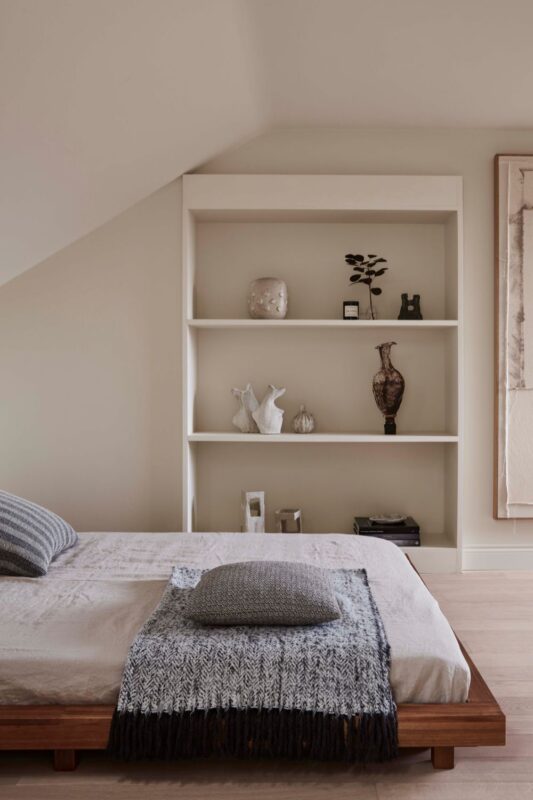
The design introduces a calm presence that suits minimalist spaces.
Platform beds perform great. The structure usually features clean lines and a simple frame.
The mattress rests directly on the base, which creates a streamlined appearance. Decorative elements remain minimal so the wood grain becomes the main feature.
Natural wood tones enhance the atmosphere of the room. Oak and ash often bring lighter warmth into the space. Walnut creates a deeper tone that adds contrast against neutral walls.
The lower height of the bed changes the room’s proportions. Ceiling height appears greater once the furniture stays closer to the floor. This effect can make the bedroom feel more spacious.
Nightstands placed beside the bed should match the scale. Low side tables maintain visual balance across the room.
A wooden platform bed sets the tone for the entire Japandi design. Its simple structure anchors the bedroom and supports the calm aesthetic this style celebrates.
11. Introduce Floating Shelves with Greenery for a Calm Natural Touch
Floating shelves can quietly transform a Japandi bedroom. The design keeps storage light and simple, which aligns with the clean character of this style.
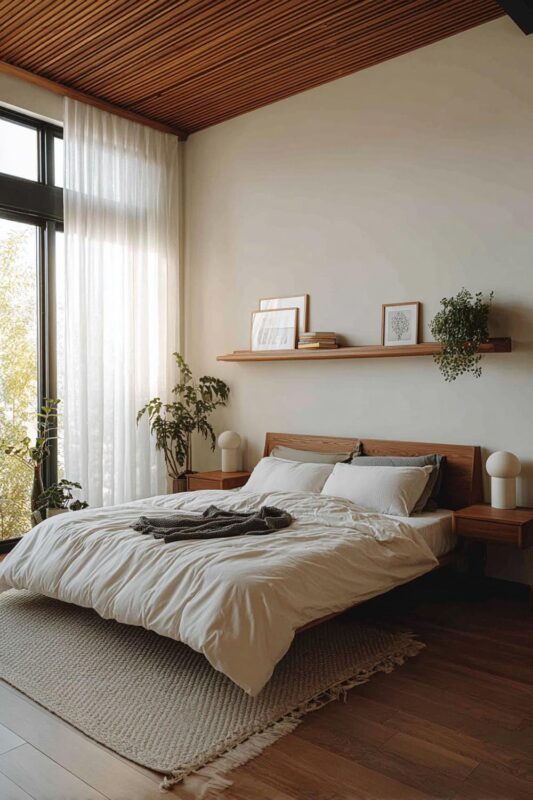
Large cabinets can dominate a small room. Slim shelves keep the wall open and airy.
Wooden floating shelves suit the Japandi look best. Light oak or ash brings warmth to neutral walls. The simple form allows other elements in the room to remain the focus.
Greenery adds life to the arrangement. A trailing plant placed on one shelf introduces movement across the wall. A small ceramic pot with a leafy plant can sit on another shelf. This small display draws inspiration from Japanese interiors where nature plays an important role indoors.
Spacing between shelves matters. A small gap creates breathing room so the arrangement does not appear crowded. A few items are enough. One plant, one ceramic object, and a small book create a calm display.
Floating shelves also offer practical storage. Bedside essentials or a small reading light can sit nearby. The wall remains organized while the room maintains its peaceful appearance.
This combination of wood shelving and greenery brings quiet life into a Japandi bedroom.
12. Keep Belongings Minimal for a Clear, Restful Space
A modern Japandi bedroom benefits from simplicity. Too many objects compete for attention and disturb the calm mood of the room. A minimal approach allows each piece to stand with purpose.
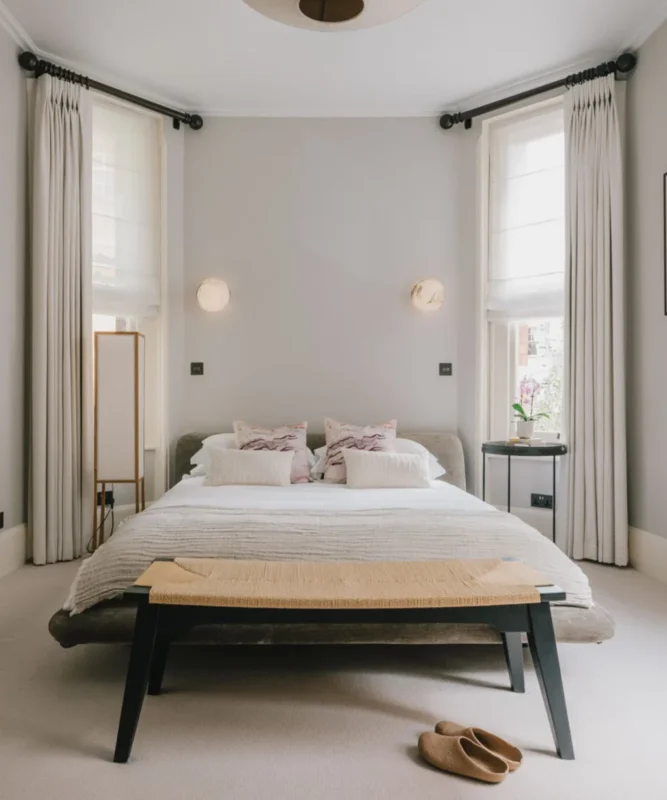
Start with the essentials. The bed remains the central focus. A bedside table provides room for a lamp or a book. Storage furniture should stay limited to what the room truly needs.
Clutter easily gathers on open surfaces. Removing unnecessary décor keeps the bedroom looking clean and peaceful.
A single ceramic vase on a dresser has stronger presence than several small decorations placed together.
Clothing storage should stay organized as well. Closed wardrobes help maintain a tidy appearance. The room instantly feels calmer once items remain out of sight.
A pared-down environment encourages relaxation. Visual distractions disappear, leaving space for rest and quiet moments. This design approach also makes cleaning easier since fewer items collect dust.
Japandi interiors celebrate simplicity through thoughtful restraint. Each item earns its place in the room. The result is a bedroom that feels balanced, open, and restful.
READ NEXT: 15 Jewel Tone Bedroom Ideas You Can’t Miss
13. Create a Visual Anchor to Give the Bedroom Structure
In Japandi design, a visual anchor provides structure to the room. The space looks organized once the eye naturally settles on one central feature.
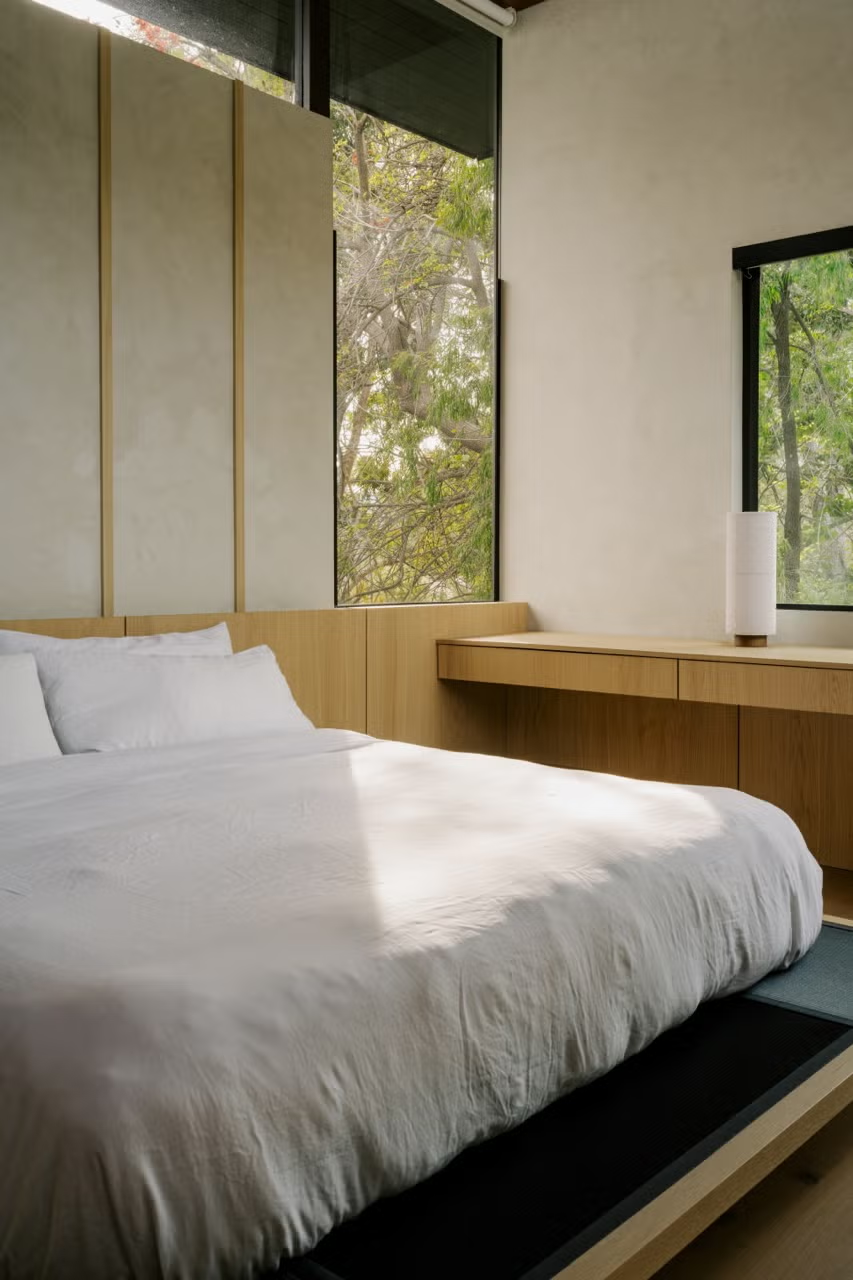
The bed usually becomes this anchor. A wooden headboard or platform frame draws attention immediately after entering the room. The surrounding décor then supports this main feature.
Bedding can reinforce the focal point. Neutral linens paired with one contrasting blanket create gentle emphasis around the bed area.
The arrangement keeps the design simple yet intentional.
Lighting also plays a role. Pendant lamps placed on each side of the bed highlight the focal area. Their warm glow frames the sleeping space during evening hours.
Wall treatment behind the bed can strengthen the effect as well. A textured panel, a large art piece, or a wood slat feature wall provides quiet drama.
A clear visual anchor helps the room feel balanced. Furniture placement becomes easier since everything relates back to the main focal point.
The bedroom gains a sense of order that complements the calm Japandi aesthetic.
14. Decorate with Delicate Patterns for Gentle Character
A Japandi bedroom thrives on calm surfaces, though small patterns can introduce character.
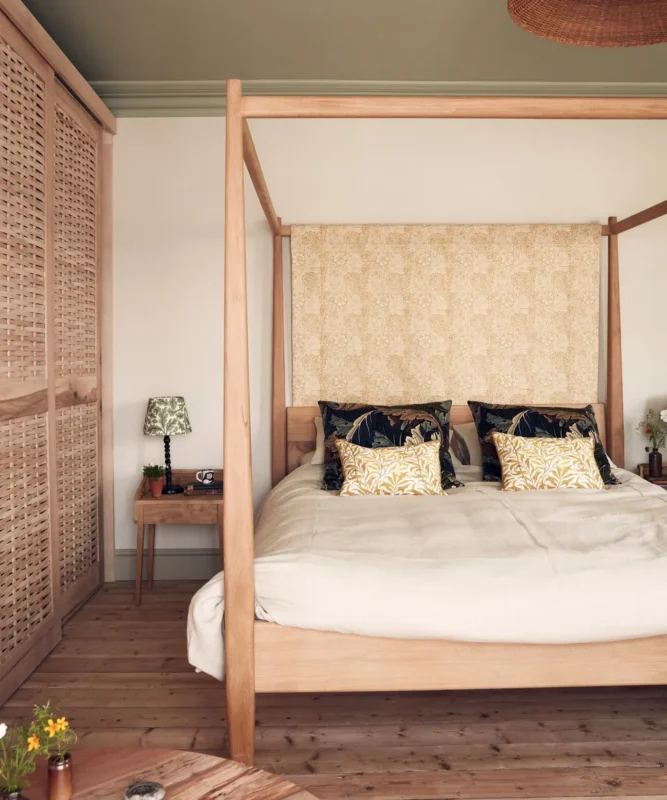
The idea is to choose designs that remain soft and restrained. Bold prints can dominate the room, which disrupts the peaceful mood.
Textiles provide the easiest way to introduce pattern. A duvet cover with a light geometric design can bring interest to the bed. Thin stripes or small grid patterns echo Scandinavian influences.
Japanese-inspired prints also suit this style. Designs based on nature themes such as waves, branches, or leaves add cultural depth.
When used in muted colors, these patterns blend smoothly with the neutral palette of the room.
Patterns should appear in limited areas. Cushion covers, bedding, or a small rug usually provide enough detail.
The rest of the room can remain calm with plain fabrics and smooth surfaces.
Balance remains important. Patterned textiles should sit alongside solid colors so the design stays peaceful.
Delicate patterns add personality in a quiet way. The room gains depth through thoughtful detail while the overall atmosphere stays serene.
15. Use Slatted Wood Screens to Add Modern Texture
Slatted wood screens bring architectural interest into a Japandi bedroom. The vertical lines introduce texture that feels modern yet natural.
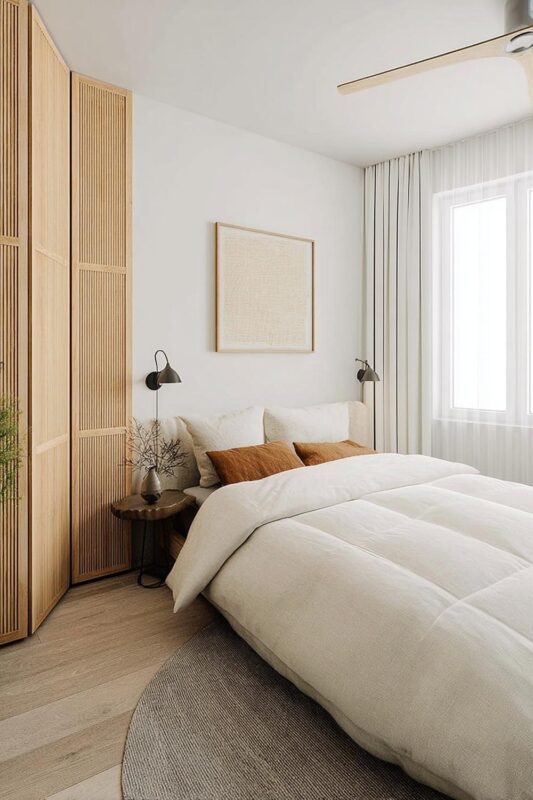
This feature fits comfortably within the blend of Japanese simplicity and Scandinavian warmth.
A wood slat divider can define zones inside the room. In larger bedrooms, the screen can separate the sleeping area from a small reading corner or dressing space.
The open spacing between slats allows light to pass through, which prevents the divider from making the room feel closed in.
Placed behind the bed, the slatted structure can also act as a headboard wall. The repeating vertical lines create rhythm across the space. Wooden tones echo the natural materials found throughout Japandi interiors.
Lighting enhances the texture even more. Soft evening light casts gentle shadows across the slats, adding depth to the wall.
This design element also brings craftsmanship into the room. The wood grain remains visible along each panel, giving the space warmth and character.
A slatted wood screen introduces structure, texture, and natural material in a single feature, making it a striking addition to a modern Japandi bedroom.